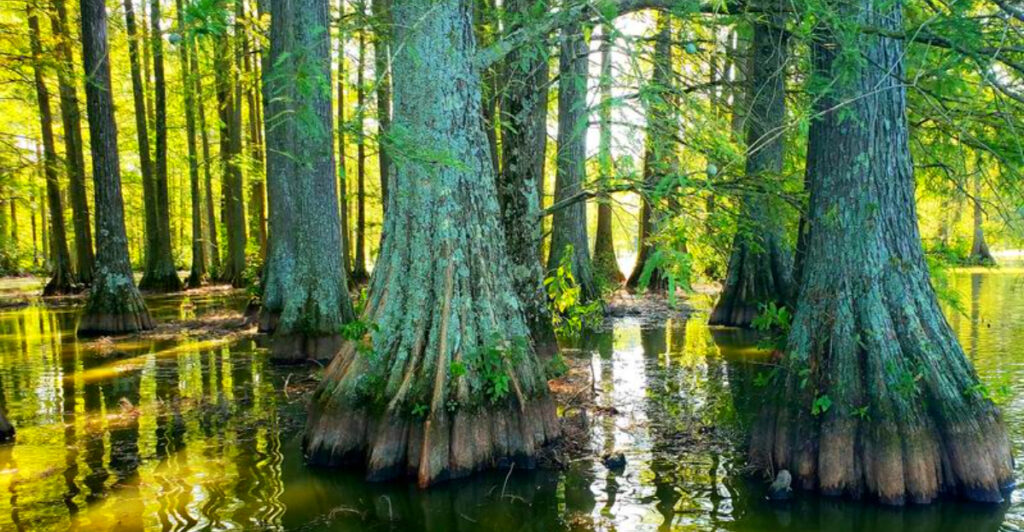
In the far southwestern corner of Delaware, a rare cypress swamp preserves a landscape that feels completely out of place in the Mid-Atlantic. Towering bald cypress trees rise from dark water, their distinctive knees breaking the surface and creating one of the most unusual natural settings in the state.
What makes this area remarkable is not just how it looks, but what it represents. The swamp serves as a living record of a much older ecosystem, offering a glimpse into the region’s natural history and supporting plant and animal communities rarely found this far north.
Visitors often arrive expecting a typical state park and leave surprised by what they find. From quiet waterways to centuries-old trees, this Delaware destination challenges assumptions about the First State and reveals a side of it that many people never knew existed.
Where the Swamp Begins: Address, Location, and How to Find It
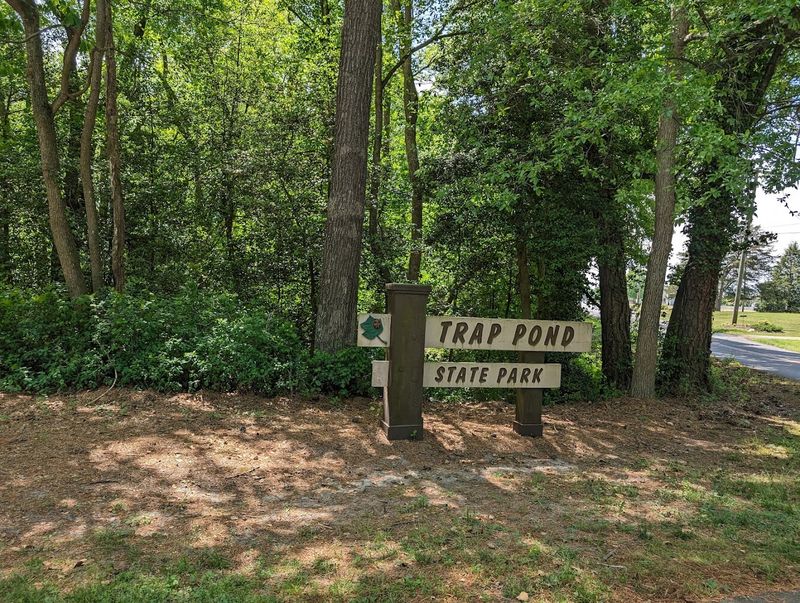
The park sits at 33587 Bald Cypress Ln, Laurel, DE 19956, right in the heart of southwestern Sussex County, Delaware. That address alone tells you something is different here, because not many state parks in the mid-Atlantic have a street literally named after a tree species.
From the Delaware beaches, the drive takes roughly 40 minutes inland, which surprises a lot of visitors who assume the coast has all the scenery worth seeing. The roads leading in are quiet and rural, lined with farmland and forest, and the transition into the park feels gradual but unmistakable.
Once you pass the entrance, the landscape shifts quickly. The air gets heavier, the tree canopy closes in, and the pond appears through the tree line like something you were not fully prepared to see.
You can reach the park office at 302-875-5153, and more details are available at destateparks.com/park/trap-pond.
The Northernmost Stand: Why These Trees Should Not Be Here
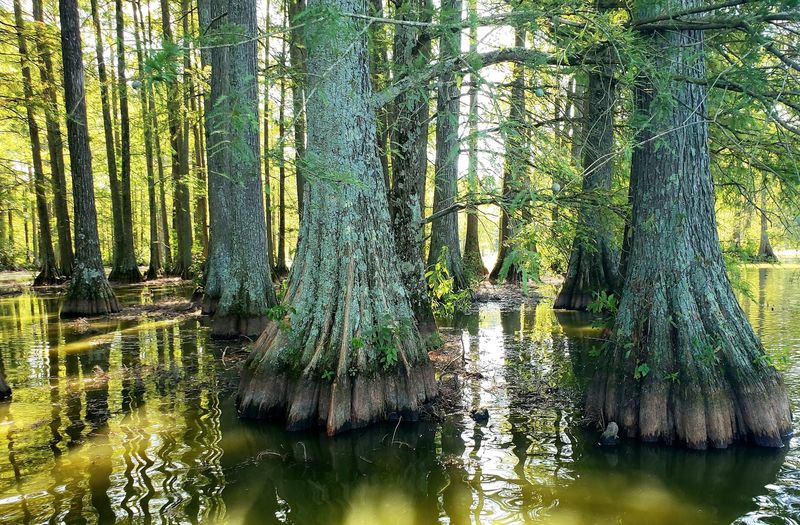
Bald cypress trees are a signature of the deep South. You expect to find them in Georgia, Louisiana, or the Florida Everglades, not in a small Delaware state park sitting just a short drive from the Maryland border.
Yet here they are, thriving in calm, shallow water, and forming what is recognized as the northernmost naturally occurring stand of bald cypress trees on the entire East Coast of North America. That is not a small distinction.
It means these trees pushed the known boundaries of their range and held their ground for centuries without any human help.
Their flared, buttressed bases and the knobby root structures called knees give them an otherworldly silhouette that stands out even against a gray winter sky. The knees help the trees breathe in waterlogged soil, and seeing dozens of them poking up from the pond surface is one of those visuals that genuinely stops you mid-paddle.
And speaking of paddling, the experience of being among them up close is something else entirely.
A Living Timeline: The Trees That Have Seen Centuries Pass
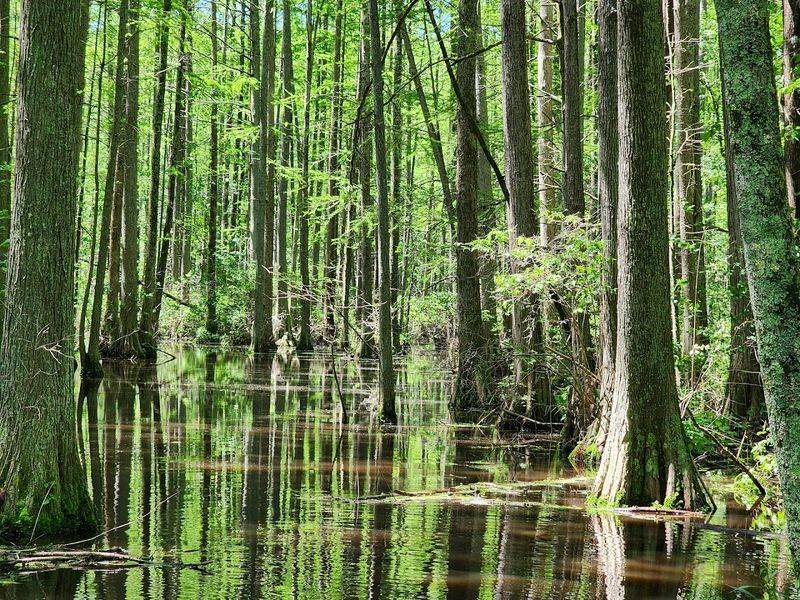
Some of the cypress trees here are estimated to be between 200 and 500 years old, which puts their germination somewhere around the time European settlers were first making contact with the Americas. That kind of age is hard to fully absorb when you are standing next to one.
The standout is a tree known as the Patriarch, believed to be over 500 years old. It rises 127 feet into the air and has a circumference of nearly 25 feet.
You can walk up to it, and the sheer scale of the trunk makes you feel suddenly very small and very temporary.
Most of the trees visible today are technically second-growth, meaning the original old-growth forest was heavily harvested in the 1700s and 1800s. The fact that these second-growth trees have already reached such remarkable sizes and ages speaks to just how favorable this environment is for the species.
The Patriarch, however, survived the logging era, and that alone makes it worth seeking out.
From Sawmill to State Park: The Industrial Past Beneath the Surface
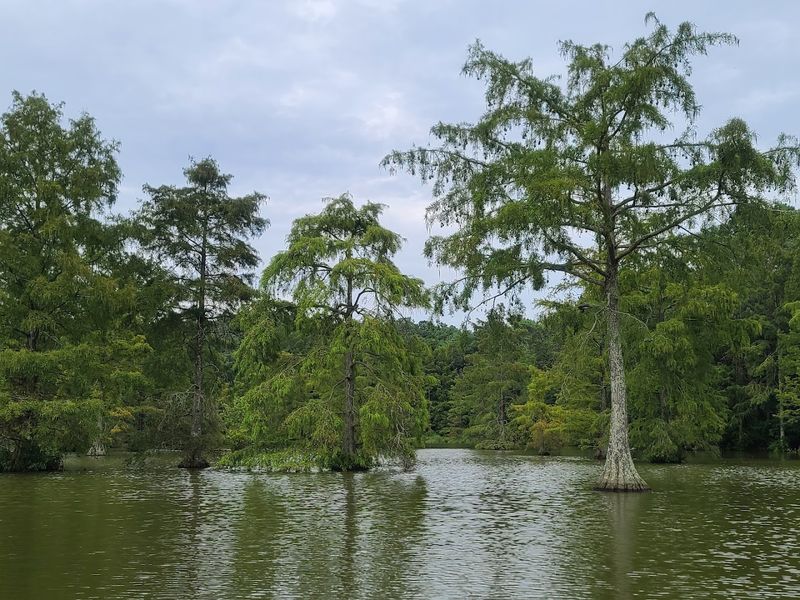
Trap Pond itself is not a natural lake. It was created in the late 1700s when a dam was built to power a sawmill, and the primary target of that mill was the bald cypress wood growing in abundance throughout the area.
Cypress lumber was prized for its resistance to rot, making it ideal for shipbuilding and construction in a young country that needed both urgently.
The logging operation was extensive enough that most of the original old-growth cypress was removed. What you see today growing from the water is largely the result of natural regeneration over the past two centuries, which makes the current forest feel even more resilient than it looks.
After the industrial era faded, the Civilian Conservation Corps arrived in the 1930s and transformed the site into a recreational area, building trails, facilities, and infrastructure that laid the groundwork for what the park is today. In 1951, Trap Pond became Delaware’s first official state park, a title it still holds with quiet distinction.
Kayaking Through the Cypress: What It Actually Feels Like on the Water
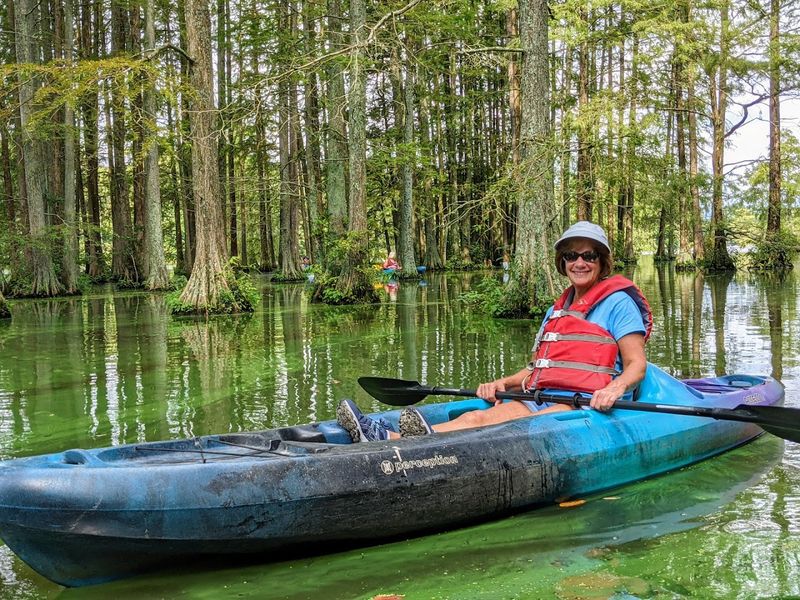
Renting a kayak or canoe here and heading out onto the pond is the kind of experience that people describe for years afterward. The water has a natural brownish tint from tannins released by the cypress trees, which gives the surface a dark, mirror-like quality that reflects the tree canopy above in stunning detail.
Paddling between the cypress trunks feels genuinely different from any other kayaking experience in the region. The trees crowd close enough that you sometimes have to navigate carefully, and the knees rising from the water add an extra layer of visual texture that keeps your eyes moving constantly.
Water lilies spread across the quieter sections of the pond, and wildlife appears regularly without much warning. Turtles bask on half-submerged logs, great blue herons stand motionless in the shallows, and dragonflies hover at eye level.
Guided boat tours are also available for those who prefer a narrated experience, and both options deliver a version of this landscape that you simply cannot get from the shore.
Wildlife That Thrives Where the Water Meets the Wood
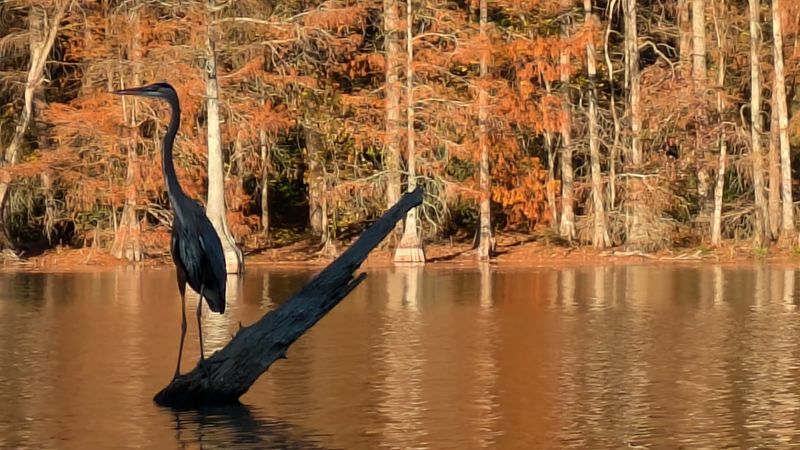
The ecosystem here supports a surprisingly wide range of wildlife for a park this size. Great blue herons are practically residents, stalking the shallows with that slow, deliberate patience that makes them look like they own the place.
Pileated woodpeckers drum loudly through the forest, and owls call from the trees after dark during camping season.
Bald eagles have been spotted here as well, which catches most visitors off guard since Delaware is not the first place that comes to mind for eagle sightings. Warblers pass through during migration, and hummingbirds visit the park in warm months, adding flashes of movement to the quieter corners of the trails.
Below the waterline, the pond supports healthy populations of turtles and frogs, and their presence is a good indicator of how clean and well-preserved the water ecosystem remains. The diversity of species concentrated in one relatively compact area is part of what makes Trap Pond feel like so much more than a typical state park.
The trails, it turns out, are another reason entirely.
Trails That Wind Through Wetland, Woodland, and Everything Between
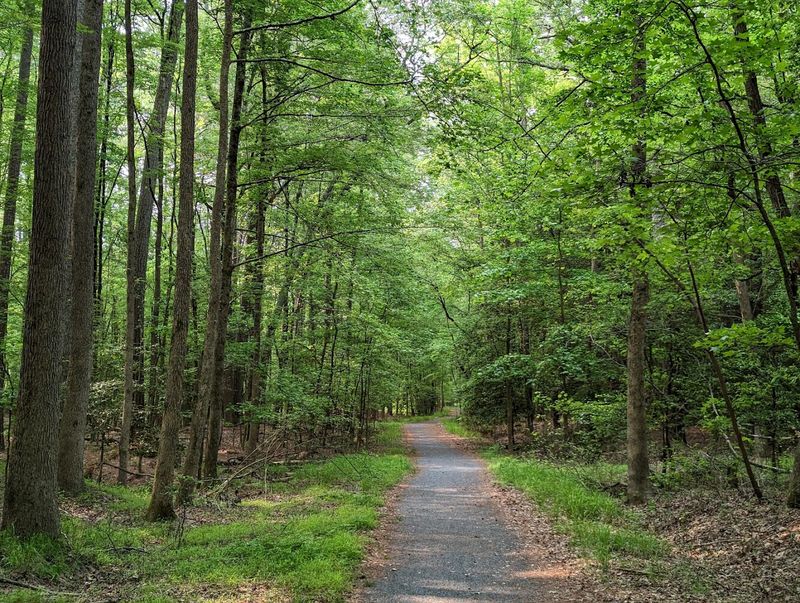
The trail network at Trap Pond covers a range of terrain that shifts between open woodland, dense swamp edge, and sunny meadow stretches, sometimes within the same walk. The flat, wide gravel paths make most of the trails accessible to a broad range of visitors, including those who use mobility aids or prefer a more relaxed pace.
Some of the trails loop around the pond and connect to adjacent natural areas, and the flat terrain means mountain biking is genuinely enjoyable here rather than just tolerable. Bikes are available to borrow from the park, which is a nice touch that encourages spontaneous exploration without requiring gear you may not have packed.
A few trail intersections are not as clearly marked as they could be, so picking up a map at the entrance or asking one of the park rangers before heading out is a smart move. The rangers here have a well-earned reputation for being genuinely helpful rather than just pointing at a sign and walking away.
Camping Under the Canopy: What Overnight Stays Are Really Like
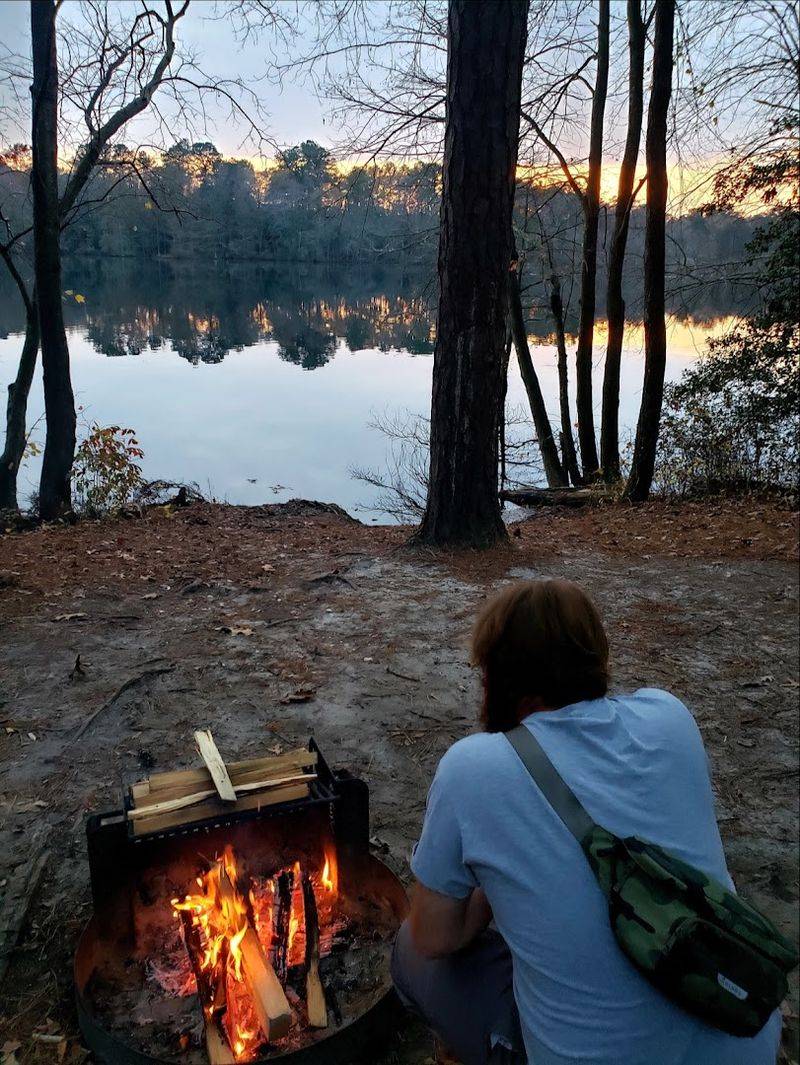
The campground at Trap Pond is one of the more well-regarded in Delaware, and it earns that reputation through a combination of spacious sites, clean bathhouses, and a general atmosphere of calm that feels hard to find at busier campgrounds. Loop A and the walk-in tent sites in Loop E are particularly popular among campers who want a more immersive outdoor experience.
The walk-in tent sites require hauling your gear a short distance with a provided wheelbarrow, which sounds inconvenient until you arrive at a site that feels genuinely private and surrounded by nature rather than neighboring campers. Free showers and laundry facilities add a level of comfort that is not universal at state park campgrounds.
A camp store on site carries essentials, and firewood is available both there and from local sellers on the road leading in. The sites are shaded well enough that summer heat is manageable, though Delaware summers are humid regardless of how many trees are overhead.
The Nature Center: Where the Park’s Story Gets Properly Told
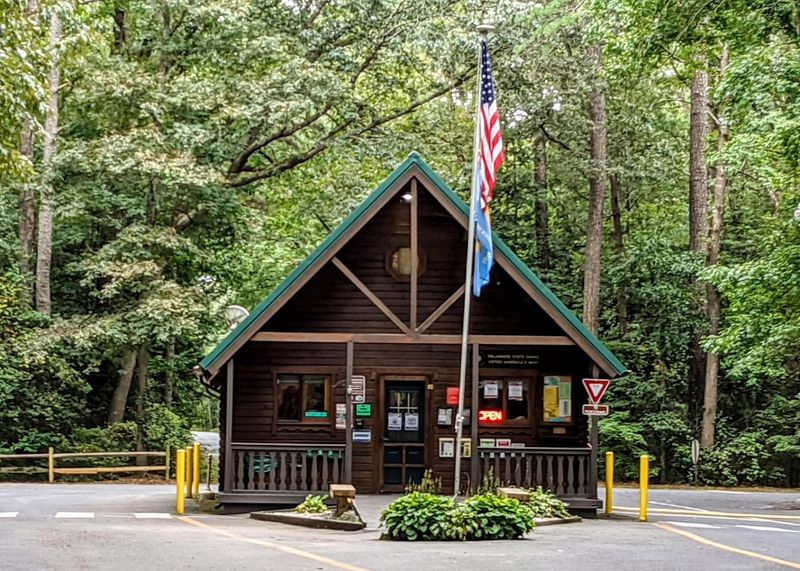
The nature center at Trap Pond is worth more than a quick glance. It provides real context for everything you see outside, explaining the ecology of the bald cypress swamp, the history of the logging era, and the role this specific landscape plays in the broader wetland system of Sussex County.
Exhibits cover the wildlife species that depend on the park, the water chemistry that gives the pond its distinctive color, and the conservation efforts that helped the cypress forest recover after centuries of harvesting. For families with younger kids, the displays are engaging without being overwhelming, and the staff are consistently described as friendly and genuinely knowledgeable.
Visiting the nature center before heading out on the water or the trails gives the whole experience a sharper focus. You notice things differently when you understand why the trees grow the way they do, or why the water looks the way it does.
It turns a pleasant outing into something closer to a real discovery, which is a rare thing to find in a day trip.
Picnics, Pavilions, and Recreation Beyond the Water
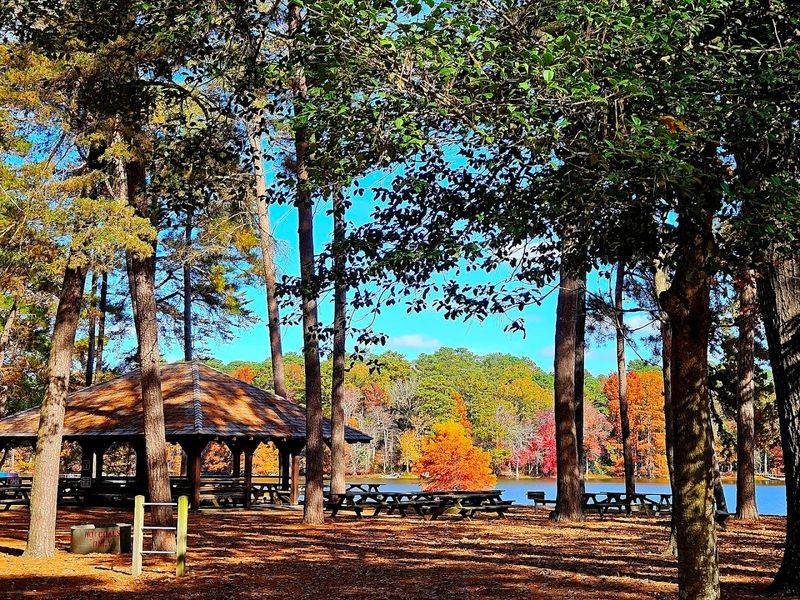
Beyond the trees and the water, Trap Pond offers a solid lineup of recreational options that make it a practical destination for family gatherings and reunions, not just solo nature seekers. Pavilion rentals are available for larger group events, and the open recreational areas include volleyball courts, horseshoe pits, cornhole setups, and a playground with swings, slides, and a climbing structure.
Picnic tables are scattered throughout the park, and some of the best spots sit right at the water’s edge with direct views of the cypress canopy. Fishing is permitted on the pond, and the calm water makes it a relaxed activity even when the fish are not cooperating.
The park has hosted evening concerts in the past, and the setting makes even a casual outdoor event feel a little more special than it might elsewhere. Clean, well-maintained restrooms throughout the park are a detail that sounds minor but genuinely improves the experience, especially for visitors spending a full day rather than just passing through.
Best Times to Visit and Tips for Getting the Most Out of the Park
Weekday visits are noticeably quieter than weekend trips, and going earlier in the morning brings two additional benefits: fewer people on the trails and significantly fewer insects. Delaware summers are warm and humid, which is exactly the climate the cypress trees love, but it can feel intense for visitors who are not used to it.
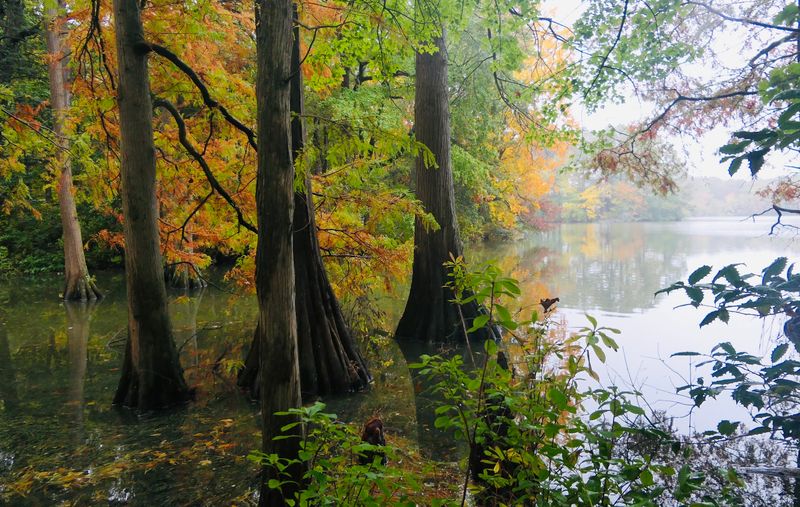
Fall is arguably the most visually striking season here. Bald cypress trees are deciduous, which surprises many people who assume they are evergreens.
Their needles turn a warm russet-orange before dropping, and the combination of that color against the dark water creates a scene that feels genuinely rare in the mid-Atlantic.
The park entrance fee for out-of-state visitors is modest, and annual passes are available for those planning multiple visits. Bringing bug spray is strongly recommended from late spring through early fall.
The park sits roughly 40 minutes from Assateague Island, making it a natural pairing for a longer weekend itinerary along the Delaware and Maryland coast.
Share this story