 Unearth The Voyage
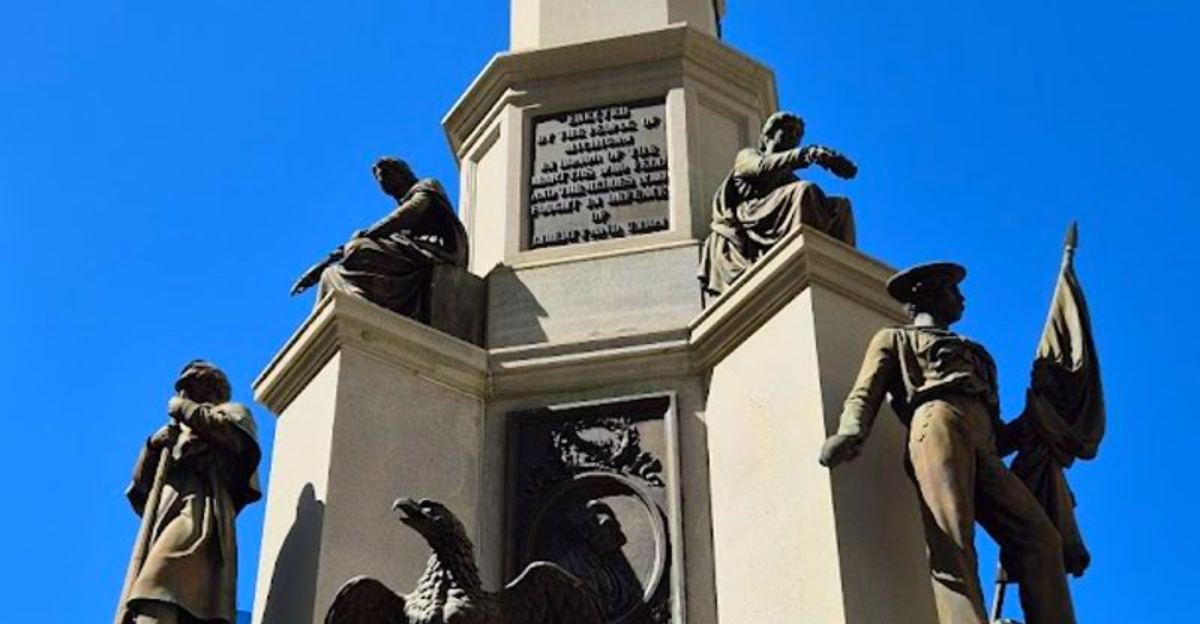
In downtown Detroit’s Campus Martius Park stands a monument most people pass without noticing, despite it honoring more than 90,000 Michigan soldiers who served in the Civil War. The Michigan Soldiers’ and Sailors’ Monument rises in four detailed tiers, each designed to represent a different part of that history.
What sets it apart is how much is built into the structure itself. From engraved figures to symbolic sculptures and the 11-foot statue at the top, every section adds context to the stories of those who served and the thousands who never returned.
It is one of the most detailed historical landmarks in the state, yet many visitors never take a closer look or realize how much is actually carved into it.
Where the Monument Stands Today
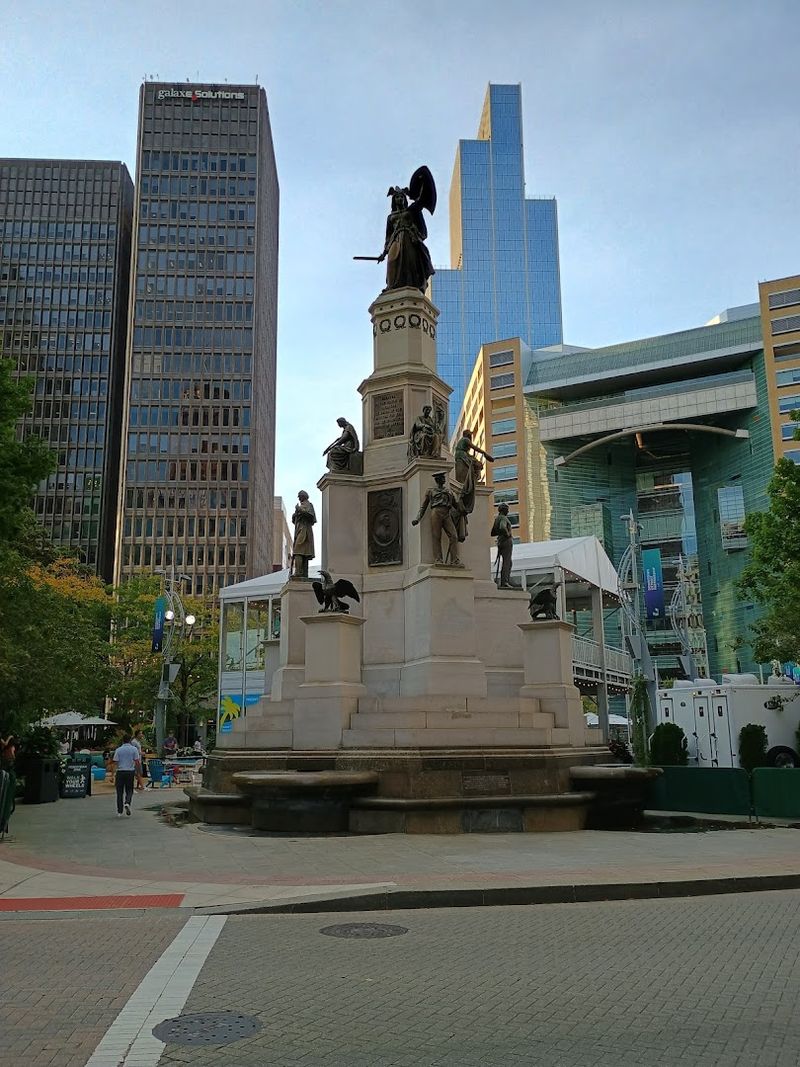
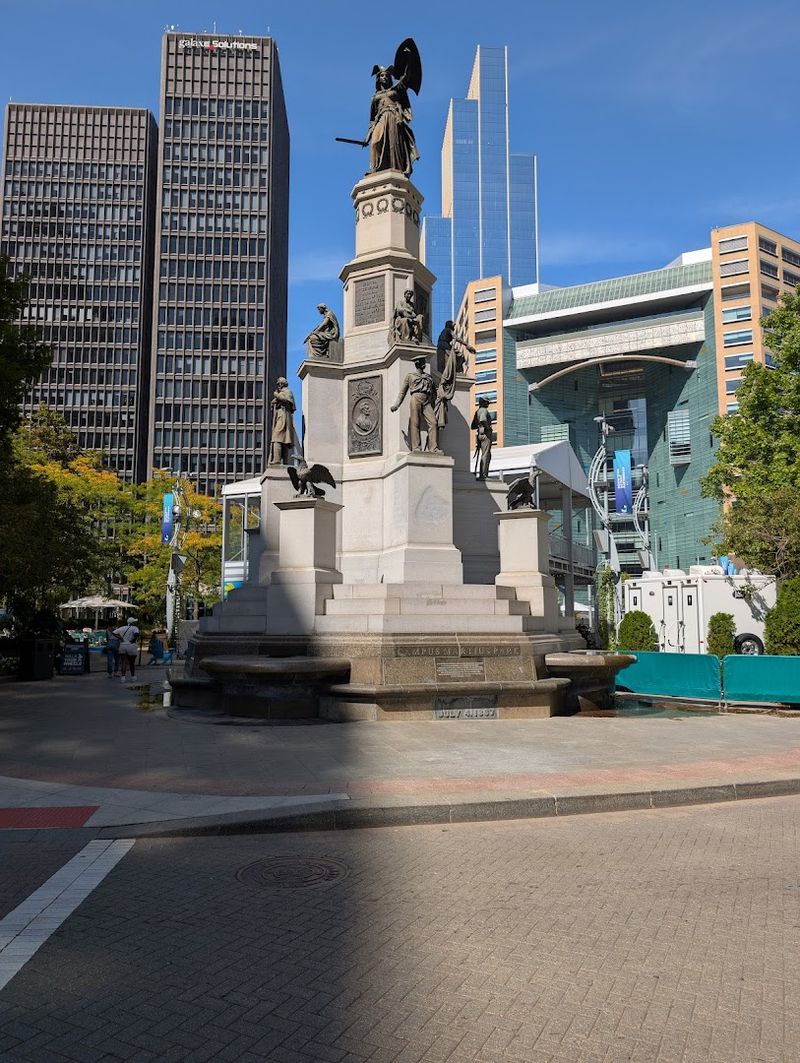
Right in the center of downtown Detroit, at Woodward Ave, Detroit, MI 48226, Campus Martius Park serves as the beating heart of the city. The Michigan Soldiers’ and Sailors’ Monument rises from that heart with authority, surrounded by flowers, seating areas, and the constant movement of city life.
The park is open every day from 6 AM to 10 PM, which means early risers and evening strollers both get a chance to experience the monument in completely different lighting. Morning light gives the bronze figures a warm, amber glow, while the evening hours bring a more dramatic, shadowed look that makes every carved detail pop.
There is no parking directly adjacent to the monument, so the best approach is on foot from nearby landmarks like the Spirit of Detroit or the Guardian Building. That short walk actually adds to the experience, because the monument gradually comes into full view as you approach, and the scale of it hits you all at once.
The Sculptor Who Shaped This Tribute
Randolph Rogers was not a newcomer when Detroit commissioned him for this project. By the time he began designing the Michigan Soldiers’ and Sailors’ Monument, he was already one of the most respected American sculptors of the 19th century, known for his emotionally powerful bronze work.
Rogers had studied in Florence, Italy, and his European training shows clearly in every tier of this monument. The figures are detailed, expressive, and anatomically precise in a way that was considered exceptional craftsmanship for the era.
He understood how to make bronze feel alive, and that skill is on full display here.
What makes his contribution even more remarkable is the symbolic depth he layered into the design. Every figure, every eagle, every allegorical representation was chosen deliberately to communicate a specific message about duty, sacrifice, and national identity.
Rogers did not just create a monument. He built a visual story in metal that has outlasted nearly every person who watched it being unveiled in 1872.
The Day Detroit Gathered to Unveil It
April 9, 1872 was not a quiet Tuesday in Detroit. The city gathered in force to witness the unveiling of a monument that had been years in the making, and the date itself was chosen with intention.
April 9th marked the anniversary of the end of the Civil War, making the ceremony feel less like a ribbon-cutting and more like a collective exhale after years of grief.
The monument had been dedicated even earlier, in 1867, but the full unveiling with the completed sculptural program took until 1872. That gap between dedication and unveiling tells its own story about the scale and complexity of what Rogers had been commissioned to create.
Crowds filled the square, speeches were delivered, and a city still processing the weight of wartime loss finally had a permanent, physical place to direct its remembrance. The monument became an anchor for public memory in a way that few structures in Michigan ever have, and that role has only deepened with each passing decade.
Four Tiers, Four Layers of Meaning
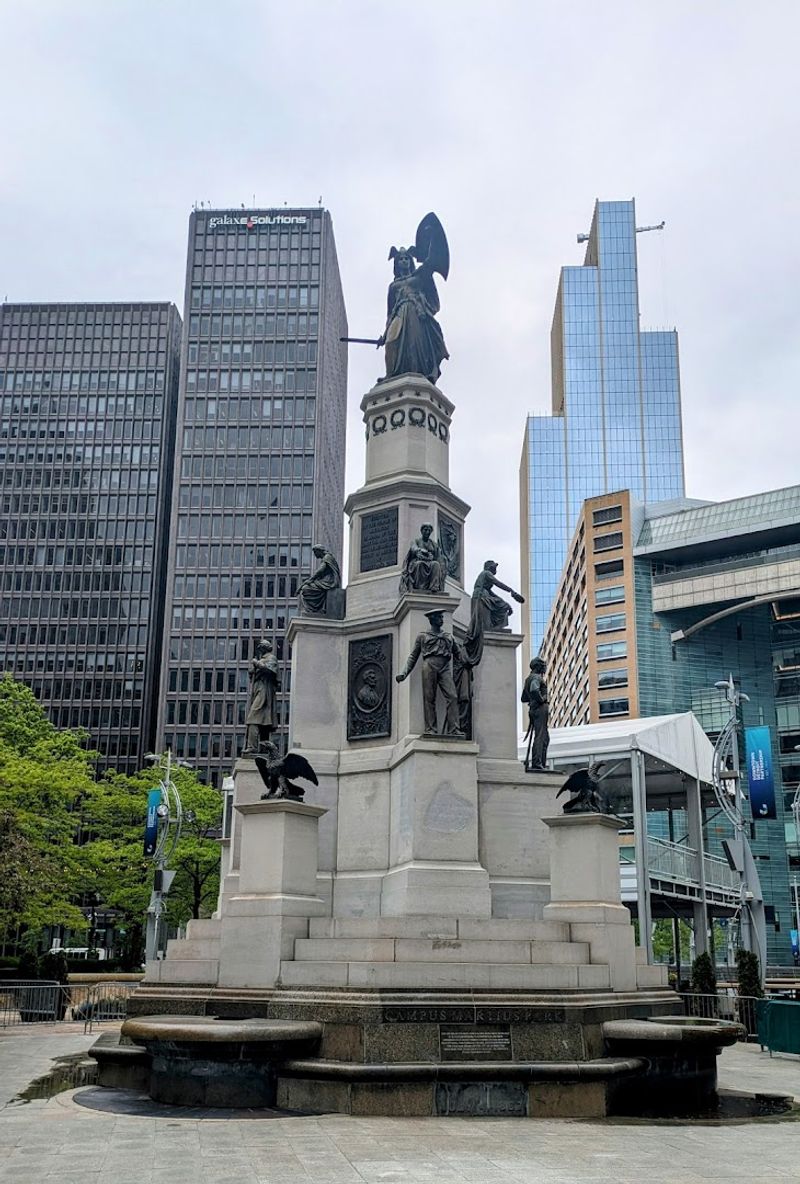
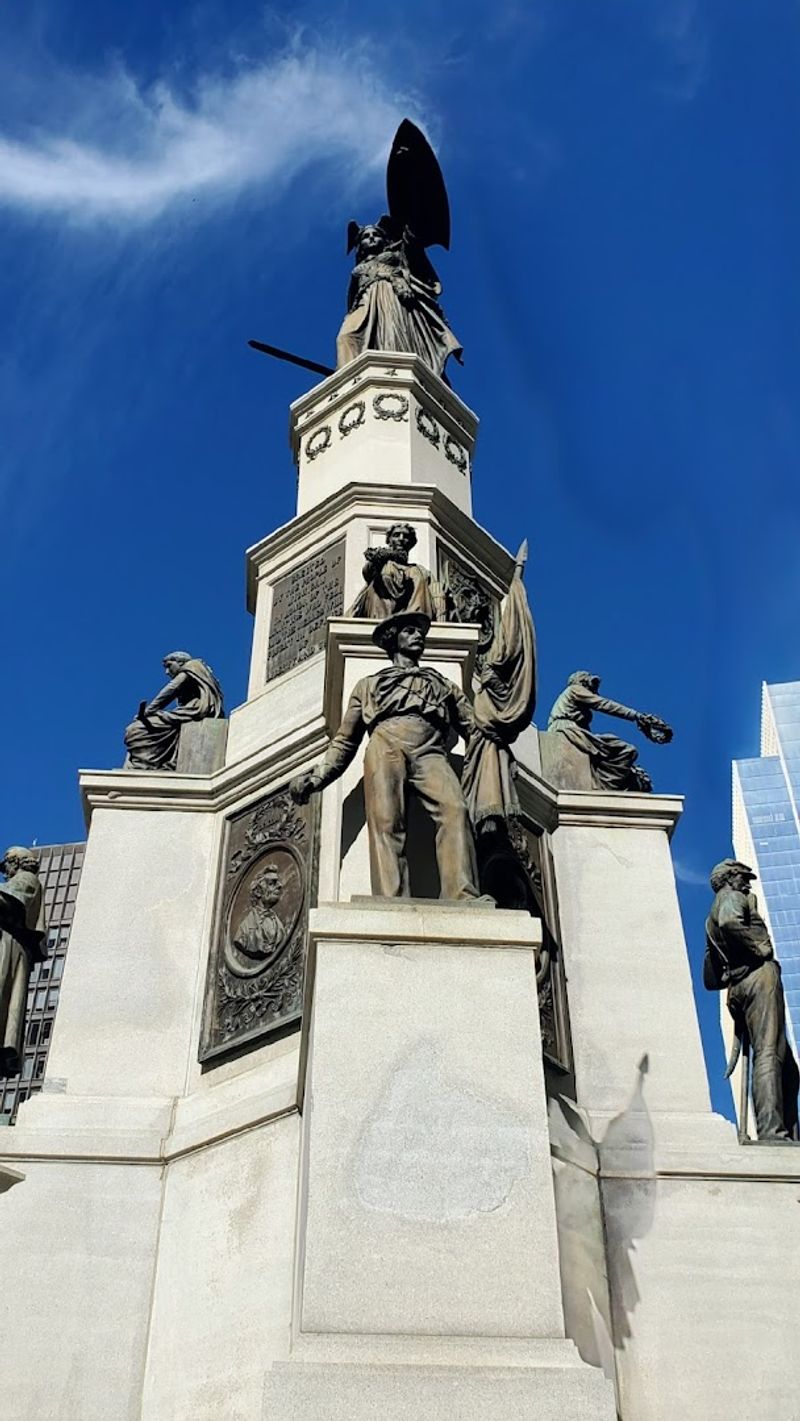
Most monuments are read in a single glance, but this one rewards a slower look. The design by Randolph Rogers unfolds in four distinct tiers, each one building on the one below it to create a complete visual and symbolic statement about Michigan’s role in the Civil War.
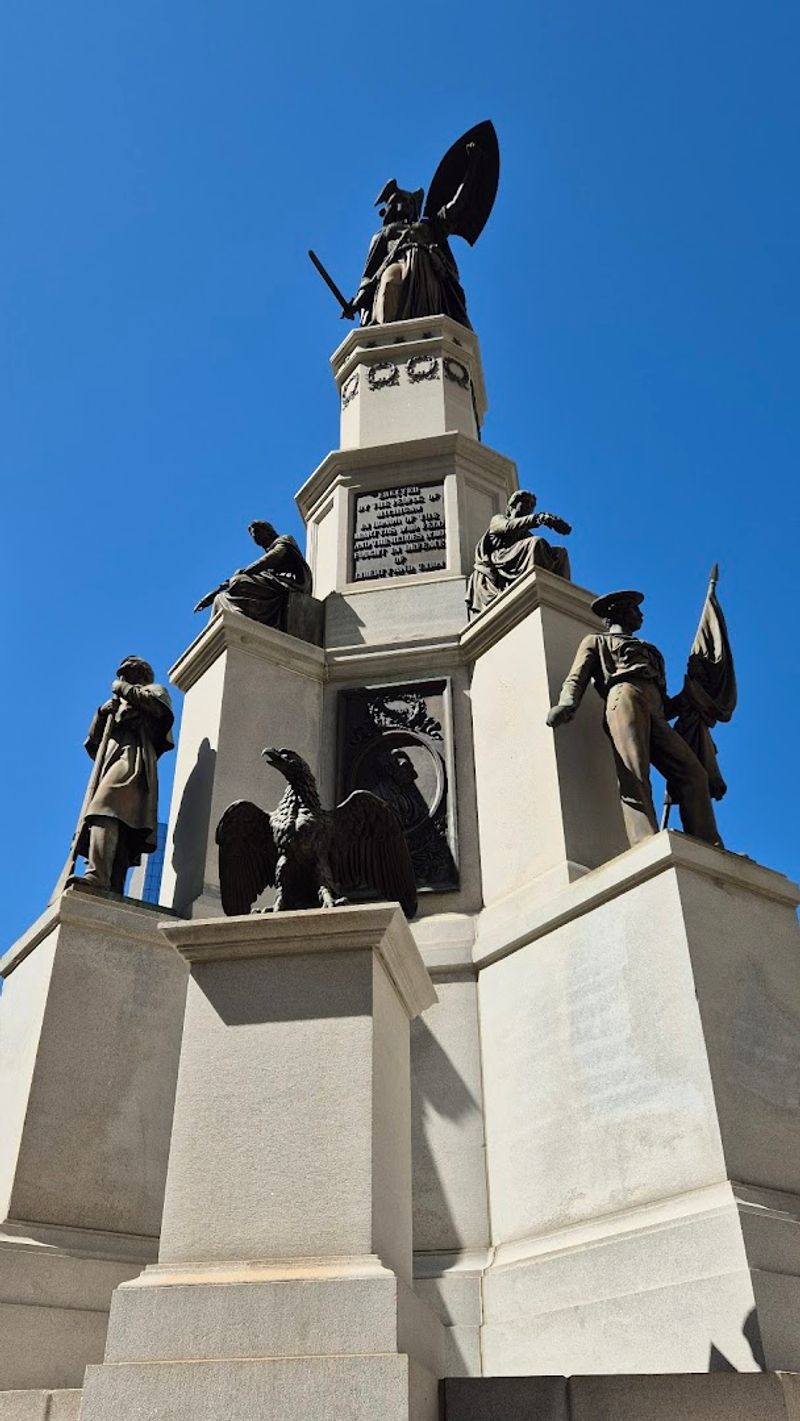
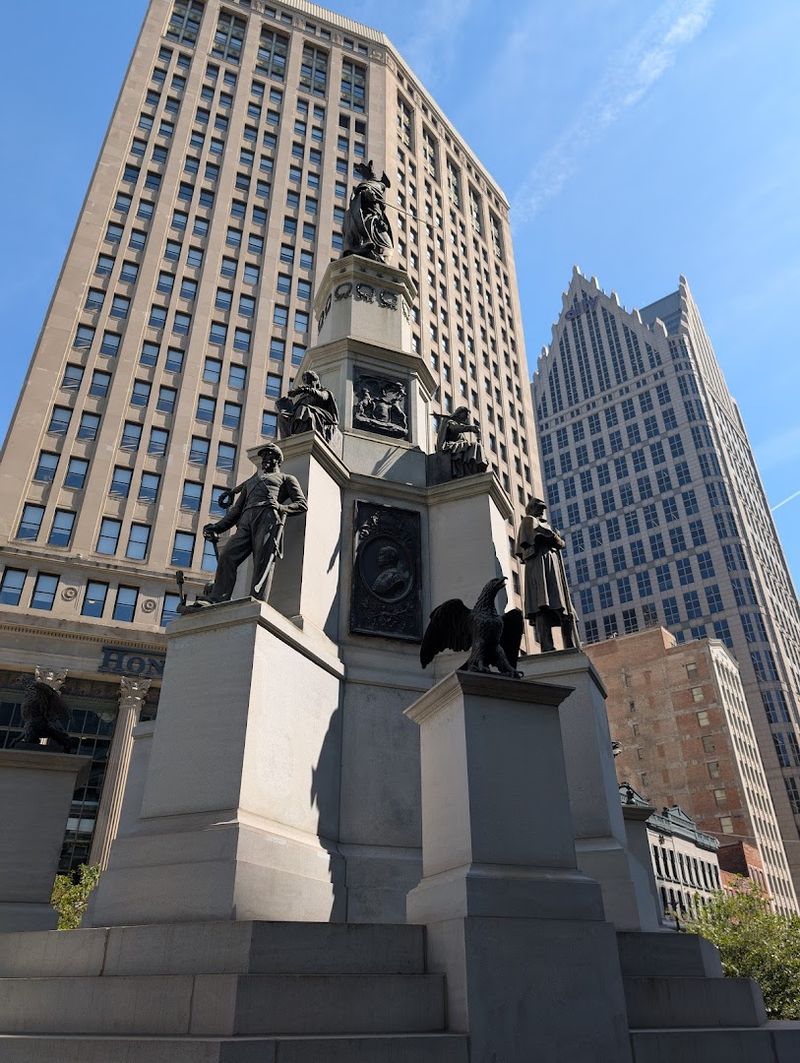
At the base, four bronze eagles spread their wings outward, a strong and deliberate symbol of national pride. Moving up, four male figures represent the Navy, Infantry, Cavalry, and Artillery branches of the Union military.
These are not generic soldiers. Each figure is dressed and equipped with specific details that reflect the actual uniforms and gear of the time.
The third tier introduces four female allegorical figures representing Victory, History, Emancipation, and Union. These four concepts together form the ideological core of what the Civil War meant to the nation.
The top tier holds Michigan herself, an 11-foot figure personified as a Native American warrior holding a sword and shield, which is arguably the most unexpected and striking design choice on the entire structure.
The Figure at the Top That Surprises Everyone
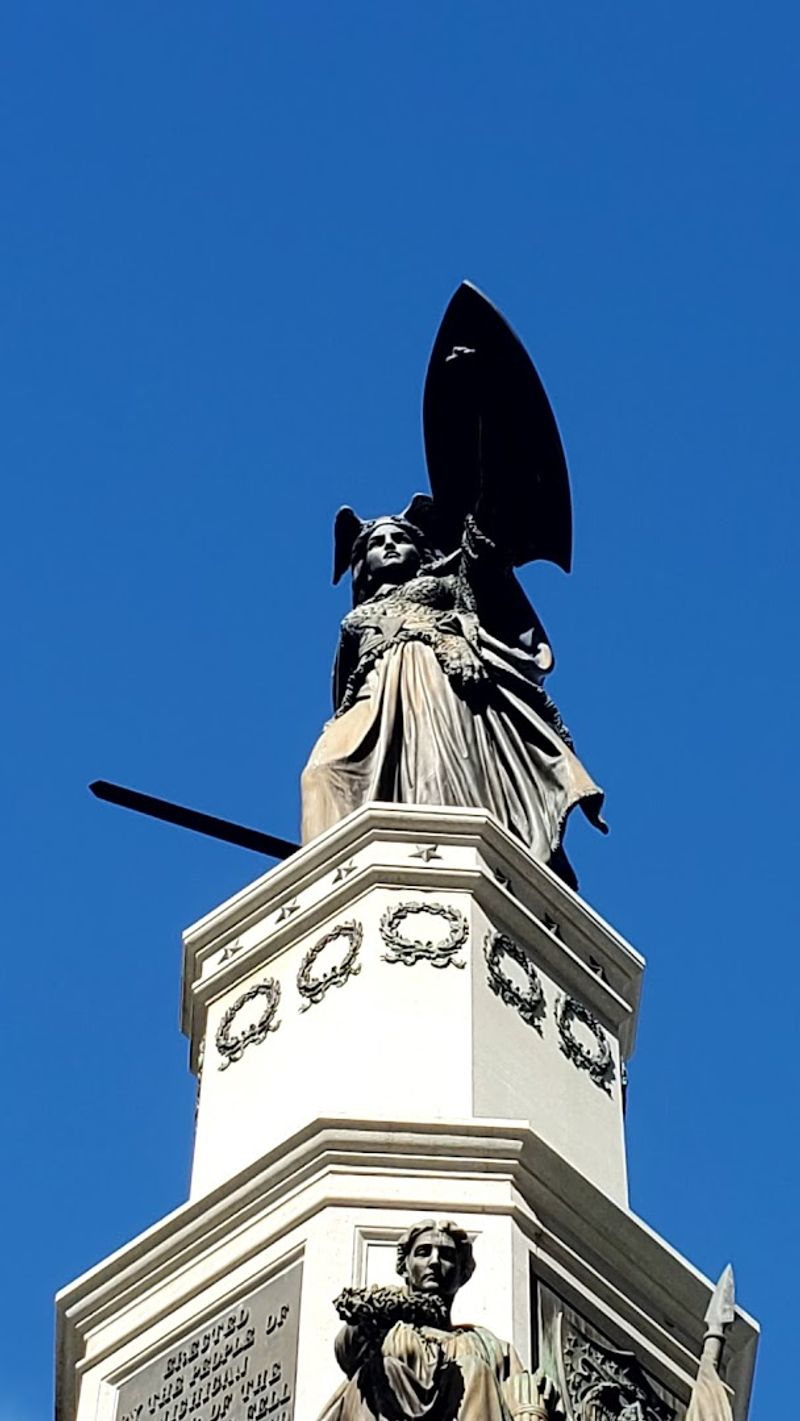
Most people expect a general on horseback or a flag-bearer at the top of a Civil War monument. What Rogers placed at the pinnacle of this structure is something far more original.
Michigan is personified as a Native American warrior, standing 11 feet tall, holding a sword in one hand and a shield in the other.
The choice was both a nod to the state’s deep indigenous heritage and a bold artistic statement about identity and strength. Michigan was not simply a participant in the Civil War.
The figure at the top communicates that the state had its own character, its own story, and its own reason to stand tall.
From street level, the details of this figure can be easy to miss, especially if you are not looking for them. A pair of binoculars or even a good zoom on a phone camera reveals the craftsmanship up close.
Once you see the full figure clearly, the entire monument takes on a different weight, and you start to understand why this structure has earned such lasting respect in Detroit.
90,000 Troops and the Numbers Behind the Bronze
The numbers carved into this monument’s history are staggering when you sit with them. Michigan sent approximately 90,000 troops to fight for the Union during the Civil War, a contribution that represented a significant portion of the state’s entire population at the time.
Of those 90,000, an estimated 14,823 did not come home. That figure is not just a statistic.
It represents 14,823 individual lives, families, and futures that the state of Michigan absorbed as loss. The monument was built to make sure those numbers were never reduced to mere data points in a history book.
When you stand in front of the bronze figures and think about those numbers, the scale of the memorial shifts. This was not a small regional gesture.
Michigan’s contribution to the Union cause was enormous, and the ambition of this monument, with its four tiers, multiple sculptural programs, and towering final figure, reflects exactly that scale. The math of sacrifice is written into every inch of this structure.
The 2005 Move That Almost Nobody Noticed
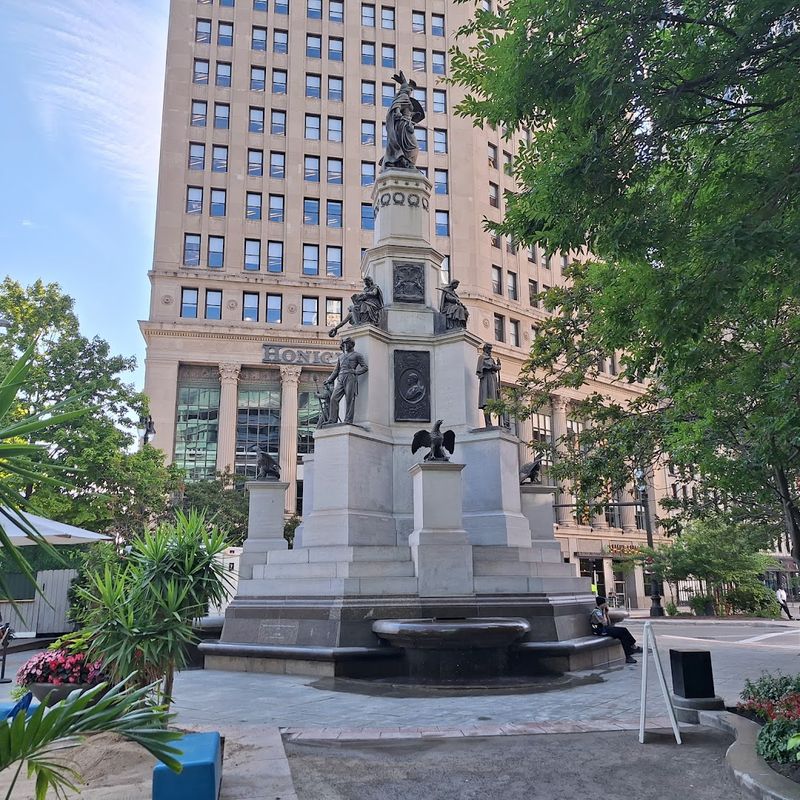
Here is something that tends to stop people mid-conversation when they hear it. In 2005, during a major renovation of Campus Martius Park, the entire monument was physically moved 125 feet from its original position.
A Civil War-era bronze structure, weighing an enormous amount, was relocated across the park without damaging a single figure.
The move was part of a broader effort to redesign the park into the vibrant public space it is today. The monument received a new granite base and a fountain during the renovation, which actually enhanced the visual drama of the structure considerably.
Water now flows around the base in a way that frames the eagles and lower figures beautifully.
The 2005 re-dedication gave the monument a second moment of public ceremony, reconnecting a newer generation of Detroiters with a piece of history that had been easy to overlook. The renovation also made the monument more accessible and visible from multiple angles throughout the park, which changed how people interact with it on a daily basis.
A Time Capsule Hidden in Plain Sight
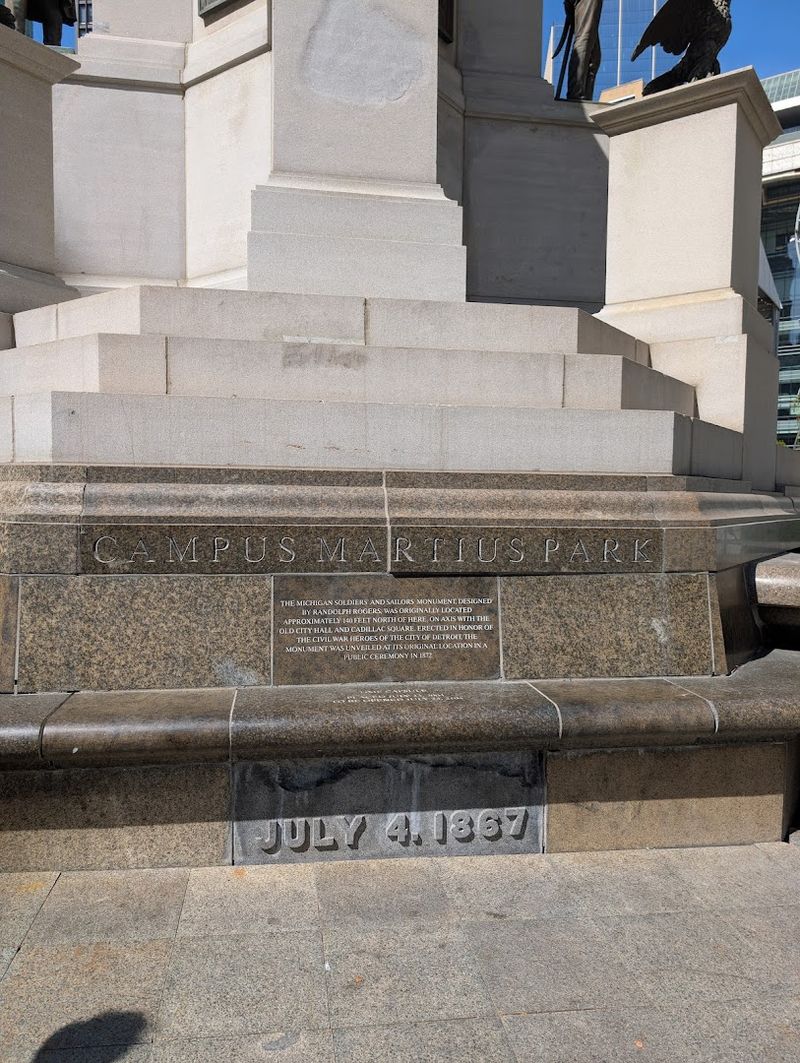
Buried within the base of the Michigan Soldiers’ and Sailors’ Monument is a time capsule, placed there during the original construction in the 19th century. That detail alone turns this monument from a passive landmark into something that feels almost like a locked diary from another era.
The contents of the capsule include documents, coins, and other items that were considered significant at the time of the monument’s construction. Nobody has opened it since it was sealed, which means a small piece of 1872 Detroit is still sitting undisturbed beneath the granite and bronze above it.
Time capsules have a way of making history feel tangible rather than distant, and knowing one exists inside this monument adds a layer of mystery to every visit. You are not just looking at a memorial.
You are standing over a sealed record of how people in the 1870s understood their own moment in history, preserved in the ground beneath a busy downtown park for over 150 years.
153 Years Old and Still Going Strong
In April 2025, the Michigan Soldiers’ and Sailors’ Monument marked its 153rd anniversary, a milestone that very few Civil War memorials in the entire country can match. The monument is considered one of the earliest and most enduring Civil War tributes in the United States, a fact that carries real weight when you think about how many structures from that era have been lost to time, neglect, or deliberate removal.
Detroit has changed enormously since 1872. Industries have risen and collapsed, neighborhoods have transformed, and the city’s skyline looks nothing like it did when the monument was first unveiled.
Through all of that change, this bronze structure has remained a fixed point in the city’s geography and identity.
Reaching 153 years is not just a matter of physical durability. It reflects the ongoing decision by the city and its residents to maintain, protect, and re-dedicate this memorial across multiple generations.
That commitment says something meaningful about how Detroit chooses to remember its history, and why this monument still matters today.
How to Make the Most of Your Visit
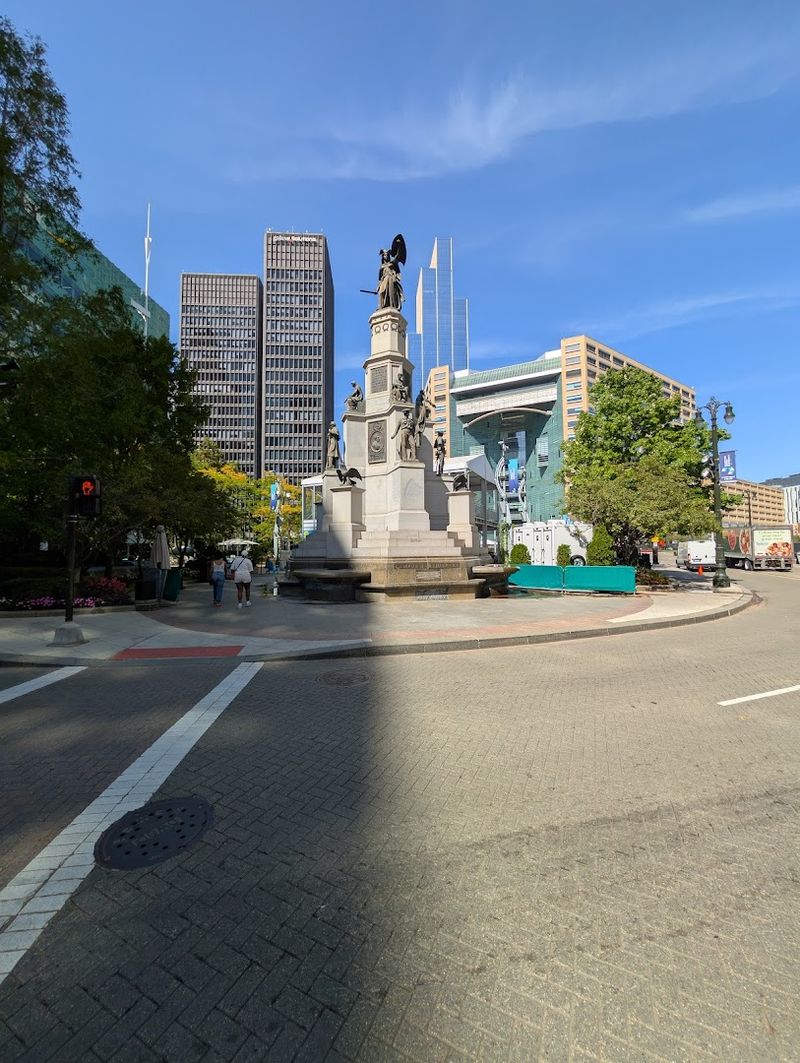
A visit to this monument works best when you give yourself time to actually circle it. Most people stop at the front, take a photo, and move on.
But the full sculptural program only reveals itself when you walk the entire perimeter and look at each tier deliberately.
The monument is free to visit and open every day from 6 AM to 10 PM, so there is no excuse to rush. Morning visits offer quieter surroundings and softer light.
Midday brings more foot traffic and a livelier park atmosphere, with flowers in bloom and the fountain running around the base.
Campus Martius Park also has seasonal programming worth checking out, including a beach setup in summer and an ice skating rink in winter, so the monument is never the only reason to linger. Nearby landmarks like the Spirit of Detroit and the Guardian Building are easy walking distance, making this a natural anchor for a broader afternoon of exploring downtown Detroit on foot.



