 Unearth The Voyage
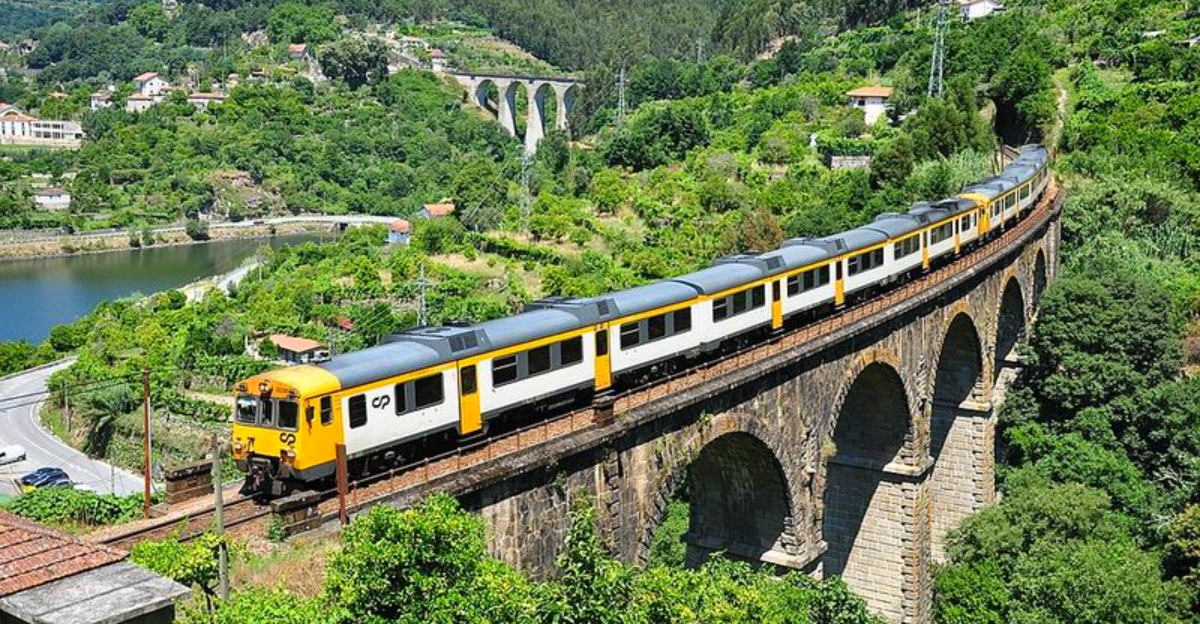
Europe’s train journeys offer something air travel never could: the chance to watch the scenery unfold like a moving painting outside your window. From snow-capped Swiss peaks to Norwegian fjords and Italian coastal villages, these routes turn transportation into an unforgettable experience.
The best part? You can relax, snap photos, and soak in views that make the journey just as memorable as the destination.
1. Glacier Express (Switzerland): Zermatt ↔ St. Moritz
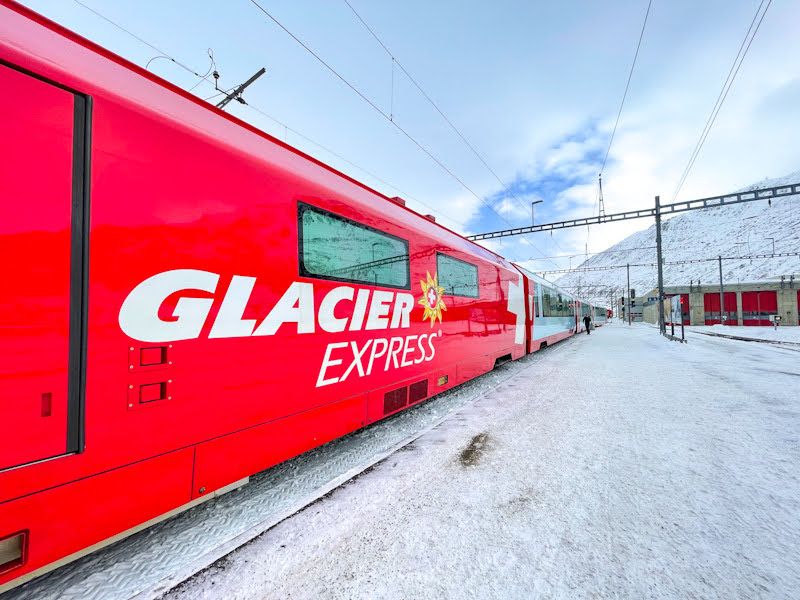
Picture yourself gliding through the Swiss Alps for eight straight hours, surrounded by nothing but jaw-dropping mountain views. Bridges appear out of nowhere, tunnels swallow you into darkness before spitting you back into sunlight, and valleys stretch endlessly below.
High-mountain towns pop up like scenes from a storybook, each more charming than the last.
Those huge panoramic windows aren’t just for show. They frame every twist and turn of this legendary route, giving you front-row seats to nature’s best work.
Seat reservations come standard because this isn’t just any train—it’s a named panoramic service designed specifically for sightseers.
From minute one until the final stop, the wow factor never quits. Whether you’re a mountain lover or just someone who appreciates beauty, this ride delivers nonstop alpine magic that cameras struggle to capture fully.
2. Bernina Express (Switzerland → Italy): Chur/St. Moritz → Tirano
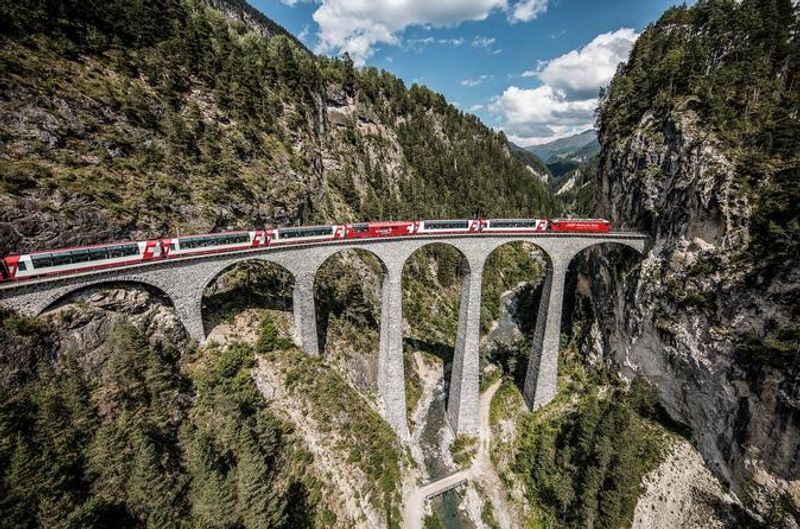
Starting high in Switzerland’s frozen alpine world, you’ll end this journey surrounded by Italian palm trees and Mediterranean warmth. This dramatic shift happens gradually as the train crosses the Bernina route, showcasing engineering marvels and UNESCO-listed landscapes that seem almost too perfect to be real.
The broader network includes iconic spots like the Landwasser Viaduct area, where tracks seem to defy gravity. Glaciers give way to forests, then suddenly you’re looking at a completely different climate zone.
It’s like traveling through multiple seasons in a single afternoon.
Rhaetian Railway landscapes earned their UNESCO recognition for good reason—every curve reveals something new. Whether it’s a stone bridge arching over a gorge or snow-covered peaks reflecting sunlight, the scenery keeps your eyes glued to the window the entire ride.
3. GoldenPass Express (Switzerland): Montreux ↔ Interlaken Ost
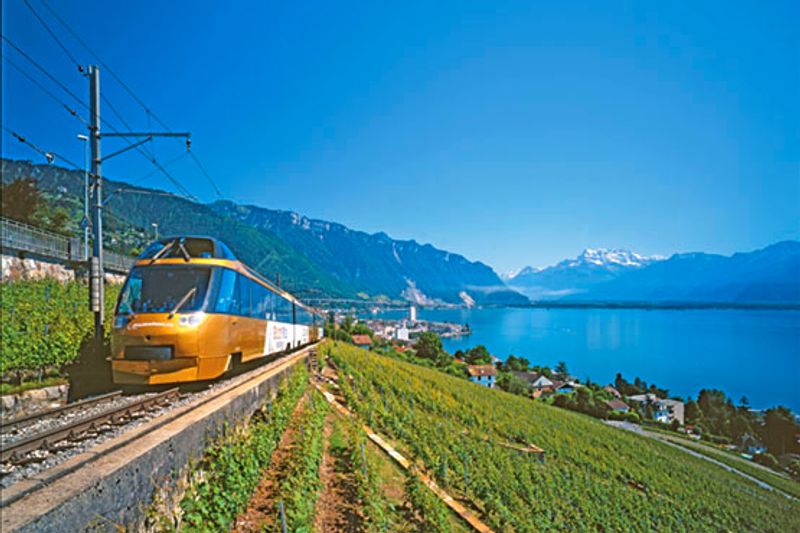
Lake Geneva’s shimmering waters greet you at the start, setting a peaceful mood that gradually builds into full-blown mountain drama. In just over three hours, you’ll transition from lakeside elegance to the towering Bernese Alps, passing through villages that look hand-painted onto the landscape.
Your brain keeps asking if the views can possibly get better—and somehow, they do.
This direct panoramic connection eliminates the hassle of transfers while maximizing scenic payoff. Storybook chalets dot hillsides, church steeples pierce valley floors, and those massive peaks loom closer with every mile.
No airplane window can compete with this level of immersion.
Comfortable seats and huge windows make the experience effortless. You simply settle in and let Switzerland’s greatest hits parade past, one stunning frame after another, all the way to your destination.
4. Flåm Railway (Norway): Myrdal ↔ Flåm
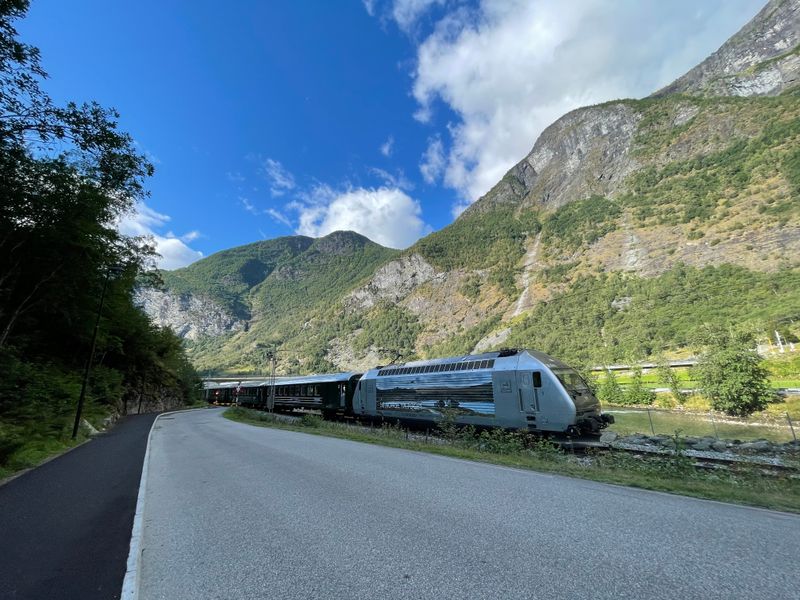
Steep doesn’t even begin to describe this descent. The Flåm Railway plunges from high mountain country straight down to fjord landscapes in what feels like a controlled freefall through Norway’s most photogenic terrain.
Short but absolutely packed with scenery, this ride wastes zero seconds on boring views.
Engineers designed every twist specifically to showcase waterfalls, cliffs, and valleys at their most dramatic angles. Mountains tower on both sides while water crashes down rocky faces close enough to feel the spray.
Then suddenly, the fjord appears below like a reward for making the journey.
It’s ridiculously scenic—almost comically so—because nature decided to show off here. Every traveler leaves with a camera full of photos and a head full of memories from one of Norway’s most famous rail experiences that truly earns its reputation.
5. Bergen Line / Bergensbanen (Norway): Oslo ↔ Bergen
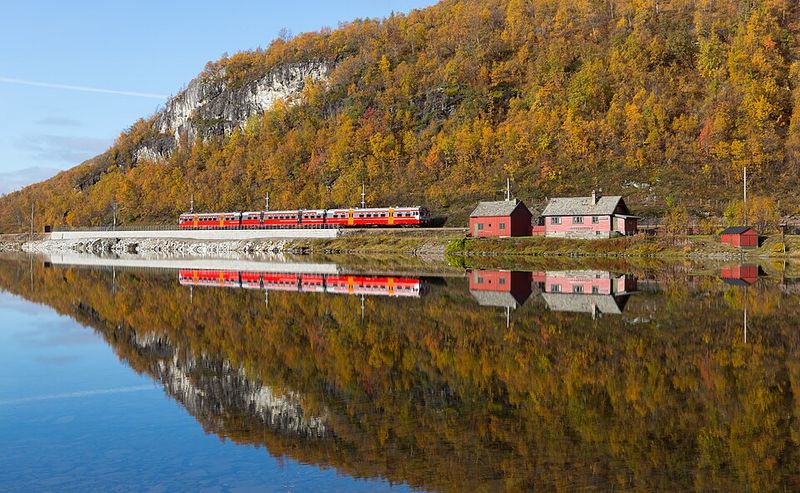
Norway’s classic cross-country journey starts in Oslo’s urban energy and ends in Bergen’s coastal charm, but the middle section steals the show. The Hardangervidda plateau—Europe’s largest high mountain plateau—stretches endlessly in all directions, creating an otherworldly landscape that feels more Martian than Norwegian.
Wild, remote, and utterly captivating.
This route delivers variety like few others can. City buildings fade into forests, which climb into treeless highlands, then gradually descend toward fjord country.
Each transition happens smoothly, giving you time to appreciate how dramatically Norway’s landscapes can shift.
Sweeping views from the train make you grateful you’re not driving this route in winter weather. Instead, you’re warm inside, watching the country’s natural drama unfold through oversized windows while someone else handles the navigation.
6. Rauma Line / Raumabanen (Norway): Dombås ↔ Åndalsnes
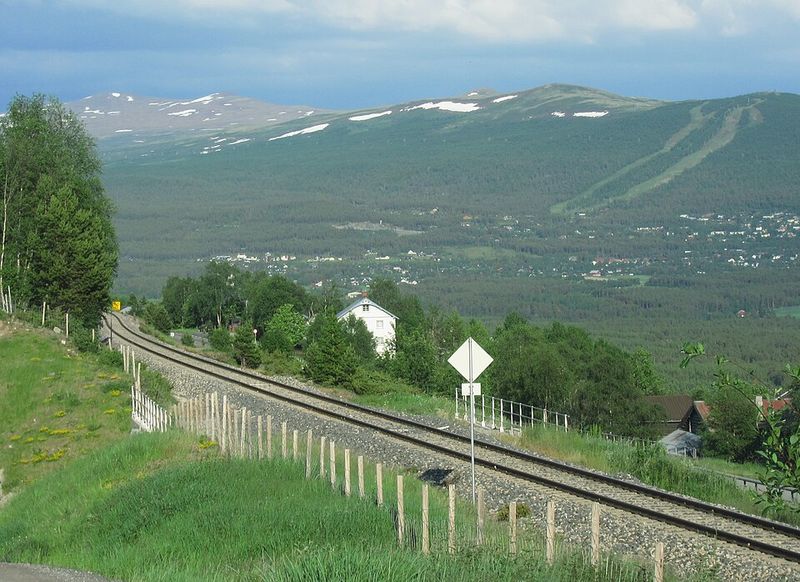
Compact but mighty, this route crams an absurd amount of natural beauty into roughly 100 minutes. Mountains, rivers, waterfalls, and a fjord-side arrival in Åndalsnes create what feels like a greatest-hits compilation of Norwegian scenery.
Nothing gets wasted—every single minute delivers something worth photographing.
The drama builds quickly as the train follows river valleys carved deep into the landscape. Rock faces rise vertically on both sides while water rushes alongside the tracks.
Then the fjord appears, and suddenly you understand why people travel halfway around the world for this view.
Weather and nature occasionally disrupt mountain railways like this one, so checking service updates when booking makes sense. But when everything runs smoothly, you get under two hours of pure scenic perfection that feels longer in the best possible way.
7. West Highland Line (Scotland): Glasgow → Fort William → Mallaig (or Glasgow → Oban)
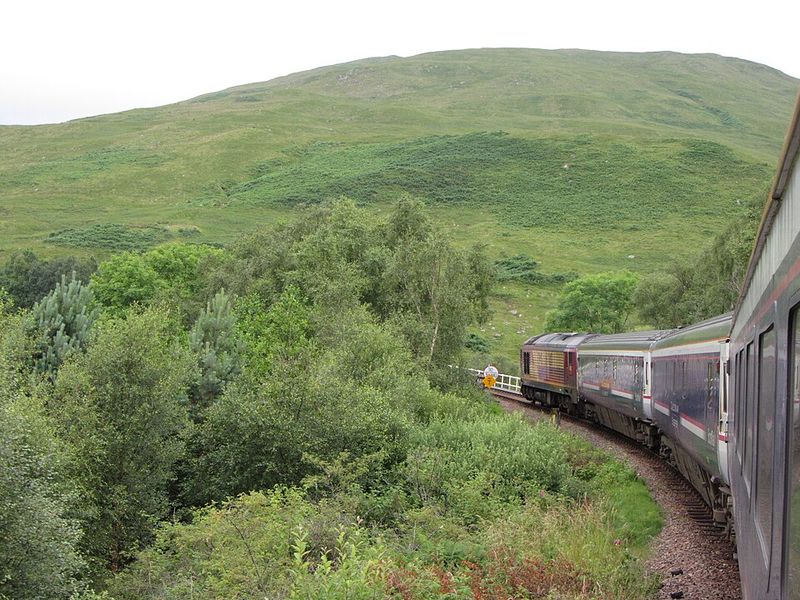
Scottish Highlands scenery has that rugged, cinematic quality that makes every view feel like a movie set. Lochs reflect moody skies, moors stretch toward distant peaks, and the landscape shifts from green to purple to gray depending on the weather and season.
This line captures all of it without requiring you to navigate narrow Highland roads yourself.
Often described as one of the world’s great rail journeys, the route earns that reputation honestly. Whether bathed in summer sunshine or shrouded in winter mist, the Highlands deliver drama.
Ancient castles appear on hillsides, remote stations mark tiny villages, and wildlife occasionally makes surprise appearances.
The beauty works in every season, which is rare for scenic routes. Spring brings wildflowers, summer offers long daylight hours, autumn paints the moors gold, and winter adds mysterious fog that makes everything feel timeless.
8. Settle–Carlisle Line (England): Settle area ↔ Carlisle (often reached via Leeds)
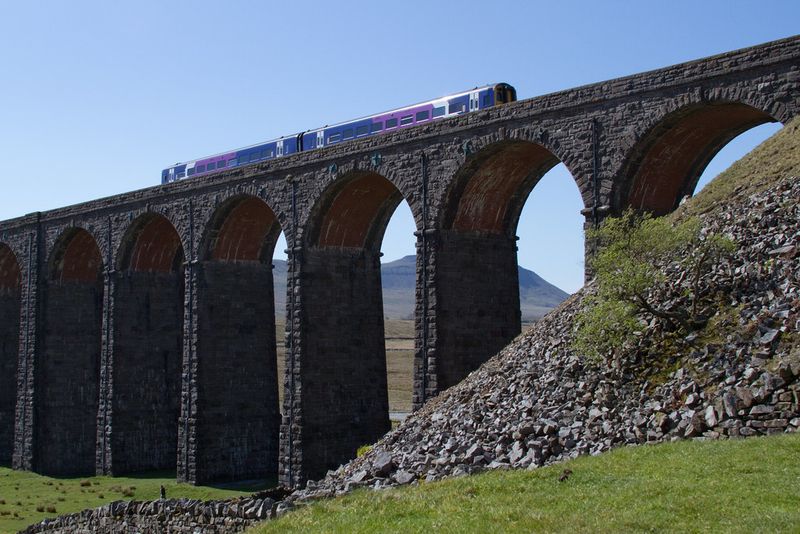
Big skies, rolling dales, and remote landscapes define this classic British rail route through Yorkshire and the North Pennines. Viaduct territory begins early, with iconic stone structures carrying trains high above valleys in scenes that feel plucked from Victorian postcards.
This is old-school countryside at its most dramatic, best appreciated slowly from a comfortable window seat.
The route doesn’t rush. Instead, it meanders through terrain that modern highways bypass entirely, preserving a sense of timelessness that’s increasingly rare.
Sheep dot hillsides, dry stone walls crisscross fields, and villages appear briefly before disappearing behind the next hill.
Photographers love this line for good reason—the combination of historic engineering and natural beauty creates endless opportunities. But even if you never lift a camera, the experience of watching rural Britain scroll past remains deeply satisfying and surprisingly peaceful.
9. Douro Line / Linha do Douro (Portugal): Porto → Régua / Pinhão / Pocinho

Portugal’s Douro Valley looks stunning from river cruises, but the rail perspective might actually be better. Tracks hug the river’s edge, winding past terraced vineyards that climb impossibly steep hillsides.
Wine country landscapes unfold continuously as the train traces the Douro from Porto all the way to Pocinho, offering views that boats simply can’t match.
Terraces carved into hillsides centuries ago still produce grapes for port wine, creating patterns that look almost architectural. Small villages appear at river bends, their white buildings contrasting beautifully with green vines and blue water.
The combination feels both timeless and surprisingly intimate.
This scenic river-hugging journey through one of Europe’s most beautiful wine regions rewards patient travelers. The pace allows you to appreciate details—individual quintas, stone bridges, boats drifting downstream—that faster transportation would blur into background noise.
10. Semmering Railway (Austria): Gloggnitz ↔ Mürzzuschlag
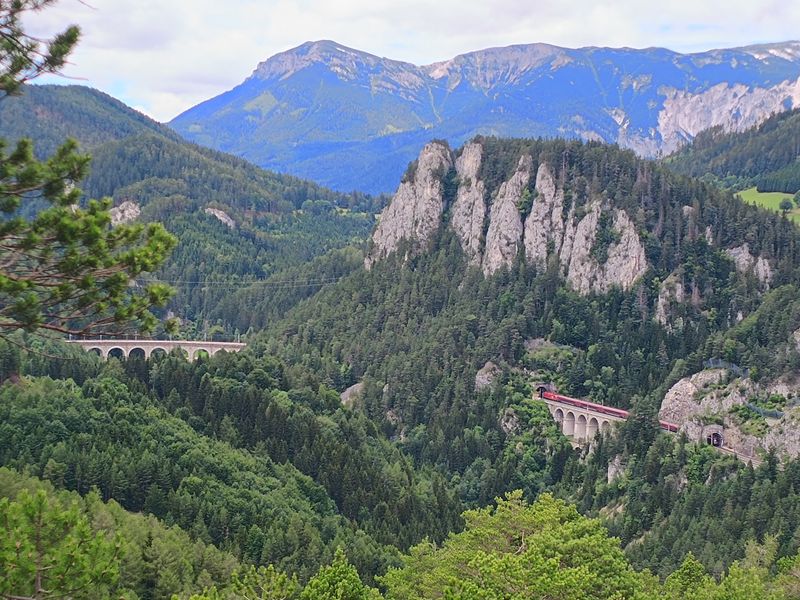
Railway as art—that’s the best way to describe this UNESCO-recognized line threading through Austrian mountains. Built in the 1850s, it represents a landmark in rail history where engineers solved seemingly impossible problems with elegant viaducts and precisely curved tunnels.
The cultural and engineering importance earned UNESCO recognition, but what makes it truly special is that it’s still operating today as a living piece of history.
High terrain demanded creativity, and the builders delivered structures that blend function with beauty. Stone arches frame mountain views, tunnels appear exactly where the landscape demands them, and the route flows naturally despite the challenging topography.
It feels deliberate and artistic in ways modern construction rarely achieves.
Riding this line means experiencing infrastructure that’s simultaneously practical transportation and historical monument. Every tunnel entrance and viaduct tells a story about human ingenuity meeting natural obstacles head-on.
11. Cinque Terre by Train (Italy): La Spezia ↔ Levanto (stopping in the villages)
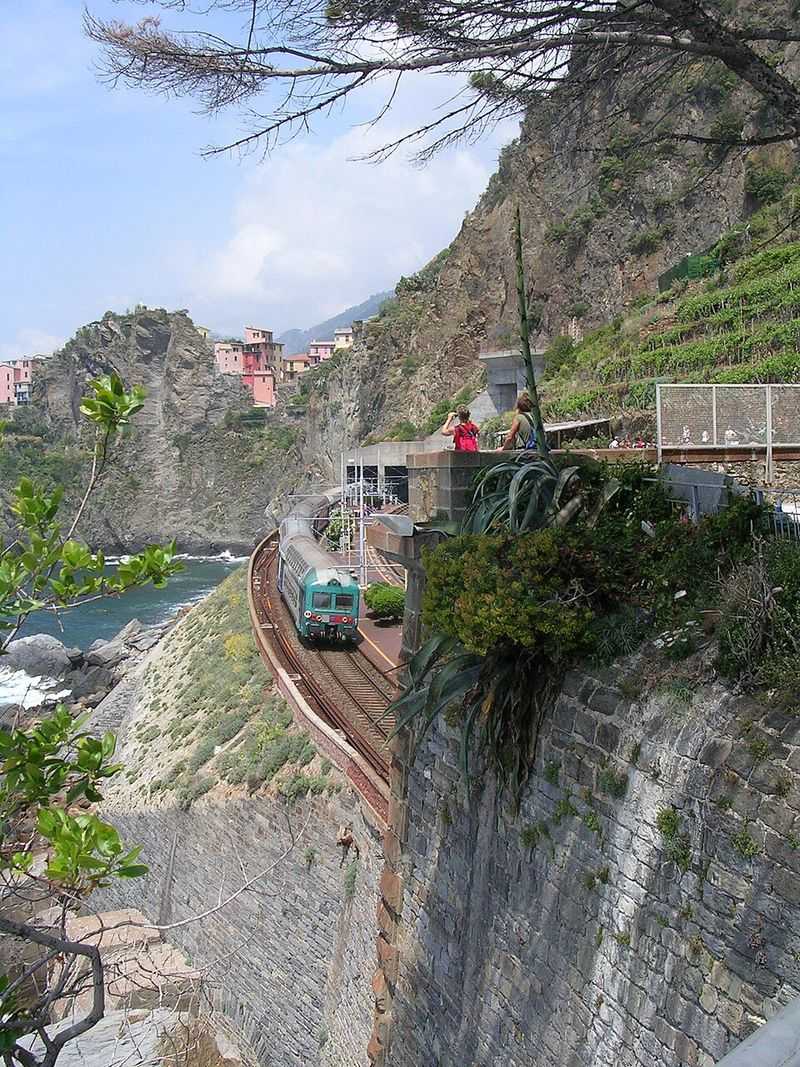
Cinque Terre’s cliffside villages are connected by frequent regional trains that make this one of Europe’s most satisfying hop-stop-snap-a-photo rail days. Fast tunnel-to-sea glimpses happen repeatedly—darkness, then sudden bright blue Mediterranean views, then another tunnel.
Each time you emerge, another postcard-perfect village appears, clinging to rocks above the water.
No stressful driving through narrow coastal roads, no parking chaos in tiny medieval streets. Just simple regional trains shuttling you efficiently between Riomaggiore, Manarola, Corniglia, Vernazza, and Monterosso.
Trenitalia provides specific guidance and tickets for these Cinque Terre stops, making logistics surprisingly easy.
The beauty of this setup is flexibility. Spend an hour in one village, three in another, grab lunch in a third.
The trains run often enough that you’re never stuck, and the brief rides between stops offer just enough scenic payoff to feel like part of the adventure.
12. Mont-Blanc Express (Switzerland ↔ France): Martigny → Chamonix → Saint-Gervais–Le Fayet
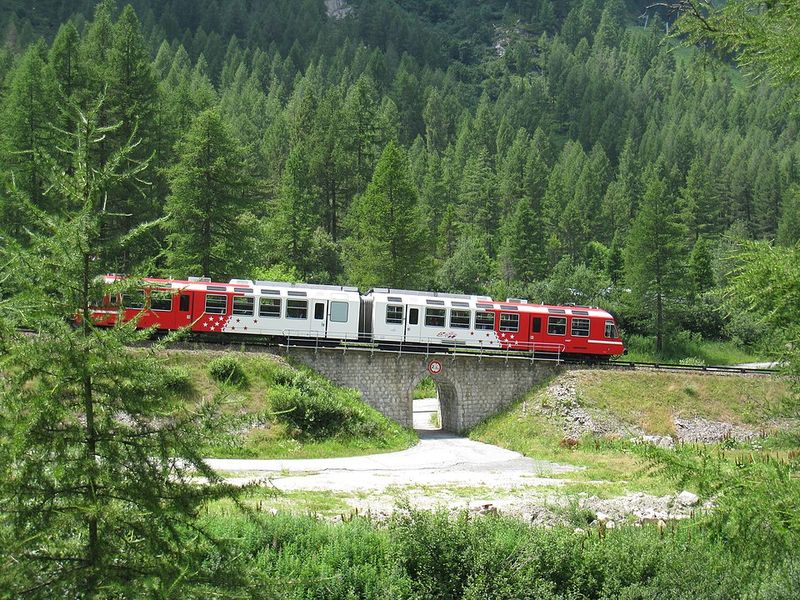
A front-row seat to the Mont Blanc region awaits on this gorgeous cross-border alpine link connecting Martigny with Chamonix and onward to Saint-Gervais–Le Fayet. Deep gorges drop away beside the tracks while tunnels punch through solid rock, emerging into valleys surrounded by massive peaks.
Mountain villages appear like rewards for making the climb, each more charming than the last.
The drama never stops—Alpine scenery just keeps coming in wave after wave. Snow-capped summits loom overhead, forests blanket lower slopes, and rivers carve through valleys far below.
Without needing a car, you access some of Europe’s most spectacular mountain territory from a comfortable train seat.
Border crossings happen seamlessly, adding international flair to an already impressive journey. Swiss precision meets French Alpine charm, all while Mont Blanc itself dominates the skyline, reminding you why people have traveled here for centuries.



