 Unearth The Voyage
Everyone flocks to Prague and Budapest, and sure, those cities are stunning. But Eastern Europe has a whole lineup of places that barely make it onto Instagram, and honestly, that’s their superpower.
From ancient monasteries tucked in mountains to lakeside towns that look like someone painted them just for you, these spots offer the kind of travel magic that feels personal, not packaged.
Plovdiv, Bulgaria
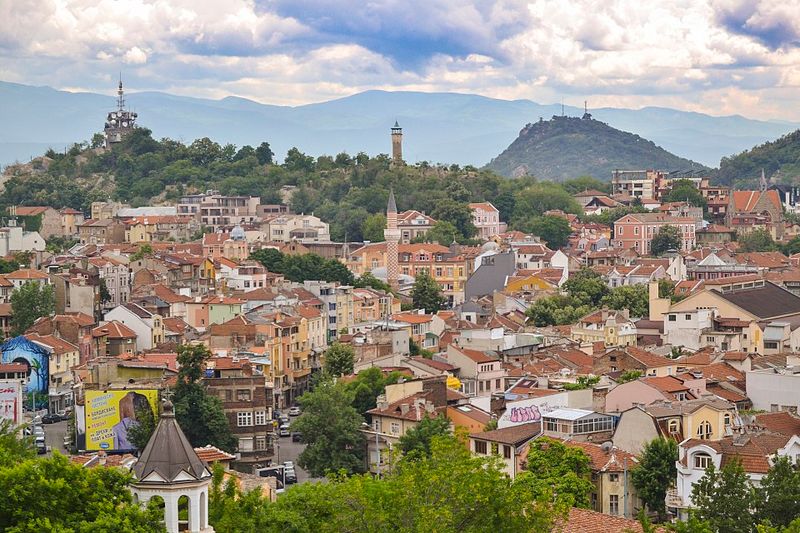
The moment you realize you can grab a drink next to serious ancient history, Plovdiv has you. The city’s Roman theatre is famously well-preserved and still the kind of place that makes you whisper “okay wow” without trying.
I sat at a café terrace once, coffee in hand, staring at stones that were old when gladiators were still a thing.
Plovdiv is Bulgaria’s second-largest city, but it moves at a speed that feels refreshingly human. The Old Town climbs three hills, and the cobblestone streets are lined with houses painted in bold colors that practically shout for attention.
You’ll find art galleries, quirky shops, and enough history to keep you busy without feeling like homework.
What really gets me is how locals just live around all this ancient stuff like it’s no big deal. Kids play soccer near Roman ruins.
People hang laundry with fortress walls in the background. It’s everyday life layered over centuries, and somehow it all just works.
If you want a city that mixes culture, history, and a genuinely chill vibe, Plovdiv delivers without even breaking a sweat.
Veliko Tarnovo, Bulgaria
If you like your cities dramatic, this one shows up like it’s auditioning for a medieval epic. Tsarevets Fortress was a major stronghold of the Second Bulgarian Empire, and wandering the ruins feels like time travel with better shoes.
The fortress sits on a hill, surrounded by a river that bends like it was designed by a landscape artist with flair.
Veliko Tarnovo was once the capital of Bulgaria, back when empires were built with swords and serious ambition. Walking through the fortress, you can almost hear the echo of old battles and royal drama.
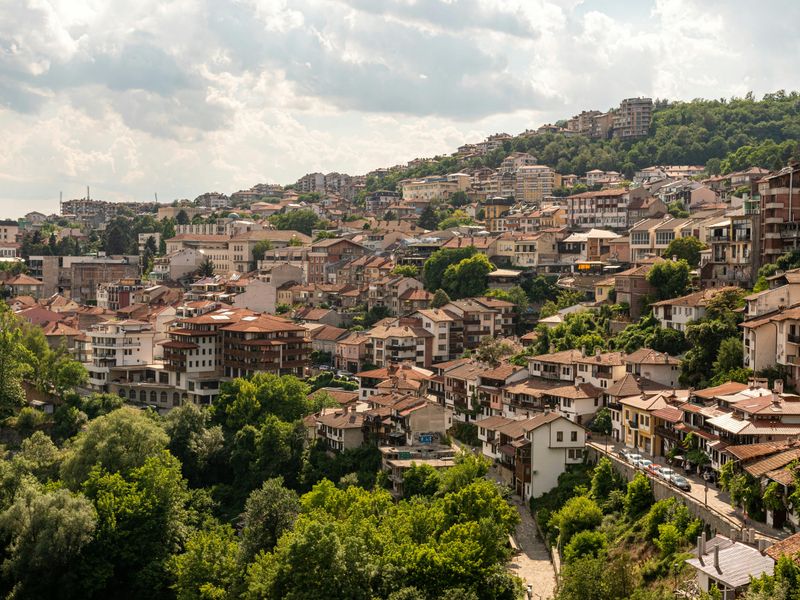
The views from the top are ridiculous in the best way, with red-roofed houses spilling down the hillsides and the river snaking through it all.
At night, they sometimes do a sound and light show at the fortress that’s equal parts history lesson and fireworks party. It’s cheesy in theory, but in practice, it’s actually pretty spectacular.
The whole town lights up, and you remember why people built castles on cliffs in the first place.
This place doesn’t just tell you about history. It puts you right in the middle of it.
Rila Monastery, Bulgaria
There are “nice monasteries,” and then there’s Rila, which basically demands you stop scrolling and look. It was founded in the 10th century by St John of Rila, and it’s one of Bulgaria’s spiritual heavy-hitters for a reason.
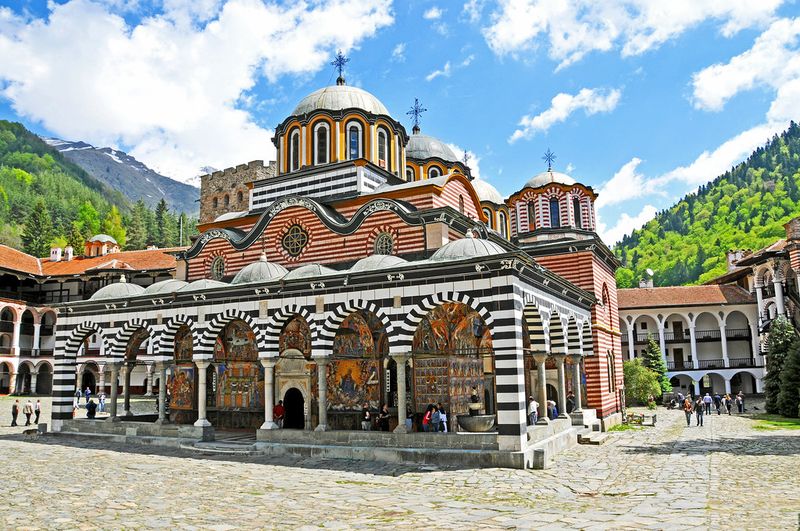
The colors alone could stop traffic: bold stripes, intricate frescoes, and enough gold leaf to make a jeweler jealous.
Rila sits in the mountains, which means the air is crisp and the views are postcard-perfect. The monastery complex is built around a central courtyard, and every wall seems to tell a story in paint.
Monks still live here, so there’s a quiet reverence that balances out the tourist cameras. It’s a working spiritual site, not just a museum.
I remember walking through the archways and feeling like I’d stepped into a different century. The frescoes cover every inch of the church interior, depicting saints and biblical scenes with a level of detail that makes you lean in closer.
It’s overwhelming in the best way.
Even if you’re not religious, Rila has a presence that’s hard to shake. It’s beautiful, yes, but it’s also deeply peaceful in a way that feels rare.
Ohrid, North Macedonia
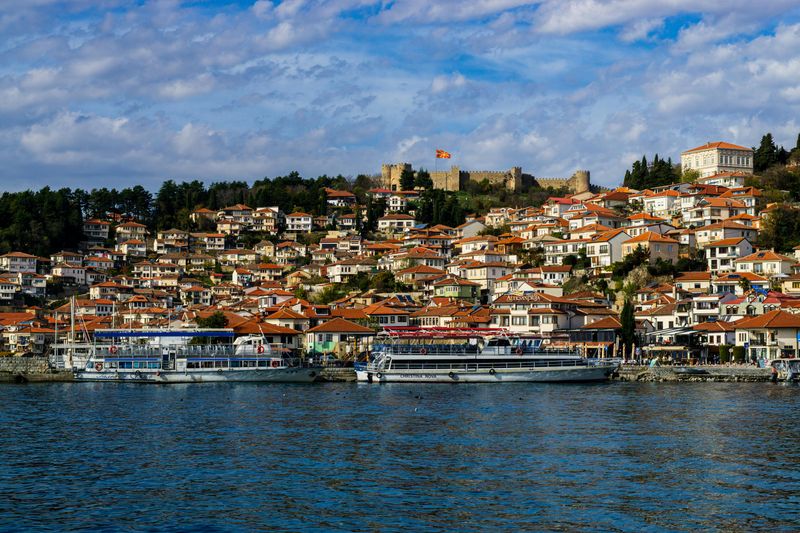
The air here feels cleaner, the lake looks unfairly pretty, and suddenly you’re walking slower on purpose. The Ohrid region is UNESCO-listed for both natural and cultural heritage, with Lake Ohrid known for its endemic species and deep history.
It’s one of Europe’s oldest lakes, and standing at the shore, you can believe it.
Ohrid town clings to the hillside above the water, with churches and monasteries dotting the landscape like someone placed them for maximum effect. The Old Town is a maze of narrow streets, stone houses, and more churches than you’d expect for a place this size.
Each one has its own history, its own frescoes, its own reason to exist.
The lake itself is the real star, though. It’s massive, clear, and calm in a way that makes you want to sit and stare for hours.
You can take a boat ride, swim in designated spots, or just walk the promenade and watch locals fish like they’ve been doing it for generations.
Ohrid doesn’t rush you. It invites you to slow down, breathe, and appreciate the kind of beauty that doesn’t need filters or hype.
Kotor, Montenegro
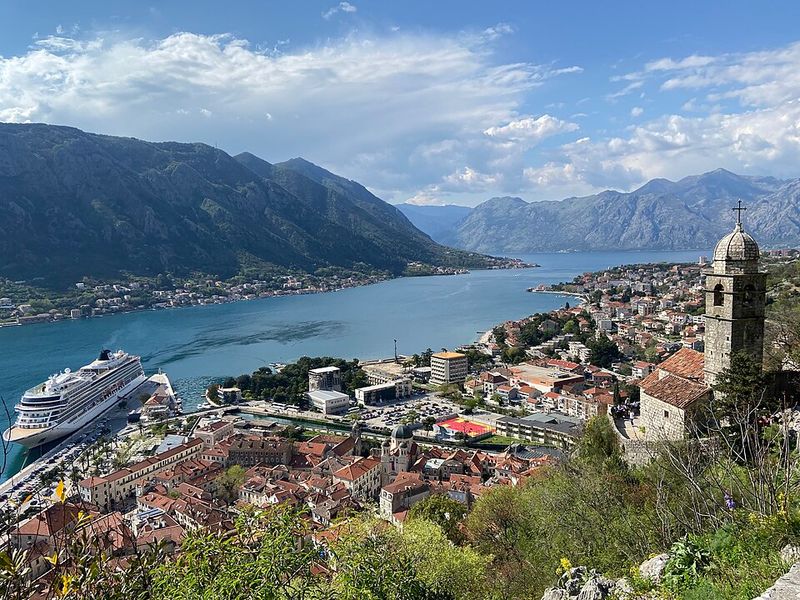
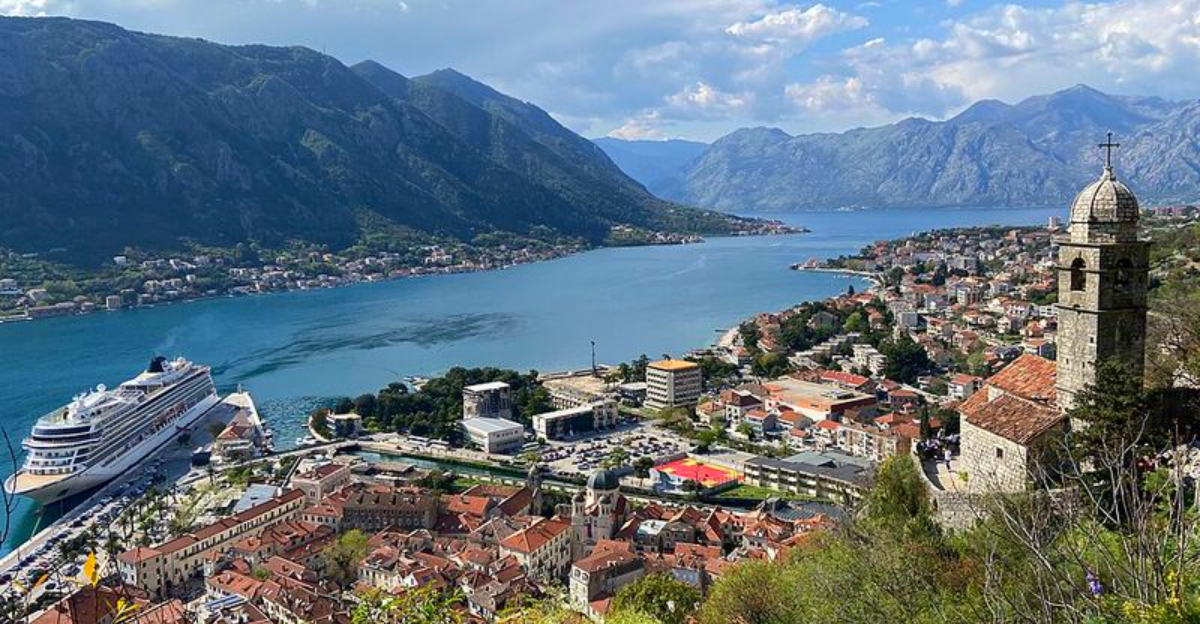
First sight of the Bay of Kotor and I actually laughed, like my eyes were being pranked. Kotor’s UNESCO-listed region was a major medieval artistic and commercial center, and the old town’s lanes are pure “get lost happily” energy.
The bay looks like a fjord crashed into the Mediterranean and decided to stay.
Walking through Kotor’s old town is like entering a stone labyrinth where every turn reveals another tiny square, a hidden café, or a cat lounging like it owns the place. The fortifications are impressive, and if you’re feeling adventurous, you can climb the fortress walls that snake up the mountain behind the town.
It’s a workout, but the views are absurd.
The town itself is compact, which means you can explore it in a few hours, but you’ll want to stay longer. There’s something about the way the light hits the stone buildings, the way the bay glitters in the distance, that makes you linger.
Plus, the seafood is fresh and ridiculously good.
Kotor is the kind of place that surprises you even when you think you’re prepared. It’s stunning, historic, and just the right amount of touristy without losing its soul.
Mostar, Bosnia and Herzegovina
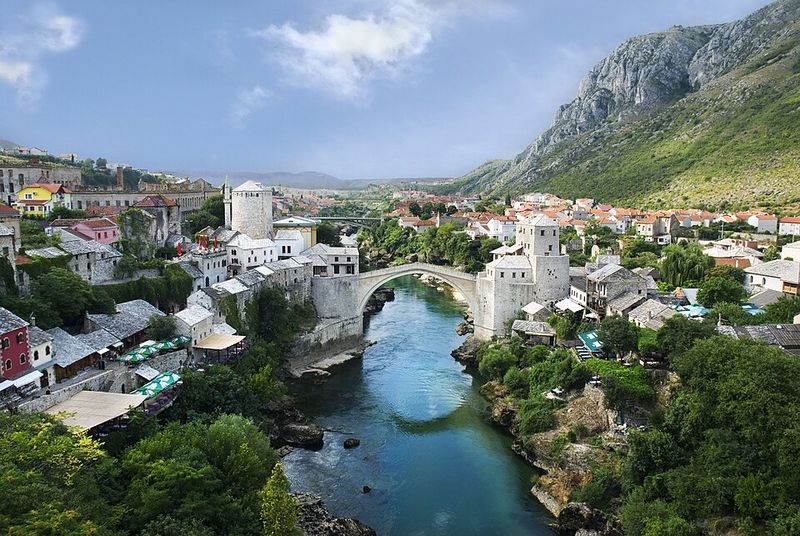
You know a place is special when a single bridge can steal the whole show. The Old Bridge Area of Mostar is UNESCO-listed, and the reconstructed bridge is recognized as a symbol of reconciliation and coexistence.
Watching someone dive off it into the cold river below is equal parts thrilling and terrifying.
Mostar’s bridge was destroyed during the war in the 1990s, and its rebuilding became a powerful statement about healing and unity. Today, it arches gracefully over the Neretva River, connecting the old town in a way that feels both literal and symbolic.
The surrounding area is full of shops, cafés, and mosques, all packed into narrow streets that hum with life.
The river itself is a stunning shade of green-blue, and the contrast against the white stone buildings is striking. You can walk across the bridge, watch the divers, or just sit by the water and soak it all in.
The town has a resilience that’s palpable, a sense of moving forward while honoring the past.
Mostar is beautiful, yes, but it’s also meaningful. It reminds you that places, like people, can rebuild and thrive.
Berat, Albania
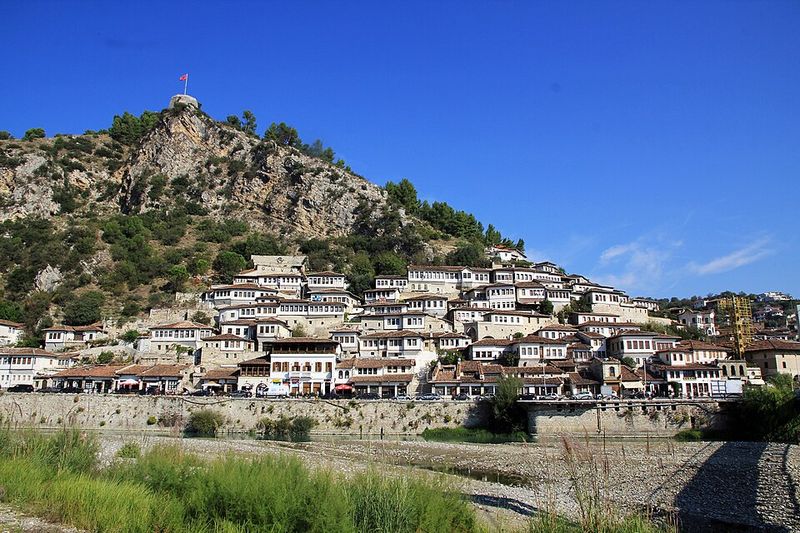
This is the town that makes you pause mid-step just to stare at the hillside windows stacked like they’re competing for best view. Berat is part of UNESCO’s Historic Centres of Berat and Gjirokastra, noted for Ottoman-era architectural character and layered communities over centuries.
The nickname “City of a Thousand Windows” is no exaggeration.
Berat’s old quarters, Mangalem and Gorica, sit on opposite sides of the Osum River, connected by a stone bridge that’s been there longer than most countries. The houses climb the hillside in tiers, their white walls and rows of windows creating a visual rhythm that’s hypnotic.
Up top, the castle still stands, offering views that justify the uphill walk.
Inside the castle walls, life continues. Families live in houses that share space with Byzantine churches and ancient cisterns.
It’s not a museum; it’s a living neighborhood where history is just part of the daily backdrop. You can wander freely, peek into churches, and stumble upon panoramic views that make you forget you’re tired.
Berat doesn’t shout for attention. It just sits there, beautiful and unassuming, waiting for you to notice.
Gjirokastër, Albania
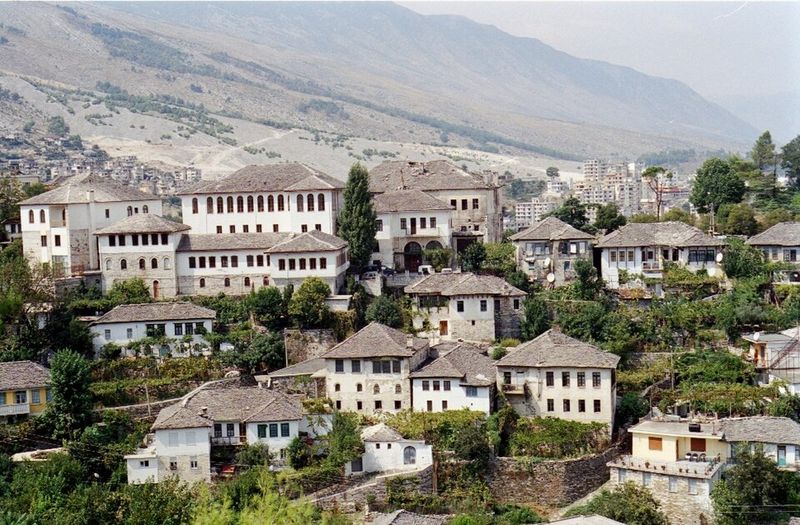
Stone houses, steep streets, and the kind of old-world vibe that makes your camera beg for a break. Gjirokastër shares UNESCO recognition with Berat as a rare example of Ottoman-period vernacular urban architecture.
The entire town feels like it was carved from the mountain itself, all gray stone and slate roofs that gleam after rain.
The fortress dominates the skyline, a massive structure that’s been a military stronghold, a prison, and now a tourist attraction. Inside, you’ll find a military museum, an old plane, and views that stretch forever.
The town below is a tangle of narrow lanes and stone staircases, with houses built in a distinctive style that’s uniquely Albanian.
Gjirokastër is also the birthplace of Albania’s former dictator Enver Hoxha and Nobel Prize-winning writer Ismail Kadare, which gives it a strange mix of pride and complexity. Walking through the old bazaar, you can buy handmade crafts, try local sweets, and chat with vendors who’ve been there for decades.
It’s a town that wears its history openly, without pretense. Every stone, every roof tile, every steep alley tells a story you can almost hear if you listen closely enough.
Škocjan Caves, Slovenia
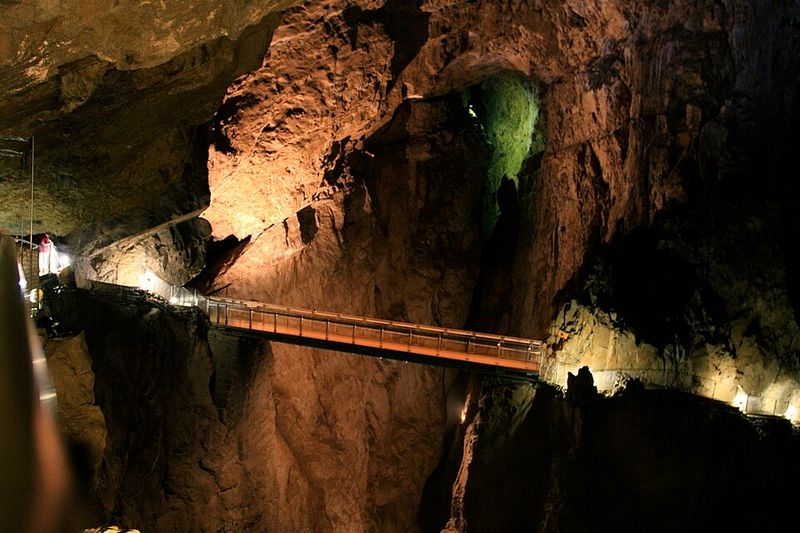
Here’s a fun travel upgrade: swap “museum feet” for “cave awe.” Škocjan is UNESCO-listed for its exceptional limestone system, including one of the world’s largest known underground river canyons carved by the Reka River. Standing on a bridge suspended over a roaring underground river is the kind of moment that rewires your brain a little.
The cave system is massive, with chambers so large they could swallow cathedrals. Stalactites and stalagmites create otherworldly formations, and the sound of the river echoing through the darkness is both eerie and exhilarating.
The guided tour takes you deep into the earth, through narrow passages and vast halls, each more impressive than the last.
What sets Škocjan apart from other caves is the sheer drama of it. The underground canyon is over 100 meters deep in places, and walking across the bridge that spans it feels like something out of an adventure movie.
It’s nature showing off, and you’re just along for the ride.
After the tour, you emerge blinking into daylight, slightly disoriented and completely amazed. Škocjan isn’t just a cave visit. It’s an underground epic.
Sibiu, Romania
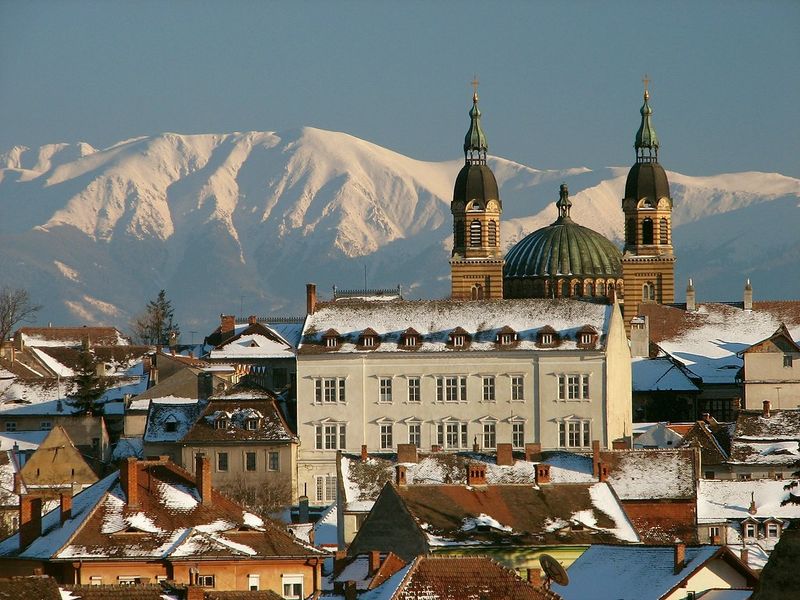
Some cities feel like they were designed specifically to make you linger at outdoor cafés, and Sibiu is guilty as charged. The Brukenthal National Museum, founded in the late 18th century in Brukenthal’s city palace, is an easy way to add a little polish to your wandering.
But honestly, the real attraction is just being here.
Sibiu’s old town is a postcard brought to life. The main squares are ringed with pastel-colored buildings, church towers, and enough cobblestones to keep your attention on where you’re stepping.
The Bridge of Lies connects the upper and lower towns, and local legend says it’ll collapse if you tell a lie while crossing. I tested it.
Still standing.
The city has a quirky feature: the houses have “eyes.” The dormer windows on the rooftops look like they’re watching you, which sounds creepy but is actually kind of charming. Sibiu was a European Capital of Culture, and you can feel the investment in arts, events, and public spaces that make the city buzz with life.
It’s the kind of place where you plan to stay a day and end up staying three, just because it feels good to be there.
Timișoara, Romania
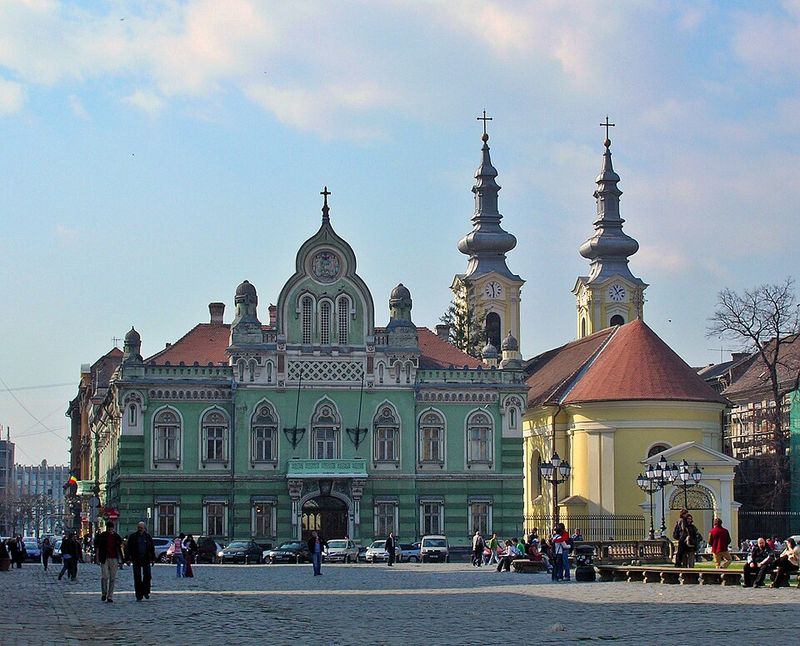
If architecture could flirt, Timișoara would wink at you from every corner. It held the European Capital of Culture title in 2023, and the city’s cultural buzz is backed by real European programming and attention.
The squares are grand, the buildings are colorful, and there’s a confidence here that’s hard to miss.
Timișoara played a key role in the 1989 Romanian Revolution, and that spirit of change and progress still feels alive. The city has a youthful energy, thanks in part to a large student population and a thriving arts scene.
Union Square and Victory Square are the main hubs, surrounded by baroque buildings, cafés, and plenty of people-watching opportunities.
The Bega River runs through the city, lined with parks and walking paths that make it easy to escape the urban buzz without actually leaving. There are also quirky touches, like the colorful umbrellas that float above certain streets or the street art that pops up in unexpected places.
Timișoara doesn’t try too hard, which is maybe why it succeeds. It’s stylish, cultural, and fun without being exhausting.
You leave feeling like you’ve discovered something worth bragging about.
Pécs, Hungary
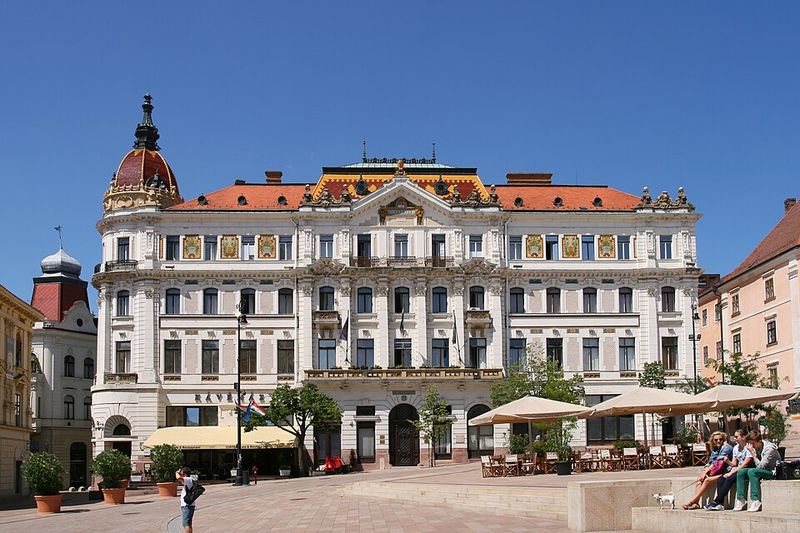
Budapest gets the spotlight, but Pécs quietly shows up with a UNESCO site and a smug little grin. The Early Christian Necropolis of Pécs (Sopianae) is UNESCO-listed, with decorated tombs and burial chapels that spotlight early Christian art and architecture.
It’s underground history that’s surprisingly beautiful and way more interesting than it sounds.
Pécs sits in southern Hungary, near the Croatian border, and has a Mediterranean vibe that sets it apart from other Hungarian cities. The main square is lively, with a mosque-turned-church that hints at the city’s layered past under Ottoman rule.
The Zsolnay ceramics factory, famous for its colorful tiles, is also based here, and you’ll spot its work on buildings throughout the city.
The necropolis itself is a series of underground chambers decorated with Christian symbols and frescoes that date back to the 4th century. It’s a quiet, almost meditative experience, walking through these ancient spaces and imagining the people who built them.
Above ground, the city is full of museums, galleries, and a university that keeps things youthful and dynamic.
Pécs is proof that you don’t need to be a capital city to be culturally rich and deeply interesting.
Lublin, Poland
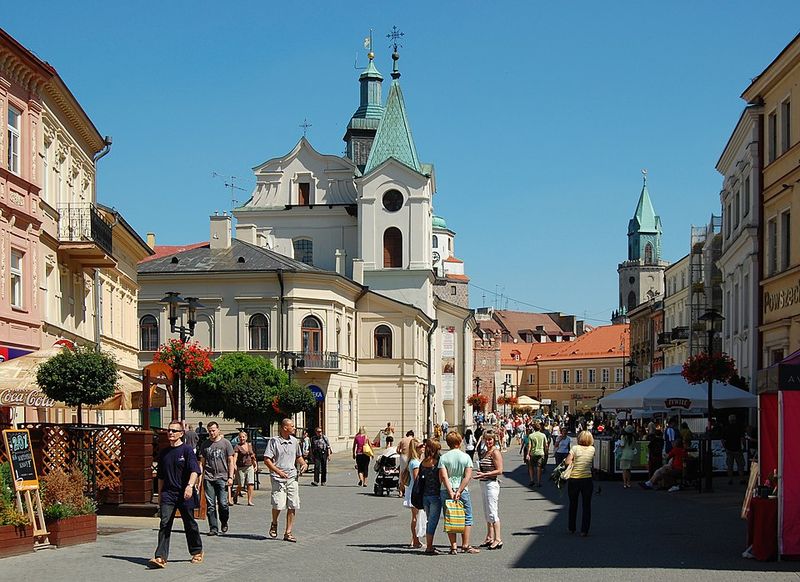
Lublin feels like Poland’s cool history nerd friend who turns out to be hilarious. Its Old Town includes landmarks like the Crown Tribunal and the 14th-century Kraków Gate, and it’s recognized as one of Poland’s major historic building complexes.
But beyond the facts, Lublin has personality.
The Old Town is compact and colorful, with a main square surrounded by buildings painted in shades of yellow, pink, and cream. The Kraków Gate towers over one entrance, a Gothic reminder of the city’s medieval importance.
Climb to the top for views that stretch across the rooftops and beyond.
Lublin Castle sits on a hill overlooking the city, a mix of Gothic and neo-Gothic styles that now houses a museum. Inside, you’ll find exhibits on regional history, art, and culture.
The castle chapel is particularly striking, with Orthodox frescoes that reveal Lublin’s multicultural past.
The city has a vibrant student population, which means plenty of cafés, bars, and cultural events that keep things lively. Lublin isn’t on every tourist’s radar, and that’s exactly why it’s worth visiting.
It’s authentic, engaging, and full of surprises you won’t see coming.
Banská Štiavnica, Slovakia
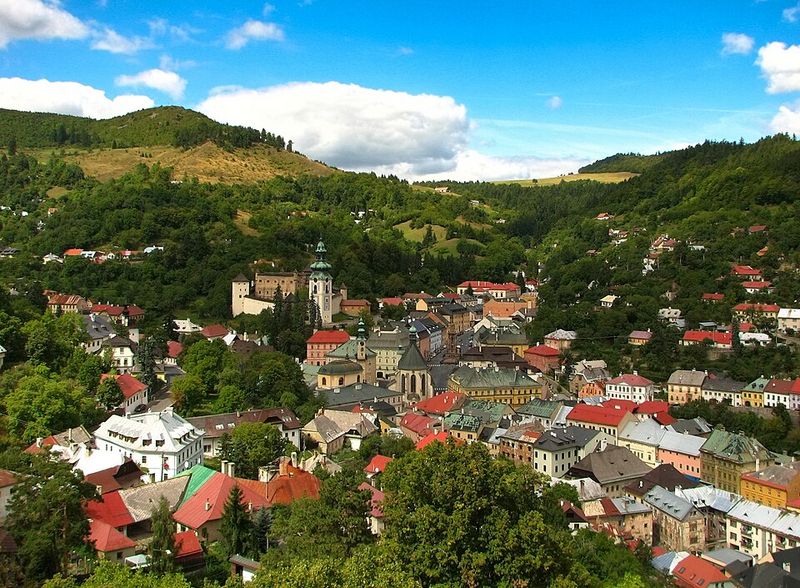
This place has “I used to be important” energy in the best way. Banská Štiavnica is UNESCO-listed for its historic town and technical monuments tied to mining, and it’s the kind of spot where a simple walk feels like a discovery.
The town grew rich from silver and gold mining, and the remnants of that wealth are everywhere.
The town center is a collection of Renaissance and baroque buildings painted in warm colors, with two castles watching over everything from nearby hills. The Old Castle and New Castle are both worth exploring, offering history, views, and a sense of what life was like when this town was a major European mining hub.
What’s really cool are the mining monuments scattered around the surrounding hills. Old shafts, reservoirs, and technical structures are preserved as part of the UNESCO site, and you can hike between them, exploring a landscape shaped by centuries of industry.
It’s history you can walk through, not just read about.
Banská Štiavnica doesn’t get the crowds of Bratislava or the Tatras, and that’s its charm. It’s quiet, beautiful, and full of stories waiting to be uncovered if you take the time to look.



