 Unearth The Voyage

You do not expect a routine day on the land to change gemstone history, but that is exactly what happened. A routine dig turned into a headline moment when farmers uncovered an opal so rare that experts worldwide paused to take notice. The stone reportedly flashes electric colors with a clarity that feels almost unreal, igniting curiosity and excitement. Keep reading to see why this discovery could rewrite what you thought you knew about opals and the secrets beneath everyday fields.
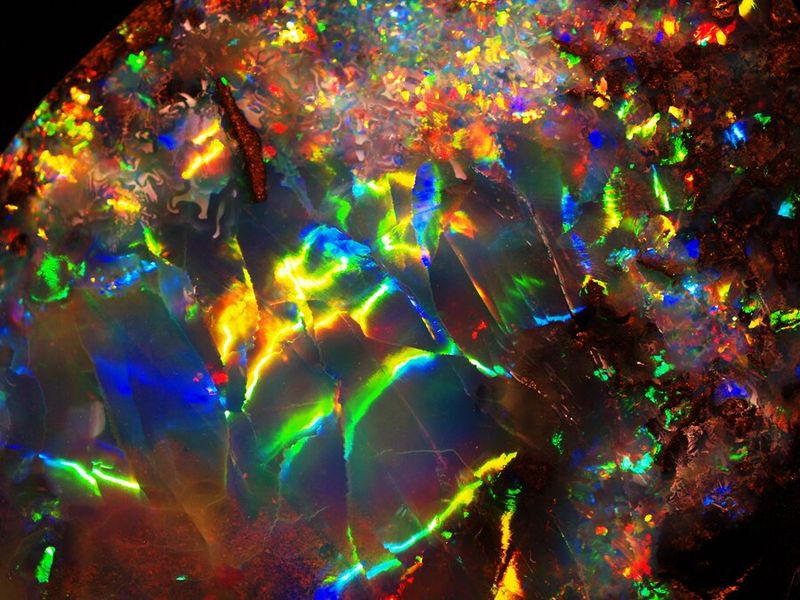
You are out in the field, boots dusty, mind on chores, when a gleam cuts through the soil like a quiet shout. That is how this discovery began, a chance strike of shovel against stone revealing an opal that seems to hold lightning. News traveled fast, and suddenly a simple field felt like a vault cracked open by luck.
Experts say the stone’s color play is unusually intense, with crisp flashes that hold even in low light. That stability matters because opals can be fussy, their water content making them fragile under pressure and time. Finding one intact, sizable, and clean is like catching a rainbow mid flight and not letting it fade.
Opals form when silica-rich water seeps into cracks and slowly hardens, a patient dance of chemistry and time. The right temperatures and steady conditions are rare, so most stones never reach this level of beauty. Standing there, you realize the earth still keeps secrets, and sometimes the ground gives them up to people simply doing their work.
What makes this opal different is the way it holds light like it was designed for it. You see flashes from every angle, the prized harlequin pattern bursting into bricks of red, green, and violet. That multi directional fire is a telltale sign you are looking at an elite specimen, not a common stone.
Most opals struggle with water loss over time, a process called crazing that creates cracks and dulls the magic. This one appears to have survived in unusually stable conditions, protecting structure and color. The alignment of microscopic silica spheres is likely exceptionally uniform, producing diffraction that feels almost staged.
Origin matters too, since certain regions produce signature opal types with premium value. If provenance confirms a famed locality, collectors and scientists will lean in closer. You are not just seeing pretty colors here, you are seeing geological perfection where chemistry, time, and environment finally agreed.
Value with opals is a dance between beauty, size, integrity, and hype, and this stone checks serious boxes. If cutting enhances the fire without risk, auction estimates could climb from hundreds of thousands into headline territory. Yet many buyers may prefer it uncut, preserving a natural window into geologic time.
Beyond the market spectacle, researchers are eager for what this opal can teach. Internal structures can record ancient groundwater behavior and the chemistry that nurtured silica into order. You are looking at a time capsule, a mineral diary that writes in color rather than ink.
Museums may seek long term loans or acquisition to study the stone and share it with visitors. Detailed imaging, spectroscopy, and hydration analysis could guide future exploration methods. For the farmers, it is both opportunity and wonder, proof that the land still surprises and science thrives on moments like this.
The next steps are careful, deliberate, and slow, because one rash move can bruise an opal’s value. Gemologists will test stability, hydration, and stress points under cool light. You want the fire to stay alive, not fade because someone hurried a cut.
There will be debate over cutting or keeping it whole, with museums often favoring preservation. Private collectors might court exclusivity, while public displays would share the spectacle widely. Either path asks for climate control, secure handling, and documentation that proves provenance beyond question.
Interest will likely spark small surveys nearby, not a mining rush but a thoughtful look at the geology. If similar conditions exist, limited exploration could follow to map the hidden story underfoot. Whatever the owners choose, the stone’s future is bright, and you are watching a modern legend take shape in real time.



