Most people think of Illinois as flat farmland and city skylines, but Rockford has been quietly hiding something extraordinary along its riverbank. Four massive figures built entirely from boulders stand watch over the Rock River, and most travelers have no idea they exist.
These stone giants have been greeting joggers, cyclists, and curious visitors for decades, yet they rarely make the national spotlight. The Rock Men sculpture is one of those rare finds that makes you stop, stare, and pull out your camera before you even fully process what you are looking at.
Tucked along a scenic bike path near the Nicolas Conservatory, this public art installation combines rugged natural materials with human form in a way that feels both ancient and completely unexpected for northern Illinois.
Where the Rock River Meets Public Art
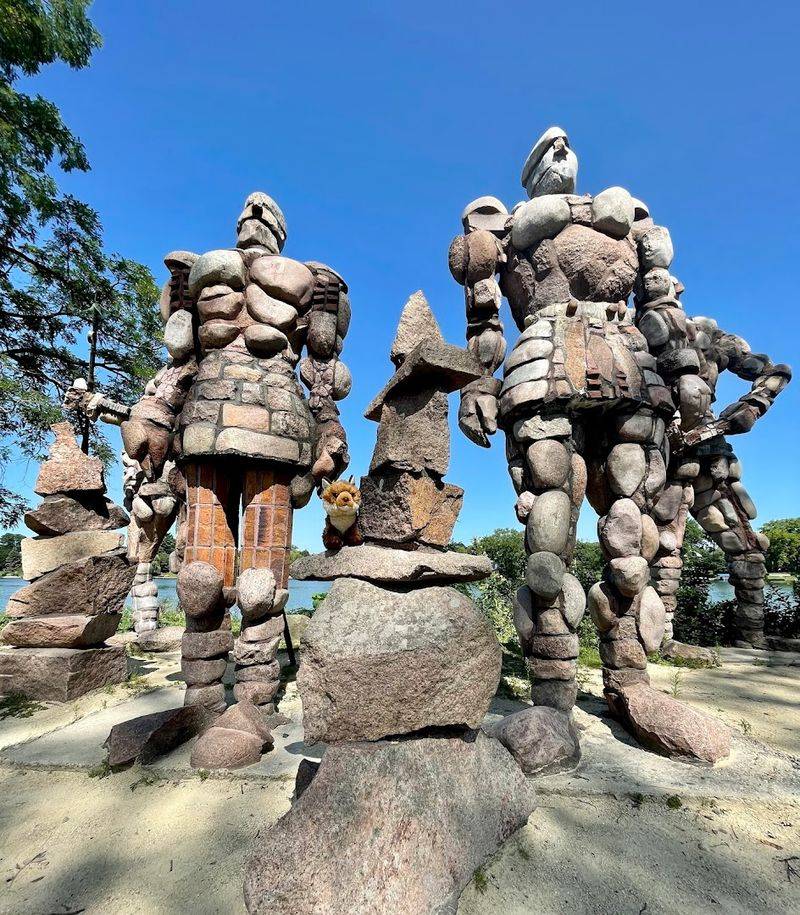
The Rock Men sculpture sits along the Rock River Rec Bike Path in Rockford, IL 61107, near the Nicolas Conservatory off Highway 251 on Ethel Avenue. The entrance is straightforward to find, parking is plentiful nearby, and the whole area feels like a peaceful escape from the busier parts of the city.
Each of the four figures stands roughly 12 feet tall, making them genuinely impressive up close. They were created in 1987 by Milwaukee-based artist Terese Agnew, and the installation was later moved from its original downtown location to its current spot along the river walk.
The setting adds a lot to the experience. The Rock River flows quietly nearby, benches are scattered along the path for resting, and the surrounding greenery makes the whole area feel like a small natural retreat inside the city.
Unlike destinations in states like Oklahoma where wide-open plains dominate the landscape, Rockford surprises visitors with this urban riverside charm. The Rock Men have earned a 4.7-star rating from over 229 reviews, which says plenty about how much people genuinely enjoy the stop.
The Artist Behind the Boulder Giants
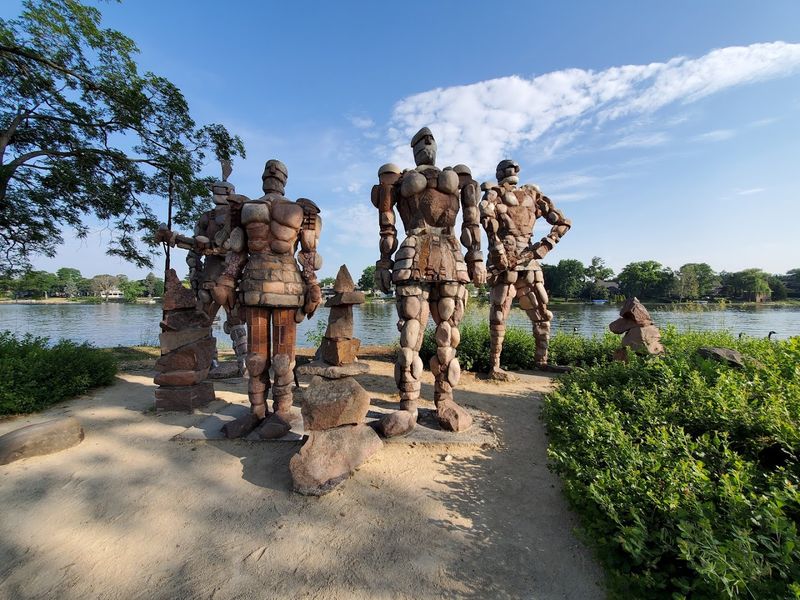
Terese Agnew is a Milwaukee-based artist known for her thoughtful and large-scale public works, and the Rock Men stand as one of her most recognizable achievements. Creating four 12-foot human figures entirely from boulders and cement requires both engineering knowledge and a strong artistic vision, and Agnew delivered on both counts.
The figures were originally installed in 1987 in downtown Rockford before being relocated to their current riverside home. That move actually worked in their favor, because the natural river setting gives the stone soldiers a context that feels far more fitting than an urban street corner ever could.
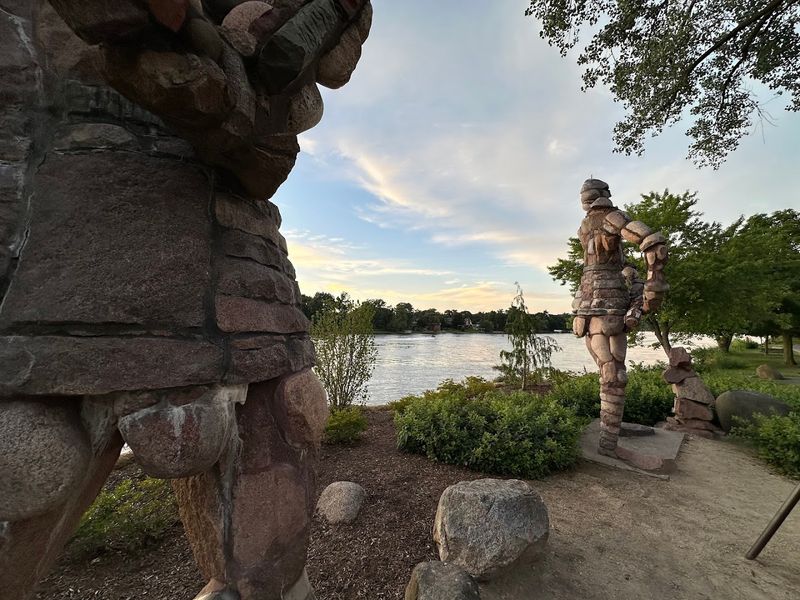
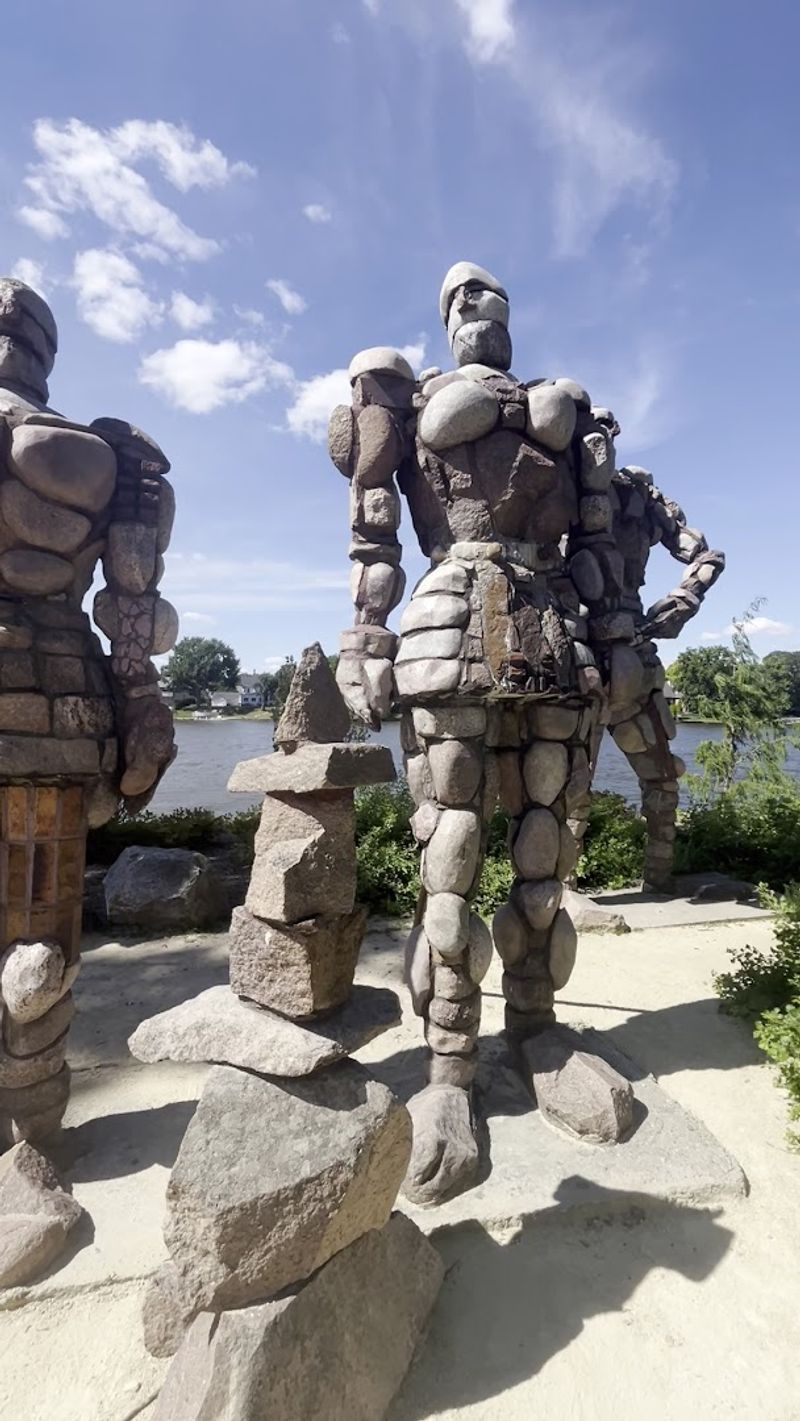
Each figure is assembled from individual boulders of varying sizes, with the larger stones forming the torso and legs and smaller ones shaping the arms and head. The cement holding them together is largely hidden, which makes the sculptures look almost organically grown rather than constructed.
Visitors consistently point out how cool it is to see the variety of rocks and stones that make up each figure. Much like roadside art finds in Oklahoma and other states, the Rock Men prove that public sculpture can be both accessible and genuinely awe-inspiring without needing a museum wall behind it.
A Closer Look at the Four Sentinels
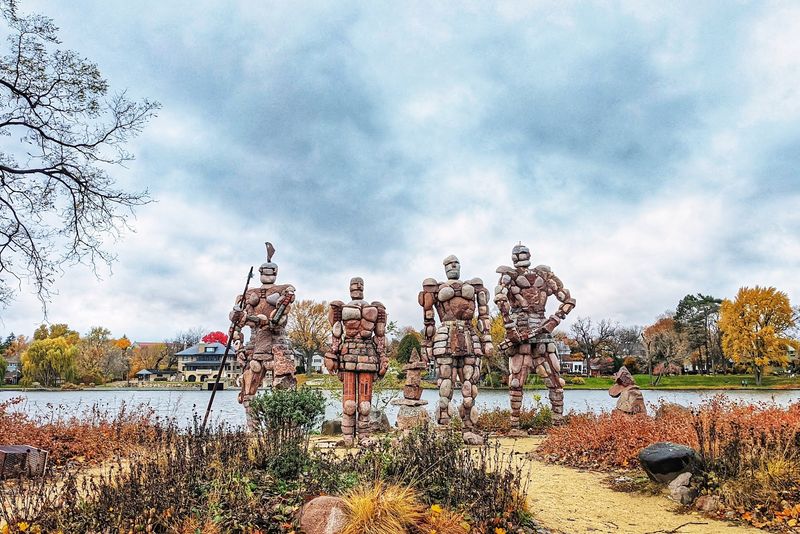
The group of four figures is what makes this installation so visually striking. Rather than a single statue on a pedestal, you get a formation that feels almost like a patrol, with each figure slightly different in posture and stone composition, giving each one a distinct personality.
Two of the middle figures reportedly have a structural support running through them to help keep the heavy boulders stable over time. That small engineering detail does not take away from the visual impact at all, and most visitors never even notice unless they look very closely from behind.
The figures wear what appear to be shirts or draped fabric forms, also made from shaped stones, which adds a layer of detail to the overall design. Some visitors have joked that the clothing makes them look a bit more dressed-up than expected for a riverside sculpture, but the craftsmanship is hard to argue with.
Standing directly in front of all four at once gives you a sense of scale that photos simply cannot capture. They feel monumental in person, and the repetition of the human form in rough stone creates a rhythm that holds your attention longer than a single figure ever would.
The Rock River Recreation Path
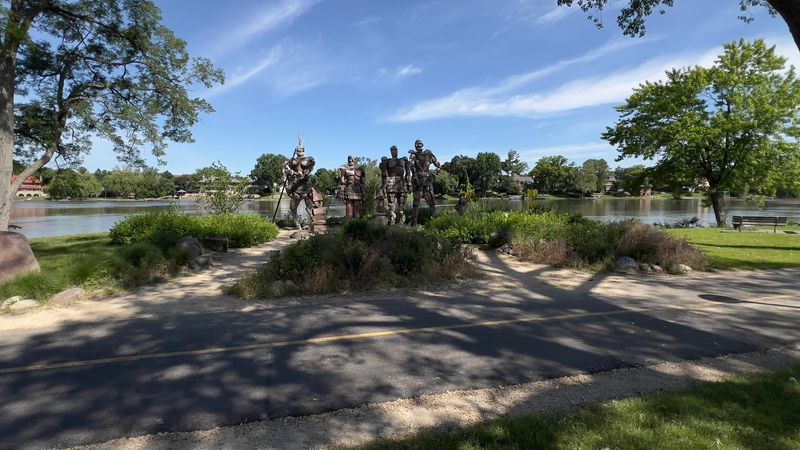
The bike path that runs alongside the Rock Men is a well-maintained paved trail that stretches along the Rock River, offering a genuinely pleasant experience for runners, cyclists, and casual walkers. The path is clean, clearly marked, and used regularly by locals who treat it as part of their daily fitness routine.
The surface is smooth enough for road bikes, and the flat terrain makes it approachable for all fitness levels. On a clear day, the river views from the path are genuinely beautiful, with the water reflecting the sky and the trees lining the banks creating a natural canopy effect in warmer months.
The trail connects to several other points of interest in the area, including the Nicolas Conservatory, which sits just to the right of the Ethel Avenue entrance. Having multiple attractions within a short distance of each other makes the path a natural anchor for a half-day itinerary in Rockford.
Unlike the open trail systems you might find cutting through the plains of Oklahoma, this path has a more enclosed, wooded feel that makes it feel like a separate world. The combination of art, nature, and easy access makes it one of the most satisfying outdoor routes in northern Illinois.
Nicolas Conservatory as a Nearby Companion Stop
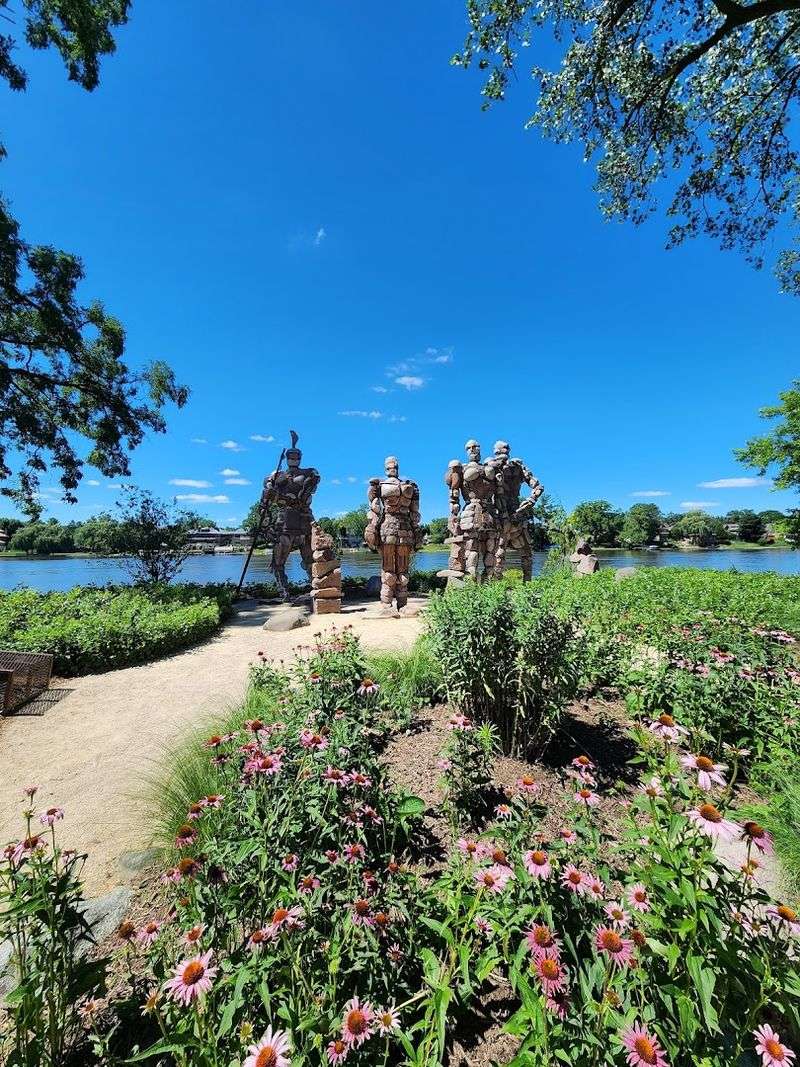
The Nicolas Conservatory and Gardens sits just steps from the Rock Men, making the two attractions a natural pairing for any visit to this part of Rockford. The conservatory features tropical plants, seasonal floral displays, and rotating exhibits inside a glass structure that overlooks the Rock River.
The contrast between the rugged stone figures outside and the lush, carefully tended plant life inside the conservatory is actually part of what makes the combination so satisfying. You go from ancient-looking rock giants to delicate orchids and ferns within a two-minute walk, and somehow both feel completely at home along the same riverbank.
Admission to the conservatory is affordable, which makes it a practical addition to the visit rather than a budget stretch. Families with children especially tend to enjoy having both the outdoor sculpture viewing and the indoor garden experience in the same outing.
The conservatory also has clean restrooms, which is worth knowing since the outdoor sculpture area reportedly lacks facilities. Planning the conservatory as part of your visit solves that practical issue while also giving you more to see and do along this stretch of the river path.
Best Times to Visit and What to Expect
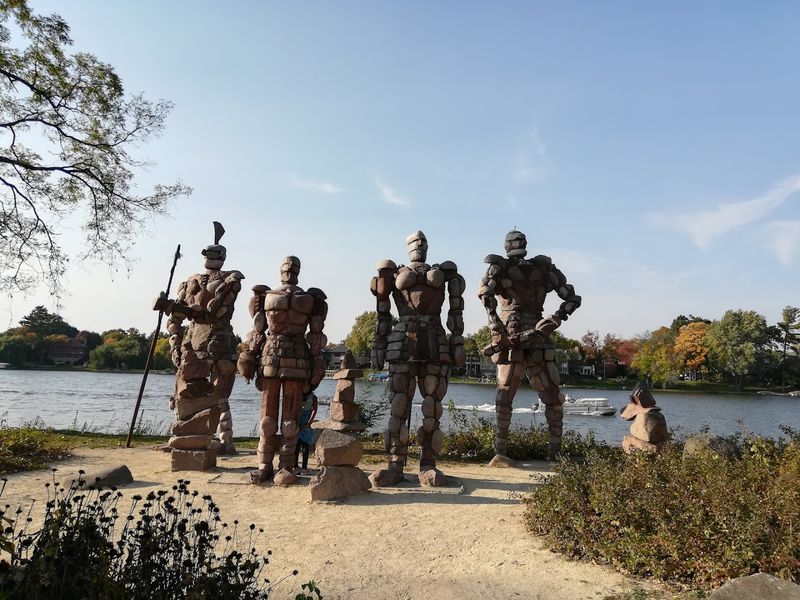
The Rock Men are open 24 hours a day, every day of the week, which means there is genuinely no bad time to show up. That said, visiting during daylight hours gives you the best chance to appreciate the detail in the boulder construction and to take clear photos without needing a flash or a tripod.
Spring and fall are particularly rewarding seasons for a visit. In spring, the surrounding trees and riverbank plants come alive with fresh green growth, and in fall, the foliage turns the whole area into a palette of warm colors that frames the stone figures beautifully.
Summer mornings tend to be the most comfortable time for walking or biking the path, since the heat along the river can build up during midday hours. Weekday mornings are also noticeably quieter, which means you can spend as much time as you want in front of the sculptures without navigating around crowds.
Winter visits have their own appeal for the more adventurous traveler. Snow-dusted boulder figures standing along a frozen river carry a quiet drama that warm-weather visits simply cannot replicate, and the lack of foliage actually lets you see the full riverscape more clearly from the path.
Picnicking and Relaxing Along the Riverbank
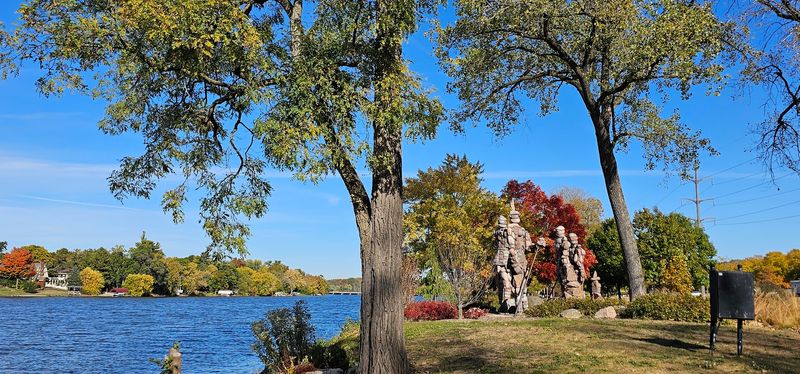
The area around the Rock Men is genuinely set up for a leisurely visit rather than a quick drive-by. Benches line the path near the sculptures, and the grassy areas along the river provide natural spots for spreading out a blanket and enjoying a meal with a view.
The river backdrop makes even a simple packed lunch feel like a proper outdoor event. The sound of the water, the open sky above the river, and the presence of the stone figures nearby create an atmosphere that encourages visitors to slow down and stay longer than they originally planned.
Dogs are welcome on the path, and plenty of local residents bring their pets along for morning and evening walks. The area draws a friendly mix of regulars and first-time visitors, which gives it a community feel that many tourist-heavy spots lack entirely.
One practical note: the grass and walkways can get messy depending on the season, particularly with waterfowl in the area. Wearing shoes you do not mind getting dirty is a small but genuinely useful piece of advice that will keep your visit stress-free and enjoyable from start to finish.
Photography Tips for Capturing the Rock Men
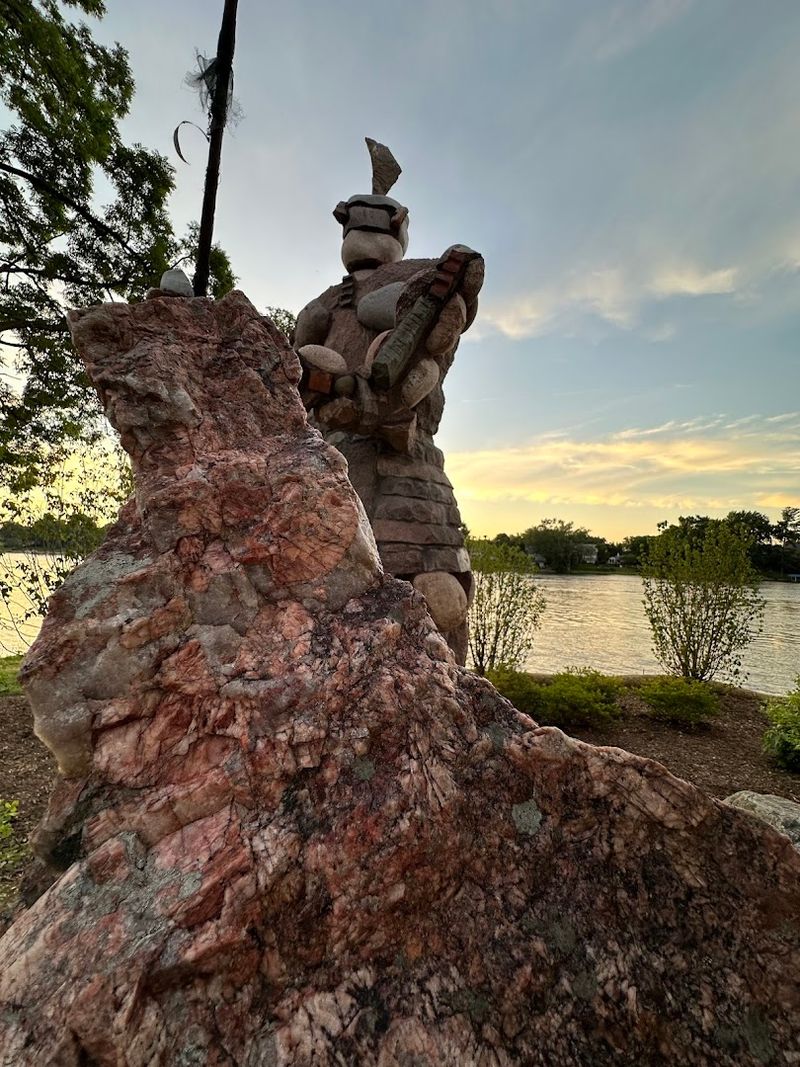
Getting good photos of the Rock Men takes a little thought because the sculptures are large, the path is relatively narrow, and the river behind them can either work beautifully or blow out your background depending on the light. Morning light coming from the east tends to hit the boulder surfaces in a way that brings out the texture and depth of the individual stones.
A wide-angle lens or the ultra-wide setting on a smartphone camera helps capture all four figures in a single frame without having to back up so far that they start to look small. Getting low and shooting upward also emphasizes the impressive height of the figures and makes them look even more monumental.
Detail shots of the individual boulders are worth taking as well. The variety of rock colors, shapes, and textures packed into each figure is genuinely interesting up close, and macro-style shots reveal how much craftsmanship went into the assembly of each piece.
The river in the background adds a natural depth to wide shots, and on calm days the water reflection can add a painterly quality to the images. The Rock Men are photogenic in a way that rewards patience, and a few extra minutes spent finding the right angle consistently produces results worth sharing.
Nearby Attractions Worth Adding to Your Day
The Rock Men sit within a cluster of attractions that makes Rockford a surprisingly full day-trip destination. Anderson Japanese Gardens, widely considered one of the finest Japanese gardens in North America, is just a couple of miles from the sculpture site and offers a completely different but equally rewarding experience.
The gardens feature authentic design elements, koi ponds, stone lanterns, and carefully maintained plantings that create a meditative atmosphere very different from the bold, rugged presence of the Rock Men. Having both in the same itinerary gives the day a natural rhythm of contrasts that keeps things interesting.
Other nearby points of interest include the Burpee Museum of Natural History and the Coronado Performing Arts Center, both of which add cultural depth to a Rockford visit. The city punches well above its weight in terms of things to do, which surprises many visitors who expected little more than a quick stop.
Rockford is a reminder that you do not need to travel to coastal cities or even to other states like Oklahoma to find genuinely worthwhile destinations. Sometimes the most rewarding stops are the ones hiding in plain sight just off a highway you have already driven a hundred times before.
The Cultural Significance of Outdoor Public Art
Public art installations like the Rock Men serve a purpose that goes well beyond decoration. They give communities a shared point of reference, a place where residents can feel pride and where visitors can connect with the character of a city in a way that no shopping center or chain restaurant ever could.
The Rock Men have been part of Rockford’s identity since 1987, which means multiple generations of residents have grown up with them. The reviews left by visitors frequently mention childhood memories tied to the sculptures, and that kind of emotional connection is exactly what makes public art so valuable to a community over the long term.
Public art in mid-sized American cities often gets overlooked in favor of bigger installations in major metropolitan areas. But the Rock Men demonstrate that scale and ambition do not require a massive urban budget or a famous museum address to make a lasting impression on the people who encounter them.
States like Oklahoma have their own traditions of public art tied to local landscapes and histories, and the Rock Men fit naturally into that broader national conversation about how communities use art to express identity. The Rock River setting gives the installation a permanence that feels earned rather than imposed.
What Makes the Rock Men Genuinely Unique
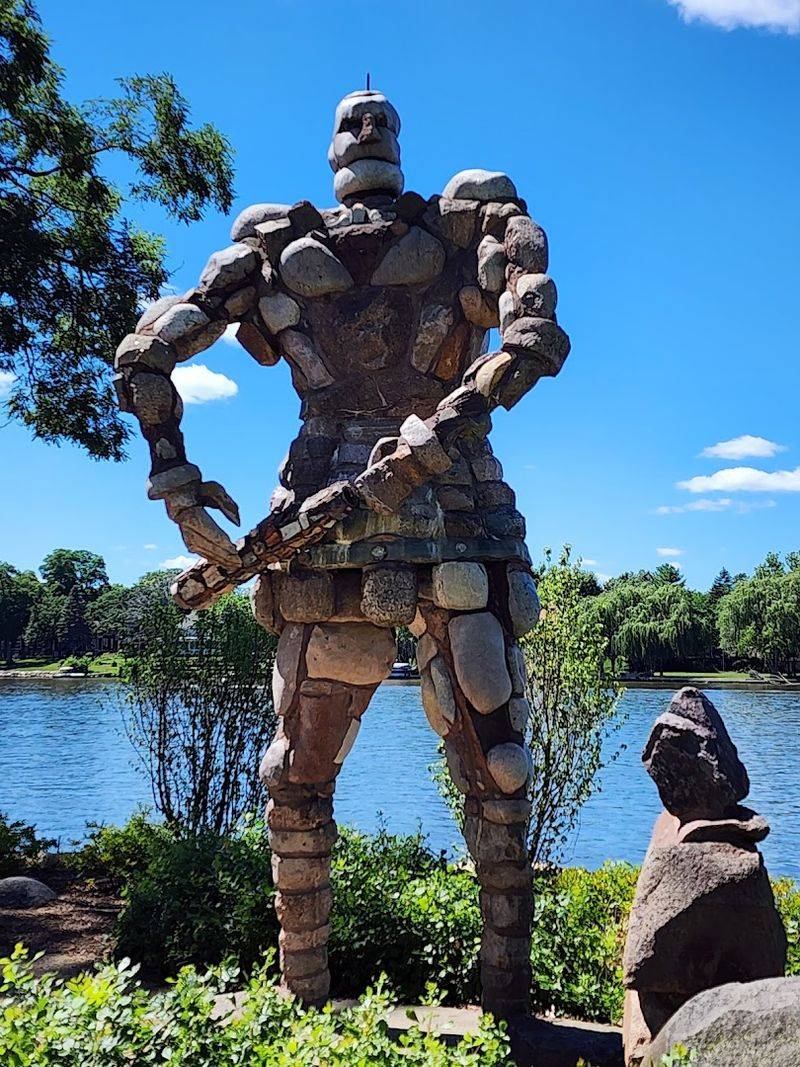
There are plenty of outdoor sculptures scattered across the United States, but very few share the specific combination of materials, scale, and setting that makes the Rock Men stand out. The choice to build human figures entirely from natural boulders rather than cast metal or carved stone gives the installation a texture and weight that feels rooted in the physical landscape rather than placed on top of it.
Each boulder used in the construction carries its own natural color and surface character, and no two stones are identical. That variation is what gives the figures a lifelike quality that smooth or uniformly colored materials could never achieve.
The irregularity is the point, and it works.
The fact that the figures were relocated from downtown Rockford to their current riverside position actually improved the installation significantly. The natural setting along the water gives the stone soldiers a context that feels mythological rather than municipal, which elevates the whole experience.
Very few sculptures in the entire midwest invite the same level of up-close curiosity that the Rock Men do. Visitors consistently mention wanting to walk around each figure, inspect the individual stones, and figure out how the whole thing holds together, which is exactly the kind of engagement that great public art is supposed to generate.
Planning Your Visit: Practical Tips and Final Thoughts
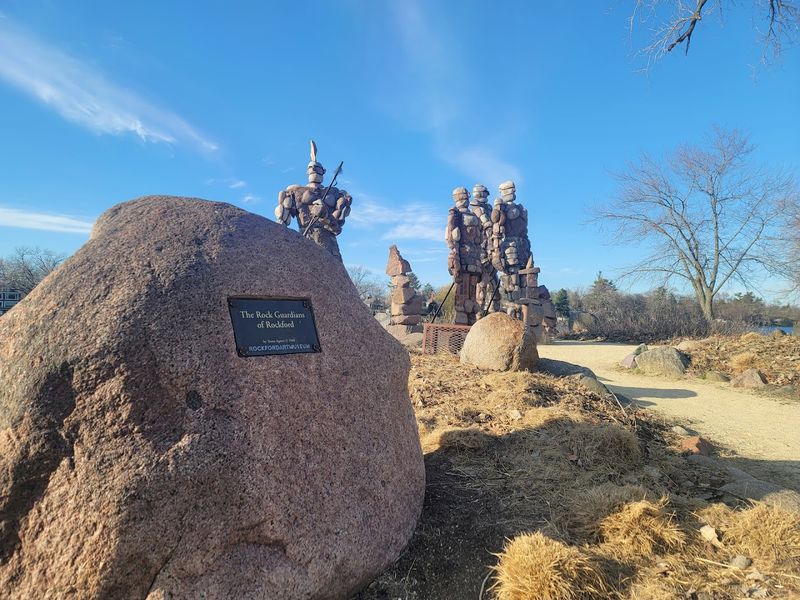
Getting to the Rock Men is straightforward. The entrance is off Highway 251 on Ethel Avenue in Rockford, with the Nicolas Conservatory to the right and the sculpture to the left.
Parking is available nearby and free, which removes one of the most common friction points of visiting an outdoor attraction.
The site is open around the clock, so there is no need to plan around operating hours. Bringing a bike is a great option if you want to extend the visit along the full recreation path, which is well-maintained and enjoyable in both directions from the sculpture site.
No admission fee is required to see the Rock Men, making this one of the most accessible public art experiences in northern Illinois. A visit can be as short as fifteen minutes or as long as a full afternoon depending on how much of the path and surrounding area you want to explore.
The Rock Men are the kind of stop that reminds you why road trips across the midwest, and across states like Oklahoma and beyond, are worth taking slowly. Not every great destination announces itself loudly, and Rockford’s stone sentinels have been quietly waiting for more people to notice them for nearly four decades.
Share this story