 Unearth The Voyage
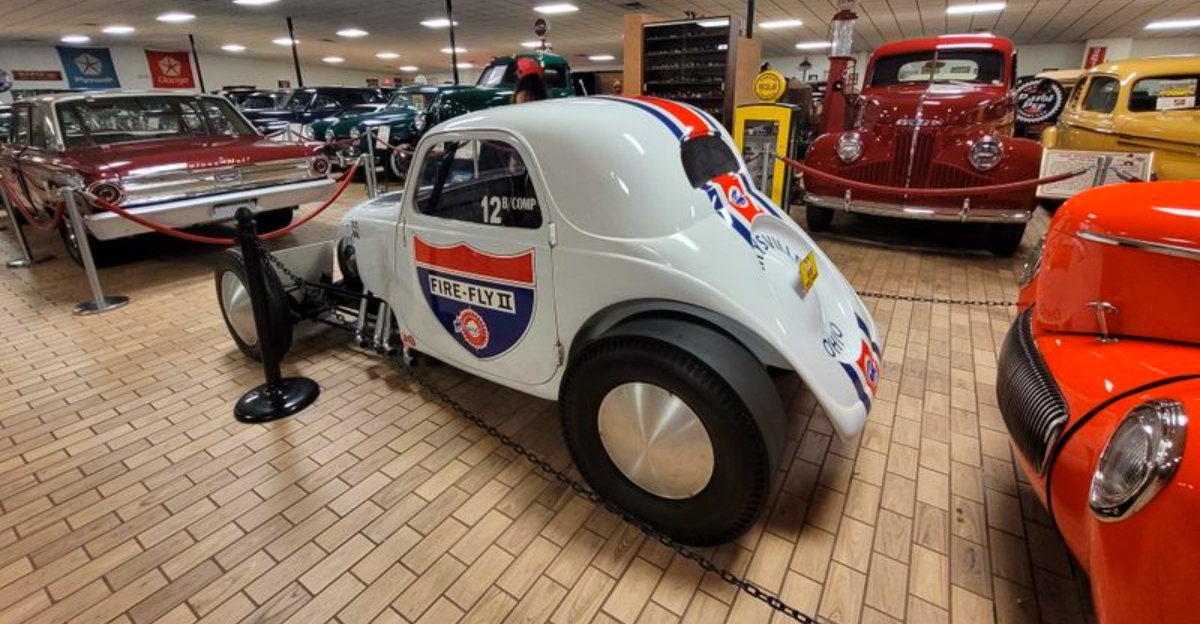
Engines whisper in the quiet before they roar, and that feeling hooked me the second I pulled into a place that treats speed like a living archive. This is where American innovation sits nose to nose with grit, and every panel tells a story that somehow smells like rubber and determination.
I found myself grinning, reading placards, and then suddenly tracing a whole era through chrome, welds, and wild ideas that actually worked. Ready to walk through decades of drag racing history in a way that grabs your curiosity and refuses to let go?
Getting There and Key Details
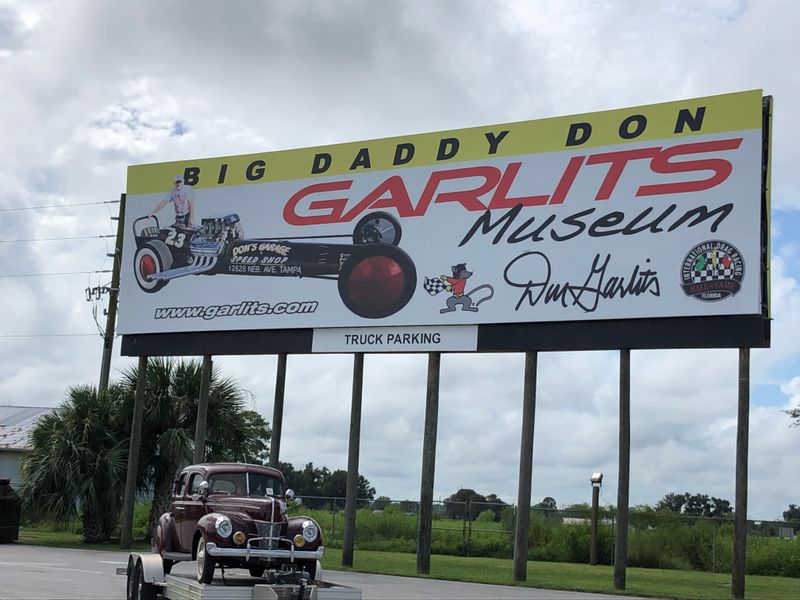
The address lands like a green flag: Don Garlits Museum of Drag Racing, 13700 SW 16th Ave, Ocala, FL 34473, United States. Hours run daily 9 AM to 5 PM, and the phone number is +1 352-245-8661 for quick confirmations.
I checked the official site, garlits.com, then rolled off I-75, exit 341, with the building glinting through the Florida sun.
Parking was simple, signage was clear, and admission felt fair for the depth inside. Two primary buildings split the experience, so I planned at least two hours, then ended up stretching it longer.
A friendly team at the counter handed over a map, and I started plotting a route like a pit crew chief.
The first section dives straight into drag racing history, while the second space expands into antique and vintage automobiles. Everything looked clean and carefully presented, with cards that actually explain, not just label.
If you want speed, story, and serious hardware, this address puts it all on one starting line.
A Living Timeline of Speed
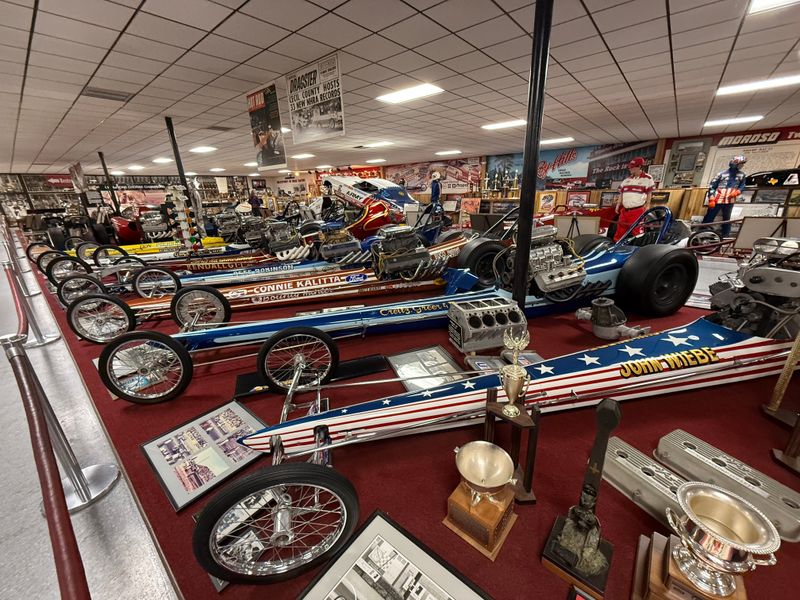
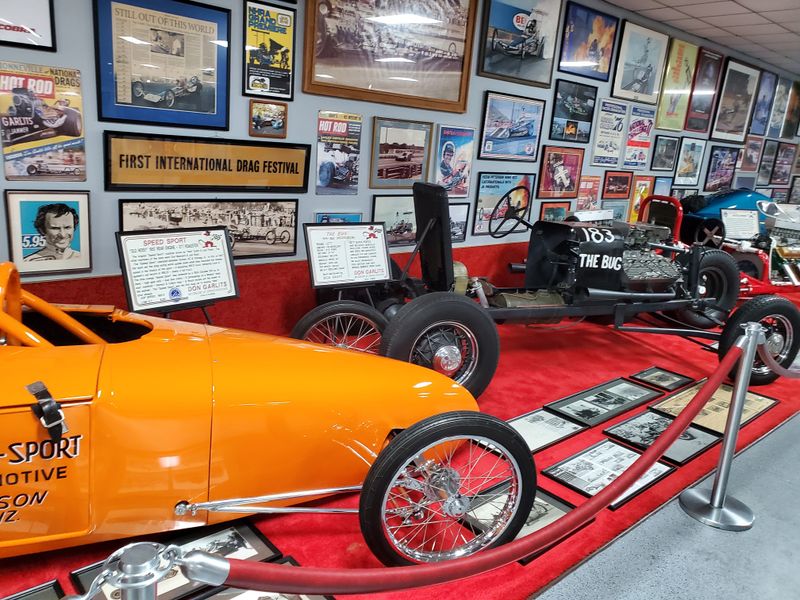
The first gallery unfolds like a timeline that knows how to apply throttle. I moved from early rails to modern machines, each with a stance that explains why straight-line speed became an art.
Placards read like pit notes, but with enough storytelling to keep a casual set of eyes locked in.
Every car felt like a chapter with handprints still on the pages. Welding beads, safety innovations, and wild bodywork show how failure, fixes, and fresh ideas reshaped the quarter mile.
The museum balances reverence with clarity, so you get context without drowning in jargon.
Engines crouch nearby, either cutaway or complete, pointing to that relentless chase for power and reliability. I caught myself leaning in, counting fasteners, and imagining heat cycles.
If you care about design under stress, this timeline revs your curiosity and never lets it stumble.
Big Daddy’s Legacy
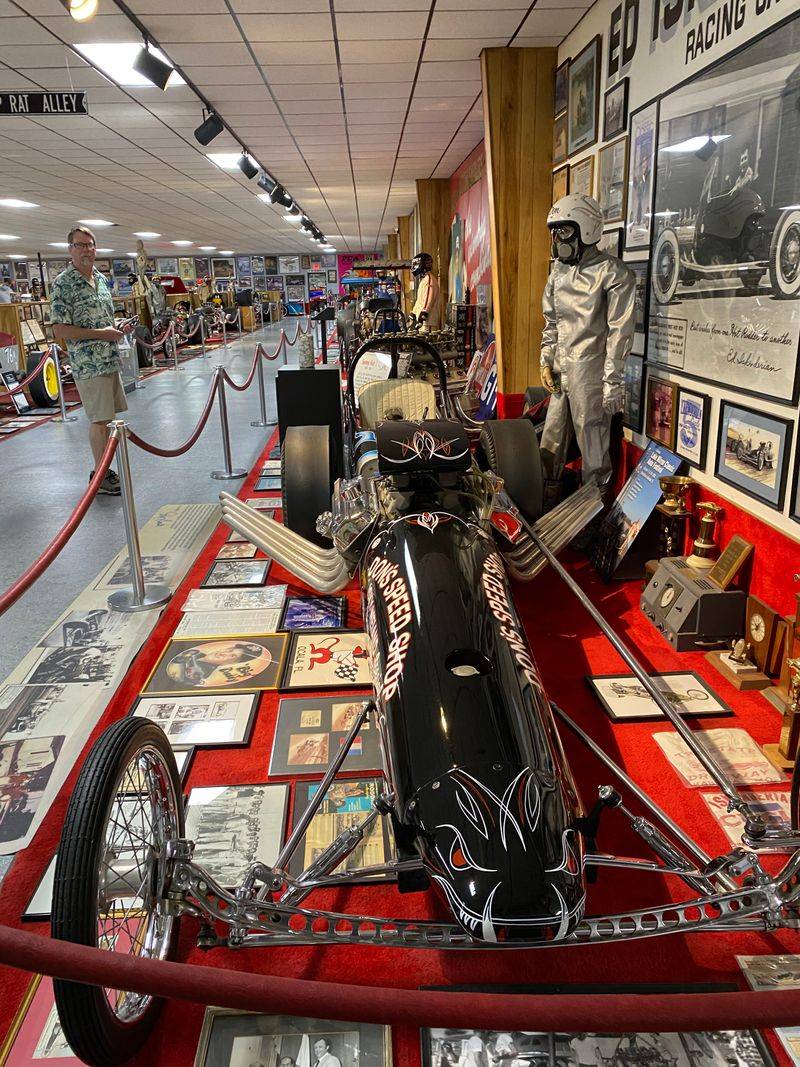
Call it the heartbeat of the place, because Don Garlits is the through line that keeps everything firing. Photos stretch across walls, trophies sparkle, and the stories stitch together a career built on ideas that other people called impossible.
The Swamp Rat lineage becomes a language you start to understand by sight alone.
I watched a short video segment and realized the museum is not just about victories. It honors experiments, hard pivots, and days that probably smelled like clutch dust and second chances.
That honesty gives the wins a sharper edge.
Plenty of quotes appear throughout, and they feel lived in, not polished for effect. I studied the problem solving that defined Garlits’s approach, from safety concepts to aerodynamic tweaks.
By the time I exited this section, the word pioneer felt earned, not casually placed.
Swamp Rat 34 and the Pursuit of 300 Plus
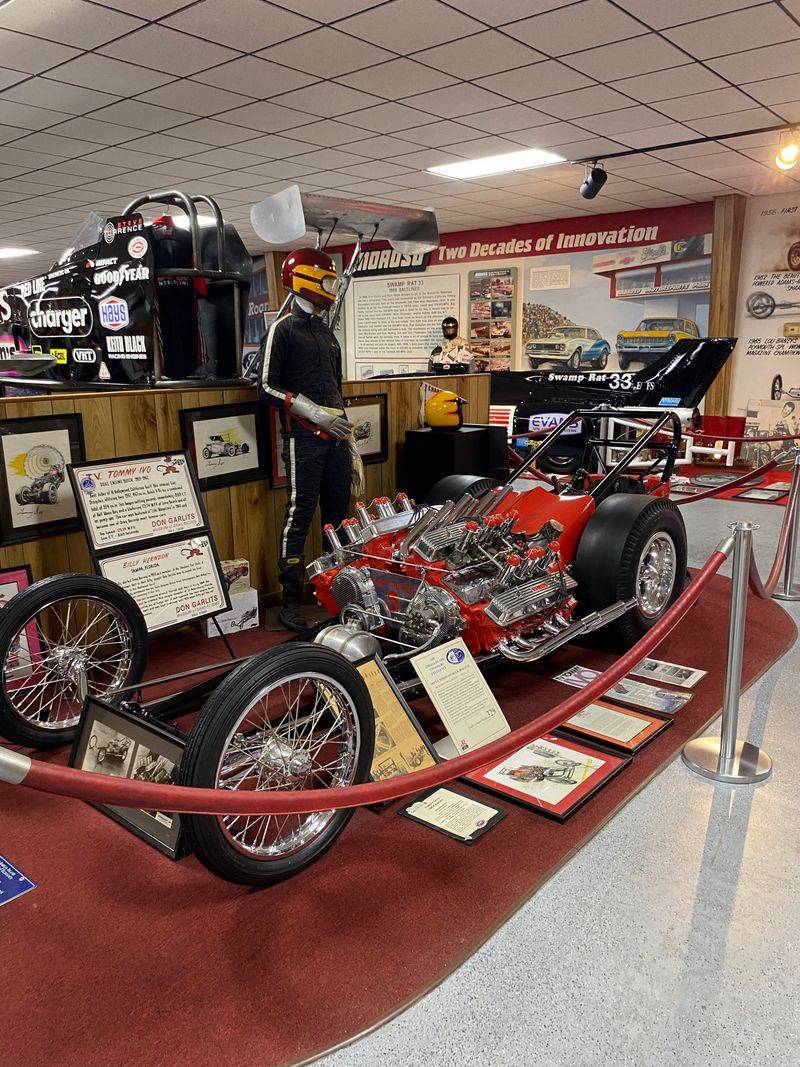
One dragster stops the room like a red light turning green at the perfect moment. Swamp Rat 34 gleams with purpose, a physical reminder that 300 plus miles per hour is not just a number.
The panels sit tight, the stance is low, and the placard nods to that 323 mph headline that still makes jaws drop.
I circled the car, checking the taper, the hardware choices, and the way everything funnels air. You feel the tunnel vision of a car that wants only the next hundred feet, then another.
Somehow it still looks fresh, like innovation does not spoil quickly.
Photos nearby capture the moment and the mindset that turned records into reality. For anyone who measures progress in tenths, this car tells a complete story.
It speaks softly, then accelerates your imagination.
Engineering Up Close
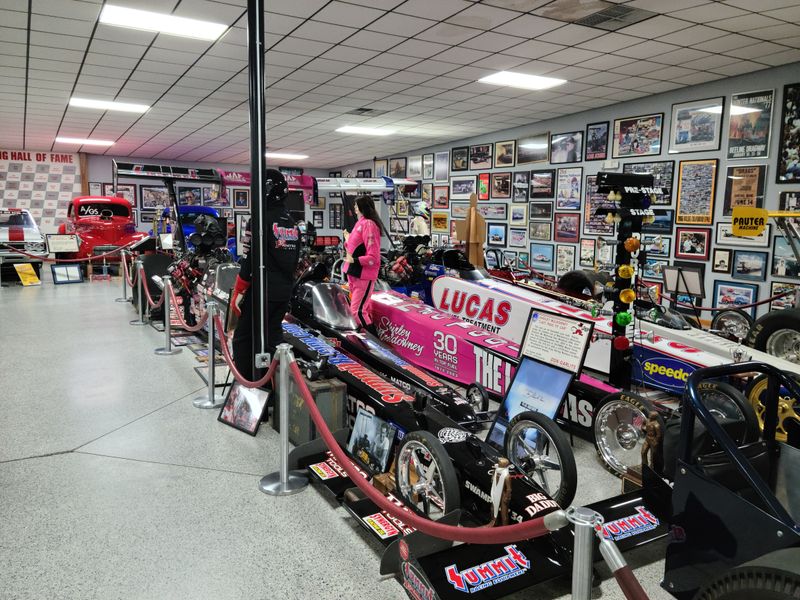
The engine room feels like a backstage pass with the curtain already raised. Cutaways show innards that usually live in secrecy, and the displays make sense even if your toolbox only holds a tape measure.
I traced oil galleries with my eyes and nodded at the geometry that makes horsepower possible.
Manifolds, carbs, and clever packaging underline how small decisions become big speeds. The balance between strength and weight gets its own quiet spotlight.
You can almost hear the math humming behind every polished surface.
It is not sterile or overly technical, though. Plain language on the placards keeps things moving, and the parts themselves do the convincing.
This is where curiosity gets fed until it is grinning like a supercharger under boost.
Antique and Vintage Automobiles
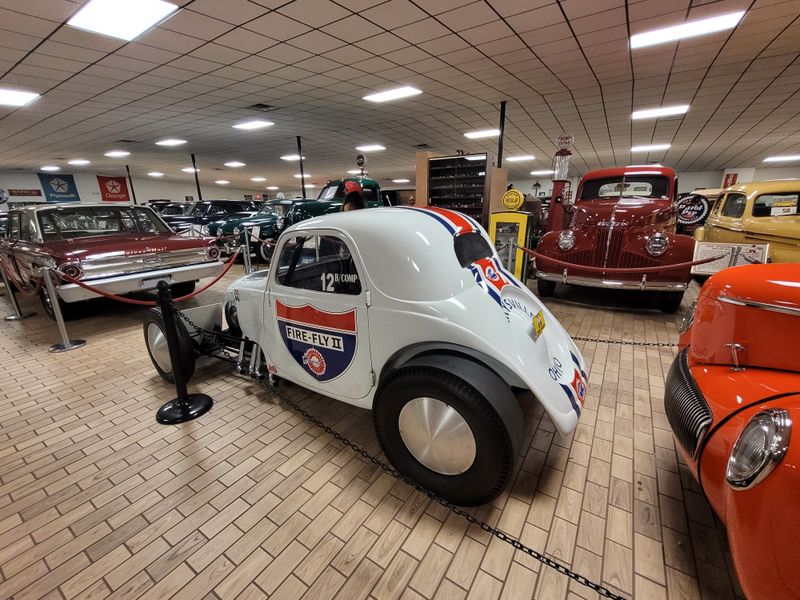
The second building shifts gears into an elegant cruise across decades of motoring. Brass-era silhouettes share space with mid-century curves, all kept spotless like they just rolled off a careful transporter.
Cards explain provenance and quirks so you can appreciate more than paint and shine.
I liked the way the room flows, with sightlines that invite slow laps. This is not a sidetrack at all, more like context for the speed obsessed halls next door.
You learn what America drove, then you understand why it raced.
Details pop, from hood ornaments to interior fabrics that look perfectly tailored. It is easy to linger, and the staff never rushes anyone.
Consider this the cool down lap that still performs like a sprint.
Stories in the Trophies
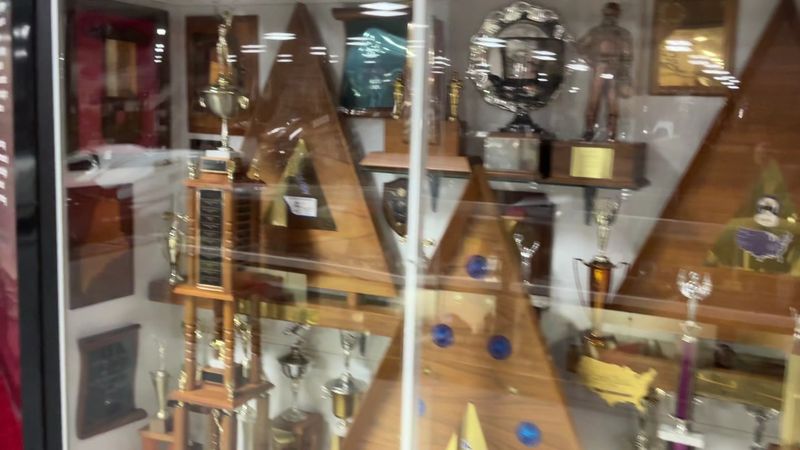
A wall of trophies can feel like numbers, but here it reads like a memoir with metallic punctuation. Each plaque, cup, and framed moment tells you why a certain weekend mattered more than the finishing time.
The layout threads a narrative, not just a roll call of names.
I paused at pieces that showed setbacks turning into turning points. Explanations highlighted mechanical lessons learned and the people behind the wrenches.
Suddenly the hardware looked less like decoration and more like a trail marker.
The shine is real, but the message has texture. Greatness often looks like persistence under bright lights.
This corner proves it without saying a word too loudly.
Atmosphere and Care
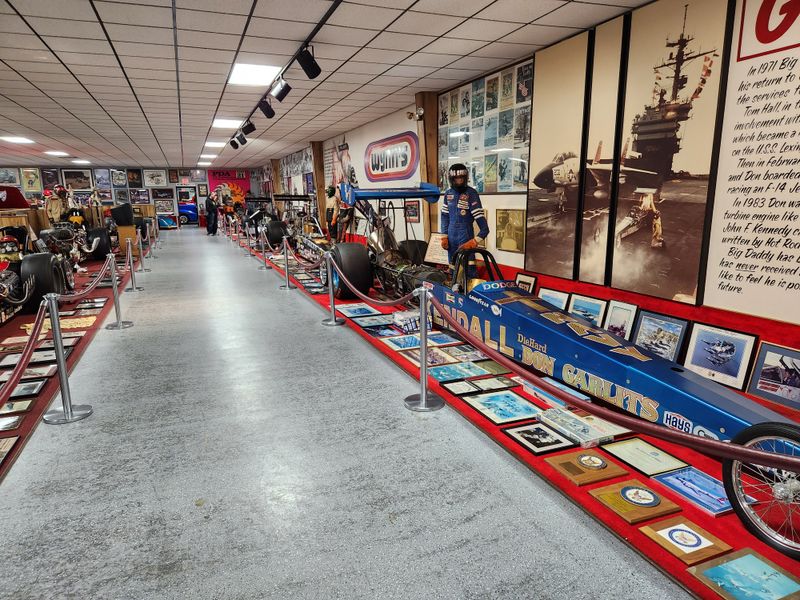
Clean enough to notice, and that matters when chrome is the star. Floors gleam, fenders mirror your curiosity, and informational cards look freshly placed.
The attention to detail makes the whole visit feel respectful to the machines and the people who built them.
Staff answer questions with calm enthusiasm and never push you along. I saw kids asking smart questions and getting thoughtful, bite sized answers.
It felt like a classroom that forgot to be boring.
Small touches stack up, from easy restrooms to well placed benches. Take breathers, then jump back into the noise and nuance.
Care shows up everywhere, and it keeps the story running smooth.
Planning Your Visit
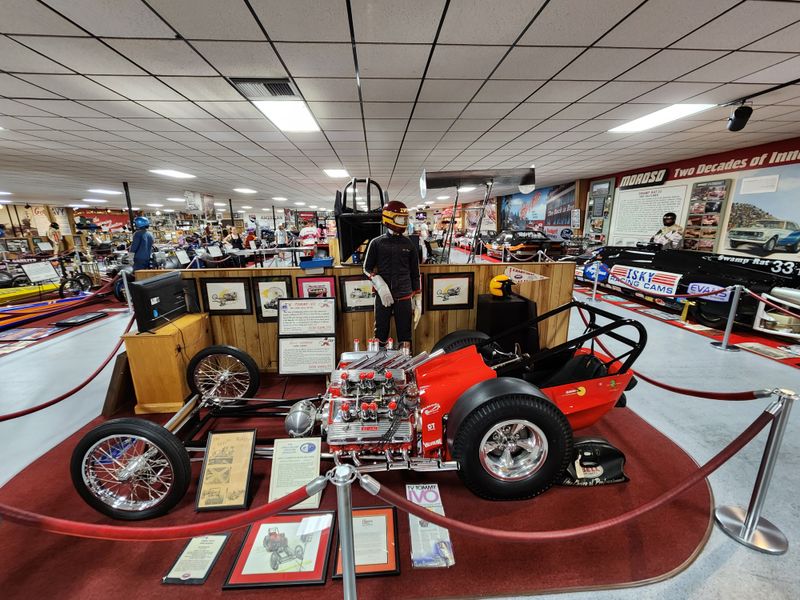
Timing helps, because this place rewards patience. Doors open 9 AM daily, and weekdays tend to feel calmer, especially if you want longer looks at popular cars.
I gave myself two hours and easily drifted toward three without trying.
Comfortable shoes matter more than you think. The exhibits are dense, so water and brief breaks keep the senses fresh.
Photography is welcome for personal memories, and you will want those shots.
Ticket prices are posted at the counter and on the website, and discounts exist for several groups. Parking is plentiful, and the drive off I-75 is wonderfully simple.
Plan light around the museum, because it will quietly steal your schedule.
Ocala Context and Florida Flavor
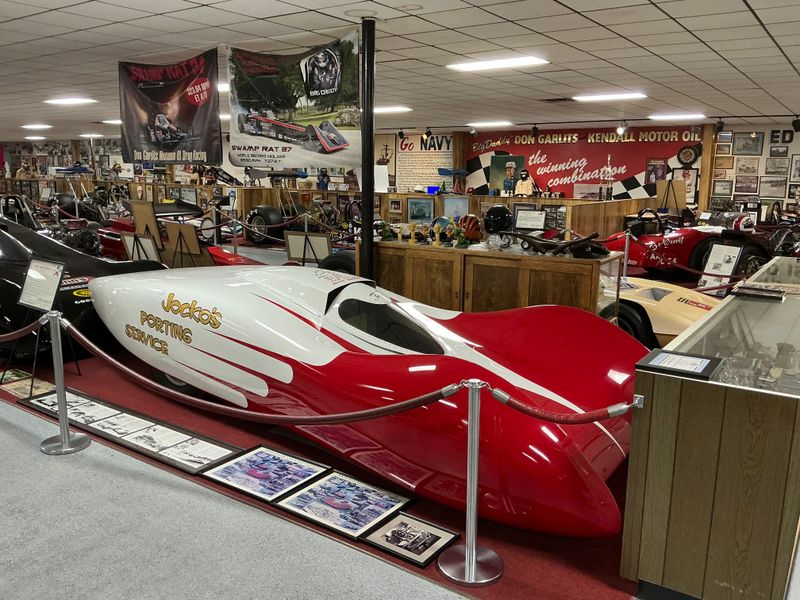
Ocala gives the visit a distinctly Florida rhythm, sunny and confident without shouting about it. Palm fronds edge the lot, and that bright sky makes polished metal look theatrical.
The city sits conveniently along I-75, so the museum becomes a worthy stop on bigger routes.
Locals recommended an easy loop that pairs the museum with nearby parks. That mix of horsepower and quiet trails actually makes sense after a few hours of engines.
Your ears can rest while your head keeps racing through the highlights.
I like how the museum stands as both destination and detour. It is pure Ocala, all practical access wrapped around passion.
Florida shows up in the light, the pace, and the welcome at the door.
Videos, Voices, and Context
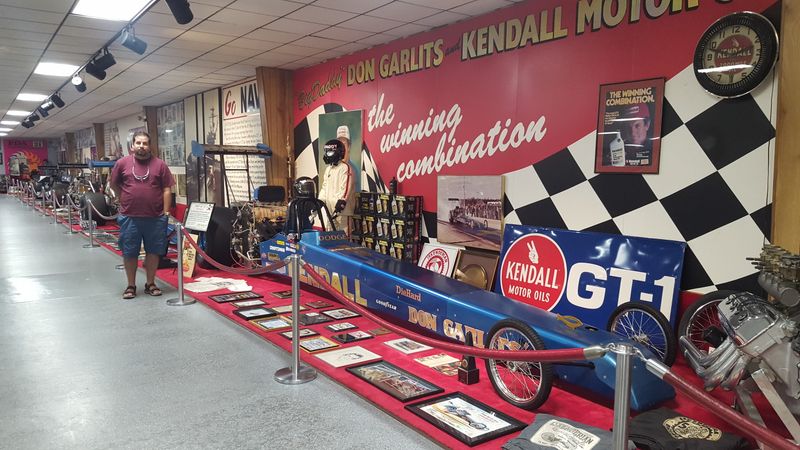
A side corner plays videos that stitch eras together better than any single placard could. Short clips show trackside moments, interviews, and the kind of garage chatter that explains why choices got made.
I sat for a few minutes and ended up staying long enough to reframe the exhibits I had already seen.
The audio is clear and the pacing brisk. You do not need to be a lifelong fan to follow along.
The takeaways ride with you as you walk back out to the cars.
Hearing the voices of drivers and builders adds dimension to the metal. It turns horsepower into a conversation with stakes and personality.
That context tightens the whole experience like a snug harness.
Events and Special Days
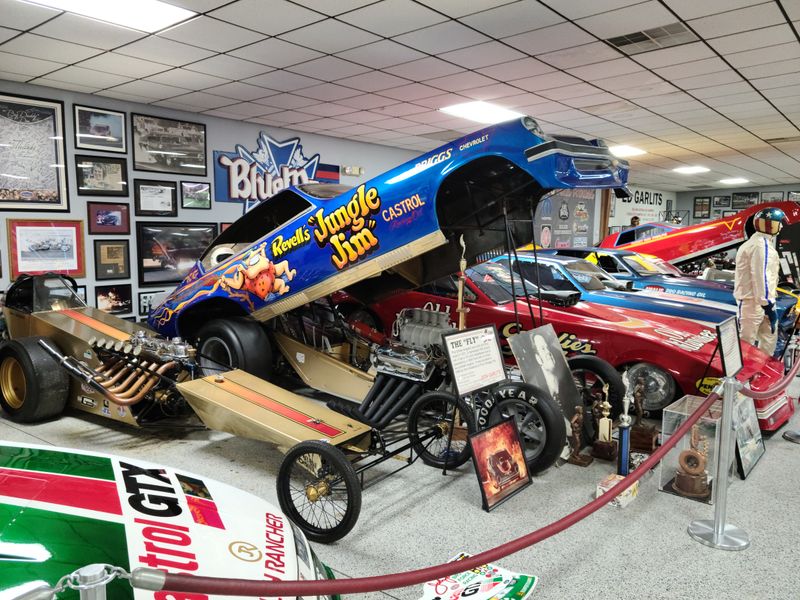
Some days, the parking lot becomes a rolling chorus of camshafts and conversation. Car shows bring out Mopars and more, with hoods up and owners ready to swap stories.
I caught one and realized the museum feels even bigger when the community shows up outside.
Check the website for dates, because these gatherings add fresh momentum to a return visit. A guided tour now and then includes first person storytelling that reshapes how you read the galleries.
It is like getting track notes before the run.
Even if your schedule misses the extras, the core museum stands tall. But land an event and you unlock a whole different gear.
The energy lingers as you head back through the doors.
Family Friendly Pace
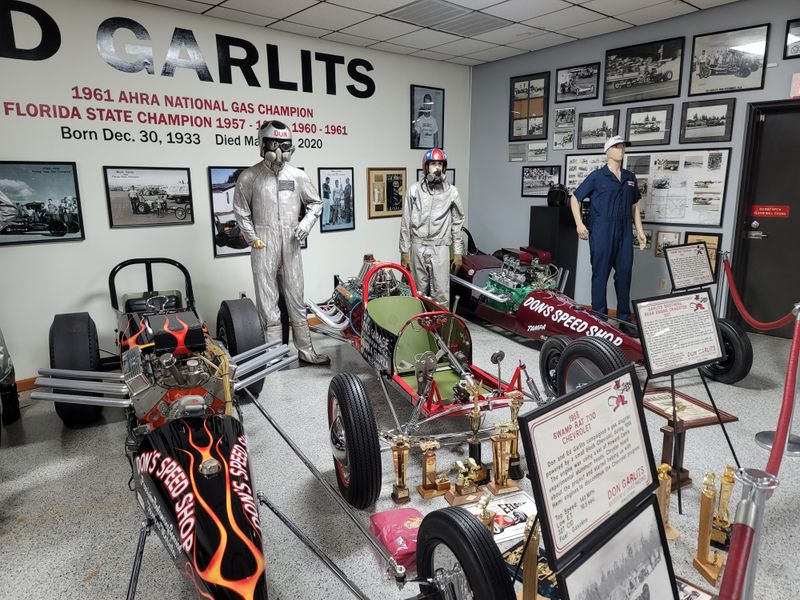
Kids do well here because the visuals explain themselves without talking down. Long cars, big tires, and bold colors pull young eyes into the lesson behind the shine.
I watched families trading guesses about what each part does before reading the answers together.
The staff understands mixed ages and varied attention spans. Breaks are easy to take, and the route never boxes you into one path.
You can skim, dive deep, and then rejoin each other by the gift shop.
Plenty of space means strollers glide, and the climate control keeps things comfortable through Florida’s warmer stretches. A visit here plants seeds for future tinkerers and storytellers.
That alone feels like a worthy finish line.
Photography and Memorabilia
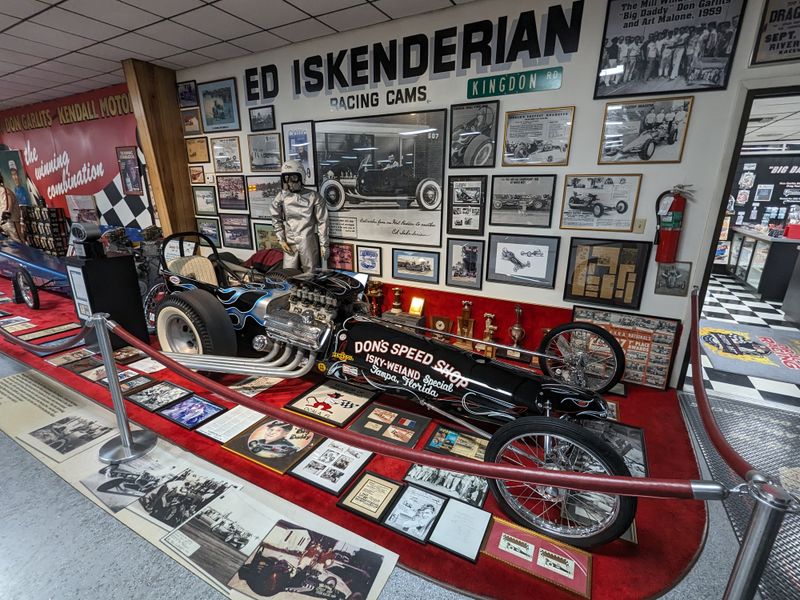
Photos come out great thanks to even lighting and shiny subjects that love a lens. I kept angles low to exaggerate length and caught reflections that doubled the drama.
Bring a patient eye and you will leave with a track day’s worth of images.
The memorabilia cases mix helmets, jackets, decals, and the sort of ephemera that proves racing lives between events. Nothing feels tossed in.
The curation nudges you toward patterns and people.
The gift area carries books, models, and practical souvenirs that travel well. I appreciated that the selection was honest and useful, not cluttered.
Leave room in the bag, because the stories make you want a piece to take home.
Safety, Innovation, and the Future
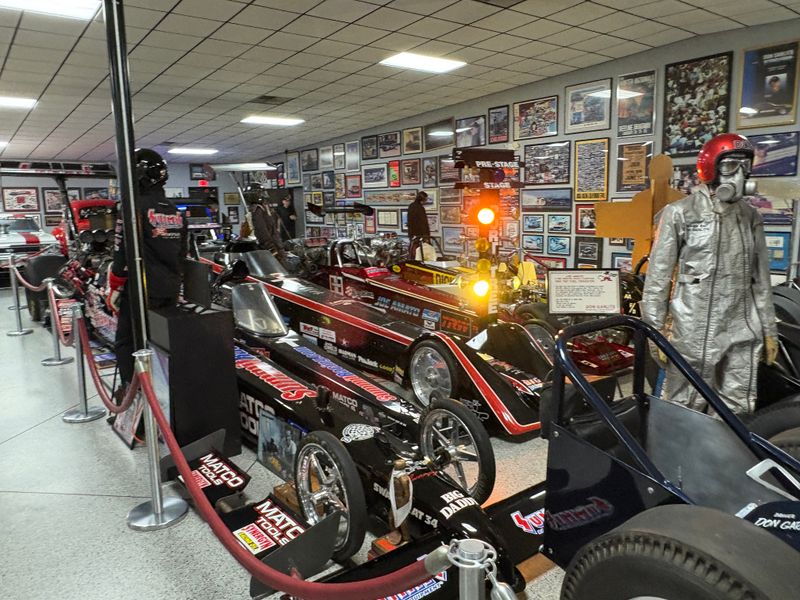
Progress here is measured by ideas that protect while they perform. Exhibits explain how rear engine layouts changed everything and why materials advanced alongside speed.
The through line is simple and powerful, safety that does not slow the pursuit.
Displays on suits, parachutes, and chassis design underline how drag racing rewrote its own rules. I left with new respect for the minds who treat risk like a puzzle to be solved with precision.
The solutions look elegant once someone proves them.
The museum hints at tomorrow by spotlighting the logic behind breakthroughs. That mindset still works, and the sport keeps evolving.
You walk out thinking less about limits and more about smart momentum.
Why It Stays With You
The best museums change how you notice the world, and this one resets your sense of motion. I started seeing everyday roads as potential stories, each with a ghost of tire smoke curling across it.
That is what a strong narrative does.
In Ocala, Florida, the Don Garlits Museum of Drag Racing takes history out of the whispering past and gives it present tense clarity. The collection is dense but never cluttered, the tone reverent but never stiff.
It rides with you long after the doors close.
You leave with a grin that feels earned. And the road ahead looks a little shorter, a little quicker, and a lot more interesting.



