There is a trail in southern Oregon that most people drive right past without ever knowing it exists. Tucked deep in the Rogue-Siskiyou National Forest near Brookings, it leads to a grove of ancient redwood trees that feel completely untouched by the modern world.
The silence there is almost startling, and the trees are so massive they make you feel like you have shrunk to the size of an ant. If you are looking for a place where you can stand among giants and have the whole forest to yourself, this trail is worth every bumpy mile of the drive to get there.
Where Exactly This Trail Is and How to Find It
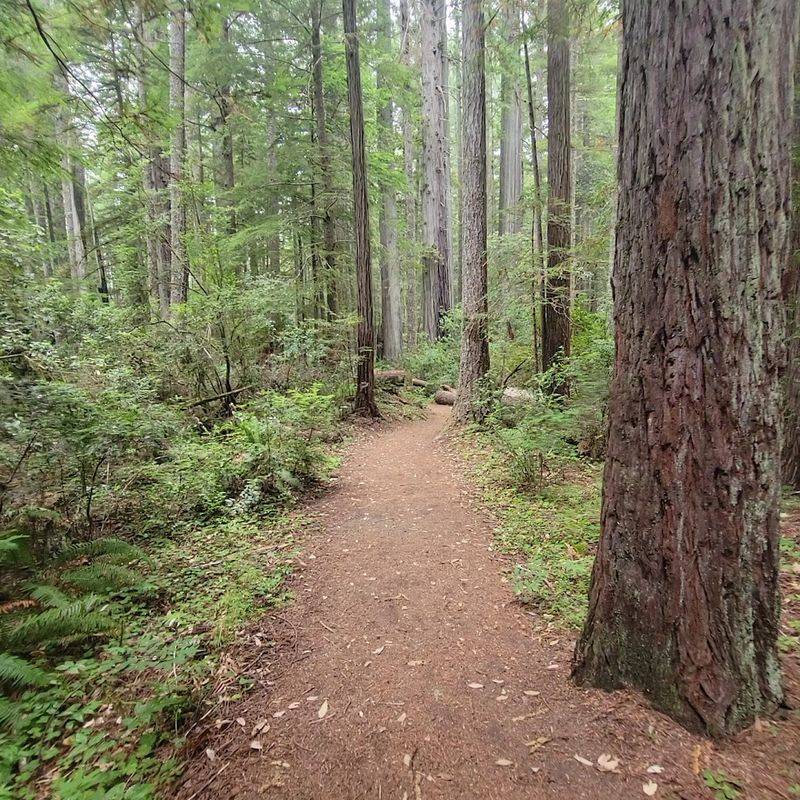
The Oregon Redwoods Trail sits in the Rogue-Siskiyou National Forest, accessed from Brookings, Oregon 97444, with a phone contact of +1 541-247-3600 for the ranger district. The trailhead is open 24 hours a day, every day of the week, making it flexible for early risers and late-afternoon adventurers alike.
To reach it, you follow a narrow, winding gravel road for roughly four miles before the forest opens up into a small parking area. Google Maps tends to struggle with the route once you get deep into the road, so downloading an offline map through an app like AllTrails before you leave is a smart move.
The road has only one way in and one way out, so navigation is actually simpler than it sounds. There are no highway signs announcing this place, and that is exactly why so few people stumble upon it.
The official USDA Forest Service page at fs.usda.gov lists the trail under recreation area ID 69568 for those who want to plan ahead with solid information.
The Road to Get There: A Journey All Its Own
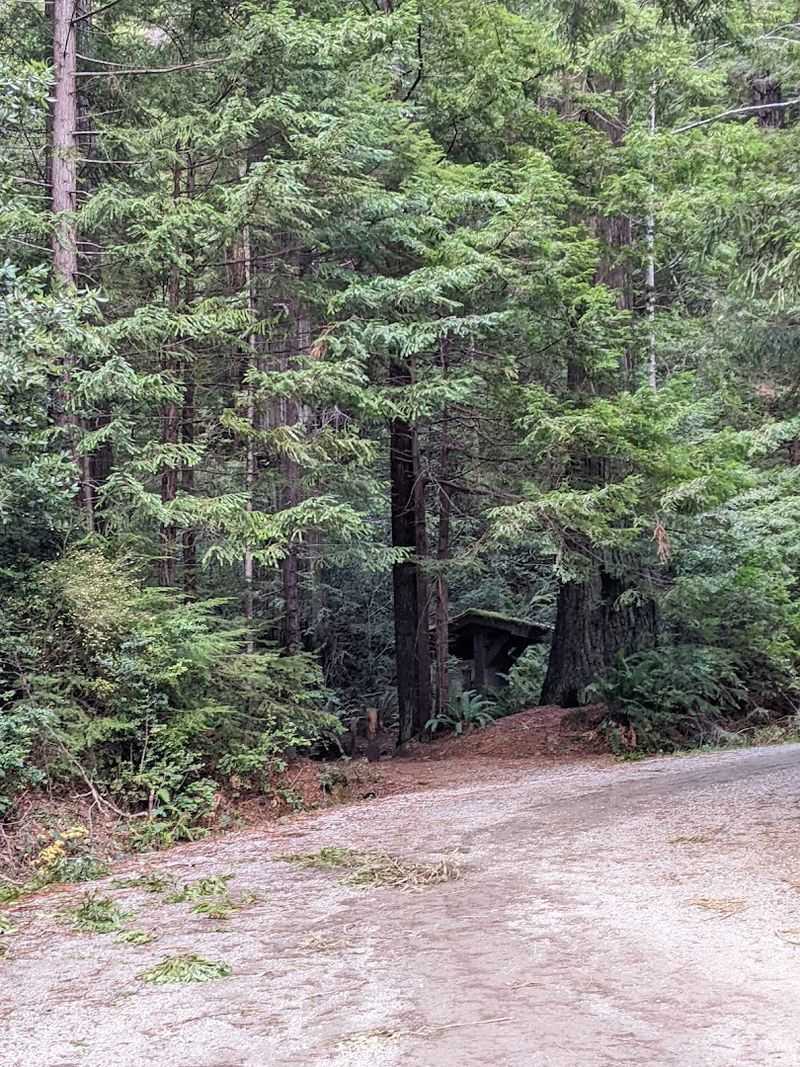
Before you even reach the trees, the road to the trailhead gives you a story to tell. The four-mile approach is a single-lane gravel track with deep ruts, occasional washouts, and tree branches that brush the sides of your vehicle if you are not careful.
It takes roughly 30 minutes to drive at a safe pace.
Most visitors strongly recommend a high-clearance vehicle, and four-wheel drive is genuinely useful in wet weather. That said, some people have made it through in a standard car by going slowly and choosing the right conditions.
The key is patience and keeping your eyes on the road rather than the trees on either side.
At one point near the end, the road forks. Take the left fork that goes slightly uphill rather than the right one that dips down, as the left route leads directly to the parking area.
Private residences line portions of the road, so staying on the main track and respecting the land around you is both polite and required.
What You Will Find at the Trailhead
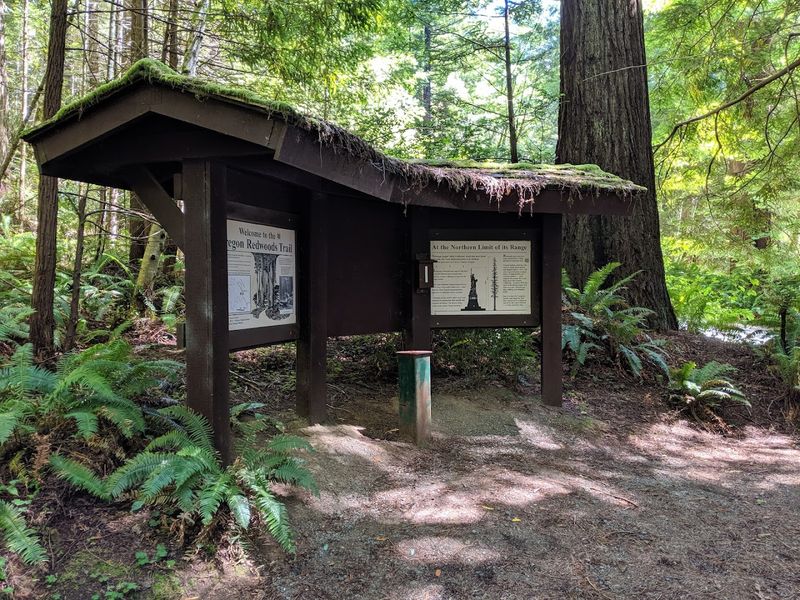
After that bumpy approach, the trailhead itself is a welcome and surprisingly tidy arrival point. There is room for about 15 vehicles in the parking area, which feels generous given how remote the location is.
A pit toilet sits at the trailhead and is generally kept in reasonable condition, though the flies inside can be a bit much.
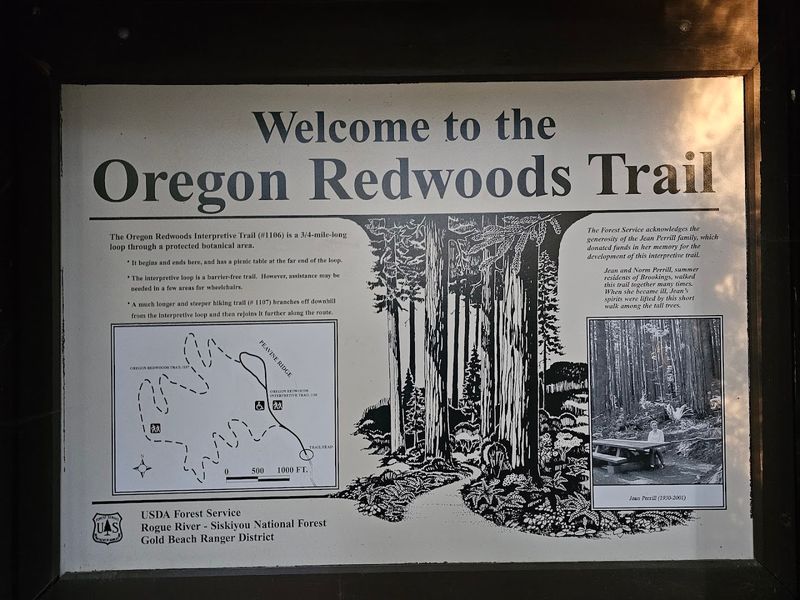
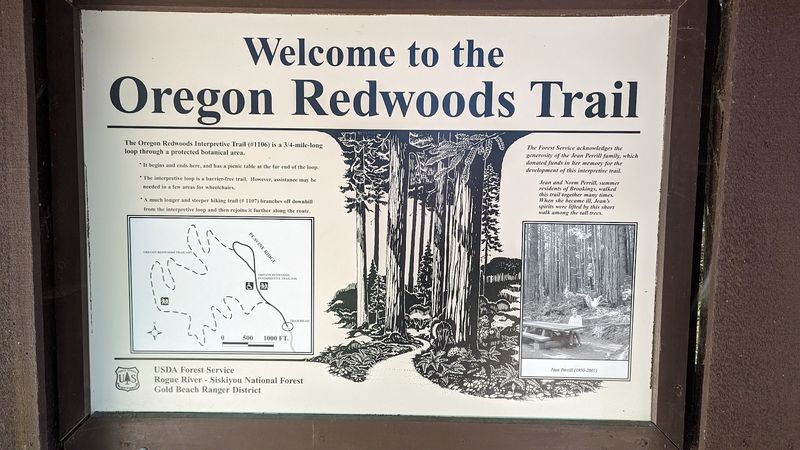
There is no trash can on site, so the pack-it-in, pack-it-out rule applies here. A trail map is posted near the start of the path, and while printed brochures are sometimes available, they run out quickly.
Taking a photo of the map before you head in is a practical habit that saves confusion later.
Cell service is essentially nonexistent at this location, so do not count on your phone for navigation or communication once you arrive. The quiet at the trailhead is the first hint of what the forest has in store.
Even in the parking area, the air smells different, cooler and richer, with that unmistakable damp-earth scent that only old-growth forests seem to produce.
The Two Trail Options and What Each One Offers
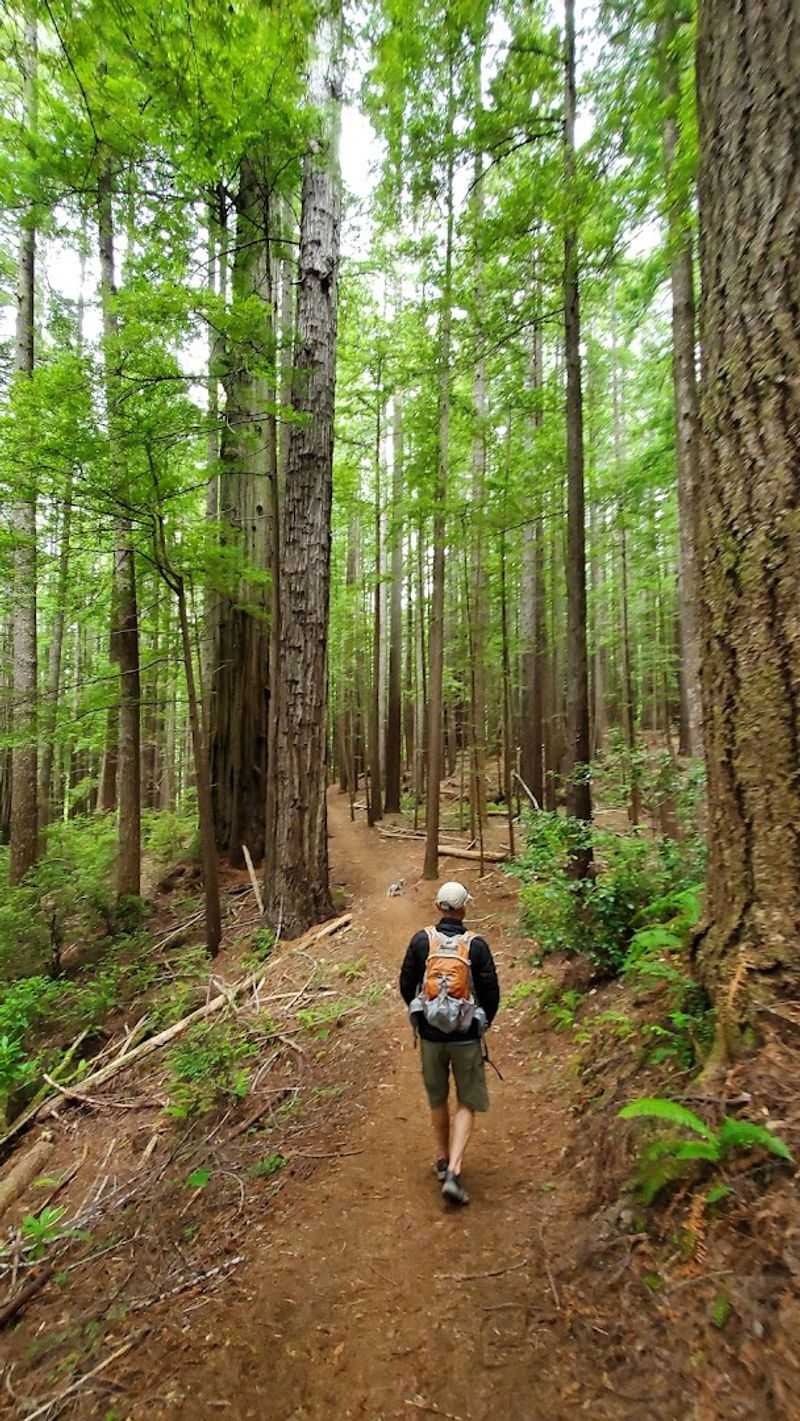
Once you step onto the trail, you will reach a fork fairly quickly. The right branch leads to the short loop, which covers about three-quarters of a mile and stays relatively flat.
It is friendly for young children, older hikers, and anyone who wants a gentle stroll without much exertion.
The left branch takes you on the longer route, which runs somewhere between one and two miles depending on the path you take. This version has a bit more elevation change, but nothing that requires serious fitness.
Most people in average shape can complete it comfortably by taking a steady pace and pausing to look up every now and then.
Both loops pass through the heart of the redwood grove, so you will not miss the main attraction on either route. The longer trail simply gives you more time among the trees and a slightly different perspective on the forest floor and canopy above.
Several visitors have noted they wished there were even more miles to explore, which says a lot about how enjoyable both options feel once you are inside the grove.
The Redwood Trees Themselves: Ancient and Overwhelming
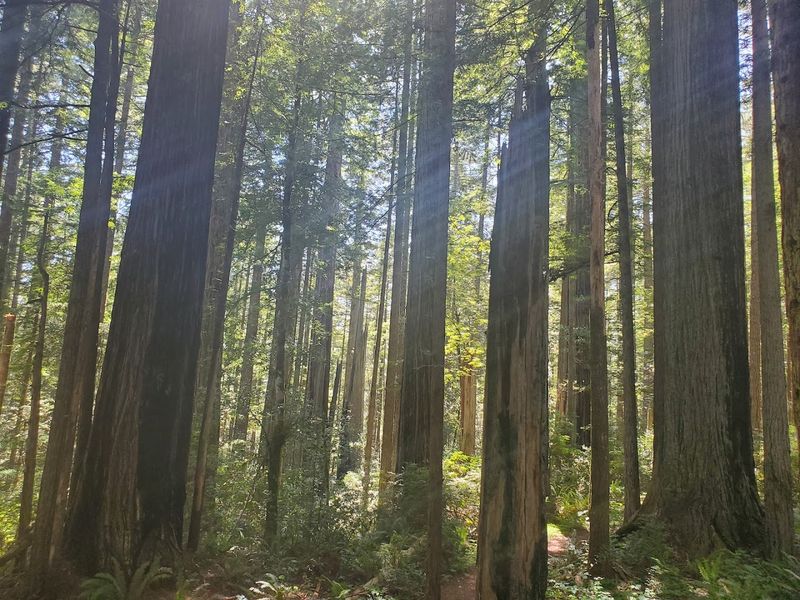
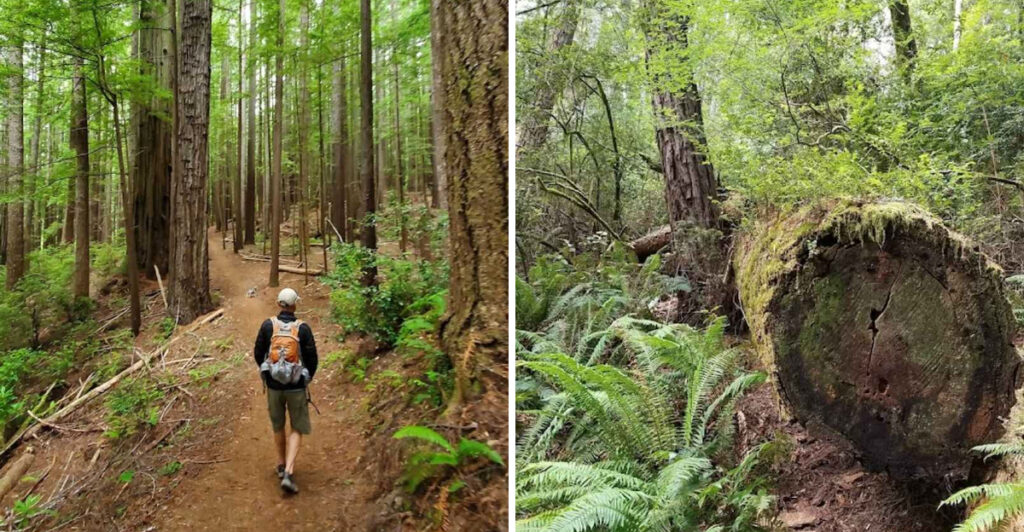
Nothing fully prepares you for the moment you round a bend and the redwoods come into full view. These trees are enormous in the most literal sense, with trunks so wide that several adults holding hands could not reach around them.
Some of the trees in this grove have been standing for centuries, and they carry that age in the deep grooves and reddish-brown bark that gives the species its name.
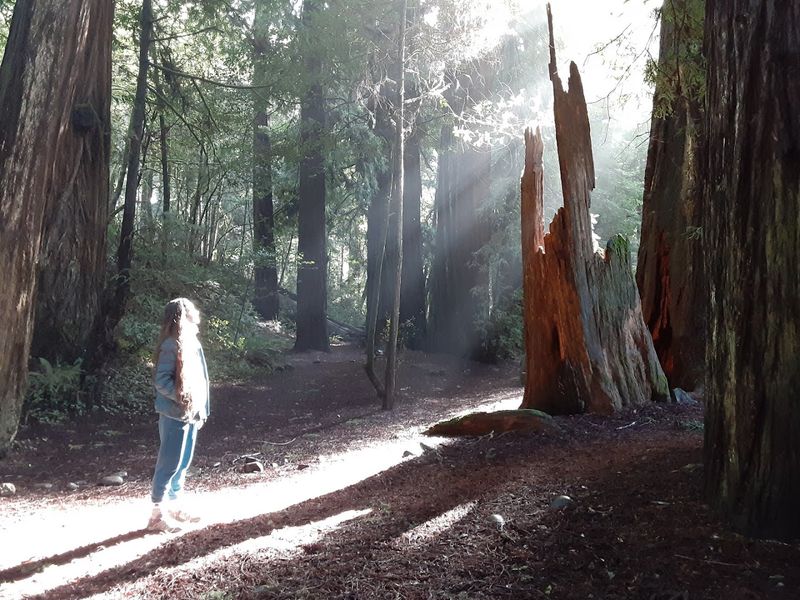
One of the most memorable features along the short loop is a burned-out hollow redwood large enough to walk inside. Standing within that charred shell while looking up through the open top is one of those experiences that stays with you long after the hike ends.
The canopy overhead filters sunlight in a way that makes the whole forest feel softly lit, even on overcast days. Misty mornings are particularly striking here, when low clouds settle between the trunks and the grove takes on an almost otherworldly quality.
These trees are genuinely comparable to the famous Jedediah Smith Redwoods in northern California, and the fact that so few people know this grove exists makes the whole experience feel even more remarkable.
The Sounds and Silence of the Forest
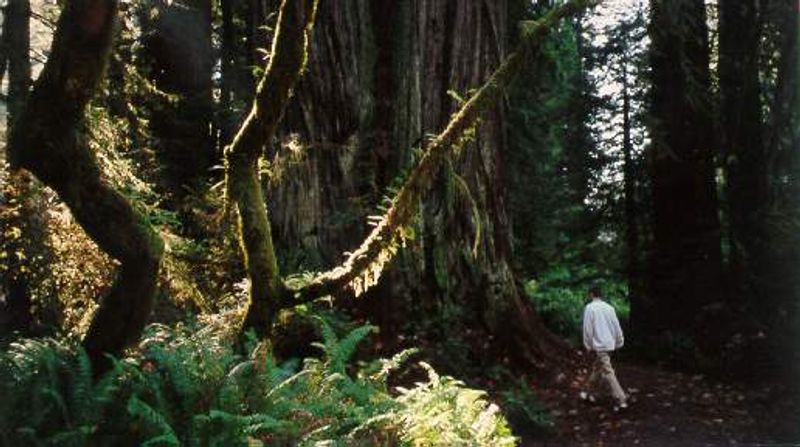
One of the most unexpected things about this trail is how quiet it is. Not just quiet in the way a park is quiet, but genuinely hushed in a way that feels almost physical.
The massive trunks absorb sound, and the thick canopy above blocks wind, leaving a stillness that most people rarely experience in daily life.
The occasional bird call breaks through, but for long stretches the only sound is your own footsteps on the soft trail. That level of quiet has a way of slowing your thoughts down in a manner that no phone app or meditation podcast can quite replicate.
Many hikers describe leaving the trail feeling noticeably calmer than when they arrived.
Even on weekends, the trail sees very little foot traffic, so the silence is rarely broken by other visitors. On weekday mornings especially, you may complete the entire loop without seeing another person.
That kind of solitude in a forest full of trees this size is genuinely hard to find anywhere on the West Coast, and it is one of the strongest reasons people return to this trail again and again.
Wildlife and Nature Along the Trail
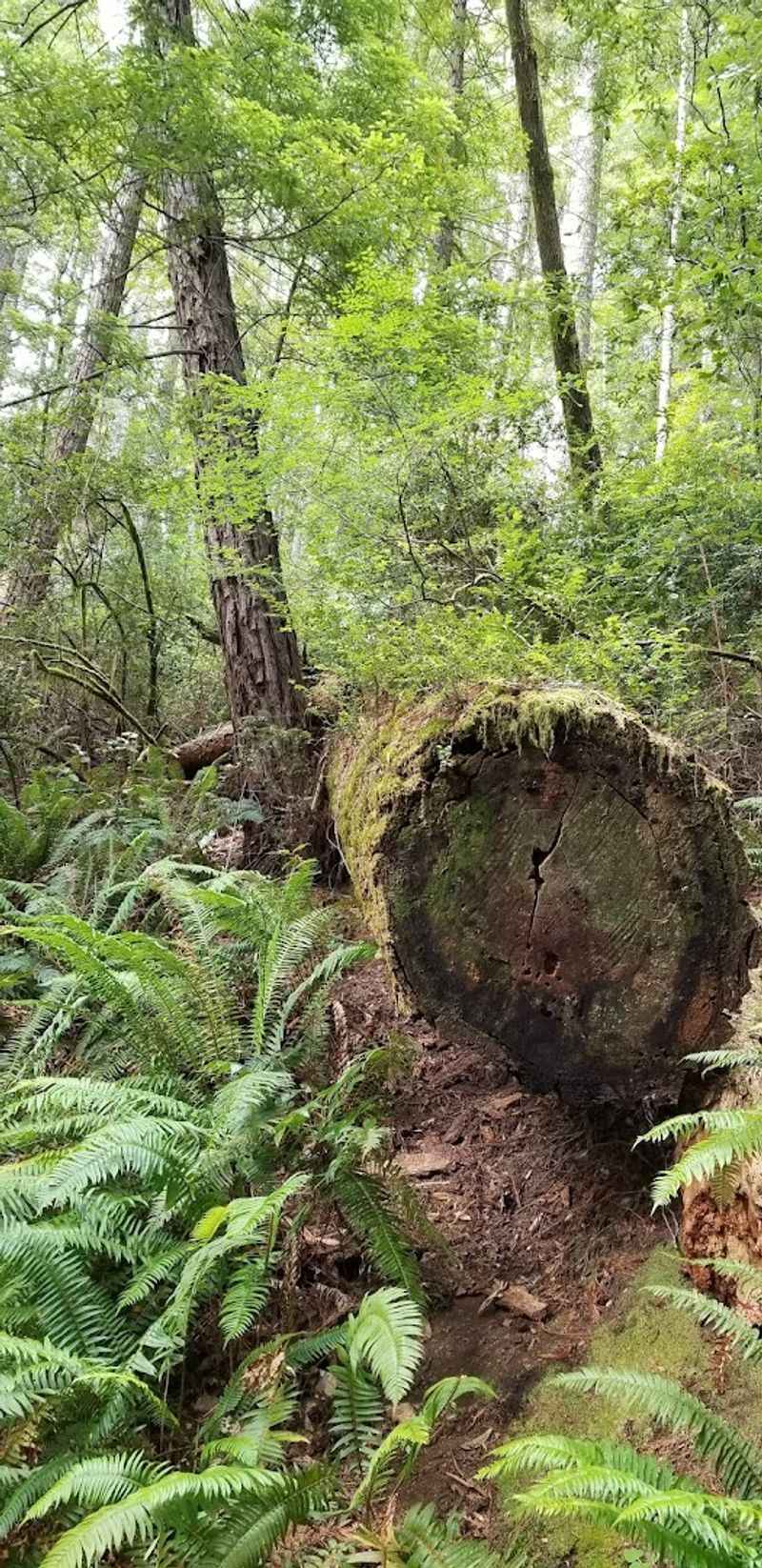
The forest around the trail supports a surprisingly rich mix of plant and animal life. The understory beneath the redwoods is thick with ferns, mosses, and smaller conifers that thrive in the cool, moist shade.
The ground itself is soft and spongy from years of accumulated organic material, which gives the whole trail a cushioned, almost springy feel underfoot.
Birds are the most commonly spotted wildlife, with various species flitting through the mid-canopy layer. The area is also known to be bear country, so staying aware of your surroundings and making a bit of noise on the trail is a reasonable precaution.
Mountain lions have also been reported in the broader region, though sightings on the trail itself are extremely rare.
The biodiversity here reflects how intact this particular patch of forest remains. Because access is difficult and visitor numbers stay low, the ecosystem has not been heavily disturbed.
Fallen logs are left to decompose naturally, providing habitat for insects and small animals that form the base of the food chain. The whole forest feels less like a managed park and more like a working, breathing ecosystem doing exactly what it has always done.
Best Time of Year to Visit
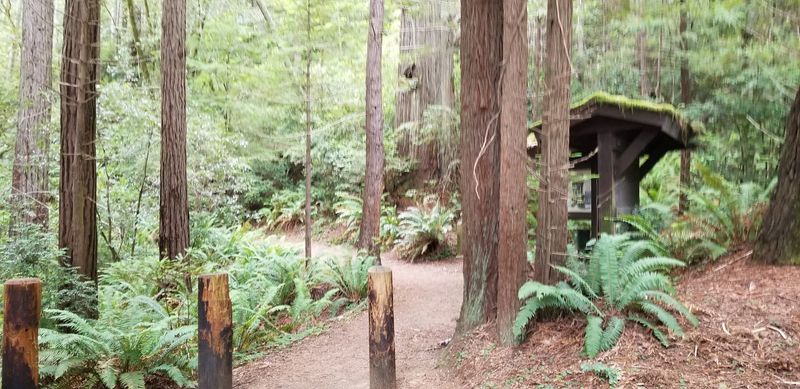
The trail is technically open year-round, but the experience and the road conditions vary significantly by season. Early June tends to be a sweet spot, with mild temperatures, lush green undergrowth, and manageable road conditions after the worst of the winter rains have passed.
The forest is especially vibrant in late spring when everything is freshly green.
Summer weekends bring slightly more visitors, though the trail never really gets crowded by any normal hiking standard. Arriving on a weekday morning in summer almost guarantees you will have the grove to yourself for at least part of your visit.
Fall brings a different kind of beauty, with cooler air and a quieter atmosphere as the tourist season winds down.
Winter and early spring visits are possible but come with real road hazards. The gravel track becomes significantly more difficult in wet weather, and the deep ruts fill with water, making it genuinely challenging even for high-clearance vehicles.
If you plan a winter visit, checking road conditions with the Rogue-Siskiyou National Forest ranger district at +1 541-247-3600 before heading out is a worthwhile step that could save you a frustrating turnaround.
How Difficult Is the Hike, Really
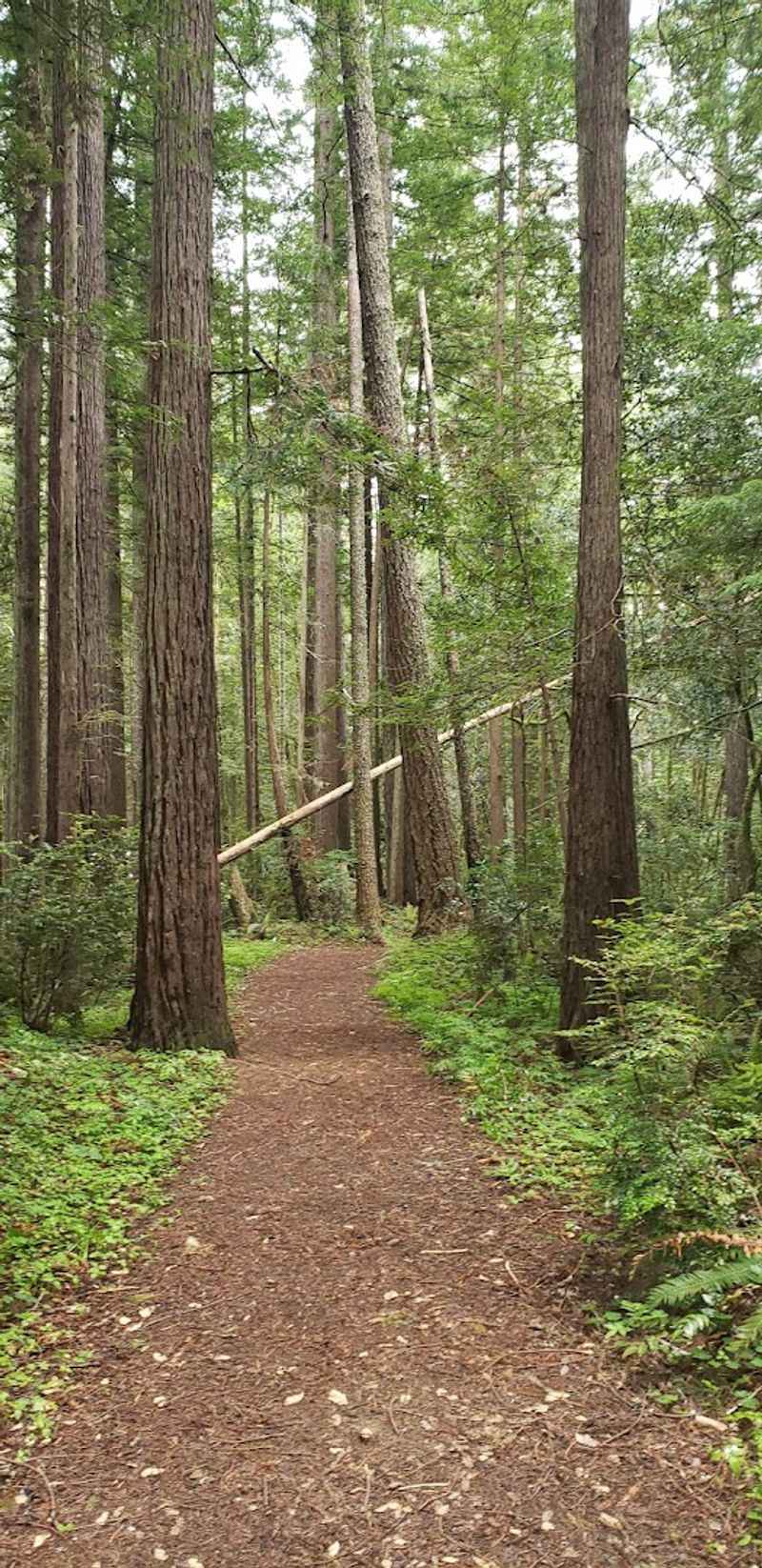
The trail has a reputation for being far more accessible than the drive in might suggest. The paths are wide, well-marked, and have minimal elevation change overall, especially on the shorter loop.
Even hikers who do not consider themselves particularly athletic have completed the full route without much difficulty.
Trekking poles are helpful for anyone with balance concerns, particularly on the few sections where tree roots cross the path or the ground gets slightly uneven. The trail surface stays firm enough to walk on comfortably in standard hiking shoes, though waterproof footwear is a smart choice in wetter months.
The longer loop does involve a bit more climbing, but the grade is gentle and the payoff at each elevated viewpoint into the canopy makes the effort feel worthwhile. Children who are old enough to walk a mile or so independently tend to find the trail engaging rather than exhausting, especially when they spot the hollow burned-out redwood.
Families with toddlers have successfully completed the short loop as well, making this one of those rare forest hikes that genuinely works for a wide range of fitness levels and ages.
What to Bring and How to Prepare
A little preparation goes a long way on this trail, mostly because of how remote the location is. Cell service disappears well before you reach the trailhead, so downloading offline maps before you leave is not optional if you want navigation help.
AllTrails and Gaia GPS both work well for this purpose and allow you to save trail data for areas with no signal.
Water is essential since there are no facilities beyond the pit toilet and no vendors anywhere near the area. Bringing more than you think you need is the right call, especially in summer.
Snacks and a small picnic are easy to enjoy at one of the two picnic tables located along the trail.
Sunscreen matters less here than bug spray, since the dense canopy blocks most direct sun but the forest edges can have mosquitoes in warmer months. A camera with a wide-angle lens captures the trees far better than a standard phone camera, though plenty of visitors manage beautiful shots with phones alone.
Sturdy shoes, a light jacket, and a fully charged battery pack round out the essentials for a comfortable and well-prepared visit.
How This Trail Compares to the Famous California Redwood Parks
Anyone who has visited Jedediah Smith Redwoods State Park or Redwood National Park in northern California will feel a familiar sense of wonder on this trail, but with one very noticeable difference: the crowds are simply not here. The California parks draw hundreds of thousands of visitors each year, and even on quieter days the parking lots fill up and the trails get busy.
The Oregon Redwoods Trail offers a forest experience that feels genuinely private. The trees are every bit as tall and ancient as their California counterparts, and the grove has the same cathedral-like quality that makes redwood forests so affecting.
The difference is that you are far more likely to experience it in complete solitude.
The trade-off is the access road, which is rougher and less tourist-friendly than the paved entrances of the California parks. But for many hikers, that difficulty is actually part of the appeal.
The challenging drive acts as a natural filter, keeping the trail quiet and the forest undisturbed. For anyone who loves redwoods but dreads the crowds that come with the famous parks, this Oregon alternative is a genuinely compelling option worth the extra effort.
Final Thoughts on Why This Trail Is Worth the Trip
Not every great trail announces itself with a billboard or a busy parking lot. Some of the best places in the country stay that way precisely because getting there requires a little commitment and a willingness to navigate a bumpy road without perfect cell service.
The Oregon Redwoods Trail is that kind of place, and it rewards the effort generously.
The combination of ancient trees, genuine quiet, and low visitor numbers creates an experience that feels increasingly rare in a world where popular outdoor destinations are getting busier every year. Whether you do the short loop or the longer one, the grove delivers something that is hard to put into words but easy to feel the moment you step beneath the canopy.
Southern Oregon is full of natural beauty, but this particular corner of the Rogue-Siskiyou National Forest holds something special. The trees have been here far longer than any road or trailhead sign, and they will likely outlast most things we build.
Visiting a place like this has a way of putting things in perspective, and that alone makes the bumpy four-mile drive completely and entirely worth it.
Share this story