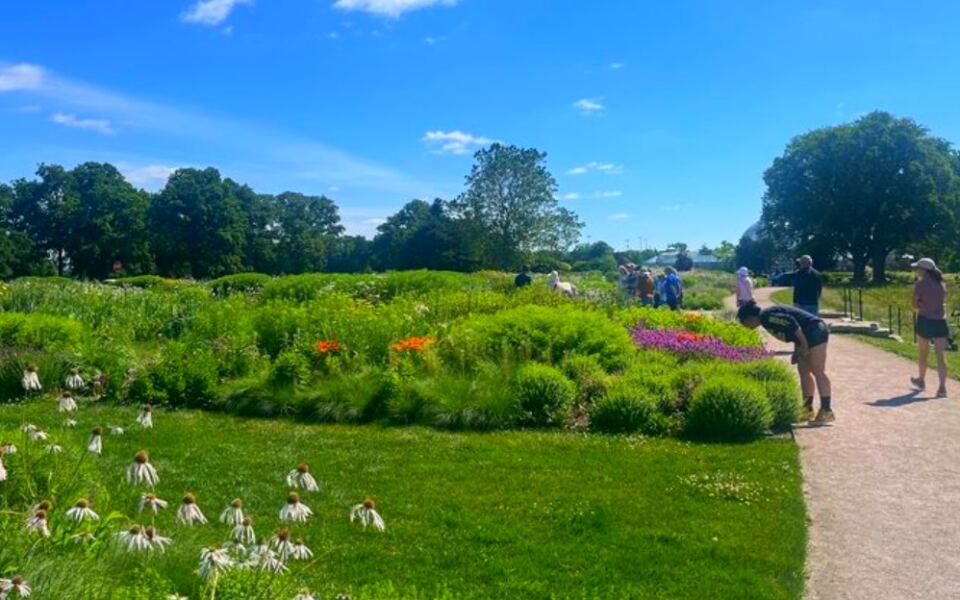
On Belle Isle in Detroit, a 2.5-acre garden designed by a leading landscape architect offers a changing display of native plants throughout the year, and it is completely free to visit. Despite comparisons to major urban spaces like the High Line and Lurie Garden, many people still overlook it.
The design is intentional and precise, with every plant placed according to a detailed plan. Visitors come for seasonal highlights like Monarch butterflies and evolving color patterns, but the real draw is how much variety and structure is packed into a relatively small space.
Where Exactly You Will Find This Garden

Belle Isle is a 982-acre island park sitting right in the middle of the Detroit River, and that is exactly where you will find this remarkable garden. The official address is Loiter Way and Picnic Way, Detroit, MI 48207, tucked near the Belle Isle Conservatory on the eastern side of the island.
Getting there is straightforward. You cross the MacArthur Bridge from the mainland, and once you are on the island, follow the signs toward the Conservatory.
Parking is available close to the garden entrance, which visitors consistently describe as convenient and easy to navigate.
Out-of-state visitors should note that Belle Isle charges an $11 day pass fee for vehicles, though walk-ins and cyclists get in free. The garden itself has no admission charge at all, making it one of the most accessible world-class green spaces you will find anywhere in the United States.
The hours run from 5 AM to 10 PM every day of the week.
The Man Behind the Magic: Piet Oudolf’s Vision
Piet Oudolf is not a household name for most people, but among garden designers and landscape architects, he is essentially royalty. The Dutch designer is the creative force behind New York’s High Line, Chicago’s Lurie Garden, and the Hauser and Wirth gallery gardens in Somerset, England.
His philosophy, often called the New Perennial Movement, flips traditional garden design on its head. Rather than filling beds with colorful annuals that need constant replanting, Oudolf selects perennials, grasses, and native plants that go through their full natural life cycle, looking just as compelling in winter dormancy as they do at peak summer bloom.
Every plant in this Detroit garden was placed according to one of Oudolf’s hand-drawn color pencil sketches, a process he has used throughout his career. That old-school, deeply personal approach to design is part of what makes the finished result feel so alive and intentional rather than simply decorative.
More on what those plants actually look like up close is coming next.
A $4.7 Million Gift to Detroit’s Public Spaces
This garden did not appear by accident. The Garden Club of Michigan spent years fundraising and planning before a single plant went into the ground, ultimately raising $4.7 million to cover both the installation and an ongoing endowment to keep the garden maintained for years to come.
The project officially opened in August 2021, making it a relatively recent addition to Belle Isle’s already impressive roster of attractions. The fundraising effort represented one of the largest private investments in a public green space in Michigan’s recent history.
What is particularly admirable is that all of that money resulted in a space that is completely free to enter. There are no ticket booths, no membership requirements, and no roped-off sections reserved for donors.
The Garden Club essentially handed Detroit a world-class public amenity and asked for nothing in return from visitors. That kind of civic generosity is rare, and it shows in the way the community has embraced and cared for the space since opening day.
160-Plus Plant Varieties Packed Into 2.5 Acres
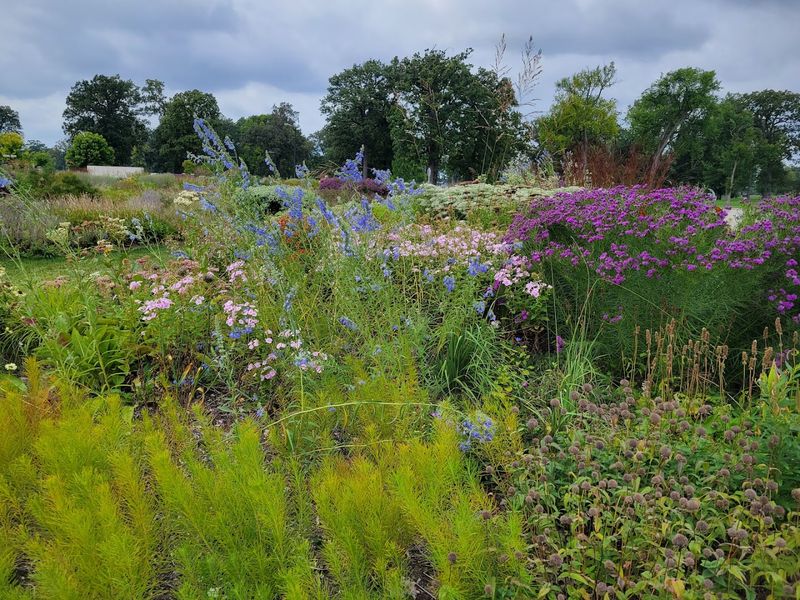
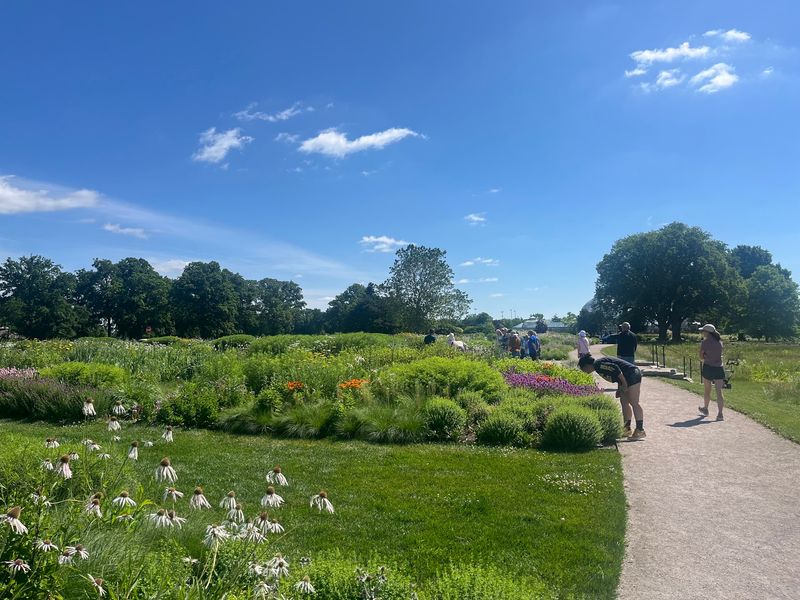
Two and a half acres might not sound enormous, but Oudolf’s planting style makes every square foot count. The garden contains over 160 varieties of plants, grasses, shrubs, and trees, and the density and layering of those plants creates a visual richness that feels far larger than the footprint suggests.
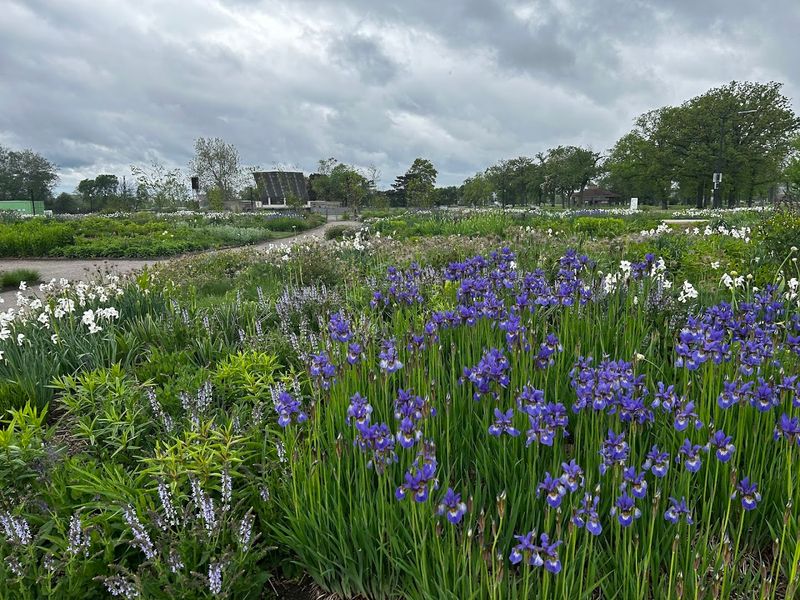
Drifts of salvia and irises thread through beds of daffodils and tulips, with native grasses rising behind them and later-blooming perennials ready to take over as the season progresses. The design ensures that something is always happening, always shifting, always drawing your eye somewhere new.
Lavender and clover add fragrance to the mix, while ornamental grasses catch the river breeze and create gentle, constant movement throughout the beds. The planting ideas on display here are practical enough that home gardeners regularly leave inspired, mentally noting combinations they want to try in their own yards.
The butterfly situation, which is genuinely jaw-dropping, deserves its own section entirely.
Monarch Butterflies and the Wildlife That Calls This Garden Home

Nobody warned me about the butterflies. The Monarch population at this garden is extraordinary, and on a warm summer afternoon the air above the beds seems to shimmer with orange and black wings moving in every direction.
The naturalistic planting style is the reason for all of this wildlife activity. By choosing plants that native pollinators actually rely on, rather than showy ornamentals that look good but offer little ecological value, Oudolf created a functioning habitat as much as a visual experience.
Bees work the lavender constantly, and birders report picking up ten or more species in just a few minutes using identification apps while standing in the garden.
The ecological thinking behind the design is part of what separates this garden from a conventional municipal flower bed. Every plant earns its place by supporting the broader ecosystem, which means the garden is genuinely alive in a way that most manicured parks simply are not.
The seasonal transformation this wildlife depends on is equally worth knowing about.
How This Garden Changes With Every Season
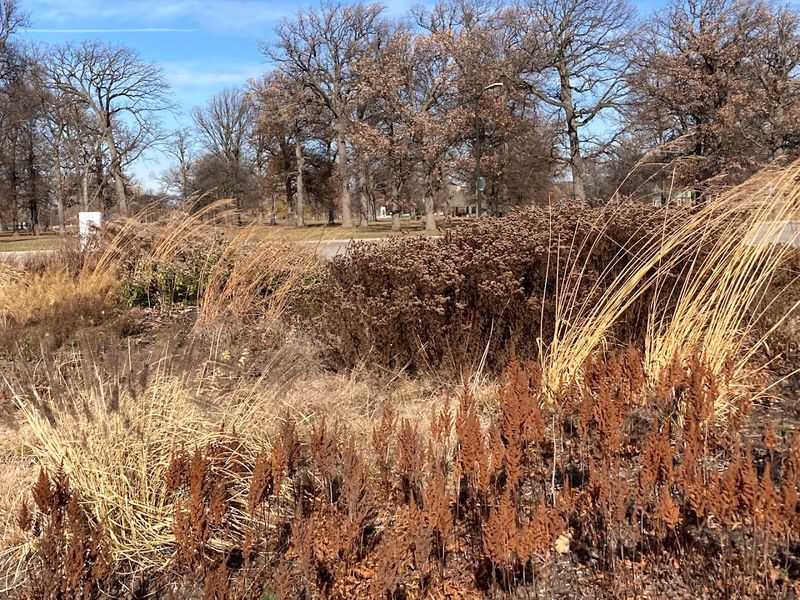
One of the most deliberate features of Oudolf’s design is that the garden never looks the same twice. Spring brings early bulbs and fresh green growth pushing through the soil.
By summer, the beds are dense with color, fragrance, and movement, and the butterfly population reaches its peak.
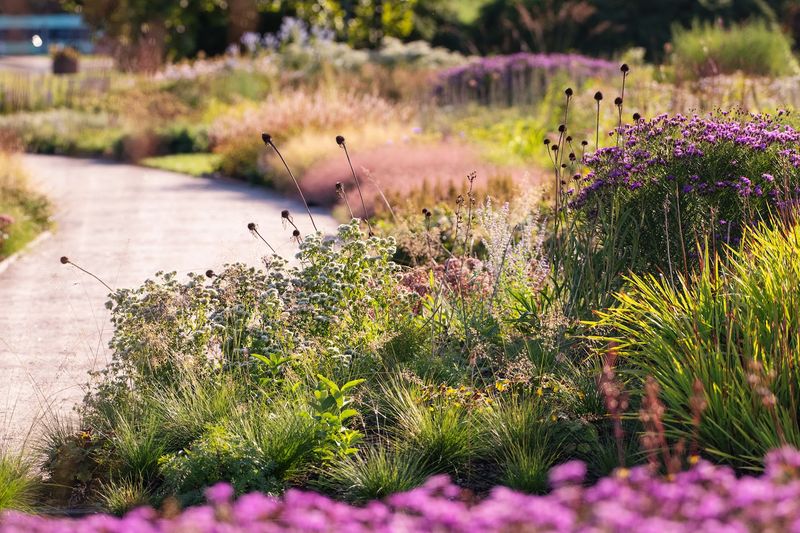
Autumn is when the grasses turn gold and copper, and the seed heads of spent perennials begin to add texture and structure to the planting beds. Many visitors argue that this is actually the most photogenic time to visit, when the warm light hits the dried flower heads and grasses and the whole garden glows.
Even in winter, the garden holds its shape. The dried stems and seed heads remain standing through the cold months, providing both visual interest and food sources for birds.
This four-season approach is central to Oudolf’s philosophy and is part of what makes return visits feel genuinely rewarding rather than repetitive. There is always something new waiting.
The Rain Garden and Wetland Restoration Underway

Beyond the main planting beds, the garden includes a small rain garden that has been quietly improving since the opening. Rain gardens are designed to capture and filter stormwater runoff, using carefully selected plants to slow water down and allow it to soak into the ground rather than running off into drainage systems.
The inclusion of this feature reflects the broader ecological ambition of the project. Belle Isle sits in the middle of the Detroit River, and the design team built resilience against flooding directly into the garden’s structure from the beginning, choosing materials and plant placements that can handle high water events without being destroyed.
A full restoration of the adjacent wetlands is also currently underway, which means the garden’s ecological footprint is still growing. Future visits will likely include access to restored native wetland habitat alongside the existing perennial beds, making the overall experience richer and more diverse.
The practical details of visiting, including what is nearby, are worth covering before you plan your trip.
The Views From This Garden Are Genuinely Surprising
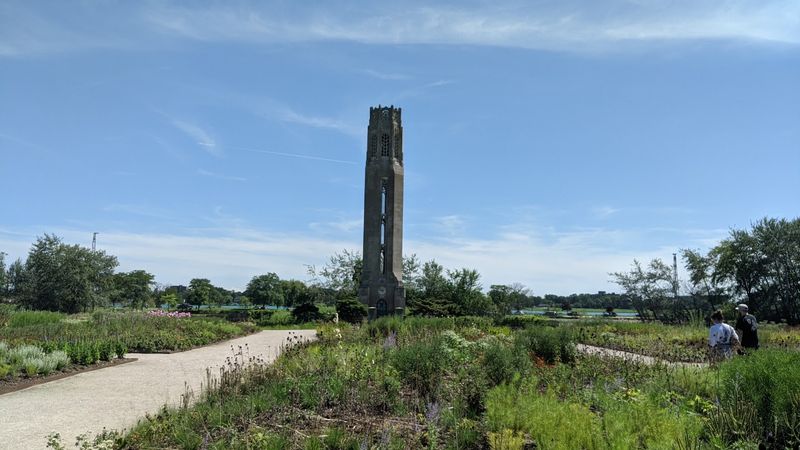
Nobody expects to watch massive cargo ships glide past while standing in a flower garden, but that is exactly what happens here. The garden sits close enough to the Detroit River that you can see both the Canadian shoreline and the steady parade of freighters and vessels that use this busy shipping lane.
The contrast is genuinely striking. You are surrounded by native grasses and blooming perennials, bees humming nearby, and then a ship the size of a city block drifts past in the background.
It is one of those only-in-Detroit moments that you cannot really plan for but will absolutely remember.
The broader Belle Isle setting adds to the effect. The island itself offers views of the Detroit skyline on one side and Windsor, Ontario on the other, giving the garden a geographic context that feels almost cinematic.
Restrooms are available nearby, next to the aquarium and the small indoor botanical garden, which makes a longer visit very comfortable to plan.
What the Paths and Layout Feel Like on the Ground
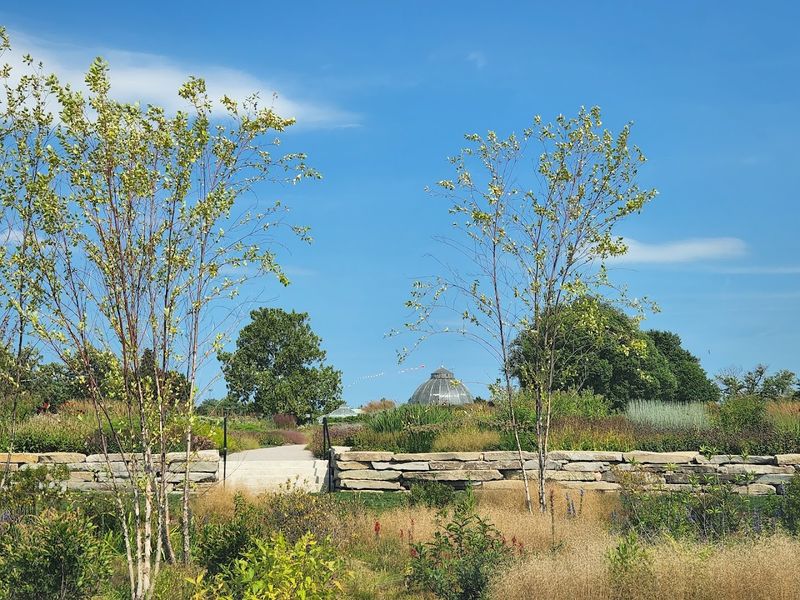
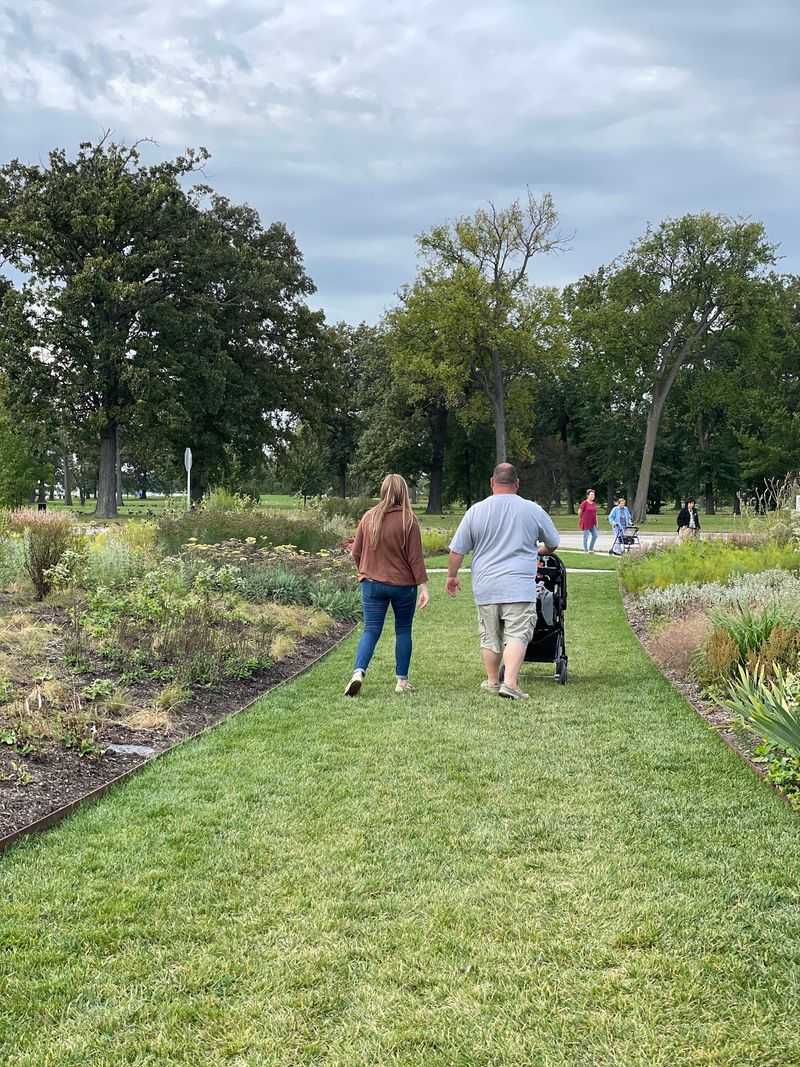
The layout of the garden rewards slow walking. The paths are well-maintained and clearly defined, winding through the planting beds in a way that gives you close-up views of individual plant groupings while also offering longer sightlines across the full design.
The scale feels human and approachable rather than grand or intimidating. You can walk the entire garden in about twenty to thirty minutes at a casual pace, though most people end up stopping frequently to look at specific plants, watch insects, or simply stand still and take in the layered textures around them.
Volunteers roam the paths regularly and are genuinely happy to answer questions about specific plants or design choices, which adds an educational layer to the visit that you would not get from simply reading a sign. The paths are also accessible enough for most visitors, and the nearby parking area makes arrival simple.
The garden’s relationship with its famous neighbor, the Belle Isle Conservatory, is also worth a mention.
The Belle Isle Conservatory Next Door
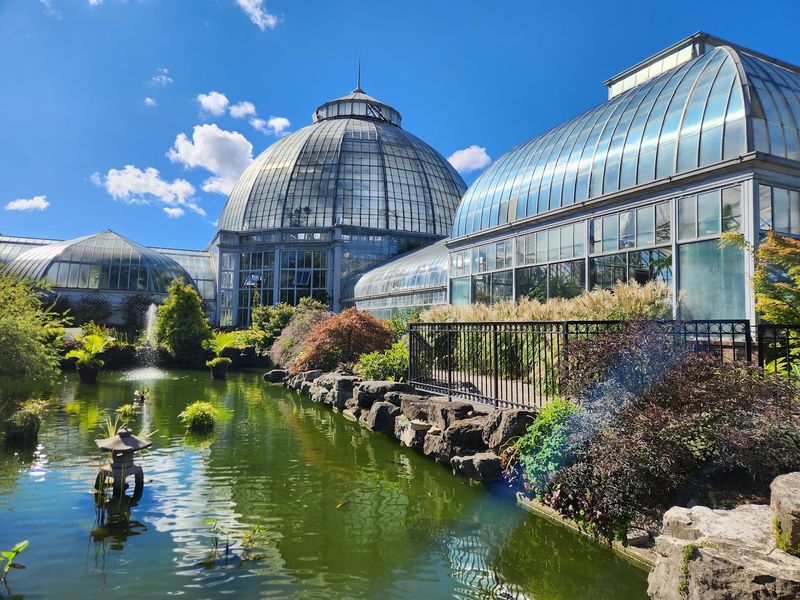
Right next to the Oudolf Garden sits the Anna Scripps Whitcomb Conservatory, one of the oldest continually operating conservatories in the United States. The two spaces complement each other in an interesting way: the Conservatory offers a curated, climate-controlled look at exotic plants from around the world, while the Oudolf Garden presents a completely different philosophy rooted in naturalism and seasonal change.
Visiting both in a single afternoon gives you a genuinely comprehensive picture of how differently people think about plants and designed landscapes. The Conservatory’s historic glass dome and formal interior feel almost theatrical compared to the organic, windswept character of the outdoor garden just steps away.
Restrooms are located near the Conservatory and the adjacent aquarium building, which is useful to know before you commit to a long afternoon on this part of the island. Together, the Conservatory and the Oudolf Garden make this corner of Belle Isle one of the most rewarding cultural destinations in all of Michigan.
Tips for Getting the Most Out of Your Visit
Timing your visit thoughtfully makes a real difference here. Late summer and early autumn tend to offer the most dramatic combination of blooming perennials and ornamental grasses, though spring is equally rewarding when the early bulbs are pushing through and the garden feels fresh and new.
Morning visits are quieter and the light is excellent for photography. The garden opens at 5 AM every day, which means early risers can have the paths almost entirely to themselves during the golden hour before the rest of Belle Isle wakes up.
Bring comfortable walking shoes, and consider pairing the garden visit with a full loop of Belle Isle by car or bike, since the island has beaches, a nature center, a yacht club, and historic architecture worth exploring. Walk-ins and cyclists enter Belle Isle free, while drivers from out of state pay an $11 day pass fee.
The garden itself always remains free, no matter how you arrive. Plan accordingly and you will leave very satisfied.
Why This Garden Matters Far Beyond Detroit
There is a broader conversation happening in the gardening world right now about how we design public green spaces, and this garden is part of it. The New Perennial Movement that Oudolf helped pioneer represents a fundamental rethinking of what a garden is supposed to do, prioritizing ecological function, seasonal honesty, and long-term resilience over short-term showiness.
Having a garden of this caliber in Detroit, a city with a complicated and deeply human story of reinvention, feels meaningful in a way that goes beyond aesthetics. The Garden Club of Michigan essentially made a statement that this city deserves world-class public beauty, and Oudolf responded by giving Detroit something that stands alongside his work in New York and Chicago.
The garden holds a 4.8-star rating and continues to grow, with new features being added and the adjacent wetlands still being restored. Every season brings something new, and every visit feels like a small discovery.
That quality, the sense that there is always more to notice, is exactly what keeps people coming back.
Share this story