 Unearth The Voyage
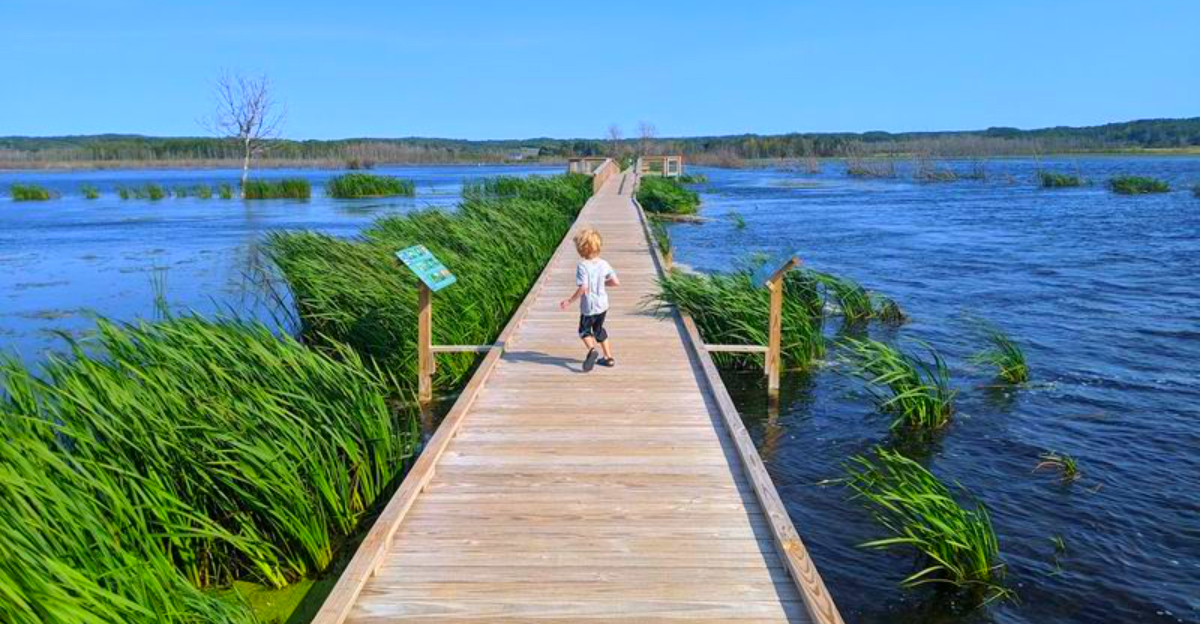
A mile-long boardwalk in northern Michigan takes you directly over a protected coastal marsh, not just alongside it. It’s one of fewer than 15 wetlands like this left along Lake Michigan’s Lower Peninsula shoreline, and most visitors don’t even know it exists.
The path runs through 273 acres of preserved habitat and is completely free to access. It draws birders, families, and anyone curious about a rare ecosystem you can walk through without disturbing it.
What makes it stand out isn’t just the setting, but how accessible and overlooked it is. The details ahead explain why this spot is far more than just another nature walk.
Where This Preserve Actually Sits on the Map
The address is 16791 Northwood Hwy, Arcadia, MI 49613, and the preserve sits just south of the small Village of Arcadia along the east side of M-22, one of Michigan’s most scenic drives along the Lake Michigan shoreline.
The parking lot is easy to find and comes with handicap-accessible spaces, so getting from your car to the boardwalk entrance takes almost no effort at all. There is a second access point on the far end near St. Pierre Road, which means you could arrange a one-way walk if you have two vehicles in your group.
The preserve is managed by the Grand Traverse Regional Land Conservancy, a nonprofit organization that has worked hard to protect this land for public enjoyment. Hours run from 7 AM to 8 PM every day of the week, and there is no admission fee, which honestly makes the whole experience feel like a gift.
Bring a camera, because you will want proof.
The Story Behind One of Michigan’s Rarest Ecosystems
Great Lakes Coastal Marshes are not common. Of all the wetland habitats that once lined the shores of Lake Michigan’s Lower Peninsula, only about 15 remain in anything close to their natural state, and Arcadia Marsh is one of them.
These coastal marshes form in low-lying areas where freshwater from inland streams and rivers meets the influence of the Great Lake nearby. The result is a layered, complex habitat that supports an extraordinary variety of plant and animal life.
The marsh at Arcadia covers 273 acres, and every inch of it is doing ecological work.
What makes it especially valuable is that it has not been drained, filled, or developed like so many other wetlands across the Midwest. The Grand Traverse Regional Land Conservancy recognized that value and moved to protect it permanently.
Knowing that this kind of habitat took thousands of years to develop, and can disappear in a single construction season, makes every visit feel a little more meaningful.
What the Boardwalk Itself Feels Like to Walk
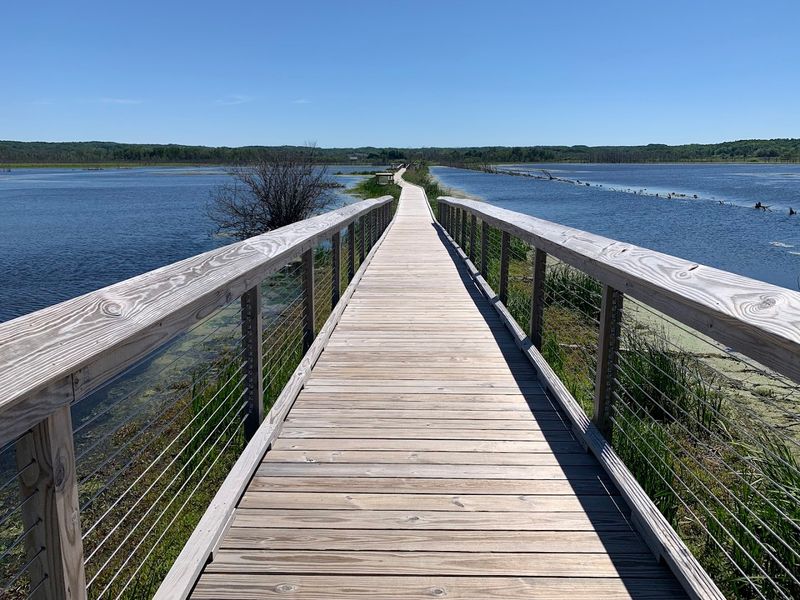
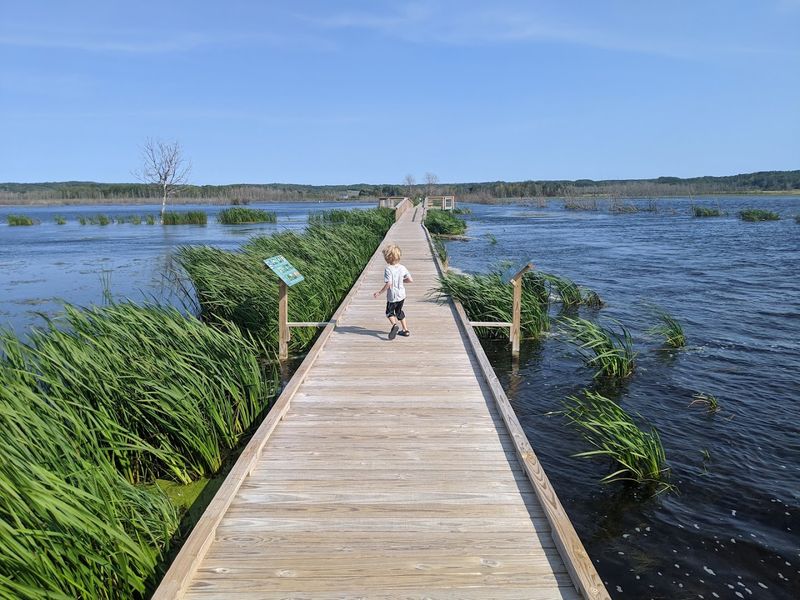
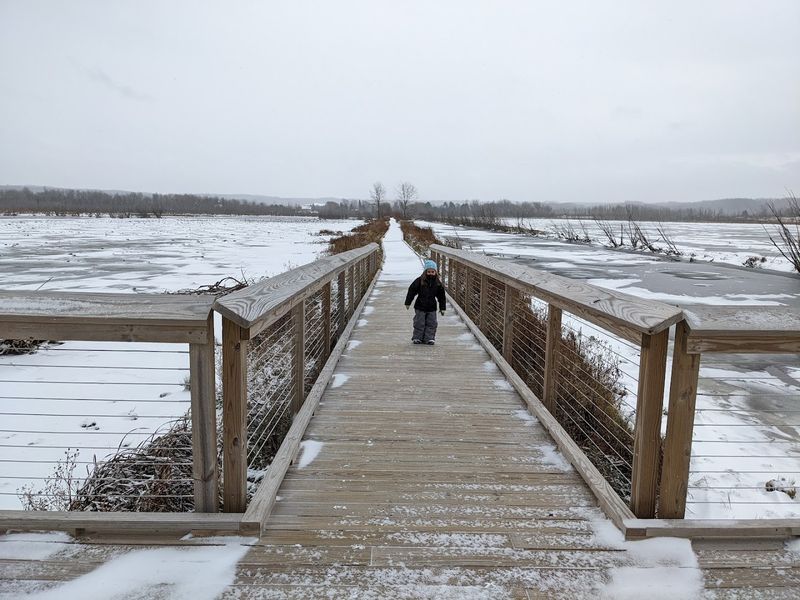
The boardwalk runs approximately 0.75 miles in one direction, making the full out-and-back trip about 1.5 miles total. The surface is smooth, level, and wide enough for two people to pass each other comfortably without anyone having to step aside.
There are no steep grades, no uneven terrain, and no tricky footing. The whole thing is universally accessible, meaning it works well for strollers, wheelchairs, and anyone who cannot handle rough trails.
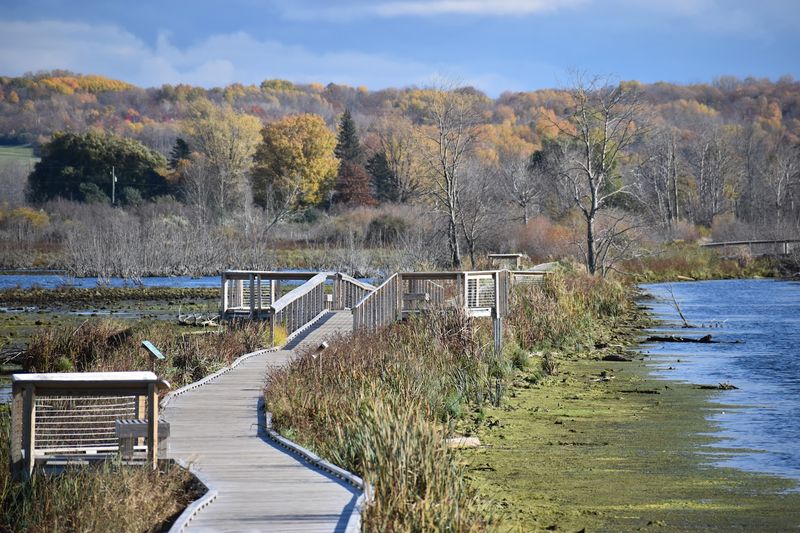
Benches and rest areas are spaced along the route so you can pause, sit, and simply watch the marsh do its thing.
Some sections of the boardwalk sit very close to the water surface, which gives you an almost eye-level view of the vegetation and wildlife around you. The feeling is less like hiking and more like floating.
You are not observing the marsh from a distance, you are right there in the middle of it, and that proximity changes everything about how the place feels.
The Bird Life That Makes Birders Lose Their Minds
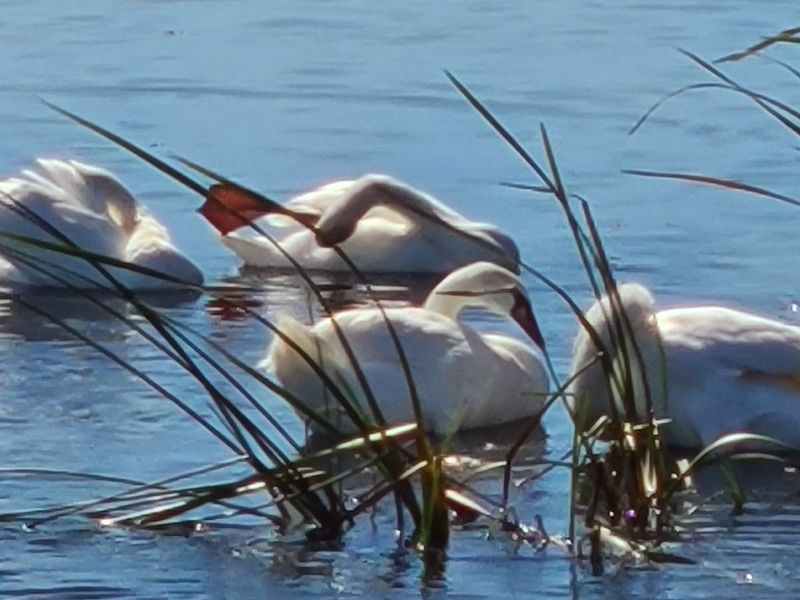
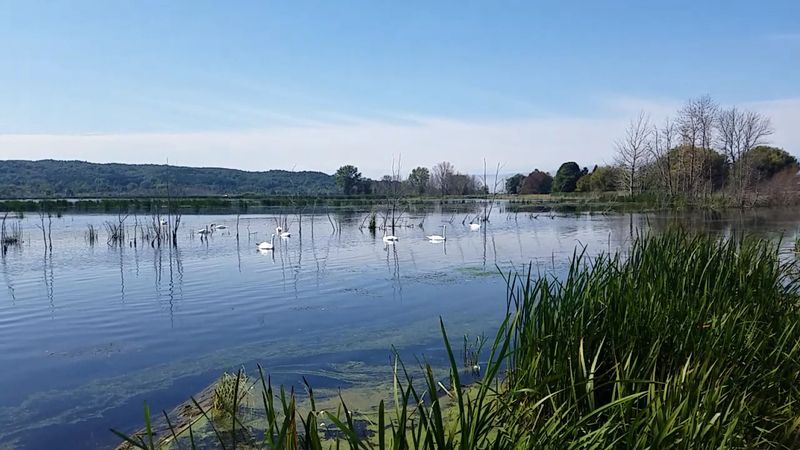
Over 150 bird species have been recorded at Arcadia Marsh, and some sources put that number closer to 200. That range includes everything from great blue herons and trumpeter swans to warblers, rails, and shorebirds that pass through during migration.
Trumpeter swans are a particular highlight. These birds were once nearly gone from Michigan entirely, and seeing them glide across open marsh water is the kind of moment that makes people stop mid-sentence and just stare.
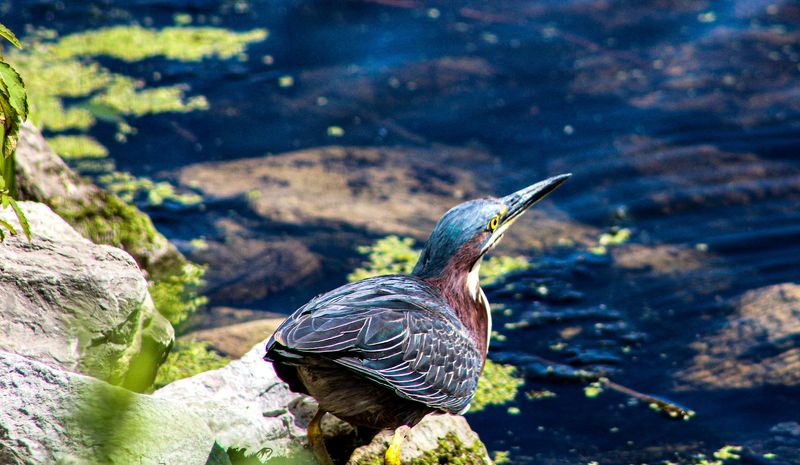
The marsh also hosts nesting waterfowl, red-winged blackbirds, sandhill cranes, and a long list of songbirds during spring migration.
Bringing binoculars is strongly recommended, because many of the best sightings happen at a distance. A birding app on your phone can help you identify calls and species as you go.
Early morning visits tend to produce the most activity, when birds are feeding and the marsh is quieter. The section of boardwalk closed for nesting season hints at just how seriously this place takes its feathered residents.
The Nesting Season Closure You Need to Know About
Each year from April 15 to July 15, a 0.25-mile section of the boardwalk is closed to protect sensitive wetland birds during their peak nesting period. This is not a minor inconvenience, it is a deliberate choice to put wildlife needs ahead of visitor access, and it reflects the preserve’s deeper values.
During those months, the closed section is gated off and clearly marked. You can still walk the open portions of the boardwalk and see plenty of wildlife, but the full out-and-back experience is not available during that window.
If you are planning a trip specifically to walk the entire trail, aim for a visit outside the April 15 to July 15 range.
Ironically, the nesting season closure is also a sign that the marsh is working exactly as it should. Birds are choosing to nest here because the habitat is healthy enough to support them.
That is a conservation success story you can actually see from the boardwalk, and it is worth planning your visit around.
Wildlife Beyond the Birds: What Else Lives Here
Birds get most of the attention at Arcadia Marsh, but the water and vegetation are full of other creatures worth watching for. Turtles are a reliable sighting, especially painted turtles that stack up on logs near the boardwalk and bask in the afternoon sun with total confidence.
Muskrats are another regular presence. They move through the reeds and along the water’s edge, sometimes close enough to watch without binoculars.
Beavers have also been spotted in the area, and their engineering work is visible in some of the woody debris and altered water channels near the trail.
Fish are active in the waterways that run through the preserve. Salmon have been spotted in the river section, and the fishing pier gives anglers a chance to cast a line in a genuinely beautiful setting.
Frogs call loudly in spring and early summer, and dragonflies patrol the open water in warm months. The marsh is essentially a layered community of life, and the boardwalk puts you right in the middle of all of it.
The Interpretive Signage That Actually Teaches You Something
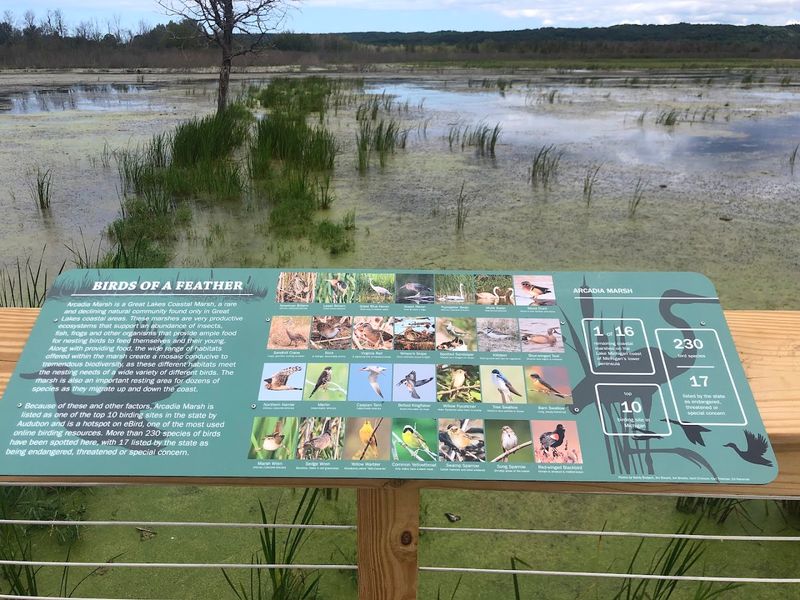
Scattered along the boardwalk are interpretive signs and information stations that explain the ecology of the marsh, identify common plant and animal species, and put the preserve’s conservation story in context. These are not the dry, text-heavy panels that most people skip past.
The signs are designed to be accessible and engaging, making them genuinely useful for kids and adults alike. They help you understand why the marsh looks the way it does, what the different vegetation zones mean, and which birds or animals you might be looking at from any given spot on the boardwalk.
For families with curious children, these stations can turn a pleasant walk into an actual learning experience. Kids who might otherwise lose interest on a nature trail tend to perk up when they can match what they see in the water to a labeled illustration on a sign.
The educational layer adds real depth to a visit that is already rewarding on its own terms, and it makes the whole experience stick with you longer after you leave.
How the Marsh Looks Across Different Seasons
Spring is electric at Arcadia Marsh. Migrating birds arrive in waves, amphibians fill the air with sound, and the vegetation shifts from brown winter stalks to vivid new green almost overnight.
The boardwalk in May feels like a front-row seat to the marsh waking up.
Summer brings dense, lush growth that closes in around the trail and makes the boardwalk feel almost tunneled in places. The light is warm and golden in the early morning, insects are active, and the water surface is alive with movement.
This is also when the nesting closure is in effect, so the experience is a bit shorter but no less beautiful.
Autumn transforms the marsh into something quieter and more dramatic. The cattails turn amber, the grasses go gold, and the open water reflects the sky with unusual clarity.
Winter visits are possible but require checking conditions, as the boardwalk can be icy. Each season offers a genuinely different version of the same place, which is reason enough to come back more than once.
Who This Trail Is Perfect For and Why
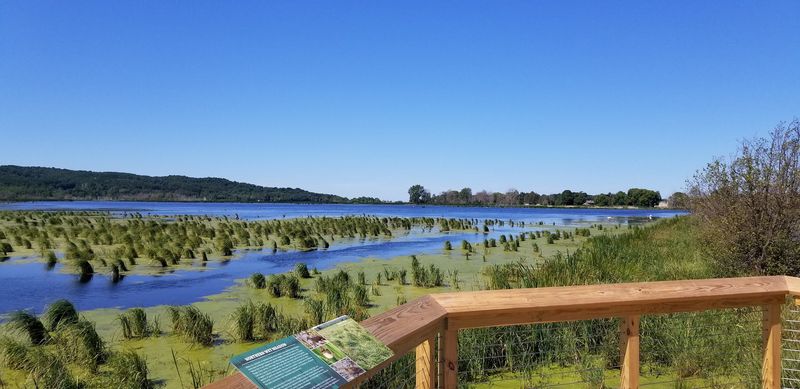
Universal accessibility is built into every part of this trail’s design. The boardwalk is smooth, level, and wide, which means wheelchairs, walkers, and strollers all move along it without any difficulty.
There are no barriers to entry here, which is genuinely rare for a natural preserve of this scale.
Families with young children find the trail easy to manage. The flat surface means little legs do not wear out quickly, and the constant wildlife activity keeps kids engaged from start to finish.
Turtles on logs, birds calling overhead, and fish visible in the water below the boardwalk boards give children plenty to focus on and talk about.
Serious nature enthusiasts, photographers, and birdwatchers also find the trail deeply rewarding. The close proximity to open water and dense marsh vegetation creates photography opportunities that are difficult to replicate anywhere else in the region.
The trail works equally well for a 20-minute stroll and a two-hour focused wildlife observation session, depending on what you are looking for.
The Plants That Make the Marsh So Visually Striking
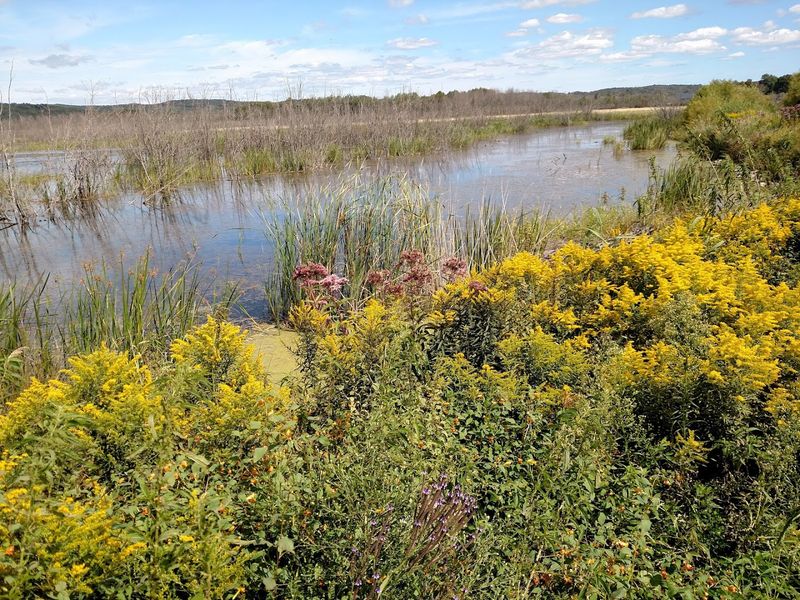
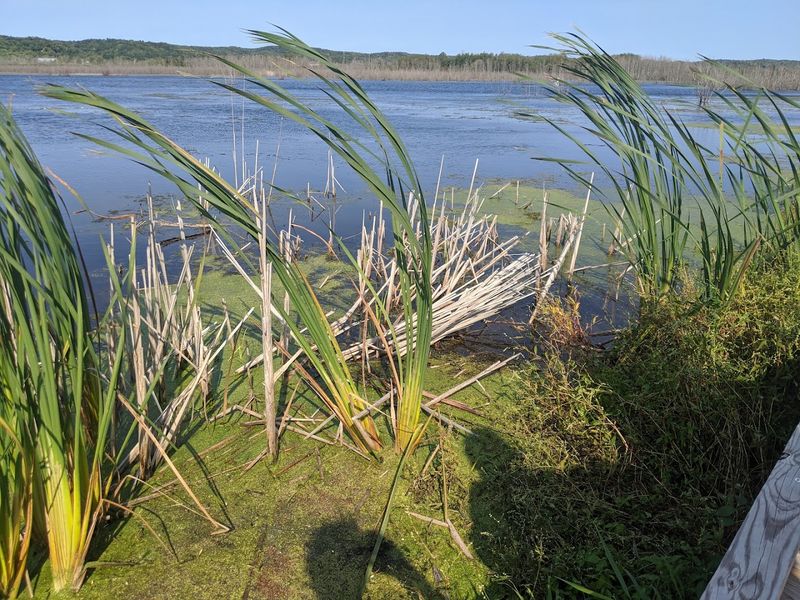
The vegetation at Arcadia Marsh is part of what makes the visual experience so rich. Cattails dominate much of the marsh and grow in dense stands that tower above the boardwalk in summer.
Their brown seed heads are iconic, and when the wind moves through them, the whole marsh seems to breathe.
Native wildflowers appear along the trail edges and in the shallower water areas. Purple loosestrife, marsh marigold, and various sedges create patches of color throughout the growing season.
The diversity of plant life is not just decorative, it supports the insects, birds, and aquatic organisms that depend on specific plant species for food and shelter.
Even the underwater vegetation plays a role. Aquatic plants provide habitat for fish and invertebrates, and they help filter and clean the water moving through the system.
Looking down through the boardwalk boards into the clear, shallow water below and seeing plants swaying in the current is a small but genuinely satisfying detail that most visitors notice and remember.
Practical Tips for Getting the Most Out of Your Visit
Binoculars are the single most useful thing you can bring. A large portion of the best wildlife sightings happen at a distance, and trying to squint at a swan or a heron from 200 feet away without optics is frustrating.
Even an inexpensive pair makes a significant difference.
There are no restroom facilities at the preserve, so plan ahead. The nearest town with services is Onekama, which is a short drive south on M-22.
Arriving early in the morning, ideally before 9 AM, gives you the best combination of wildlife activity, soft light for photography, and fewer people on the trail.
No pets are allowed on the boardwalk, which is worth knowing before you load up the car. The preserve is free to visit, but donations to the Grand Traverse Regional Land Conservancy are welcomed and go directly toward protecting places like this one.
Why This Place Stays With You Long After You Leave
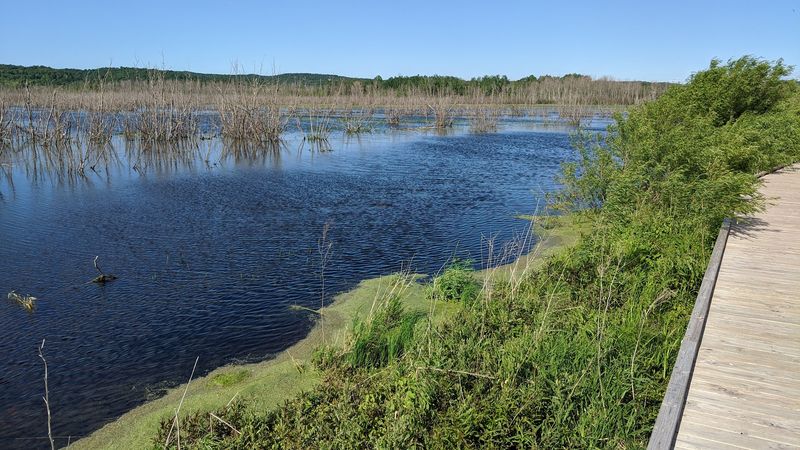
There is something about being physically suspended above a living wetland that does not translate well into words or photographs. The boardwalk puts you above the water, surrounded on all sides by reeds and open sky, with the sounds of the marsh filling in around you, and it creates a kind of quiet that is hard to find anywhere else.
The preserve earns its near-perfect rating not because it is flashy or dramatic, but because it is honest. What you see is what is actually there, no manufactured experiences, no crowds jostling for position, no entrance fee creating pressure to justify the trip.
You walk in, the marsh does its thing, and you walk out feeling genuinely better than when you arrived.
Arcadia Marsh is the kind of place that people return to across seasons and across years, bringing different people each time because they want to share it. That quiet pull back is probably the best review any nature preserve can earn, and this one earns it every single time.



