 Unearth The Voyage
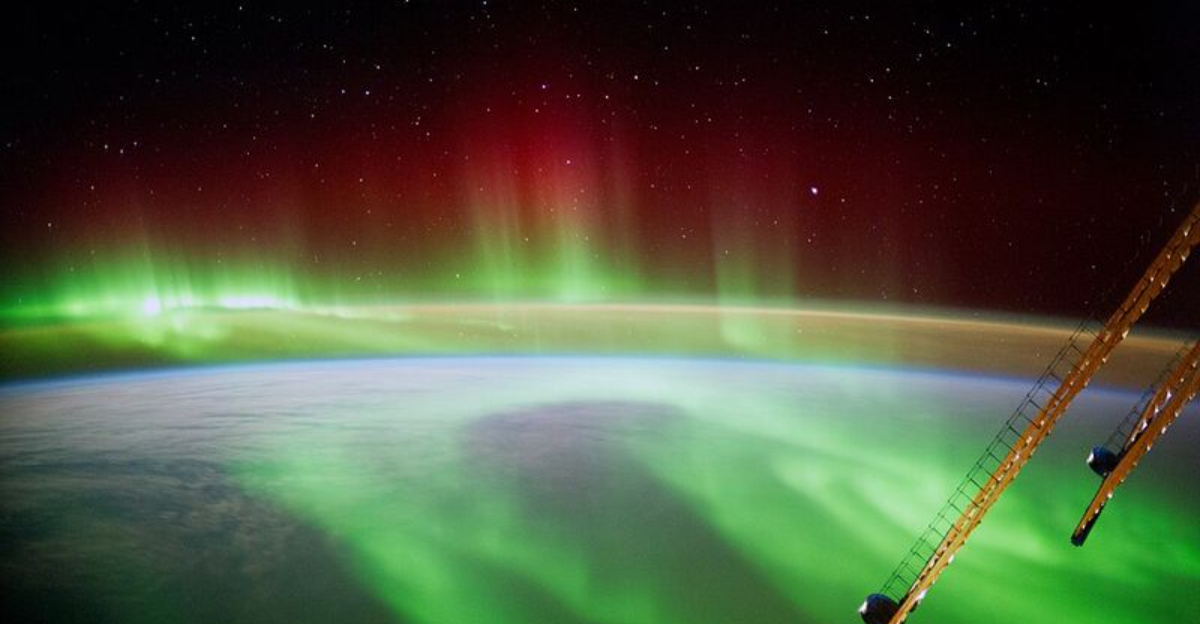
The Northern Lights are more than a pretty glow in the sky, and NASA is proving it with rockets launched straight into the action. From Alaska’s Poker Flat Research Range, scientists are flying through auroral curtains to grab data you cannot get from the ground.
These missions aim to reveal the hidden electrical circuits that link space and atmosphere, shaping everything from flickers to full sky pulses. If you have ever wondered what powers that polar magic, this is where the answers begin.
NASA Probes Aurora Electricity With Rockets
NASA is investigating the aurora as an electrical engine, not just a light show, by firing sounding rockets through active curtains above Alaska. Launched from Poker Flat near Fairbanks, these flights dive into the upper atmosphere and boundary regions where space meets air, sampling currents and particles in real time.
Instead of watching from afar, scientists are flying directly into the circuitry that makes the sky glow. Onboard instruments track electrons, ions, magnetic fields, and winds while vapor tracers paint brief, colorful plumes across the stars.
Those plumes drift and shear, acting like rulers in the sky so researchers can watch how energy and momentum move. Ground cameras and radars compare the tracer motion with auroral arcs, stitching an energy map from magnetosphere to ionosphere.
The goal is to pin down auroral currents, also called electrojets, that surge along magnetic field lines and close through the polar atmosphere. Understanding their strength and variability helps decode geomagnetic storms that can upset power grids and satellites.
You get dazzling skies for a few minutes, but the payoff is long lasting.
Why Rockets Into the Aurora Are Scientific Gold
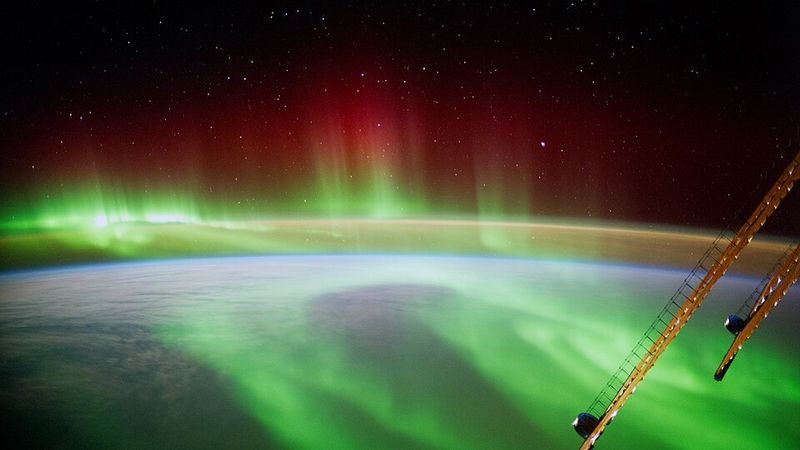
Auroras look effortless, yet their behavior hides complex electrical processes that cameras alone cannot resolve. Flickering, fast pulsations, and black auroras hint at rapid particle energization and wave interactions.
Rockets carry sensors straight into those hot spots, capturing electron distributions, fields, and waves at millisecond scales. Missions like GIRAFF compare emissions and particle data to link visible brightenings with specific energy signatures.
Other rockets chase black auroras to test whether outgoing electron beams carve temporary holes in the glow. By flying through the structures instead of watching them edge on, scientists build a three dimensional picture of currents, turbulence, and instabilities.
This direct sampling is the difference between reading a weather report and standing in the storm. Instruments measure pitch angles, energy spectra, and electric field spikes while magnetometers trace current pathways.
The results feed models that improve space weather predictions you rely on for GPS, aviation, and power reliability.
Stunning Skies and Scientific Payoff
During the AWESOME aurora experiment, rockets launched into an auroral substorm painted the Alaskan sky with tracer colors that mingled with green and purple arcs. From central and northern Alaska, observers watched geometry and motion unfold in real time.
Beneath the beauty, instruments captured the energy transfer that drives those dramatic surges. The data sharpen forecasting of geomagnetic storms that can skew satellite links, jam HF radio, and scramble navigation.
Better timing on auroral currents helps operators protect power grids and reroute flights. Even astronaut safety benefits when models anticipate radiation spikes tied to magnetospheric activity.
The rocket approach embraces risk and speed, grabbing snapshots of phenomena that orbiting satellites might miss. Coordinated ground cameras, radars, and all sky imagers fuse with in situ measurements to validate models.
You get unforgettable sky art, and scientists get the wiring diagram of space weather.
From Alaska’s Range To Near Space
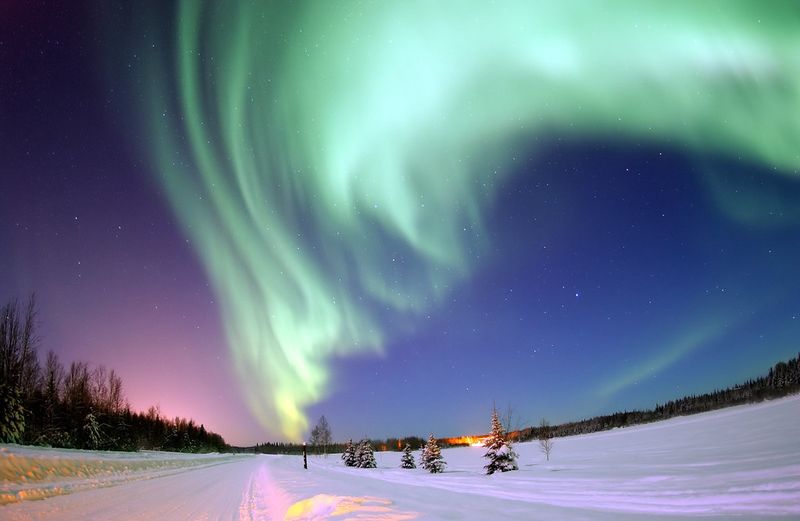
Poker Flat Research Range serves as the launchpad where logistics meet auroral timing. Teams wait for bursts of activity, then sprint through checklists to catch the window when currents peak.
The rockets climb fast, release instrument packages, and send torrents of data before parachuting hardware back. Flight profiles target altitudes where ionospheric conductance and magnetic geometry funnel energy into arcs.
Cross tracked tracer plumes reveal winds and shears, while particle detectors measure the electrons lighting the sky. Radios, lidars, and satellites provide the context, turning each flight into a 3D experiment.
The result is a clearer chain from solar wind to magnetosphere to ionosphere and finally to the ground. With every launch, forecasting models learn to predict not just if aurora appears, but what kind and how intense.
You see ribbons and curls; scientists read currents, waves, and thresholds.



