Some of the most breathtaking homes in the world are sitting empty, slowly being swallowed by nature or falling apart behind locked gates. These grand mansions were once symbols of wealth, power, and ambition, but today they stand as haunting reminders of how quickly fortunes can change.
From the jungles of Central Africa to the leafy streets of London, abandoned mega-homes tell fascinating stories about the people who built them and the circumstances that left them behind. Get ready to explore nine extraordinary properties that are still worth millions, even in their forgotten state.
1. Lynnewood Hall (Pennsylvania, USA)
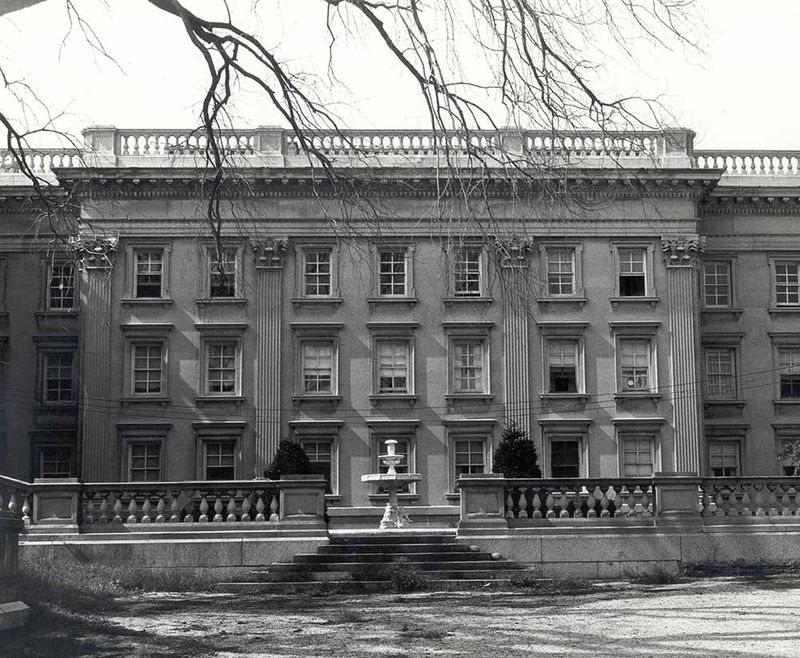
At its peak, Lynnewood Hall was one of the most magnificent homes in all of America. Built for transportation and art magnate Peter A.
B. Widener in 1900, this 110-room neoclassical estate in Elkins Park, Pennsylvania, was designed by architect Horace Trumbauer and filled with priceless artwork and European furnishings.
The Widener family lost two members aboard the Titanic in 1912, and the estate gradually fell into decline after that. By the late 20th century, the mansion had been largely abandoned, with its grand ballrooms and galleries left to deteriorate behind iron gates.
Preservation groups have fought for decades to save Lynnewood Hall, estimating its replacement cost in the hundreds of millions of dollars. Recent restoration efforts have brought renewed hope.
The mansion remains one of the finest surviving examples of Gilded Age architecture in the United States.
2. Mobutu’s Jungle Palace (Gbadolite, DR Congo)
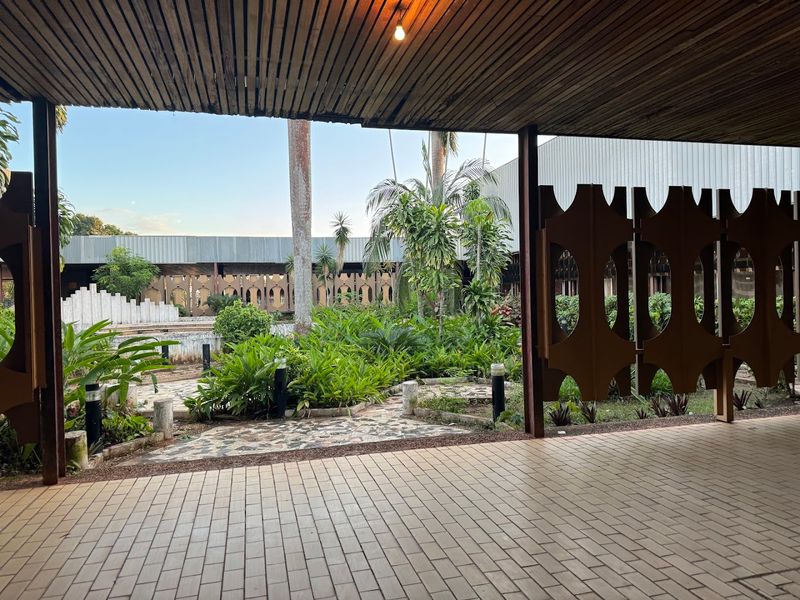
Few abandoned estates carry a story as dramatic as the jungle palace built by Zaire’s former dictator Mobutu Sese Seko. Tucked deep in the rainforest near the remote town of Gbadolite, this lavish complex was constructed at a cost of hundreds of millions of dollars drawn from state funds.
Mobutu spared no expense, importing marble, chandeliers, and luxury furnishings from Europe. At its height, the compound included multiple palaces, an airport capable of landing the Concorde, and elaborate gardens carved out of the dense jungle.
When Mobutu was overthrown and fled the country in 1997, the palace was looted and left to the elements. Tropical vegetation has since reclaimed much of the complex, turning what was once a symbol of excess into a surreal ruin.
Today, it stands as a striking monument to unchecked power and its inevitable collapse.
3. Rutland Gate Mansion (London, England)
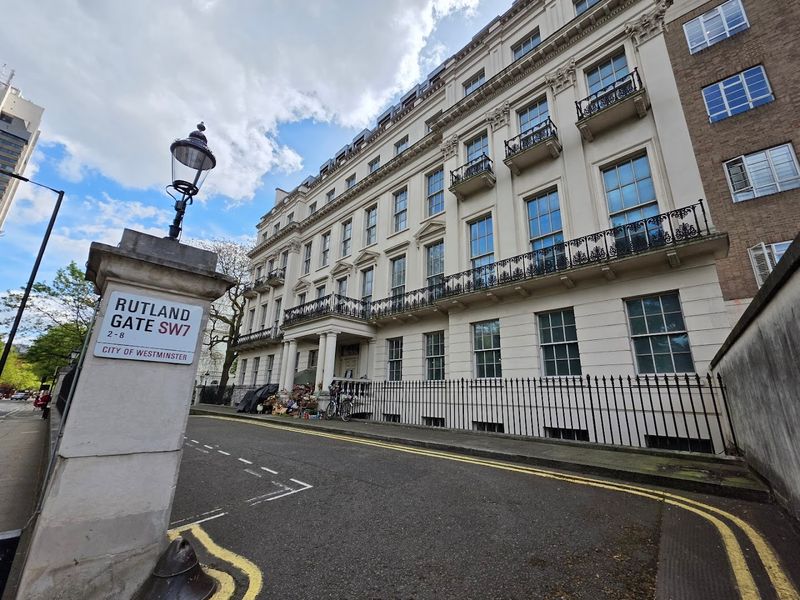
Located on one of London’s most exclusive streets in Knightsbridge, the Rutland Gate mansion made headlines when it reportedly sold for around $280 million, placing it among the most expensive residential sales in British history. The buyer was linked to Chinese property giant Evergrande, whose dramatic financial collapse sent shockwaves around the world.
Following Evergrande’s troubles, ownership of the property became entangled in complex legal and financial disputes. The mansion, despite its staggering price tag, has sat largely empty, its grand rooms unused while lawyers and creditors sort through the mess.
Rutland Gate is a powerful example of how global financial instability can reach even the most prestigious addresses on earth. Neighbors and property experts have watched with curiosity as one of London’s grandest homes gathers dust.
Its story is less about neglect and more about the unpredictable nature of extreme wealth.
4. Hamilton Palace (East Sussex, England)
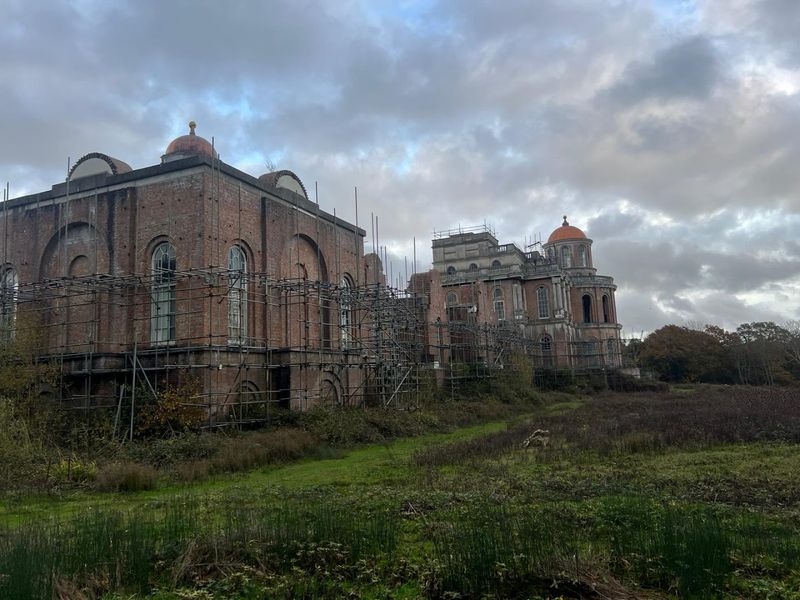
Conceived with the bold ambition of rivaling Buckingham Palace itself, Hamilton Palace in East Sussex is one of Britain’s most legendary unfinished homes. Developer Nicholas van Hoogstraten began construction on the enormous neoclassical mansion decades ago, pouring tens of millions of pounds into the project before legal troubles and personal setbacks brought everything to a halt.
The sheer scale of the building is jaw-dropping. Planned to include a grand mausoleum beneath the main hall, the estate was designed as a personal monument as much as a private residence.
Work has stalled repeatedly over the years, leaving the structure in a permanent state of incompletion.
Local residents and urban explorers have long been fascinated by the hulking structure sitting quietly in the Sussex countryside. Hamilton Palace remains a bold, slightly bizarre testament to one man’s outsized vision and the complications that can arise when ambition outpaces reality.
5. Updown Court (Surrey, England)
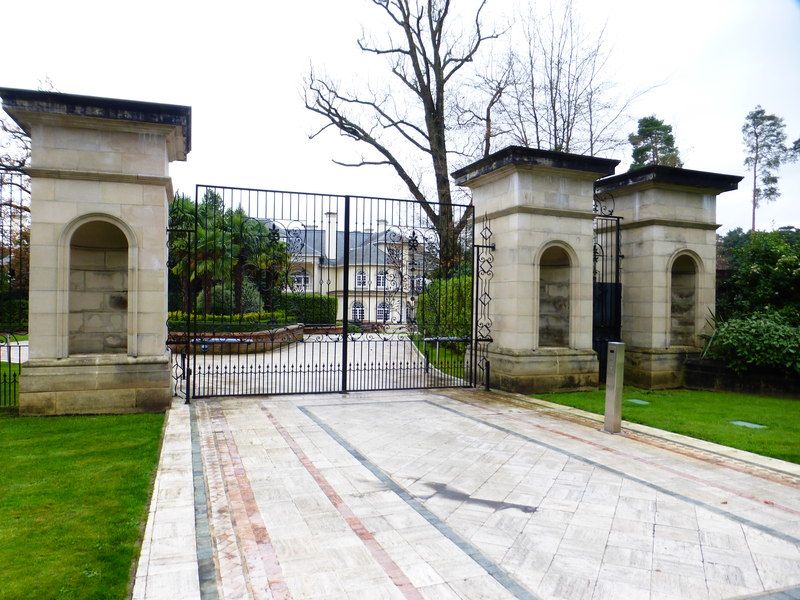
When Updown Court in Surrey hit the market in the early 2000s, it carried a price tag of more than 70 million pounds, briefly earning the title of the world’s most expensive home for sale. The 103-room estate boasts a private cinema, heated marble floors, a squash court, and even its own helipad, reading more like a luxury resort than a private house.
Despite the extraordinary amenities, the property struggled to find a buyer willing to meet its asking price. For years, Updown Court sat largely vacant, cycling through various owners and price reductions while its lavish interiors waited for someone to actually move in.
The mansion eventually sold, but its long stretch of emptiness made it a symbol of the challenges facing ultra-luxury real estate. Not every extraordinary home finds an extraordinary buyer, and Updown Court learned that lesson in a very public way.
6. Wyndclyffe Mansion (New York, USA)
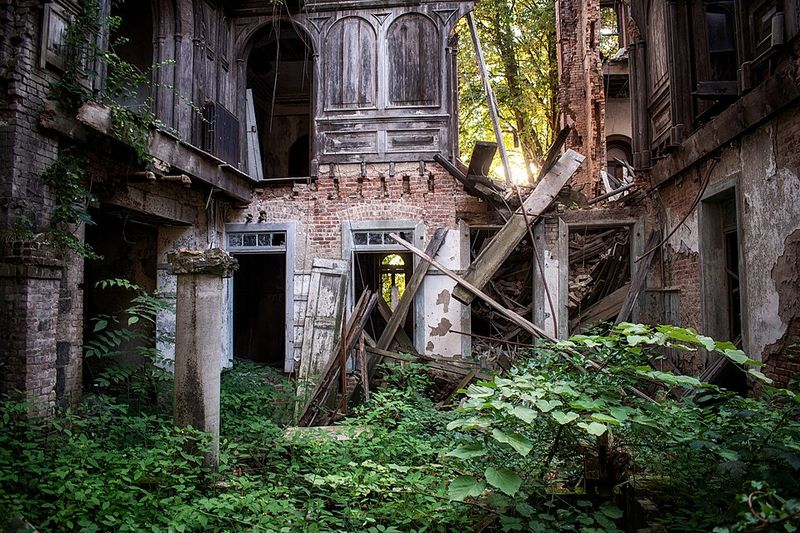
Perched above the Hudson River in Rhinebeck, New York, Wyndclyffe was built in 1853 for Elizabeth Schermerhorn Jones, a wealthy socialite whose extravagant lifestyle is widely credited with inspiring the phrase “keeping up with the Joneses.” The Gothic Revival stone mansion was the grandest home in the region when it was completed, drawing admiring glances from neighbors up and down the valley.
Financial troubles following the Civil War forced the Jones family to sell, and Wyndclyffe passed through several hands before eventually being abandoned entirely. Nature moved in fast, wrapping the stone walls in thick vines and pushing trees up through collapsed floors.
Today, Wyndclyffe is one of the most photographed ruins in New York State. Preservation advocates have tried repeatedly to save the structure, but restoration costs remain prohibitive.
The mansion stands as a beautifully melancholy reminder that even the most fashionable addresses can fall silent.
7. Chateau Miranda (Celles, Belgium)
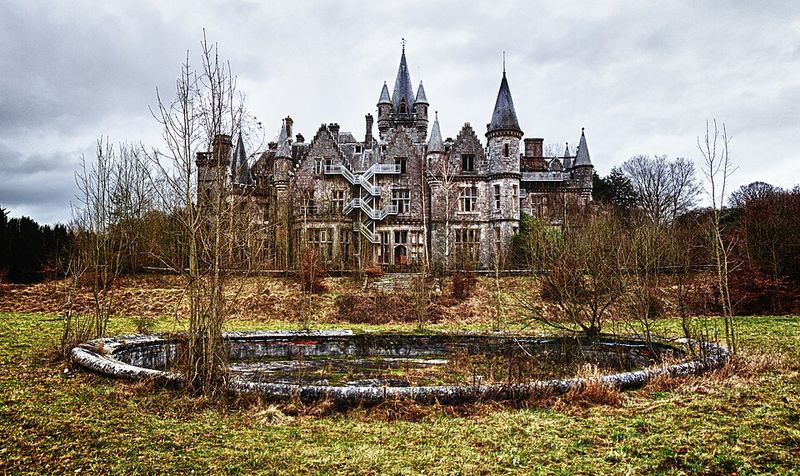
Chateau Miranda, also known as Chateau Noisy, looked like something straight out of a storybook. Built in the Gothic Revival style in the 19th century and nestled in the forested hills of Celles, Belgium, the castle captured the imaginations of photographers and urban explorers from around the world after it was abandoned in the early 1990s.
The property originally served as an orphanage run by the Belgian National Railway Company before falling into disuse. For decades, it sat empty, its ornate turrets slowly crumbling and its grand staircase gathering dust.
Images of its decaying interiors spread widely online, turning it into one of Europe’s most famous abandoned buildings.
Sadly, the castle was partially demolished between 2017 and 2019 after the owning family declined restoration offers. The loss sparked significant public outcry.
Though much of the structure is now gone, Chateau Miranda’s haunting legacy lives on in thousands of photographs.
8. Villa de Vecchi (Lake Como, Italy)
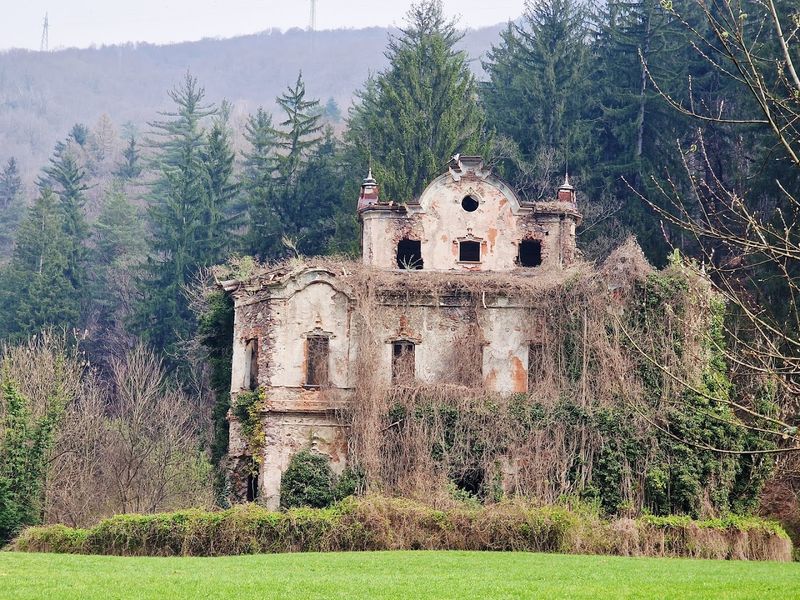
Locals around Lake Como have whispered about Villa de Vecchi for generations. Built in the mid-1800s for Count Felix de Vecchi, the elegant villa earned its nickname the Ghost Mansion after a string of family tragedies left it empty and seemingly cursed.
The Count’s wife was murdered inside the home, and he himself disappeared shortly afterward, never to be found.
The villa passed through several owners over the decades but was never successfully restored or permanently occupied. Earthquakes in 2012 caused further structural damage, accelerating its decline.
Ornate plasterwork ceilings and tiled floors remain visible inside, offering glimpses of its former elegance.
Despite being off-limits to visitors, the villa attracts curious travelers who catch glimpses through its rusted gates. It remains one of Italy’s most recognizable abandoned estates, blending genuine architectural beauty with an atmosphere that feels equal parts romantic and deeply unsettling.
9. Peter Grant Mansion (Ontario, Canada)
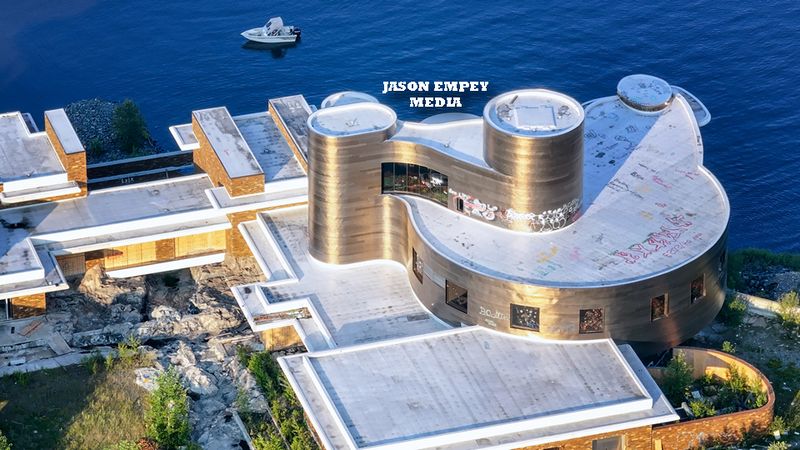
Back in the mid-2000s, construction began on what was meant to become Canada’s largest private home. Located in Windermere, Ontario, the Peter Grant mansion was designed to cover an astonishing 65,000 square feet, featuring dozens of rooms, a private bowling alley, a movie theater, and an indoor pool, among other extravagances.
When the 2008 global financial crisis hit, funding dried up and construction ground to a halt. The massive concrete shell was left standing in the Ontario countryside, a dramatic monument to interrupted ambition.
More than 15 years later, the structure remains largely untouched, weathering through harsh Canadian winters without ever welcoming a single resident.
Aerial photos of the abandoned shell regularly circulate online, sparking fresh waves of curiosity and debate about what should be done with it. The property has become a local landmark of sorts, a giant, empty reminder of how quickly grand plans can unravel when economic conditions shift.
Share this story