 Unearth The Voyage
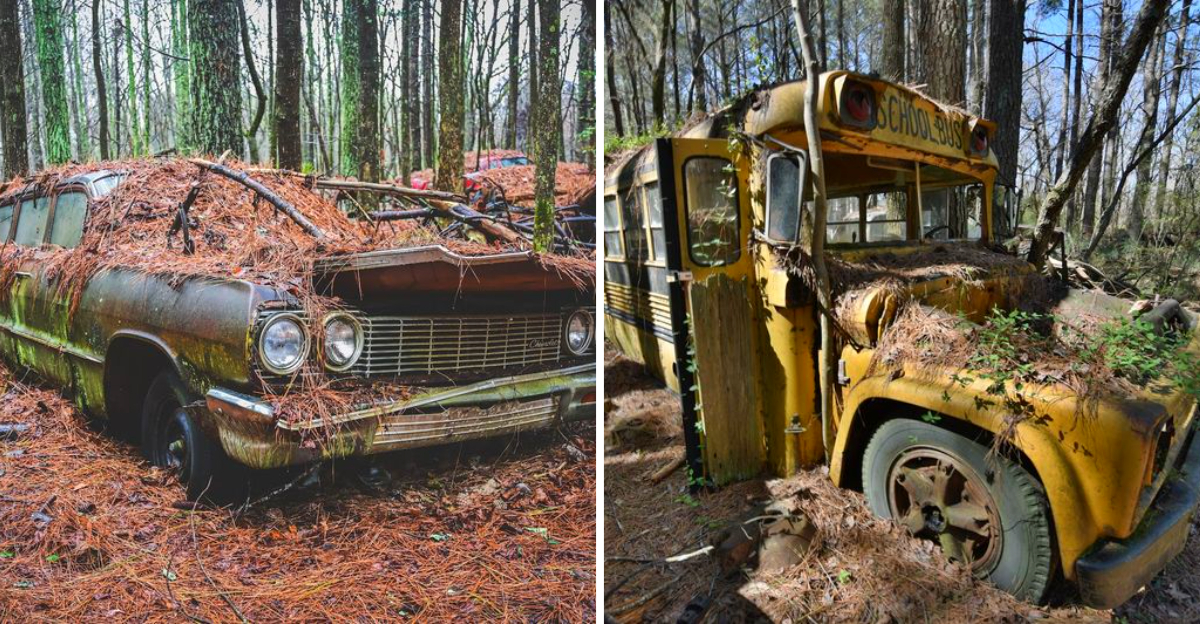
Somewhere in the Georgia woods, thousands of classic cars are quietly being swallowed by nature, and somehow, it is one of the most beautiful sights you will ever see. Rows of rusted Chevrolets, Fords, and Cadillacs sit half-buried under pine needles, vines creeping through cracked windshields and moss spreading across chrome bumpers.
This is not your average roadside stop. Old Car City USA is a 34-acre outdoor museum where automotive history and wild nature have merged into something that photographers, car enthusiasts, and curious travelers all agree is unlike anything else in the country.
I visited on a clear Tuesday morning and still cannot fully explain what I saw out there.
Where Exactly You Will Find This Place
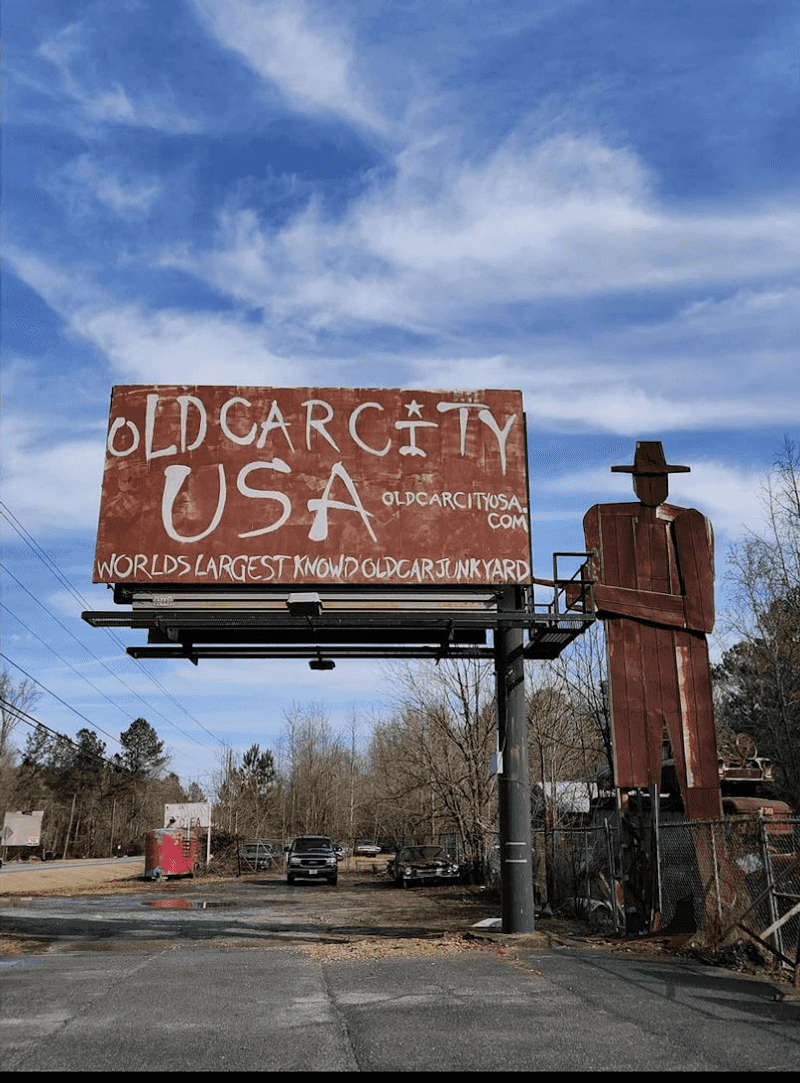
The address is 3098 US-411 E, White, GA 30184, and the drive there already sets the mood. The two-lane highway cuts through the green Georgia hills, and then suddenly a hand-painted sign appears roadside, and you know you have arrived somewhere worth stopping for.
White is a small community in Bartow County, not far from Cartersville, and the area has that quiet, rural Georgia charm that makes you slow down automatically. The property sits right along US Highway 411, which is the same route that connects several small towns across the region.
Interestingly, a diner sits directly across the road, so you can fuel up before tackling miles of trails. The owner, Dean Lewis, has been known to eat breakfast there himself, and on lucky mornings, he walks guests across the highway personally.
Old Car City USA is open Tuesday through Saturday from 9 AM to 4 PM, closed Sunday and Monday. The phone number is 770-382-6141, and the website at oldcarcityusa.com has basic visitor info worth checking before you go.
The History Behind the Rust
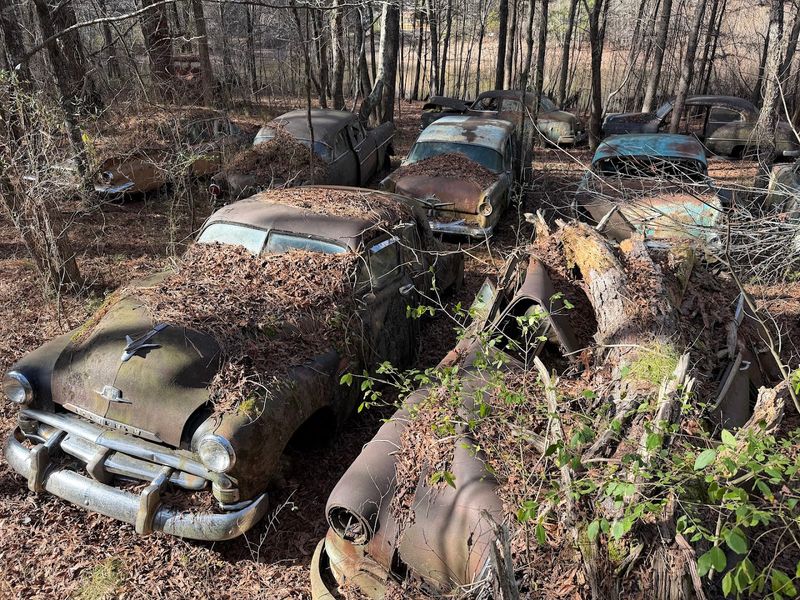
The story of Old Car City USA starts in the 1930s, when the Lewis family opened a general store on this same stretch of Georgia highway. Over the decades, cars began accumulating on the property, first as salvage inventory, then as something far more deliberate and personal.
By the time Dean Lewis took over from his father, the collection had grown into the thousands. What began as a working salvage yard slowly transformed into a curated open-air museum, a decision that not everyone agrees with, but one that has made this place genuinely singular.
The transition from parts yard to museum was gradual, and the Lewis family’s deep roots in this land give the whole place a personal, almost intimate quality. You get the sense that every car here was kept for a reason, not just stored and forgotten.
The history stretches back nearly 90 years, touching multiple generations of one family and reflecting the broader arc of American car culture, from practical transportation in the early 20th century all the way through the muscle car era and beyond. That kind of continuity is rare anywhere in the country.
Over 4,400 Cars Spread Across 34 Acres
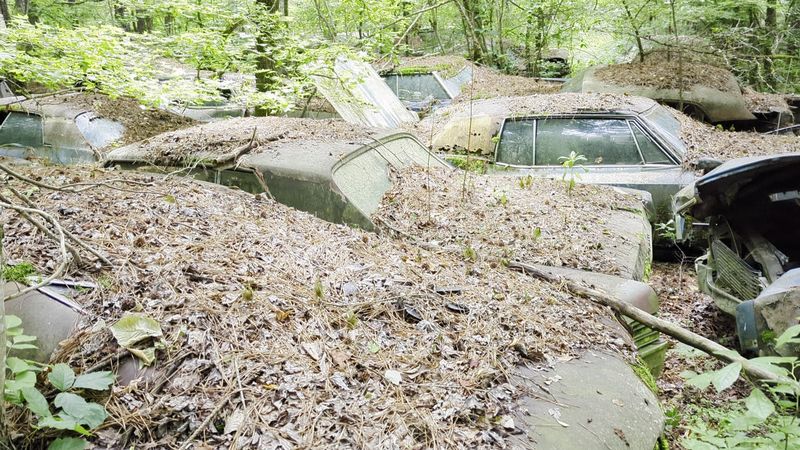
The sheer scale of this place is the first thing that stops you cold. More than 4,400 vehicles are spread across 34 acres of Georgia woodland, and the trails that wind between them total approximately 7 miles if you walk every single path.
The cars are not parked in neat rows like a conventional lot. They are tucked between pine trees, half-swallowed by kudzu, tilted at odd angles on soft forest soil, and occasionally stacked in ways that make your eyes work harder.
The effect is genuinely disorienting in the best possible way.
Some visitors have spent four to five hours walking methodically through every row and still felt they missed things. The density of the collection means there is always something new to find around the next bend, a chrome detail catching the light, a dashboard still intact, a steering wheel wrapped in decades of moss.
This is not a place you rush through. A full day is the honest recommendation, and even then, you may leave with the nagging feeling that a few more hours would have been worthwhile.
Wear comfortable shoes, because the trails are soft, uneven, and very much alive.
Nature and Metal in a Strange, Beautiful Merger
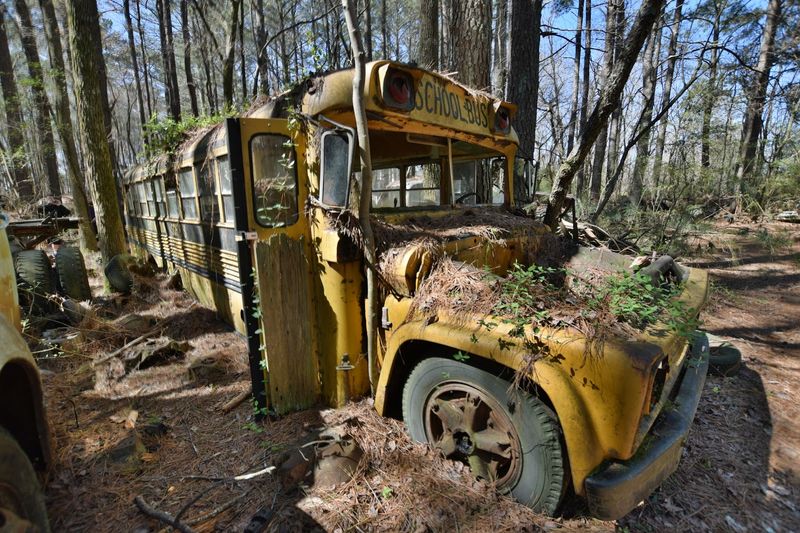
There is a specific moment that hits most visitors somewhere along the trails, when the combination of metal, rust, pine needles, and filtered sunlight becomes something genuinely beautiful. It is hard to describe without sounding dramatic, but the merger of nature and machine here creates a visual texture that is unlike anything you will find in a traditional museum.
Vines thread through broken windows. Ferns grow up through floorboards.
Tree roots have lifted entire car bodies off the ground in slow motion over decades. The forest is actively reclaiming these vehicles, and watching that process at different stages across thousands of cars is quietly fascinating.
Photographers in particular tend to lose themselves here. The light changes constantly through the tree canopy, and every angle offers a new composition.
There is a $10 additional charge for camera use beyond a phone, but most serious photographers consider it more than fair given the material available.
The peaceful quality of the trails surprises many first-time visitors who expected something more like a traditional junkyard. The atmosphere is closer to a nature walk that happens to feature extraordinary man-made objects at every turn, unhurried and strangely calming.
Dean Lewis, the Artistic Mind Running the Show

Dean Lewis is not just the owner of Old Car City USA. He is the creative engine behind everything unusual and wonderful about the place.
The cars themselves are just the beginning of what Dean has built on this property over the years.
Inside the main building, Dean displays an extraordinary collection of hand-decorated styrofoam cups, each one painted with its own pattern, color scheme, or design. He has covered what seems like every possible variation and has now begun sculpting the styrofoam itself into three-dimensional forms.
The dedication behind that alone is remarkable.
There are also walls of motivational painted signs, galleries of soda can art, die-cast toy arrangements with subtle layered messages, and a green bean can collection that somehow feels completely at home alongside everything else. Dean’s creative output is prolific and genuinely eccentric in the most admirable sense.
Visitors who arrive early enough sometimes get the rare treat of meeting Dean personally. He greets guests with real enthusiasm, not the performative kind, but the kind that comes from someone who genuinely wants you to understand and appreciate what he has spent his life building here.
That energy sets the tone for the entire visit.
A Photographer’s Absolute Playground
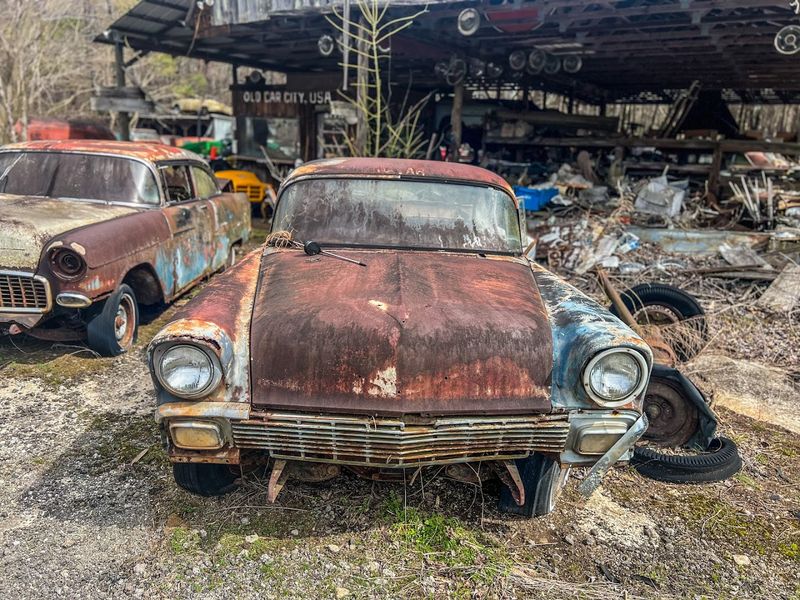
Few outdoor locations in the American South offer this kind of raw photographic material. Every surface tells a story through texture, and the combination of decay, color, and natural light creates conditions that professional photographers genuinely get excited about.
The rust itself comes in dozens of shades, from deep orange to chalky brown to a near-purple tone that appears on certain older body panels. Chrome trim catches and scatters light in unexpected ways.
Cracked vinyl seats hold pools of rainwater that mirror the tree canopy above.
The trails wind through different light conditions throughout the day, so the experience changes significantly depending on what time you arrive. Morning visits offer cooler temperatures and softer light through the eastern canopy, while midday brings harsher contrasts that suit certain styles of documentary photography.
One practical note worth remembering: a $10 camera fee applies to dedicated camera equipment beyond a standard smartphone. The fee is separate from the general admission charge, and it goes toward maintaining the property and trails.
Most photographers report that the creative return on that investment is significant, with hours of compelling material available at every turn throughout the 7-mile trail system.
The Styrofoam Cup Collection You Did Not See Coming

Nobody warns you about the styrofoam cups, and that is part of what makes discovering them so genuinely delightful. Dean Lewis has spent years drawing unique patterns and designs on individual styrofoam cups, and the resulting collection fills an entire wall inside the main building with an energy that is hard to categorize.
Each cup is its own small work of art, and the sheer volume of them creates a mosaic effect that stops visitors in their tracks. Some are geometric, some are abstract, some appear to reference specific ideas or symbols that reward closer inspection.
The variety across thousands of cups is testament to an obsessive creative practice maintained over many years.
Now that Dean has exhausted the flat surface of the cup as a canvas, he has moved into sculpting the material itself, bending and shaping styrofoam into three-dimensional forms that extend the project into new territory. It is the kind of artistic evolution that happens when someone commits completely to a single medium.
The cup collection alone is worth the price of admission for anyone interested in outsider art or American folk creativity. It sits in quiet contrast to the massive outdoor collection and reminds you that the real heart of this place is one person’s unstoppable need to make things.
What to Expect from the Trails
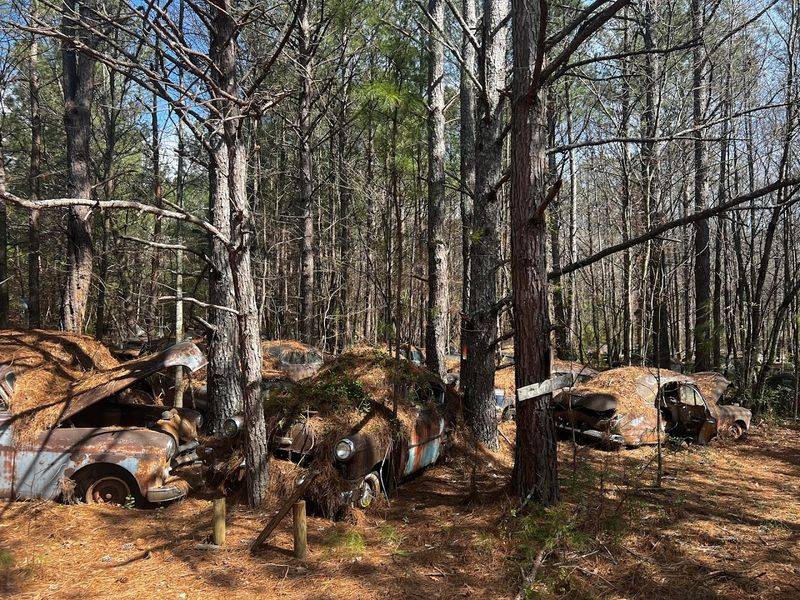
The trail system at Old Car City USA covers roughly 7 miles in total if you walk every lane, alley, and side path across the 34-acre property. That number surprises most visitors who expect a short stroll and end up spending half a day out there without realizing it.
The paths are generally clear and maintained, though the forest floor is soft and uneven in places. Sneakers or trail shoes are strongly recommended over sandals or dress footwear.
The terrain is not difficult, but it is definitely outdoor walking rather than pavement, and the ground can be damp after rain.
One popular strategy among repeat visitors is to walk systematically up and down every row to ensure nothing is missed. The alternative is a more wandering approach, following whatever catches your eye, which tends to produce more surprising discoveries but also more backtracking.
A note for visitors who are cautious about spiders: the property hosts large orb weaver spiders during warmer months, particularly in late summer and fall. They hang their webs between cars and trees at roughly head height.
Visiting in winter or early spring eliminates most of that concern and also brings a different, starker visual quality to the rusted cars against bare branches.
Cars That Actually Mean Something
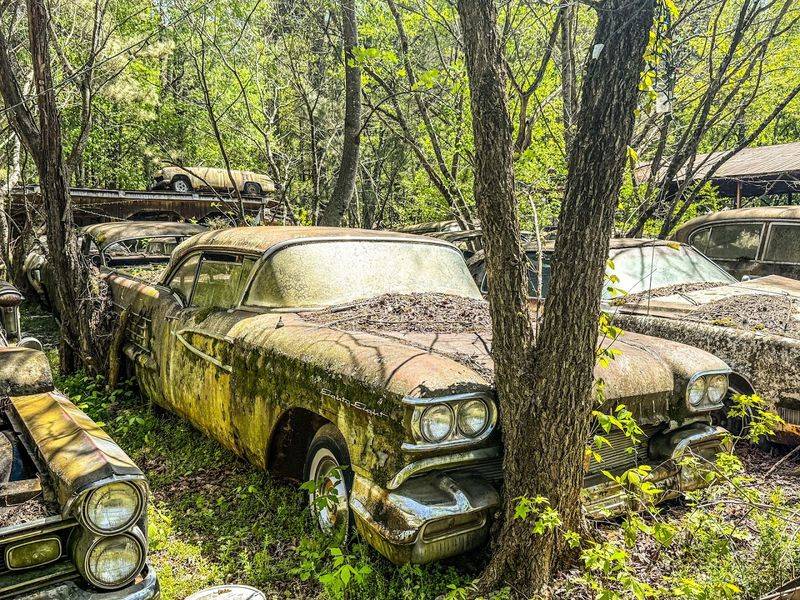
For car enthusiasts, the collection at Old Car City USA reads like a physical archive of American automotive history. Vehicles from the 1930s through the 1980s appear throughout the property, representing nearly every major domestic manufacturer and dozens of body styles that no longer exist in production.
Cadillacs, Chevelles, Hudsons, Fords, delivery vans, and motorcycles all appear along the trails, some partially dismantled, others remarkably intact considering their decades of outdoor exposure. The variety means that almost every visitor finds something personally meaningful among the thousands of vehicles on the property.
One of the highlighted vehicles on the property is a car associated with Elvis Presley, which staff members can point out during the visit. Whether or not that provenance matters to you, the story adds a layer of pop culture history to an already dense collection.
The emotional response to the collection varies widely. Some visitors feel a deep nostalgia for specific models they associate with family memories.
Others respond more to the abstract beauty of the decay itself. Both reactions are completely valid here, and the property is large enough to hold all of them without crowding anyone out.
Admission, Pricing, and What to Bring
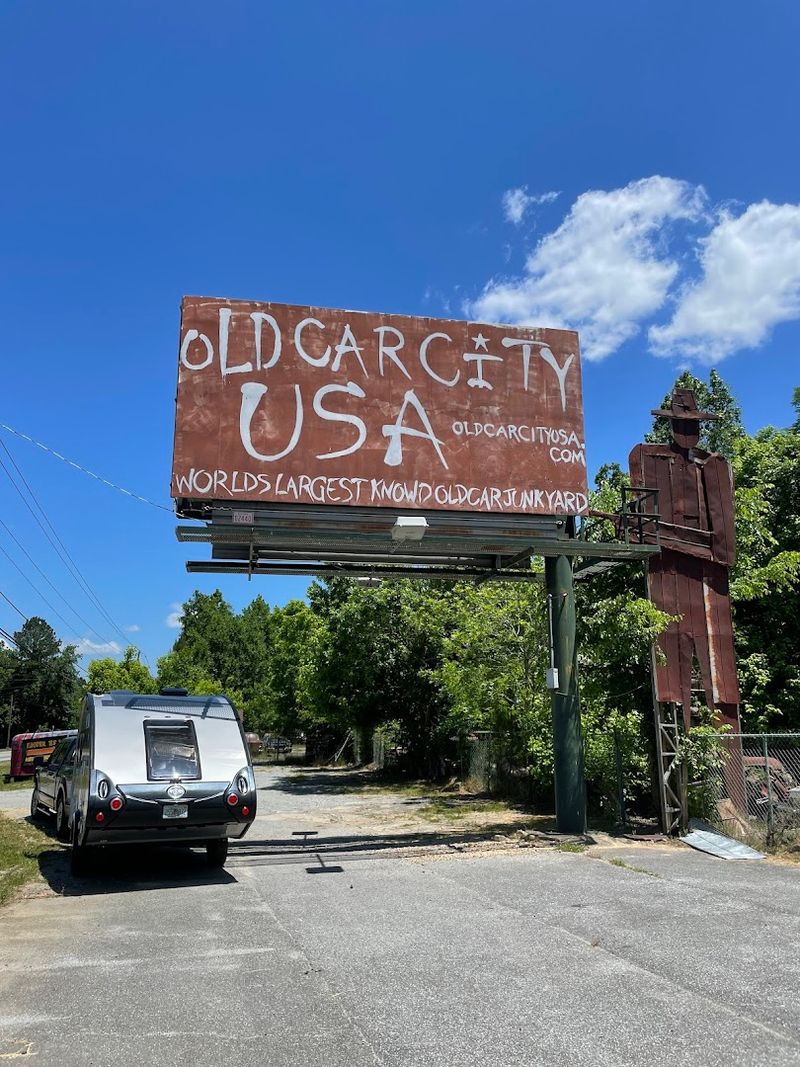
Admission to Old Car City USA runs around $30 per person, which is a figure that generates strong opinions among visitors. Some find it entirely reasonable given the scale and uniqueness of what is on offer.
Others feel it is steep for what is essentially an outdoor walk through a large property.
The honest answer is that the value depends heavily on what you are looking for. Car enthusiasts and photographers tend to feel the price is more than justified.
Casual visitors who spend only an hour or two may feel differently. Planning to spend a full day makes the admission cost feel considerably more worthwhile.
An additional $10 camera fee applies if you bring dedicated photography equipment beyond a smartphone. Cash is the recommended payment method, so come prepared.
There is a gift shop on the property where small souvenirs and mementos are available, and several visitors specifically mention picking up something from the shop as a highlight of the visit.
Bring water, snacks, insect repellent, and sunscreen, especially in warmer months. The trails are shaded by the forest canopy, but the walk is long enough that hydration matters.
Comfortable closed-toe shoes are essential for navigating the soft and sometimes uneven forest floor throughout the property.
Seasonal Highlights and the Halloween Haunted Trails
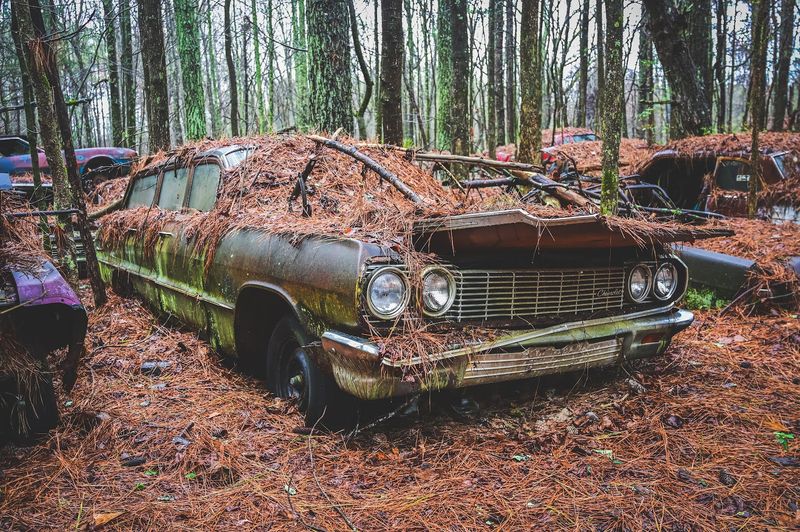
Each season brings a noticeably different experience to Old Car City USA, and regular visitors often return multiple times throughout the year specifically because of how the property changes. Spring brings fresh green growth pushing through the rust, creating vivid color contrasts.
Summer is lush but warm, and the spider population peaks during late August and September.
Autumn is widely considered the best season to visit. The foliage adds warm color to the already textured landscape, the temperatures are comfortable for long walks, and the orb weaver spiders have thinned out compared to their late-summer peak.
The property also runs Haunted Trails events during October, adding a theatrical layer to the already atmospheric setting.
The Halloween decoration transforms the forest trails into something genuinely eerie in the best possible way. Rusted cars draped in cobwebs and surrounded by seasonal props at dusk create a mood that feels completely organic to the setting rather than forced.
Winter visits offer a starker, quieter experience with bare branches framing the rusted metal against grey skies, a look that appeals strongly to photographers who prefer high-contrast, minimal compositions. The trails are less crowded in colder months, which adds to the contemplative quality of the visit.
Any season rewards a patient, curious visitor.
Why This Place Matters Beyond Georgia
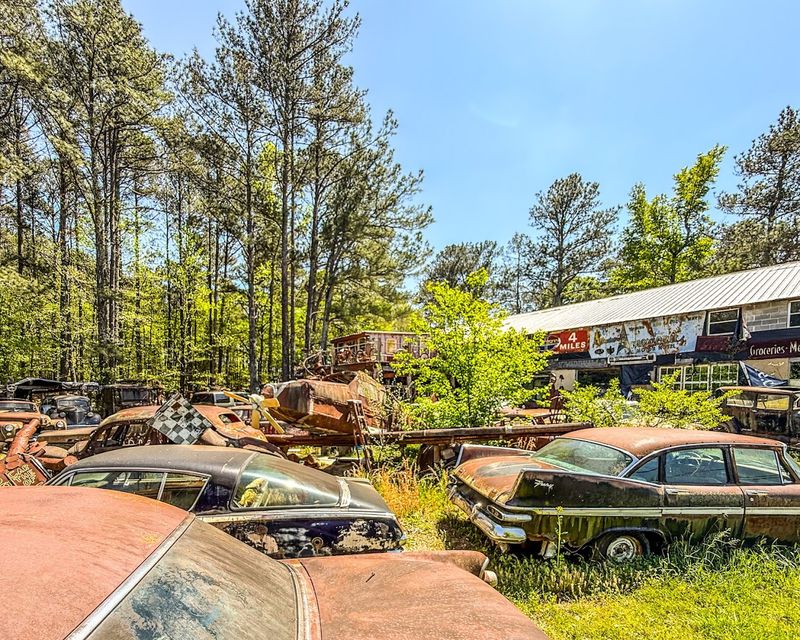
Old Car City USA occupies a genuinely rare category in American roadside culture. There is no other site in the country where this many vintage vehicles have been preserved in one place specifically as an open-air artistic and historical experience.
That distinction matters beyond state lines.
The place draws visitors from across the country and beyond, including car enthusiasts, artists, photographers, historians, and people who simply heard about it and needed to see it for themselves. The combination of scale, setting, and the Lewis family’s personal creative vision makes it irreplaceable in a way that few attractions genuinely are.
Comparisons to Oklahoma’s own Route 66 roadside attractions are not uncommon among long-distance road trippers who make Old Car City USA part of a broader American automotive pilgrimage. Oklahoma and Georgia share a certain highway culture sensibility, and visitors who have toured Oklahoma’s classic car landmarks often cite Old Car City USA as the most emotionally affecting stop they make in the Southeast.
The fact that one family has maintained this property for nearly 90 years, resisting the pressure to scrap, sell, or develop, is itself a remarkable act of preservation. Old Car City USA is the kind of place that Oklahoma travelers, Georgia locals, and out-of-state visitors all describe the same way afterward: there is simply nothing else like it anywhere.



