Gettysburg is one of the most significant historic sites in the United States, preserving the ground where the Civil War’s deadliest battle unfolded over three days in July 1863. More than 51,000 soldiers were killed, wounded, captured, or reported missing here, making the battlefield a place where American history feels immediate and impossible to ignore.
The park offers far more than monuments and memorials. Visitors can explore the fields where pivotal moments of the battle took place, stand near the site of Lincoln’s Gettysburg Address, and experience the famous Cyclorama painting that brings the conflict to life on a massive scale.
Every section of the battlefield adds another layer to the story.
What makes Gettysburg unforgettable is its ability to connect visitors with both the human cost and the lasting impact of the battle. Whether you are a dedicated history enthusiast or visiting for the first time, the landscape itself provides a powerful reminder of a moment that helped shape the nation’s future.
Here’s why Gettysburg remains one of America’s most important and compelling historic destinations.
Where History Meets the Pennsylvania Countryside
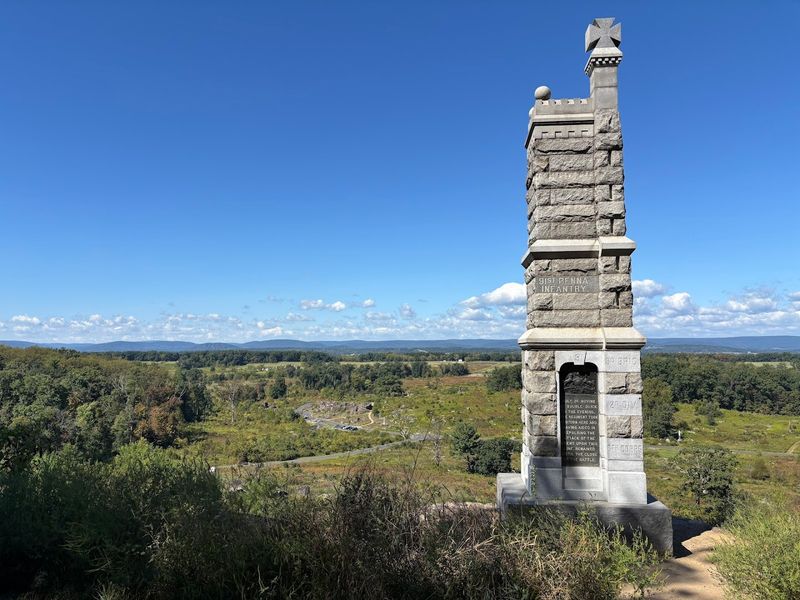
The address is simple enough: Gettysburg National Military Park, Gettysburg, PA 17325, right in the heart of Adams County in south-central Pennsylvania. But the moment you arrive, simplicity is the last word that comes to mind.
The park covers more than 6,000 acres of preserved battlefield landscape, and the terrain itself tells the story. You can see the ridgelines where Union soldiers held their ground, the open fields they defended, and the woods that both sides used for cover.
The countryside here is genuinely beautiful, with rolling hills, old farm lanes, and tree-lined ridges that look almost painted in the golden afternoon light. It is the kind of scenery that would be worth a visit on its own, even without the extraordinary history attached to it.
The park is reachable by car, and the town of Gettysburg sits right alongside it, making the whole area easy to explore at your own pace.
Three Days That Changed the Course of a Nation
July 1 through July 3, 1863 were three of the most consequential days in American history, and Gettysburg National Military Park preserves exactly where and how they unfolded.
Confederate General Robert E. Lee had led his Army of Northern Virginia into Pennsylvania on his second invasion of the North, hoping a decisive victory on Union soil would force a peace settlement.
What he met instead was fierce and determined resistance from the Union Army of the Potomac, commanded by General George Meade.
By the time the fighting ended, Lee’s forces had suffered devastating losses and were forced to retreat back into Virginia, never again mounting a serious offensive into the North. Historians widely regard this battle as the turning point of the Civil War, sometimes called the “High Water Mark of the Confederacy.”
Understanding those three days before your visit makes walking the ground genuinely electric, because every hill, road, and tree line suddenly has a story attached to it.
The Museum and Visitor Center That Sets the Stage
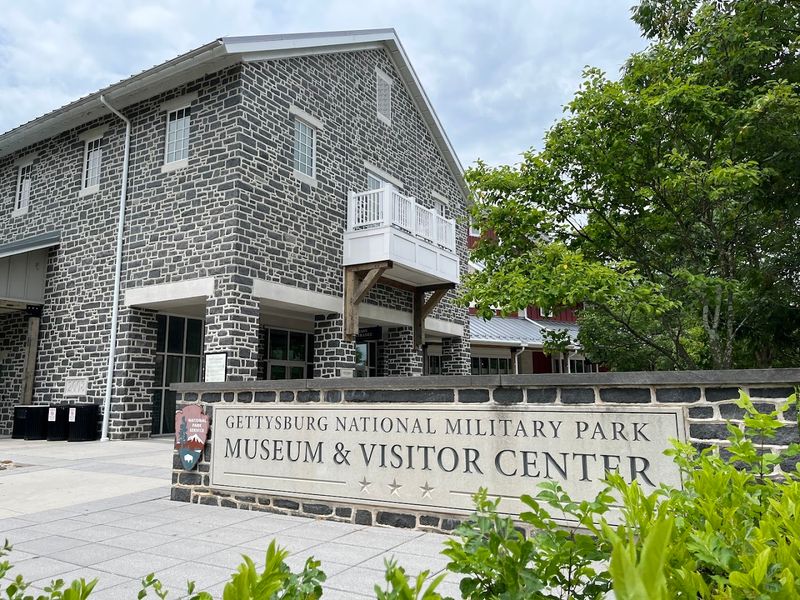
Before heading out onto the battlefield, the Gettysburg National Military Park Museum and Visitor Center is the essential first stop, and it earns that reputation completely.
The museum holds an impressive collection of rare Civil War artifacts, including weapons, uniforms, personal items carried by soldiers, and detailed maps that help you understand the battle’s geography. Interactive exhibits walk you through the three days of fighting in a way that feels genuinely engaging rather than dry or textbook-heavy.
The visitor center also screens “A New Birth of Freedom,” a film narrated by Morgan Freeman that provides a powerful and moving overview of the battle and its meaning. Plan to spend at least two hours here before you even think about heading outside.
The staff is notably knowledgeable and approachable, happy to answer questions and point you toward the highlights that match your specific interests. Starting here means you leave the building already invested in every monument and field you are about to encounter.
The Cyclorama Painting That Puts You Inside the Battle
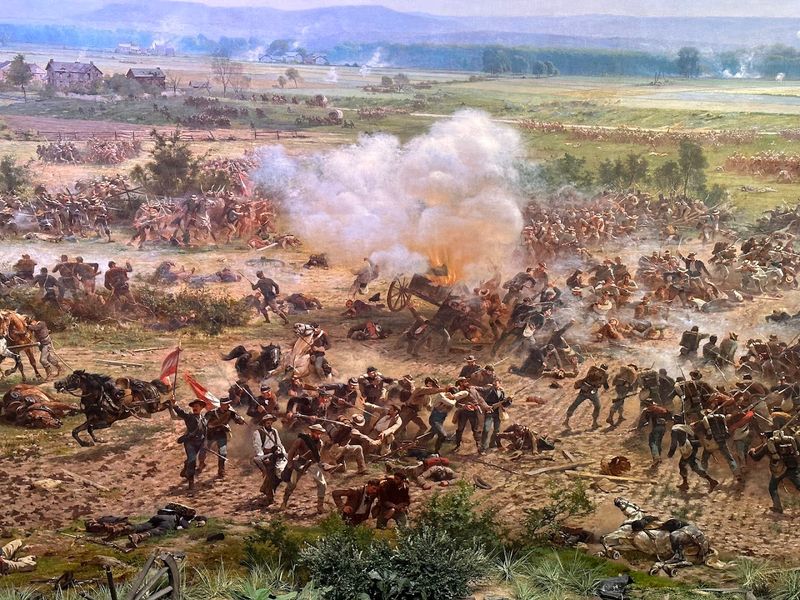
Few museum experiences in America are as immediately jaw-dropping as the Gettysburg Cyclorama, and that is not an overstatement by any measure.
The painting depicts Pickett’s Charge, the Confederate assault on the Union center on July 3, 1863, which many consider the emotional and strategic climax of the entire battle. Created by French artist Paul Philippoteaux and completed in 1884, the oil painting measures 377 feet in circumference and stands 42 feet tall, wrapping completely around a circular viewing platform so that you feel surrounded by the action.
A three-dimensional foreground landscape blends seamlessly into the painted background, creating a sense of depth and presence that genuinely pulls you in. The lighting and narration that accompany the viewing experience add another layer of drama and context.
Most visitors report that the Cyclorama is the single most visually striking part of their entire visit, and it is hard to argue with that assessment once you have stood inside that room and turned slowly around.
Little Round Top and the View That Defines the Battle
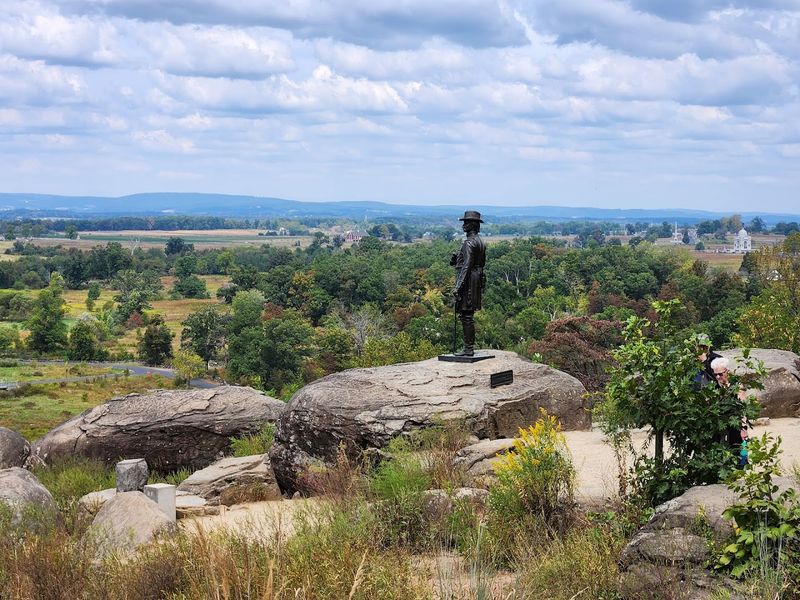
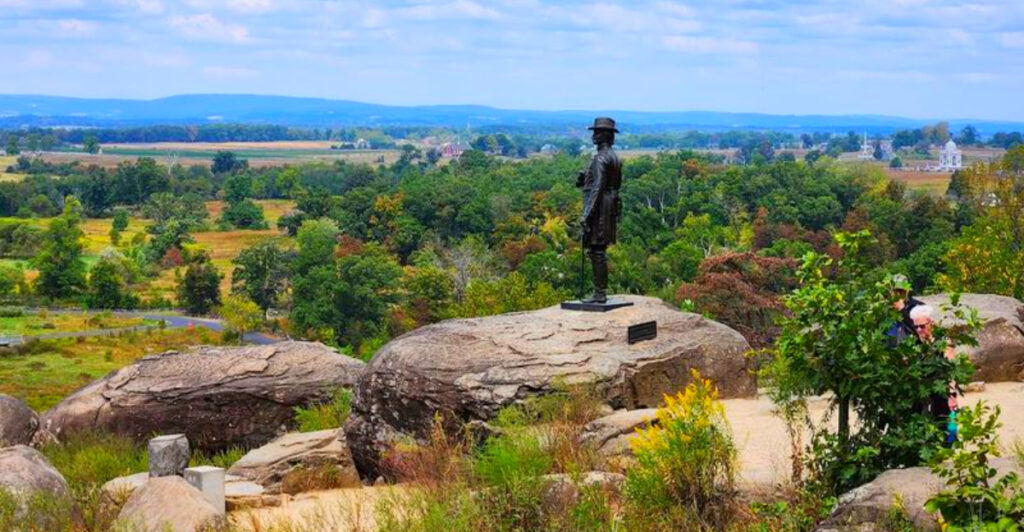
There is a rocky, boulder-strewn hill on the southern end of the battlefield that carries an outsized weight in Civil War history, and climbing it is one of the most rewarding things you can do at the park.
Little Round Top was the far left anchor of the Union line on July 2, 1863, and its defense by the 20th Maine Infantry Regiment under Colonel Joshua Chamberlain became one of the most celebrated episodes of the entire war. Had Confederate forces taken this hill, they could have flanked the entire Union position and potentially changed the outcome of the battle.
The view from the summit is genuinely panoramic, giving you a clear sense of the battlefield’s geography and just how exposed those soldiers were. Several monuments and markers on the hill explain exactly what happened and where.
The short but rocky hike to the top is manageable for most visitors, and the perspective you gain from standing there makes everything else you see in the park click into place in a new way.
The Soldiers’ National Cemetery and Lincoln’s Lasting Words
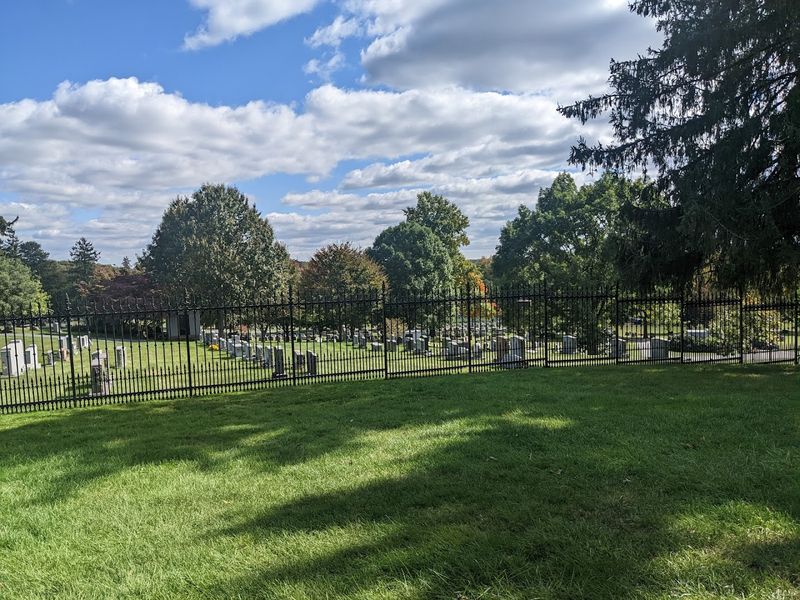
On November 19, 1863, President Abraham Lincoln stood on this ground and delivered a 272-word speech that redefined what the United States stood for, and the Soldiers’ National Cemetery where he spoke remains one of the most quietly powerful places in the country.
The cemetery contains more than 7,000 interments, including over 3,500 soldiers from the Civil War, many of them laid to rest in neat rows of small, identical markers. The order and care of the grounds give the space a profound sense of dignity.
A replica of the Gettysburg Address is displayed near the spot where Lincoln spoke, and reading it in that setting carries a weight that simply reading it in a classroom never quite matches. The words feel different when you are surrounded by the people they were written to honor.
Every November, the park hosts a Remembrance Ceremony that draws reenactors, historians, and visitors from across the country, keeping Lincoln’s dedication of this hallowed ground alive in a very tangible way.
The Auto Tour Route That Covers It All
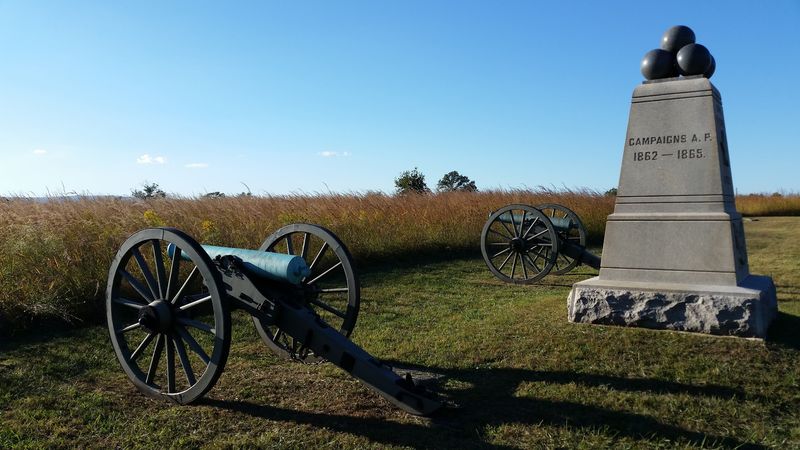
The self-guided auto tour is honestly the smartest way to cover the full scope of Gettysburg National Military Park, especially on a first visit when the sheer size of the place can feel a little overwhelming.
The route stretches across approximately 24 miles and visits 16 official stops, each marked with clear signage and accompanied by either a printed guide or an audio tour available through the park’s app. The sequence follows the chronology of the battle, so your drive through the park essentially walks you through the three days of fighting in order.
At each stop, there is usually a pull-off area where you can park, get out, and walk among the monuments for a closer look. Some stops require only a few minutes; others could hold your attention for the better part of an hour.
Budget at least four to five hours for the full route if you want to stop regularly, and consider bringing snacks because once you start, it is genuinely hard to pull yourself away from the next marker ahead.
Licensed Battlefield Guides Who Know Every Story
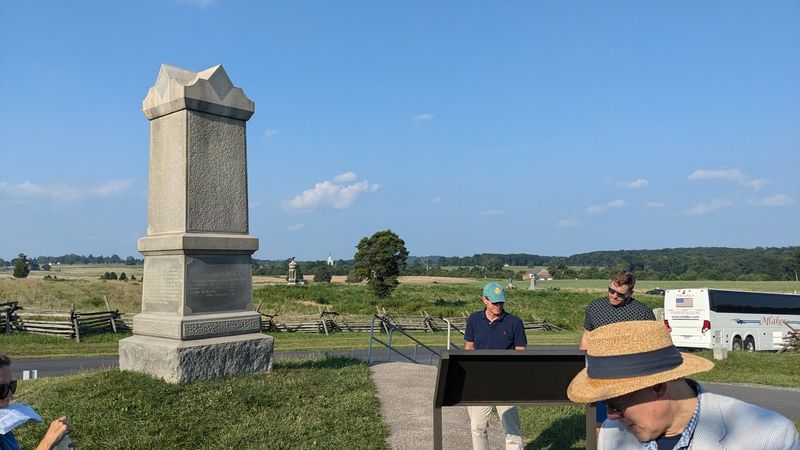
Hiring a Licensed Battlefield Guide is one of those decisions that sounds optional right up until the moment your guide starts talking, and then it becomes obviously the best choice you made all day.
The National Park Service certifies these guides through a rigorous examination process, and the result is a group of people who know the battle, the terrain, and the stories behind every monument with remarkable depth and precision. They ride with you in your own vehicle, narrating the tour at your pace and answering every question you can think of.
The guides consistently share details, personal stories, and tactical explanations that you would never find in a printed brochure or even a well-researched book. They have a way of making the landscape come alive in real time.
Guides can be arranged through the visitor center, and while there is a fee involved, nearly everyone who hires one describes it as money extremely well spent. The stories they share have a way of staying with you long after you leave the battlefield behind.
Hundreds of Monuments Spread Across Miles of Terrain
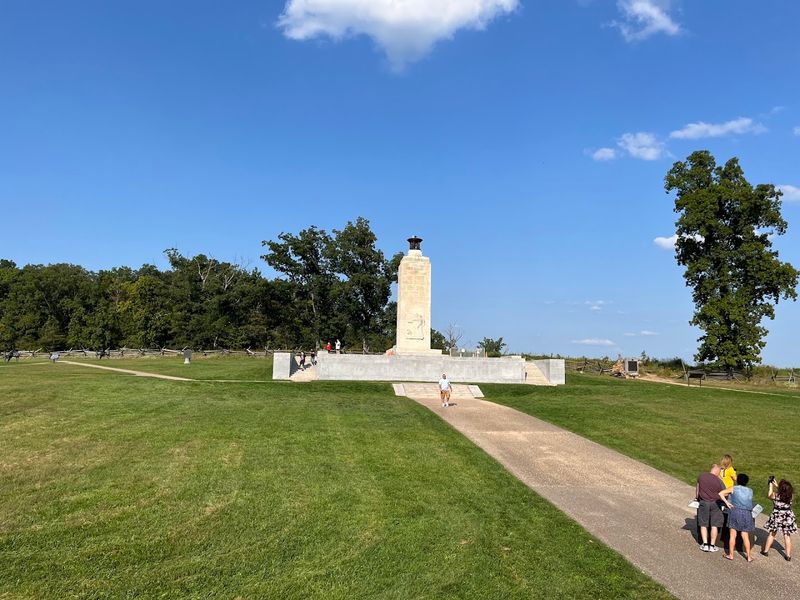
No other battlefield in the United States comes close to the sheer concentration of monuments found at Gettysburg, and exploring them is a rewarding experience all on its own.
More than 1,300 monuments, memorials, markers, and tablets are spread across the park, representing virtually every state that sent soldiers to fight here, as well as individual regiments, brigades, and divisions on both sides. Some are simple stone tablets; others are elaborate bronze sculptures of commanding officers on horseback.
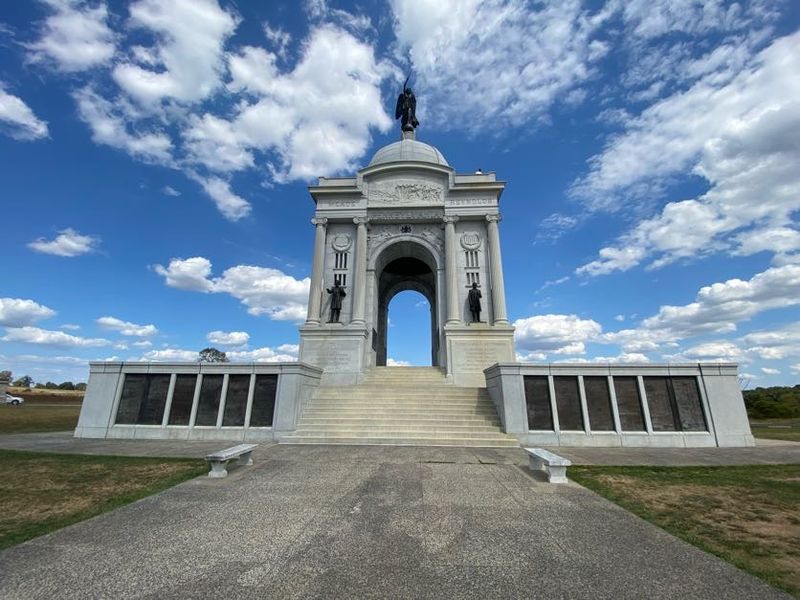
The Pennsylvania Monument near the center of the battlefield is one of the most impressive, a massive granite structure inscribed with the names of the more than 34,000 Pennsylvania soldiers who fought here. Standing at its base and looking up gives you a real sense of the human scale of this conflict.
Sunset is a particularly striking time to walk among the monuments, when the light turns warm and golden and the long shadows stretch across the fields in a way that feels almost cinematic.
Hiking and Walking Trails Through the Historic Landscape
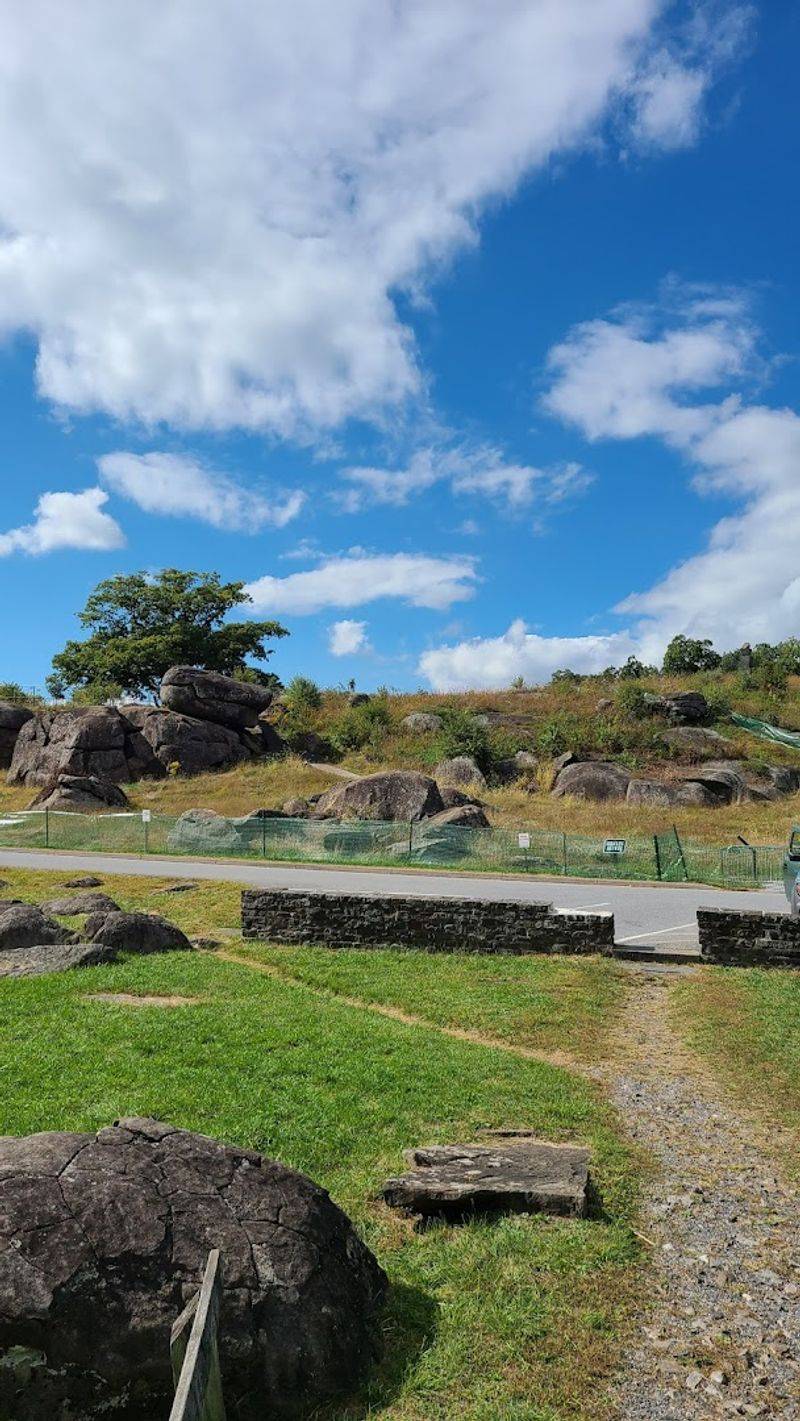
Beyond the driving tour and the museum, Gettysburg National Military Park rewards those willing to slow down and explore on foot in a very different and more personal way.
The park maintains a network of hiking and walking trails that wind through the battlefield landscape, taking you to areas that feel quieter and more intimate than the main road stops. Trails range from short, easy walks to longer routes that cover several miles across varied terrain.
Walking the ground where soldiers actually moved and fought gives you a physical sense of distance and effort that no car tour can fully replicate. You start to understand instinctively why certain positions were valuable and why others were nearly impossible to hold.
Cycling is also a popular option, with many visitors bringing or renting bikes to cover the battlefield at a pace somewhere between walking and driving. The park also has ample restroom facilities distributed throughout, so a full day of outdoor exploration is entirely practical and comfortable.
Practical Tips for Making the Most of Your Visit
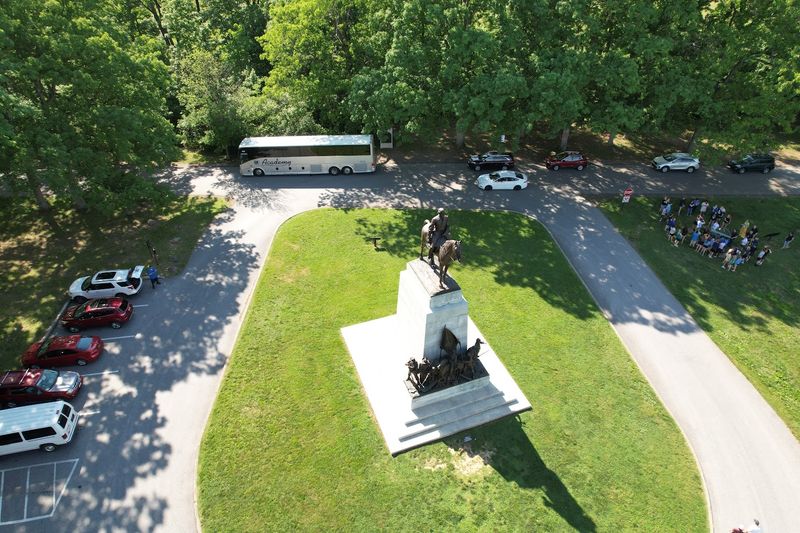
A little planning goes a long way at a park this large, and a few simple tips can make the difference between a satisfying visit and one that leaves you feeling like you only scratched the surface.
Arrive early, especially in summer, because the visitor center gets busy by mid-morning and parking near popular stops fills up quickly. The park is open year-round, but spring and fall offer the most comfortable temperatures for extended outdoor exploration.
Wear comfortable walking shoes regardless of whether you plan to drive most of the route, because even the car stops involve uneven ground, grass, and gravel paths between monuments. A good pair of sneakers or hiking shoes will serve you far better than anything fashionable.
The park’s website at nps.gov/gett has current hours, ranger program schedules, and downloadable tour guides that are worth reviewing before you arrive. The phone number for the visitor center is 717-334-1124 if you want to call ahead with specific questions about tours or accessibility options.
Share this story