 Unearth The Voyage
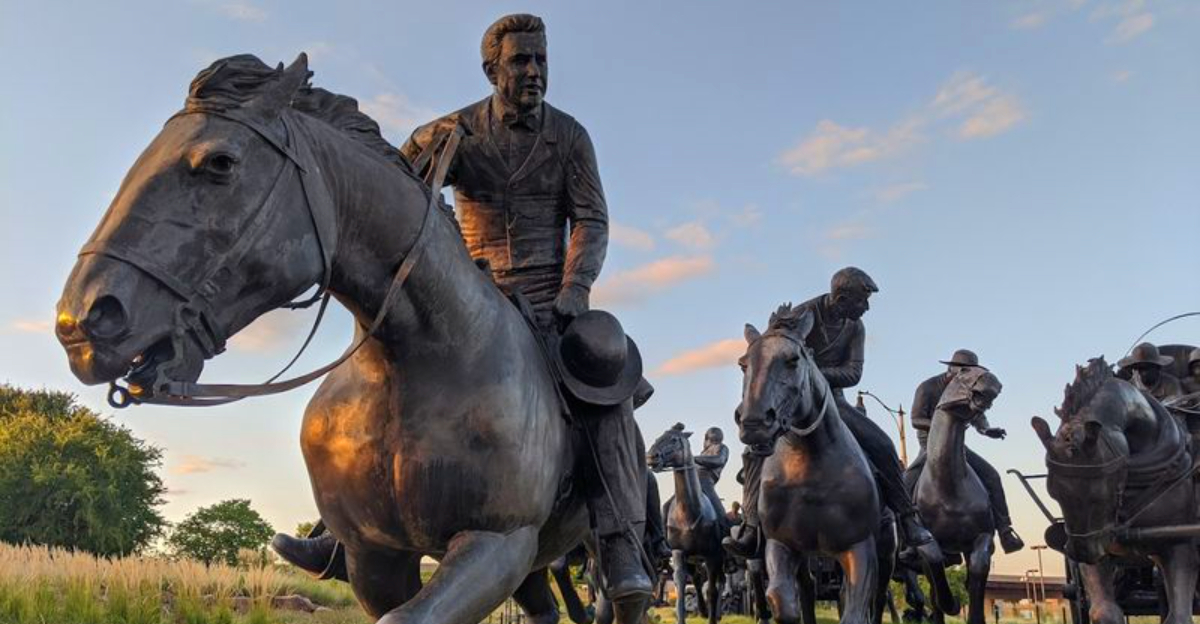
Some places make an impression before you even fully understand what you are looking at, and this is one of them. I came expecting a quick stop and a few photos, but instead found a sprawling bronze scene with motion, detail, and enough presence to slow my pace on purpose.
The scale alone is wild, yet the real surprise is how much there is to notice once you get close and start following the action figure by figure. Keep reading, because this is not just a monument you glance at from the road in Oklahoma City – it is a place to walk, study, and feel your way through, with river views, practical visiting perks, and plenty of stories pressed into metal.
First look by the river
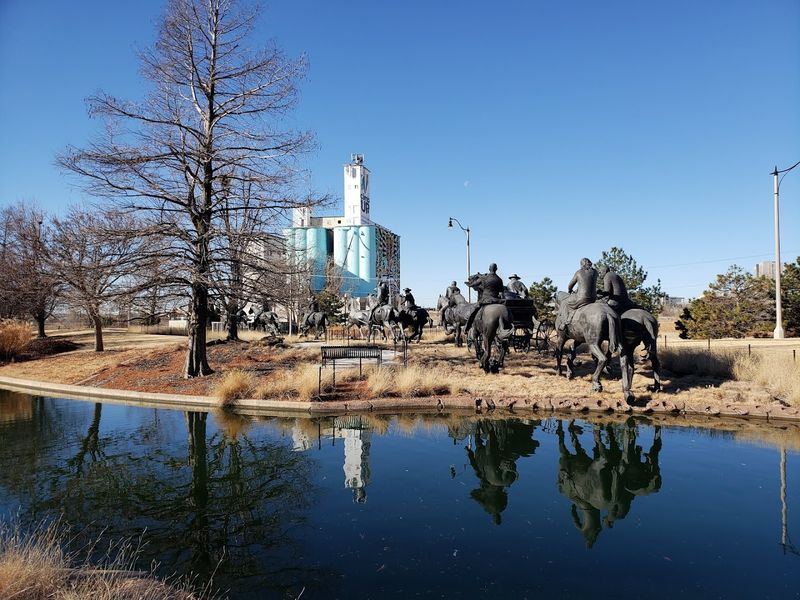
The first thing I want you to know is exactly where this place sits: Centennial Land Run Monument, 200 Centennial Ave, Oklahoma City, OK 73102, in the United States. Set near Bricktown and beside the canal and riverwalk area, it feels easy to reach but still dramatic enough to make a strong entrance.
I liked that contrast right away, because the monument is close to city activity without feeling squeezed by it.
From a distance, the bronze figures already look huge, but the real surprise comes when you begin to understand their spread across the landscape. This is not one statue on a pedestal doing all the work.
It is a sweeping scene that stretches out with horses, wagons, and people in motion, and that extra room gives it a real sense of momentum.
I found the setting especially helpful for first-time visitors, since the open area gives you space to pause, walk, and let your eyes adjust to the scale. Oklahoma has no shortage of memorable sights, yet this one grabs attention with very little effort.
By the time I reached the main path, I knew this was not going to be a quick look and leave stop.
Why the sculpture feels so enormous
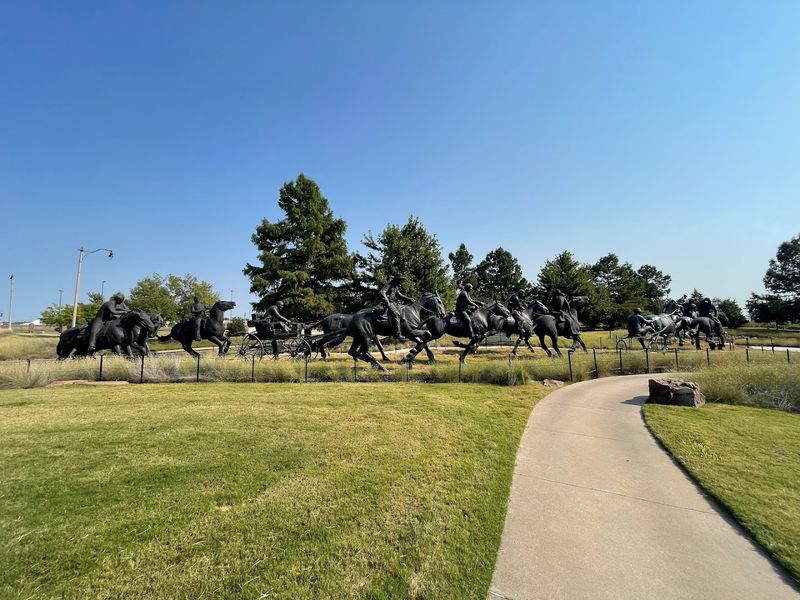
Size is the headline here, and honestly, it earns that headline. I had read that the monument covers an area larger than a football field, but numbers can feel flat until you stand there and start walking alongside it.
Then your legs become the measuring tape, and the scale finally clicks.
The installation includes a long procession of larger-than-life bronze figures, and the spacing between them matters almost as much as the figures themselves. That open ground creates movement, as if the whole scene is still surging forward even though the metal never shifts an inch.
I kept noticing how my perspective changed every few steps, with one rider suddenly becoming the focal point and then giving way to a wagon or another horse.
What impressed me most was that the monument does not feel oversized just for bragging rights. Its breadth helps tell the story, because the scene needs room to breathe and charge across the landscape.
In Oklahoma City, plenty of places are easy to enjoy in a few minutes, but this one rewards a longer wander. I came for the giant sculpture angle, and I stayed because the scale actually serves the experience instead of overpowering it.
Details that keep pulling your eyes back
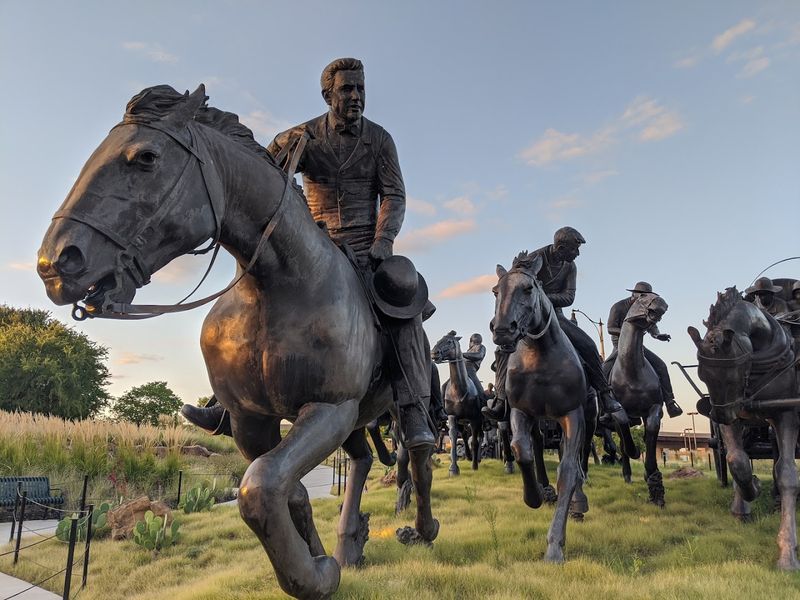
Here is where the monument stopped being simply big and started becoming genuinely absorbing. Up close, the craftsmanship turns into the main event, with textured clothing, tense muscles on the horses, alert expressions, and small touches that keep showing up when you think you have already seen enough.
I spent far longer than planned doing that classic traveler move of saying, one more minute, and then wandering off to inspect another figure.
The bronze surfaces have a liveliness that photographs only partly capture. Sunlight slides over the raised lines and edges, giving the riders and animals a sharper sense of energy.
I noticed how each face seemed distinct, and that variety keeps the whole installation from feeling repetitive even though it is one continuous historical scene.
One of my favorite parts was how the sculptural detail encourages a slower look without requiring any special art background. You do not need a guide whispering art terms in your ear to appreciate the skill here.
You just need a little time and curiosity. Oklahoma monuments can lean formal, but this one invites close inspection in a more relaxed way, almost like it knows you will circle back for another look before you are done.
A moving scene frozen in bronze
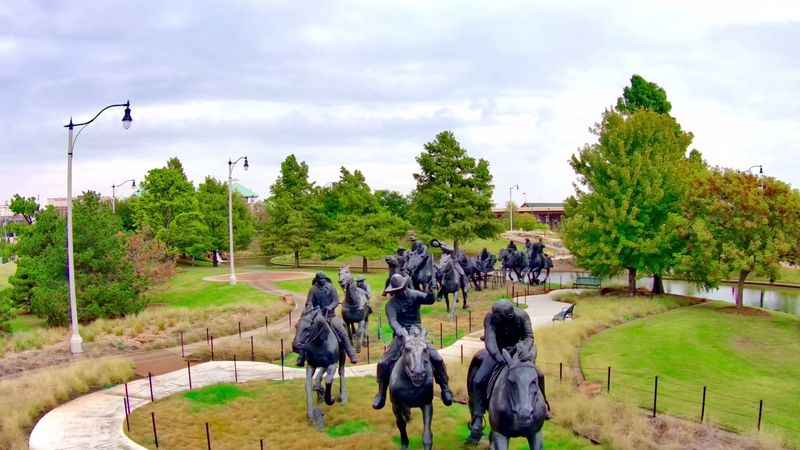
Motion is the secret ingredient that makes this place memorable. Plenty of monuments look polished and respectable, but this one seems to kick up dust even without any actual dust around.
I could feel that rush in the arrangement of bodies, wheels, reins, and hooves, all angled in ways that push the eye forward.
The figures are not lined up like a class photo. They surge, lean, and stretch into the scene with a sense of urgency that gives the whole composition dramatic force.
Horses rear and lunge, wagons tilt, and the people look committed to the momentum around them. That design choice does heavy lifting, because it turns a history lesson into a visual experience that feels active from every angle.
I also appreciated how the monument keeps changing depending on where you stand. One viewpoint emphasizes the collective push, while another lets a single rider or animal suddenly steal the show.
That shifting emphasis kept me moving through the site instead of planting myself in one place for too long. In Oklahoma City, where you can easily fill a day with quick stops, this monument has a rare ability to hold attention through pure visual energy.
Even my camera seemed to work harder trying to keep up.
History with room for reflection
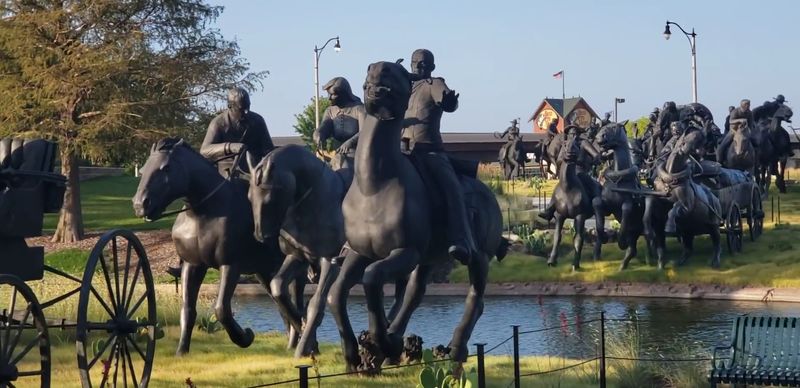
History sits at the center of this monument, and I think it is best approached with both curiosity and honesty. The sculpture commemorates the 1889 Land Run, a major event tied to the opening of land in Oklahoma Territory.
Standing there, I could appreciate the ambition of the artwork while also recognizing that the past behind it is layered and not neatly packaged.
That complexity matters. The monument presents a dramatic vision of movement and settlement, but thoughtful visitors will probably find themselves considering the wider story as well.
I did. Public art can be visually stunning and still prompt bigger questions, and in this case the monument works best when you let both realities exist at once: admiration for the artistry and awareness that history is broader than one viewpoint.
I actually liked that the site gave me enough physical space to think instead of pushing me through too quickly. The open walkway, the river nearby, and the spread of the sculpture create a setting where reflection feels natural rather than forced.
Oklahoma history carries weight, and this monument certainly does too, in more ways than one. It left me with an experience that was not only scenic and impressive, but also thoughtful enough to stay on my mind afterward.
The riverwalk adds breathing room
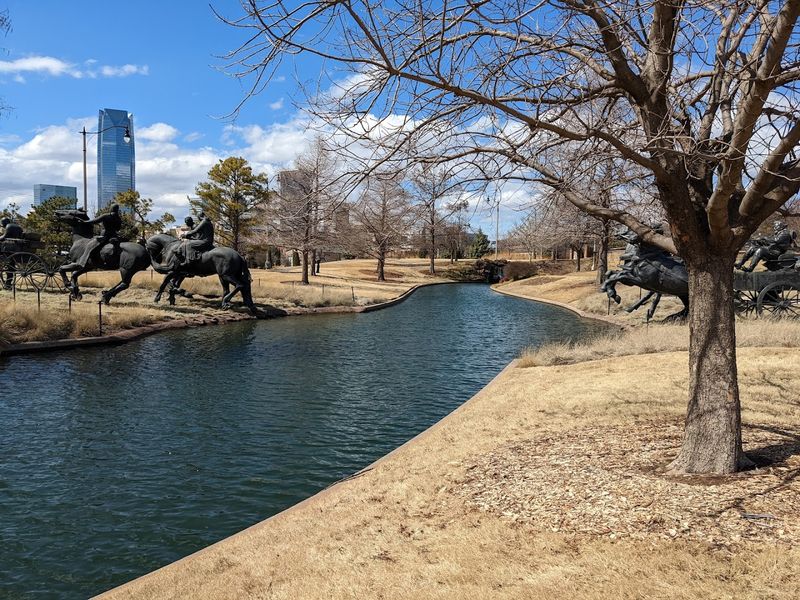
One reason I enjoyed this stop so much was the setting around the sculpture. The monument is not trapped in a cramped urban corner or fenced off like a trophy.
Instead, it sits beside a pleasant walking area near the water, which gives the whole visit a calmer rhythm than I expected from something so visually forceful.
I found that the riverwalk and nearby paths helped balance the intensity of the scene. After studying the riders and wagons, I could step back, look across the water, and reset my eyes before going in again for another round of details.
That mix of open air, walkway, and sculpture makes the experience feel less like checking off a landmark and more like spending time somewhere genuinely enjoyable.
It also helps that the atmosphere can be surprisingly peaceful, especially if you arrive when the area is quieter. I heard city sounds in the distance, but they never overpowered the experience.
Instead, the monument and the water seemed to work together, one delivering drama and the other offering a little breathing room. Oklahoma City knows how to pair public art with usable outdoor space, and this is one of the clearest examples I found.
My visit ended up feeling half history walk, half riverside reset, which is a pretty solid travel combination.
Best times to visit and what to expect
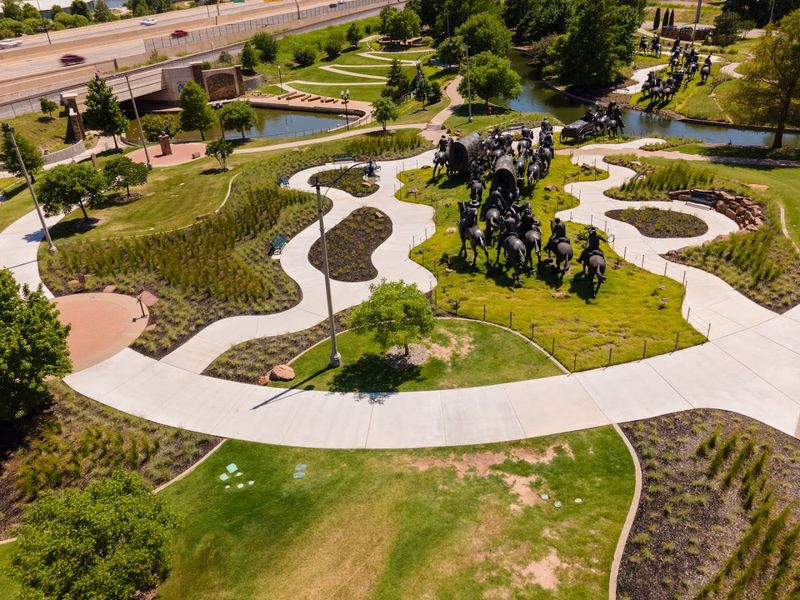
Timing can change the whole personality of this place, and I noticed that almost immediately. Since the monument is open 24 hours, you get flexibility that many attractions simply do not offer.
That makes it easy to fit into a packed Oklahoma City day, but I still think a little planning improves the visit.
Morning works well if you want a quieter atmosphere and a comfortable walk before the day heats up. Late afternoon and early evening also have a lot going for them, especially when the light softens and the bronze starts showing off with richer color and longer shadows.
Midday is perfectly doable, but the open layout means sun can become part of the conversation in a hurry, especially during warmer months in Oklahoma.
I would also keep an eye on nearby event traffic, because the broader area can get busier depending on what is happening around Bricktown. The good news is that once you are at the monument, the site itself still feels roomy.
I liked being able to take my time without feeling rushed along. For a free attraction with all-day access, it offers a lot of convenience with very little fuss.
That kind of low-stress sightseeing deserves a small round of applause, or at least a second lap around the statues.
Parking, access, and practical tips
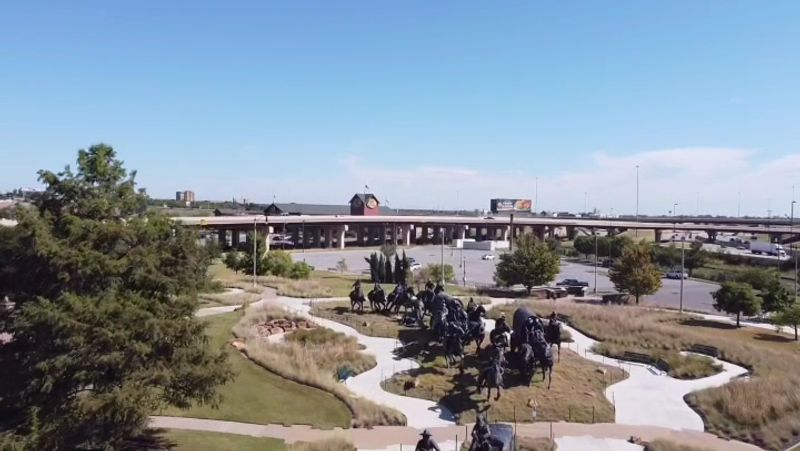
Practical details are not the glamorous part of travel writing, but they can save a day from unnecessary grumbling. I found the monument fairly easy to work into my route, and that matters because giant sculptures are more fun when you are not muttering at your phone’s directions.
The area near Bricktown offers access points, parking options nearby, and a straightforward walking environment once you arrive.
My best advice is simple: give yourself a few extra minutes to approach calmly, especially if traffic is heavier around downtown Oklahoma City. Some visitors reach the site after passing through nearby commercial areas, and that can feel slightly less scenic than the monument itself.
Still, once I parked and got my bearings, the rest was easy. Comfortable shoes helped, because this is absolutely a walk-and-look destination rather than a quick glance from the curb.
I would also bring water in warmer weather and expect limited shade in parts of the open area. Since the monument is free and accessible at all hours, there is no ticketing stress, which I appreciated more than I expected.
You can simply show up, move at your own pace, and decide how long the experience deserves. In a travel world full of reservations and timed entries, that felt refreshingly old-school in the best possible way.
Why photographers love this place
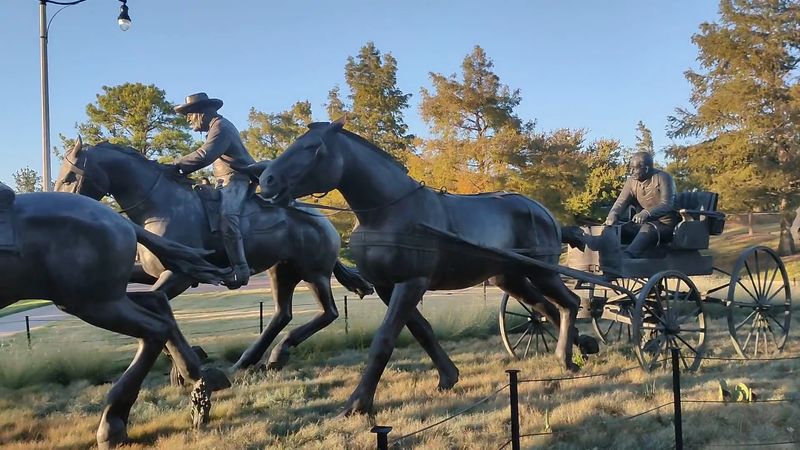
My camera had an unusually busy day here, and I do not think that was an accident. This monument offers the kind of visual variety photographers love, because wide shots, medium frames, and tight detail images all work for different reasons.
You can capture the full sweep of the installation, then turn around and find a horse’s expression or a sculpted fold of clothing worth isolating on its own.
Light also plays a huge role. Bronze reacts beautifully to changing conditions, and the monument gains different moods throughout the day.
In stronger sun, the figures look crisp and forceful. In softer light, they feel more layered and textured.
Add the nearby water and open sky, and you get extra visual ingredients without needing to force the composition.
I especially liked how easy it was to experiment with angles. You can stand back for scale, move lower for more drama, or walk the line of figures for a sense of momentum.
Even casual phone photos come away looking more intentional than usual, which is always a nice little travel bonus. Oklahoma City has plenty of places where a photo says, yes, I was there.
This one gives you images that say, yes, I stopped, looked closely, and found something worth taking home besides a souvenir magnet.
How long to spend here
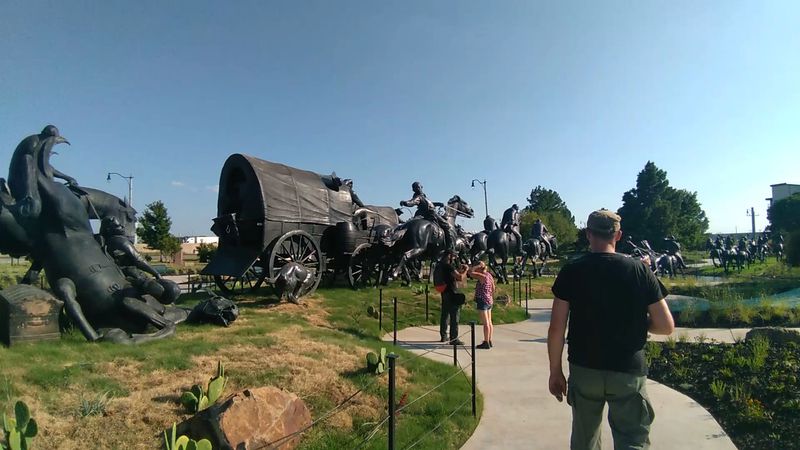
Some landmarks are over in ten minutes, and there is nothing wrong with that. This one can be a quick stop if your schedule is tight, but I think it is better when you give it room to unfold.
I spent longer here than expected, mostly because the monument keeps rewarding a second pass with new details and stronger perspectives.
For a basic visit, thirty minutes gives you enough time to see the major sweep, walk around, and take a few photos. If you enjoy public art, history, or riverside strolls, I would stretch that to an hour without hesitation.
That extra time lets you slow down, revisit the strongest sections, and enjoy the surrounding paths instead of treating the monument like a checkpoint.
I also think this stop works especially well when paired with a relaxed mindset. There is no need to rush through as if a buzzer is about to sound.
Since it is open all day and free to access, you can settle into the site and let your interest set the pace. In Oklahoma City, that kind of freedom is a real perk.
I arrived expecting an efficient sightseeing moment and ended up getting a fuller experience, the sort that quietly improves a trip because it asks for attention and then actually rewards it.
A strong fit for different kinds of travelers
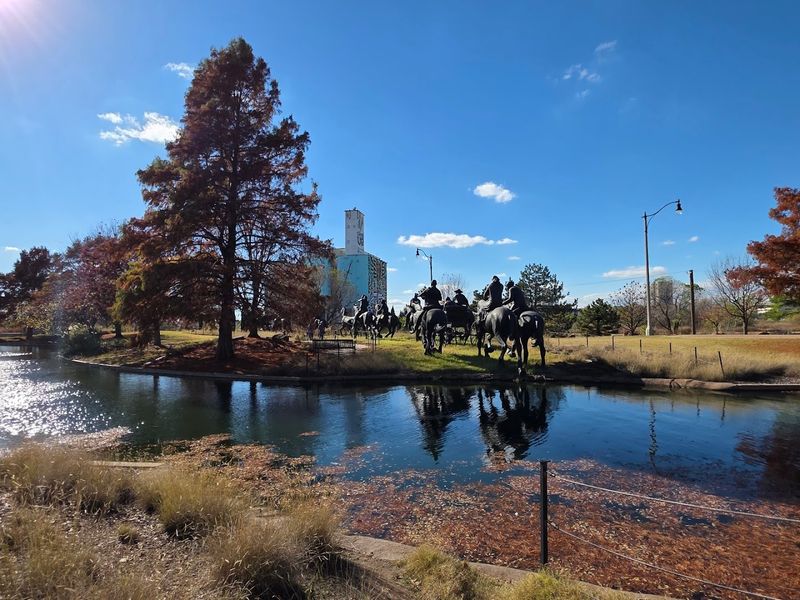
One thing I appreciated right away was how many different travelers could enjoy this monument without much effort. History fans can dig into the subject matter, photographers can chase angles and light, and casual visitors can simply enjoy the wow factor of a massive public artwork by the water.
It does not demand a niche interest to make sense.
I also think it works well for people who like attractions with flexible pacing. You can move briskly and still get the main impression, or linger and study every figure until the details start feeling familiar.
Families, solo travelers, couples, and road trippers all seem to have an easy path here because the experience is visual, open, and uncomplicated. That matters more than many cities realize.
For me, the monument hit a sweet spot between educational and accessible. It gave me enough substance to think about, but it never felt stiff or overly formal.
Even someone with only a passing interest in monuments could probably appreciate the scale and craftsmanship in a matter of minutes. Oklahoma has a talent for places that feel grounded and direct, and this one follows that pattern while still aiming big.
If your travel style leans toward memorable stops with both substance and scenery, this is a very safe bet and a very solid walk.
What stayed with me afterward
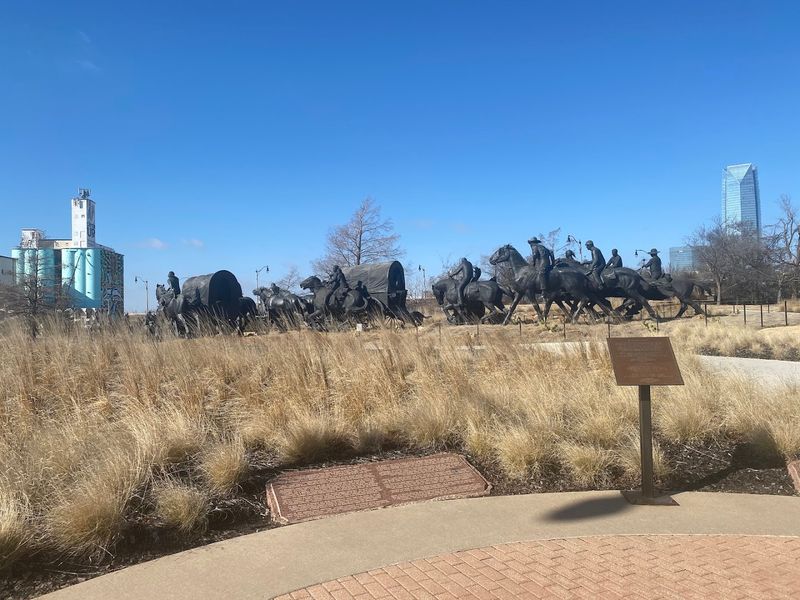
Long after I left, the thing I kept returning to was not just the size, though the size certainly earns its reputation. What stayed with me was the combination of scale, craftsmanship, setting, and thoughtfulness packed into one outdoor stop.
The monument manages to be visually bold without becoming hollow, and that balance is harder to pull off than it looks.
I liked that my visit never felt one-note. There was the initial surprise of seeing how far the sculpture stretches, then the pleasure of inspecting the bronze details, and finally the quieter part where the historical context settled in.
Add the riverwalk atmosphere and the easy access, and the whole experience becomes more layered than a simple roadside landmark. That layered feeling is probably why the site lingers in memory so well.
Travel often rewards the places that give you more than one reason to care, and this monument definitely did that for me. It offered spectacle, yes, but also texture and room for reflection.
In Oklahoma City, where there are plenty of ways to spend an afternoon, this is one stop I would gladly repeat without any persuasion at all. My final verdict is simple: go for the giant sculpture, stay for the details, and leave with a fuller sense of why this corner of Oklahoma keeps drawing people back.
A final word on this Oklahoma landmark
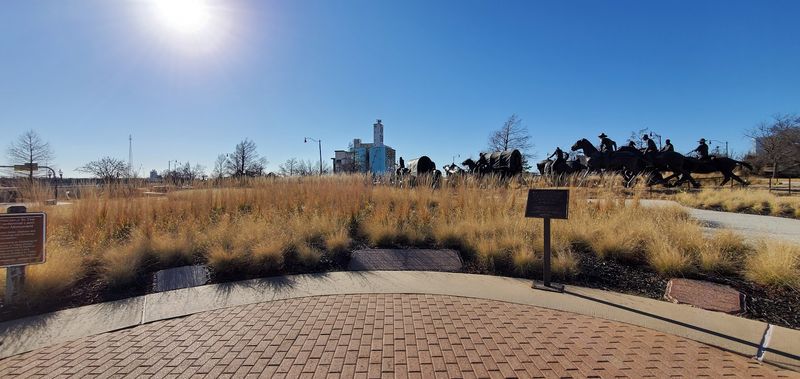
By the end of my visit, this place had gone from interesting stop to one of the most memorable monument experiences I have had in Oklahoma. It is huge, yes, but not in a gimmicky way.
The scale supports the story, the artistry rewards close attention, and the setting makes it easy to spend more time there than you first planned.
I would recommend it to anyone spending time in Oklahoma City who wants something free, distinctive, and surprisingly absorbing. You can come for a short walk, a photography session, a history-minded pause, or simply to see what a sculpture larger than a football field actually feels like in person.
Few attractions deliver that kind of flexibility while still offering a clear sense of place.
Most of all, I appreciated that the monument feels both civic and personal. It belongs to the city, but it also leaves room for your own pace, your own reactions, and your own take on what you are seeing.
That makes the visit feel less scripted and more genuine. When a destination manages to be practical, thought-provoking, and visually unforgettable at the same time, I call that a win.
Centennial Land Run Monument does exactly that, and it does it with plenty of bronze horsepower to spare.



