 Unearth The Voyage

Our planet’s oceans are heating up faster than ever before, and scientists have found a dramatic way to help us understand just how much energy is being absorbed. Recent research shows that in 2025, the world’s oceans took in more heat than any year on record, with the amount of energy equal to 12 Hiroshima atomic bombs exploding every single second.
This alarming trend is changing weather patterns, fueling stronger storms, and threatening marine life across the globe.
1. Oceans Absorbed More Heat Than Ever Before
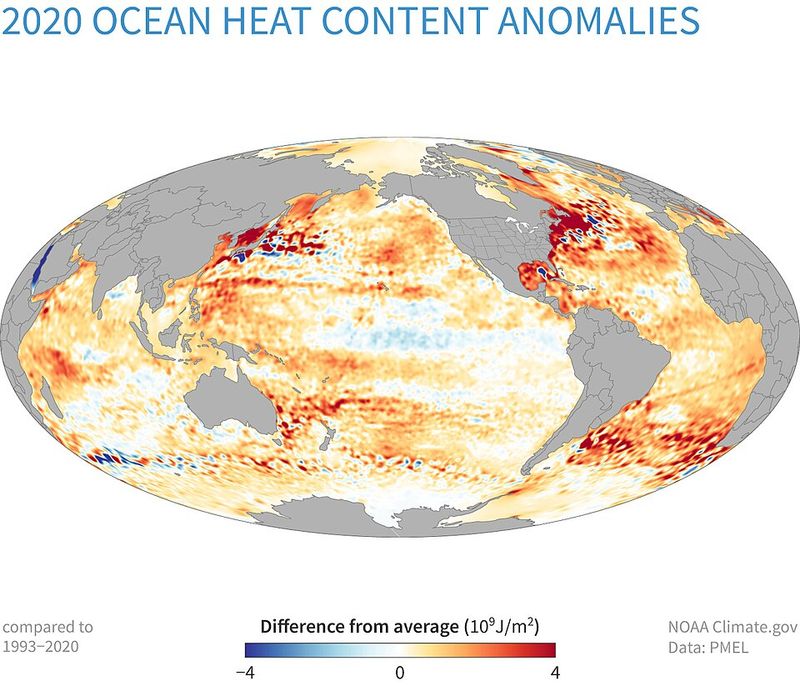
Global oceans reached a terrifying milestone in 2025, absorbing more heat than any year since scientists began keeping reliable records back in 1960. This isn’t just another statistic; it represents a fundamental shift in how our planet stores energy.
The warming trend shows no signs of slowing down, with each passing year bringing new temperature extremes.
Researchers from around the world collaborated to measure ocean temperatures at various depths and locations. Their findings paint a clear picture of a planet struggling to cope with human-caused climate change.
Water has an incredible capacity to hold heat, which means our oceans act like massive batteries storing excess energy.
What makes this record particularly concerning is the speed at which it was broken. Previous records were surpassed by significant margins, suggesting an acceleration in the warming process.
Scientists warn that this rapid heat accumulation will have consequences for weather patterns, marine ecosystems, and coastal communities worldwide for generations to come.
2. This Marks the Ninth Consecutive Year of Record Ocean Heat

Imagine breaking a record not just once, but nine years in a row. That’s exactly what’s happening with ocean temperatures, creating the longest continuous streak of record-breaking heat ever documented.
Each year since 2017 has been hotter than the last, establishing a pattern that climate scientists find deeply troubling.
This unprecedented streak eliminates any possibility that ocean warming is just a random fluctuation or natural cycle. The consistency of the trend points directly to human activities, particularly the burning of fossil fuels that release greenhouse gases.
The nine-year pattern shows that our planet’s heat absorption isn’t slowing down or leveling off.
Think of it like a pot of water on a stove that keeps getting hotter and hotter without anyone turning down the heat. Eventually, that water will boil over, causing damage.
Our oceans are experiencing something similar, with temperatures climbing relentlessly year after year, creating conditions we’ve never seen before in recorded history.
3. Oceans Absorb Over 90% of Excess Heat from Greenhouse Gases

Here’s a surprising fact: when we talk about global warming, most people picture hot air and rising atmospheric temperatures. But the truth is that more than 90% of the extra heat trapped by greenhouse gas emissions actually ends up in the oceans, not the air we breathe.
This makes our seas the primary storage system for climate change.
Water’s unique chemical properties allow it to absorb and hold tremendous amounts of thermal energy. While the atmosphere heats up quickly and cools down just as fast, oceans hold onto heat for decades or even centuries.
This means the warming we’re causing today will affect ocean temperatures far into the future, long after we reduce emissions.
If oceans weren’t absorbing this heat, atmospheric temperatures would be much higher than they are now. In a way, our oceans are protecting us from even more severe warming on land.
However, this protective role comes at a terrible cost to marine life and ocean ecosystems.
4. Ocean Heat Is a Key Indicator of Long-Term Climate Change

Scientists consider ocean temperature measurements to be one of the most reliable indicators of long-term global warming. Unlike air temperatures that can fluctuate wildly from day to day or season to season, ocean temperatures change slowly and steadily.
This makes them perfect for tracking the overall health of our planet’s climate system.
Atmospheric temperatures can be influenced by short-term events like volcanic eruptions, El Niño patterns, or even urban heat islands around cities. Ocean temperatures, on the other hand, represent the accumulated heat energy of the entire planet.
They smooth out the noise and reveal the true underlying trend of climate change.
When climate scientists want to know if global warming is really happening or just a temporary blip, they look at ocean heat content. The steady, relentless increase in ocean temperatures over the past six decades provides undeniable evidence that our planet is warming.
No amount of cold winters or cool summers can hide this fundamental truth revealed by our warming seas.
5. Surface Ocean Temperatures Were Near Historic Highs

The surface of the ocean, where water meets air, reached extraordinary temperatures in 2025. Global average sea surface temperature ranked as the third highest on record, measuring a full 0.5 degrees Celsius above the 1981 to 2010 average.
That might not sound like much, but across billions of square miles of ocean, it represents an enormous amount of energy.
Surface temperatures matter tremendously because they directly affect weather patterns, hurricane intensity, and the health of coral reefs. Warmer surface waters evaporate more quickly, putting extra moisture into the atmosphere that can fuel extreme rainfall events.
They also provide the energy that powers tropical storms, making hurricanes stronger and more destructive.
Marine creatures living near the surface face particular challenges from these elevated temperatures. Coral reefs experience bleaching events when water gets too warm, and fish populations shift toward cooler waters, disrupting entire food chains.
The combination of deep ocean warming and hot surface temperatures creates a double threat to ocean ecosystems everywhere.
6. Scientists Measure Ocean Heat in Zettajoules

Ever heard of a zettajoule? It’s the unit scientists use to measure ocean heat content, and the numbers are so large they’re hard to comprehend.
One zettajoule equals one sextillion joules, which is a one followed by 21 zeros: 1,000,000,000,000,000,000,000. To put that in perspective, the entire United States uses about 100 exajoules of energy per year, and one zettajoule equals 10 exajoules.
Scientists had to invent these huge units because oceans contain such massive amounts of energy. Traditional units like calories or even megajoules would result in numbers too large to work with practically.
Zettajoules allow researchers to express ocean heat content in manageable figures, though the numbers still boggle the mind.
When you hear that oceans absorbed 23 additional zettajoules in 2025, try to imagine the power of millions of power plants running continuously for an entire year. That’s the scale of energy we’re talking about, all absorbed by seawater and stored in the depths for decades to come.
7. Most Heat Is Stored in the Upper 2,000 Meters of the Ocean

Ocean depths are divided into different zones, and scientists have discovered that the upper 2,000 meters, or about 6,560 feet, is where the vast majority of ocean warming takes place. This layer represents less than half the ocean’s total depth in many places, yet it absorbs most of the excess heat from climate change.
Below this depth, water temperatures remain relatively stable and cold.
Researchers focus their measurements on this upper layer for practical reasons as well as scientific ones. It’s easier to deploy temperature sensors and monitoring equipment in the top 2,000 meters compared to the deepest ocean trenches.
More importantly, this zone interacts directly with the atmosphere and contains most of the ocean’s living creatures.
Heat doesn’t distribute evenly throughout ocean depths. Warmer water tends to stay near the surface because it’s less dense than cold water.
However, ocean currents do carry some heat to deeper levels over time. The concentration of warming in the upper ocean means that surface-dwelling marine life bears the brunt of temperature increases.
8. Multiple Global Agencies Contributed Data

This groundbreaking study wasn’t the work of just one group of scientists working in isolation. Instead, it represents a massive international collaboration combining observations from three major organizations around the world.
NOAA’s National Centers for Environmental Information in the United States, the European Union’s Copernicus Climate Change Service, and the Chinese Academy of Sciences all pooled their data and expertise.
Each agency operates networks of ocean buoys, satellite sensors, and research vessels that constantly monitor ocean temperatures. By combining their measurements, scientists can create a truly global picture of ocean heat content.
This collaboration ensures that the findings aren’t biased by regional variations or the limitations of any single monitoring system.
International cooperation on climate science demonstrates that ocean warming is a planetary problem requiring a planetary response. No single country can solve this challenge alone.
The fact that American, European, and Chinese scientists worked together sends a powerful message about the urgency and importance of understanding ocean heat.
9. Oceans Absorbed an Extra 23 Zettajoules of Heat in One Year

In just one year, 2025, the world’s oceans absorbed an additional 23 zettajoules of heat energy. To understand how much energy that represents, consider that it would take every power plant on Earth running at full capacity for several years to generate that much power.
This single-year increase shattered the previous record and shocked even experienced climate scientists.
The jump from previous years shows that ocean warming isn’t happening at a steady, predictable rate. Instead, the process appears to be accelerating, with more heat being absorbed faster than climate models predicted.
This acceleration suggests that feedback loops may be amplifying the warming process beyond what scientists initially expected.
What happens to all that energy once it enters the ocean? It doesn’t just disappear.
The heat spreads through ocean currents, melts ice at the poles, expands seawater to raise sea levels, and fundamentally alters the chemistry and biology of marine ecosystems. Every zettajoule absorbed represents lasting changes to our planet’s climate system.
10. That Energy Equals 12 Hiroshima Bombs Every Second

To help people grasp the enormous amount of energy oceans are absorbing, scientists came up with a startling comparison. The 23 zettajoules absorbed in 2025 equals the energy of 12 Hiroshima atomic bombs detonating every single second throughout the entire year.
Let that sink in for a moment. Every tick of the clock, every heartbeat, every breath you take, 12 nuclear explosions worth of energy enters our oceans.
This comparison isn’t meant to be sensational or scary, though it certainly is alarming. Scientists use it because nuclear weapons represent one of the few energy sources most people can visualize and understand.
The Hiroshima bomb released a known, measurable amount of energy, making it a useful reference point for calculations.
Multiply 12 bombs per second by 60 seconds per minute, then by 60 minutes per hour, then by 24 hours per day, then by 365 days per year. The total number of bomb-equivalents is staggering, yet that’s the reality of how much excess heat our oceans absorbed in just one year.
11. The Increase Was Sharply Higher Than the Year Before

Looking at year-to-year changes reveals an even more concerning trend. In 2024, oceans absorbed about 16 zettajoules of excess heat, which was already considered alarmingly high.
But 2025 saw that number jump to 23 zettajoules, representing a dramatic increase of 7 zettajoules in just one year. This sharp acceleration caught many scientists off guard.
What caused such a large jump in a single year? Scientists are still investigating, but several factors likely contributed.
Changes in cloud cover, variations in ocean circulation patterns, and the continued increase in greenhouse gas concentrations all play roles. The interaction between these factors can sometimes produce unexpectedly large effects.
The year-to-year variation also demonstrates that ocean warming doesn’t happen smoothly or predictably. Some years show smaller increases while others, like 2025, show huge jumps.
However, the overall trend remains unmistakable: each decade is hotter than the last, and the rate of warming appears to be speeding up rather than slowing down.
12. The Hottest Ocean Regions Were Widespread

Ocean warming in 2025 wasn’t concentrated in just one area. Instead, the hottest regions were spread across the globe, affecting multiple ocean basins simultaneously.
The tropical and southern Atlantic Ocean experienced extreme warming, with temperatures well above historical averages. These warm waters influenced weather patterns across Africa, South America, and even Europe.
The Mediterranean Sea, often called Europe’s bathtub, reached record-breaking temperatures that threatened marine life and coastal ecosystems. Meanwhile, the northern Indian Ocean heated up significantly, affecting monsoon patterns that billions of people depend on for agriculture and fresh water.
The Southern Ocean surrounding Antarctica also showed alarming warming, contributing to ice melt at the frozen continent.
The widespread nature of ocean warming shows that this isn’t a local or regional problem. Every ocean basin, from the Arctic to the Antarctic, from the Atlantic to the Pacific, is experiencing temperature increases.
This global pattern confirms that human-caused climate change is affecting the entire planet’s ocean system simultaneously.
13. Warming Oceans Fuel Extreme Weather

Warmer oceans don’t just affect marine life; they fundamentally change weather patterns across the entire planet. Marine heatwaves, which are periods of abnormally hot ocean temperatures lasting weeks or months, have become more frequent and intense.
These underwater heat waves kill fish, coral, and other sea creatures while disrupting commercial fisheries that coastal communities depend on.
Tropical storms and hurricanes draw their energy directly from warm ocean water. As sea surface temperatures rise, storms have access to more fuel, making them stronger, wetter, and more destructive.
Scientists have observed that hurricanes are intensifying more rapidly than in the past, giving coastal residents less time to prepare and evacuate.
Ocean warming also affects atmospheric circulation patterns, changing where and how much rain falls around the world. Some regions experience devastating droughts while others face unprecedented flooding.
The jet stream, which guides weather systems across continents, is influenced by temperature differences between tropical and polar oceans. As those differences change, so do global rainfall patterns.
14. Recent Disasters May Be Linked to Ocean Heat

Climate scientists are increasingly connecting specific weather disasters to elevated ocean temperatures. Hurricane Melissa, which devastated parts of Jamaica and Cuba, likely gained strength from unusually warm Caribbean waters.
The storm intensified rapidly just before making landfall, catching many residents unprepared for its fury. Warmer oceans provided the energy that transformed it from a manageable storm into a catastrophic hurricane.
Halfway around the world, extreme monsoon flooding in Pakistan displaced millions of people and destroyed vast agricultural areas. Scientists believe warmer Indian Ocean temperatures contributed to the excessive moisture in the atmosphere that produced the devastating rainfall.
The connection between ocean heat and monsoon intensity is well-established in climate research.
Even far from tropical waters, ocean warming plays a role in extreme weather. Severe flooding in the Mississippi River basin has been linked to atmospheric patterns influenced by ocean temperature changes.
As scientists develop better attribution methods, they’re finding ocean heat fingerprints on more and more extreme weather events worldwide.
15. Scientists Say Earth’s Climate System Is Out of Balance

After analyzing all the data, climate researchers have reached a sobering conclusion: Earth’s climate system is not in thermal equilibrium. In simple terms, this means our planet is receiving more energy from the sun than it’s radiating back into space.
The difference is being stored, primarily in the oceans, causing continuous warming that won’t stop until we restore the balance.
A planet in thermal equilibrium would have stable temperatures over time, with energy coming in exactly matching energy going out. But greenhouse gases in the atmosphere trap heat that would normally escape to space, creating an energy imbalance.
This imbalance drives all the climate changes we’re experiencing, from ocean warming to melting ice to extreme weather.
The findings provide direct, measurable evidence that human activities have pushed Earth’s climate system out of balance. Until greenhouse gas emissions are dramatically reduced and atmospheric carbon dioxide levels decline, the planet will continue accumulating heat.
Our oceans will keep warming, and the consequences will keep intensifying for decades to come.



