There is a waterfall in northern Minnesota where half the Brule River simply disappears into a dark, swirling hole in the rock, and nobody fully understood where it went for decades. That alone should be enough to get you packing your hiking boots.
Tucked along the rugged North Shore of Lake Superior, this state park holds one of the most genuinely puzzling natural features in the entire country. The trail to reach it winds through dense forest, drops down dramatic staircases, and rewards every step with views that feel almost unreal.
Whether you are a seasoned hiker or just someone who enjoys a good mystery with your nature fix, this place delivers on every front. Keep reading, because the story of this vanishing river is even stranger than it sounds.
Where to Find This Geological Puzzle
Judge C.R. Magney State Park sits at 4051 MN-61, Grand Marais, MN 55604, roughly 15 minutes north of Grand Marais along the scenic Lake Superior shoreline.
The park is named after Clarence R. Magney, a former mayor of Duluth and Minnesota Supreme Court justice who worked tirelessly to protect the North Shore’s natural beauty for future generations.
Getting there is straightforward. Highway 61 runs right past the park entrance, and the drive itself is gorgeous, hugging the Lake Superior coastline with dramatic views at nearly every turn.
A daily or annual Minnesota State Parks vehicle permit is required for entry, and you can purchase one at the trailhead kiosk using your phone. Arriving early on weekends is strongly recommended since the parking lot fills up faster than you might expect, especially during peak summer months.
The Devil’s Kettle: A Waterfall With a Secret
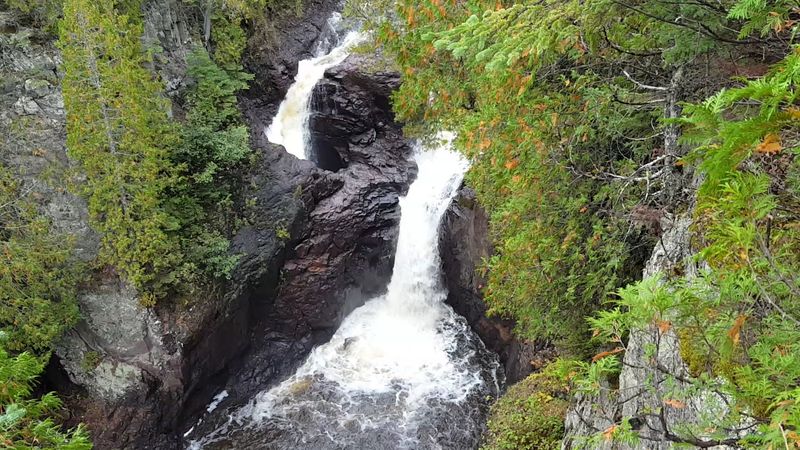
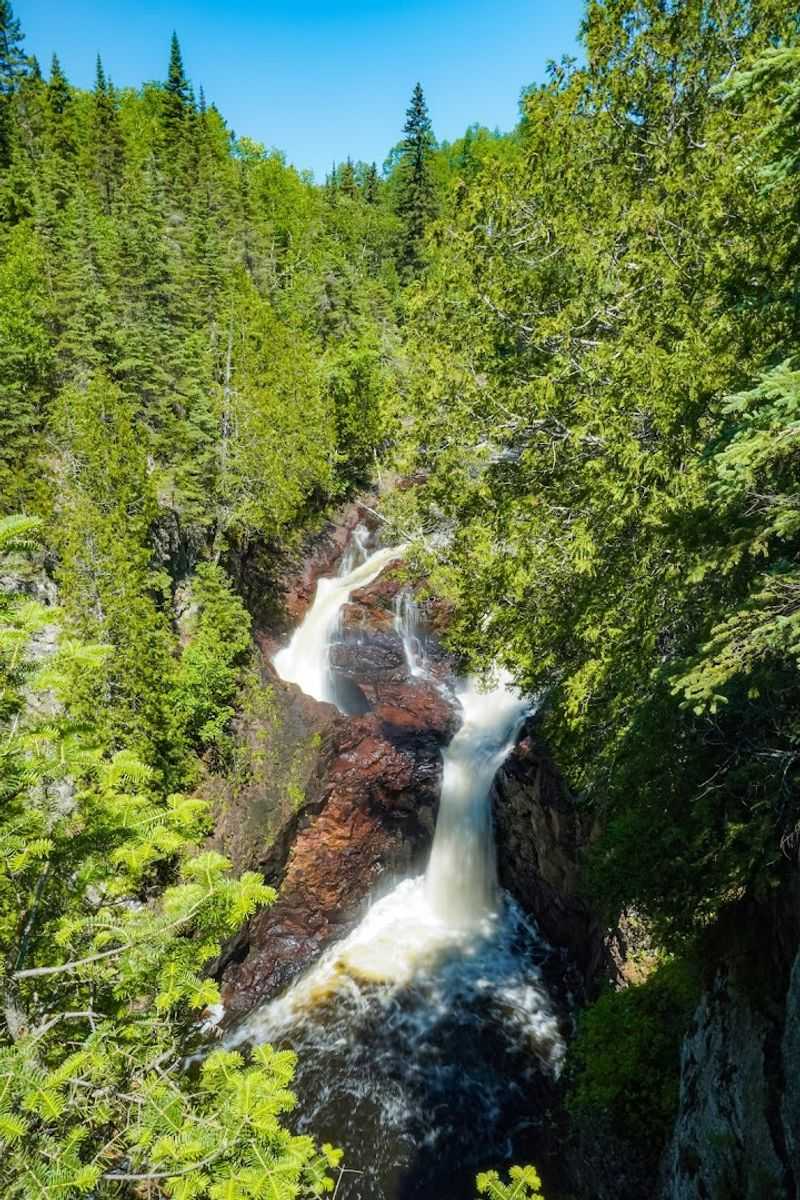
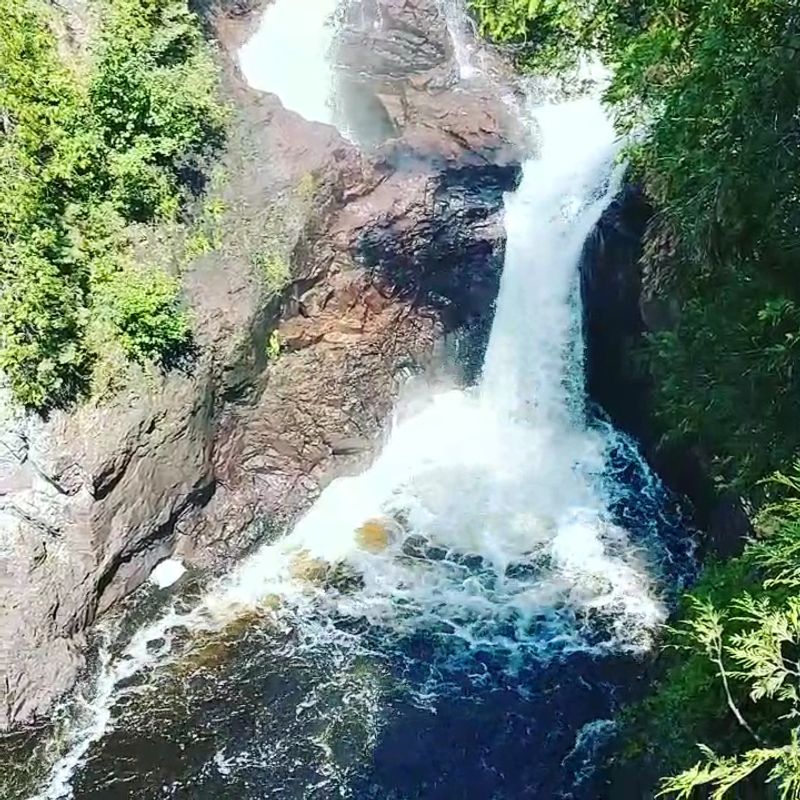
Devil’s Kettle is the undisputed star of this park, and the name alone hints at its unsettling character. The Brule River splits around a large rock outcropping, and while the eastern branch continues downstream as a normal waterfall, the western branch drops into a massive pothole and simply vanishes underground.
For years, scientists, hikers, and curious visitors tried to figure out where that water goes. People tossed in ping pong balls, dye, and even logs, none of which ever appeared downstream.
It became one of Minnesota’s most talked-about natural mysteries.
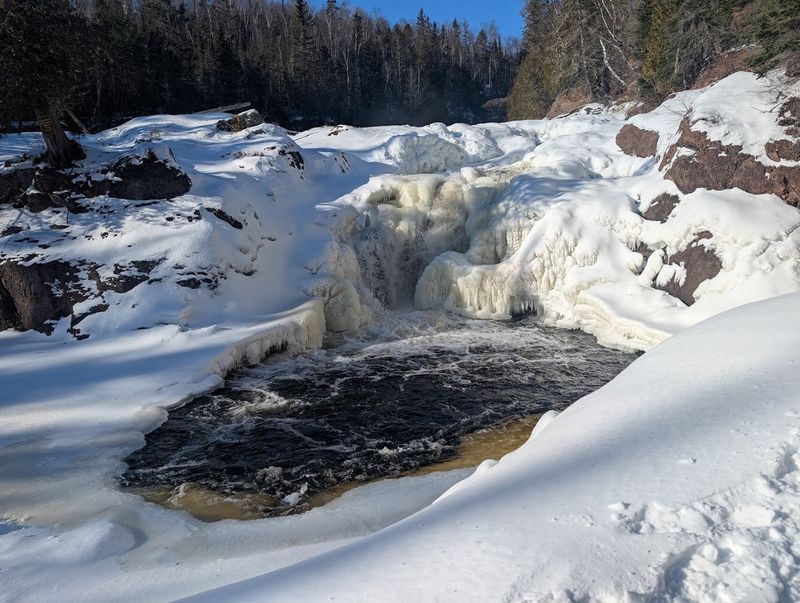
More recent hydrological studies suggest the water likely rejoins the main river through underground fractures in the volcanic rhyolite bedrock, but even that explanation feels almost too tidy for something this dramatic. Standing at the edge and watching half a river disappear right before your eyes is an experience that genuinely stops you in your tracks.
The Hike In: What to Expect on the Trail
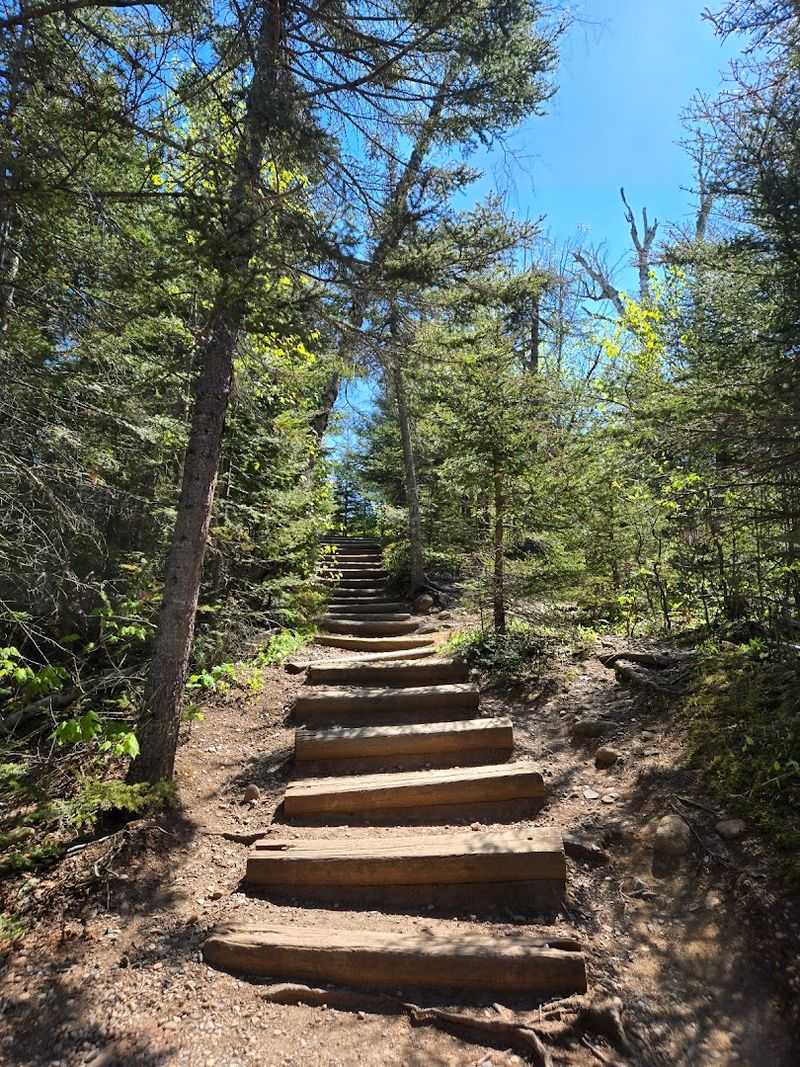
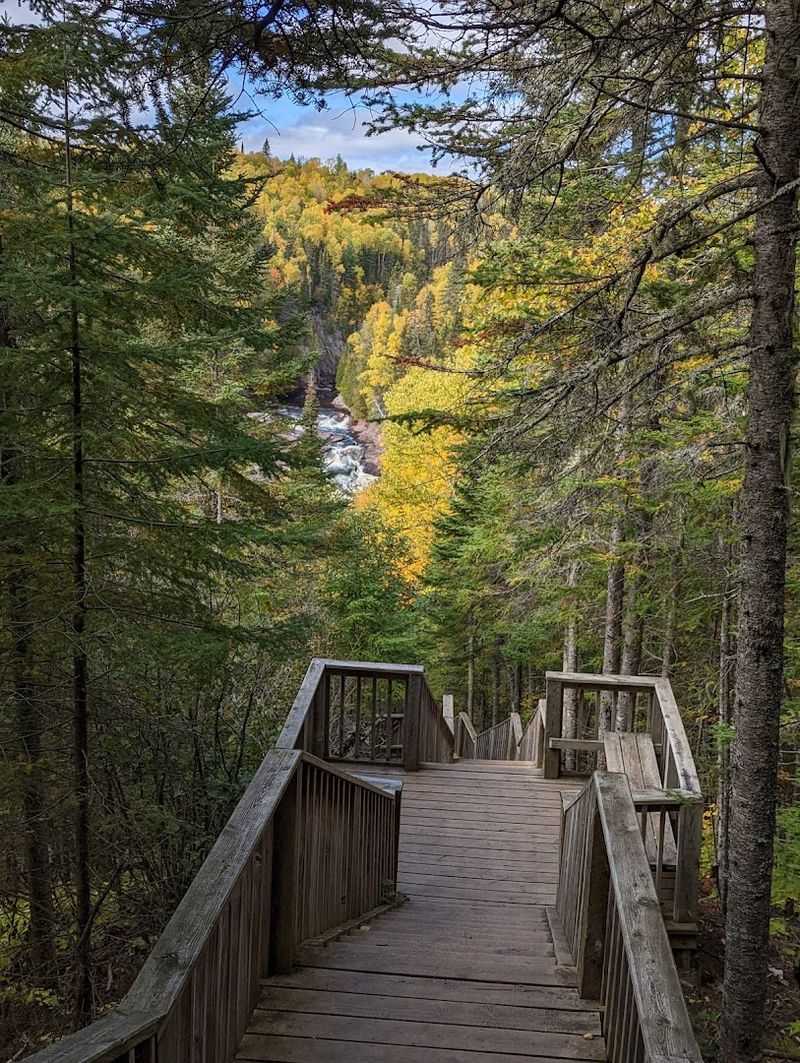
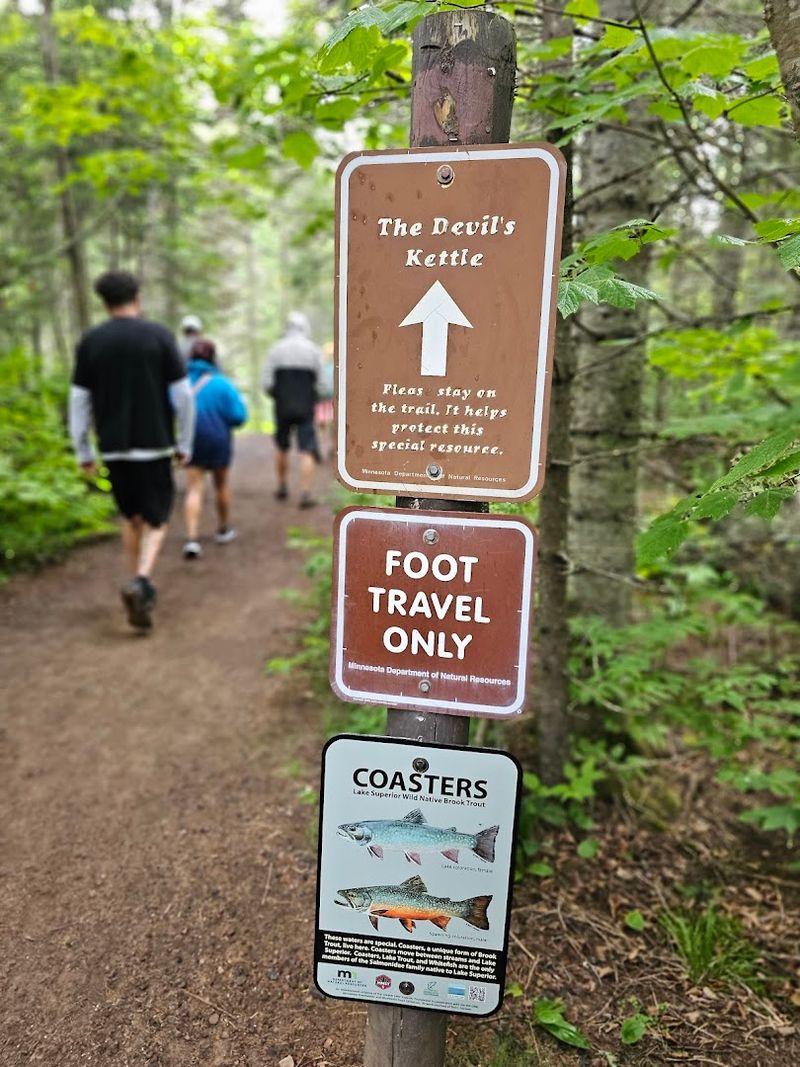
The trail to Devil’s Kettle is approximately 1.5 miles one way, which sounds easy enough until you factor in the roughly 200 stairs and the uneven, rocky terrain near the falls. The path starts gently through a beautiful boreal forest of spruce, birch, and cedar before the real workout begins.
Most of the elevation change is packed into the final stretch before the overlook, where a long wooden staircase descends toward the river. The good news is that sturdy benches are placed at regular intervals along the stairs, giving you a legitimate excuse to pause and enjoy the forest sounds around you.
The trail is well-maintained and clearly marked, so you are unlikely to lose your way. That said, wearing proper hiking shoes with solid grip is genuinely important here, especially near the wet, slippery rocks around the falls where the mist makes every surface feel like a slip-and-slide.
The Upper Falls: A Beautiful Warm-Up Act
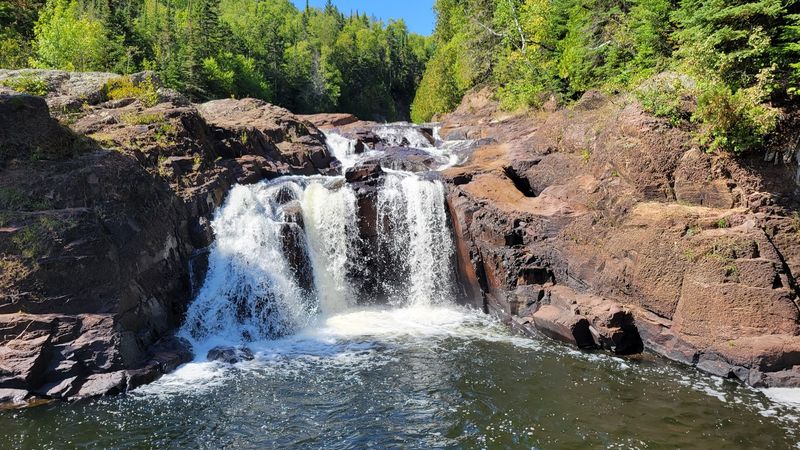
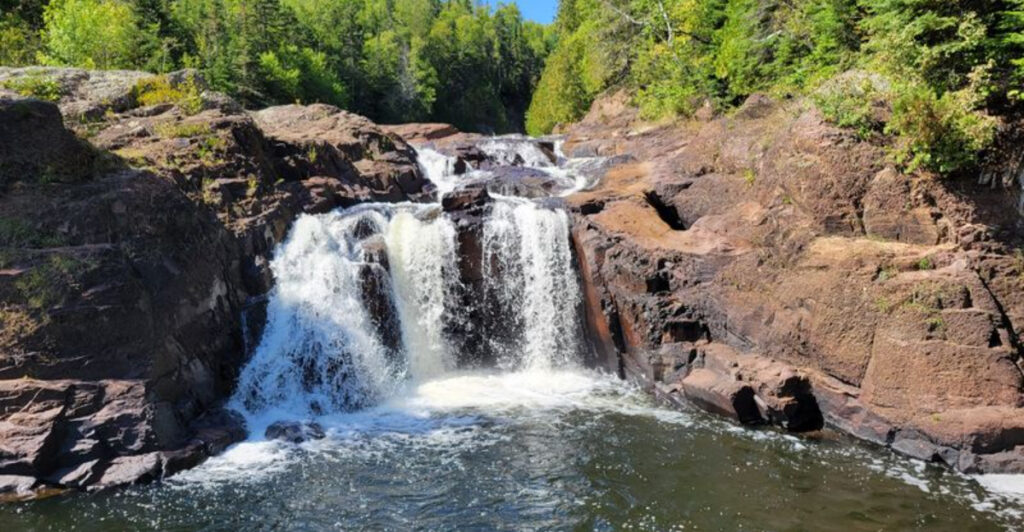
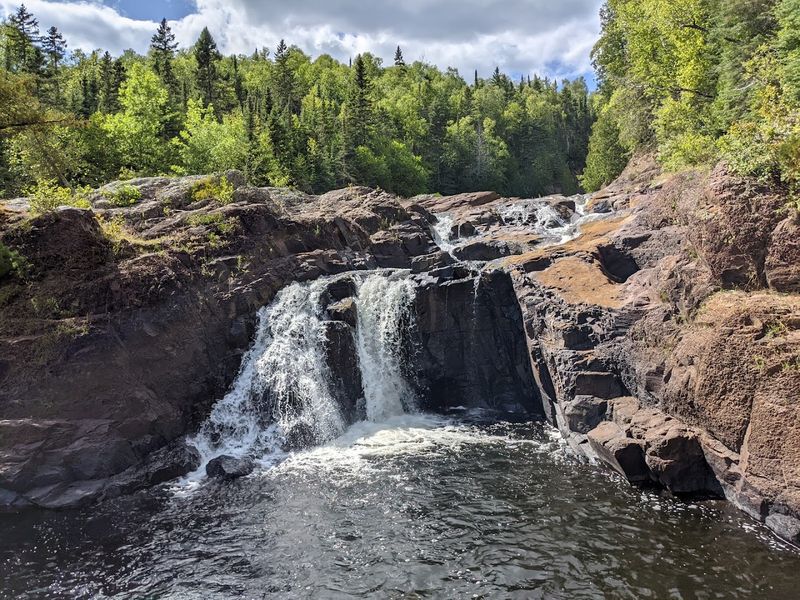
Before you reach Devil’s Kettle, the trail passes the Upper Falls of the Brule River, and this waterfall deserves far more attention than it typically gets. The water rushes over dark volcanic rock in a wide, powerful cascade, and the surrounding forest frames the scene in a way that feels almost staged for a nature documentary.
Many hikers walk right past in their rush to reach the famous pothole, but slowing down here pays off. The Upper Falls has several flat rock ledges near the water where you can sit, feel the spray on your face, and watch the river churn below you.
On warm days, some visitors carefully wade in the shallower pools above the falls, though caution is always necessary near moving water. The Upper Falls also tends to be less crowded than Devil’s Kettle, so if you want a more peaceful moment with the river, this is your spot.
The Brule River: More Than Just a Pretty Backdrop
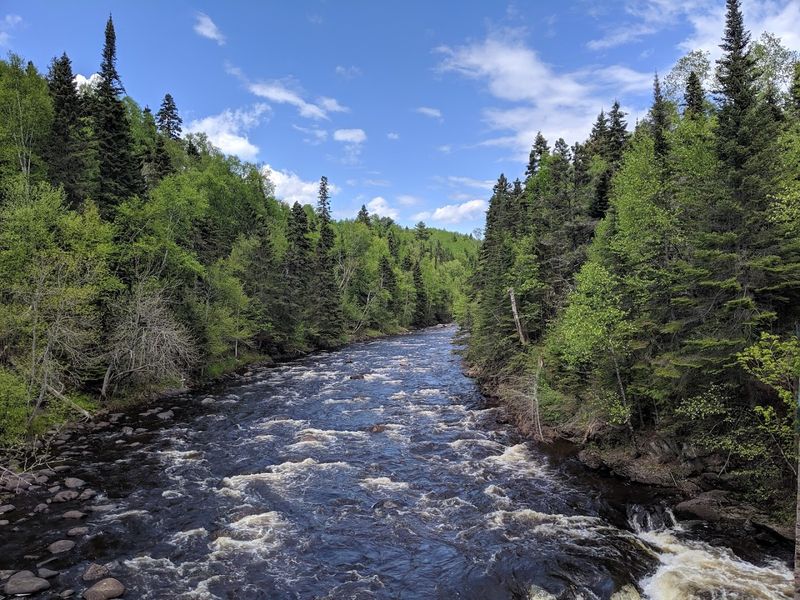
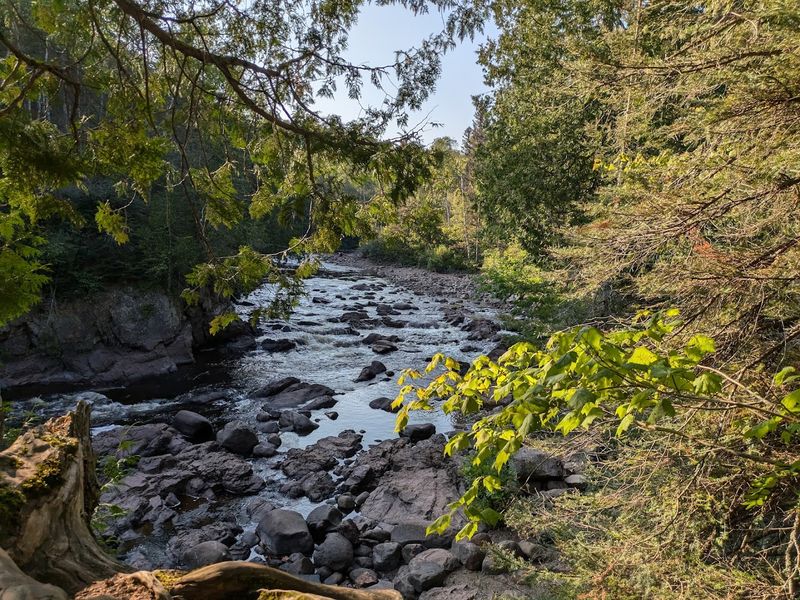
The Brule River is the spine of this entire park, and it puts on quite a show long before it reaches the famous waterfall. The river carves through ancient volcanic rock formations that are hundreds of millions of years old, creating a gorge that feels rugged and raw in the best possible way.
Anglers will be pleased to know that the Brule is well-regarded for trout fishing, particularly for steelhead and brook trout during their seasonal runs. The river’s cold, clear water and rocky bottom create ideal conditions for these fish, and the park’s remote location means the water quality remains excellent.
Even if fishing is not your thing, walking along the riverbank is deeply satisfying. The sound of moving water, the smell of pine and cedar, and the occasional glimpse of a kingfisher darting low over the current all combine to make the river itself a destination worth lingering beside.
Camping at the Park: Sleeping Under North Shore Stars
Judge C.R. Magney State Park offers a campground that feels genuinely removed from the noise of everyday life.
The sites are spacious and spread out among the trees, giving each camper a real sense of privacy that you do not always find at more popular parks. Facilities include clean restrooms and shower houses that are well-maintained throughout the season.
Dumpsters and recycling stations are conveniently located near the sites, making it easy to keep your spot tidy without a long walk. The campground also connects directly to the park’s trail network, so you can roll out of your sleeping bag and be on the trail to Devil’s Kettle within minutes.
Sites can be reserved through the Minnesota DNR’s reservation system, and booking ahead is wise during summer weekends. Waking up in this forest, with nothing but birdsong and the distant sound of the river, is a reminder of why camping exists in the first place.
The Superior Hiking Trail Connection
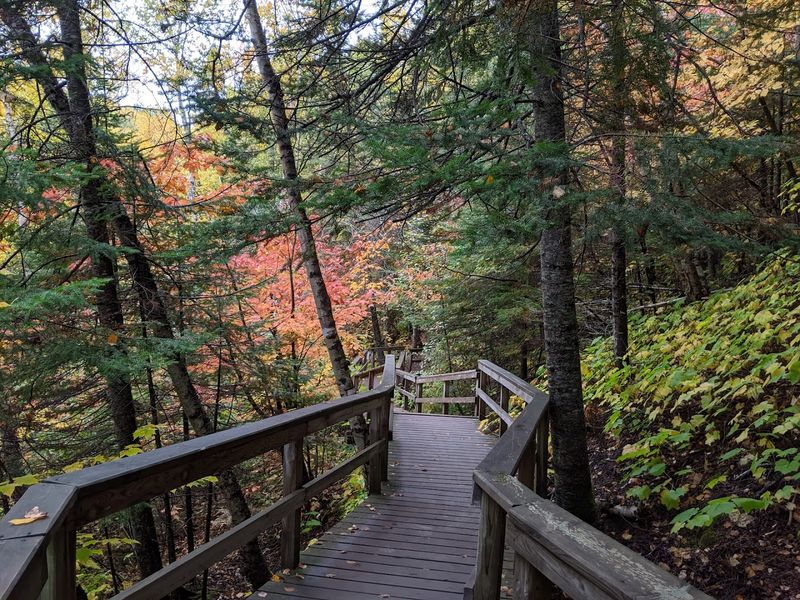
One detail that serious hikers should not overlook is that the Superior Hiking Trail runs directly through Judge C.R. Magney State Park.
This legendary long-distance trail stretches over 300 miles along the Minnesota North Shore, connecting dozens of parks, overlooks, and wild river crossings from Duluth all the way to the Canadian border.
Having access to this trail from within the park opens up hiking options well beyond the Devil’s Kettle route. You can explore ridgelines with sweeping views of the surrounding boreal forest, or follow the trail north toward even more remote stretches of the Lake Superior watershed.
For backpackers, the Superior Hiking Trail offers primitive camping opportunities along its route, making it possible to turn a day trip to Magney into a multi-day wilderness adventure. The trailhead parking area within the park serves as a practical launch point for longer excursions into this remarkable corner of Minnesota.
The Geology Beneath Your Feet
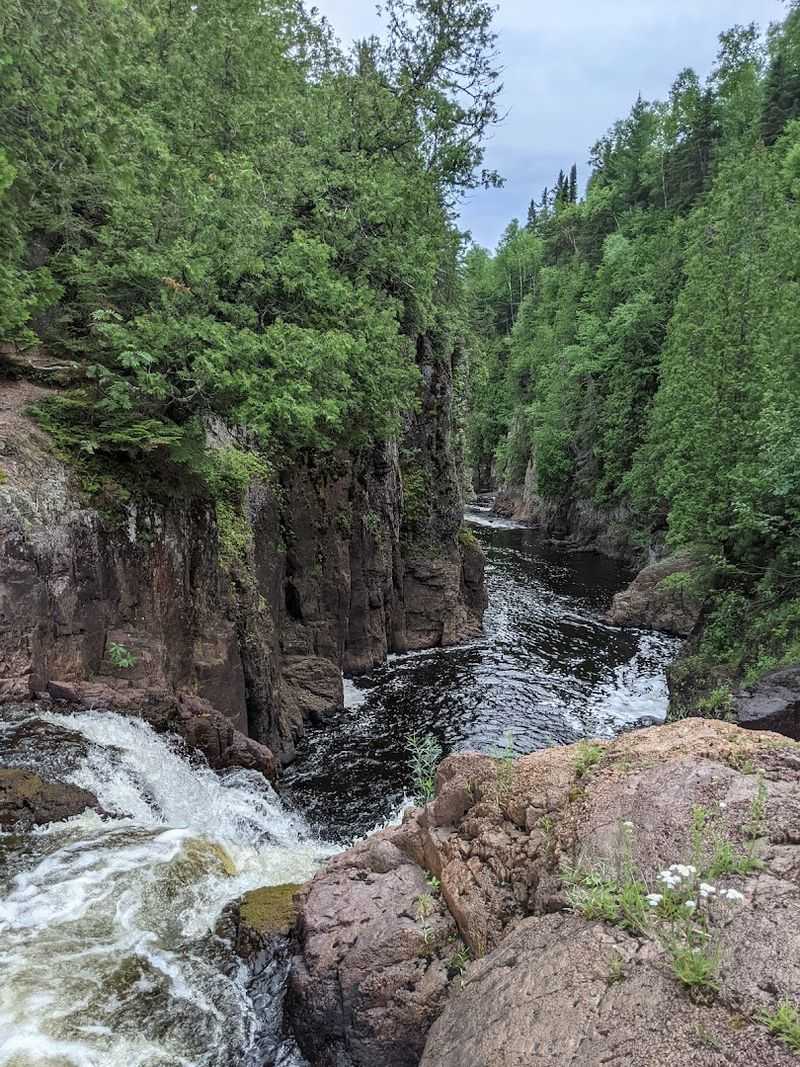
The rock you walk across and peer down into at Devil’s Kettle is rhyolite, a volcanic rock formed roughly a billion years ago during a massive period of volcanic activity in the Lake Superior region. This ancient geology is a big part of what makes the park’s landscape so dramatic and distinctive compared to other Minnesota parks.
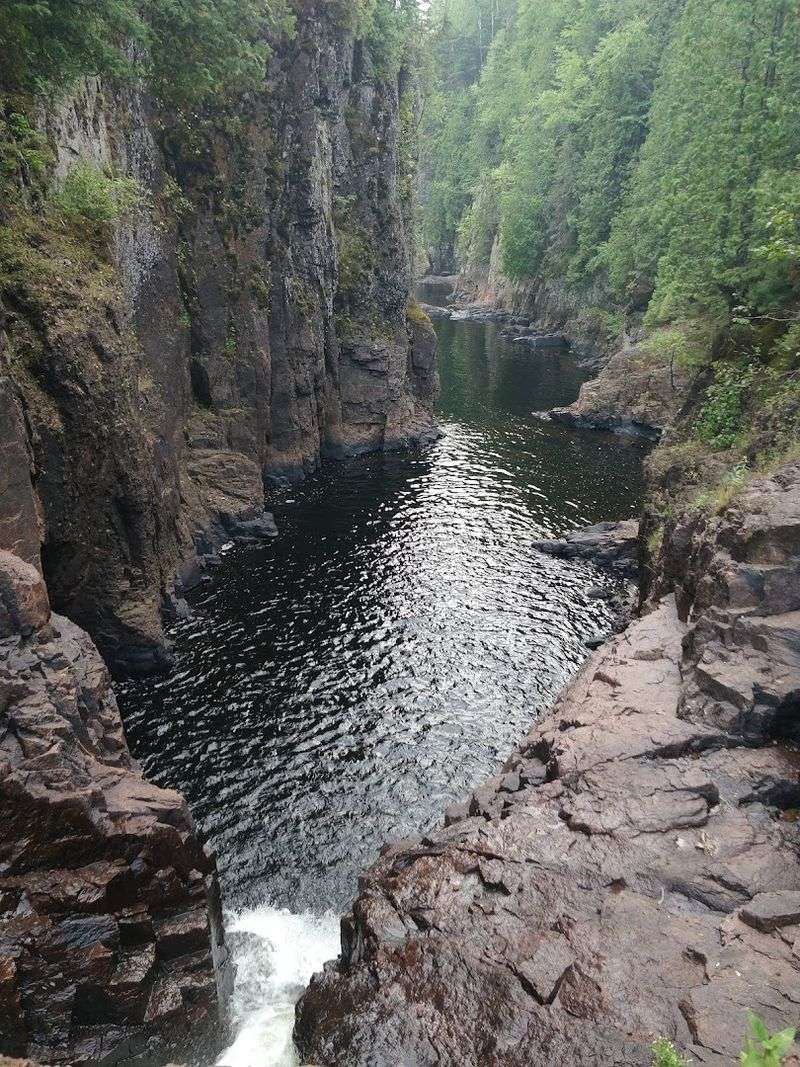
The pothole that swallows half the Brule River was carved over thousands of years by the river’s own force, grinding rock and sediment into a circular void that now acts like a drain with no visible outlet. The dark, reddish-brown coloring of the rock gives the gorge a moody, almost otherworldly quality.
Geology enthusiasts could spend hours examining the exposed rock faces along the river trail. The layered formations tell a story of ancient lava flows, tectonic shifts, and the relentless patience of moving water reshaping solid rock across deep stretches of geological time.
Wildlife You Might Spot Along the Way
The dense boreal forest surrounding the park supports a surprisingly rich variety of wildlife, and keeping your eyes open on the trail can reward you with some memorable sightings. White-tailed deer are common throughout the park, often spotted near the forest edges in the early morning or late afternoon hours.
Birdwatchers will find plenty to get excited about as well. The park sits within a prime migration corridor along the Lake Superior shoreline, and species like the common merganser, belted kingfisher, and various warbler species are regularly seen along the river.
Black bears also inhabit the area, so storing food properly at camp is not optional.
The river itself hosts a healthy population of brook trout, and if you stand quietly on one of the rock ledges and look into a clear pool, you may spot them holding in the current below you, which is oddly thrilling every single time.
Best Time of Year to Visit
Summer is the most popular season at the park, and for good reason. The trails are fully accessible, the campground is open, and the waterfalls are running strong from snowmelt and spring rains.
Arriving early on summer weekends is genuinely important since the parking lot reaches capacity by mid-morning on busy days.
Fall might actually be the most visually spectacular time to visit. The birch, maple, and aspen trees that line the trail turn vivid shades of orange, red, and gold, creating a color show that frames the waterfalls in a way that feels almost too beautiful to be real.
Late September through mid-October is the sweet spot for fall color on the North Shore.
Spring brings powerful water flow to the Brule River, making the falls more dramatic than at any other time of year. Winter visits are possible but require serious preparation, as the stairs and rock surfaces become dangerously icy.
Tips for Making the Most of Your Visit
A few practical details can make a real difference in how enjoyable your visit turns out to be. Wearing hiking shoes with solid traction is the single most important gear decision you will make, since the rocks near the falls are consistently wet and slippery regardless of the season or recent weather.
Bringing plenty of water is also worth emphasizing. The trail is not extremely long, but the combination of stairs and warm summer temperatures means you will work up a genuine thirst.
There are no water fountains or concession stands along the trail, so pack accordingly.
The park does not have a restroom near the falls themselves, so plan ahead before you start hiking. Purchasing your vehicle permit online or at the trailhead kiosk before arrival saves time.
Arriving at or before 8 a.m. on busy summer weekends almost guarantees you a parking spot and a more peaceful experience on the trail.
The Mystery That Kept Scientists Guessing
For decades, the question of where Devil’s Kettle’s water goes sparked genuine scientific debate and no small amount of local legend. The most straightforward attempts to trace the water involved pouring brightly colored dye into the pothole and watching downstream for any sign of it reappearing.
None ever did, at least not in any obvious way.
Ping pong balls were tried next, followed by larger floating objects, and the results were consistently the same: nothing came out downstream. This fueled theories ranging from an underground lake to a direct connection to Lake Superior itself, which is about a mile away.
A more recent and rigorous study by hydrologists measured the downstream flow rate of the Brule River carefully and found it consistent with receiving the water from both branches of the falls, suggesting the water does rejoin the river underground. The mystery has a likely answer now, but standing at the edge, it still feels like magic.
The Judge Who Saved the Shore
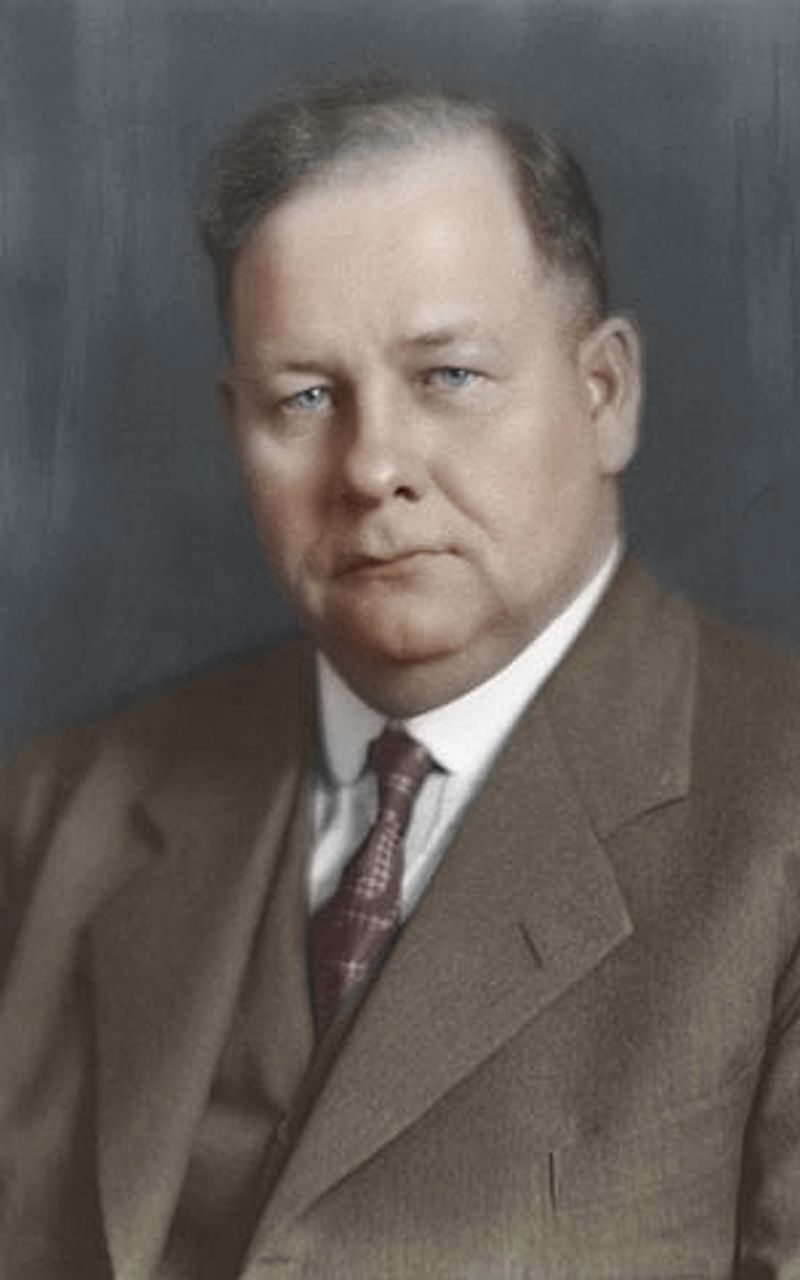
The park’s full name honors Clarence R. Magney, a man whose passion for the Minnesota North Shore left a permanent mark on the region.
Magney served as mayor of Duluth in the 1920s and later became a justice on the Minnesota Supreme Court, but his most lasting contribution may have been his relentless advocacy for preserving the North Shore’s wild places.
He worked throughout his career to establish a series of state parks along Highway 61, recognizing that the rugged coastline and river gorges of northeastern Minnesota were irreplaceable natural treasures worth protecting from development. His efforts directly resulted in the creation of multiple parks that millions of visitors now enjoy.
Having a park this spectacular named in his honor feels entirely appropriate. Every hiker who descends those 200 stairs to stare into the swirling darkness of Devil’s Kettle is, in a small way, benefiting from the work one dedicated person did decades ago to keep this landscape intact.
What Makes This Park Different From Others on the North Shore
The Minnesota North Shore is lined with excellent state parks, each with its own personality and appeal. Gooseberry Falls gets the most visitors, Tettegouche offers dramatic inland lakes, and Split Rock Lighthouse State Park has one of the most iconic views in the state.
Magney occupies its own unique lane among all of them.
What sets this park apart is the combination of genuine geological mystery, accessible but rewarding hiking, quality camping, and a remote enough location that it never feels overwhelmed by crowds the way some of its neighbors do. The park sits near the northern end of the Highway 61 corridor, past the point where many casual tourists turn back toward Duluth.
That extra distance filters the crowd and rewards those who make the effort with a quieter, more intimate experience of the North Shore’s wild character. Few parks in Minnesota pack this much genuine wonder into a single trail.
A Place Worth Every Step of the Journey
Some destinations are built up by reputation and then fail to deliver when you actually arrive. Judge C.R.
Magney State Park is not one of those places. The trail delivers exactly what it promises: a beautiful forest hike, a pair of impressive waterfalls, and a genuine geological phenomenon that makes you stop and question what you thought you knew about how rivers work.
The park rewards visitors who slow down and pay attention. The moss-covered rocks, the sound of the Brule rushing through its gorge, the way the mist from the falls settles on your skin, these are the kinds of details that stick with you long after you have driven back down Highway 61.
If you find yourself anywhere near the Minnesota North Shore, carving out a half day for this park is one of the easiest travel decisions you will ever make. A river that vanishes underground is a story worth hiking 200 stairs to witness in person.
Share this story