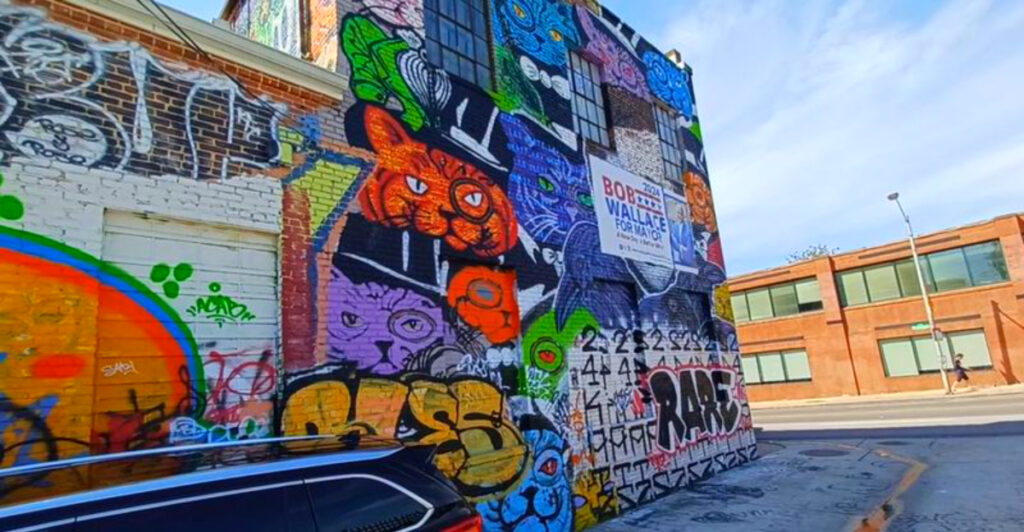
This Ann Arbor alley has become a constantly changing canvas where new street art can appear overnight. Known locally for its dense layers of graffiti, murals, and public expression, it has been evolving for decades just behind the downtown area.
Every surface is covered, from large-scale pieces to smaller tags and messages, with artists regularly painting over what came before. It is not curated or preserved in the traditional sense, which is exactly what keeps it active and unpredictable.
What sets this spot apart is how open it is. Anyone can contribute, and that steady turnover means no two visits look the same.
Here is what to know before you go and what makes it worth seeing in person.
Where Exactly You Will Find This Colorful Corridor
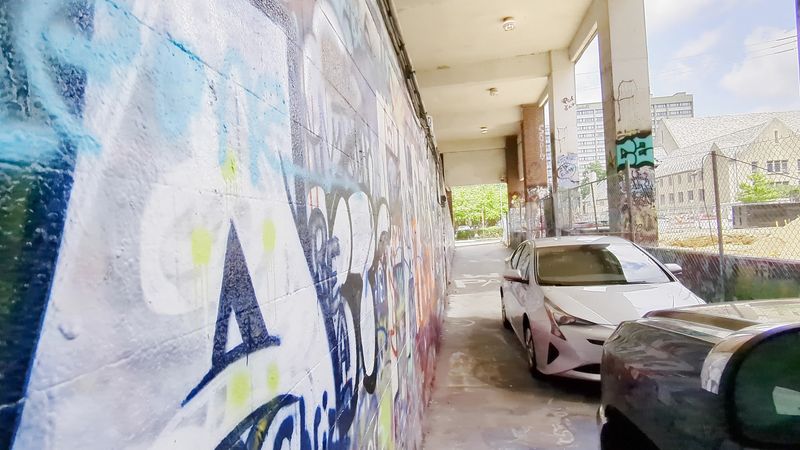
Right in the heart of Ann Arbor, tucked just off East Liberty Street, Graffiti Alley sits at E Liberty St, Ann Arbor, MI 48104, behind the historic Michigan Theater. The first time I found it, I almost walked past the entrance twice before noticing the burst of color peeking out from between two buildings.
The alley runs parallel to the main street and connects to the surrounding blocks in a way that makes it feel both hidden and surprisingly central. You are never more than a short walk from coffee shops, bookstores, and campus buildings, yet the alley feels like its own separate world.
It is open 24 hours a day, seven days a week, and admission is completely free. That combination of accessibility and zero cost makes it one of the most welcoming creative spaces in the entire state of Michigan, and honestly, one of the easiest spontaneous detours you can make.
How This Alley Went From Blank Walls to a Living Canvas
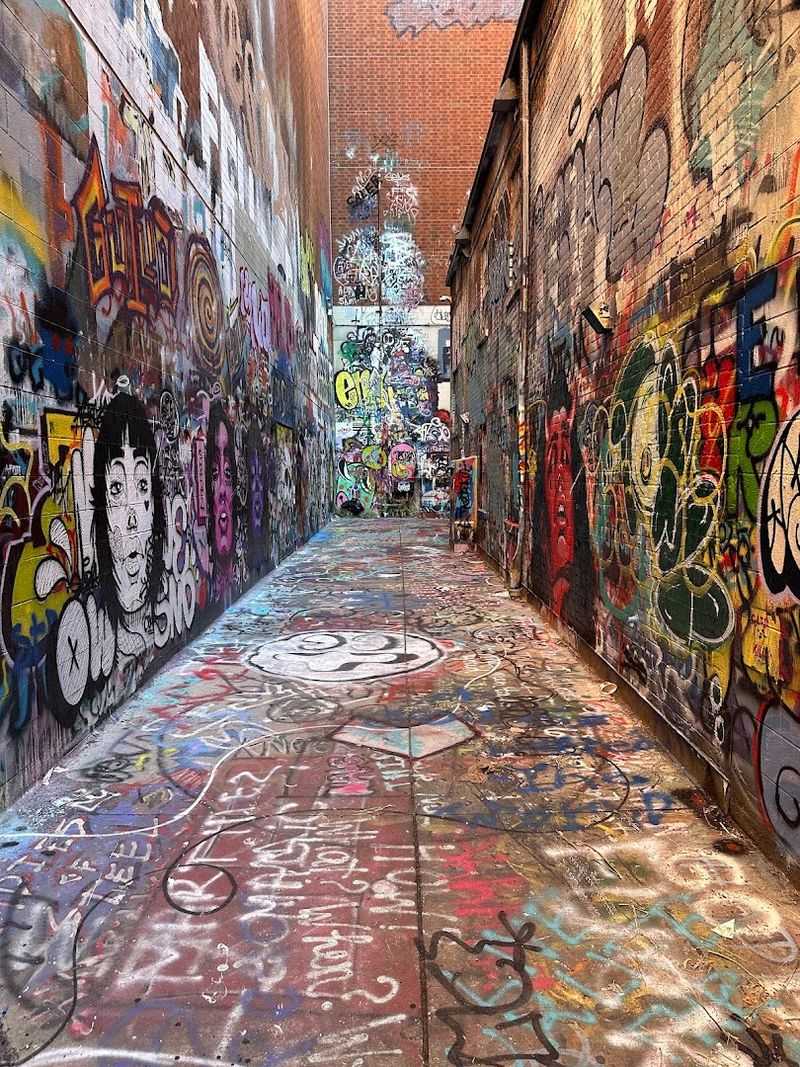
The story of Graffiti Alley begins in 1999, when artist Katherine Cost painted a mural called “Infinite Possibilities” on the alley walls. That original piece did not last long, because other artists quickly painted over it, and that moment of overwriting turned out to be the founding act of something much bigger.
Rather than being a problem, the layering became the point. Artists accepted that their work would eventually be covered, and that acceptance created a culture of fearless creativity.
Nobody was precious about permanence here.
Over the following two decades, the alley evolved into a constantly rotating outdoor gallery driven entirely by the community. University of Michigan students, local artists, visiting creators, and curious first-timers have all left their marks on these walls.
The result is a surface so thick with paint that the texture itself has become part of the art, and every new layer quietly buries the one before it, like chapters stacking up in a very colorful book.
The Visual Experience That Hits You the Moment You Step Inside
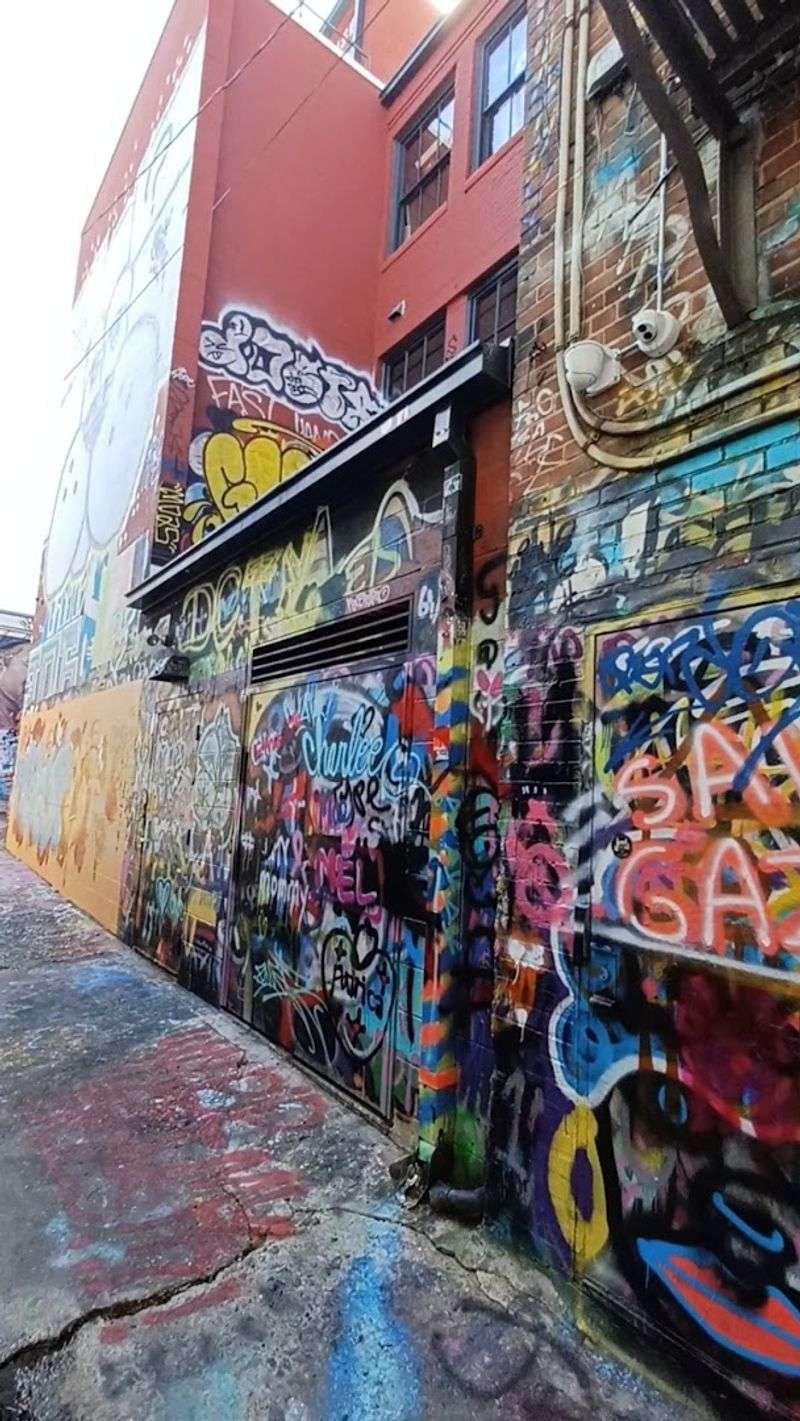
Nothing quite prepares you for the visual density of this place. The moment you step into the alley, color comes at you from every direction.
Neon greens sit next to deep purples, cartoon characters share space with detailed portraits, and political slogans overlap with abstract geometric patterns.
The walls are not the only surfaces covered. Look down and you will find hopscotch grids, painted words, and swirling designs on the ground beneath your feet.
Look up and you will see tags and murals climbing to heights that seem physically impossible to reach without serious equipment.
The alley is longer than most people expect. What looks like a short cut-through from the street actually stretches far enough that you find yourself stopping repeatedly to examine individual pieces up close.
Some sections have a layered, almost three-dimensional quality from decades of paint buildup, and that physical texture adds a tactile dimension to the viewing experience that no photograph can fully capture. More surprises wait further down the corridor.
The Artists Who Keep These Walls Alive
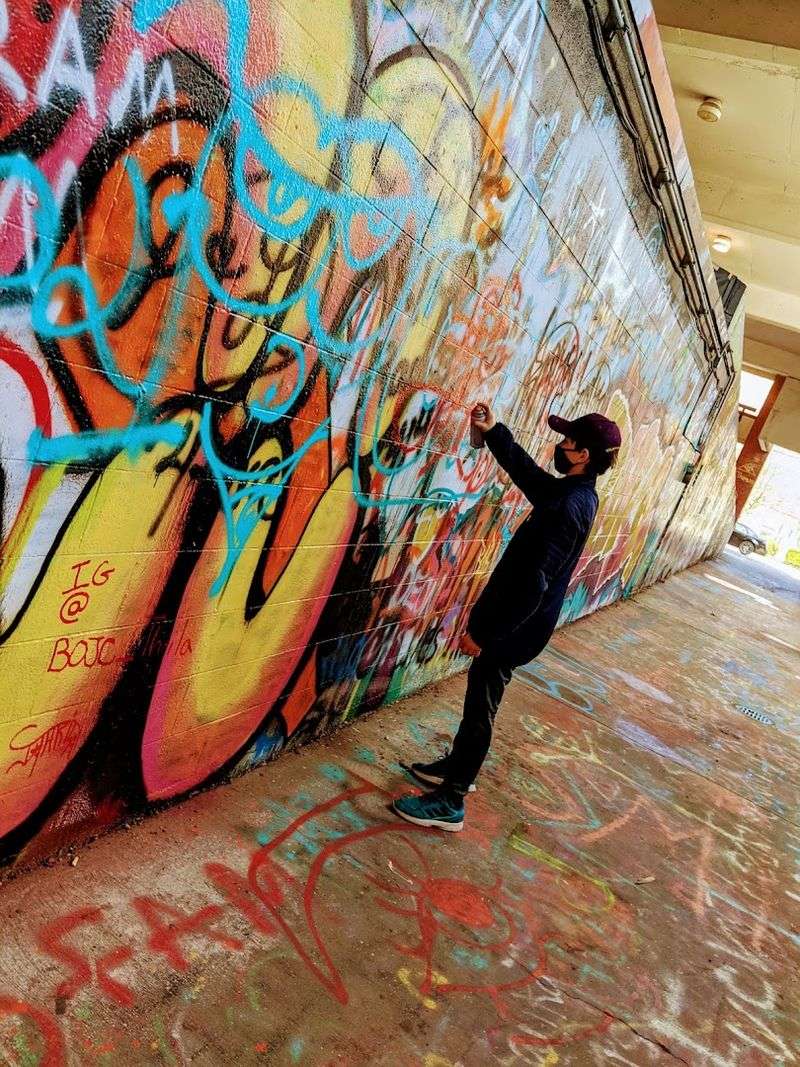
The creative community behind Graffiti Alley is as diverse as the artwork itself. University of Michigan students make up a significant portion of the contributors, bringing campus energy and academic ideas into the space in ways that range from witty to deeply thoughtful.
Local Ann Arbor artists also treat the alley as an informal studio wall, returning seasonally to add new pieces or update older ones. There is no application process, no jury, and no approval needed.
You show up with paint and you contribute.
Visiting artists passing through the city have added their own flavors to the mix, which means the alley carries influences from well beyond Michigan. Stencil artists, freehand painters, and calligraphy-focused creators each bring distinct techniques that sit side by side on the same surfaces.
The result is an unplanned collaboration between strangers across time, where a piece painted this morning might share a wall with something created three years ago, and the conversation between them is entirely accidental but often fascinating.
What the Walls Are Actually Saying

Spend enough time reading the walls of Graffiti Alley and you start to understand that this is not just decoration. The content spans a wild range of human expression, from deeply personal messages to broad social commentary, all packed into a space barely wide enough for two people to walk side by side comfortably.
Political statements appear regularly, reflecting whatever is happening in the national or local conversation at any given time. Pop culture references fade in and out as trends shift.
Playful cartoon characters pop up between serious portraits, and intricate stencil work sits next to freehand lettering that took obvious hours of careful work.
Some pieces are clearly meant to provoke thought, while others seem to exist purely for the joy of putting color on a surface. A few are genuinely beautiful in a way that would hold up in any formal gallery setting.
The mix of intentions is exactly what makes the alley feel honest rather than polished, and that honesty is the most compelling thing about it.
The Acoustic Secret That Most Visitors Miss Entirely
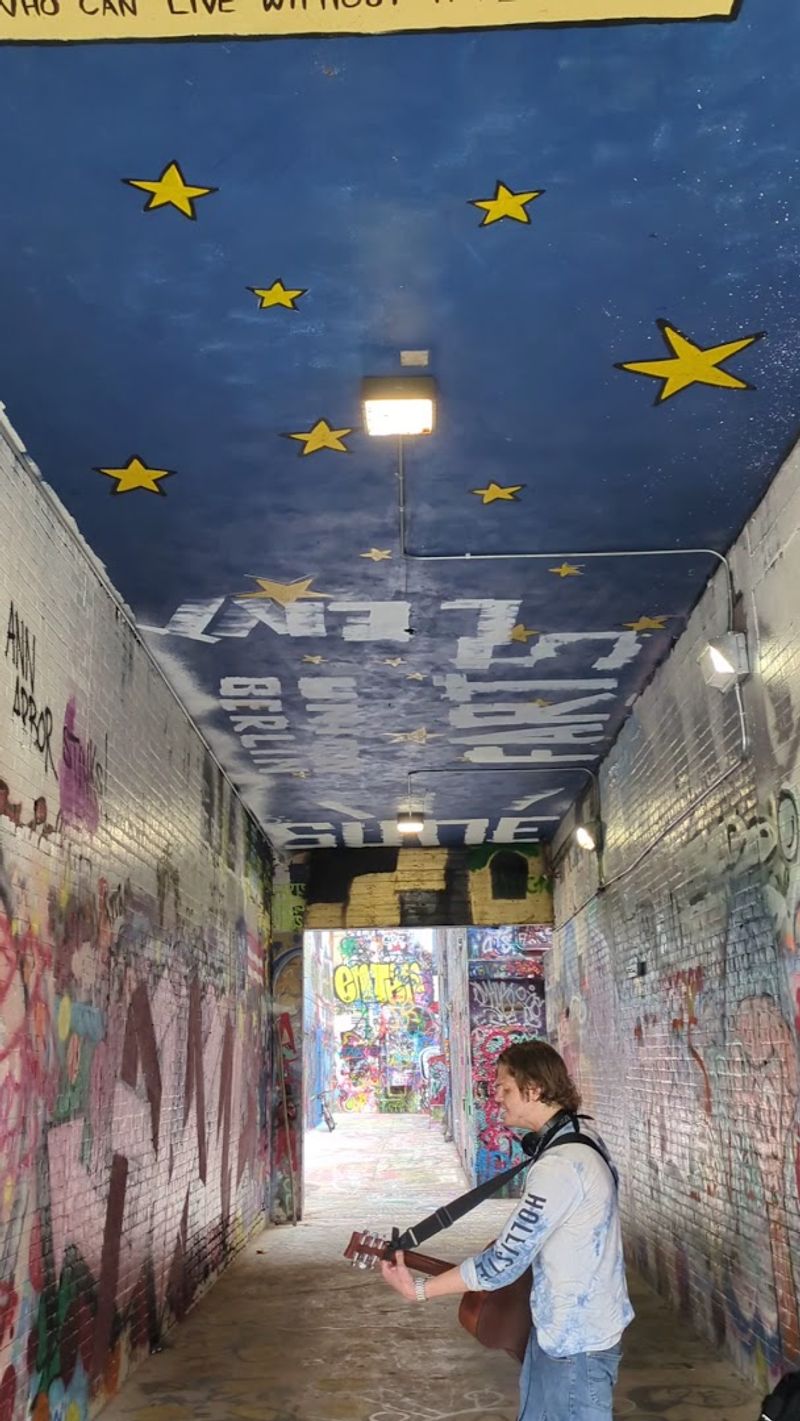
Here is something that caught me completely off guard on my first visit: the acoustics inside Graffiti Alley are genuinely impressive. The narrow walls and hard painted surfaces create a natural reverb that makes any sound produced inside the alley ring out with unexpected richness and depth.
Buskers and street performers have figured this out, and it is not uncommon to find musicians playing inside the alley, using the space as a natural amplifier. The sound bounces off the painted bricks in a way that gives even a simple acoustic guitar a full, warm quality that you would not get performing on an open sidewalk.
I happened to catch a solo musician performing inside on a quiet weekday afternoon, and the combination of the sound and the surrounding visuals created one of those unexpectedly memorable moments that you do not plan for and cannot really recreate. If you visit and find a performer inside, do yourself a favor and stay for at least a few minutes, because the experience of music in that space is something genuinely worth pausing for.
Community Moments That Turned the Alley Into a Meeting Place
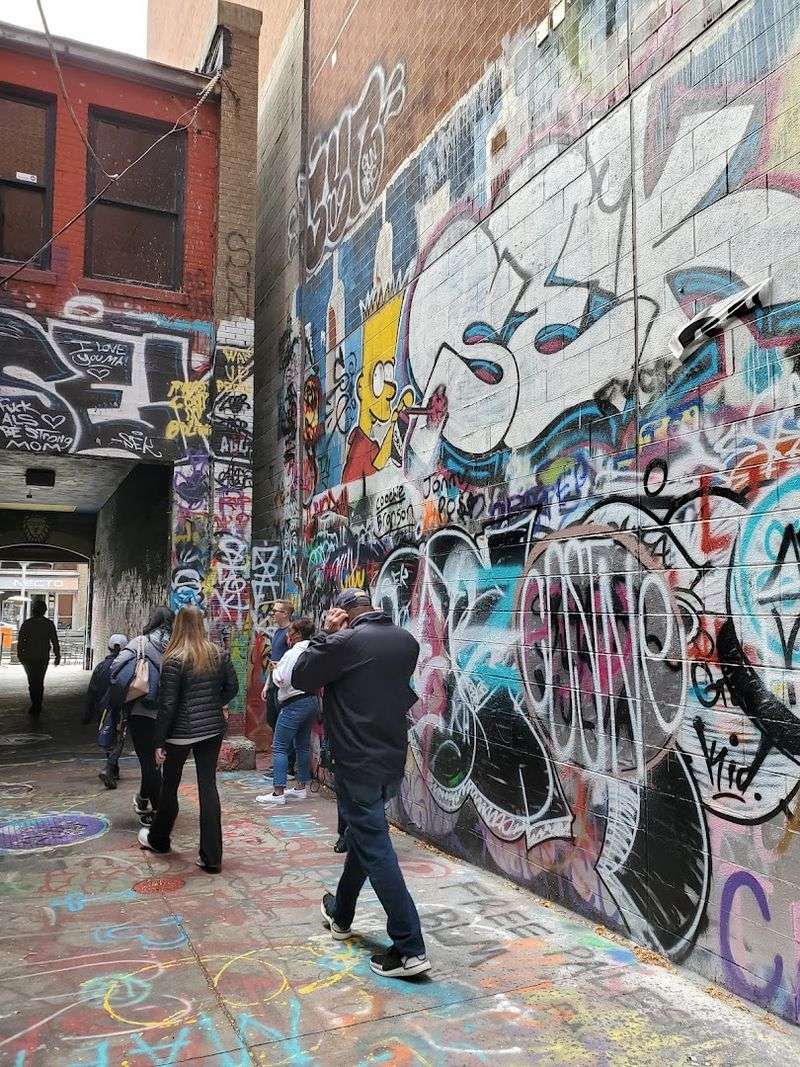
In September 2024, two local residents named Jeremy Mulder and Adam Hess launched a project called “Micro Moments of Magic” right here in Graffiti Alley. Their goal was refreshingly simple: connect with strangers through playful interactions and genuine smiles, using the alley as their stage.
The project drew attention because it tapped into something the alley already had going for it, which is the natural tendency for people to slow down, look around, and become a little more open to unexpected conversations when they are surrounded by art. The visual environment seems to lower people’s guard in a good way.
Small gatherings and informal pop-up events have also taken place in the alley over the years, organized by local vendors and community groups who recognized that the space has a built-in atmosphere that most event venues spend thousands of dollars trying to manufacture. The alley creates that feeling for free, and the community has been smart enough to take advantage of it regularly.
The next section gets into something equally unexpected.
Why Photographers Keep Coming Back Again and Again
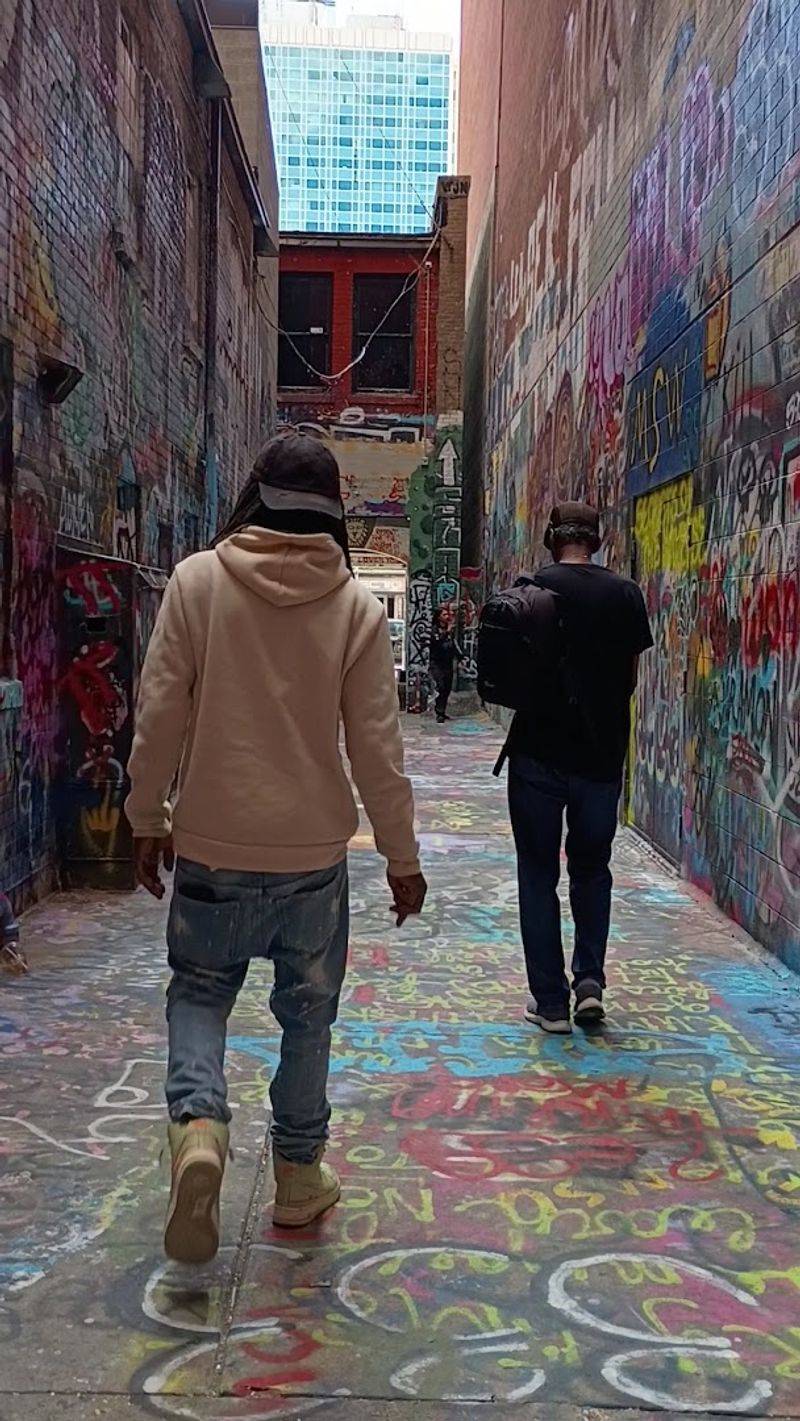
Graffiti Alley has developed a devoted following among photographers, and once you see the walls up close, the reason is obvious. Every surface functions as a ready-made backdrop that would take a professional set designer weeks to build, and it is available to anyone with a camera at any time of day or night.
Portrait photographers bring clients here for the kind of vibrant, layered backgrounds that make images pop on social media. Fashion photographers use the color contrasts to create striking compositions.
Even casual smartphone photographers consistently walk away with shots that look far more interesting than anything they could capture on a plain city street.
The changing nature of the walls means that a photo taken today will look noticeably different from one taken three months ago, even from the exact same spot. That built-in variety keeps photographers returning throughout the year, chasing new combinations of color and content.
The alley essentially updates its backdrop on its own schedule, which is a pretty remarkable feature for a free outdoor location.
Tips for Visiting That Will Make Your Trip Much Better
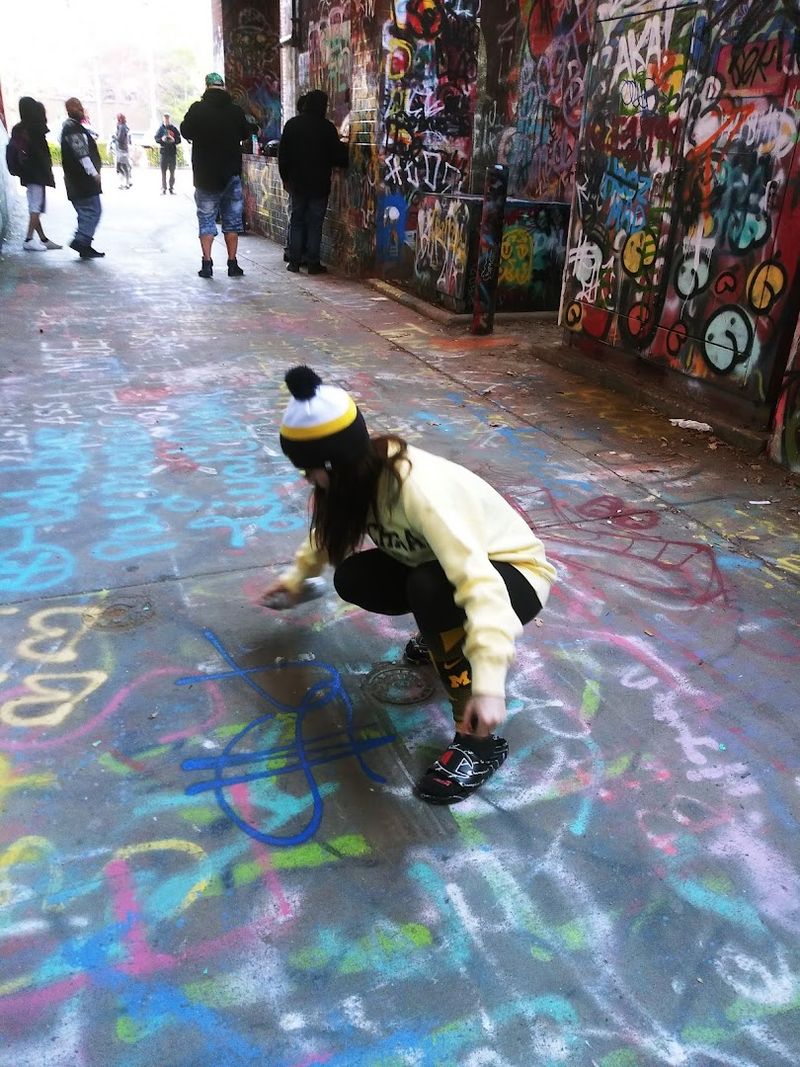
A few practical things made a real difference in how much I got out of my visit, and they are worth sharing before you head over. The most important one is this: if you plan to add your own art to the walls, bring your own spray paint.
Supplies are not readily available near the alley, and showing up empty-handed when you are feeling inspired is genuinely frustrating.
Daytime visits offer the best lighting for both viewing and photographing the artwork, though the alley has a different kind of appeal after dark when the colors catch whatever ambient light is available. Weekday mornings tend to be quieter, while weekends bring more foot traffic and a livelier atmosphere.
Wear shoes you do not mind getting paint on, because the ground is covered in layers of color and the occasional fresh drip. Also, the alley is longer than it looks from the entrance, so budget more time than you think you need.
First-time visitors almost always underestimate how much there is to take in.
What Changes Every Time You Visit and Why That Matters
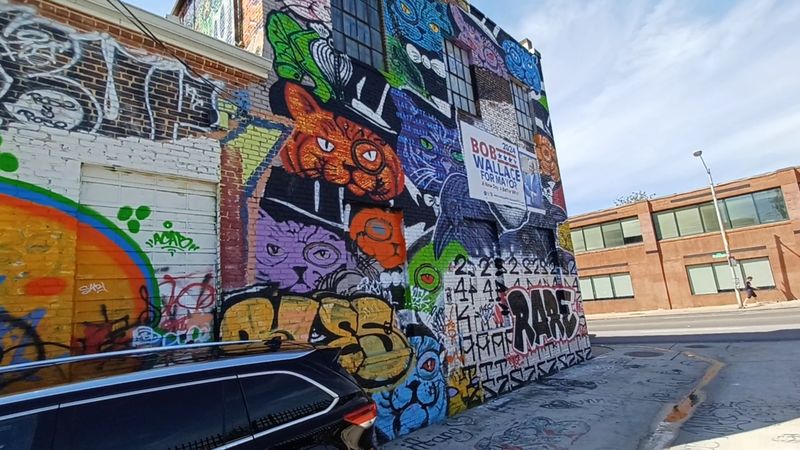
The single most distinctive feature of Graffiti Alley is also the hardest to fully appreciate until you visit more than once. The artwork changes constantly, with new pieces appearing over old ones on a timeline that nobody controls or announces.
A mural that caught your eye last month may be completely buried under fresh layers by the time you return.
That impermanence is not a flaw. It is the entire philosophy of the space, built into its DNA since the very first piece was painted over back in 1999.
Artists who contribute here understand that their work is temporary, and that understanding seems to encourage a kind of creative freedom that more permanent gallery settings do not always produce.
Regular visitors develop a habit of returning every few months to see what has changed, treating each visit as a new exhibition that they did not know was coming. The alley rewards that kind of ongoing attention in a way that very few free public attractions can match, which is a rare quality worth seeking out.
The Feeling You Take With You When You Leave
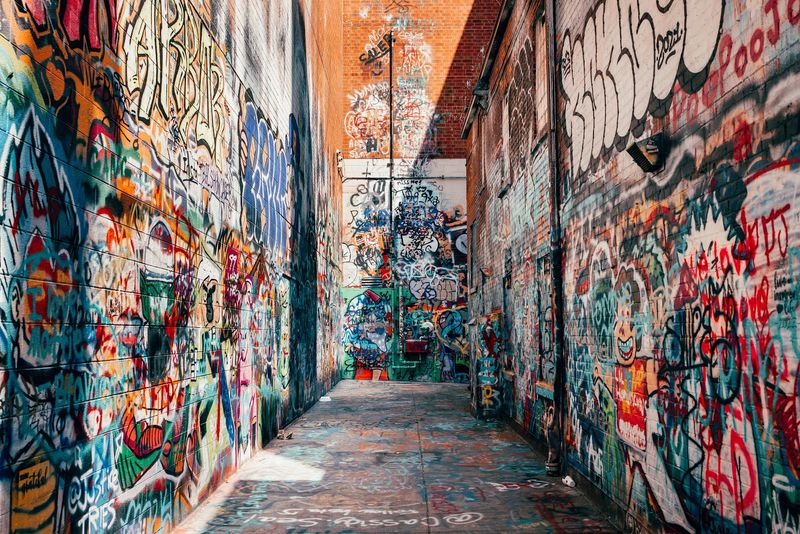
There is a specific feeling that the alley leaves you with, and it is a little hard to name precisely. It is somewhere between creative inspiration and quiet satisfaction, the kind that comes from stumbling onto something that feels genuinely real in a world full of carefully managed experiences.
Nothing in Graffiti Alley is trying to sell you anything. No ticket booth, no gift shop, no guided tour with a script.
Just paint on walls, applied by hundreds of different hands over more than two decades, accumulating into something that is messier and more honest than most public art spaces ever manage to be.
I left with a camera full of photos, a few paint smudges on my jacket sleeve, and a strong urge to come back sooner rather than later. That combination of sensory richness, zero cost, and genuine community ownership makes Graffiti Alley one of those places that earns its reputation not through marketing but through the simple fact of being exactly what it promises, colorful, unpredictable, and completely alive.
Share this story