Most beaches in America offer white or golden sand, crashing waves, and maybe a seagull or two. But tucked away on the southern tip of Hawaii’s Big Island is a beach that looks like it belongs on another planet.
The sand here is jet black, formed from ancient lava flows, and the shoreline is regularly visited by endangered Hawaiian green sea turtles that haul themselves onto the shore to rest in the sun. I made the drive down the southeastern coast of the Big Island specifically to see this place, and I can tell you firsthand that no photograph does it justice.
If you have never stood on black sand with a sea turtle napping just a few feet away while coconut palms sway overhead, you are genuinely missing one of the most surreal and beautiful experiences the United States has to offer.
Where Exactly You Will Find This Remarkable Beach
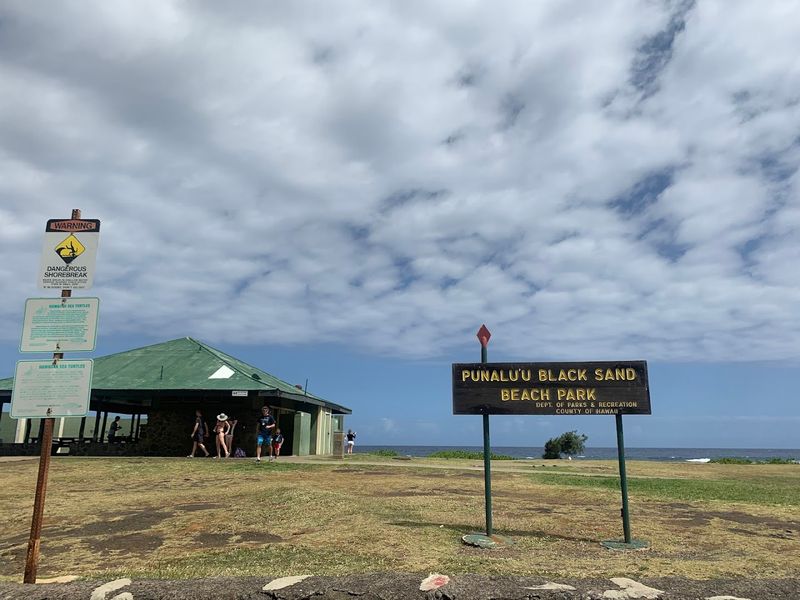
Punaluʻu Beach sits on the southeastern coast of the Big Island of Hawaii, roughly halfway between the town of Naalehu and the entrance to Hawaii Volcanoes National Park, along Highway 11.
The full address is Punaluʻu Beach Park, Ka’u District, Hawaii, and the beach is part of a public beach park managed by the county.
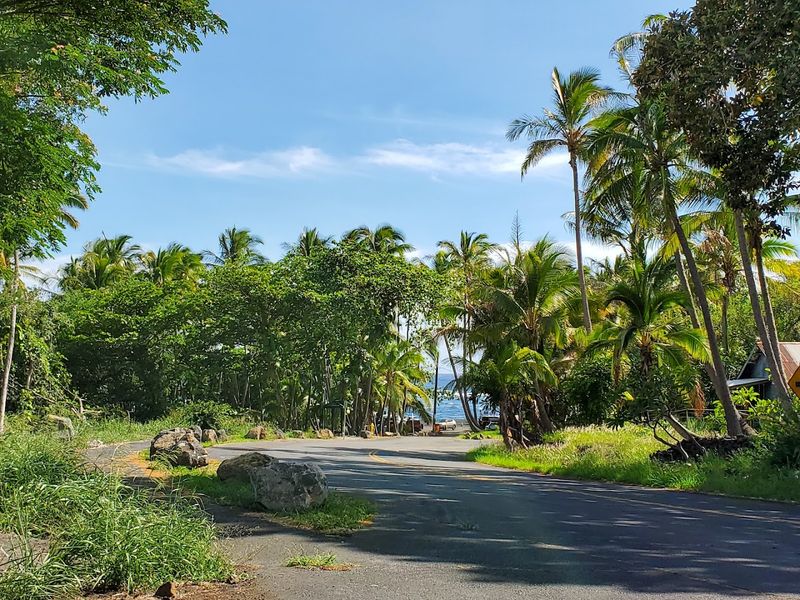
Getting there from Kona takes about two hours, while the drive from Hilo runs closer to 90 minutes. The road winds through lush, remote landscape before the ocean suddenly appears below you.
The parking lot sits right next to the beach and access is straightforward, with clear signage from the main highway. Free parking is available in one lot, though another nearby lot charges a fee, so it pays to look around before pulling in.
The Science Behind the Black Sand
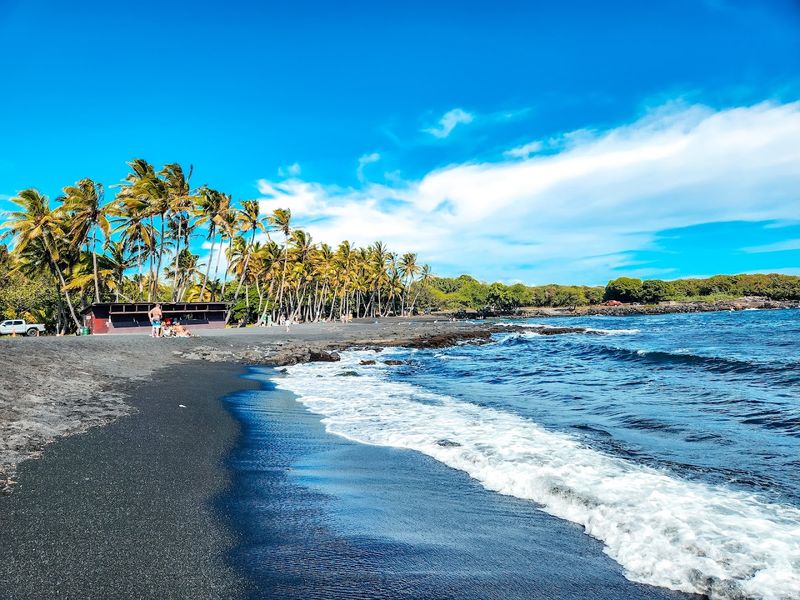
Not every beach gets to tell a story written by volcanoes, but Punaluʻu does. The sand here is not your typical crushed shell or quartz material.
It formed when molten lava from Kilauea volcano flowed into the cold Pacific Ocean, causing the lava to shatter instantly into tiny black fragments.
Over thousands of years, those fragments were ground down by wave action into the coarse, dark grains that cover the beach today. The texture is noticeably different from soft tropical sand.
It feels more like tiny smooth pebbles underfoot, and the color is a deep, genuine black rather than the gray you might expect.
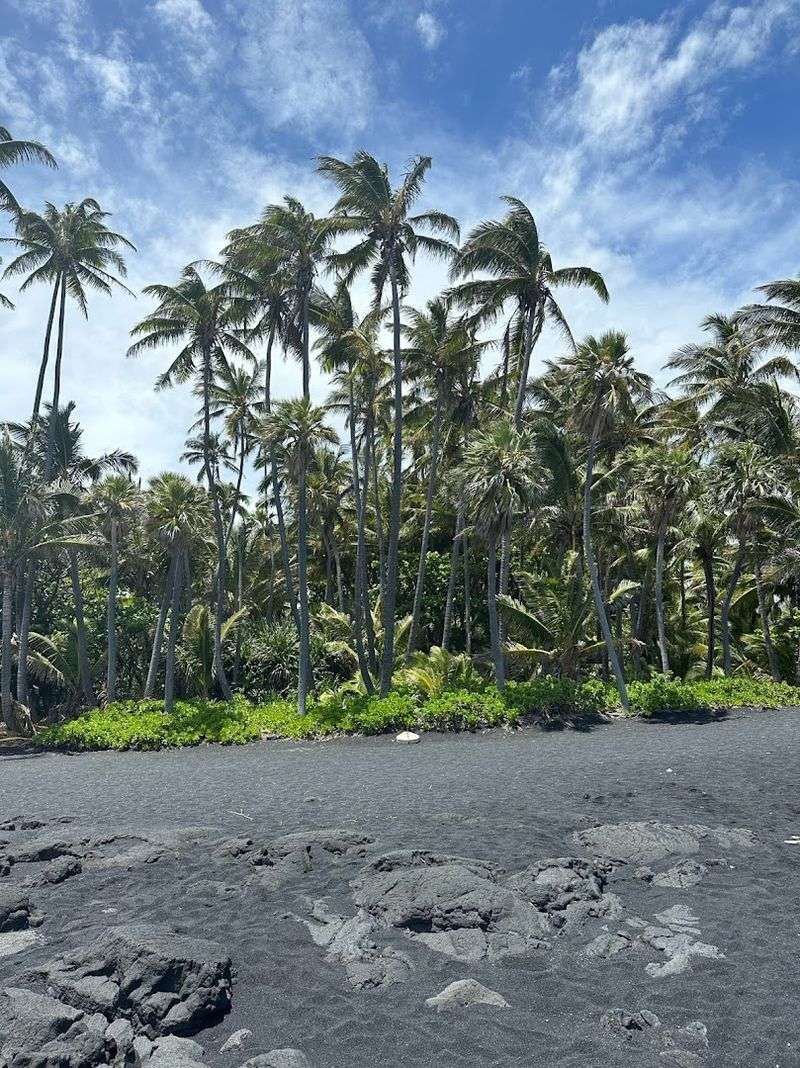
On a sunny day, the contrast between the black sand, the bright green palms, and the deep blue water creates a visual combination that genuinely stops you in your tracks. Geology has never looked this good up close.
Hawaiian Green Sea Turtles Are the Real Stars Here
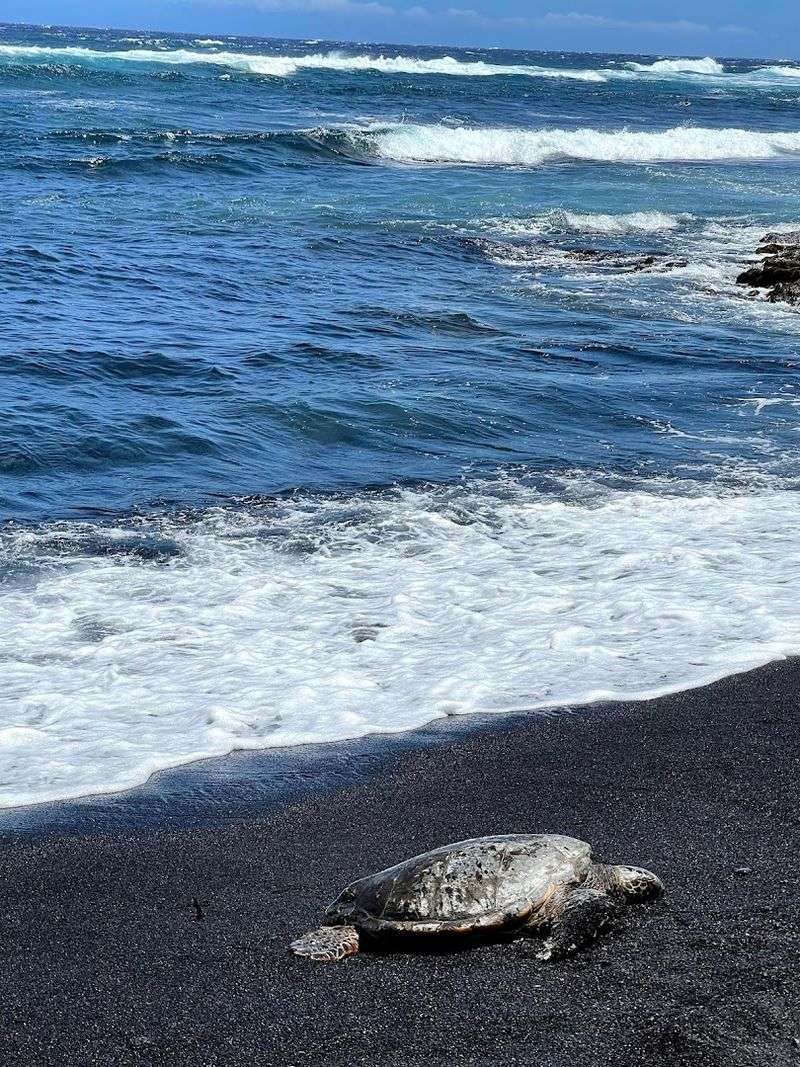
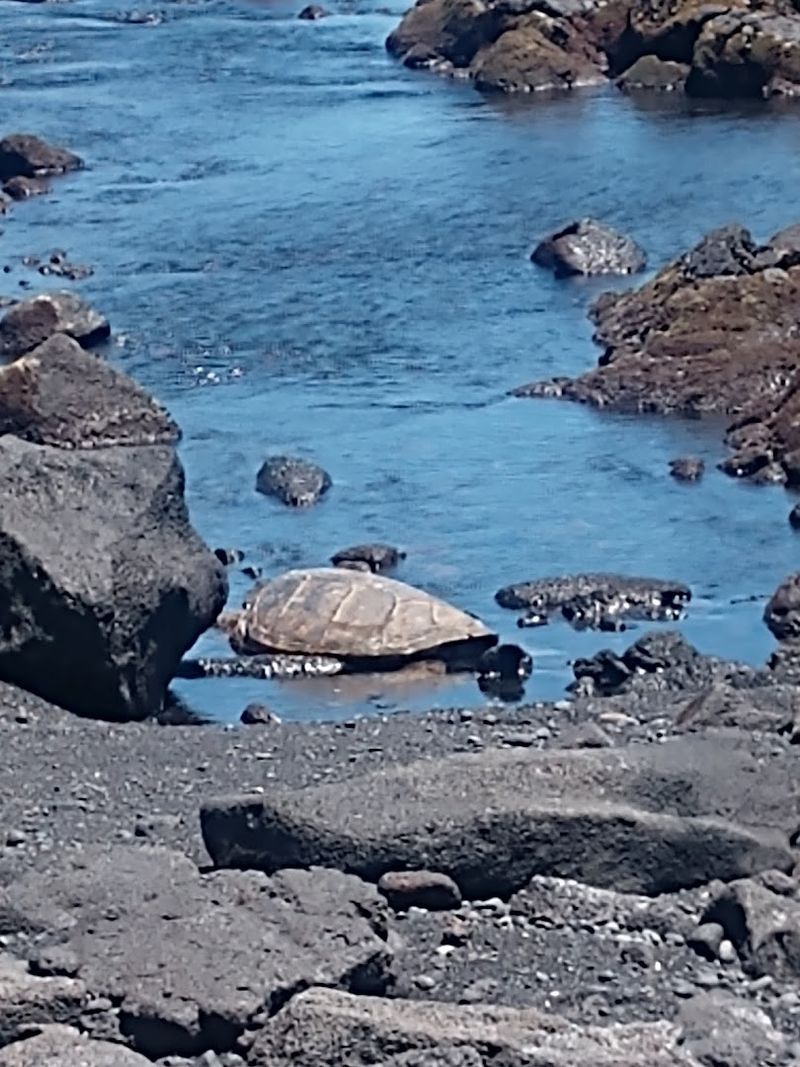
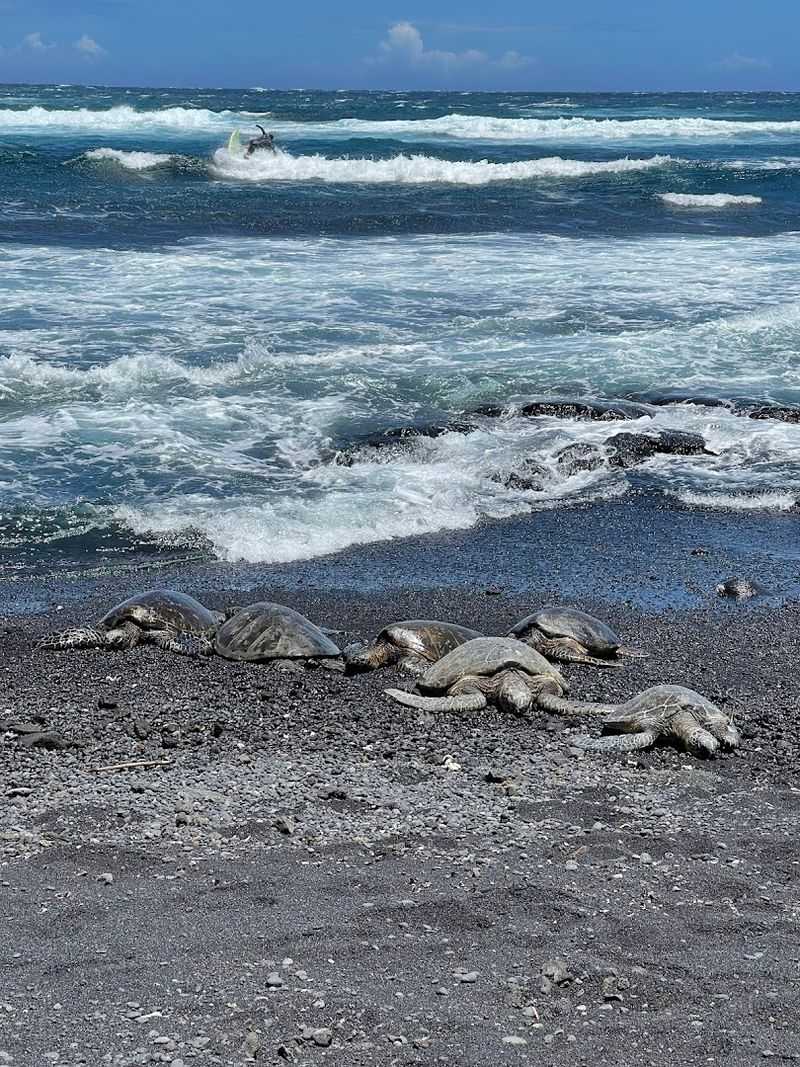
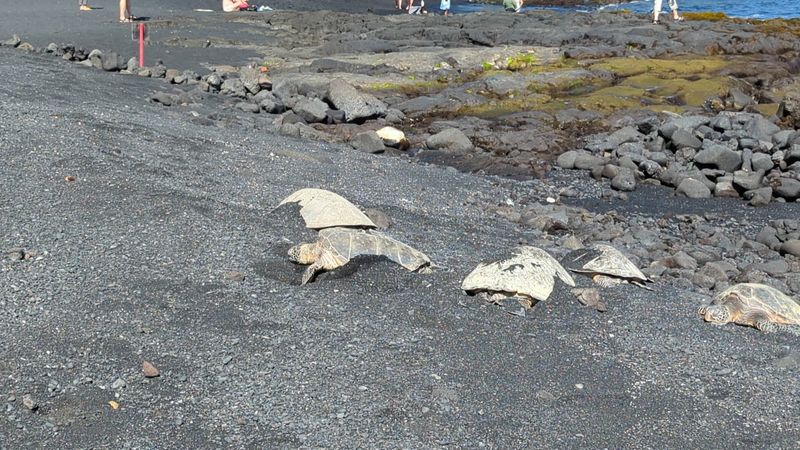
Before I even reached the waterline on my visit, I spotted a large green sea turtle hauled out on the sand, completely unbothered by the cluster of people watching from a respectful distance. Seeing these ancient creatures in the wild, on a public beach, is one of those experiences that quietly rearranges your priorities.
Hawaiian green sea turtles, known locally as honu, are protected under both state and federal law. Visitors must stay at least 20 feet away and are strictly prohibited from touching or feeding them.
Rangers and volunteers actively remind visitors of these rules throughout the day.
On a good visit, you might spot a dozen or more turtles resting on the shore or swimming lazily in the shallow water near the rocks. Their calm, unhurried presence gives the whole beach a peaceful, almost meditative atmosphere that you will not find at a typical tourist spot.
The Southernmost Beach in the United States
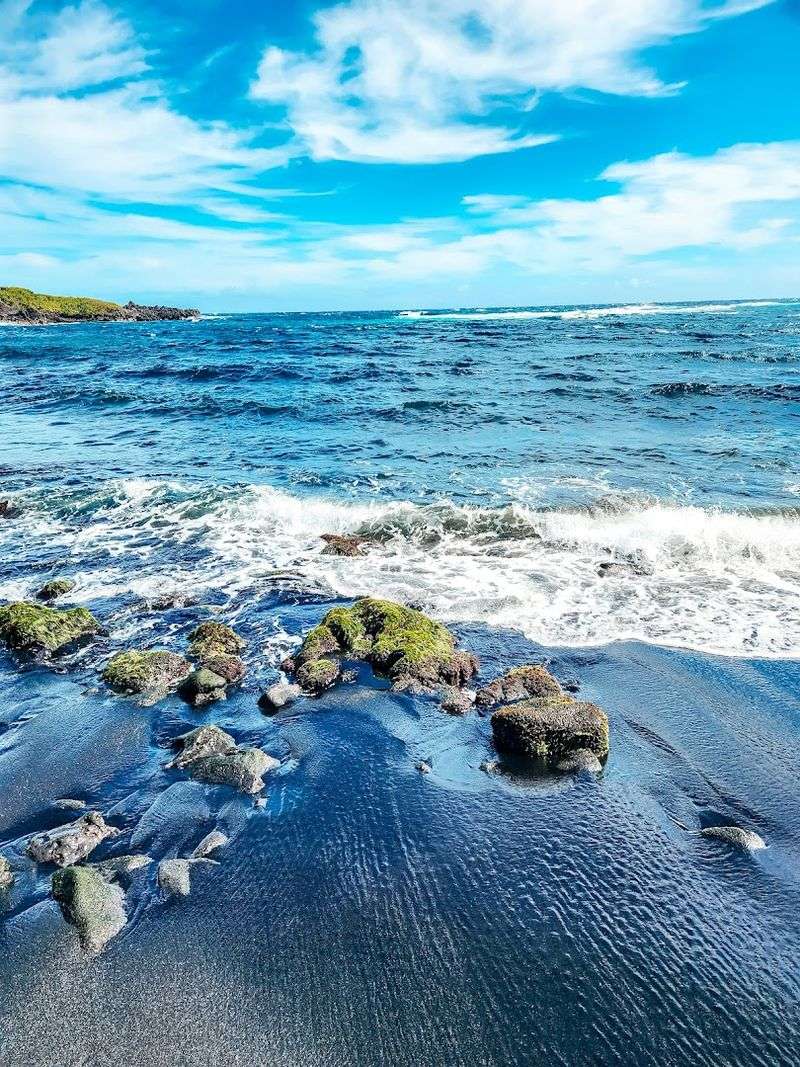
Here is a fun geographic fact that most visitors do not realize until someone mentions it: Punaluʻu Beach holds the distinction of being the southernmost beach in the entire United States.
The Ka’u District, where the beach is located, sits at the southern tip of the Big Island, which itself is the southernmost landmass in the country. That alone gives the place a certain novelty, though the beach does not need a geography record to justify a visit.
Standing at the waterline and looking south means there is nothing between you and Antarctica except open ocean. That sense of standing at the edge of something vast is genuinely hard to shake once you feel it.
Combine that with the volcanic sand, the turtles, and the dramatic backdrop of the rainforest-covered mountains, and you have a place that earns its reputation as one of the most distinctive coastlines in America.
The Dramatic Landscape That Frames the Shore
The setting at Punaluʻu is genuinely striking, and the beach itself is only part of what makes it feel so otherworldly. Behind the shoreline, a wall of deep green rainforest-covered mountains rises sharply, creating a backdrop that feels almost theatrical.
Rows of tall coconut palms line the beach and provide welcome shade on hot afternoons. Their swaying silhouettes against the black sand and blue sky make for some of the most photogenic scenery on the entire Big Island.
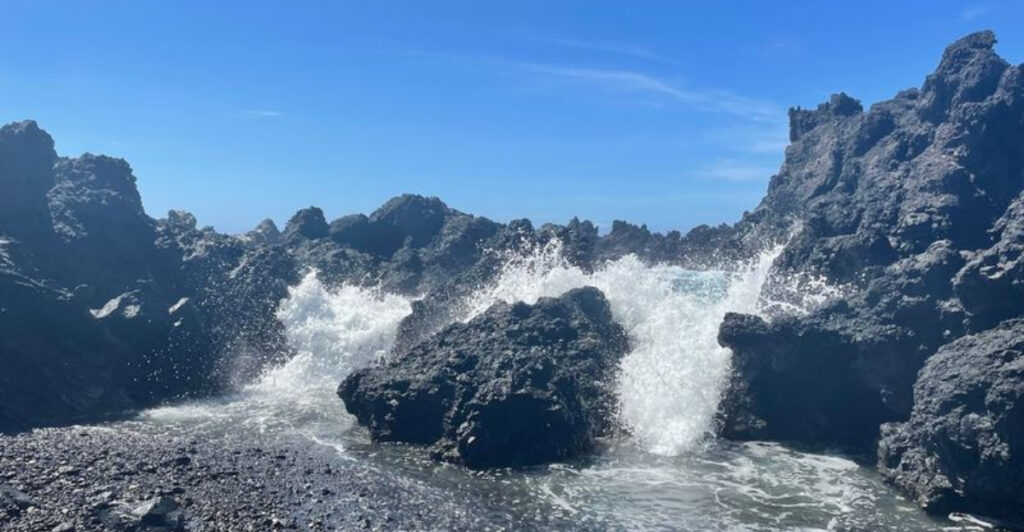
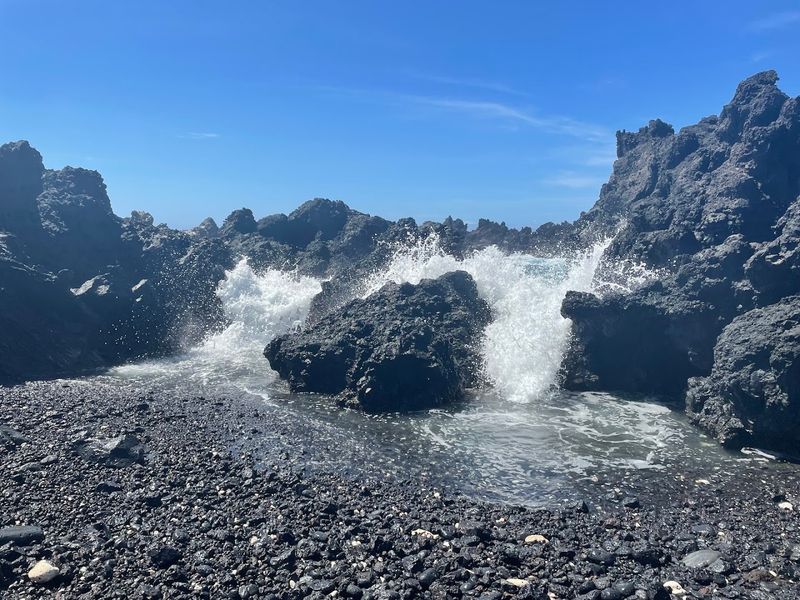
The rock formations along the water are equally impressive. Old lava flows have created jagged outcroppings that jut into the surf, forming natural tide pools full of small fish, crabs, and other marine life worth exploring carefully.
On windy days, the waves crash hard against those rocks, sending spray into the air in a way that feels dramatic and raw. The landscape here does not feel manicured or managed.
It feels alive.
Swimming Conditions and Water Safety
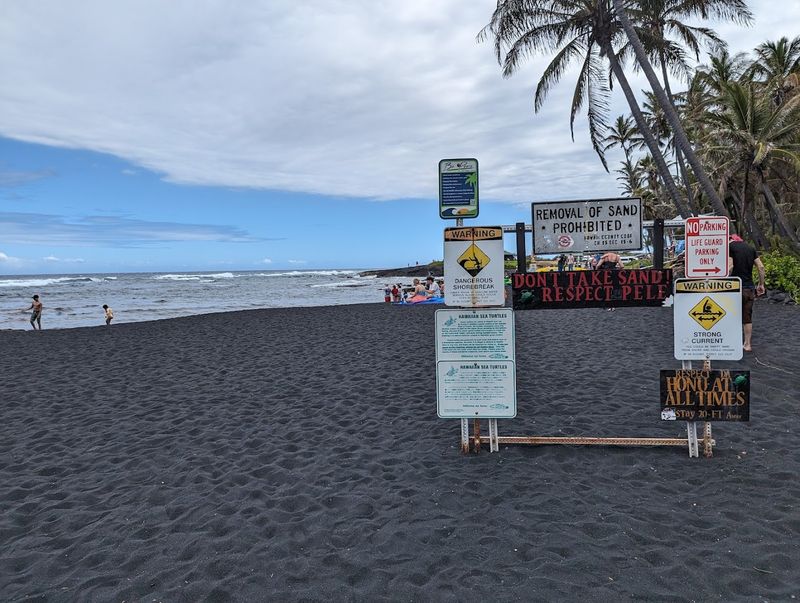
One thing worth knowing before you pack your snorkel: Punaluʻu is not the ideal swimming beach. The water can be rough, with strong currents and waves that pick up quickly, and the rocky bottom makes it difficult to stand comfortably in the shallows.
Sea urchins hide among the rocks beneath the surface, which adds another reason to watch your step carefully if you do wade in. The water can also run murky depending on the season and wave activity, limiting visibility for snorkeling.
A lifeguard is on duty during regular beach hours, which offers some peace of mind, but most visitors spend their time on the sand rather than in the water. The beach rewards observation far more than it rewards swimming.
Watching the wave action from the shore is genuinely entertaining, especially near the lava rock formations where the surf puts on a continuous, powerful show throughout the day.
Monk Seals and Other Wildlife Surprises
Green sea turtles get most of the attention at Punaluʻu, but the beach occasionally hosts an even rarer visitor. Hawaiian monk seals, one of the most endangered marine mammals in the world, have been spotted resting on the black sand here.
Like the turtles, monk seals are fully protected and must not be approached, touched, or disturbed in any way. They tend to sleep for long stretches on the shore, and any human interference can cause serious stress to these animals.
Beyond the big marine wildlife, the tide pools near the lava rocks teem with smaller life. Baby reef fish dart through the shallow water, and hermit crabs pick their way across the rocks at the water’s edge.
The biodiversity packed into this small stretch of coastline is remarkable. Every visit offers something slightly different, and even repeat visitors often discover a new creature or an unexpected moment of natural theater along the shore.
Practical Amenities That Make the Visit Easy
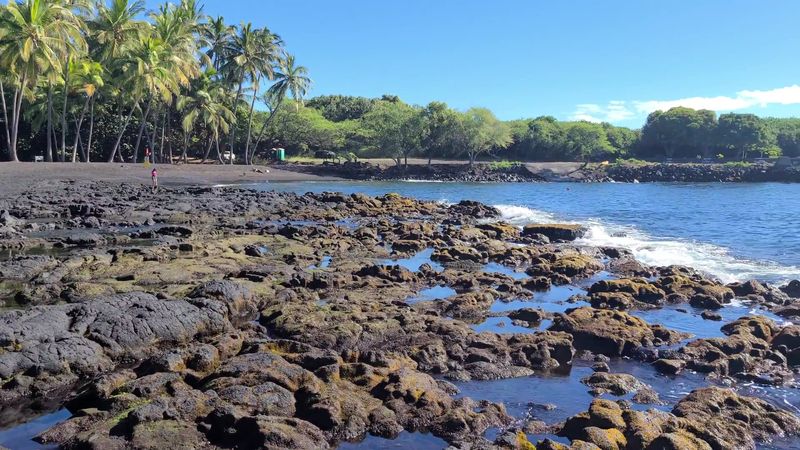
For a beach this remote and dramatic, Punaluʻu is surprisingly well set up for visitors. The park includes public restrooms that are open around the clock, outdoor showers, and covered picnic areas where you can eat lunch in the shade without battling the wind.
A lifeguard is stationed at the beach during regular hours, which adds a layer of comfort for families. The parking situation is a bit mixed: one lot near the beach is free, while another nearby lot charges a minimum fee, so arriving early and taking a moment to find the right spot saves you money.
Vendors set up near the beach selling fresh coconuts, small snacks, and souvenirs on most days. A gift shop sits roughly halfway down the beach and carries a variety of island-themed items.
The overall vibe of the park is relaxed and well-maintained, making it a genuinely comfortable place to spend a few hours without needing to plan too carefully in advance.
What Camping at Punaluʻu Is Actually Like
Spending the night at Punaluʻu is a genuinely different experience from a daytime visit, and the beach park does allow camping with a permit. The atmosphere after dark shifts noticeably, with the sound of waves and the rustle of palms replacing the daytime crowd noise.
Security is present overnight, with rangers or park staff patrolling the area and checking camping permits. That presence provides a real sense of safety, especially for first-time campers unfamiliar with the area.
The restrooms stay open 24 hours, which is a practical detail that makes a real difference when you are sleeping outdoors. On clear nights, the sky above the beach is remarkably dark and full of stars, far from the light pollution of larger towns.
Rangers have even been known to wake campers if the nearby volcano becomes active overnight, which is the kind of unexpected bonus that turns a simple camping trip into a story worth telling for years.
The Connection to Hawaii Volcanoes National Park
Punaluʻu sits conveniently close to Hawaii Volcanoes National Park, making it a natural addition to any itinerary that includes the park. The drive between the two takes roughly 30 minutes along Highway 11, and the road passes through some genuinely wild and scenic terrain.
Many visitors pair the two stops in a single day, spending the morning exploring the volcanic craters and lava tubes inside the park before heading down to the coast for an afternoon on the black sand. The combination gives you a rare chance to see both where the lava comes from and where it ends up.
During periods of volcanic activity, the beach itself takes on an added layer of significance. The same geological forces that built the island are still visibly at work, and standing on lava-born sand while a volcano remains active nearby is a reminder of just how young and dynamic this landscape truly is.
Tips for Getting the Most Out of Your Visit
A few smart choices can make the difference between a good visit and a great one. Arriving early in the morning is the single best tip, as the beach is far less crowded before mid-morning and the light is softer and better for photography.
Wear shoes you can easily slip off, since walking barefoot on the black sand is a sensory experience worth having, but the coarse texture can be uncomfortable for long stretches. Bring water and sunscreen, as the dark sand absorbs and reflects heat more intensely than lighter beaches.
The wind can pick up significantly in the afternoon, so a light layer is useful to have on hand. If you are hoping to see turtles, patience pays off.
Sit quietly near the waterline and give them space rather than crowding the roped-off areas.
A 90-minute to two-hour visit covers the beach comfortably, though many people find themselves lingering well past their planned departure time.
Why This Beach Stays With You Long After You Leave
There are beaches you visit and forget, and then there are beaches that quietly take up permanent residence in your memory. Punaluʻu falls firmly into the second category, and it is not hard to understand why.
The combination of elements here is genuinely rare: volcanic black sand, ancient sea turtles resting in the open, a rainforest backdrop, lava rock tide pools, and the knowledge that you are standing at the southernmost point of the entire United States. No single element would be enough on its own, but together they create something that feels completely unlike any other coastal experience in the country.
Even a short 40-minute stop leaves a lasting impression. The beach does not need to be experienced for hours to make its mark.
It has a way of resetting your sense of what a beach can be, and once you have seen it, ordinary shorelines never quite measure up the same way again.
Share this story