Most people drive past this Dayton-area park without giving it a second thought, and that is honestly their loss. Tucked along a busy road in southwestern Ohio, there is a free public arboretum that hides one of the most underrated views in the entire state: a 65-foot observation tower that puts the whole Miami Valley landscape right in front of your eyes.
Beyond the tower, the place offers butterfly habitats, edible gardens, Japanese-style footbridges, ponds full of koi and turtles, and trails that work for every fitness level. I visited on a crisp fall morning and came home with a full memory card and a serious urge to go back.
Keep reading, because this place has way more going on than its modest entrance lets on.
The Address and Getting There

Cox Arboretum MetroPark sits at 6733 N Springboro Pike, Dayton, OH 45449, right along a stretch of road that most commuters treat as a throughway rather than a destination.
The parking lot is free, which still surprises me every time I pull in, because the quality of what waits inside feels like it should cost something.
The park is open daily from 8 AM to 10 PM, so early risers and evening walkers both have a real window to enjoy it. From downtown Dayton, the drive takes roughly 15 to 20 minutes, and the entrance is clearly marked with a sign that does not do justice to what lies beyond it.
First-time visitors often underestimate how large the grounds are, so plan for at least two hours if you want to see the major highlights without rushing.
The 65-Foot Observation Tower
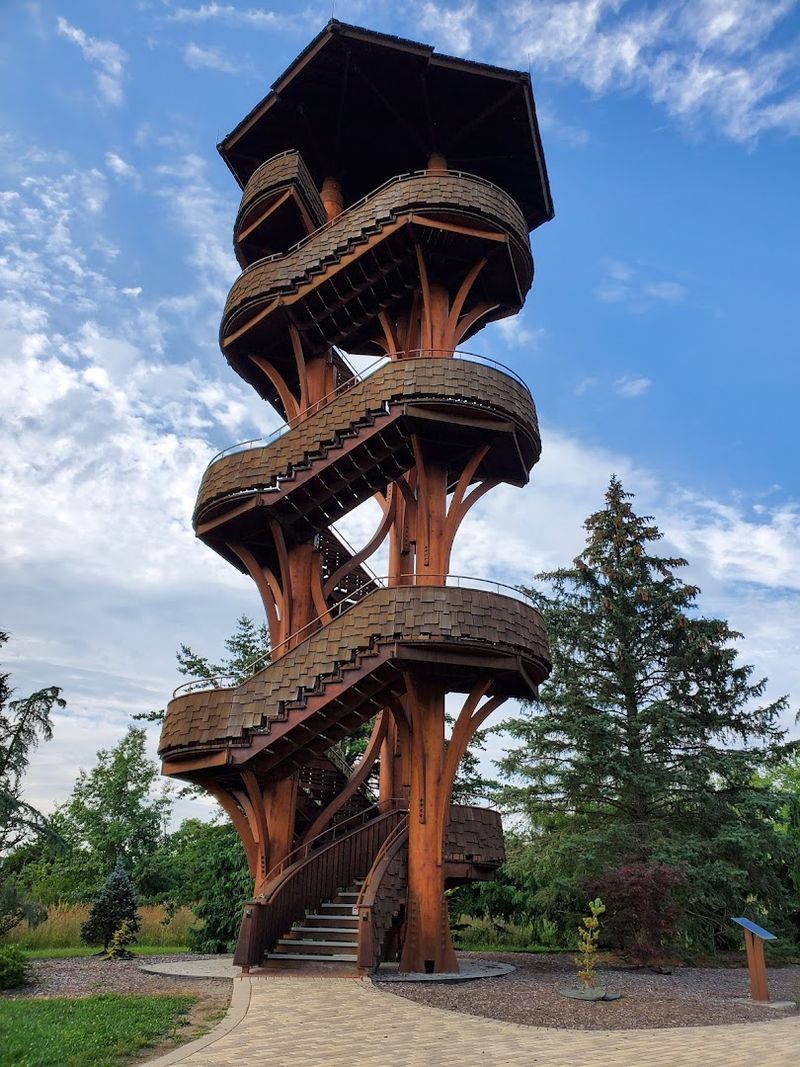
The tower is the reason most people share photos from this park online, yet somehow a surprising number of visitors walk right past it without climbing to the top.
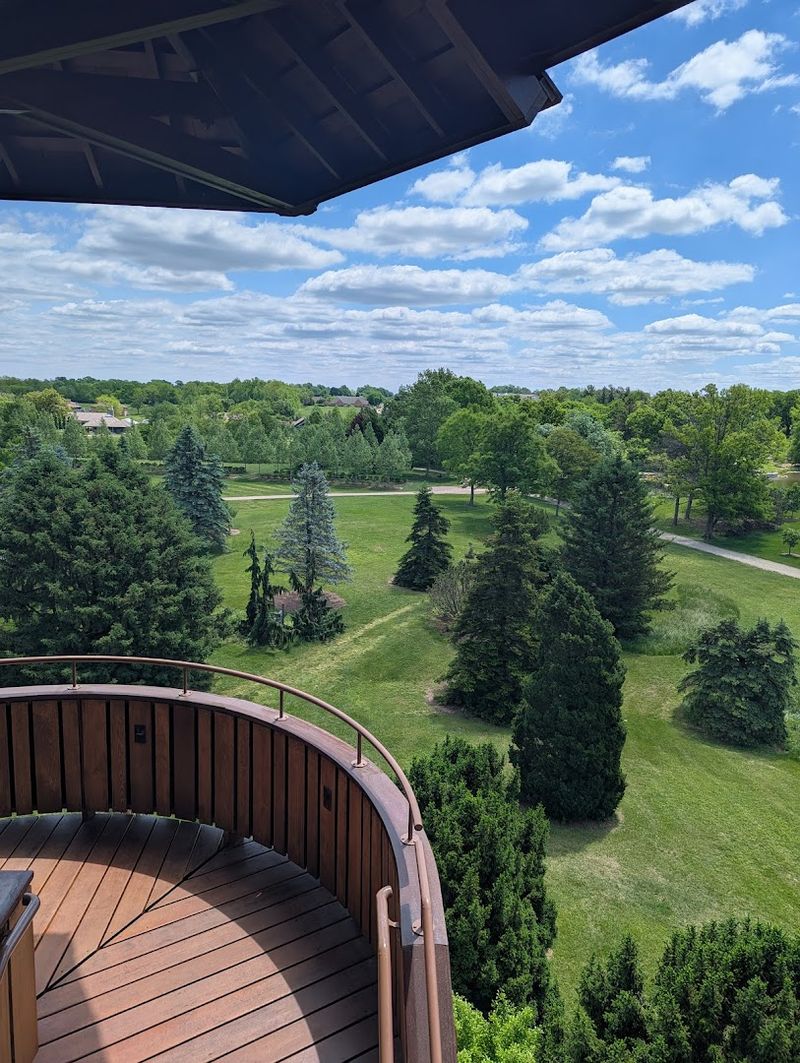
Built from wood and rising 65 feet above the ground, the structure gives you a sweeping, unobstructed look across the Miami Valley, with Miamisburg visible in the distance on clear days.
The climb is not steep or technically difficult, just a steady spiral of steps that rewards patience with a genuinely jaw-dropping panorama at the top. On the fall morning I visited, the canopy below had turned every shade of orange and red, and the view from the platform made it feel like I was standing above a patchwork quilt of color.
Bring a camera with a good zoom lens, because the details you can pick out from up there are worth capturing.
Trails for Every Type of Walker
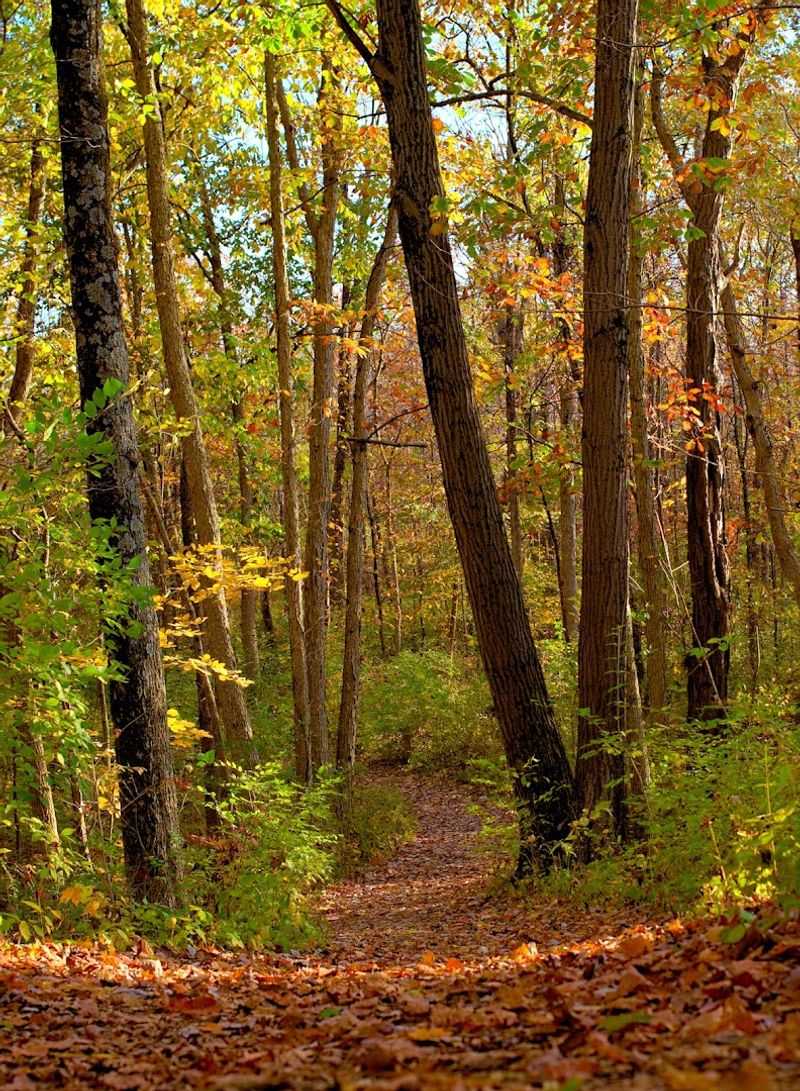
One of the things that genuinely impressed me about this arboretum is how thoughtfully the trail system is laid out for people of all ability levels.
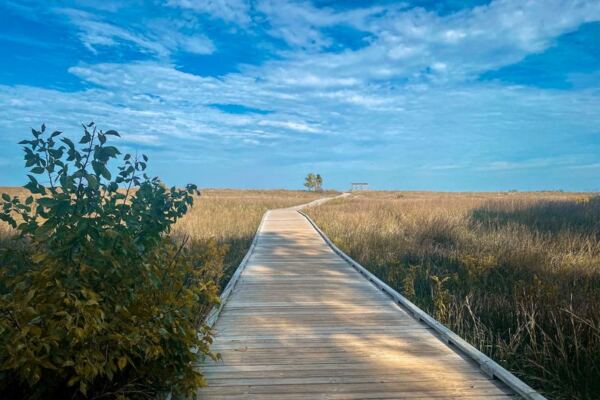
Paved paths loop through the main garden areas, making them accessible for strollers, wheelchairs, and anyone who prefers a smooth surface underfoot. The unpaved trails branch off into wooded sections and tall grass prairies, where the atmosphere shifts completely and feels more like a wilderness hike than a garden stroll.
The yellow trail in particular offers a satisfying mix of gentle climbs and descents without ever becoming exhausting. Trail markers are clear and easy to follow, and a printed map at the visitor center helps newcomers plan a route that fits their available time.
Even a short 30-minute loop delivers enough variety to feel like a genuinely full outdoor experience.
Three Scenic Ponds and Their Wildlife
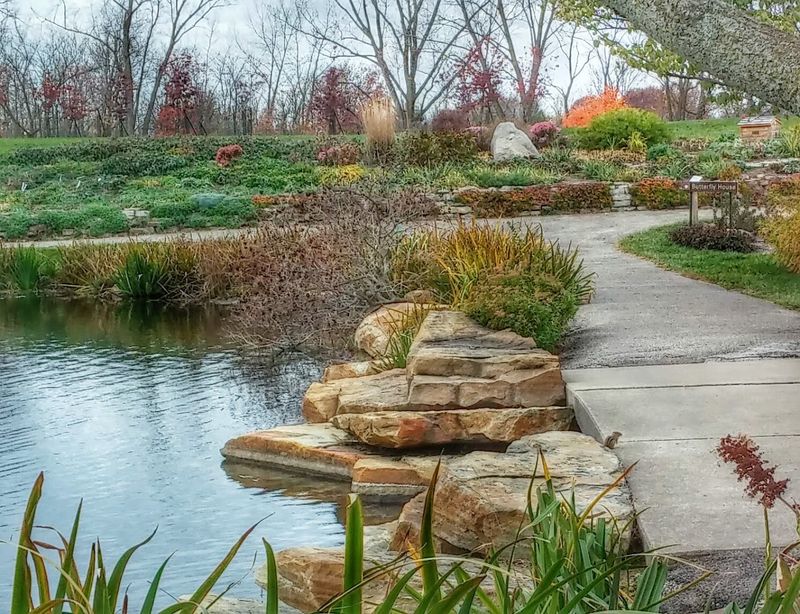
Three good-sized ponds are spread across the arboretum grounds, and each one has its own personality depending on the season and time of day.
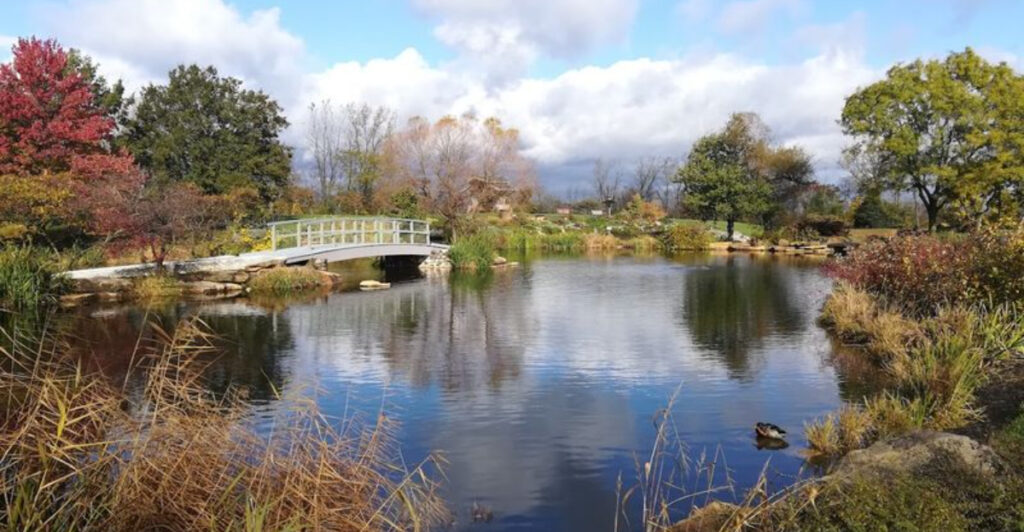
On my visit, I spotted large koi gliding just below the surface near one of the bridges, and a snapping turtle the size of a dinner plate was sunning itself on a log without a care in the world. Flocks of Canada geese occasionally land on the water in a loud, chaotic rush, then settle into graceful gliding almost immediately.
The ponds are surrounded by benches and shaded spots that make them ideal for sitting quietly and watching the activity unfold at its own pace. Early mornings are especially good for birdwatching near the water, and the reflections on calm days produce some of the most photogenic scenes the entire park has to offer.
The Japanese-Style Footbridge
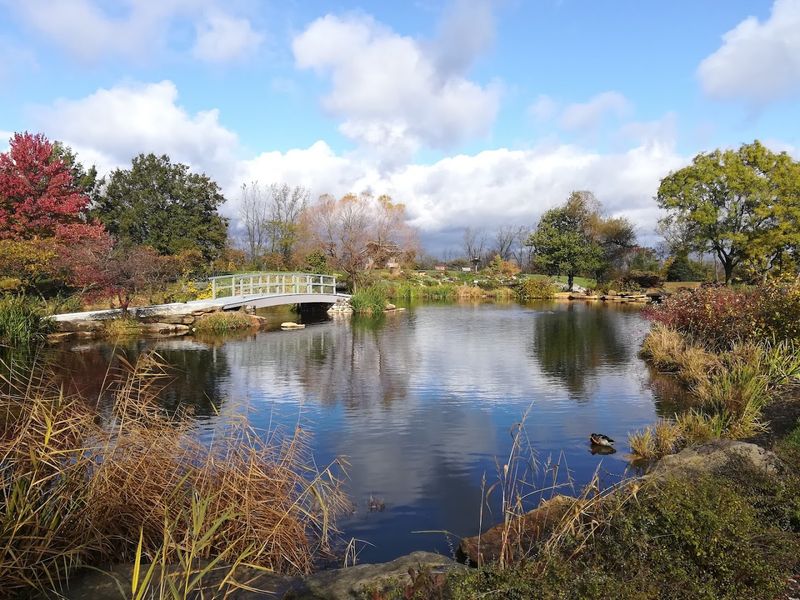
There is a footbridge in this arboretum that stops most visitors mid-step because it looks almost too picturesque to be real.
The arched, Japanese-style structure crosses over one of the ponds and frames a reflection in the water below that genuinely resembles a painting. The surrounding plantings, which include ornamental grasses, flowering shrubs, and weeping trees, reinforce the serene aesthetic without feeling overdone or artificial.
Photography enthusiasts consistently list this bridge as one of their favorite spots in the entire Dayton park system, and it is easy to understand why once you see the light hit the water at the right angle. Visiting in late spring brings added color from the surrounding blooms, but even in winter the bare branches and still water create a quietly beautiful composition that is worth the trip on its own.
The Butterfly Habitat
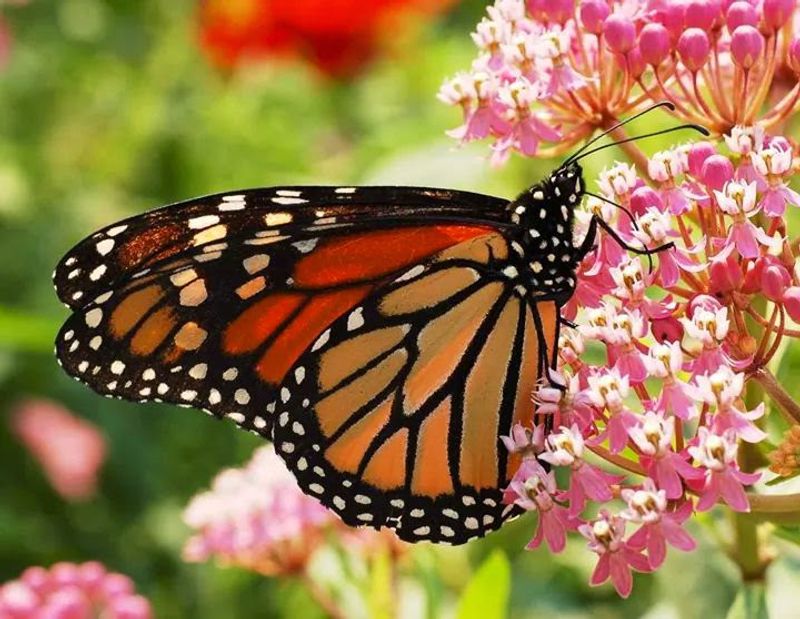
A dedicated butterfly habitat sits within the arboretum grounds and draws visitors who might not otherwise consider themselves nature enthusiasts, and then completely converts them.
The area is planted specifically to attract native pollinators, with species like milkweed, coneflower, and black-eyed Susan creating a dense, buzzing, fluttering ecosystem during the warmer months. Monarchs are a regular presence during their migration window, and spotting a cluster of them resting in the late afternoon sun is the kind of thing that genuinely makes you stop talking mid-sentence.
Children tend to go completely quiet in this section, which is either a sign of deep wonder or the best distraction technique nature has ever developed. Either way, the habitat earns its place as one of the most memorable stops on any visit to the arboretum, regardless of the season.
The Edible Garden
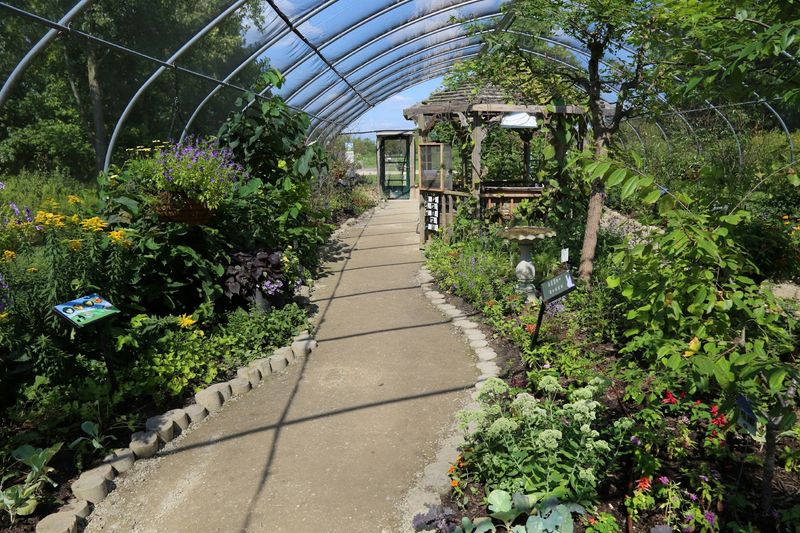
Not every arboretum gives you a garden where the plants are meant to be eaten, but this one does, and it is a surprisingly fun section to explore.
The edible garden features raised beds and open plots filled with herbs, vegetables, and fruit-bearing plants that change with the seasons. Strawberries ripen in late spring and early summer, and catching them at peak season means you might get lucky enough to smell them before you even see them.
Fragrant herbs like rosemary, basil, and mint line some of the beds, and brushing your hand lightly across the leaves releases a burst of scent that makes the whole section feel alive in a very sensory way. The garden also serves an educational purpose, connecting visitors of all ages to where food actually comes from in a way that feels hands-on and genuinely engaging.
Wildflower Woodland and Prairie Sections
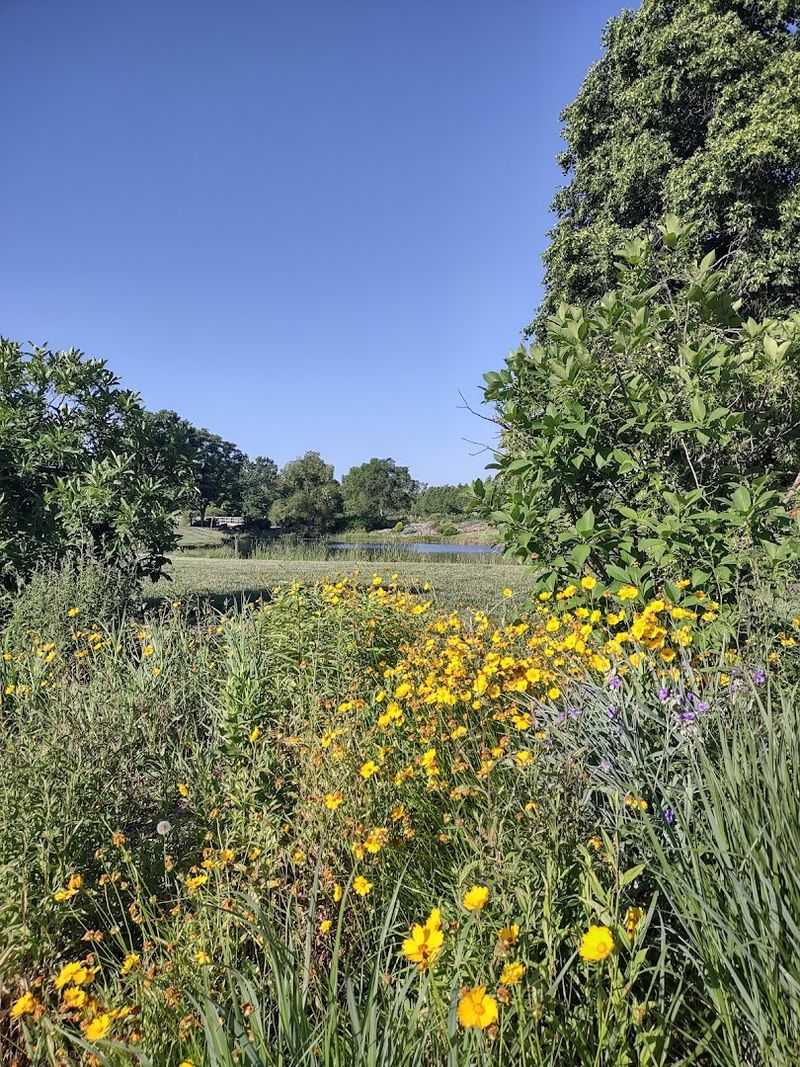
Beyond the manicured garden beds and paved paths, the arboretum opens up into something that feels much wilder and less curated, and that contrast is part of what makes the place so interesting.
The wildflower woodland section fills with native blooms in spring and early summer, creating a low canopy of color beneath the taller trees that is completely different from anything in the formal garden areas. The tall grass prairie section, meanwhile, gives you a sense of what the Ohio landscape looked like long before development changed it so dramatically.
Walking through the prairie on a breezy day, with grasses swaying at shoulder height and insects humming in every direction, feels like a genuinely immersive experience rather than a simple walk in a park. These sections tend to be quieter than the main garden areas, which makes them ideal for anyone seeking a more solitary outdoor moment.
Family-Friendly Features and Kids Activities
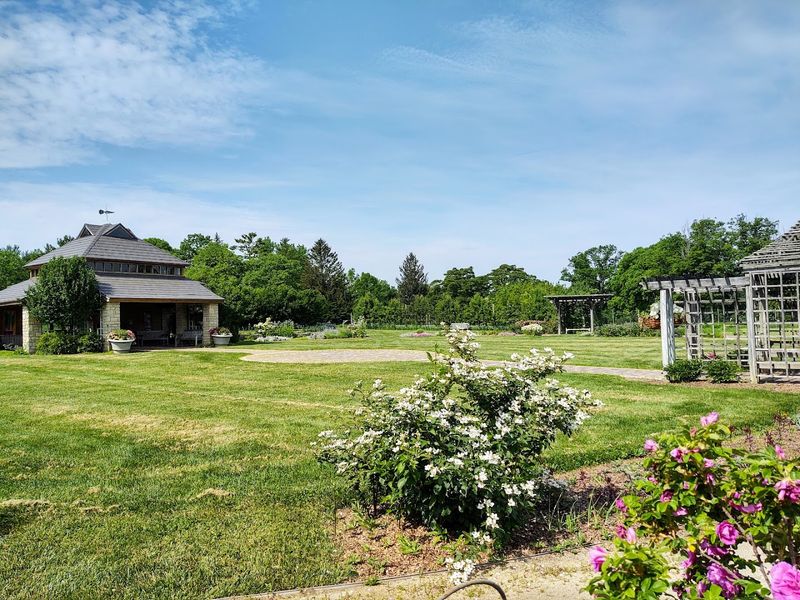
Families with kids have a lot to work with at this arboretum, and the variety of experiences available across different age groups is genuinely impressive for a free public park.
A treehouse-style play area gives younger children a chance to climb and explore in a natural setting, and the surrounding grounds offer enough open space for running, picnicking, and general outdoor freedom. During summer months, the park hosts outdoor gardening programs and nature education classes that teach children about plants, ecosystems, and the environment in a hands-on format.
The ponds, turtles, koi fish, and butterfly habitat all serve as natural conversation starters between kids and their parents or teachers, making the whole visit feel educational without feeling like a field trip in the formal sense. Parents should note that some surface areas near the play zone are uneven, so keeping an eye on younger children is a good idea.
Best Seasons to Visit
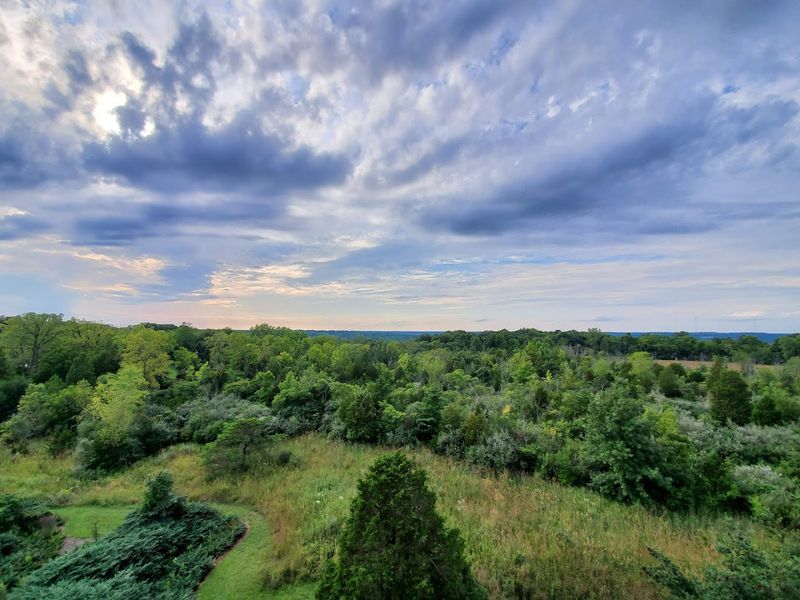
Every season brings something worth seeing at this arboretum, which is part of what makes it such a reliable destination throughout the year rather than a one-time novelty.
Spring is arguably the showiest season, with tulips, flowering trees, and fresh green growth transforming the grounds into a riot of color that peaks around late April and early May. Summer brings the butterfly habitat to full activity, the edible garden into harvest mode, and the ponds to their most lively state with turtles and fish visible from the bridges.
Fall is when the tower view becomes truly spectacular, with the surrounding canopy turning into a landscape of deep reds and golden yellows that stretches as far as the eye can reach. Even winter has its charms, with bare branches, still water, and frost-covered paths creating a quiet, almost meditative atmosphere that regular visitors specifically seek out.
Why This Free Park Deserves More Attention
Free admission at a park this well-maintained and thoughtfully designed feels like finding a $20 bill in an old jacket, except the good feeling lasts a lot longer.
The grounds are consistently clean, the trails are clearly marked, the plantings are diverse and well-cared-for, and the overall experience rivals paid botanical gardens in larger cities without asking anything of your wallet. Photographers, families, dog walkers, birdwatchers, and solo hikers all find something genuinely worthwhile here, and the variety of environments packed into one property keeps repeat visits from ever feeling repetitive.
The 65-foot observation tower alone is worth making a special trip for, but the butterfly habitat, Japanese footbridge, edible garden, and wildlife-filled ponds all add up to something that deserves a much bigger spotlight than it currently gets. Cox Arboretum MetroPark is the kind of place that makes you want to tell everyone you know, and then quietly hope the crowds stay manageable.
Share this story