 Unearth The Voyage
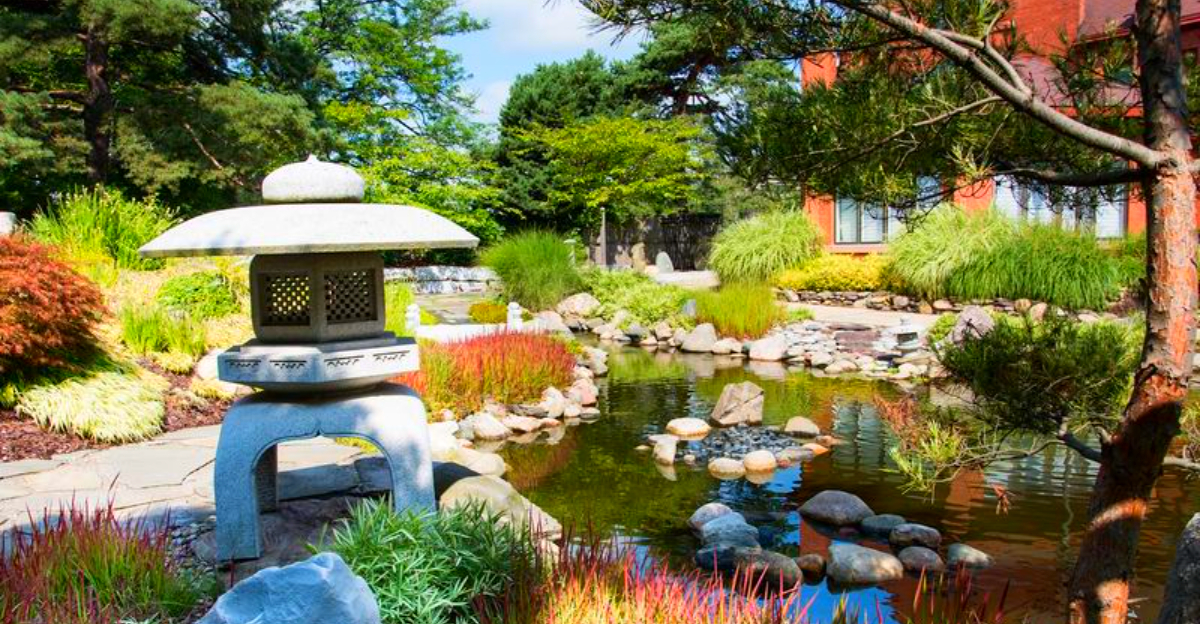
Most people in downtown Lansing walk past this place without realizing it exists. On the Lansing Community College campus, a Japanese garden offers a quiet, carefully designed space with koi ponds, stone features, and small bridges just steps from busy streets.
It stands out because of its deliberate layout and cultural detail, not size or hype. The garden has a name tied to its origins and a purpose beyond decoration, making it more than just a hidden corner on campus.
If you want a quick break between stops or a low-key spot to reset, this is one of the few places in the city that delivers it without crowds or noise. Here’s what to know before you go.
Where Exactly You Will Find This Urban Retreat
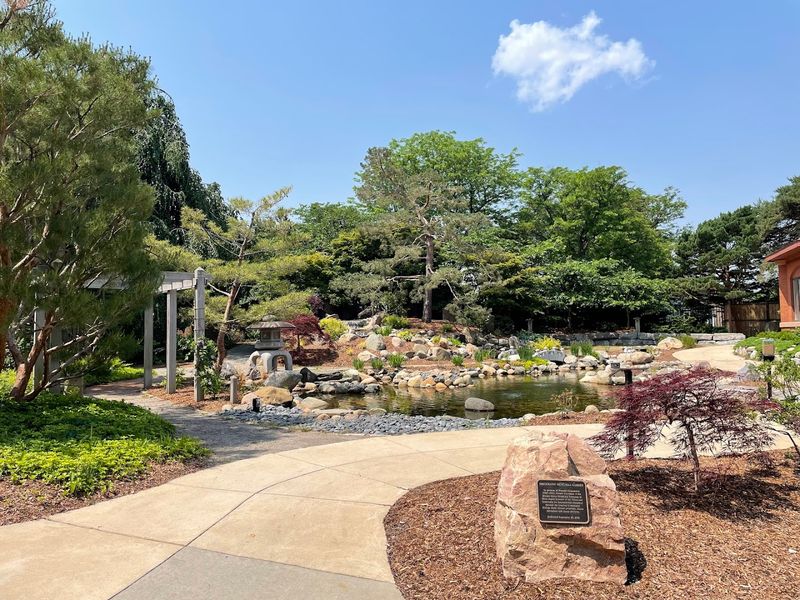
The address is 598 N Capitol Ave, Lansing, MI 48933, and the garden sits right on the campus of Lansing Community College in the heart of downtown Lansing, Michigan.
From the street, nothing gives it away immediately. The entrance is tucked near the larger Horticultural Gardens, and first-time visitors often miss it without a little patience and curiosity.
A commemorative plaque and beautiful statues gifted from Japan greet you at the threshold, setting the tone before you even take your first step inside. The garden is open 24 hours a day, every day of the week, so there is no pressure to rush your visit around a schedule.
Its location near the state capitol makes it surprisingly easy to reach by foot if you are already spending time in downtown Lansing. Parking is available nearby on campus, and the walk from the street to the garden entrance takes only a minute or two.
The Story Behind the Name and the Gift from Japan
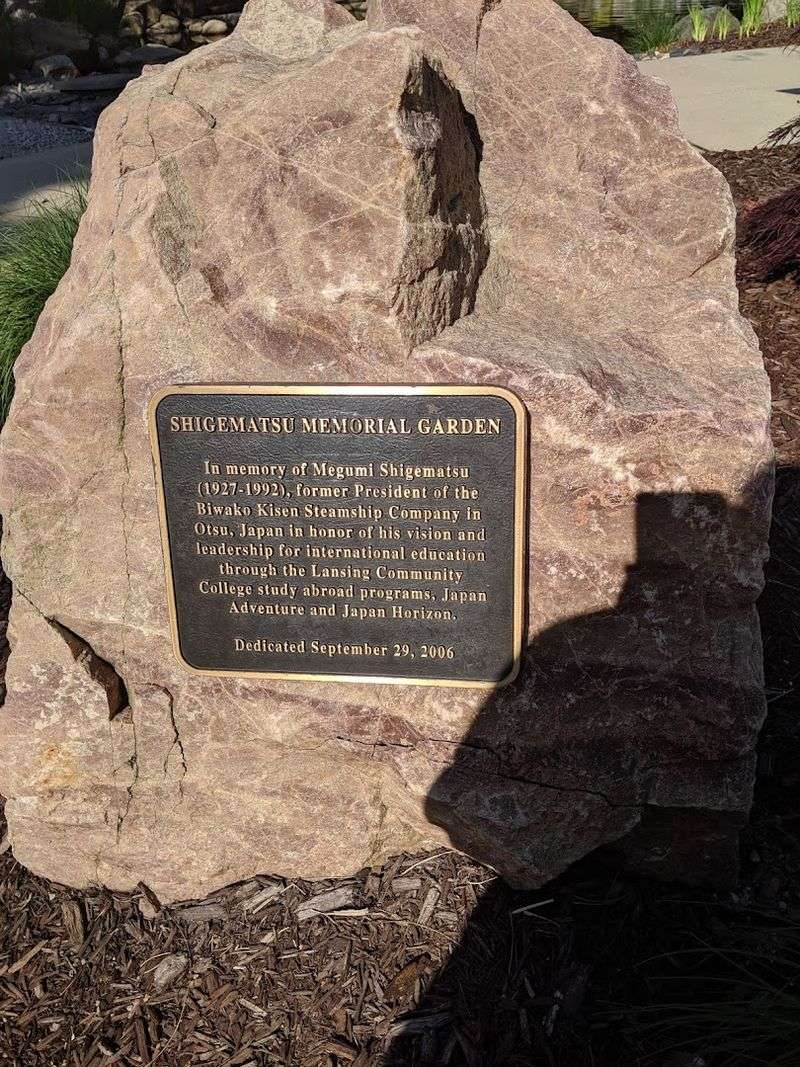
Not every garden comes with a story this meaningful. The Shigematsu Japanese Garden was established as a cultural gift honoring the relationship between Michigan State University and Japan, and the name itself carries that weight with dignity.
A commemorative plaque near the entrance explains the dedication, and the statues brought directly from Japan give the space an authenticity that goes beyond decoration. This is not a garden that was designed to look vaguely Japanese; it was created with genuine cultural intention and care.
The connection to MSU adds an academic and international dimension that makes the garden feel like more than just a pretty corner of a college campus. It is a living symbol of friendship, exchange, and shared appreciation for beauty across cultures.
Understanding that history before you enter changes how you experience the space. Every stone, every structure, and every carefully placed plant suddenly feels like part of a larger conversation between two countries, and that is a surprisingly moving thing to sit with.
What the Garden Actually Looks Like Inside
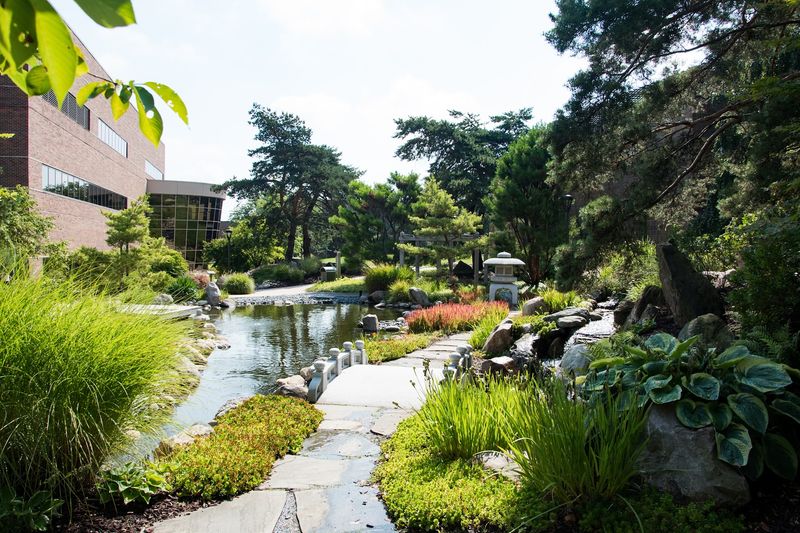
The layout is compact but thoughtfully composed. At the center of the garden is a large open-air Zen-like seating area filled with sand and smooth river rocks, designed specifically for quiet contemplation and reflection.
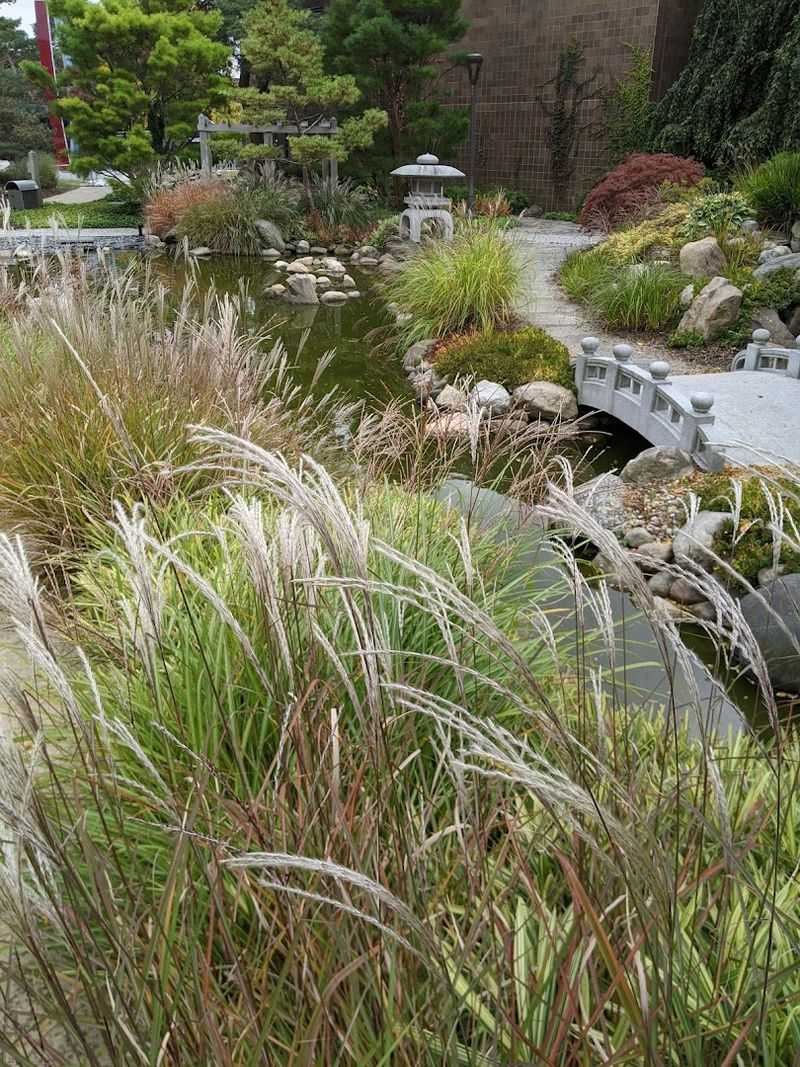
Shaded walking paths wind around the perimeter, leading visitors past koi ponds, babbling brooks, and miniature bridges that feel almost miniature-world in their charm. The wooden veranda-like structure provides a covered spot to sit and take it all in without feeling rushed.
Every element has been placed with purpose. The combination of water, stone, sand, and plant life creates a sensory balance that feels calm rather than cluttered, and the scale of the space encourages you to slow down rather than move quickly through it.
The garden is small by most standards, but that intimacy is part of its appeal. Bigger does not always mean better, and this space proves that a well-designed small garden can deliver a far more personal experience than a sprawling park ever could.
The Koi Fish That Make the Pond Come Alive

The koi are one of the most talked-about features of this garden, and for good reason. They swim slowly through the pond with an ease that almost feels contagious, and watching them for even a few minutes has a noticeably calming effect.
The fish are reportedly friendly and comfortable with human presence, often drifting close to the pond edge when visitors approach. There is something quietly satisfying about making eye contact with a koi fish while the rest of the city carries on without you just a block away.
The pond itself features a small waterfall that keeps the water moving and adds a gentle audio backdrop to the whole experience. At various points in the garden’s history, maintenance challenges affected the pond’s condition, but recent updates and renovations have brought it back to a much healthier and more beautiful state.
Returning in different seasons changes the experience entirely, since the pond looks different in spring greenery versus the bare stillness of a winter visit, and the fish seem to have their own seasonal personalities too.
The Zen Contemplation Area That Invites You to Slow Down
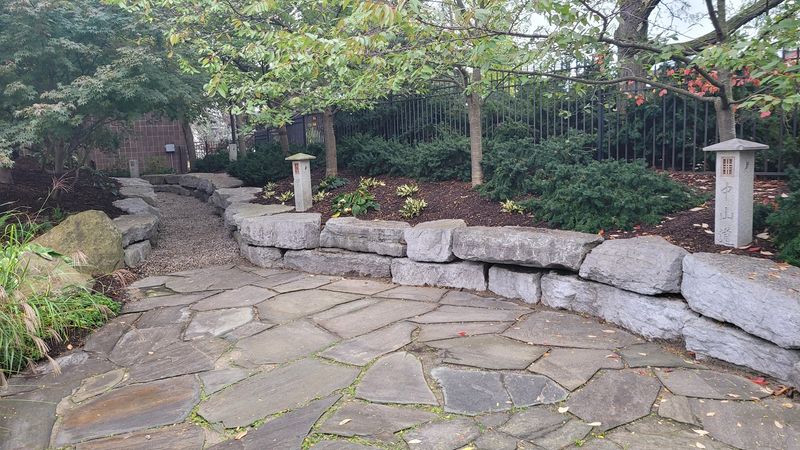
Right at the heart of the garden is an open-air space that functions as a Zen contemplation zone, and it is unlike anything else you will find in downtown Lansing.
The ground is covered in smooth river rocks and sand, arranged in a way that encourages stillness rather than activity. There are no distractions here, no screens, no noise, and no agenda.
Just the texture of natural materials and the sound of water nearby.
Seating is available within this area, which makes it genuinely practical for anyone who wants to read, journal, meditate, or simply decompress after a long morning of meetings or classes. Students from Lansing Community College use this space regularly between classes, and it is easy to understand why.
The psychological effect of sitting in a space designed for contemplation is real and immediate. Even a short ten-minute visit to this part of the garden tends to leave people feeling noticeably clearer and more settled, which might be the most useful thing a city park can offer.
How the Garden Changes With Every Season
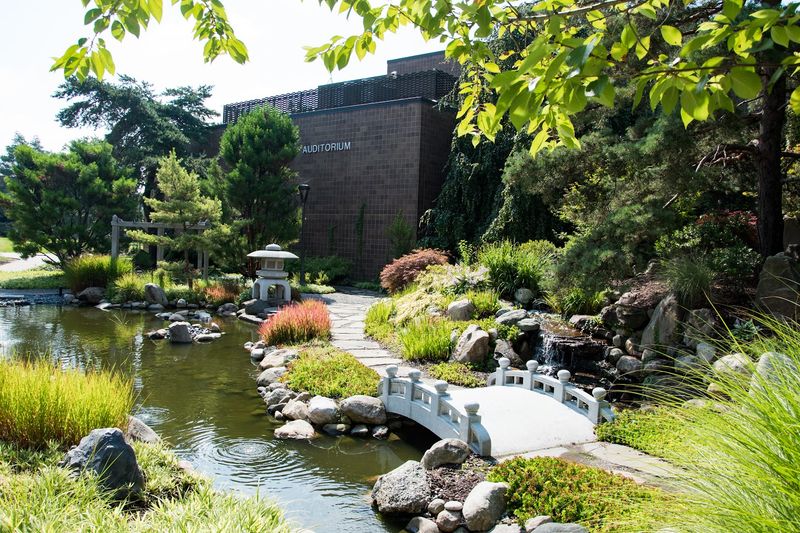
One of the most rewarding things about this garden is that it never looks exactly the same twice. Each season brings a different mood, a different color palette, and a different reason to visit.
Spring is arguably the most vibrant time to come, when fresh greenery fills in the paths and the pond water clears up after winter. The contrast of new plant growth against the stone and sand elements of the Zen area is particularly striking in April and May.
Summer brings full shade along the walking paths, which makes the garden a genuinely cool and comfortable retreat on warm Michigan afternoons. The koi are most active during these warmer months, and the waterfall sound feels especially refreshing when the temperature climbs.
Autumn transforms the space with warm tones and falling leaves that collect in the sand and along the brook, giving the garden a more melancholy and contemplative atmosphere. Winter visits are quieter and starker, but there is a spare beauty to the bare branches and still water that has its own quiet reward.
The Miniature Bridges That Add a Storybook Quality
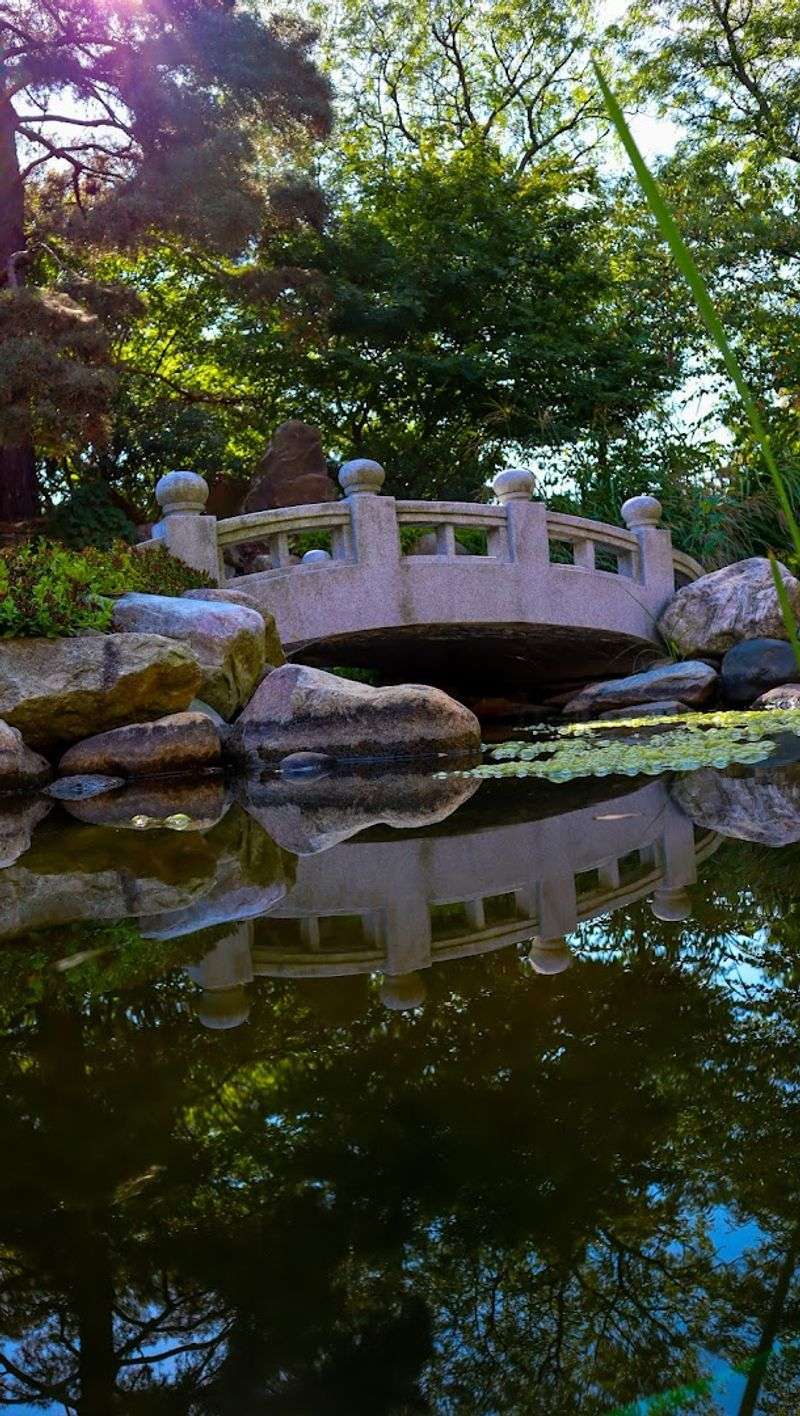
Few details in this garden get more attention than the small bridges that cross over the babbling brooks winding through the space. They are modest in size but disproportionately charming, and they give the garden a fairytale-like quality that photographs beautifully.
Each bridge is placed at a point where the path naturally crosses water, so crossing one feels intentional rather than decorative. The sound of water beneath your feet as you cross is one of those small sensory details that sticks with you long after you leave.
The bridges also serve a practical purpose by connecting the different sections of the walking paths, which means the garden has a natural flow and rhythm as you move through it. You are never quite sure what is around the next corner, which keeps the exploration interesting even in a compact space.
For visitors who enjoy photography, these bridges offer some of the best compositional opportunities in the garden. The combination of wood, water, stone, and greenery in a single frame is hard to get wrong, and the light filtering through the trees adds a natural softness that any camera will appreciate.
Why the Garden Feels Like a Secret Even Though It Is Right There
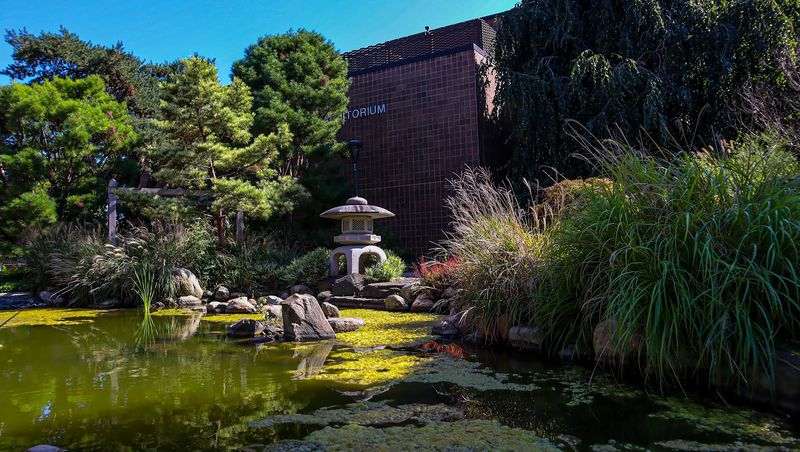
There is a particular thrill that comes with finding a beautiful place that most people walk right past. This garden earns that feeling honestly, because its entrance is genuinely tucked away and easy to overlook if you are not paying attention.
The garden sits adjacent to the larger Horticultural Gardens on campus, and many visitors discover it almost by accident while exploring the surrounding area. That accidental quality is part of what makes the first visit feel so rewarding.
The surrounding campus buildings and city streets create a kind of visual noise that the garden quietly opts out of. Once you are inside, the transition feels more complete than the short physical distance would suggest is possible.
Regular visitors often describe it as their personal reset button, a place they return to whenever the city feels too loud or the day feels too long. The fact that it is open around the clock means there is no wrong time to seek it out, and a late-evening visit under the glow of the garden lights has a mood all its own.
The Shaded Walking Paths Worth Taking Slowly
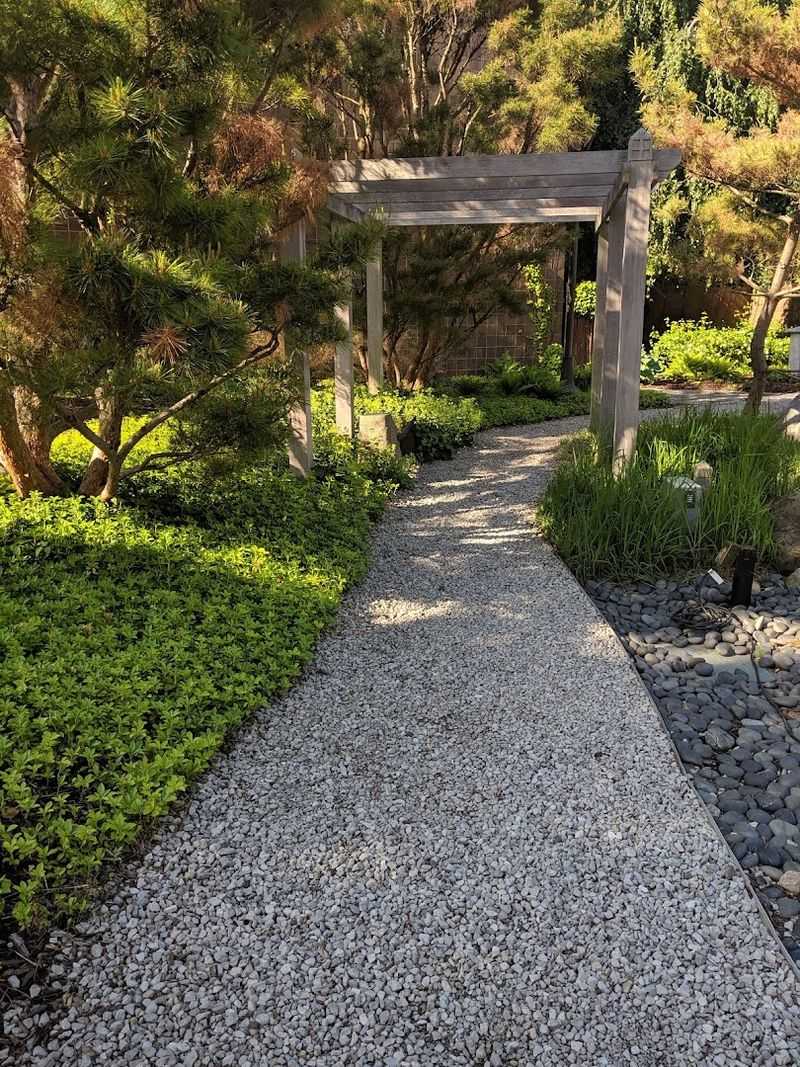
The walking paths at this garden are not long, but they are genuinely lovely, and the temptation to rush through them is worth resisting. The shade provided by the surrounding trees makes the paths comfortable even on sunny days, and the surface is clean and easy to walk on.
Each turn along the path reveals a slightly different view of the garden, whether it is a new angle on the koi pond, a closer look at a stone lantern, or a moment where the sound of the waterfall suddenly gets louder as you round a bend.
The paths are also practical for anyone who wants to use the garden for low-key exercise or a gentle stretch between work meetings. The circuit is short enough to complete in under ten minutes, but the design encourages multiple loops rather than a single pass-through.
Benches and seating areas appear at intervals along the route, and the pacing of the whole experience feels deliberately unhurried. That is not an accident; it is a design principle rooted in Japanese garden philosophy, and it works exactly as intended.
Practical Tips for Getting the Most Out of Your Visit
A few practical notes can make a real difference in how much you enjoy this garden. The space is open 24 hours a day, seven days a week, which means early morning and late evening visits are completely possible and often more peaceful than midday stops.
Weekday mornings tend to be the quietest, especially outside of the academic semester when student foot traffic is lower. If solitude is what you are after, Tuesday or Wednesday mornings in late summer are about as close to perfect as it gets.
The garden is free to visit, which makes it one of the best no-cost experiences in downtown Lansing. Bringing a book, a journal, or a simple lunch is a perfectly reasonable plan, and several visitors use the space exactly that way on a regular basis.
Wear comfortable shoes since the paths include stone surfaces and gentle uneven terrain in spots. Also, be mindful that this is a shared space on an active college campus, so keeping noise levels low is both considerate and personally rewarding.
Why This Small Garden Leaves a Surprisingly Large Impression
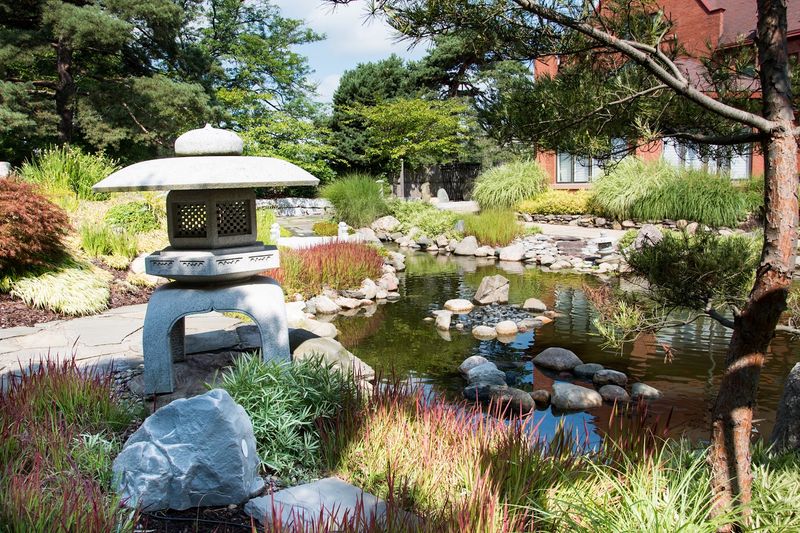
Size is not always the most important measure of a place’s value, and this garden makes that case better than most. At just a fraction of the scale of famous Japanese gardens across the country, it still manages to deliver a complete and satisfying experience.
The design principles at work here are the same ones found in renowned gardens around the world: balance, intention, the interplay of water and stone, and the careful use of natural sound to create psychological calm. Smaller scale does not dilute those principles; it concentrates them.
Visitors consistently describe leaving the garden feeling noticeably different from when they arrived, calmer, more focused, and more present. That kind of effect is not something you can manufacture with more square footage; it comes from thoughtful design and a genuine commitment to the purpose of the space.
A city that has a place like this tucked into its downtown is a city worth spending more time in. The Shigematsu Japanese Garden is proof that the best urban escapes are not always the ones you plan for, but the ones you stumble upon and never quite forget.



