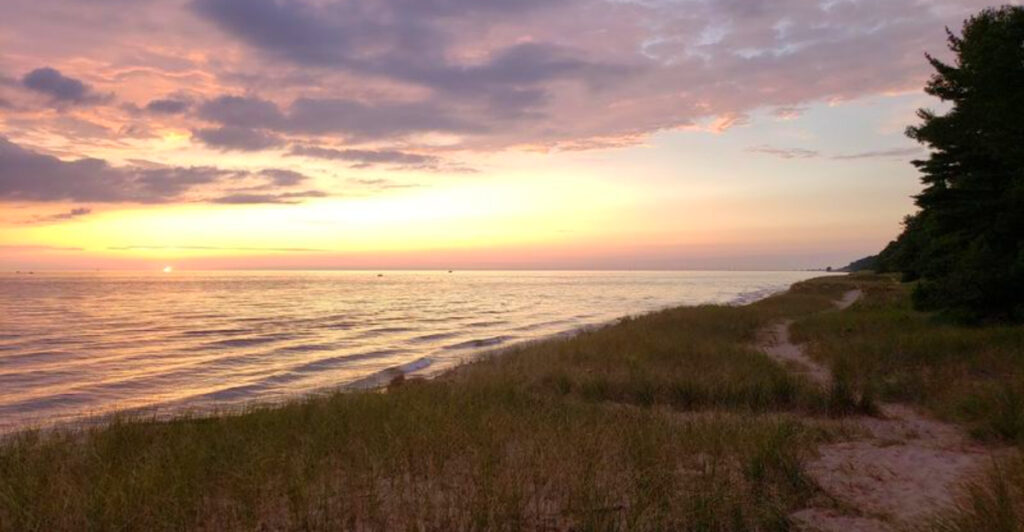
A lakeshore park in Norton Shores has earned a 4.8-star rating from over a thousand visitors, yet many people still drive past without noticing it. Those who do stop find a mix of wooded trails, dune climbs, and direct access to Lake Michigan without the heavy crowds of more well-known spots.
The layout makes it easy to explore in different ways. You can follow a flat path along the harbor channel, head into shaded trails, or take on the dunes for a more active visit.
It works just as well for a quick walk as it does for a longer outing. What sets it apart is how much it offers in one place without feeling crowded or overdeveloped.
It delivers the full lakeshore experience without the usual hassle, which is exactly why visitors rate it so highly.
Where Exactly This Park Sits and How to Find It

Tucked along the western edge of Norton Shores, Michigan, Lake Harbor Park sits at 4635 Lake Harbor Rd, Norton Shores, MI 49441, just a short drive from downtown Muskegon. The park is easy to reach by car, and the parking lot holds around 60 or more vehicles, including two designated accessible spaces near the entrance.
A basic trail map is posted near the lot, which helps first-time visitors get their bearings before heading out. Some paths are sandy, so wearing sturdy shoes makes the walk much more comfortable, especially toward the beach end.
The park is open every day from 5 AM to 10 PM, so early risers and sunset chasers both have plenty of time to enjoy it. You can reach the parks and recreation department at 231-799-6802 if you need more details before your visit.
The address is straightforward to find with any navigation app, and the drive through the surrounding neighborhood feels calm and pleasant.
The 189-Acre Layout That Keeps Surprising You
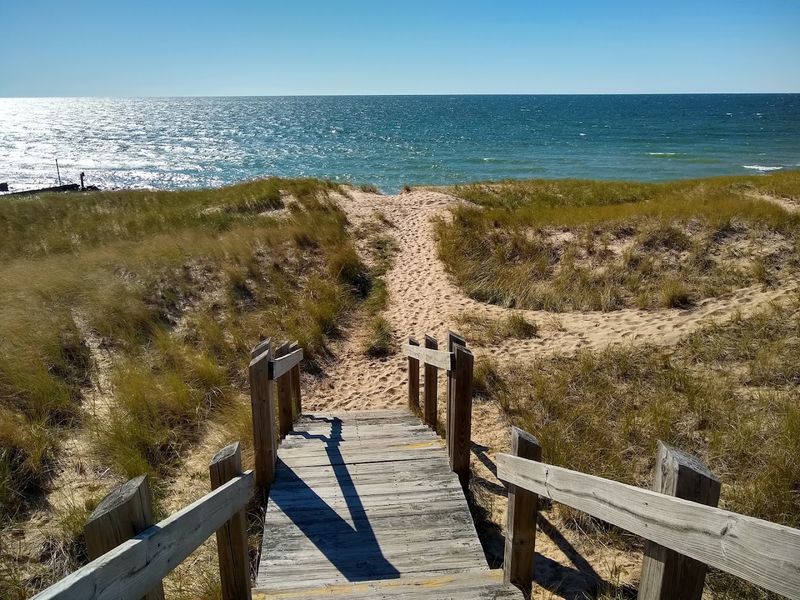
Most people expect a small neighborhood park when they first hear about this place, but 189 acres has a way of changing expectations fast. The park stretches across a varied landscape that includes dense woodland, open sand dunes, a harbor channel, and direct access to Lake Michigan’s shoreline.
What makes the layout especially appealing is that no single trail shows you everything at once. Each direction you choose from the parking lot leads to a completely different experience, which means repeat visits rarely feel repetitive.
Head right from the lot and you enter the dune terrain and woods. Head left and Mona Lake opens up with its calm, reflective water and steady boat traffic.
The park also contains pavilions, picnic areas, grilling stations, and a boardwalk section near the canal, all within a reasonable distance from where you parked. Families with young children and solo hikers alike tend to find exactly the kind of space they were hoping for here.
What the Walk to the Beach Actually Feels Like
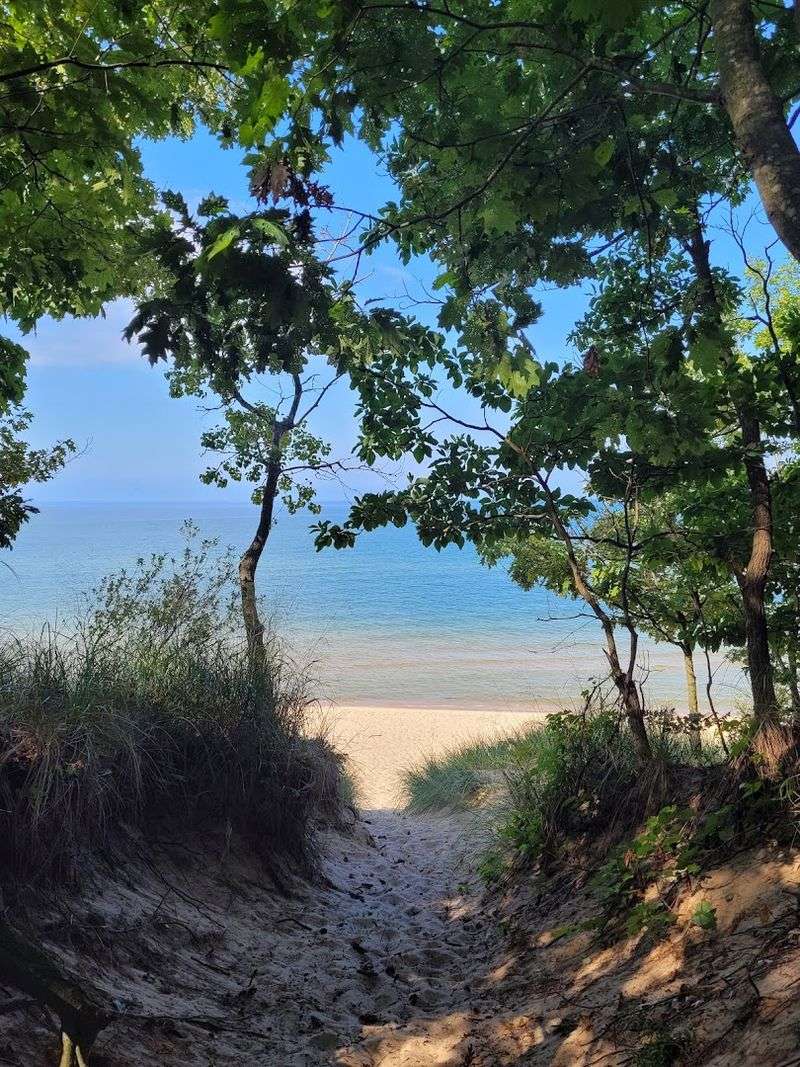
The path from the parking lot to the Lake Michigan shoreline covers roughly half a mile, and the walk itself is part of what makes the arrival feel earned. Most of the route follows a crushed limestone and paved trail that is well-maintained and comfortable underfoot for the majority of the distance.
As you get closer to the water, the path transitions into packed dirt and eventually sandy terrain, which is where appropriate footwear really pays off. The final stretch passes a boardwalk section near the canal before opening up to the beach and the bluffs above it.
The whole walk takes around ten to fifteen minutes at a relaxed pace, and the gradual shift from shaded woodland to open sky creates a natural sense of buildup. Port-a-johns are available along the path, though there are no permanent restroom facilities near the beach itself.
The walk back tends to feel shorter, especially after you have had a full view of the lake to carry with you.
The Bluff Lookout That Makes People Stop Mid-Sentence
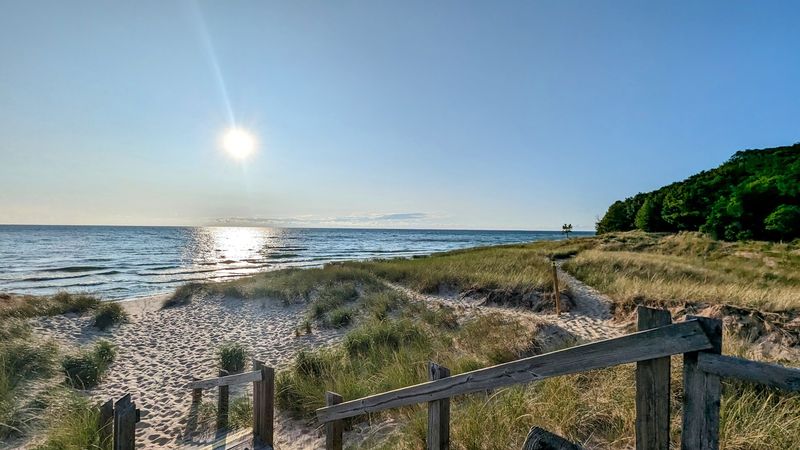
There is a stairway near the beach that leads up to the bluffs, and the view from the top is the kind that quietly rewrites your expectations of a public park. From up there, Lake Michigan spreads out in every direction with no buildings, no boardwalks, and no interruptions, just open water meeting open sky.
The dunes below roll in gentle waves of sand and sparse grass, and on clear days the color of the water shifts from pale green near the shore to deep blue farther out. Sunsets from this vantage point are genuinely hard to overstate.
One visitor got engaged up on those bluffs over a decade ago and still returns regularly, and it is easy to understand why a place like this would hold that kind of meaning. The climb to reach the lookout is manageable for most people, though the sandy steps require some attention.
Once you are up there, though, very few people seem to want to leave quickly.
Sand Dunes That Are Built for Exploration
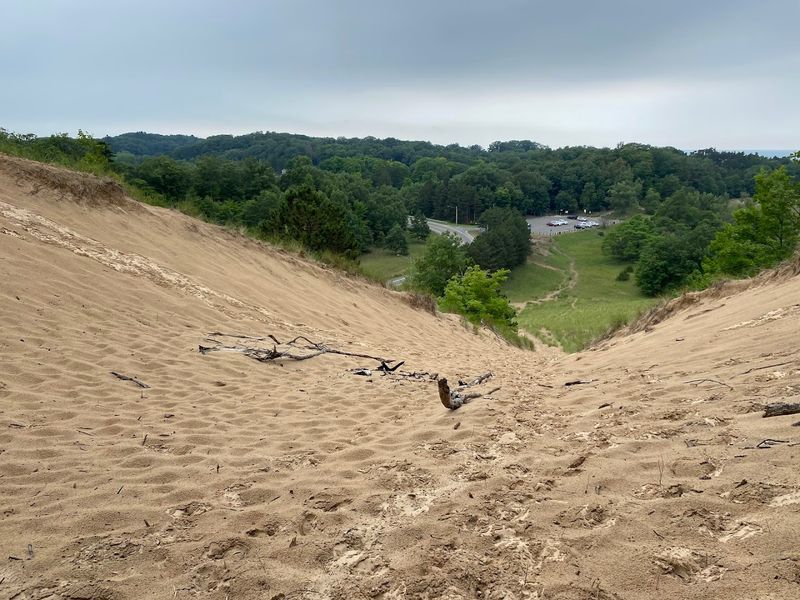
The dunes at this park are not just a backdrop, they are an active part of the experience. Kids regularly run up and down multiple dunes in a row without losing much energy, and adults tend to find the challenge more demanding than expected, which makes it oddly satisfying.
What surprises many first-time visitors is how many trees grow directly out of the dunes. The contrast between the sandy slopes and the established woodland growing through them gives the landscape a layered, almost otherworldly quality that photographs well but feels even better in person.
The terrain ranges from moderate to genuinely steep depending on which dune section you take on, so the park works equally well for casual walkers and those looking for something more physically engaging. Dogs are welcome on the trails and dune areas, though they are not permitted on the beach itself.
The dune section also connects naturally to the broader trail network, so you can link a dune climb into a longer loop without backtracking.
Mona Lake Side: A Completely Different Kind of Calm
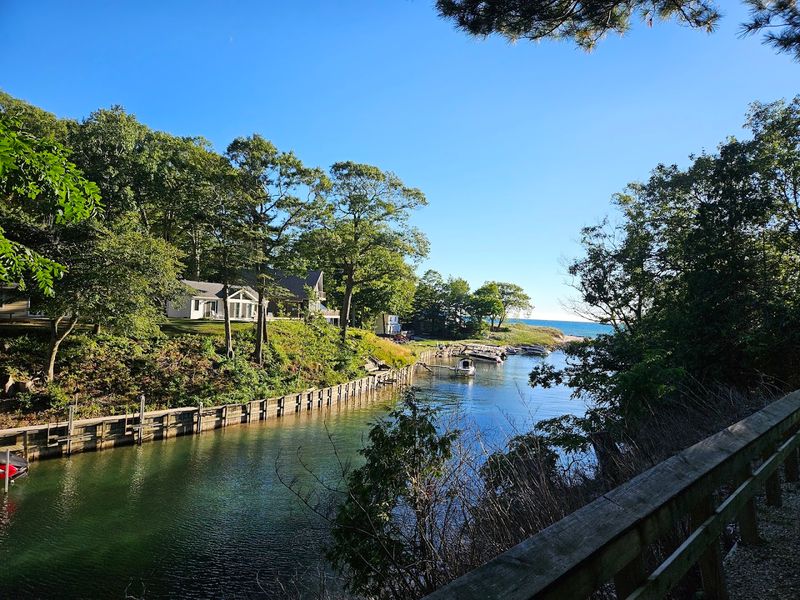
Turn left from the parking lot instead of right, and the whole mood of the park shifts. A paved path runs east along the northwest side of Mona Lake, where the water sits still and reflective, and ducks paddle around with the kind of confidence that suggests they know this is their territory.
Boats move through the channel at a relaxed pace, and paddleboarders occasionally drift by during warmer months. The harbor channel itself connects Mona Lake to Lake Michigan, and watching vessels navigate that passage is a low-key but genuinely entertaining way to spend time at the park.
Fishing is popular along this section, and the calm water and shaded banks make it an easy spot to settle in for a while. The Mona Lake side of the park tends to draw a quieter crowd than the beach side, which makes it a reliable option when you want a peaceful stretch without much foot traffic.
The two sides of the park together offer more variety than most people expect from a single visit.
Whitey’s Woods and the Trails That Wind Through Them
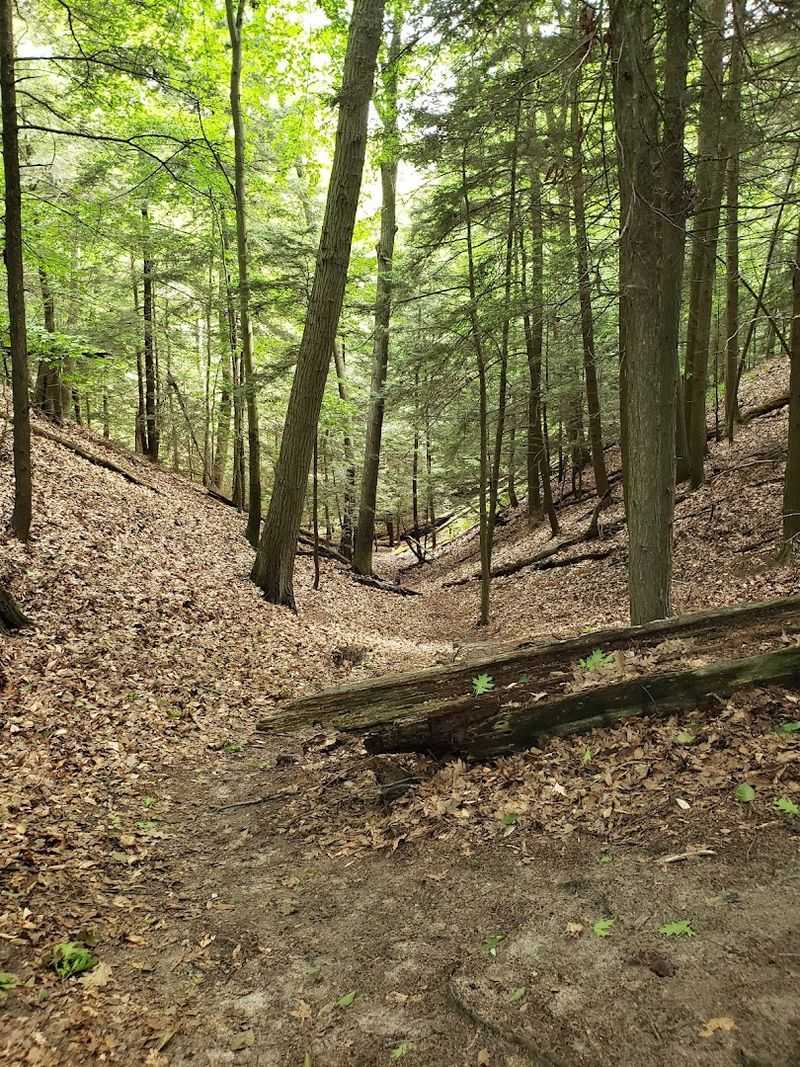
The wooded section of the park, known locally as Whitey’s Woods, is one of those places that earns genuine affection from regular visitors. The trails wind through mature trees that block out enough sun to keep the temperature noticeably cooler on hot days, and the forest floor has the kind of quiet that makes you slow down without meaning to.
The paths here range from easy and level to moderately challenging, and the variety means you can tailor the walk to however much energy you brought with you that day. After about two miles of hiking through the park’s full trail network, most visitors report feeling like they have barely scratched the surface.
Wildlife sightings are common in this section, with deer spotted regularly by families exploring the area. The woods connect seamlessly to the dune terrain and the boardwalk near the canal, so you can move between very different environments without ever returning to the parking lot.
That kind of natural flow is what keeps people coming back season after season.
Why the Beach Feels Different From the Bigger Spots Nearby
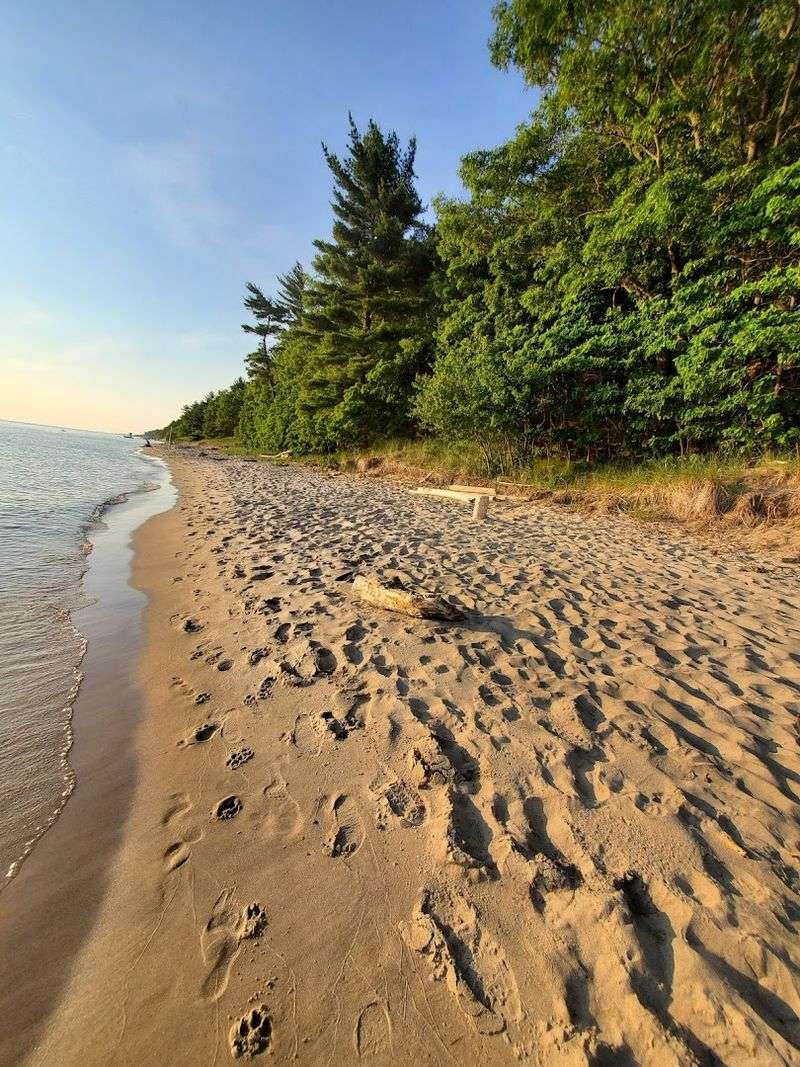
Grand Haven and Muskegon State Park draw large summer crowds, and for good reason, but Lake Harbor Park offers something those spots rarely can: a stretch of Lake Michigan beach where you can actually find a quiet corner for yourself. Midweek visits in July have been known to produce an almost deserted shoreline, which feels almost surreal given how beautiful the setting is.
The beach here is not a wide, sprawling expanse of sand. High water levels in recent years have occasionally reduced the available beach area, so arriving during peak conditions makes a noticeable difference.
When the water is lower and the sand is exposed, the beach rewards visitors with soft ground, clear water, and an unobstructed horizon.
Volleyball nets have been set up in the sand at times, and the area near the shore is flat enough for kids to run around freely. The lack of a concession stand or large amenity infrastructure is part of what keeps the atmosphere relaxed and the crowds manageable throughout the season.
Picnic Areas, Pavilions, and the Practical Stuff That Matters

Good infrastructure often goes unnoticed until it is missing, and Lake Harbor Park has done a solid job of providing the basics without overdoing it. The pavilion and grilling area near the parking lot make the park a practical choice for family outings that involve food, and the shaded picnic spots fill up on weekends but rarely feel overcrowded.
The main path to the beach is partly paved and partly packed limestone, making it accessible for most visitors, though the sandy final stretch and some of the dune terrain present more of a challenge for those with mobility limitations. Port-a-johns are available along the trail, which is a welcome addition for longer visits.
Cyclists can ride from nearby Hoffmaster Campground to the park, though bikes are not permitted past the parking lot. The park’s facilities are well-maintained overall, which reflects the level of care that goes into a space that sees consistent use year-round.
Knowing what to expect ahead of time makes the visit run much more smoothly.
Tips for Getting the Most Out of Your Visit

A few practical details can make the difference between a good visit and a great one at this park. Wearing closed-toe shoes with some grip is strongly recommended, since the sandy sections of the trail and the dune climbs are noticeably easier with the right footwear.
Sandals work fine near the water, but they slow you down on the wooded paths.
Arriving early on summer weekends is worth the effort. The parking lot holds around 60 vehicles, and it fills up faster than most first-time visitors expect on a busy afternoon.
A weekday visit, especially midweek, tends to give you a noticeably quieter experience across the entire park.
Bringing water is a smart move since there are no concession stands or water fountains along the trail. Dogs are welcome on leashes throughout the trails and dune areas, but they need to stay off the beach.
The park’s website at nortonshoresparksandrecreation.com carries updated information on conditions and any seasonal changes worth knowing before you head out.
Why This Park Stays With You Long After You Leave
Some parks are nice to visit once and check off the list. Lake Harbor Park is not that kind of place.
The combination of accessible trails, genuine natural beauty, and a shoreline that rarely feels crowded creates the kind of experience that tends to show up in conversations months later when someone asks where to go near Muskegon.
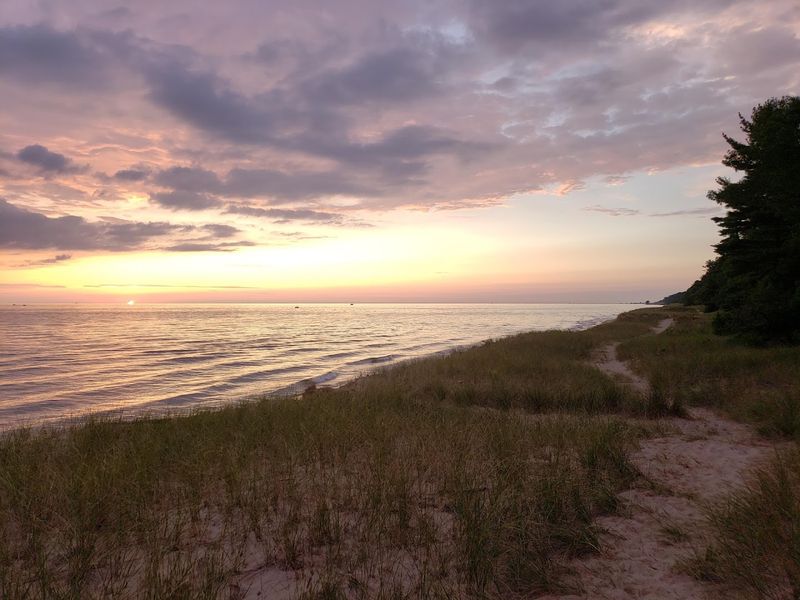
The sunsets from the bluff lookout have a way of landing differently than sunsets seen from a busy beach parking lot. There is something about earning the view with a half-mile walk through the woods that makes the colors feel more vivid and the moment feel more personal.
Families return year after year, couples mark meaningful milestones here, and solo visitors find the trails a reliable place to clear their heads. With a 4.8-star rating built on over a thousand honest reviews, the park has clearly made a lasting impression on a lot of people.
That kind of reputation does not happen by accident, and one visit tends to make it easy to understand why.
Share this story