Just minutes from downtown Ludington, this forested trail offers a quiet loop surrounded by white birch trees and easy access to Lake Michigan. Despite its location, many visitors pass through the area without ever finding it.
What makes it stand out is how much it packs into a compact space. The paved loop works for strollers and casual walks, while separate trails cater to mountain biking. Along the way, you will find outdoor art, a dog park, fishing piers, a small lake, and nearby campground access.
It is a simple stop that delivers more variety than most expect from a short trail.
Where Exactly You Will Find This Forested Escape
The address is 1101-1203 N Rath Ave, Ludington, MI 49431, and the moment you pull into the parking area, the tree canopy makes it immediately clear that you have arrived somewhere worth your time.
Cartier Park Pathway sits in Ludington, a small city on the western shore of Michigan’s Lower Peninsula, roughly 1.5 miles east of Lakeshore Drive when heading west from Ludington Avenue.
That proximity to Lake Michigan is one of the first things that strikes you. You are not deep in the wilderness.
You are in the middle of a city, yet surrounded by 68 to 80 acres of mature forest that feels genuinely removed from the world.
The park is open 24 hours a day, seven days a week, which means early morning fog walks and late evening cool-down rides are both completely on the table. It holds a 4.7-star rating across 146 reviews, and that number tells you something real about how consistently this place delivers.
The Paved Loop That Anyone Can Handle

Not every trail needs to be a challenge to be worth your time, and the main paved loop at Cartier Park proves that point with quiet confidence.
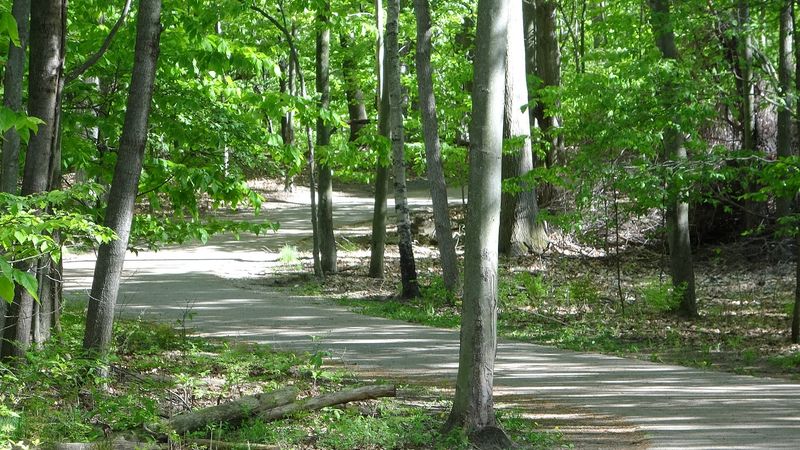
The loop stretches approximately one mile and is flat enough that elevation barely registers as a consideration. Walkers, joggers, cyclists, rollerbladers, and even e-scooter riders all share the path without much friction, and the surface is well-maintained enough that a stroller rolls along it without complaint.
The loop passes through a canopy of tall white birch trees that filter sunlight into something soft and shifting. About halfway around, the path opens up near Lincoln Lake, where restrooms are available and the scenery shifts from deep forest to open waterfront.
Six laps in a single outing is not unheard of, especially when the surroundings keep changing with the light and the season. The paved loop is the park’s anchor, but it turns out to be far from the only reason to come here.
Mountain Bike Trails That Reward the Curious Rider
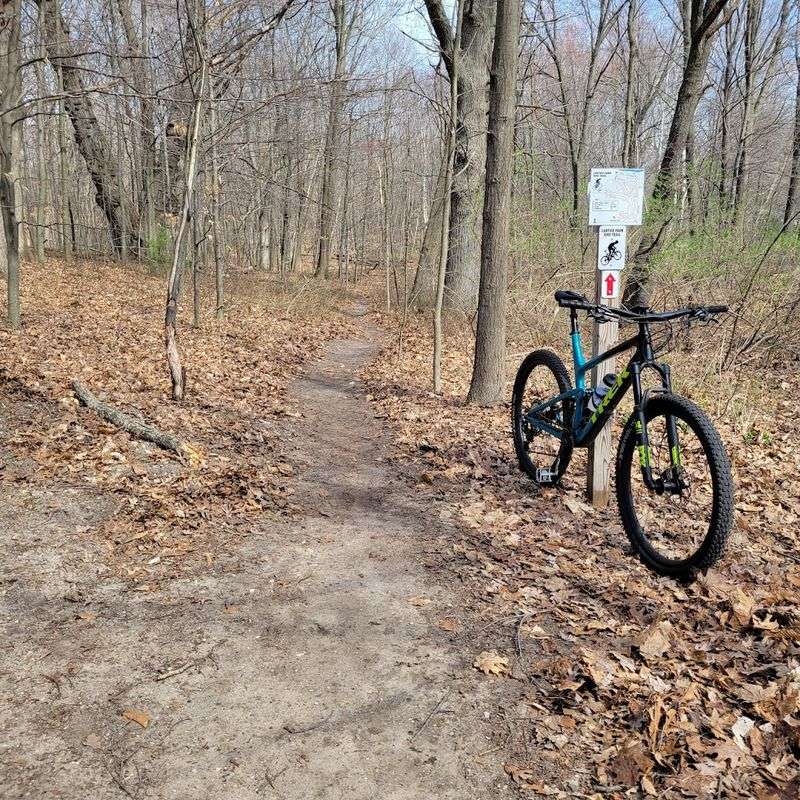
Beyond the smooth pavement, Cartier Park hides 3.5 miles of singletrack mountain bike trails that run tight, moderately twisty lines through the forest understory.
These trails are rated beginner to intermediate, which means they are approachable for newer riders while still offering enough variation to keep experienced cyclists engaged. There are no extreme drops or technical rock gardens here, just flowing, forested singletrack that rewards riders who pay attention to the trail ahead.
One rider described completing half the bike path on the south side and registering 2.5 miles and 86 floors of elevation gain on a fitness tracker, which suggests the terrain has more personality than it first appears.
The trails also connect to the broader Ludington Urban Singletrack route, a 10-mile network that links Cartier Park to other local trail systems including the Forest School Trail about a mile to the east. That connection turns a quick park visit into a genuinely substantial riding adventure if you want it to be.
The Outdoor Art That Catches You Off Guard

Most trail systems do not come with a rotating art gallery, but Cartier Park is not most trail systems.
The cARTier Trail runs along the paved loop and features artwork created by members of the Ludington Area Center for the Arts. The pieces are placed at strategic points along the path, so they appear naturally as you walk or ride rather than feeling like an afterthought bolted onto a fence post.
The art rotates, which means repeat visitors have a genuine reason to come back and see what has changed since their last loop. It transforms what could be a straightforward nature walk into something closer to a slow, relaxed gallery experience with better air quality.
Small informational placards for local wildlife also appear along the route, adding a light educational layer that works especially well with younger visitors. The combination of forest, movement, and art gives the trail a personality that is genuinely hard to replicate anywhere else in the region.
Lincoln Lake and the Gazebo Worth Pausing For
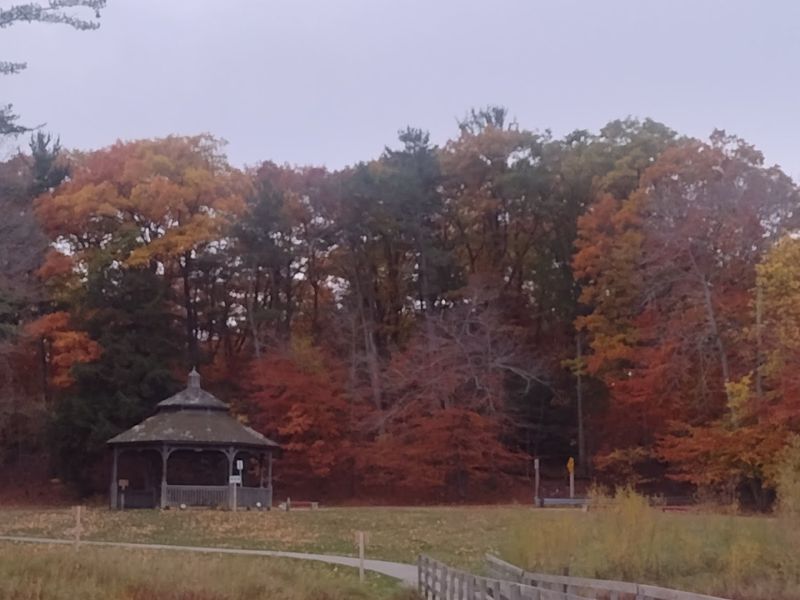
Cartier Park sits on Lincoln Lake, and the moment the trail opens up to reveal it, the pace of the walk naturally slows down.
The lake is calm and reflective in the early morning, and by midday the light on the water has a quality that makes it hard to keep moving without stopping to take it in. A large gazebo sits near the lake’s edge, accessible either by foot along the trail or by car if you prefer to drive directly to it.
The gazebo is the kind of structure that earns its keep. It provides shade on warm afternoons, shelter during a surprise drizzle, and a quiet place to sit and watch the water without any particular agenda.
Picnic tables nearby make it a reasonable lunch stop during a longer outing.
Fishing piers extend over the lake as well, giving anglers a reason to arrive early and stay late. The waterfront section of the park adds a dimension that the forest alone cannot provide, and it connects the whole experience in a satisfying way.
Central Bark: The Dog Park That Earns Its Name

The dog park at Cartier Park carries the name Central Bark, which immediately signals that whoever named it has a healthy sense of humor and probably owns at least one enthusiastic retriever.
The park is enclosed and provides a dedicated space for dogs to run without a leash, which is a meaningful amenity in a place where the main trail sees a steady flow of walkers, cyclists, and rollerbladers sharing the same paved loop.
The mountain bike trail does pass near the dog park entrance and exit, so riders approaching that section should slow down and watch for activity. It is easy to navigate once you know it is there, and the brief crossing is a minor consideration compared to the overall experience.
Dogs are welcome on the main trail as well, and the park’s general atmosphere is relaxed and friendly toward four-legged visitors. The combination of a dedicated off-leash area and a leash-friendly loop makes Cartier Park one of the more thoughtfully designed parks for dog owners in the Ludington area.
Wildlife Encounters That Make the Loop Feel Wild

There is something about a forested trail that resets your expectations, and Cartier Park has a way of delivering wildlife sightings that feel genuinely unscripted.
Deer appear regularly along the trail, often close enough to the path that you can watch them for a moment before they decide to move on. Squirrels are a constant presence, birds are active throughout the canopy, and the general sense of being surrounded by living forest is one of the trail’s most consistent qualities.
The mature birch trees create a layered habitat that supports more activity than you might expect from a park this close to a downtown area. The canopy overhead is dense enough in summer to provide real shade, and the filtered light gives the whole trail a quality that is genuinely pleasant to move through.
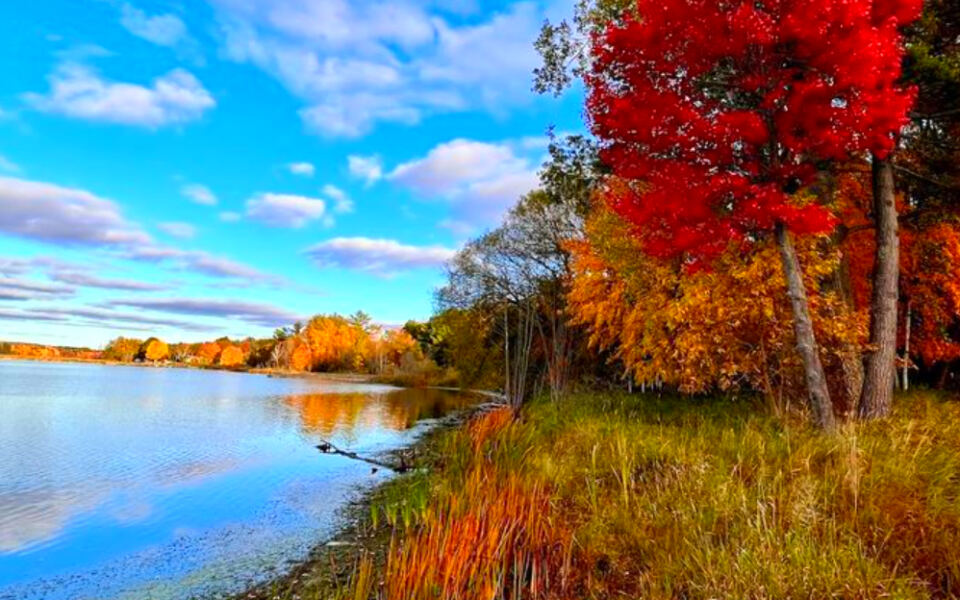
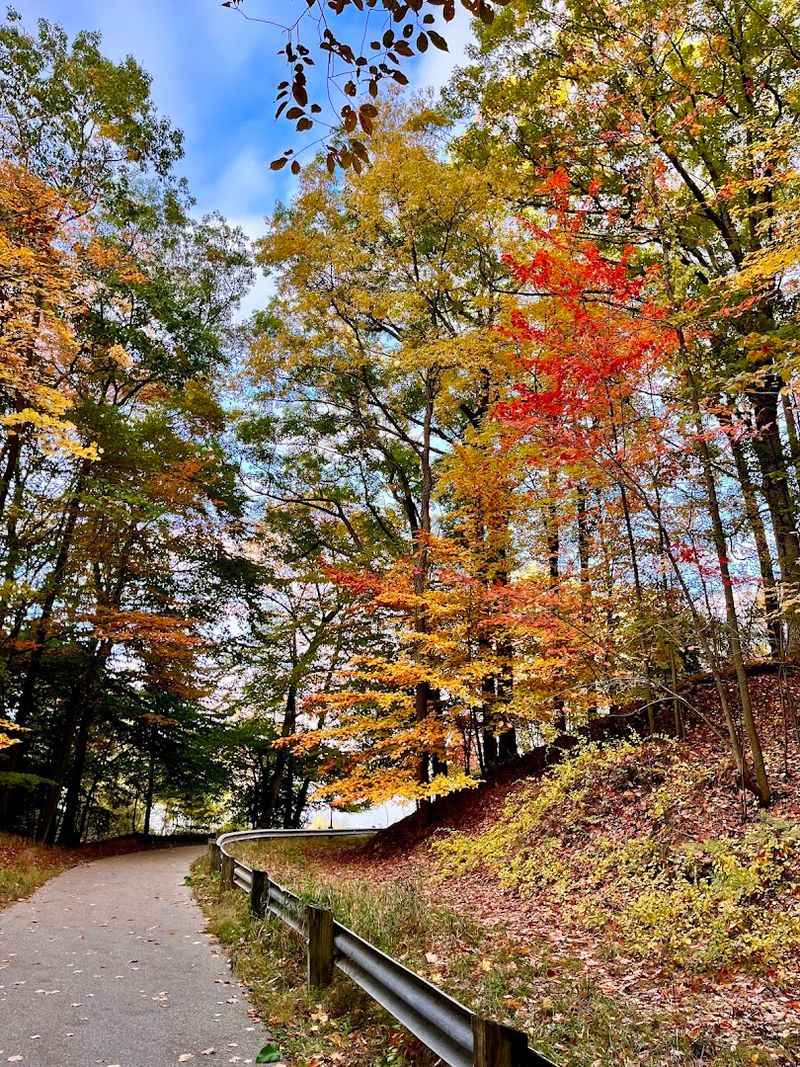
Fall is particularly striking, when the birch leaves turn and the forest shifts into something that looks almost deliberately arranged. Wildlife sightings tend to increase in the quieter morning hours, which is a good reason to set the alarm a little earlier than usual.
The Campground That Keeps the Experience Going
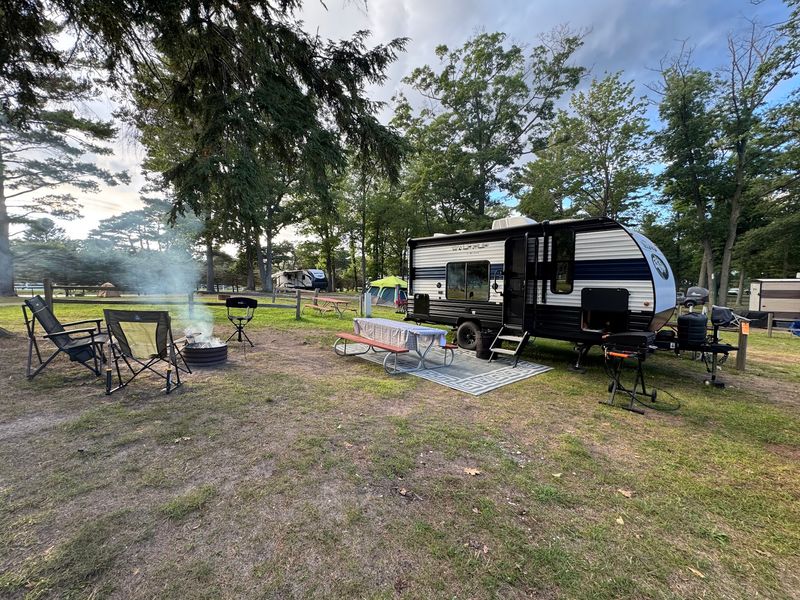
Cartier Park includes a campground, which means the experience does not have to end when the sun goes down.
The campground is set within the same forested landscape that defines the rest of the park, so waking up to birch trees and birdsong is a reasonable expectation rather than a lucky outcome. Quiet hours are maintained at the campground, which keeps the atmosphere consistent with the overall peaceful character of the park.
For visitors coming to Ludington for a longer stay, the campground provides a base that puts the trail, the dog park, the lake, and the boat launch within easy walking distance. That kind of proximity to multiple amenities in one location is not something every campground can offer.
The boat launch adds another layer of utility for visitors who arrive with kayaks or canoes loaded on a roof rack. Camping at Cartier Park means spending more time in the forest and less time driving back and forth from a hotel, which is a trade most outdoor visitors are happy to make.
Year-Round Access and What Each Season Brings
One of the quiet advantages of Cartier Park Pathway is that it does not close when the temperature drops.
The paved loop is typically plowed during winter, making it accessible for cold-weather walks when many other trails become impassable. The birch trees take on a completely different character in winter, their white bark standing out sharply against a grey sky or a fresh layer of snow, and the forest feels more open once the underbrush dies back.
Spring brings new growth and increased bird activity, summer delivers the full canopy shade that makes a midday walk genuinely comfortable, and fall turns the whole forest into something that photographers specifically plan trips around.
The park’s 24-hour access means that early risers can catch morning mist moving through the trees before the rest of the world arrives, and evening visitors can experience the trail in a quieter, cooler version of itself. Each season genuinely changes the experience rather than simply repeating it with different lighting.
How Close You Actually Are to Lake Michigan

Cartier Park sits on Lincoln Lake, but Lake Michigan itself is not far away, and that proximity matters more than the distance suggests.
Stearns Beach, one of the most popular stretches of Lake Michigan shoreline in the region, is approximately half a mile from the park. That is close enough to combine a morning trail loop with an afternoon on the beach without any significant driving involved.
The park sits roughly 1.5 miles from Lakeshore Drive heading west from Ludington Avenue, which puts it in an ideal position between the forested interior of the park and the open shoreline of the lake. The contrast between the two environments is part of what makes a full day in this area so satisfying.
Ludington State Park, which offers direct Lake Michigan beach access and additional trails, is also nearby for visitors who want to extend the experience further. The trail at Cartier Park functions as a quiet starting point for a broader day of outdoor exploration along one of Michigan’s most scenic stretches of shoreline.
Share this story