 Unearth The Voyage
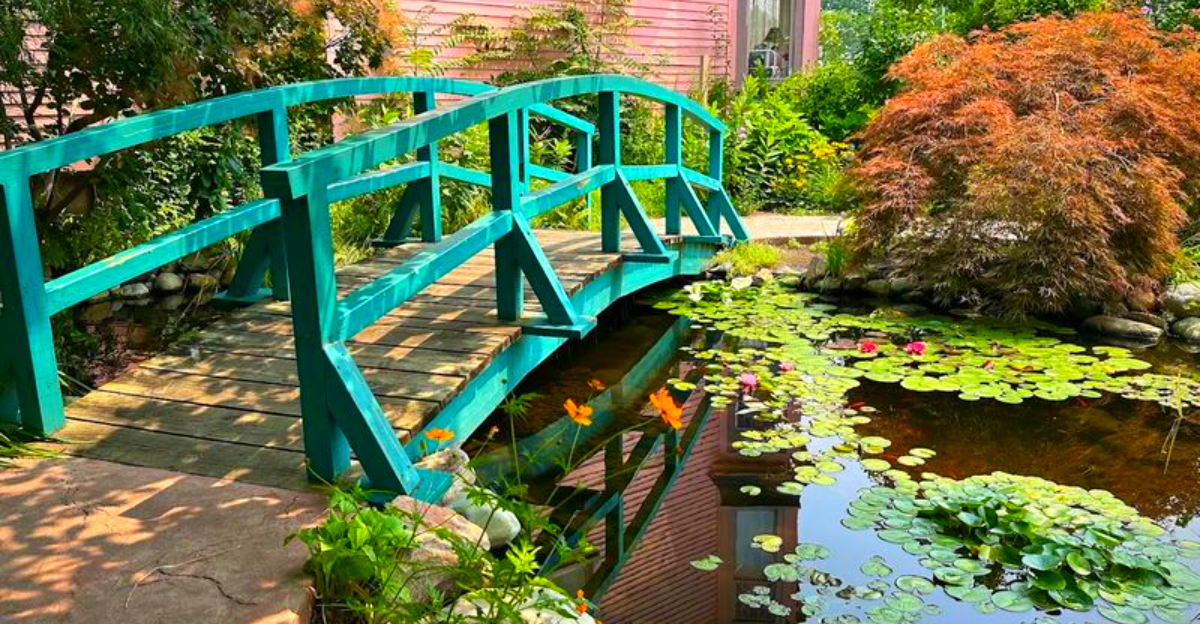
Most people pass this small garden in downtown Muskegon without noticing it, but it’s modeled after Claude Monet’s famous garden in Giverny. Complete with a green arched bridge and carefully designed water features, it turns an ordinary city lot into a recognizable tribute to one of the world’s most iconic landscapes.
Built on what was once a vacant space, this community project stands out for its deliberate design and artistic influence rather than size. It offers a rare chance to see a Monet-inspired setting without leaving Michigan.
It’s easy to overlook, but once you know what it is, it becomes one of the most unexpected stops in the area.
A Vacant Lot Turned Living Canvas
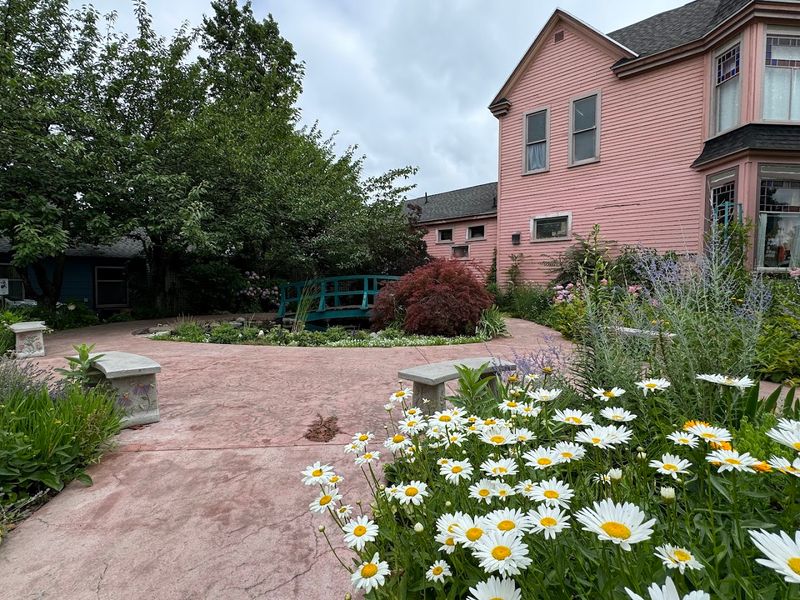
Before a single flower was planted, the spot at 470 W. Clay Ave. in Muskegon, Michigan, was just an empty lot collecting weeds and forgotten potential.
Today, that same address is home to the Monet Garden of Muskegon, a community garden that has become one of the most talked-about small attractions in the city.
The transformation did not happen overnight. It took vision, hard work, and the dedication of the Lakeshore Garden Masters, a local volunteer organization committed to making Muskegon more beautiful one garden at a time.
What strikes you first is how unexpected it all feels. You are walking through a downtown neighborhood lined with historic buildings, and then suddenly there is this burst of color and calm that simply does not look like it belongs to an ordinary city block.
That contrast is exactly what makes the first impression so unforgettable.
The Giverny Connection That Started It All
Claude Monet was not just a painter. He was also a devoted gardener who spent decades cultivating the landscape around his home in Giverny, France, treating it as both a creative retreat and a living studio.
His water garden, with its iconic Japanese bridge and floating lily pads, became the subject of some of the most recognized paintings in art history.
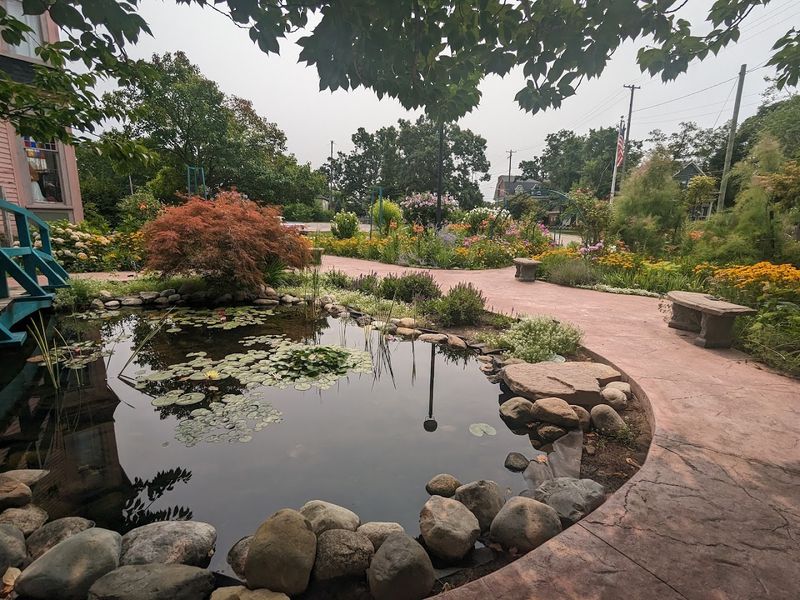
The creators of the Muskegon garden drew direct inspiration from that legacy, designing the space to echo the spirit of Giverny without trying to copy it outright. The green arched bridge, the reflective pond, and the carefully chosen plantings all nod to Monet’s original vision.
What makes the connection feel genuine rather than gimmicky is the attention to atmosphere. The garden does not just reference Monet’s paintings visually.
It recreates the kind of quiet, contemplative mood that Monet himself seemed to be chasing every time he set up his easel beside the water.
The Green Bridge That Steals Every Photo
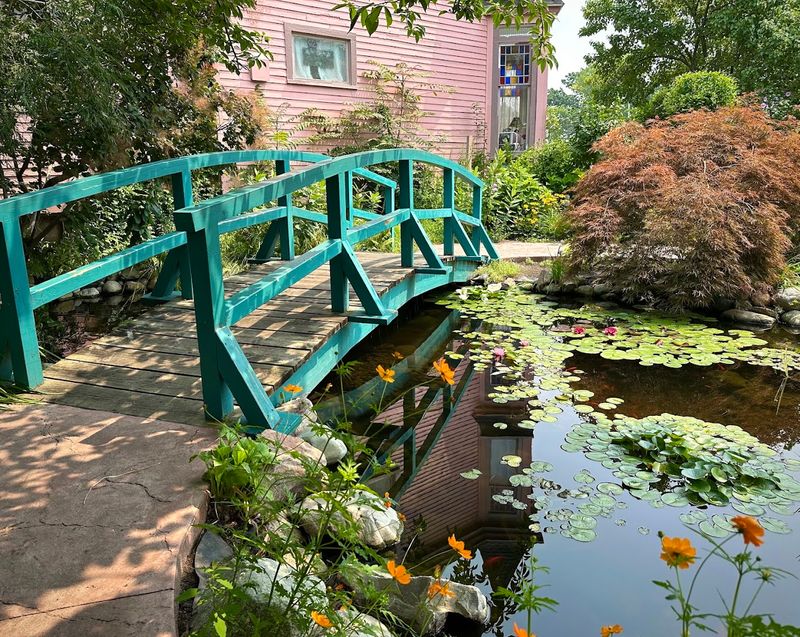
The bridge is the undisputed star of the garden, and it earns that title every single day. Painted in the same soft green that Monet used for his own bridge in Giverny, the arched structure spans a tiny pond and manages to look both delicate and sturdy at the same time.
You can actually walk across it, which makes it feel less like a decoration and more like a genuine invitation to slow down and take in your surroundings from a slightly different angle. From the center of the bridge, the reflections in the water below create a scene that practically begs to be photographed.
Visitors come back in different seasons just to capture how the bridge looks against changing backdrops, from spring blossoms to summer greens to the stripped-down quiet of late autumn. It is remarkable how much personality one small bridge can carry, and this one carries plenty.
Goldfish, Water Lilies, and a Pond Full of Surprises
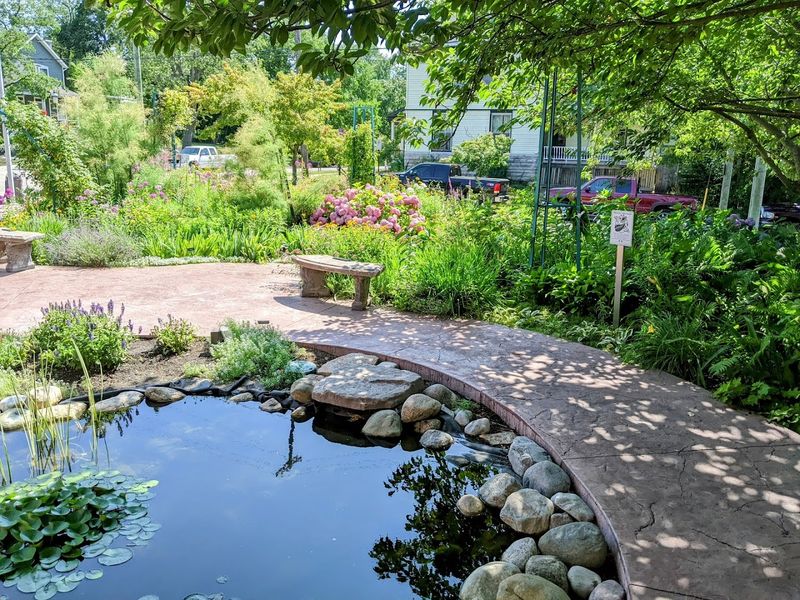
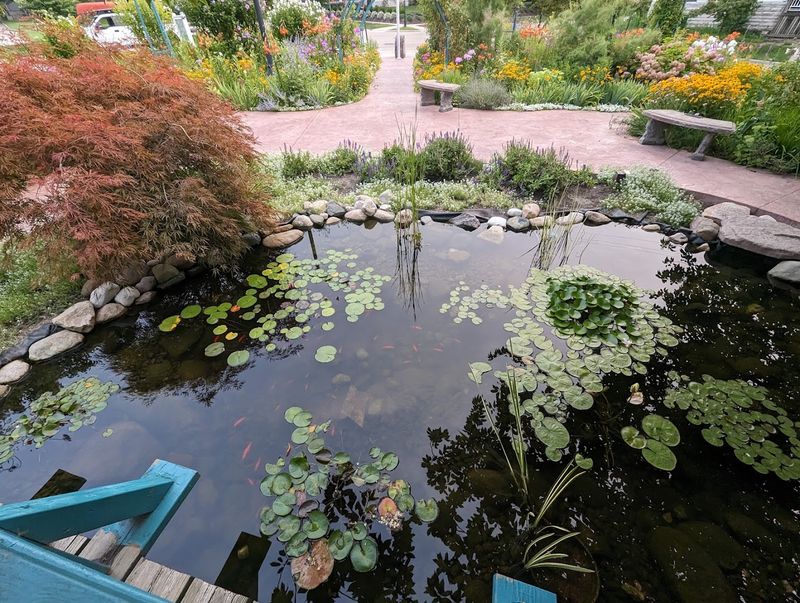
Most people notice the bridge first, but the pond beneath it deserves just as much attention. Goldfish move lazily through the clear water, their orange and gold scales catching the light in a way that feels almost theatrical.
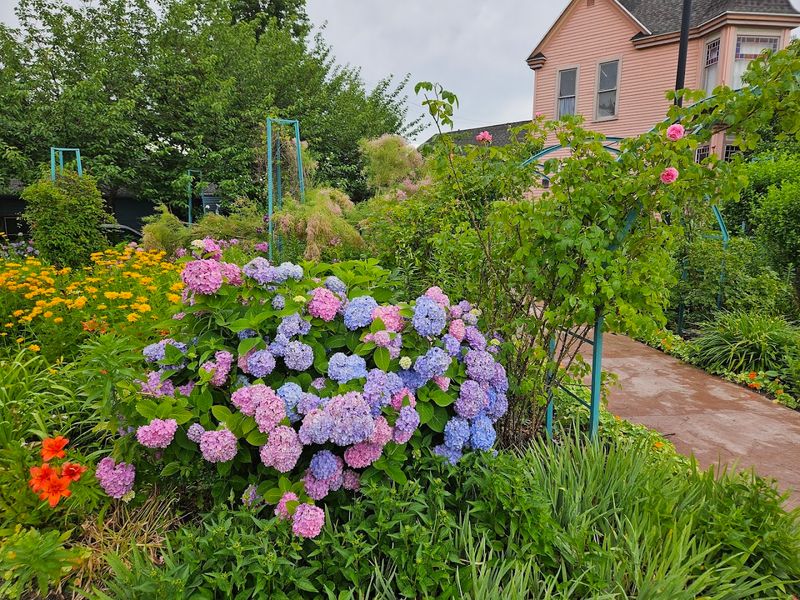
Water lilies float across the surface, their broad green pads dotted with blooms that seem to change color depending on the hour and the season.
The pond is small enough that you can take it all in from a single vantage point, which actually makes it more intimate than a larger water feature would be. There is something genuinely satisfying about being able to see the whole scene at once without having to move around.
On warm afternoons, dragonflies hover above the water and butterflies drift through the surrounding plantings, adding a layer of spontaneous wildlife activity that no garden designer could fully plan for. The pond feels alive in a way that goes well beyond its modest size, and that liveliness is part of what makes it so appealing.
A Butterfly Waystation Hidden in Plain Sight

Tucked within the garden’s compact borders is a certified butterfly waystation, a designated planting area designed to support migrating monarch butterflies and other pollinators on their long seasonal journeys. It is one of those details that elevates the garden from a pretty space into something with genuine ecological purpose.
Milkweed, native wildflowers, and other pollinator-friendly plants fill this section, creating a miniature habitat that buzzes and flutters with activity during the warmer months. Watching a monarch land on a bloom just a few feet away from you is the kind of small, vivid moment that stays with you long after you have left.
The waystation also serves as a quiet reminder that beautiful spaces and practical conservation goals do not have to be separate things. The garden manages to be visually stunning and environmentally meaningful at the same time, which is a balance that many larger and far more expensive parks fail to achieve.
That balance is worth appreciating.
The Volunteers Who Keep the Dream Growing
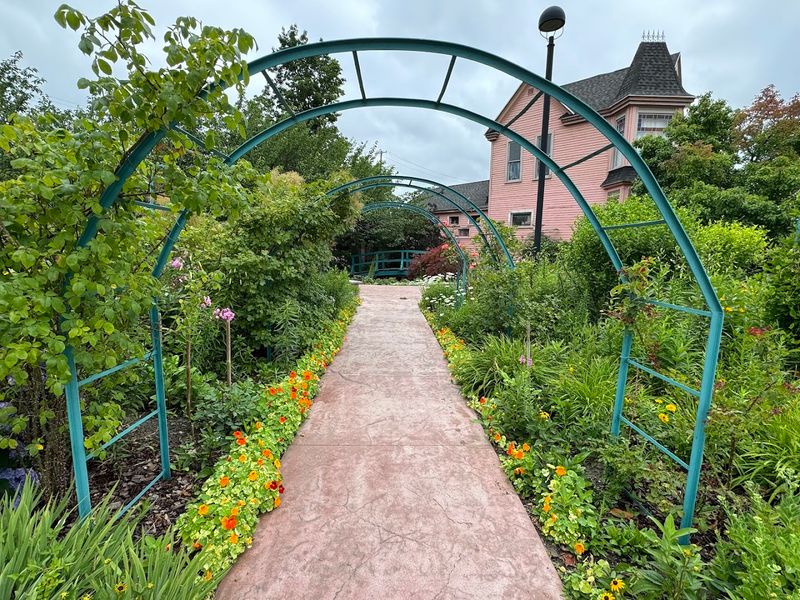
None of this happens by accident. The Lakeshore Garden Masters are the dedicated group of volunteers who plant, prune, water, and maintain the garden through every season, showing up consistently even when the work is unglamorous and the weather is uncooperative.
Their commitment turns what could have been a one-time beautification project into a living community institution. The garden does not just survive year after year.
It improves, with new plantings, seasonal adjustments, and ongoing care that keeps it looking intentional rather than neglected.
For anyone interested in getting involved, the Lakeshore Garden Masters welcome new participants and can be reached through United Way Lakeshore or directly by phone. There is something quietly powerful about a public space that exists entirely because ordinary people decided to give their time and energy to it, asking nothing in return except for others to come and enjoy what they have built together.
What the Garden Looks Like After Dark
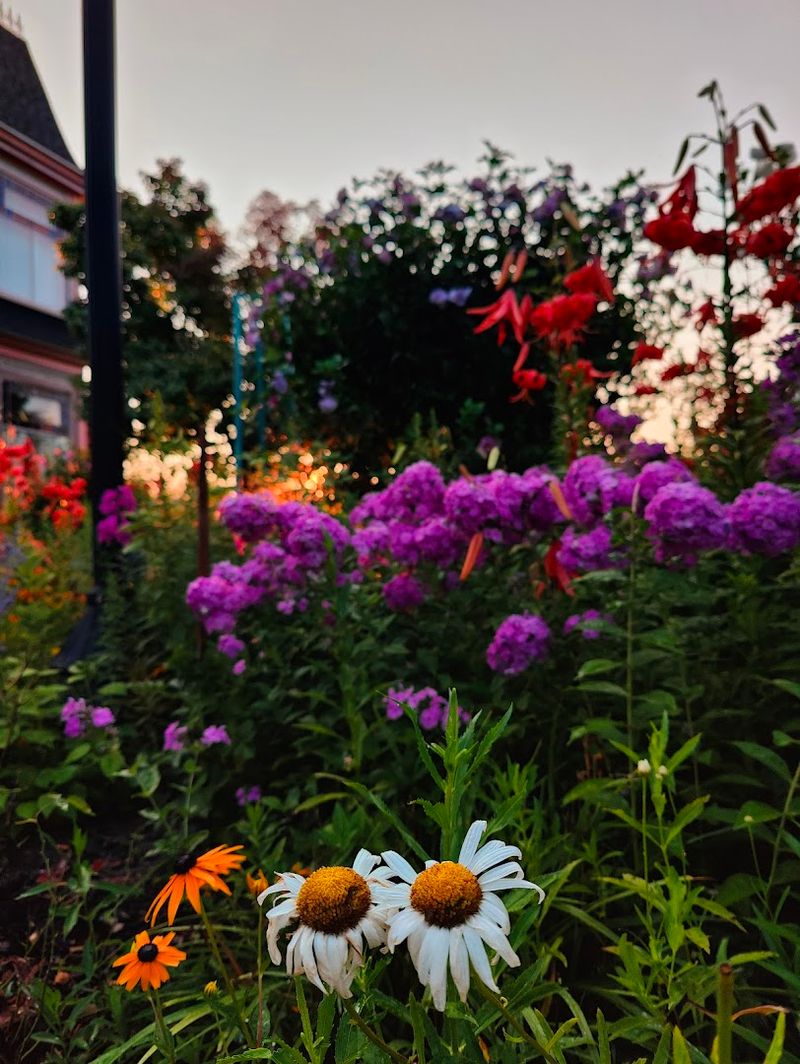
Most public gardens close at sunset, but this one keeps going. The Monet Garden of Muskegon is open around the clock, every day of the week, and after dark it takes on a completely different personality thanks to the lighting installed throughout the space.
The illumination is subtle rather than dramatic, casting a warm glow over the bridge, the pond, and the surrounding plantings without overwhelming the natural atmosphere. At night, with the reflections shimmering on the water and the flowers softened by low light, the garden feels almost dreamlike in a way that daylight visits simply cannot replicate.
Evening visits also tend to be quieter, which is its own kind of reward. Without the foot traffic of the afternoon, you can sit on one of the garden benches and absorb the stillness without distraction.
The combination of open hours, thoughtful lighting, and a genuinely peaceful setting makes after-dark visits one of the garden’s best-kept secrets.
Seasonal Blooms That Reward Repeat Visits

One visit to the Monet Garden of Muskegon is genuinely enjoyable, but returning across different seasons reveals how much the garden transforms throughout the year. Spring brings iris blooms and the first flush of color after winter.
Summer turns the space into a dense, layered display of perennials, annuals, and blooming shrubs that practically overflow the borders.
Autumn shifts the palette toward warmer tones, and even the stripped-down version of the garden in late fall has a spare, quiet beauty that feels intentional. Regular visitors often mention that they stop by in every season just to see what has changed, treating it almost like checking in on a friend.
The changing displays are also a testament to the horticultural thoughtfulness behind the garden’s design. The plantings were chosen not just for peak summer impact but for a longer season of interest that keeps the space rewarding across many months.
Planning a visit around a specific bloom is a perfectly reasonable strategy here.
Free Parking and Zero Entry Fee: A Rare Combination
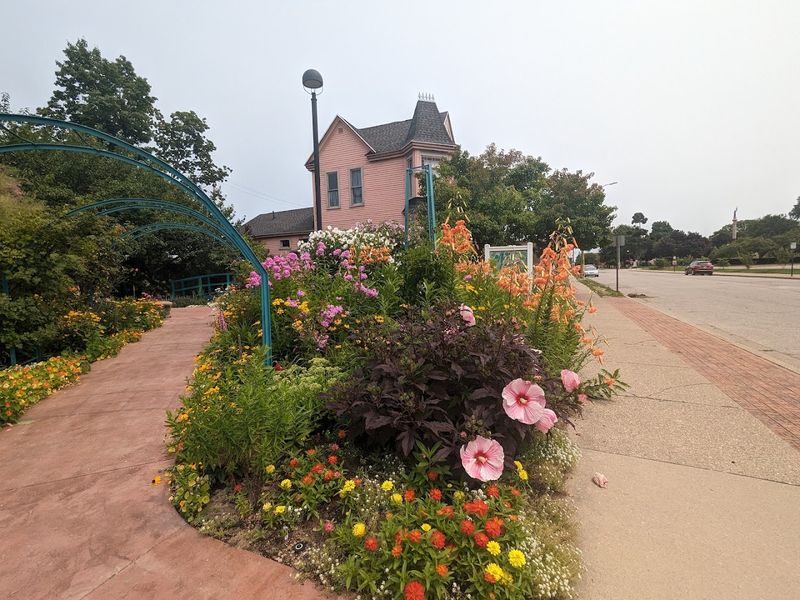
In a world where many worthwhile experiences come with a price tag attached, the Monet Garden of Muskegon is completely free to visit. There is no admission fee, no suggested donation box at the gate, and no membership required.
You simply show up and enjoy it.
Free parking is available directly in front of the garden, which removes one of the most common small frustrations of urban exploration. You do not have to circle the block, feed a meter, or walk several blocks from a paid lot.
The convenience is genuine and appreciated.
This accessibility matters because it means the garden truly belongs to everyone in the community, not just those with flexible schedules or extra spending money. Families, retirees, tourists passing through, and downtown workers on a lunch break all share the same space on equal footing.
That democratic openness is part of what gives the garden its warm, welcoming character, and it is part of why people keep coming back.
What Sits Just Around the Corner
The garden does not exist in isolation. A short walk from its borders places you in the heart of downtown Muskegon, a neighborhood that packs a surprising amount of cultural interest into a relatively compact area.
The Muskegon Museum of Art is one of the closest neighbors, and the pairing of a Monet-inspired garden with an art museum feels almost too perfect to be accidental.
Historic buildings, local shops, and other community spaces fill the surrounding blocks, making it easy to build a full afternoon around a visit to the garden without needing to drive anywhere. The garden works beautifully as both a destination in its own right and as a natural starting or ending point for a broader downtown exploration.
The proximity to the museum is especially worth noting for visitors who appreciate context. Seeing Impressionist-influenced paintings inside the museum and then stepping outside into a garden built on the same aesthetic principles creates a satisfying loop that connects art history to lived experience in a very tangible way.
Why This Small Space Leaves a Big Impression
The Monet Garden of Muskegon holds a 4.7-star rating across more than 120 visitor reviews, which is a remarkably consistent score for any public space. What comes through in those reviews is not just appreciation for the flowers or the bridge.
It is a genuine sense of surprise that something this thoughtful and beautiful exists in the middle of an ordinary city block.
The garden proves that scale is not the determining factor in whether a place feels meaningful. A tiny pond, a handful of well-chosen plants, a single arched bridge, and the collective care of a dedicated volunteer group are enough to create something that people remember and return to.
There is a quiet lesson in that for anyone who has ever looked at an empty lot and seen only absence. The Monet Garden of Muskegon began as exactly that kind of space, and it became something that draws visitors from across Michigan and beyond, one small bloom at a time.



