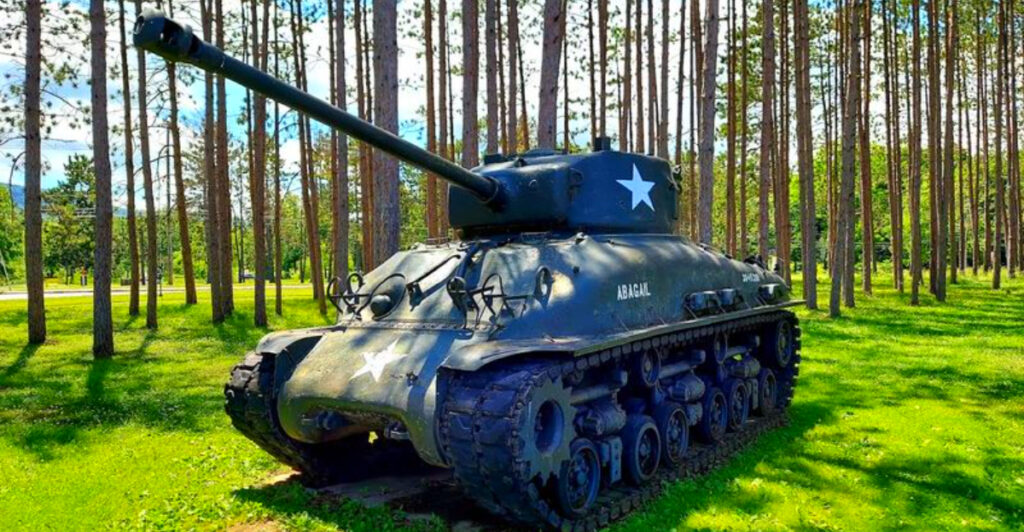
Just minutes from Penn State University, the Pennsylvania Military Museum preserves the stories of the men and women who served through an impressive collection of military artifacts, historic vehicles, and memorials. Highlights include massive naval guns from the USS *Pennsylvania*, Sherman tanks, artillery pieces, and exhibits spanning centuries of military history.
Beyond the museum, visitors can explore a free 67-acre memorial park with walking trails, more than 30 monuments, and seasonal living history events. Combining powerful personal stories with remarkable historic displays, it remains one of Pennsylvania’s most meaningful military history destinations.
Where Pennsylvania’s Military Story Begins
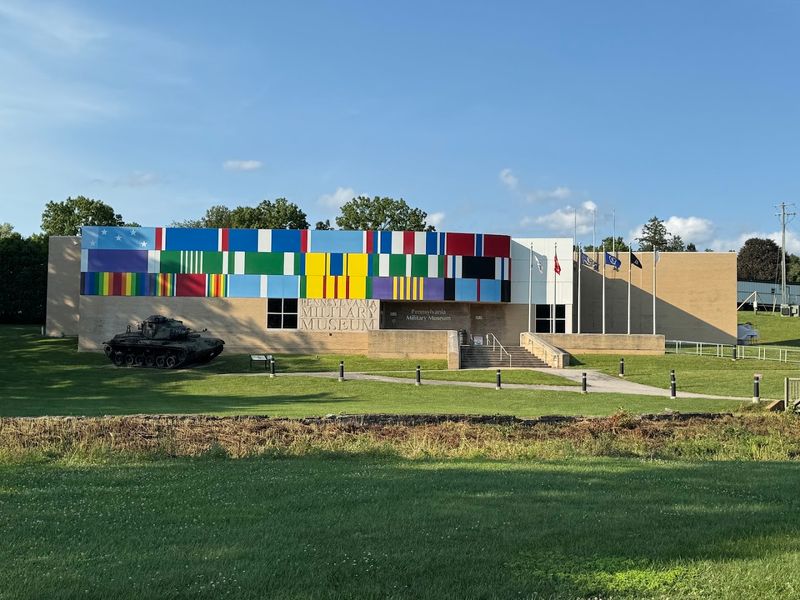
The address is 51 Boal Avenue, Boalsburg, PA 16827, and the moment you pull into the parking lot, two enormous naval guns from the USS Pennsylvania battleship make it absolutely clear you are somewhere special.
The Pennsylvania Military Museum sits in the small village of Boalsburg, just minutes from Penn State University and downtown State College in Centre County, Pennsylvania. The museum is administered by the Pennsylvania Historical and Museum Commission and first opened its doors on May 25, 1969, after construction began in the fall of 1967.
Its mission is to preserve and interpret the contributions of Pennsylvania’s service members, veterans, and civilians across every era of military service. The building itself, designed by Heyl-Treby Associates, was intentionally shaped to resemble a defensive military position, so even the architecture is telling a story before you step inside.
Those Two Massive Guns at the Gate
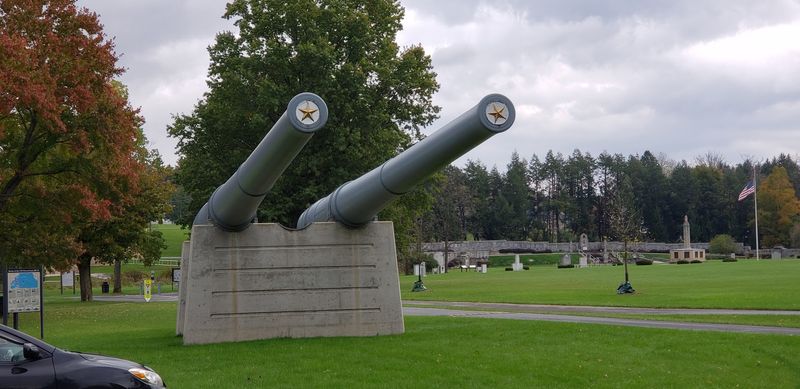
Few outdoor exhibits in any American museum command attention the way these two do. The pair of 14-inch guns removed from the USS Pennsylvania battleship each weigh approximately 70 tons, and they greet every visitor at the museum entrance like the world’s most serious welcome committee.
The USS Pennsylvania is no ordinary ship in American history. It was present at Pearl Harbor on December 7, 1941, and went on to earn eight battle stars during World War II, making it one of the most decorated battleships of the entire conflict. Having these guns here, in a quiet Pennsylvania village, creates a genuinely surreal moment.
Standing next to them gives you a real sense of scale that no photograph can fully capture. The sheer size of each barrel forces you to reckon with the power they once represented on the open ocean, and that feeling lingers long after you walk away.
A 67-Acre Park That Costs Nothing to Explore
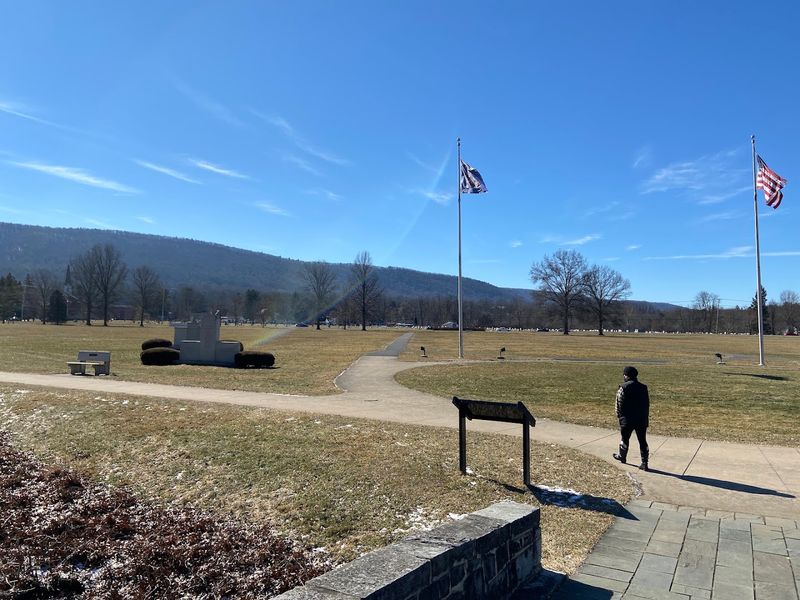
Not every great museum experience requires a ticket. The 67-acre park surrounding the Pennsylvania Military Museum is open daily from sunrise to sunset, completely free of charge, making it one of the most accessible outdoor history spaces in Pennsylvania.
The grounds include a half-mile paved walking path that winds past artillery pieces, armored vehicles, towering monuments, benches for quiet reflection, and even a stream. The layout feels more like a thoughtfully designed memorial park than a traditional museum lot, and that distinction matters.
Families bring dogs for morning walks, joggers use the path as a regular route, and history enthusiasts spend hours moving from one exhibit to the next without ever feeling rushed. The trees are positioned so naturally around the tanks and vehicles that the whole scene has an almost organic quality to it. And if you think the outdoor collection is impressive on its own, just wait until you hear what is inside the building.
Tanks, Armored Vehicles, and Artillery Spread Across the Grounds
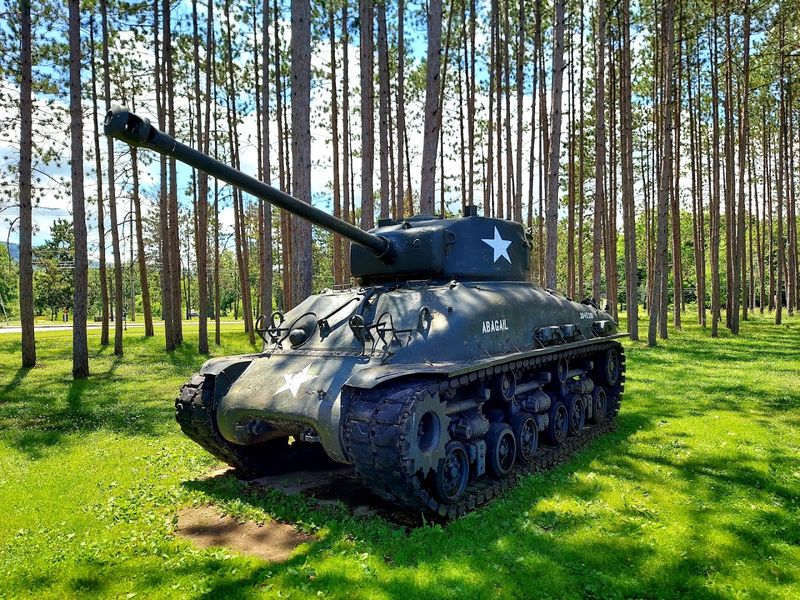
Tank enthusiasts will find plenty to study across the museum’s outdoor collection, which spans conflicts from World War II through the Vietnam War era. A highlight is the M4A1(76)W Sherman Tank, one of the most recognized armored vehicles of the 20th century, sitting right out in the open where you can walk around it and examine every angle.
Beyond the Sherman, the grounds hold additional armored fighting vehicles, howitzers, and historic air defense equipment that reflect the full range of Pennsylvania’s military involvement across multiple conflicts. Each piece carries its own story, and the information boards nearby, though some have weathered over the years, add helpful context.
The combination of massive hardware and open green space creates a surprisingly peaceful atmosphere. There is something unexpectedly contemplative about standing next to a Korean War-era vehicle on a quiet Tuesday morning with birds singing overhead. The outdoor vehicle collection alone justifies making the trip, and the memorials scattered among them add even more weight to the experience.
The 28th Division Shrine and Its Deep Roots
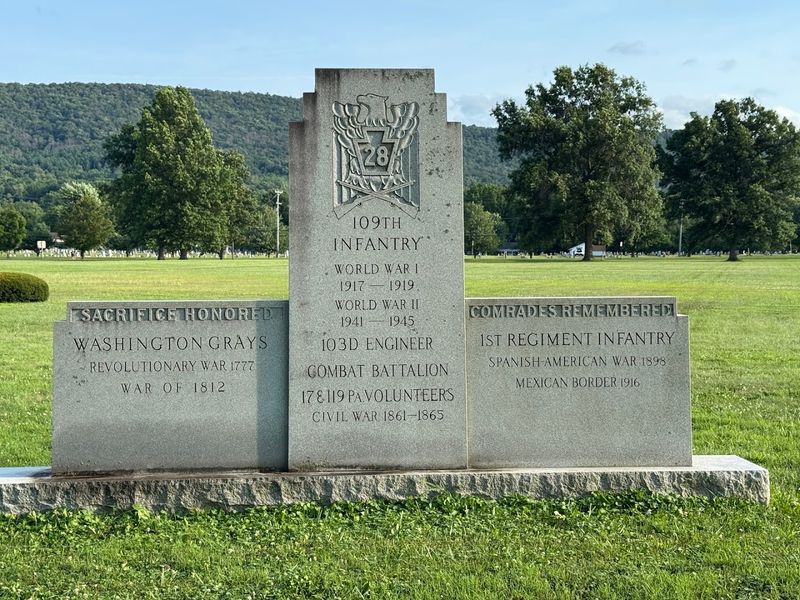
Long before the museum building existed, this land carried historical weight. The grounds are part of the 28th Division Infantry Shrine, originally established after World War I as a reunion site for veterans of Pennsylvania’s famous 28th Infantry Division, nicknamed the Keystone Division.
The property itself was historically connected to the Theodore Davis Boal estate. Theodore Davis Boal founded the Boal Troop, a private horse-mounted machine gun unit that served provisionally with the Pennsylvania National Guard during World War I, and Camp Boal functioned as a training ground during that conflict. That layered history gives the land itself a sense of purpose that predates every monument currently standing on it.
The 28th Division’s legacy continues to be honored here with ongoing additions to the memorial landscape, including the 28th Division Global War on Terrorism Monument dedicated in 2016. The shrine aspect of the grounds transforms a simple museum visit into something closer to a pilgrimage for anyone with a connection to Pennsylvania’s military heritage.
Memorials That Stop You Mid-Step
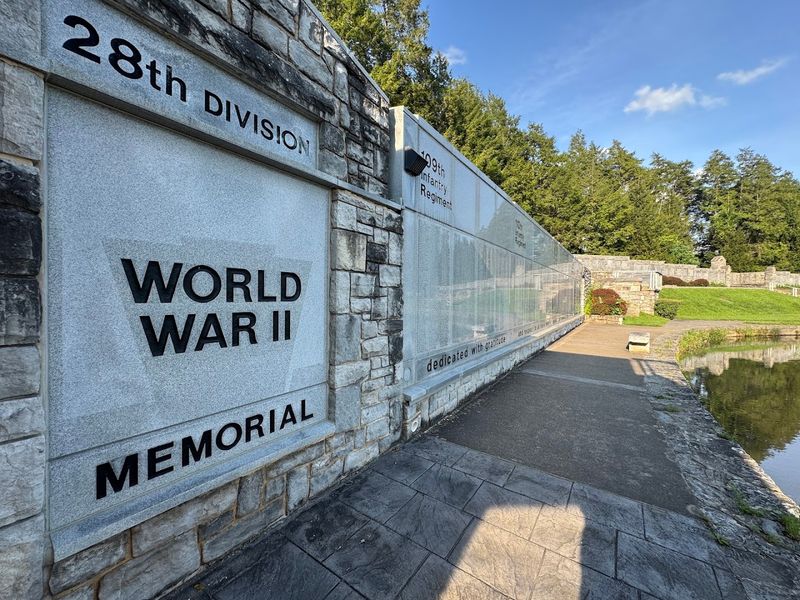
The memorial landscape at this museum is genuinely moving. More than 30 monuments and memorials are spread across the grounds, each one dedicated to a specific group, conflict, or individual, and collectively they create a powerful tribute to Pennsylvania’s long history of military service.
The World War II Memory Wall, dedicated in 1997, draws visitors to stand quietly and read the names etched into it. The 2nd Brigade Combat Team Memorial honors 82 service members who were lost during Operation Iraqi Freedom, and the Brigadier General Edward Sigerfoos Memorial, placed in 1924, remembers a WWI general officer who fell in combat. New monuments continue to be added as the years go on.
Walking the path from one memorial to the next feels less like touring an outdoor exhibit and more like participating in an act of remembrance. The benches placed throughout the grounds invite you to sit, read, and reflect rather than simply pass through, which is exactly the kind of design choice that separates a good memorial from a great one.
Inside the Building: 10,000 Artifacts and Counting
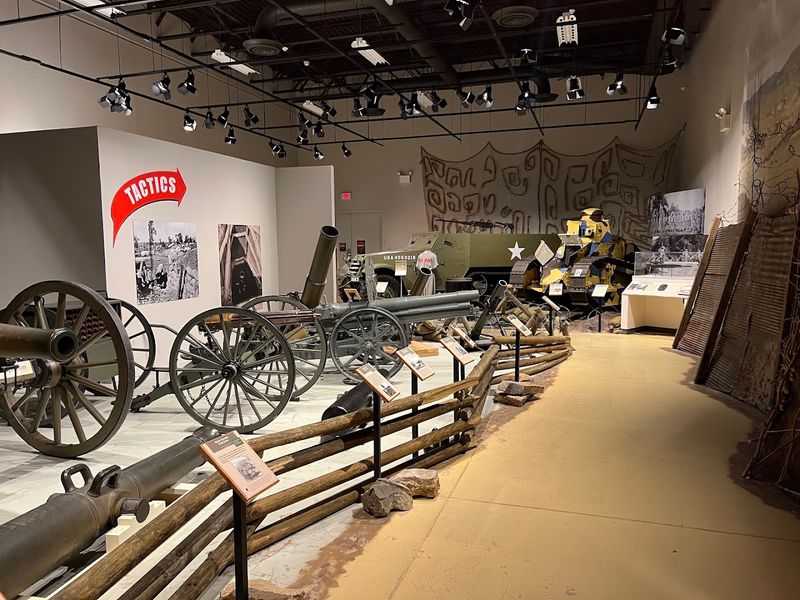
When the indoor gallery is open, the 18,000-square-foot building reveals a collection that the museum describes as ranging from tea cups to tanks, and that phrase is not an exaggeration. More than 10,000 artifacts are cared for here, representing Pennsylvania’s military involvement from colonial times through modern conflicts.
The permanent exhibits are organized around five core themes: Tactics, Small Arms, Sea Power, Air Power, and Logistics. Every artifact on display has a Pennsylvania connection, which gives the collection a regional focus that makes it feel personal rather than generic. Uniforms, weapons, photographs, and vehicles fill the space with a density of history that rewards slow, careful looking.
The building underwent a full renovation between 2003 and 2005, and a Capital Project renovation is currently underway that has temporarily closed the interior gallery. But the scale of what waits inside when it reopens is worth keeping an eye on, because a collection this size rarely sits still for long.
The First American-Built Tank Has a Pennsylvania Home
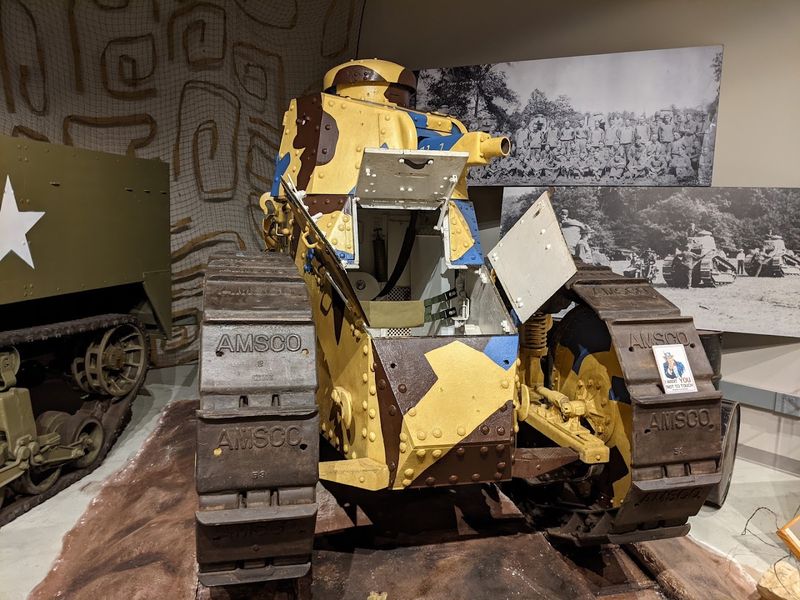
Hidden among the indoor collection is a piece of American military history that most people have never seen in person. The M1917 tank on display at this museum is considered the first tank built in the United States, modeled after the French FT-17 Renault and produced during World War I.
The M1917 never saw combat in WWI because production was too slow to get units to Europe before the armistice, but its existence marked a turning point in American military thinking about armored warfare. Seeing one up close makes the evolution from that small, boxy machine to a modern battle tank feel both logical and astonishing at the same time.
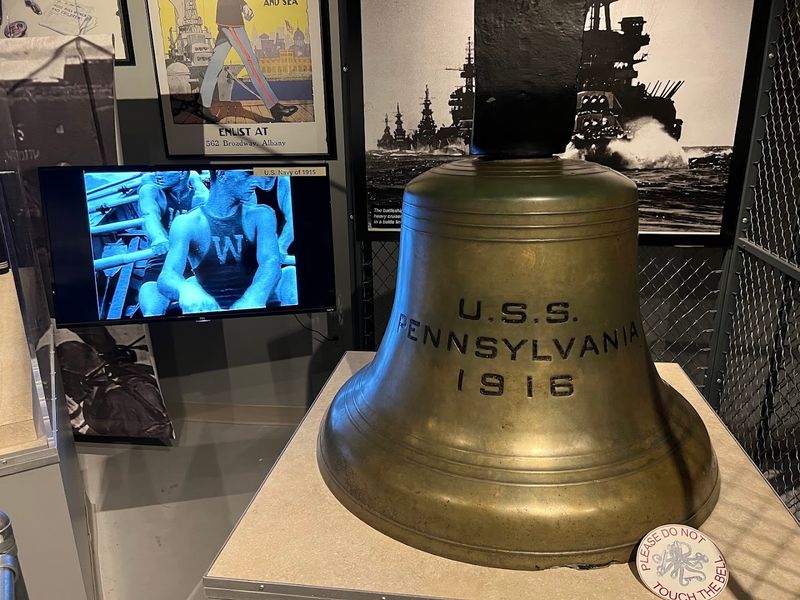
The museum also houses the bronze bell from the USS Pennsylvania battleship, which sits indoors alongside the naval guns displayed outside, creating a kind of conversation between interior and exterior exhibits that rewards visitors who take time to connect the dots between what they see outside and what they find inside.
The WWI Trench Experience You Did Not Expect
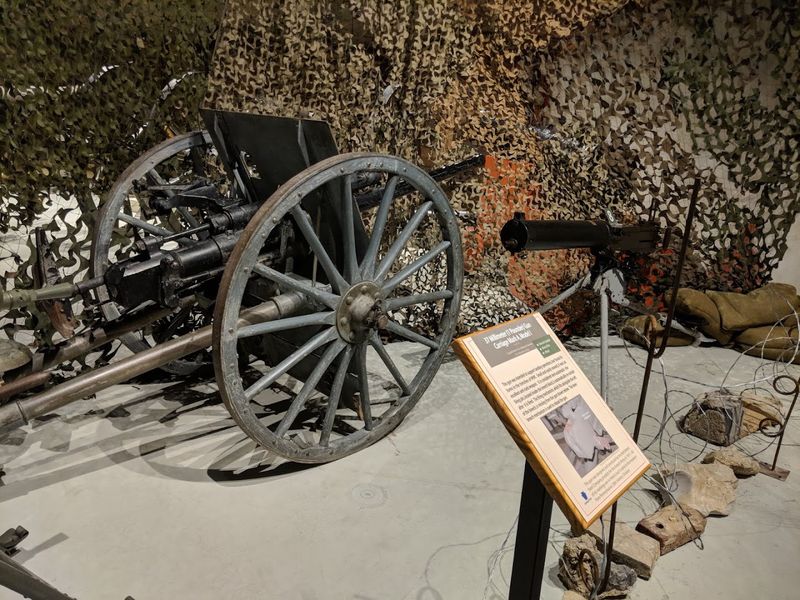
One of the more unexpected features of the indoor gallery is a small recreation of a World War I trench. It is not a massive immersive environment, but it does not need to be, because even a compact recreation of trench conditions communicates something that photographs and text panels simply cannot.
The rough wooden supports, the confined space, the period equipment arranged as if soldiers just stepped away for a moment, all of it works together to make the reality of trench warfare feel less abstract. For younger visitors especially, this kind of hands-on, spatial storytelling tends to stick in the memory far longer than a display case of artifacts.
The museum’s approach throughout the indoor galleries leans toward making history tangible rather than just informative, and the trench recreation is a good example of that philosophy in action. It is a quiet, understated exhibit that punches well above its size, and it hints at the kind of thoughtful curation waiting throughout the rest of the collection.
Living History Events That Bring the Past to Life
Beyond the static exhibits, the museum runs a calendar of special events throughout the year that transform the grounds into something much more dynamic. Upcoming events include a Civil War experience in May 2026, a World War I experience in October 2026, and a World War II experience in December 2026.
These are not simple presentations. They feature immersive experiences, guided tours, historic weapons demonstrations, and a program called History Mystery specifically designed for younger visitors. Memorial services, veterans reunions, and a lecture series round out the annual programming calendar.
The museum also participates in the Blue Star Museums program, which provides free admission to active-duty military personnel and their immediate families with valid identification. A Walk to Remember, held on the Saturday of Memorial Day weekend, is a 5K walk across the museum grounds that supports care packages for deployed service members. It has become a genuinely moving community tradition that draws veterans, families, and neighbors together in a way that few other local events can match.
Boalsburg’s Claim to Memorial Day’s Origin
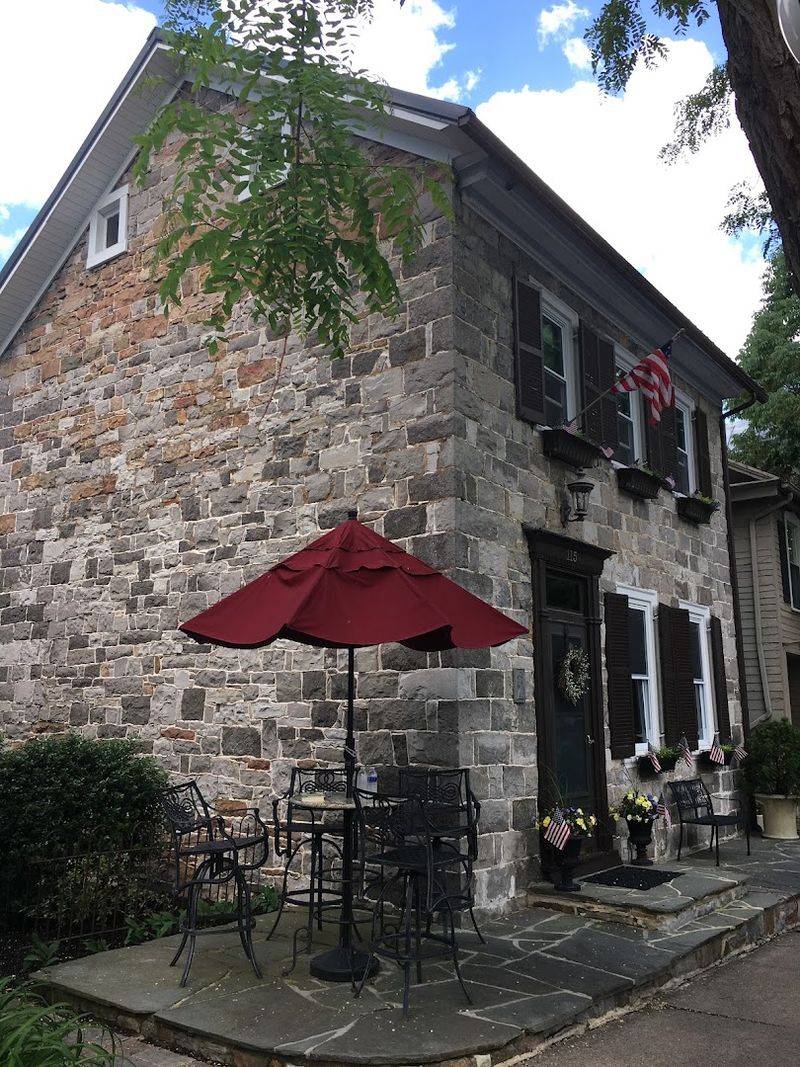
The town surrounding the museum carries its own fascinating piece of American history. Boalsburg locals hold firmly to the tradition that their village was the original site of Memorial Day, tied to an 1864 Civil War commemoration organized by a group of women who gathered to decorate the graves of fallen soldiers.
That story gives the entire village a particular resonance, especially when you consider that the Pennsylvania Military Museum sits at its heart. The combination of a town with Memorial Day origins and a museum dedicated to military remembrance creates a layered historical atmosphere that is hard to find anywhere else in the state.
The village itself offers shops, restaurants, and nearby attractions including the Boalsburg Heritage Museum and the Columbus Chapel and Boal Mansion Museum, making it easy to turn a museum visit into a full day of exploration. The proximity to Penn State University and downtown State College means that accommodation and dining options are never more than a few minutes away.
Practical Tips Before You Make the Trip
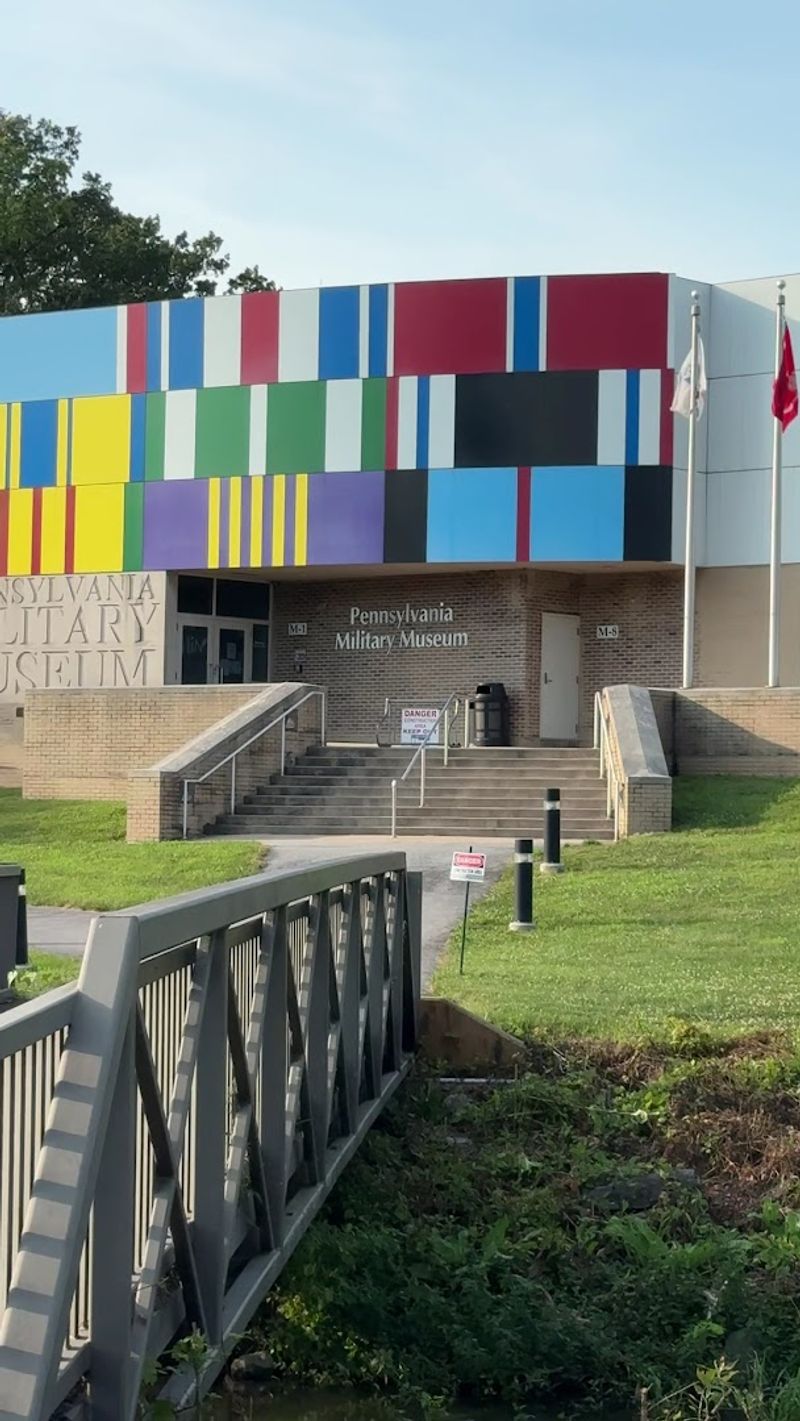
A few details worth knowing before you go. The outdoor grounds at 51 Boal Avenue are open daily from sunrise to sunset at no charge, and the parking lot is large and free except during special events. The indoor gallery is currently closed for a Capital Project renovation, so check the museum’s website or call ahead at (814) 466-6263 for the latest updates on reopening.
When the gallery is open, admission runs six dollars for adults, five dollars and fifty cents for seniors and veterans, and four dollars for children aged three to eleven. Active-duty military and their immediate families receive free admission with valid identification. The museum typically operates Thursday through Saturday from 10 AM to 3 PM and Sunday from noon to 3 PM, from mid-March through late November.
The grounds are dog-friendly and work well as a walking destination even without the indoor exhibits. Comfortable shoes, a camera, and a bit of extra time are the only things you genuinely need to get the most out of a visit here.
Share this story