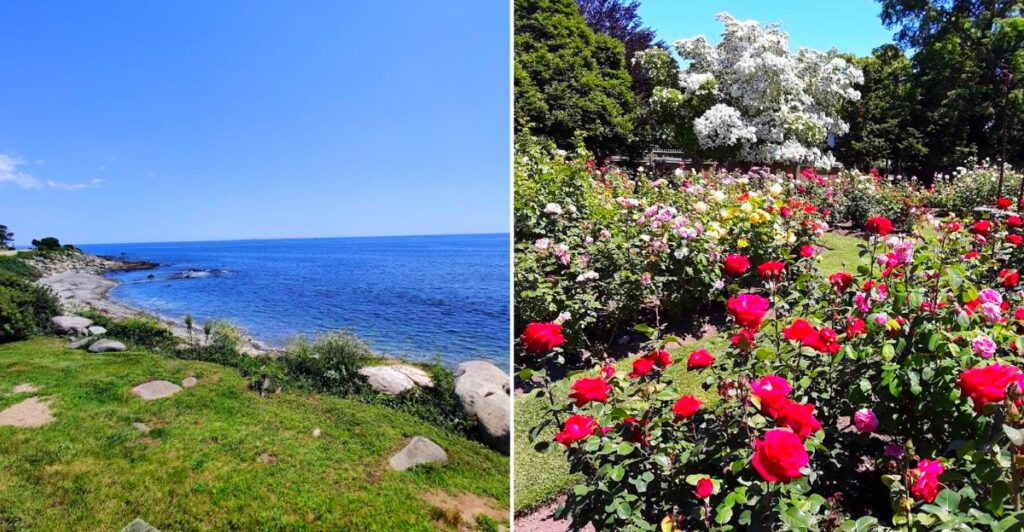
Just steps from New Hampshire’s Atlantic coastline, a historic three-acre garden combines ocean views with one of New England’s finest collections of roses. More than 1,500 rose bushes, a peaceful Japanese garden, a tropical conservatory, formal walking paths, and sculptures collected from Europe make every visit feel different as the seasons change. Originally created as the private estate of former Massachusetts Governor Alvan T. Fuller, the grounds were later opened to the public so everyone could enjoy the landscape and sweeping coastal setting.
The gardens continue to bloom from spring through fall with tulips, English perennials, dahlias, and hundreds of tropical and desert plants inside the conservatory. Whether you’re looking for a relaxing afternoon, a memorable stop along the Seacoast, or one of New Hampshire’s most beautiful historic gardens, it’s easy to see why visitors return year after year.
Here’s why Fuller Gardens has become one of New Hampshire’s most treasured coastal attractions and a destination that’s well worth the drive.
Where the Garden Meets the Sea: Location and First Impressions
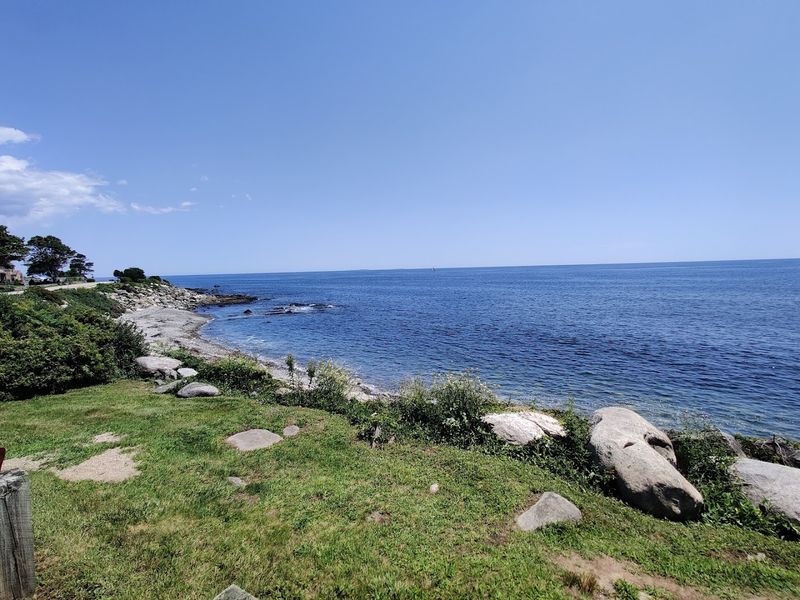
There are places you stumble upon that feel immediately, unmistakably right, and Fuller Gardens is one of them. The garden sits at 10 Willow Avenue, North Hampton, New Hampshire 03862, nestled within the historic Little Boars Head district, a neighborhood that practically drips with coastal New England character.
The Atlantic Ocean is not just nearby; it is a presence you feel throughout your entire visit. A cool, salty breeze drifts across the formal beds, mingling with the sweet scent of roses in a way that no inland garden could ever replicate.
The moment you pass through the entrance, the outside world softens considerably. Neatly trimmed hedges frame your view, gravel paths invite exploration, and the hum of the ocean provides a natural soundtrack that keeps the atmosphere refreshingly calm. The garden carries a 4.7-star rating from nearly 400 visitors, which tells you this first impression tends to hold up throughout the entire experience.
The Original Vision That Still Guides the Gardens
Not every garden has a governor behind it, but this one does. Alvan T. Fuller was a Massachusetts businessman who built his fortune through the Packard Motor Car Company before ascending through the ranks of politics, serving in the Massachusetts legislature, representing the state in Congress, and eventually becoming both Lieutenant Governor and Governor of Massachusetts.
In the late 1920s, Fuller commissioned the creation of these gardens as the crowning feature of his North Hampton summer estate, known as Runnymede-by-the-Sea. His stated goal was not simply to grow flowers; he wanted a true botanical garden, a place of serious horticultural purpose rather than a decorative afterthought.
He also wanted the beauty to be visible from the road, specifically so passersby could enjoy it on weekends, even when he and his wife Viola were not in residence. That outward-facing generosity, baked into the original concept, set the tone for everything that followed and still defines the garden’s character today.
The Olmsted Touch: How a Legendary Firm Shaped the Grounds
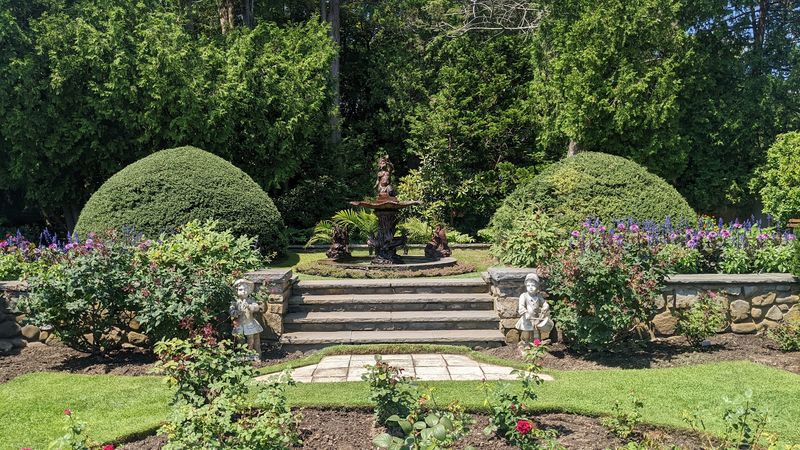
The name Olmsted carries serious weight in American landscape history, and Fuller Gardens bears that legacy proudly. After Arthur Shurtleff laid the initial groundwork in 1927, Fuller turned to the Olmsted Brothers Firm in the 1930s to expand and redesign the property in a grander vision.
Their primary assignment was the creation of a magnificent rose garden dedicated to Viola Fuller, and they executed it in the Colonial Revival style, a design language that blends classical formality with distinctly American sensibility. The result is a garden that feels both disciplined and welcoming, structured yet alive.
Fuller’s own European travels contributed directly to the design. He had collected an impressive array of statues and fountains from across the continent, and the Olmsted team skillfully wove these pieces into the landscape, giving the grounds an almost gallery-like quality. Every turn reveals a carefully placed sculptural element that rewards the attentive visitor, adding depth and narrative to what might otherwise be a purely horticultural experience.
A Rose by Any Other Name: The Heart of the Garden in Full Bloom
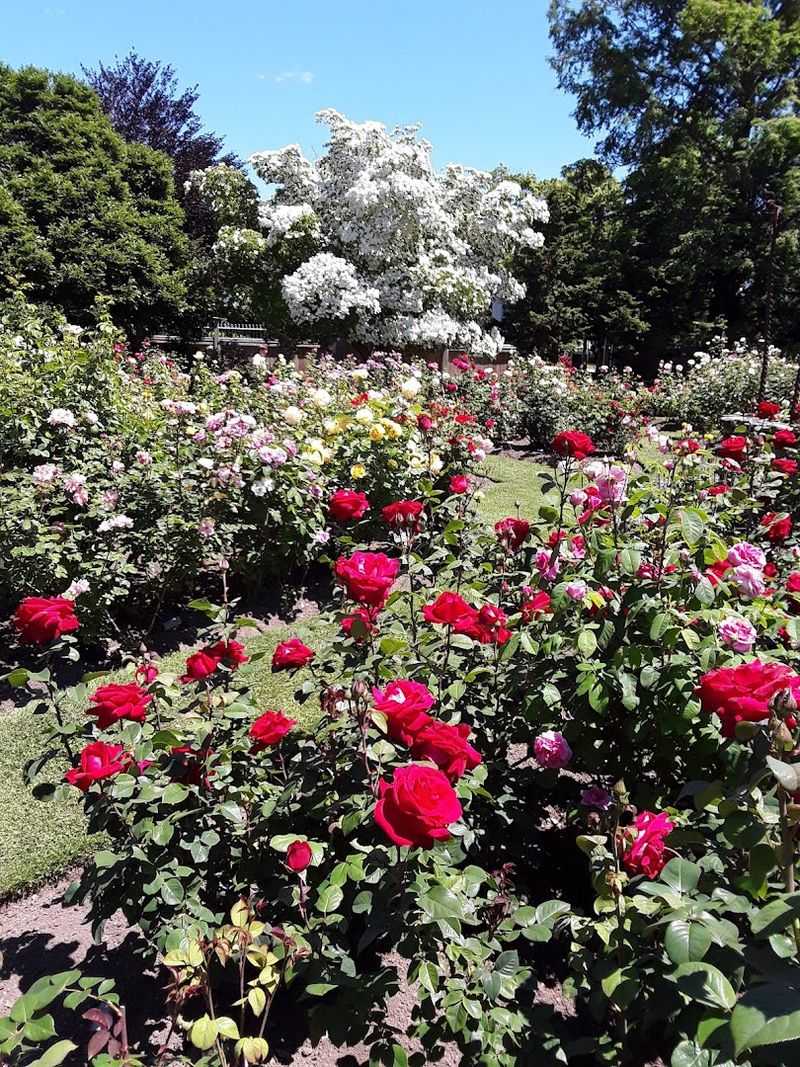
The rose garden here is not a token gesture toward floral decoration. Between 1,500 and 2,000 rose bushes representing approximately 125 different varieties fill the beds, creating a display that peaks in late June and continues to perform beautifully well into October.
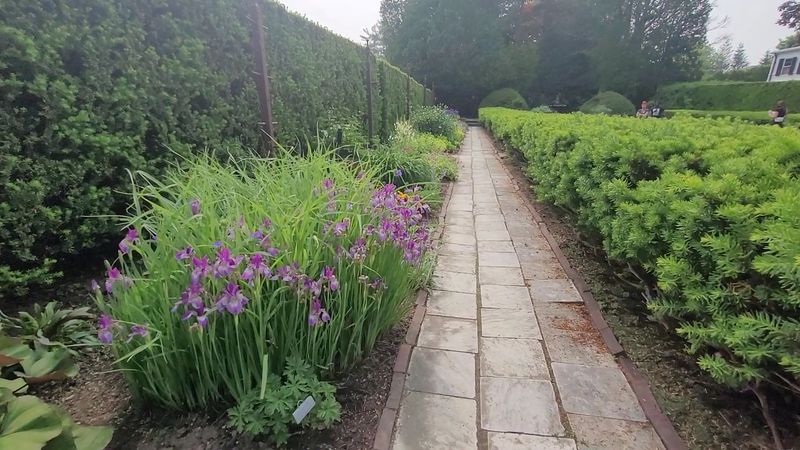
A tunnel of trees draws you into what is called the side garden, and the transition from shade to color is genuinely arresting. The sheer density of blooms, each one labeled for identification, creates an educational experience alongside the aesthetic one. Varieties range from classic hybrid teas to climbing roses trained along the cedar fence that borders the space.
Espaliered apple trees are trained flat against that same fence, adding a layer of structured elegance that speaks to the garden’s formal horticultural ambitions. The privet hedges surrounding the beds are trimmed with an almost architectural precision, giving the whole space a sense of order that somehow never feels rigid. The fragrance on a warm summer afternoon, with the ocean breeze threading through, is something genuinely difficult to describe and equally difficult to forget.
Quiet Waters and Koi: The Japanese Garden’s Unexpected Serenity
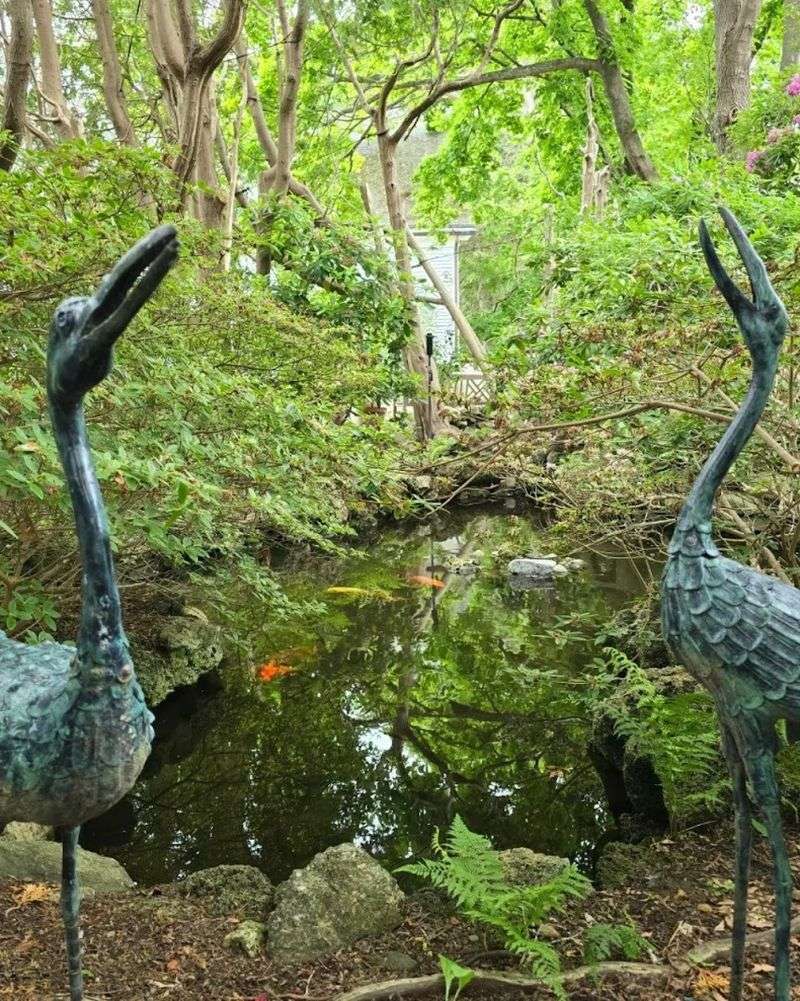
Just when the formal symmetry of the rose beds starts to feel like the whole story, the Japanese Garden arrives to rewrite the narrative entirely. Flanked at its entrance by giant hosta pots, this section of the grounds offers a deliberate shift in mood, one that many visitors describe as the most surprising part of the entire visit.
Winding paths move beneath a canopy of unusual trees, their forms quite different from the manicured hedges elsewhere on the property. Rhododendrons, azaleas, and wisteria contribute bursts of color that feel less orchestrated and more organic, as though nature had a slightly larger say in the design here.
At the center of this quiet world sits a large koi pond, its surface calm and reflective. The fish move slowly through the water with an unhurried grace that seems to set the pace for everything around them. More than one visitor has mentioned sitting beside this pond and simply stopping, letting the minutes pass without any particular agenda, which in itself is a remarkable thing for a garden to offer.
Dahlias, Tulips, and Perennials: A Garden That Never Stands Still
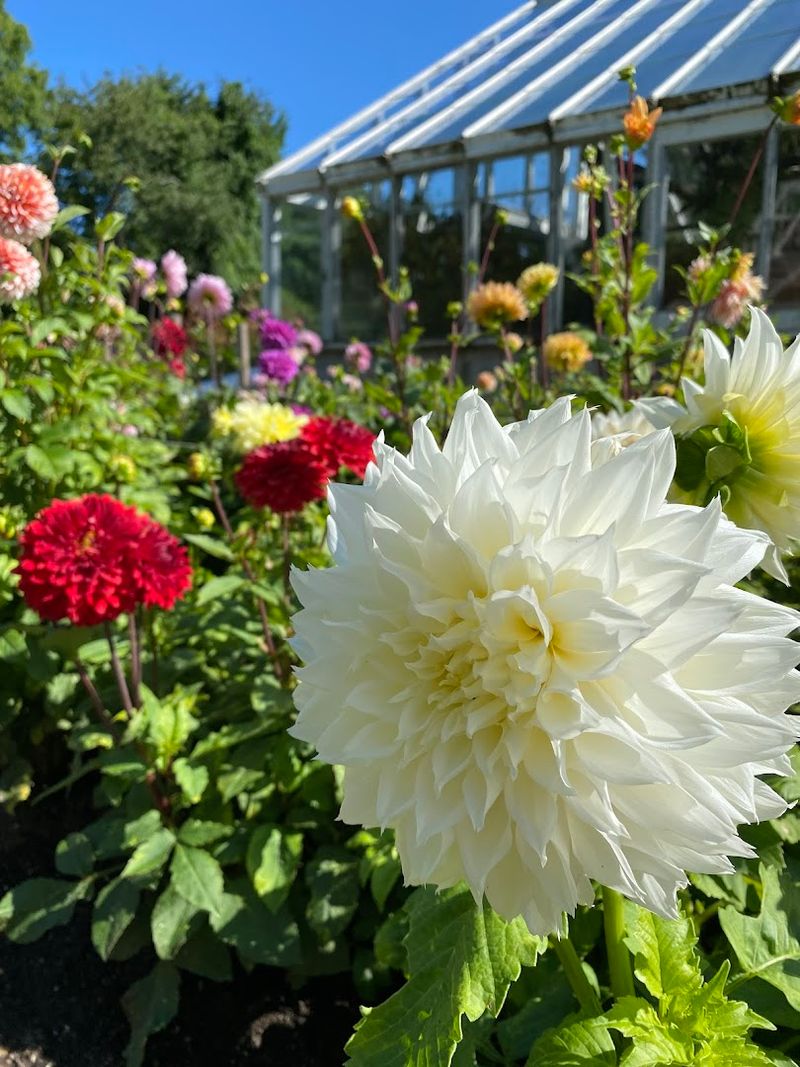
One of the smartest things about the design of this garden is that it refuses to peak just once and call it a season. The calendar of bloom here is carefully orchestrated to ensure that each visit, regardless of the month, offers something fresh and visually compelling.
Early May brings a cheerful parade of tulips and annual beds that announce the season with considerable enthusiasm. As spring deepens into summer, the English perennial borders take over, cycling through a rich succession of textures and colors that keep the landscape dynamic and interesting across multiple months.
Then, as summer leans toward autumn, the dahlia display garden becomes the undisputed star. These are not subtle flowers; dahlias arrive in bold, complex forms and a spectrum of color that commands full attention. The bees agree wholeheartedly, making the dahlia rows a genuinely buzzing corridor in late season. The hosta display garden, by contrast, offers a cooler and greener retreat, its textured foliage providing restful visual relief from all that floral drama elsewhere on the grounds.
The Conservatory Surprise: Tropics and Desert Under One Glass Roof
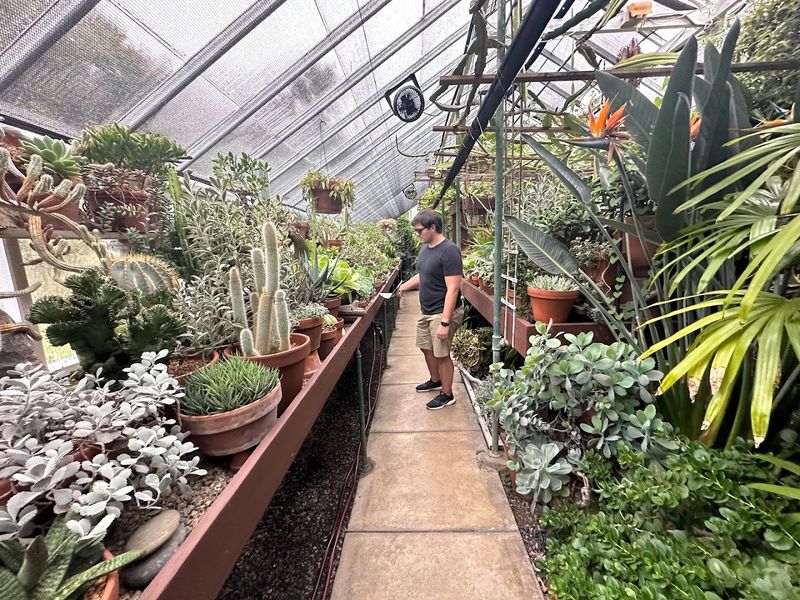
Nobody expects to find a thriving collection of desert cacti and tropical plants tucked inside a New England coastal garden, which is precisely what makes the conservatory here such a genuinely delightful discovery. The moment you step inside, the temperature and humidity shift noticeably, and the world outside recedes.
Hundreds of succulents and cacti species line the interior, some of them impressively large and clearly decades old. Their spiky, sculptural forms create a visual contrast so sharp against the soft petals outside that the transition feels almost theatrical. Tropical specimens fill the remaining space, their broad leaves and vivid colors adding warmth to the glass-enclosed environment.
The collection has been gathered from various corners of the globe, making the conservatory a compact but genuinely diverse botanical showcase. It is a space that tends to hold visitors longer than they initially expect, as each plant presents something new to examine. For anyone visiting during a cooler or overcast day, the conservatory also provides a warm and sheltered interlude that makes the rest of the garden feel even more refreshing upon re-entry.
From Private Estate to Public Treasure: The Story of the Transition
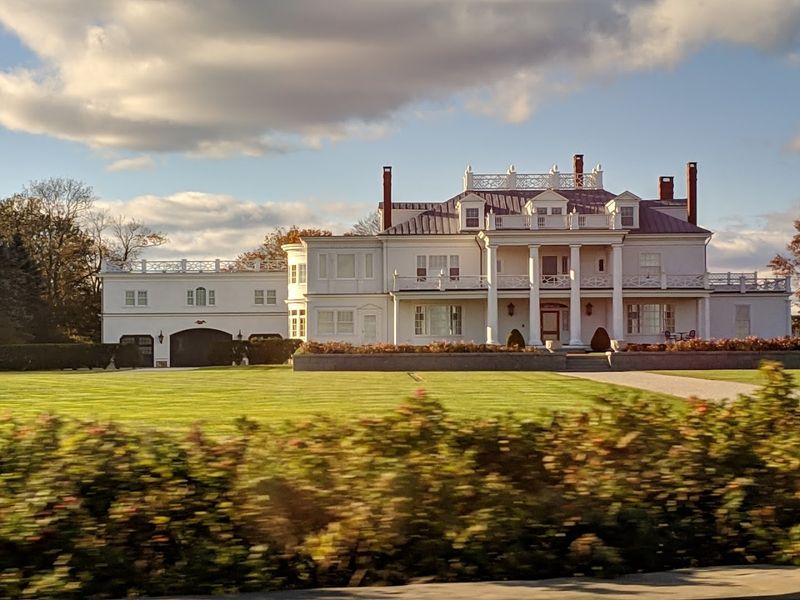
Governor Fuller passed away in 1958, and the question of what would become of his beloved coastal gardens was one that his family took seriously. The answer came in 1961, when the gardens were officially opened to the public under the stewardship of the Fuller Foundation of New Hampshire, a non-profit entity created specifically to ensure the garden’s perpetual operation and care.
The transition involved a decision that still resonates as an act of remarkable generosity. The grand summer home, Runnymede-by-the-Sea, was deliberately removed in 1961 or 1962 to give visiting members of the public an unobstructed view of the Atlantic Ocean. A private family’s most prized seasonal residence was taken down so that strangers could enjoy a better view.
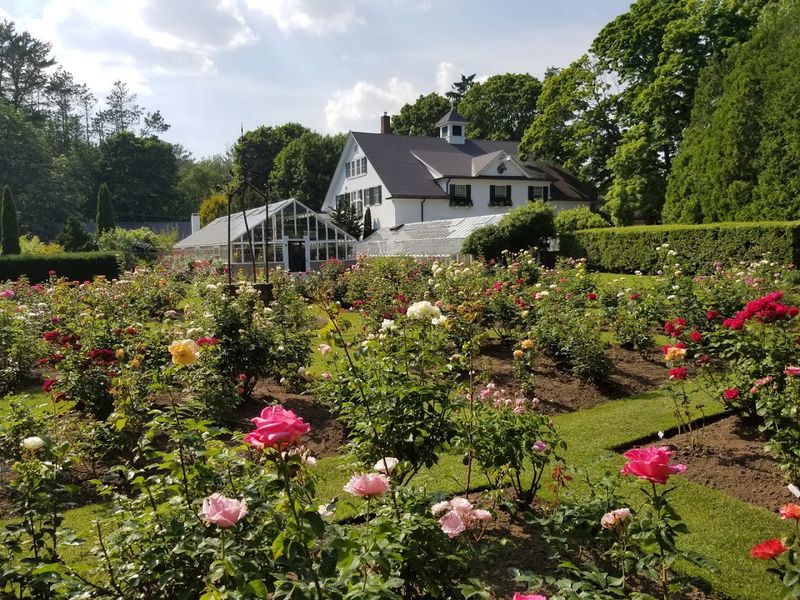
What remains from the original estate is the charming carriage house, dating to approximately 1890, which still stands on the grounds and serves as a picturesque reminder of the property’s origins. Approximately seven thousand visitors pass through the garden’s gates each year, each one benefiting from a decision made over six decades ago to share rather than preserve privately.
The Lydia Fuller Bottomly Garden: A Family Legacy Continues
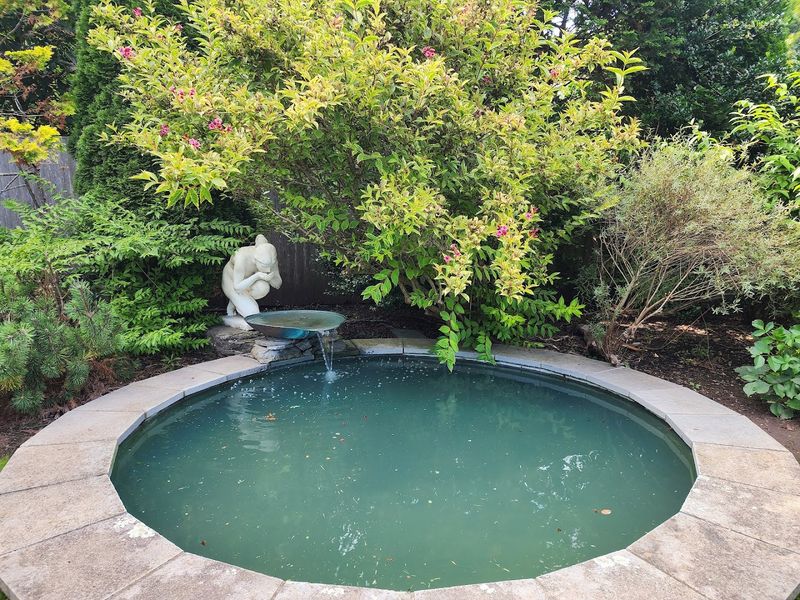
History did not stop being made at Fuller Gardens when the property opened to the public. A newer section, established less than two decades ago, demonstrates that the Fuller family’s investment in this landscape continued well into the modern era. The Lydia Fuller Bottomly Garden honors the late daughter of Alvan and Viola Fuller, who gifted exquisite statuary to the grounds.
A serene reflecting pool anchors the space, its still surface catching the sky and the surrounding greenery in equal measure. At its edge stands a graceful marble nude statue, a classical addition that connects visually and thematically to the European collection Alvan Fuller assembled during his travels decades earlier.
Rose beds frame the reflecting pool on either side, and the garden opens onto a broad grassy area that provides a sense of spaciousness uncommon in a three-acre property. This section doubles as a popular wedding venue, its combination of formal elegance and open air making it an ideal setting for intimate ceremonies. The Lydia Fuller Bottomly Garden proves that the best living legacies keep growing long after their founders are gone.
Statues, Fountains, and Hidden Corners: The Art Within the Garden
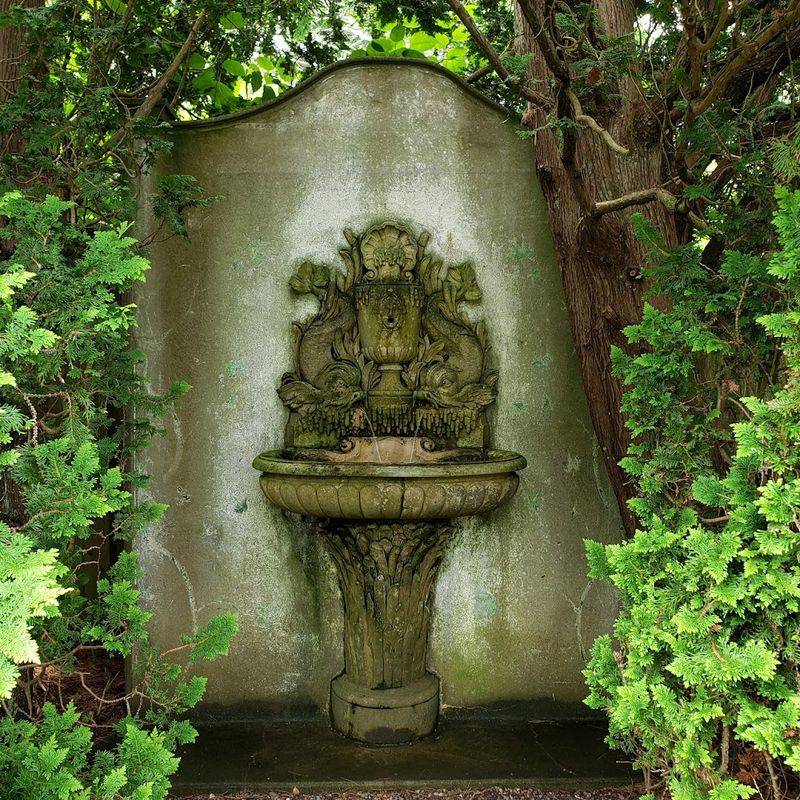
One of the quiet pleasures of wandering through this garden is the steady accumulation of artistic discoveries that punctuate the horticultural displays. Alvan Fuller was an avid collector, and his travels across Europe yielded an impressive haul of statues and fountains that were deliberately incorporated into the Olmsted design.
These pieces are not clustered together in a sculpture court; they are distributed throughout the grounds in a way that rewards the attentive explorer. A classical figure appears at the end of a rose-lined path. A fountain murmurs quietly at the intersection of two hedged corridors. The effect is one of gentle surprise, as though the garden itself is offering small gifts to those patient enough to look.
The so-called secret garden, a more enclosed and intimate section of the grounds, is a particular favorite among repeat visitors who have learned to seek it out. The combination of sculptural art, architectural plantings, and that ever-present coastal light gives the grounds a quality that feels genuinely European in sensibility while remaining unmistakably rooted in New England soil.
Planning Your Visit: Practical Details Worth Knowing Before You Go
Fuller Gardens is open daily from Mother’s Day in mid-May through mid-October, with hours running from 10:00 AM to 5:00 PM and last admittance at 5:00 PM. The phone number is +1 603-964-5414, and additional information is available at fullergardens.org. The address is 10 Willow Avenue, North Hampton, New Hampshire 03862.
Admission is $12 for adults, $10 for seniors, $8 for students with identification, and $6 for children under 12. Infants carried in arms are admitted free. Dogs are not permitted on the grounds, with the exception of registered service animals, so plan accordingly if you were hoping to bring a canine companion.
Roughly 75 percent of the garden is accessible, with wider grass and gravel paths that accommodate most mobility devices, though the conservatory can be a tighter fit for some wheelchairs. A wheelchair-accessible restroom is available, and benches are thoughtfully placed throughout the grounds. Local library cardholders should check whether their branch offers garden passes, which can significantly reduce the cost of a visit for area residents.
Share this story