Some places in history look completely impossible on paper. A city built on a lagoon, a town carved into a cliff, a trading hub planted at the edge of the Sahara. By every practical measure, these settlements should have collapsed within a generation. Yet they not only survived but thrived, producing remarkable architecture, complex societies, and lasting cultural legacies.
What made these places work was not luck. It was a combination of clever engineering, community organization, adaptive thinking, and an almost stubborn refusal to quit. From frozen Arctic outposts to desert tower cities, these 15 historic settlements each overcame a different set of impossible odds. Understanding how they did it reveals something genuinely interesting about human problem-solving across centuries and continents.
Whether you are a history enthusiast or simply curious about how people lived in extreme conditions, these stories offer concrete, fascinating answers.
1. Venice, Italy
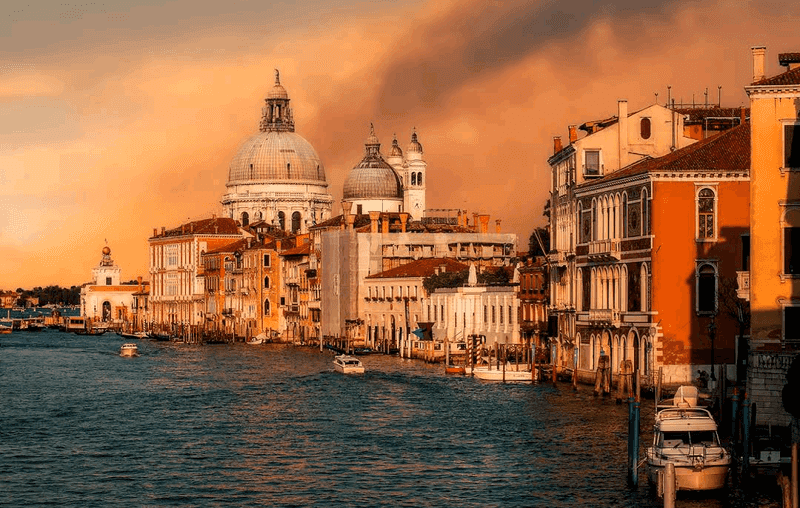
A city built entirely on water should have sunk into irrelevance long before it became one of medieval Europe’s most powerful trading states. Venice was constructed on more than 100 small islands in a shallow lagoon along the Adriatic coast, with buildings resting on millions of wooden piles driven into the muddy seafloor.
Founding settlers arrived in the 5th and 6th centuries, fleeing mainland instability. The lagoon itself acted as a natural barrier against invasion, giving Venice a strategic military advantage that flat-ground cities simply did not have.
By the 9th century, Venice had established a merchant fleet that connected European markets to Byzantine and Islamic trade networks. At its peak in the 14th and 15th centuries, the Venetian Republic controlled key Mediterranean ports and generated extraordinary wealth through controlled commerce, making it one of history’s most successful city-states built against natural logic.
2. Machu Picchu, Peru
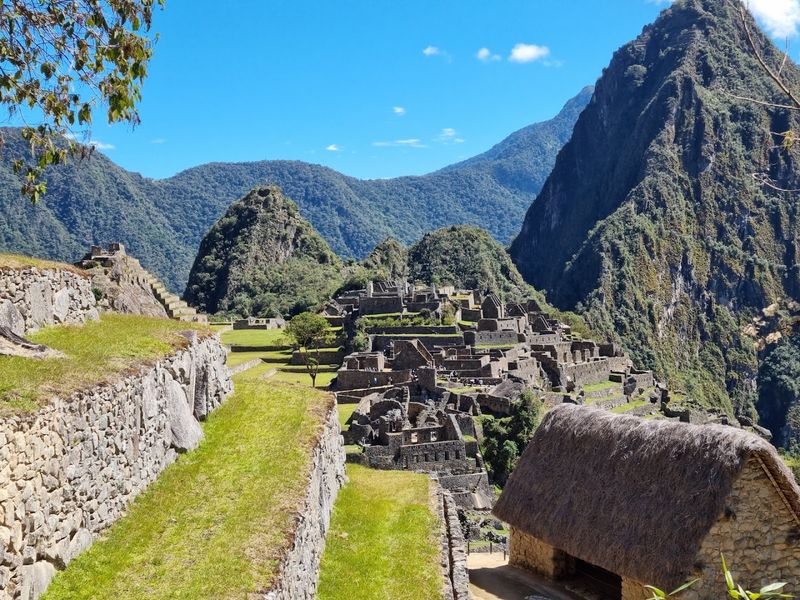
Perched at roughly 2,430 meters above sea level on a narrow ridge between two mountain peaks, this Inca city was built in one of the least accessible locations imaginable. Construction began around 1450 CE under the reign of Inca emperor Pachacuti, using no wheeled vehicles, no iron tools, and no draft animals larger than llamas.
The engineering solutions were precise and deliberate. Builders used a technique called ashlar masonry, cutting stones so accurately that no mortar was needed. This allowed walls to shift slightly during earthquakes without collapsing, which proved critical in a seismically active region.
Agricultural terraces called andenes prevented soil erosion on the steep slopes while also creating usable farmland. An internal drainage system managed mountain rainfall efficiently. Rediscovered by historian Hiram Bingham in 1911, Machu Picchu now stands as one of the most studied examples of pre-Columbian engineering problem-solving anywhere in the world.
3. Aït Benhaddou, Morocco
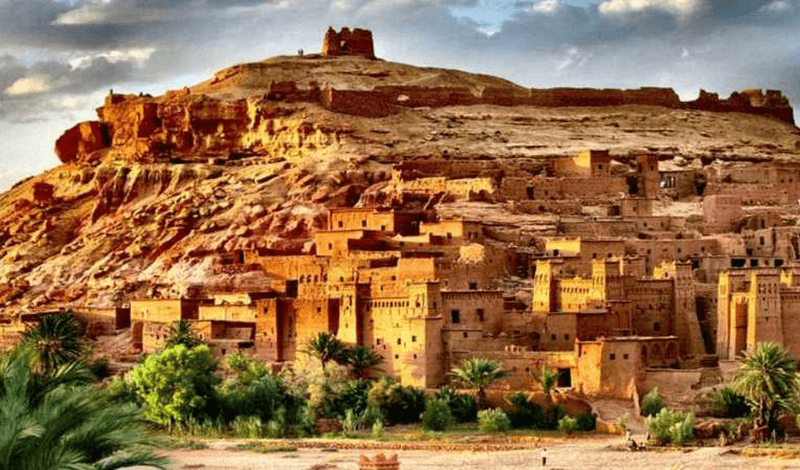
Sitting at the edge of the Sahara along the historic trans-Saharan caravan route, Aït Benhaddou looks more like a film set than a functional medieval settlement. That comparison is not entirely unfair since it has appeared in dozens of major productions, but its real story predates Hollywood by roughly a thousand years.
The ksar, a fortified grouping of earthen buildings called ksour, developed as a commercial waypoint between the Sahara and Marrakech. Caravans carrying gold, salt, and spices stopped here regularly, funding its construction and growth. The mudbrick architecture was not just aesthetic. Thick walls insulated residents from extreme heat during the day and cold at night.
Communal defense towers at each corner of the settlement allowed residents to monitor the surrounding desert for potential threats. The settlement required regular maintenance since desert conditions erode mudbrick steadily, but communities rebuilt consistently, keeping Aït Benhaddou functional for centuries against genuinely hostile environmental conditions.
4. Longyearbyen, Svalbard, Norway
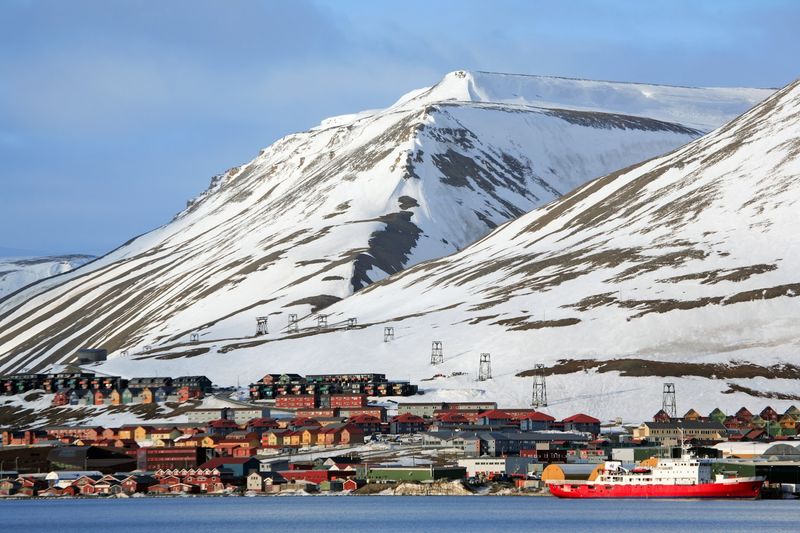
At roughly 78 degrees north latitude, Longyearbyen sits closer to the North Pole than to Norway’s mainland capital. The sun disappears entirely for about four months each year, temperatures regularly drop below minus 20 degrees Celsius, and polar bears outnumber permanent human residents on the archipelago.
Norwegian coal mining company Store Norske Spitsbergen Kulkompani established the town in 1906, giving it a clear economic purpose from the start. That industrial foundation kept people returning despite conditions that would discourage casual settlement. The Svalbard Treaty of 1920 gave Norway sovereignty while allowing citizens of signatory nations to work there, creating a uniquely international small community.
Today Longyearbyen has a university research center, a global seed vault buried in permafrost, and a year-round population of around 2,400 people. It functions as a genuine town with schools, hospitals, and grocery stores, proving that human organization can create stable communities even in the planet’s most extreme northern environments.
5. Mesa Verde Cliff Dwellings, Colorado, USA
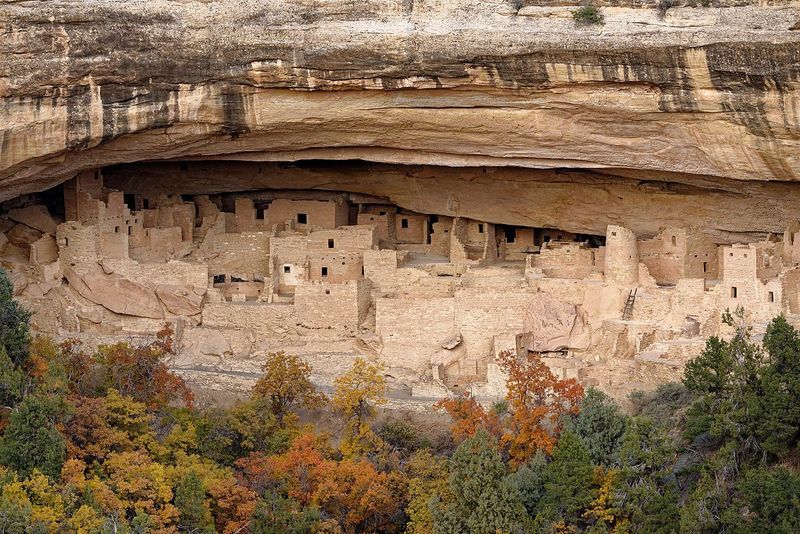
Building a home inside a cliff face requires solving problems that flat-ground construction never encounters. The Ancestral Puebloans who constructed the Mesa Verde communities between roughly 600 and 1300 CE understood this completely, and their solutions were both practical and architecturally sophisticated.
Cliff Palace, the largest cliff dwelling in North America, contains 150 rooms and 23 kivas, which were circular ceremonial chambers. Residents accessed upper levels using hand-carved toeholds and wooden ladders. The overhanging cliff provided natural shelter from rain and moderated temperature swings between seasons.
These communities were not isolated outposts. Archaeological evidence shows extensive trade networks connecting Mesa Verde to settlements across the Southwest, including exchanges of turquoise, pottery, and food. The Ancestral Puebloans managed water collection through check dams and reservoirs carved into the mesa top. When the population eventually dispersed around 1300 CE, it was likely due to prolonged drought rather than any failure of their engineering or social organization.
6. Coober Pedy, South Australia
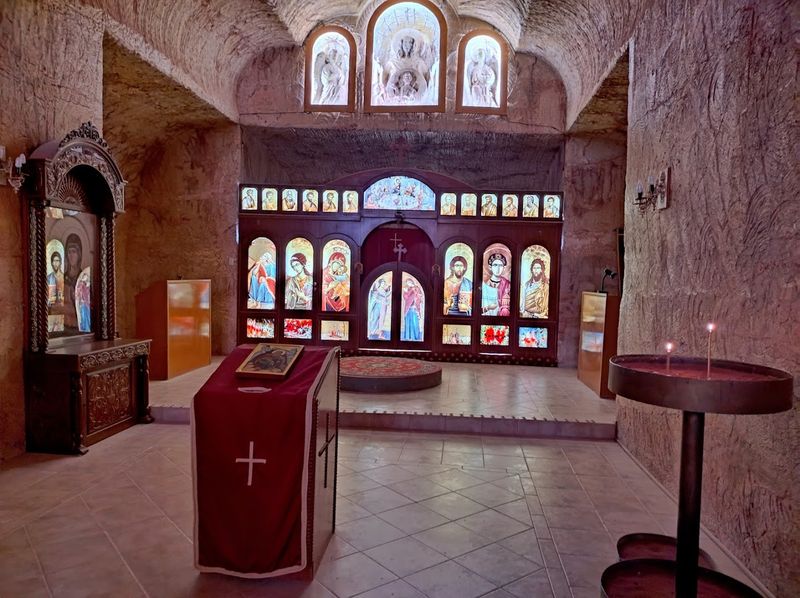
Most towns respond to uncomfortable climates by building better insulation. Coober Pedy responded by eliminating the surface entirely. When summer temperatures regularly exceed 40 degrees Celsius and shade is scarce across the South Australian outback, going underground turns out to be a genuinely effective architectural strategy.
Opal was discovered near Coober Pedy in 1915, and miners quickly realized that the same dugouts they carved for mining could serve as comfortable homes. Underground temperatures stay consistently around 23 degrees Celsius year-round regardless of what happens on the surface. Today, roughly half the town’s 1,700 residents live in dugout homes, and the settlement contains underground churches, hotels, and even a bookstore.
The town supplies around 70 percent of the world’s opal. Its underground lifestyle was not a quirky experiment but a rational response to a specific environmental challenge. Coober Pedy demonstrates that when conventional building methods fail a climate, communities with enough motivation will simply rewrite the rules of where humans are supposed to live.
7. Timbuktu, Mali
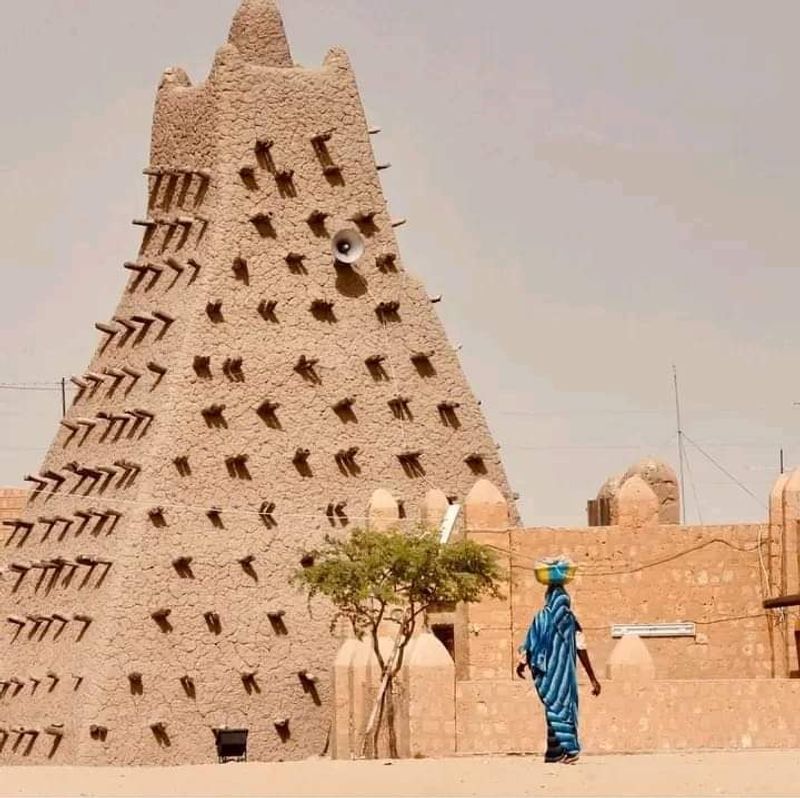
Positioned at the southern edge of the Sahara where the Niger River bends northward, Timbuktu had no obvious geographic reason to become one of the medieval world’s great intellectual centers. Water was scarce, the surrounding terrain was unforgiving, and supply lines stretched across hundreds of miles of desert.
What Timbuktu had was position. It sat at the intersection of trans-Saharan caravan routes connecting North Africa to West African gold and salt-producing regions. By the 14th century, the Mali Empire had made it a significant commercial hub. Under the Songhai Empire in the 15th and 16th centuries, it became a center of Islamic scholarship, housing the famous Sankore University and a manuscript tradition that produced hundreds of thousands of written texts.
Scholars from across North Africa and the Middle East traveled there to study astronomy, mathematics, law, and theology. The city’s success was built entirely on trade logistics and institutional investment in education, proving that geographic disadvantage can be overcome when economic networks and knowledge infrastructure are developed deliberately and maintained consistently over generations.
8. Civita di Bagnoregio, Italy
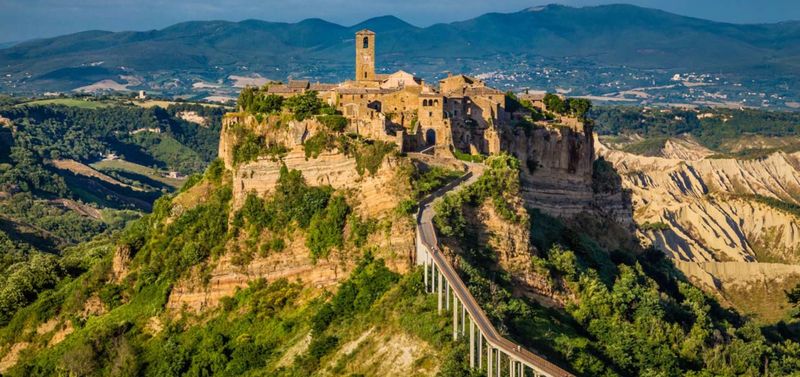
Geologists have been predicting the end of Civita di Bagnoregio for decades. The town sits on top of a volcanic tufa plateau in central Italy that erodes a little more each year, and the surrounding cliffs have been collapsing in chunks since at least the Middle Ages. A single narrow pedestrian bridge now connects it to the outside world.
Founded by the Etruscans more than 2,500 years ago, the town survived Roman conquest, medieval feudal conflicts, and centuries of slow geological decline. At its lowest point in the 20th century, the permanent population dropped to fewer than 10 residents, earning it the nickname “the dying city.”
Tourism and preservation efforts have since stabilized it somewhat, with hundreds of thousands of visitors arriving annually. The medieval street layout, stone buildings, and original Etruscan tunnels beneath the plateau remain largely intact. Civita di Bagnoregio survives not because the geology improved but because successive generations chose to maintain what earlier ones built, regardless of the structural odds.
9. Isle of Skye’s Dunvegan Settlement, Scotland
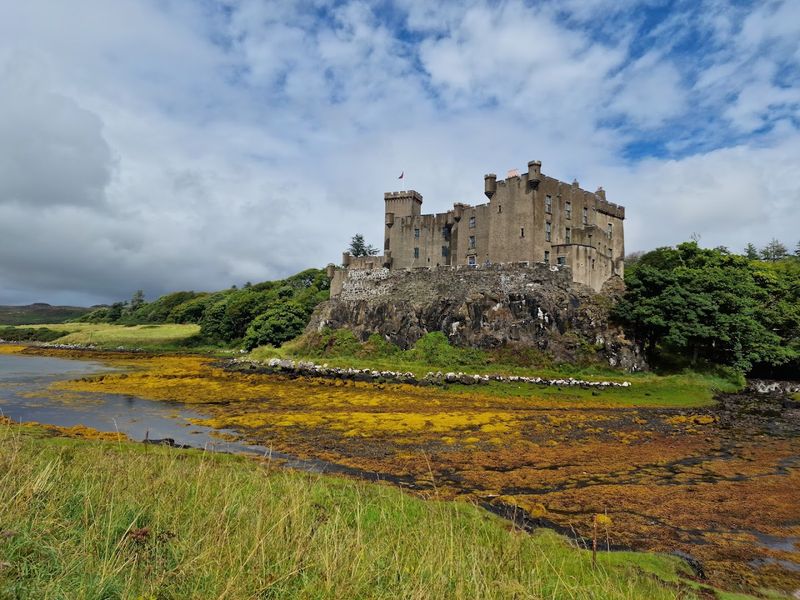
The northwestern coast of Scotland’s Isle of Skye offers thin, rocky soil, relentless Atlantic weather, and geographic isolation that would discourage most attempts at permanent settlement. Communities around Dunvegan have nonetheless maintained continuous habitation for centuries, anchored by the presence of Dunvegan Castle, the longest continuously inhabited castle in Scotland.
The MacLeod clan established their stronghold there in the 13th century, and the surrounding community developed around that political and economic anchor. Residents adapted farming techniques to the rocky terrain using lazy beds, raised cultivation strips that improved drainage and soil depth on land that standard plowing could not manage.
Fishing supplemented agriculture, and the community’s tight social organization meant resources were shared during difficult seasons. The settlement never grew large by European standards, but its longevity is the point. Dunvegan demonstrates that community cohesion and adaptive land use can sustain human habitation in environments where the physical conditions themselves seem designed to push people away.
10. Shibam, Yemen
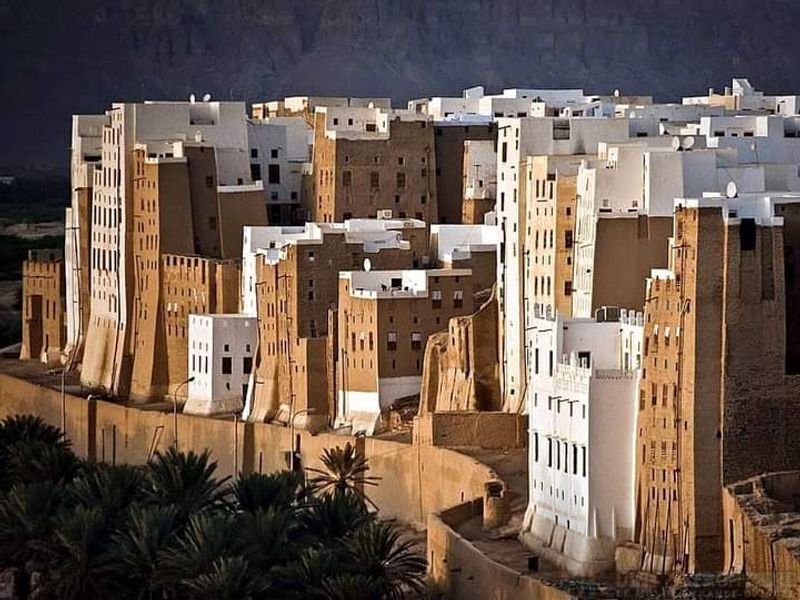
Centuries before steel-frame construction made skyscrapers standard in modern cities, residents of a Yemeni desert valley were already building vertically at a scale that surprises architectural historians today. Shibam’s towers, some reaching 11 stories, were constructed entirely from mudbrick and have stood in the Hadhramaut Valley for roughly 1,700 years.
The vertical design was not aesthetic preference. Building upward concentrated the settlement within a defensive wall while leaving the valley floor available for agriculture. Towers were also easier to defend since entry points were limited and upper floors provided clear sightlines across the surrounding desert.
The mudbrick construction required consistent community maintenance. Exterior walls were replastered regularly to prevent rain damage, a practice that continued across generations. UNESCO recognized Shibam as a World Heritage Site in 1982, noting it as one of the earliest examples of urban vertical planning in human history. The city’s survival across nearly two millennia of desert conditions is a direct result of organized collective upkeep rather than passive endurance.
11. Monemvasia, Greece
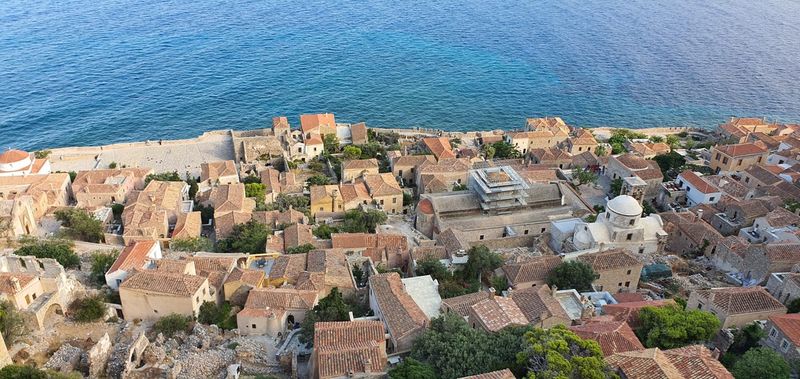
Geography provided Monemvasia with a defense strategy that most medieval fortifications could only dream about. The entire settlement sits on a massive rock that rises dramatically from the Aegean Sea, connected to the Greek mainland by a single narrow causeway that was easy to cut off and impossible to flank.
Byzantine Emperor Maurice reportedly founded the settlement in 583 CE as a refuge from Slavic raids on the mainland. The name itself translates roughly to “single entrance,” which describes the town’s entire defensive logic. Attackers who found the causeway faced a fortified gate with no alternative approach. Those who tried to assault by sea faced sheer cliffs.
Monemvasia became a significant trading port during the Byzantine and later Venetian periods, exporting a sweet wine called Malmsey that became popular across medieval Europe. The lower town, with its Byzantine and Venetian churches and stone-paved streets, remains remarkably intact today, visited by travelers who find it genuinely difficult to believe a functioning medieval community occupied such an improbable location.
12. Røros, Norway
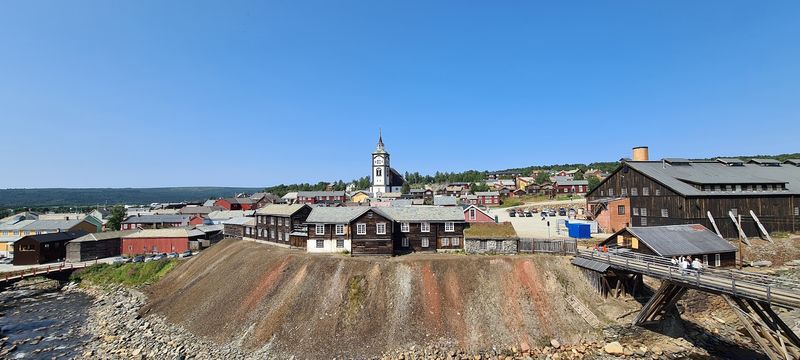
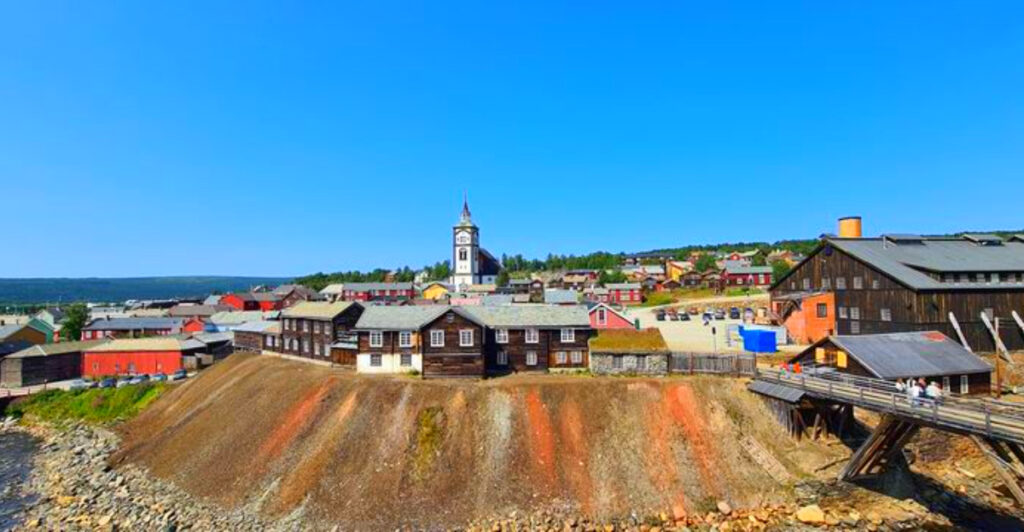
Founded in 1644 following the discovery of copper deposits in the Norwegian highlands, Røros was built in a region where winters are long, temperatures regularly drop below minus 30 degrees Celsius, and the growing season is extremely short. On paper, sustaining a permanent settlement there required solving several problems at once.
The copper works, operated by the Røros Copper Works company for over 300 years, provided the economic engine that kept the town functional. Workers and their families developed a community organized almost entirely around the mining calendar. Building techniques adapted to the climate, with thick-walled wooden structures and enclosed passages between key buildings reducing exposure during the worst winter months.
When the copper company finally closed in 1977, Røros had already been recognized for its exceptional architectural preservation. UNESCO added it to the World Heritage List in 1980. The town’s brightly painted wooden buildings, dating primarily from the 17th and 18th centuries, survived intact because the community maintained them consistently across generations, treating preservation as a practical habit rather than a heritage project.
13. Nan Madol, Pohnpei, Federated States of Micronesia
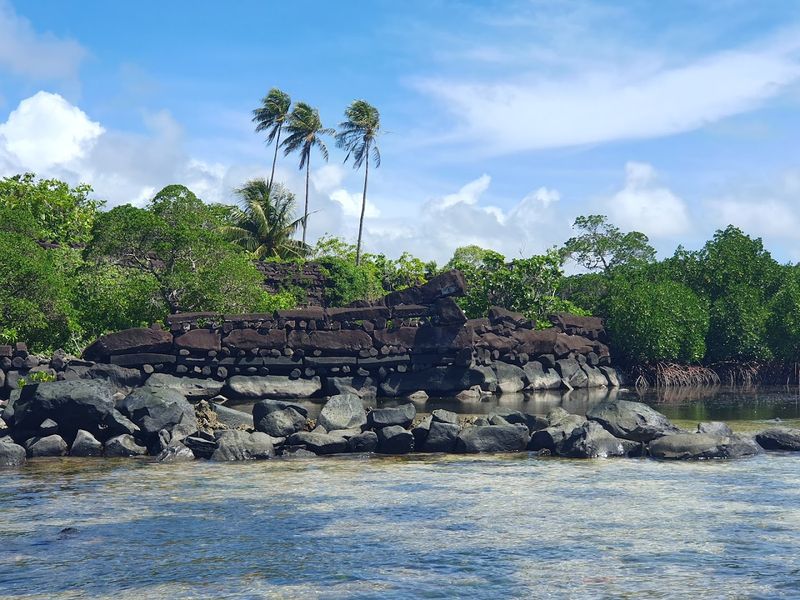
Building a city on land is complicated enough. Building one on nearly 100 artificial islets constructed from basalt columns, each weighing up to 50 tons, in the middle of a Pacific lagoon, without metal tools or wheeled transport, belongs to a different category of human ambition entirely.
Nan Madol was constructed between roughly 1200 and 1500 CE by the Saudeleur dynasty as a ceremonial and political center. The islets were built by stacking columnar basalt in a log-cabin pattern, creating platforms and enclosures above the tidal flats. Archaeologists estimate that transporting the stone required coordinated labor across multiple island communities over several generations.
The city served as the administrative and religious seat of Pohnpei’s ruling class, separating the elite from the general population both literally and symbolically. UNESCO inscribed Nan Madol as a World Heritage Site in 2016, noting it as a unique example of monumental Pacific architecture. The logistical achievement alone, moving enormous stone without modern equipment across open water, remains one of the less-discussed engineering puzzles of the ancient Pacific world.
14. Göreme, Cappadocia, Türkiye
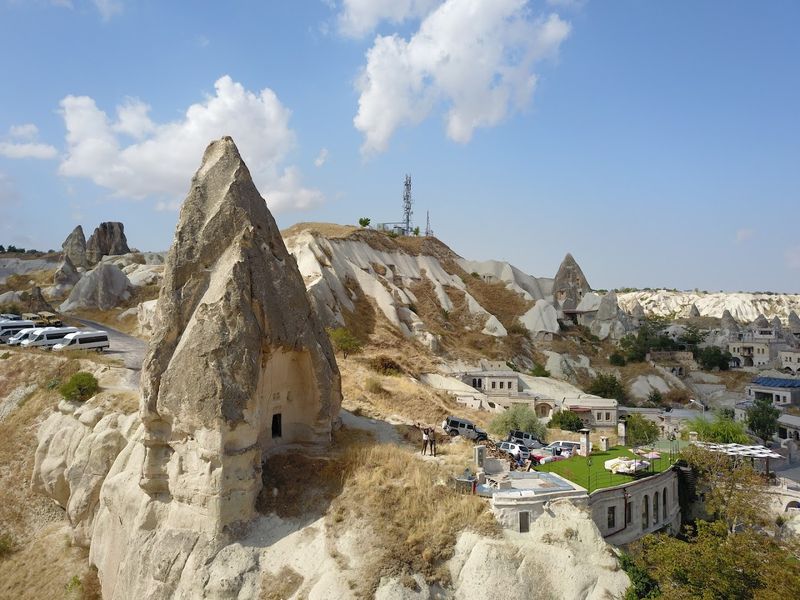
Cappadocia’s volcanic landscape, formed by eruptions millions of years ago, left behind a soft rock called tuff that humans discovered could be carved with basic tools. Residents of the Göreme valley took full advantage of this, cutting homes, churches, monasteries, and multi-level underground refuge cities directly into the rock beginning around the 4th century CE.
The underground complexes, some extending eight levels deep, were not permanent homes but functional retreats used during periods of external threat. Ventilation shafts, wells, and storage rooms were carved with enough precision to support hundreds of people for extended periods. The above-ground cave churches, many decorated with frescoes dating from the 9th to 13th centuries, reflect a settled community with substantial artistic and religious organization.
Göreme’s rock-cut architecture was practical first and visually striking second. The volcanic tuff maintained consistent interior temperatures, reducing the need for heating or cooling. UNESCO recognized the Göreme National Park as a World Heritage Site in 1985. The settlement’s longevity rested on an unusually honest match between available materials and community needs, a combination that proved remarkably durable across more than a thousand years of continuous use.
15. Rothenburg ob der Tauber, Germany
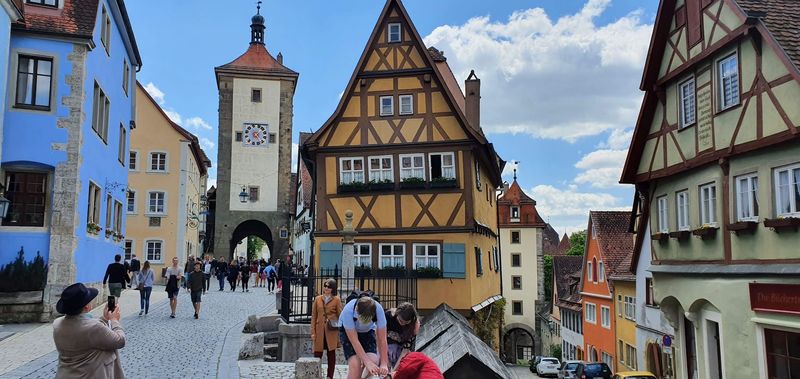
Most medieval European towns were significantly altered or partially destroyed during the conflicts and urban development of the 19th and 20th centuries. Rothenburg ob der Tauber is a notable exception, and the reasons it survived largely intact involve a combination of economic misfortune and deliberate preservation choices that unfolded across several centuries.
The town was a prosperous Free Imperial City during the 14th and 15th centuries, positioned on a key trade route in Bavaria. When those routes shifted in the 16th century and the town’s commercial importance declined, Rothenburg lacked the funds to modernize or expand. That financial stagnation, frustrating for residents at the time, meant its medieval walls, towers, and half-timbered buildings were never demolished to make way for newer construction.
During World War Two, a diplomatic intervention by American Assistant Secretary of War John McCloy, whose mother had visited the town, resulted in its preservation rather than bombardment. Rothenburg’s survival across repeated historical threats was partly engineered and partly circumstantial, but the result is one of the most complete medieval urban environments remaining anywhere in Europe today.
Share this story