 Unearth The Voyage
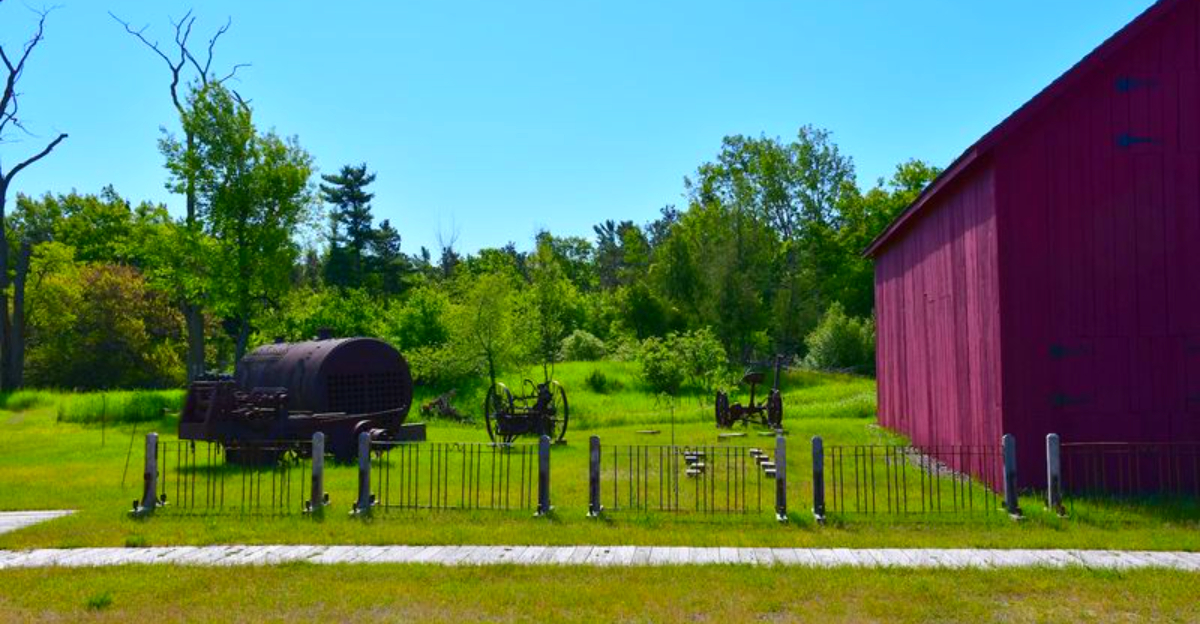
Glen Haven Historic Village near Glen Arbor offers a rare look at a preserved 19th-century lakeshore community. Part of Sleeping Bear Dunes National Lakeshore, it features original buildings, including a blacksmith shop and former cannery structures, that reflect its past as a working port.
Visitors can walk through the village, explore restored interiors, and learn how it supported steamships and local industry. The setting also places it right along Lake Michigan, making it easy to combine history with time by the water.
What makes it worth the stop is its authenticity. This is not a recreated site.
It is a real village with a layered history that still feels intact today.
A Village Frozen in Time: Location and First Impressions
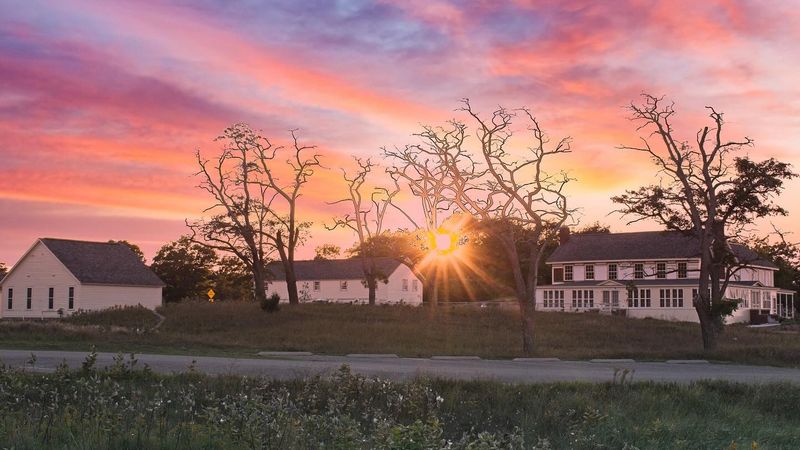
The moment you pull up to the address at 5121-5395 Glen Haven Rd, Glen Arbor, MI 49636, something shifts in the air around you. The village sits right inside the Sleeping Bear Dunes National Lakeshore, and the setting alone earns its reputation.
There are no neon signs, no chain restaurants, and no parking garage structures blocking the view. What greets you instead is a cluster of carefully restored 19th-century buildings arranged along a quiet road with Lake Michigan glittering just beyond them.
The grounds are open 24 hours a day, and admission is covered by your Sleeping Bear Dunes National Lakeshore park pass. That accessibility makes it easy to stop by even if you only have an hour to spare.
The village sits about a ten-minute drive west of Glen Arbor, so it pairs naturally with a day spent exploring the wider national lakeshore. First impressions here tend to stick with visitors long after they have driven home.
Born as Sleeping Bearville: The Origin Story of Glen Haven
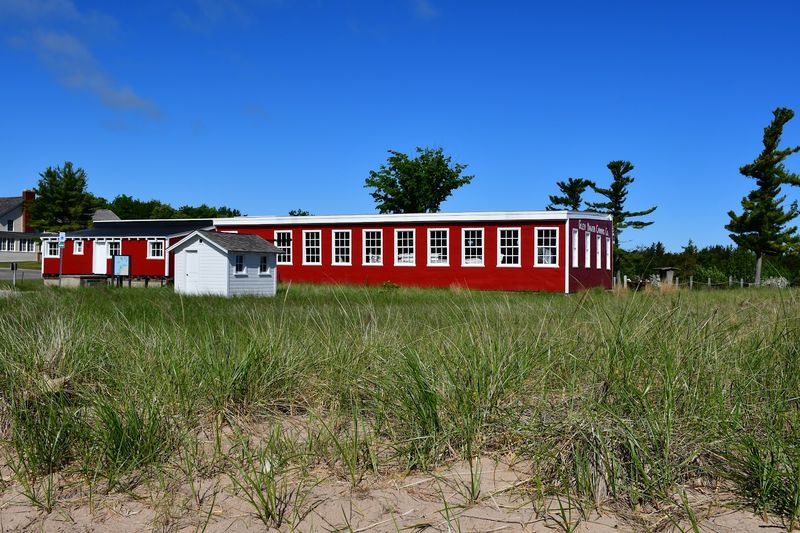
Back in 1857, a man named C.C. McCarty established this settlement and called it Sleeping Bearville.
His original plan was practical and straightforward: build a sawmill, run an inn, and capitalize on the heavy timber trade that was reshaping northern Michigan at the time.
The location was no accident. The natural harbor along the Manitou Passage made this stretch of Lake Michigan shoreline a logical stopping point for the steamships that carried goods and passengers up and down the Great Lakes.
By 1881, the village had grown into a functioning community with eleven buildings, including a general store, a blacksmith shop, and a school. The name eventually changed to Glen Haven, and the town continued evolving through the decline of the timber industry and into the era of farming, cherry canning, and early tourism.
That long arc of reinvention is exactly what makes this place so layered and interesting to explore today.
The Cannery That Became a Boat Museum
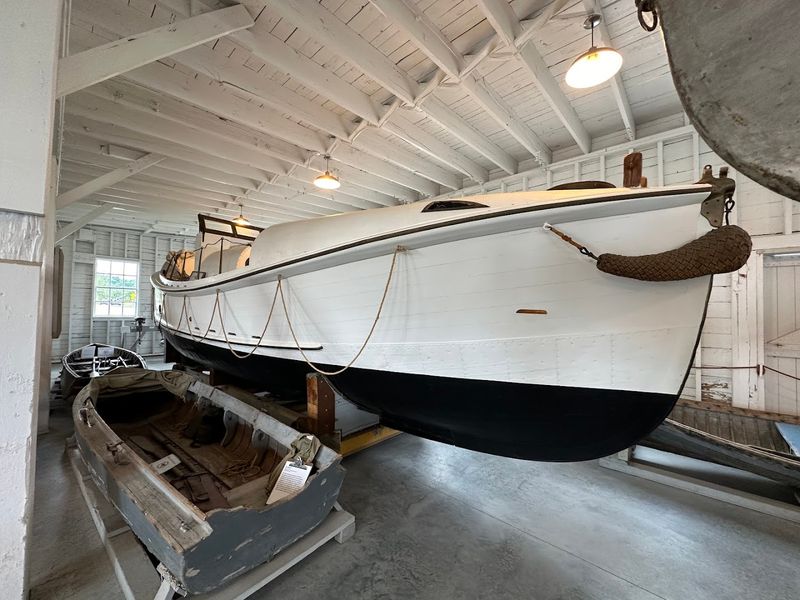
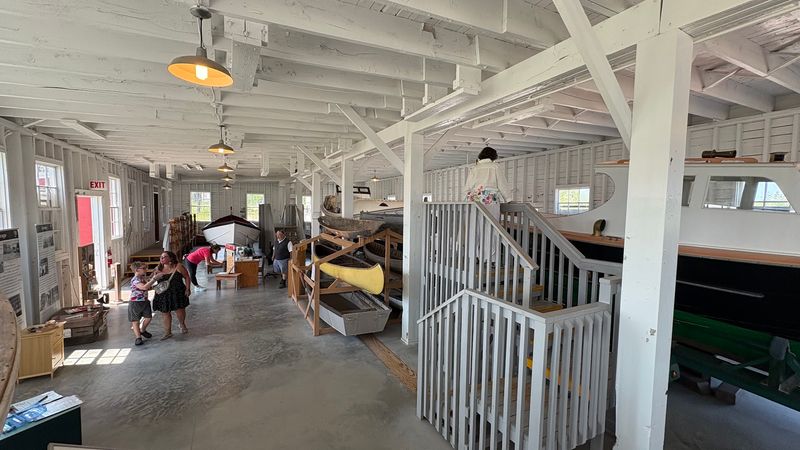
Here is a building that has had more career changes than most people. Originally constructed as a warehouse, it later became a cherry cannery in the 1920s, processing the fruit that northern Michigan farms became famous for growing.
Today, the Glen Haven Cannery and Boat Museum holds a collection of historic wooden boats that were once used to navigate the Manitou Passage, the stretch of water between the mainland and the Manitou Islands. These vessels range from small rescue craft to larger working boats, and each one carries a story about the dangers and demands of Great Lakes travel.
The exhibits inside connect the dots between the village’s commercial history and the broader maritime culture of the region. Rangers and volunteers are often on hand during the warmer months to walk visitors through the displays and answer questions.
Seeing these boats up close gives you a real sense of just how physically demanding life on the lake actually was for the people who depended on it.
The Life-Saving Station That Guarded the Manitou Passage
The Manitou Passage earned a reputation as one of the most treacherous stretches of water on the Great Lakes, and the federal government knew it. That is why the U.S.
Life-Saving Service established a station at Glen Haven, a precursor to what eventually became the modern U.S. Coast Guard.
The Maritime Museum now occupies the former Life-Saving Station building, and the exhibits inside tell the full story of rescue operations on the Great Lakes. You can learn about the surfmen who rowed out into violent storms to pull sailors from sinking ships, often at tremendous personal risk.
The museum covers the evolution from the Life-Saving Service to the Coast Guard, and also traces the broader history of Great Lakes shipping. Detailed displays include equipment, photographs, and written accounts that put the danger of the passage into sharp perspective.
The building itself is a historic structure worth examining from the outside even when the museum is closed. What waits inside the general store next door adds yet another layer to this story.
The General Store That Still Feels Like 1890
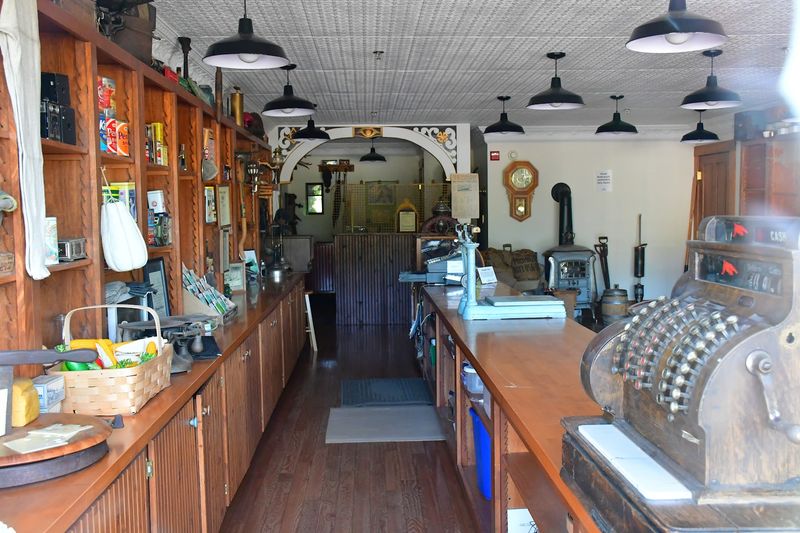
Some restored historic buildings feel like museum exhibits, clinical and distant. The Glen Haven General Store is different.
The space retains a warmth and intimacy that makes it easy to imagine the daily rhythms of village life in the late 1800s.
Shelves are stocked with period-appropriate goods, and the layout reflects how a working general store would have functioned as the commercial and social center of a small community. Villagers would have gathered here not just to buy supplies but to exchange news, settle accounts, and catch up with neighbors.
During the warmer months, knowledgeable staff and volunteers are present to answer questions and provide context for what you are seeing. The store connects directly to the broader story of how Glen Haven sustained itself economically through multiple eras.
It is a small space, but the details packed into it reward slow, careful observation. Pay attention to the small items on the shelves and you will start to understand what daily commerce looked like before the modern world arrived.
Iron, Fire, and Craft: The Blacksmith Shop Experience
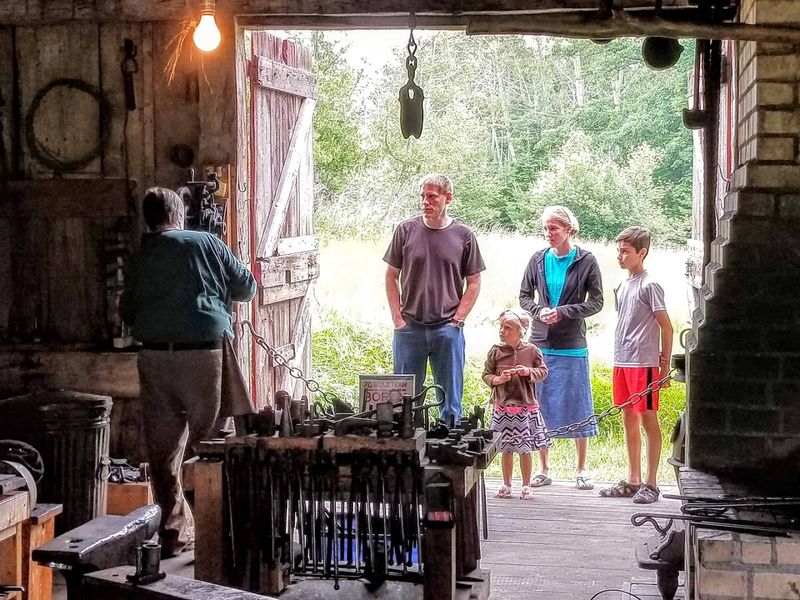
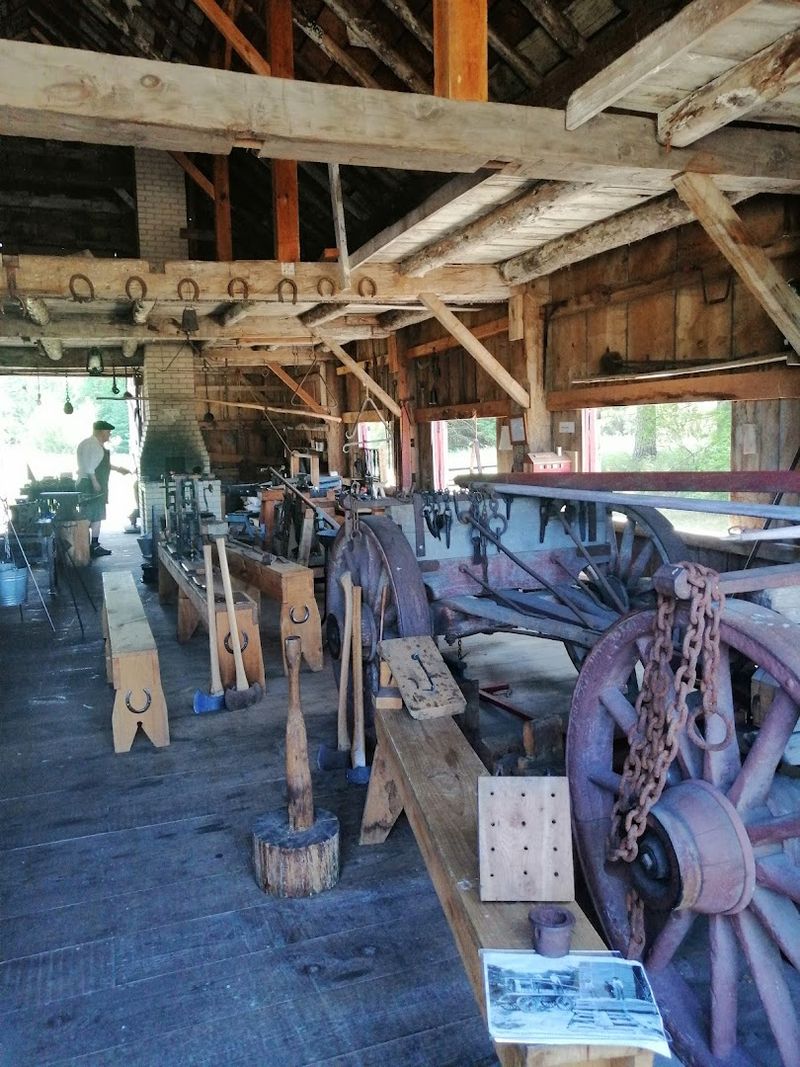
The blacksmith shop at Glen Haven is the kind of place that stops people mid-stride. Even if metalworking is not something you have ever thought about, the combination of old tools, a working forge, and the sheer physicality of the craft tends to pull visitors in immediately.
The shop demonstrates the techniques and tools that blacksmiths used throughout the 19th century, a trade that was absolutely essential to the functioning of any self-sufficient village. Wagon wheels, farm implements, hardware for buildings, and tools for other tradespeople all came from the blacksmith’s hands.
During peak season, live demonstrations bring the craft to life in a way that static displays simply cannot replicate. Watching a skilled smith shape hot iron with a hammer and anvil is genuinely impressive, even if you only catch a few minutes of it.
Visitors who have made it this far in the village tend to agree that the blacksmith shop is one of the most memorable stops on the property. The Sleeping Bear Inn nearby offers a completely different kind of history.
The Sleeping Bear Inn: Overnight Stays in a Historic Setting
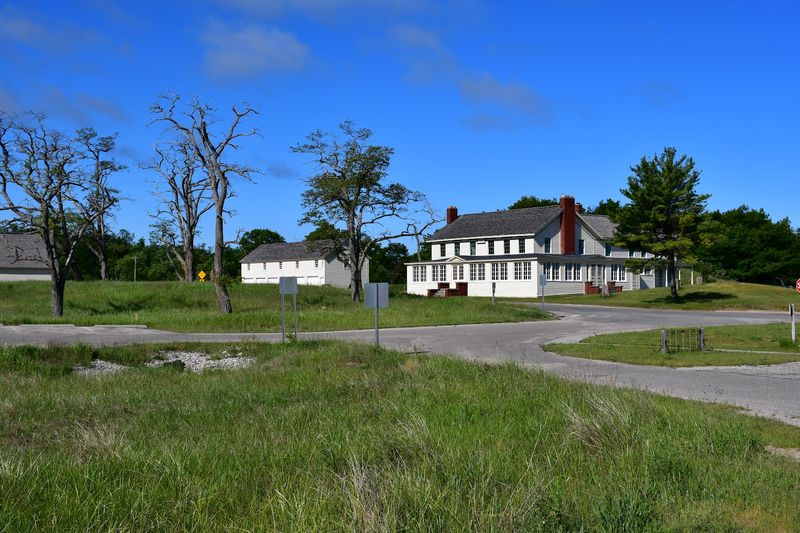
The Sleeping Bear Inn holds a quiet distinction: it is the oldest inn within the Sleeping Bear Dunes National Lakeshore. That alone makes it worth knowing about, but the building offers more than just a historical footnote.
The inn has hosted travelers since the village’s earliest days, and its continued operation as a lodging option gives visitors the rare chance to actually sleep inside a piece of living history. Weddings and private events have also taken place here, particularly on the beach nearby, which provides a setting that is hard to replicate anywhere else in the region.
The structure itself reflects the architectural character of the late 19th century, with a simplicity and functionality that stands in contrast to modern hotel design. Staying here is not about luxury amenities.
It is about connection to a place and a time that most travelers only read about in history books. If you have ever wanted to experience what early Great Lakes tourism actually felt like, this inn gives you the closest possible answer.
The Beach That Stops You in Your Tracks
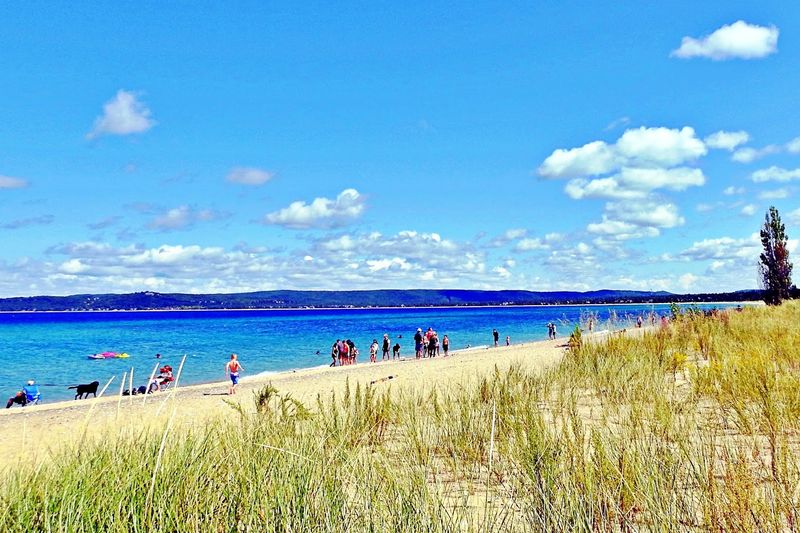
No article about Glen Haven would be complete without talking about the beach, and honestly, it deserves its own extended moment. The Lake Michigan shoreline here is wide, clean, and stretches in both directions farther than most people expect.
The water runs in shades of turquoise and teal that feel almost out of place for a freshwater lake in the American Midwest. On a clear day, you can spot the outlines of North and South Manitou Island lighthouses hovering in the distance across the passage, which adds a genuinely dramatic quality to the view.
The sand stays surprisingly clean even on busy days, and the beach tends to draw fewer crowds than some of the more heavily advertised spots along the national lakeshore. Public restrooms are available on site, and there is parking nearby, though it can fill up on summer weekends.
Petoskey stones occasionally turn up along the waterline, which gives beachcombers an extra reason to walk slowly and look down. The heritage trail running through the village connects this beach to even more of the landscape.
The Dunes Just Beyond: A Natural Wonder Next Door
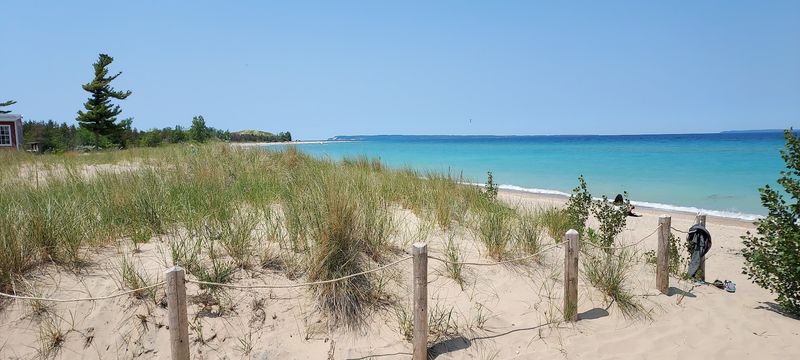
Glen Haven sits within one of the most visually striking landscapes in the entire Midwest. The Sleeping Bear Dunes rise dramatically from the surrounding terrain, forming one of the largest freshwater coastal dune systems in the world.
The Dune Climb, one of the most popular activities in the national lakeshore, is a short drive from Glen Haven and offers a physical challenge that rewards those who reach the top with a sweeping view of Lake Michigan and the surrounding forest. The climb is steeper than it looks from the base, and the descent is faster than most people plan for.
Visiting Glen Haven and then heading to the dunes creates a natural pairing for a full day in the national lakeshore. The contrast between the quiet, shaded village and the open, sun-drenched dune landscape makes both experiences feel more vivid by comparison.
The scenic drive through the park adds further context to the geography that shaped this entire region and the communities, like Glen Haven, that grew up along its shores.
Practical Tips for Getting the Most Out of Your Visit
A few practical details can make the difference between a rushed stop and a genuinely satisfying visit. The village grounds are open around the clock every day of the week, but the individual historic buildings and staffed exhibits operate on seasonal hours, generally running during the warmer months with last entry around 4 p.m.
The site is covered by the Sleeping Bear Dunes National Lakeshore park pass, which costs a modest fee and covers multiple attractions across the park for the duration of your visit. Parking is available on site but fills up quickly on summer weekends, so arriving earlier in the day gives you a clear advantage.
Public restrooms are on the property, which is a detail that matters more than it sounds after a long drive. The village is also reachable by bike from nearby campgrounds via the Sleeping Bear Heritage Trail, which is a genuinely enjoyable way to arrive.
Why Glen Haven Stays With You Long After You Leave
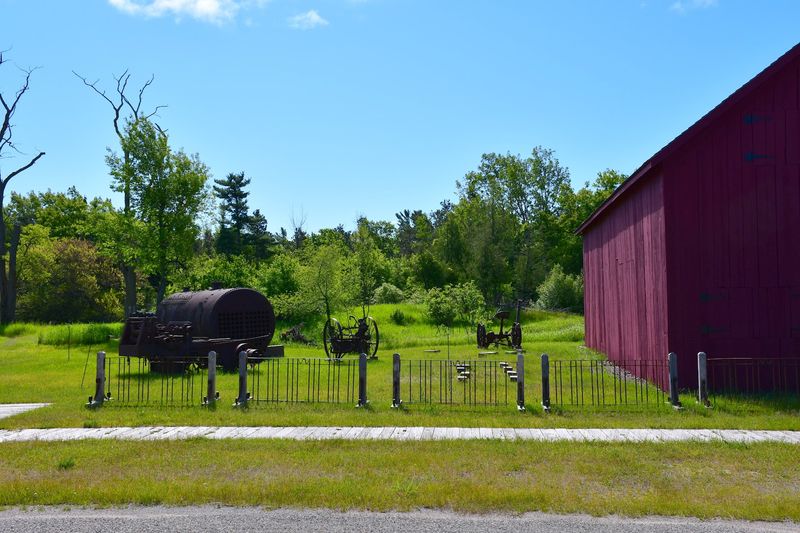
Most roadside stops fade from memory within a day or two. Glen Haven Historic Village tends to linger.
The combination of genuine history, natural beauty, and thoughtful preservation creates an experience that feels earned rather than packaged.
There is something quietly powerful about standing in a building that has been standing since the 1880s, looking out at the same lake that steamship captains and Life-Saving Service surfmen watched for storms more than a century ago. The scale of that continuity is not something you feel at a replica attraction.
The village also rewards return visits. Seasonal programming changes, the beach looks different in every kind of light, and the heritage trail offers new angles depending on whether you walk, bike, or ski it.
Families, solo travelers, history enthusiasts, and outdoor adventurers all find something here that speaks directly to them. Glen Haven is the kind of place that reminds you why traveling slowly and paying attention to the details of a single destination is almost always more satisfying than rushing through a checklist.



