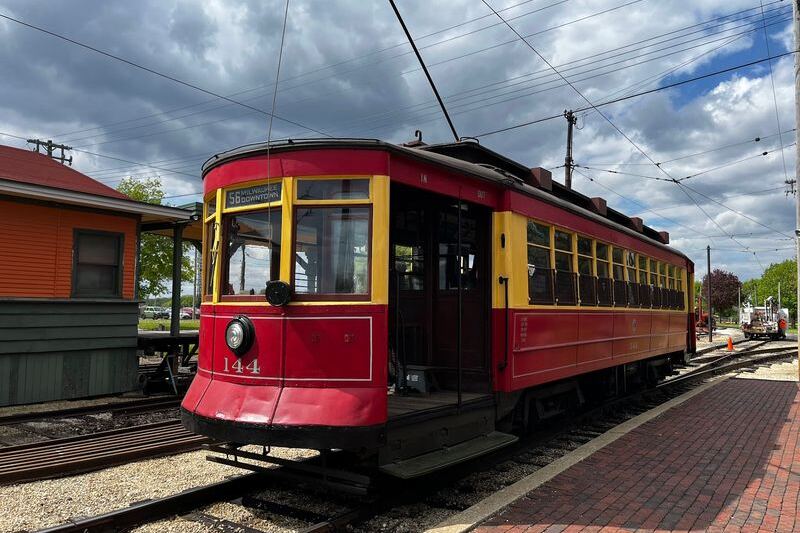
There is a small town in northwest Illinois where the 19th century never really left. The streets are lined with brick buildings that have stood for nearly two hundred years, and the whole place feels like a living history book you can actually walk through.
Ulysses S. Grant once called this town home, and the locals are still pretty proud of that fact.
From ancient ceremonial mounds to sweeping views of three states, this corner of Illinois packs a remarkable amount of story into just a few square miles, and every block gives you something new to discover.
A Town Frozen in Time: The Heart of Galena
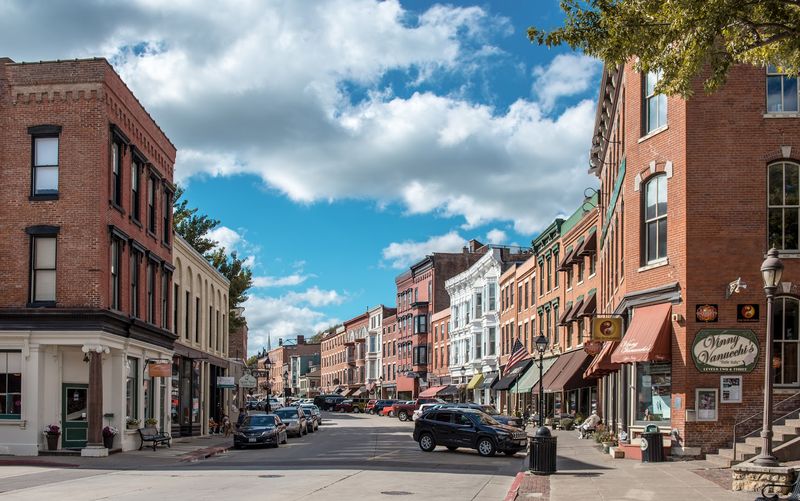
Galena, Illinois, tucked into the rolling hills of Jo Daviess County at the far northwest corner of the state, is one of those rare American towns where history did not get bulldozed to make room for a parking lot.
The city sits at Illinois 61036, and its downtown along Main Street is a near-perfect snapshot of mid-1800s American commerce. The brick storefronts, iron railings, and ornate facades look much the same as they did when Galena was one of the most prosperous cities in the entire Midwest.
Back in the 1840s and 1850s, Galena was a booming lead-mining hub and river port that outshone even Chicago in terms of regional importance. More than 85 percent of the buildings in the historic district are listed on the National Register of Historic Places.
That is not a small number. The city has worked hard to preserve what it has, and the result is a streetscape that genuinely transports you.
You do not need a time machine when you have Galena.
The Dowling House and the Story of Galena’s Oldest Walls
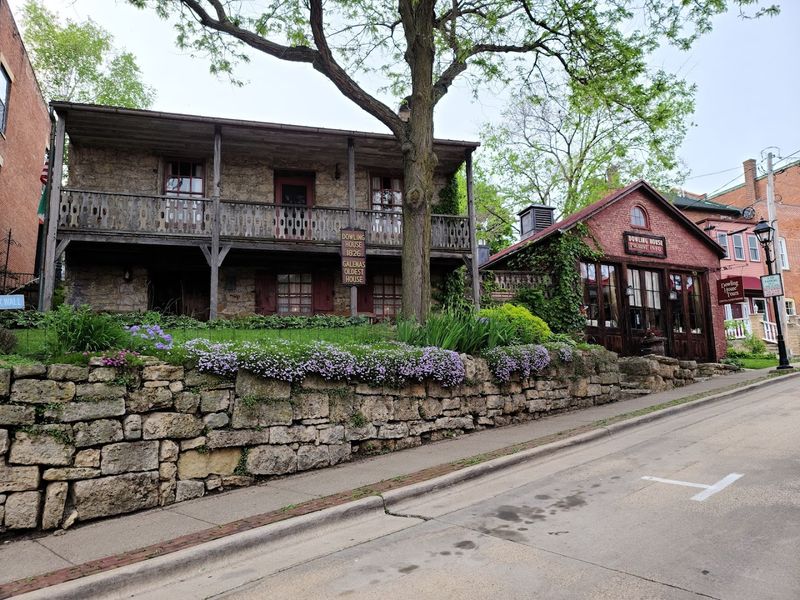
Built in 1826, the Dowling House holds the title of the oldest surviving structure in Galena, and it wears that distinction with quiet confidence.
The building was constructed from local limestone using a technique called galena limestone rubble construction, which gives it a rough, textured exterior that looks as rugged today as it did nearly two centuries ago. John Dowling, a trader and merchant, used the ground floor as a trading post and lived upstairs with his family, a practical arrangement common in frontier-era commercial life.
Today the house operates as a historic site and is furnished with authentic period pieces that reflect daily life in early 19th-century Illinois. The low ceilings and small rooms give you an immediate sense of how compact and functional frontier homes needed to be.
Nothing about the space is showy, and that is exactly the point. The Dowling House is a reminder that Galena’s story did not begin with generals and grand mansions.
It began with traders, miners, and families carving out a life along the Galena River, one limestone wall at a time.
The Ulysses S. Grant Home: A Presidential Gift from a Grateful City
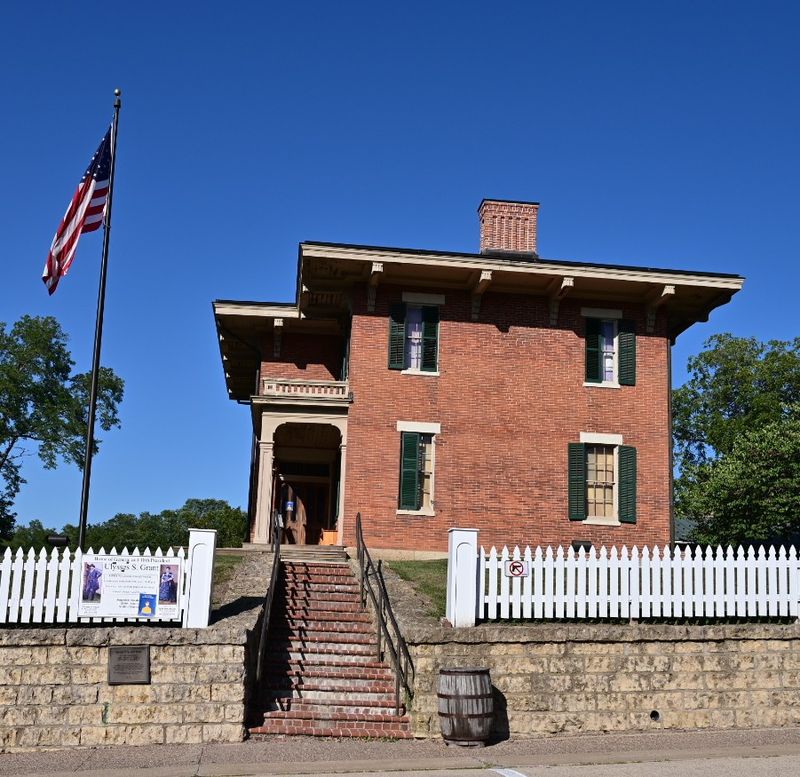
Few towns in America can say they gave a house to a future president, but Galena is not most towns.
After the Civil War ended in 1865, the citizens of Galena presented General Ulysses S. Grant with a fully furnished Italianate home as a thank-you for his service.
The house, now known as the Ulysses S. Grant Home State Historic Site, sits on a gentle hill above downtown and is maintained by the Illinois Historic Preservation Agency.
The Italianate style was fashionable in the mid-1800s, and the home features the characteristic bracketed eaves, tall narrow windows, and a welcoming front porch that define the look. Inside, many of the original furnishings remain, including pieces that belonged to the Grant family during their time in Galena.
Grant went on to serve two terms as the 18th President of the United States, but Galena always held a special place in his life. Visiting the home gives you a grounded, personal look at the man behind the legend, minus the mythology and right down to the parlor furniture he actually sat in.
Main Street Magic: Shopping, Architecture, and Small-Town Energy
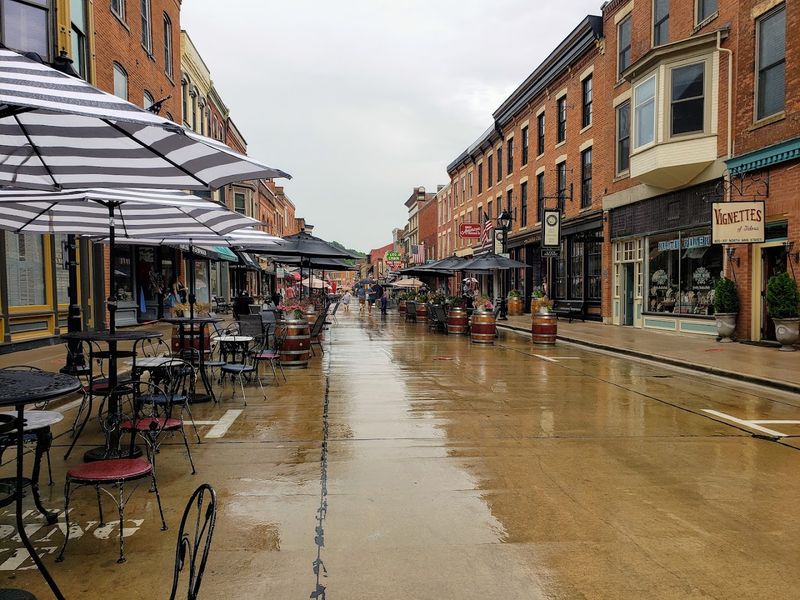
Main Street in Galena is the kind of street that makes you slow down without even realizing it. The storefronts are so well-preserved and the window displays so inviting that your feet just stop moving on their own.
The street runs through the heart of the historic district and is lined with an eclectic mix of independent shops, galleries, candy stores, antique dealers, and specialty boutiques. You will not find big-box retail here.
Every store has a personality, and many are housed in buildings that date back to the 1850s and 1860s.
The architecture alone is worth the stroll. Look up above the shop signs and you will see decorative cornices, arched windows, and brick detailing that most modern buildings never bother with.
The whole street has a rhythm to it that feels unhurried and genuinely welcoming.
On weekends, especially in fall when the surrounding hills turn gold and red, Main Street fills with visitors who come just to soak it all in. It is the kind of place where you pop in for one thing and come out two hours later with a bag full of things you did not know you needed.
Horseshoe Mound: Three States, One Breathtaking View
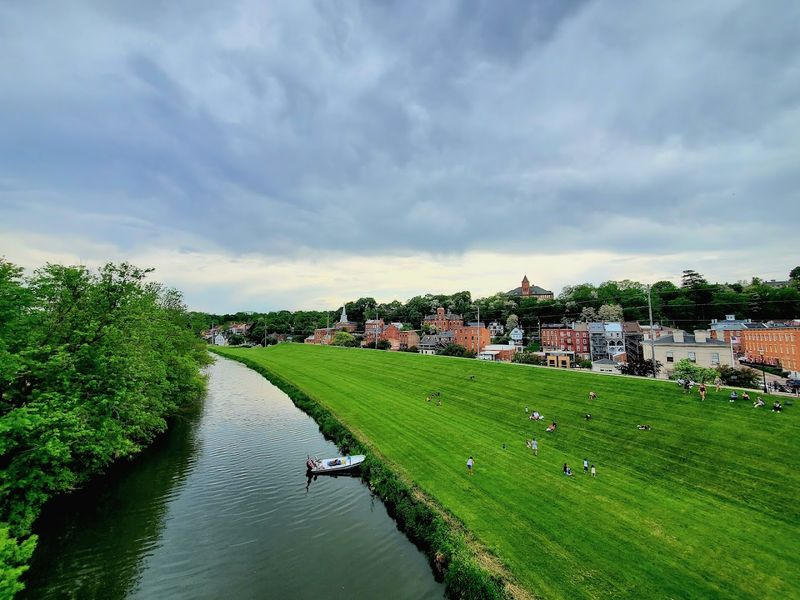
Not every overlook delivers on its promise, but Horseshoe Mound does not mess around. The view from the top is genuinely one of the most sweeping natural panoramas in the entire Midwest.
The mound rises on the outskirts of Galena and, on a clear day, offers visible stretches of Illinois, Wisconsin, and Iowa all at once. The Galena River winds through the valley below, and the patchwork of farmland, forest, and rolling terrain stretches as far as the eye can comfortably follow.
Getting up there requires a bit of a hike, but the trail is manageable for most fitness levels and the payoff is immediate once you crest the top. Early morning visits are especially rewarding when the valley mist has not yet burned off and the whole landscape looks like it is wearing a soft, gauzy layer.
Photographers tend to linger longer than everyone else, and honestly, that is a reasonable response. Horseshoe Mound is the kind of place that quietly recalibrates your sense of scale and reminds you just how much open, beautiful country still exists in this part of the country.
Ancient Mysteries at Casper Bluff: The Effigy Mounds
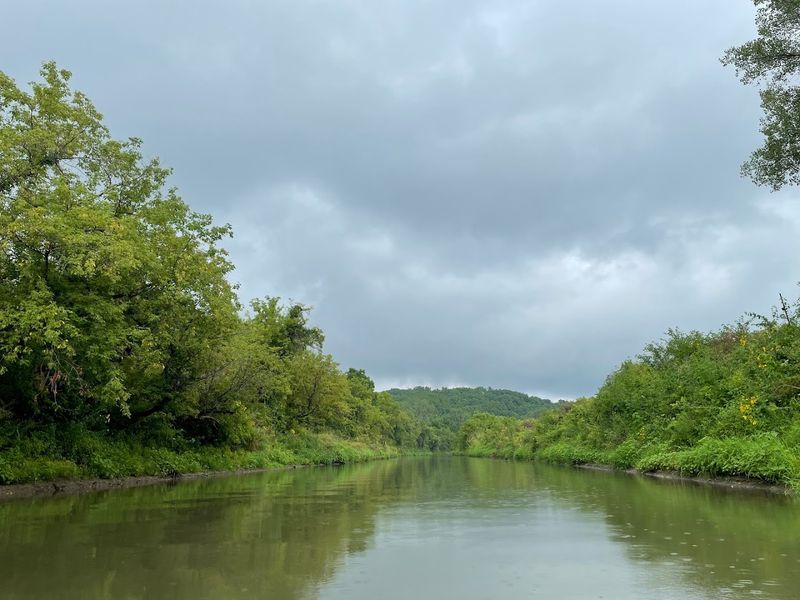
Long before lead miners arrived and Civil War generals became famous, this corner of Illinois was already home to something extraordinary. The effigy mounds at Casper Bluff are among the most quietly compelling ancient sites you can visit in the entire region.
These earthen mounds, thought to have been built by Native American peoples as ceremonial or spiritual sites, are shaped to represent animals and other forms when viewed from above. The Casper Bluff Land and Water Reserve protects the site and allows visitors to walk among the mounds on maintained trails.
The mounds date back over a thousand years, which puts them in a category of human history that most of us rarely get to stand next to in person. There is a stillness to the site that is hard to describe but easy to feel.
The landscape around Casper Bluff is also beautiful in its own right, with blufftop views and native prairie vegetation that complement the ancient earthworks. Coming here after a day on Main Street is a good reminder that Galena’s layers of history go much deeper than the 19th century.
The Galena River: A Waterway That Built a City
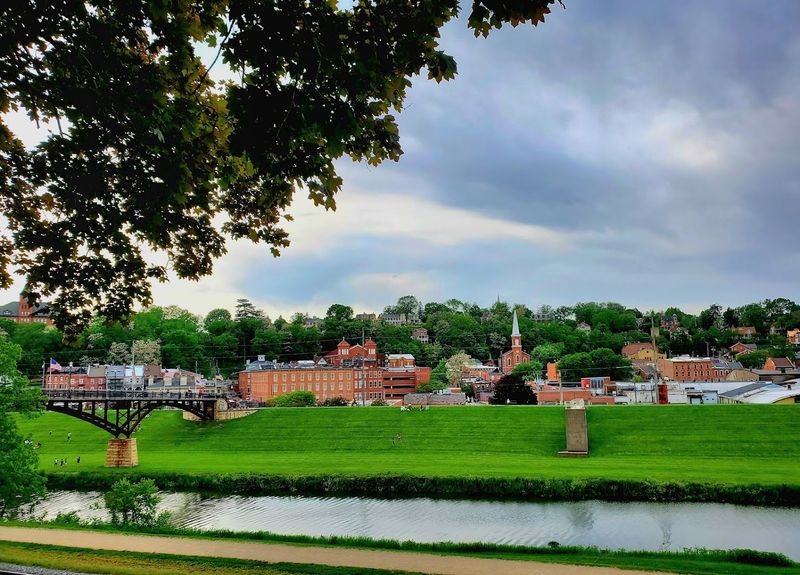
The Galena River is easy to overlook when you are busy admiring the architecture, but this modest waterway is the reason the town exists at all. Without the river, there would have been no way to ship the lead ore that made Galena one of the wealthiest cities in the pre-Civil War Midwest.
At its peak, the river was navigable by steamboats, and the docks along its banks were some of the busiest in the region. Today the river runs quieter, with a pedestrian-friendly riverwalk area that gives you a relaxed place to stroll and take in the historic surroundings from a different angle.
The flood control levee system, built after severe flooding in the 20th century, now keeps the town protected and also provides an elevated walking path with views over the river and surrounding landscape. The contrast between the calm water today and the industrial bustle it once supported is striking.
Standing on the riverwalk and looking back toward the hillside homes and church steeples of Galena, you get a perspective on the town that most visitors miss entirely, and it is well worth the short walk from Main Street.
Civil War Legacy: How One Town Sent Nine Generals to War
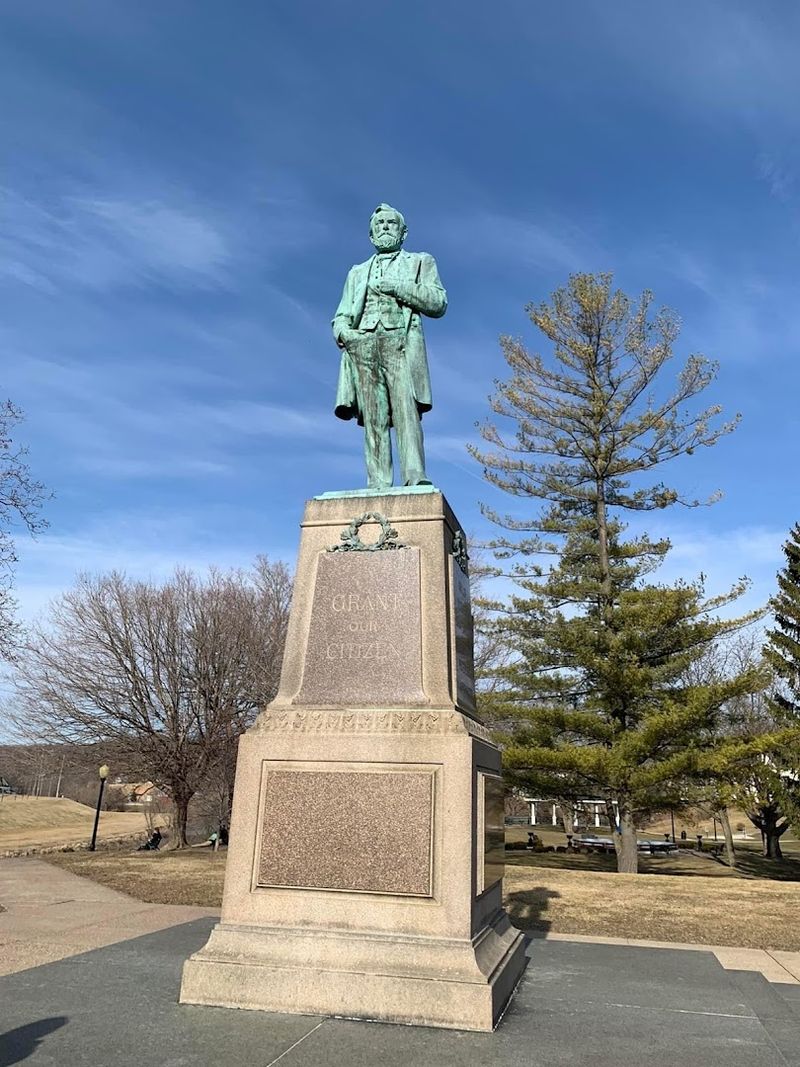
Galena’s connection to the Civil War goes far beyond Ulysses S. Grant.
The town, remarkably, sent nine men to the war who rose to the rank of general, a record that no other community of comparable size in the country could match.
That fact alone tells you something about the kind of civic energy and patriotism that defined Galena in the 1860s. The town was prosperous, well-connected, and full of men with leadership experience gained in commerce, law, and public life.
Grant himself was working in his family’s leather goods store on Main Street when the war began, having returned to Galena after a difficult period following his resignation from the Army. The store, known as the Grant Leather Store, still stands and is a popular stop on any walking tour of the historic district.
The Old Market House, another preserved landmark, served as a gathering point for community meetings during the war years. Galena’s Civil War story is not just about one famous general.
It is about an entire community that answered a call, and the town has never stopped honoring that chapter of its past.
Architectural Grandeur: The Homes That Made Galena Famous
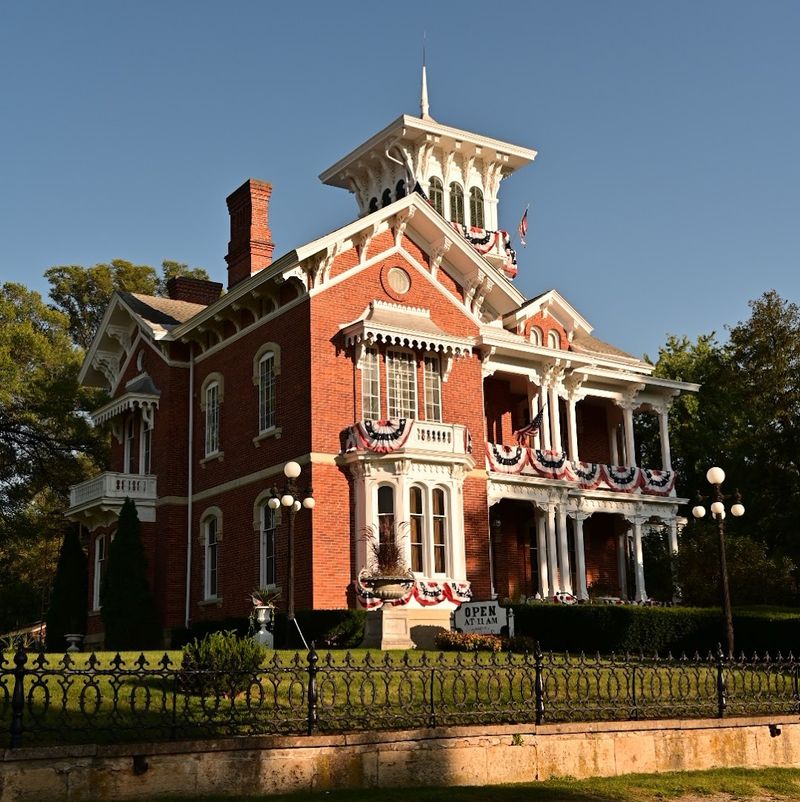
The residential streets of Galena are just as impressive as the commercial ones, and wandering away from Main Street to explore the hillside neighborhoods is one of the best things you can do here.
The town’s 19th-century prosperity is written in brick and stone across hundreds of private homes. Greek Revival, Italianate, Federal, and Queen Anne styles stand side by side on streets that climb the bluffs surrounding the downtown valley.
Many of these homes were built by lead merchants, lawyers, and civic leaders who wanted their architecture to announce their success.
The Belvedere Mansion, built in 1857, is one of the grandest examples. Its Italianate design features 22 rooms, elaborate plasterwork ceilings, and original furnishings that include pieces said to have belonged to the Liberace estate.
Tours are available and they do not disappoint.
Self-guided walking tour maps are available from the local visitor center, and they take you past dozens of significant properties with brief histories of each. You could spend an entire afternoon just walking the residential streets and never run out of something architecturally interesting to stop and admire.
Practical Tips for Visiting Galena, Illinois
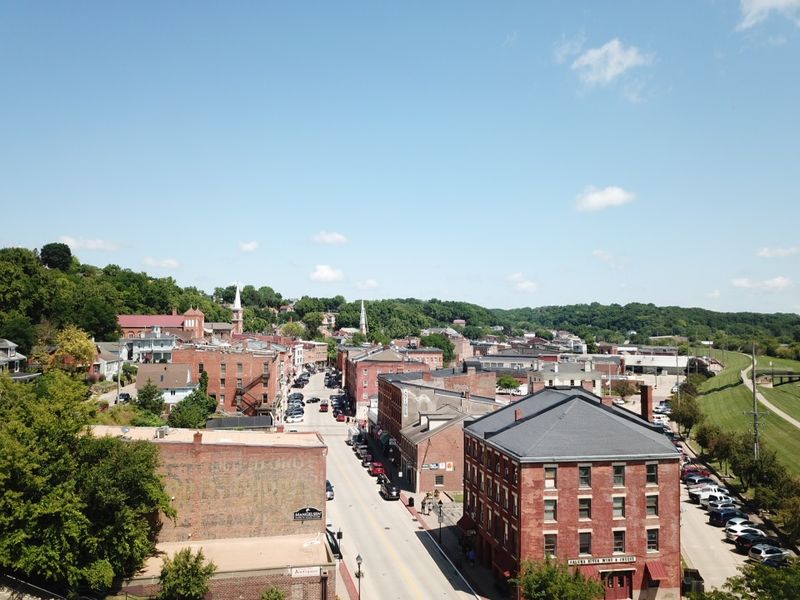
Galena rewards the visitor who takes their time, and a weekend stay is far better than a day trip if your schedule allows. The town has a solid range of bed and breakfast options, many of them housed in those same historic buildings you will be admiring from the outside.
Fall is the most popular season, and for good reason. The surrounding hills put on a serious color show from late September through October, and the cooler temperatures make walking the hilly streets genuinely pleasant.
Summer is also busy, particularly around holiday weekends, so booking accommodations early is a smart move.
Comfortable walking shoes are not optional here. The terrain is hilly and the sidewalks, while charming, are old brick and not always even.
A good pair of shoes will save you a lot of grief by the end of the day.
The Galena/Jo Daviess County History Museum is an excellent first stop for context before you start exploring. It gives you a solid grounding in the town’s lead-mining history, its Civil War chapter, and the preservation efforts that kept all of this intact.
Going in informed makes everything else you see that much richer.
Share this story