Most people think of Michigan and picture Detroit or the Lower Peninsula. But spend any real time north of the Mackinac Bridge and you quickly realize the Upper Peninsula operates by its own rules.
Over three years of living there, I drove gravel roads to nowhere, hiked trails that barely exist on maps, and stumbled onto places that left me completely speechless. The U.P. is one of the most underrated regions in the entire country, packed with dramatic geology, strange history, and communities that genuinely march to their own beat.
Tourists tend to grab a pasty, snap a photo at Pictured Rocks, and head home. That means the really extraordinary stuff stays hidden.
This list covers the places I kept returning to, the ones that made me grateful every single day that I ended up in Michigan’s wild, frozen, glorious north.
1. Black Rocks in Marquette
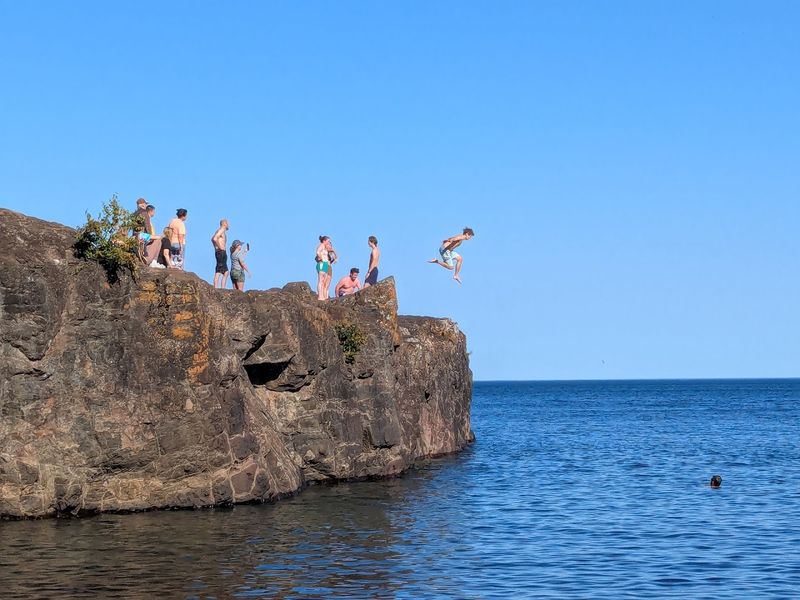
There is a rite of passage in Marquette that involves climbing dark volcanic cliffs and launching yourself into Lake Superior, and locals treat it with the kind of casual pride that outsiders find both admirable and slightly alarming.
Black Rocks sits within Presque Isle Park, a city park that wraps around a forested peninsula jutting into the lake. The cliffs themselves rise about 20 to 30 feet above the water, and on warm summer days, a steady rotation of jumpers lines the edge.
Even watching from shore is entertaining and tells you a lot about U.P. culture: practical, bold, and completely unbothered by discomfort.
The surrounding park is worth exploring on its own, with forested trails and rocky shoreline stretching in both directions. Sunset from the Presque Isle area ranks among the best free shows Marquette offers.
2. Fayette Historic State Park
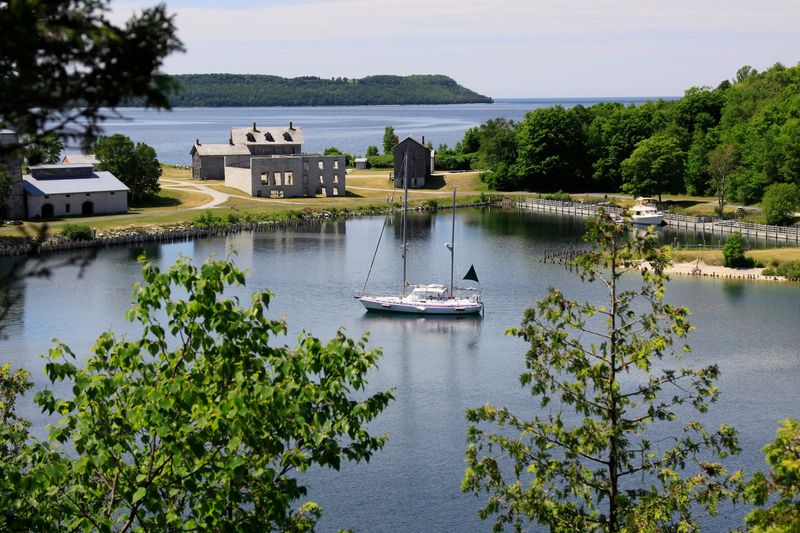
Ghost towns tend to disappoint in person, but Fayette Historic State Park on the Garden Peninsula is a rare exception that actually delivers more than its reputation promises.
This former charcoal iron-smelting community operated from 1867 to 1891, and the remaining structures include furnace ruins, a hotel shell, company homes, and a dock superintendent’s office, all sitting along a stunning limestone bay.
The turquoise color of Snail Shell Harbor behind the buildings creates a backdrop that looks almost artificially perfect for photographs.
A small museum inside the visitor center gives the site real historical depth, explaining the lives of the workers who lived and labored here. The park also offers camping, so you can stay after the day visitors leave.
Few places in Michigan pack this much history and scenery into one compact location.
3. Eben Ice Caves
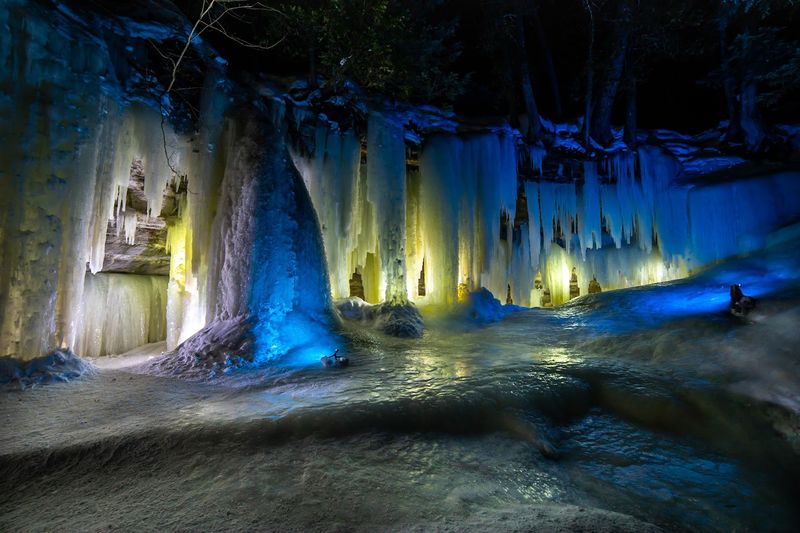
Winter in the Upper Peninsula has a way of producing things that defy easy explanation, and the Eben Ice Caves near Eben Junction are a prime example.
Every year, groundwater seeps through sandstone cliffs and freezes into enormous curtains of blue and white ice, creating formations that tower above hikers who make the trek in.
The trail itself is short but demands serious footwear since the path gets icy and uneven quickly. Most visitors have no idea this place even exists until a local lets them in on the secret.
The caves are seasonal, so timing matters. Peak conditions usually hit between late January and early March, depending on the year.
It is genuinely one of the most jaw-dropping winter hikes in the entire Midwest, and the crowds are still remarkably thin.
4. Canyon Falls
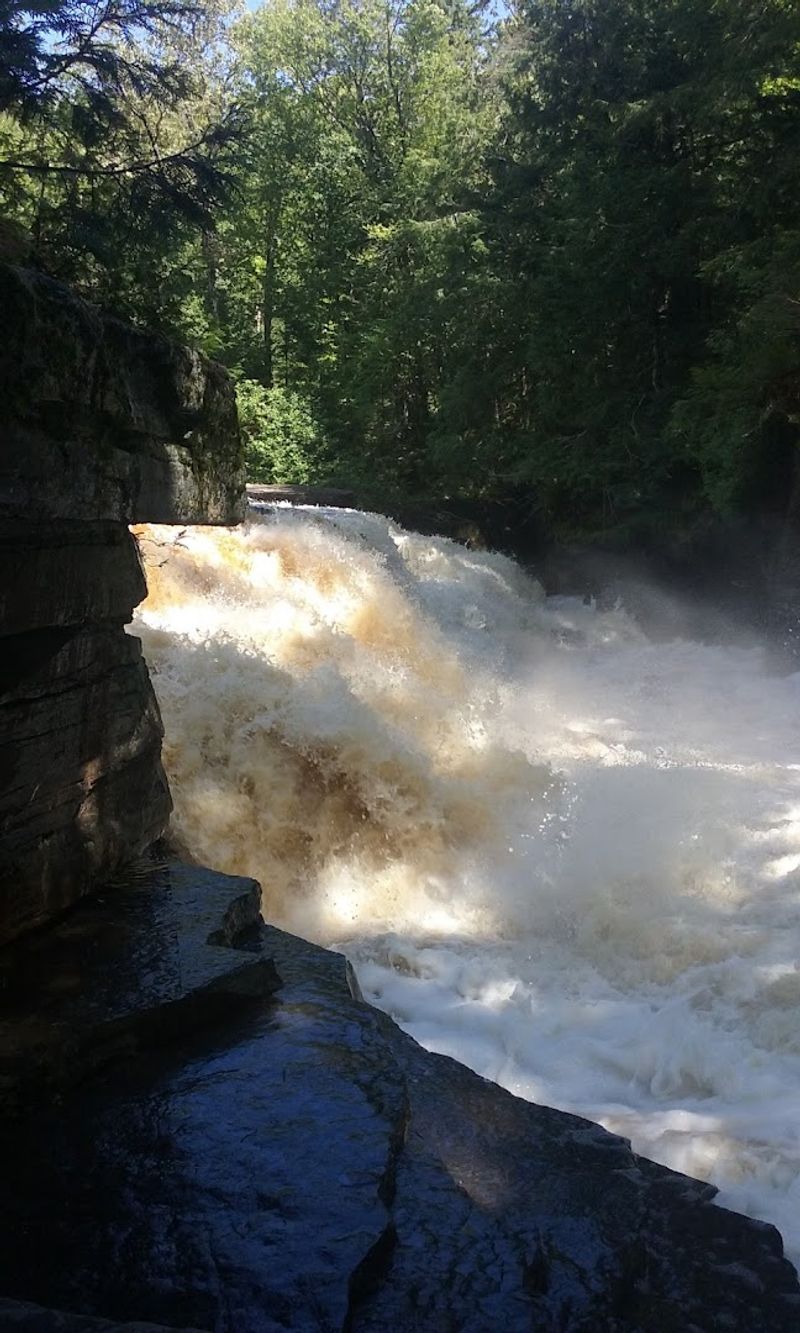
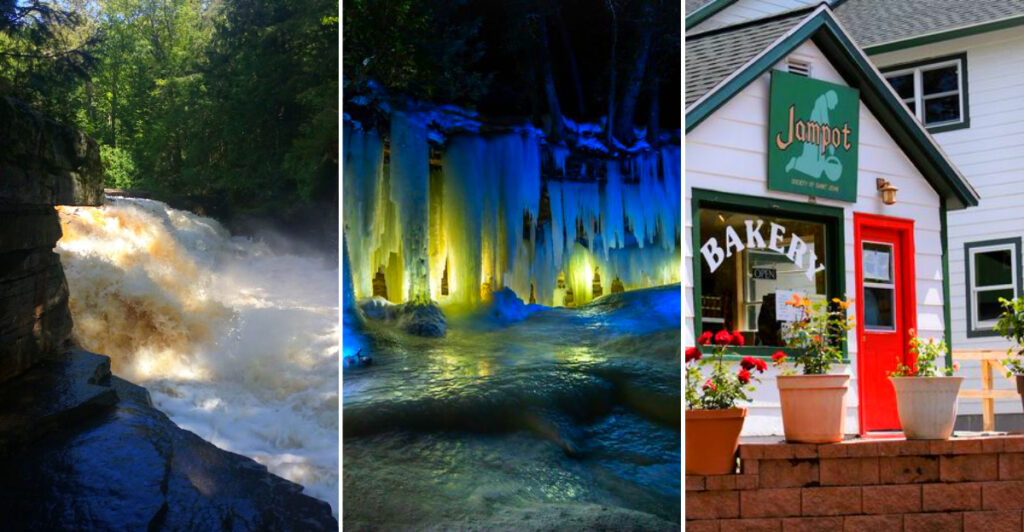
Tucked off a quiet forest road near Alberta, Canyon Falls earns its local nickname of the “Grand Canyon of the U.P.” without much argument once you see it in person.
The waterfall itself is striking, but the real showstopper is the narrow gorge the water has carved through ancient Precambrian rock over thousands of years. Walls of stone rise steeply on both sides, making the canyon feel much more dramatic than its modest size suggests.
The trail from the parking area is short, less than a mile round trip, which means almost anyone can reach it comfortably. That accessibility makes it a bit puzzling why more people don’t know about it.
Weekday visits almost guarantee you’ll have the whole place to yourself, which makes the experience feel genuinely personal rather than touristy.
5. Kitch-iti-kipi
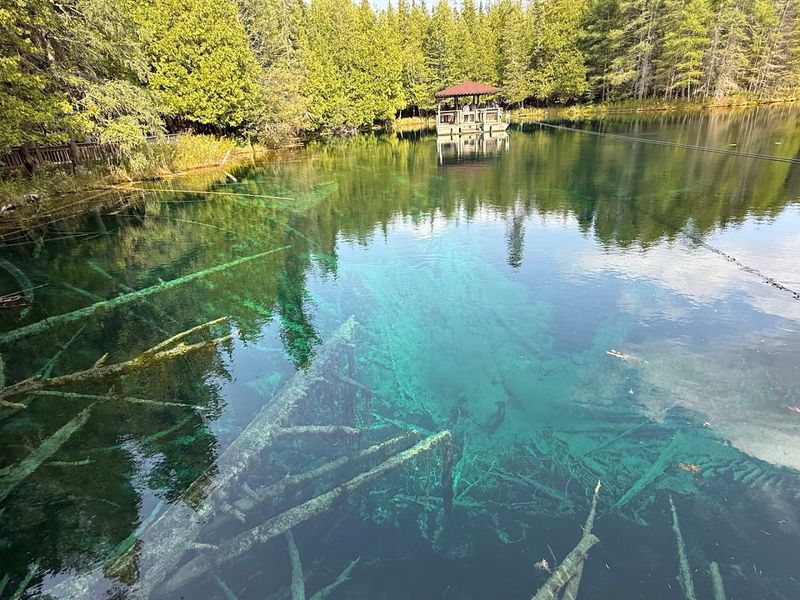
Michigan’s largest natural freshwater spring sits inside Palms Book State Park, and nothing quite prepares first-time visitors for how unreal it looks.
Kitch-iti-kipi spans 200 feet across and reaches 40 feet deep, with water so clear that ancient fallen tree trunks and enormous trout are visible from the surface without any effort.
A self-operated wooden observation raft carries visitors across the spring by pulling a cable hand-over-hand, which adds a low-tech charm that somehow makes the experience more memorable than any motorized tour could.
The water temperature stays at a constant 45 degrees Fahrenheit year-round, fed by underground fissures that push out thousands of gallons per minute. The spring never freezes, which makes it visually striking even in the middle of a brutal U.P. winter.
It is the kind of place that makes you stop talking and just stare.
6. The Gay Bar

The name alone has been generating confused double-takes from road-trippers for decades, and honestly, that reaction is part of what makes stopping here so enjoyable.
The Gay Bar sits in the tiny community of Gay on the Keweenaw Peninsula, a spot so remote that most GPS systems seem personally offended by its existence. The bar has been a gathering point for snowmobilers, copper country locals, and curious travelers who spotted the name on a map and simply had to investigate.
The food is straightforward and honest, with burgers that get consistently praised by regulars. The walls are covered in memorabilia that traces decades of Keweenaw history, and conversations with the staff tend to be genuinely entertaining.
Outside, the ruins of old copper stamp mills dot the nearby shoreline, adding an unexpected layer of industrial history to what is already a pretty unforgettable pit stop.
7. Hungarian Falls
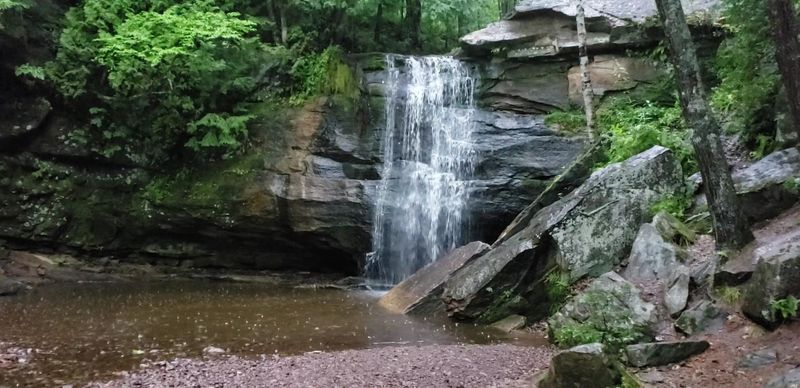
Hidden in the woods near Hubbell on the Keweenaw Peninsula, Hungarian Falls is the kind of discovery that makes you feel like a genuine explorer rather than a tourist following a crowd.
The falls drop in multiple stages through a forested ravine, with each tier offering its own distinct character. Some sections are wide and dramatic, others narrow and forceful, and the surrounding rock formations change shape as you move downstream.
The trails leading to the falls are not heavily maintained, which keeps visitor numbers low but also means you need solid footwear and some basic trail sense before heading in. The reward for that small effort is a waterfall series that rarely appears on mainstream travel lists.
Locals in the Copper Country region treat this place as their personal backyard, and spending time there makes it easy to understand why they guard it so closely.
8. Crisp Point Lighthouse
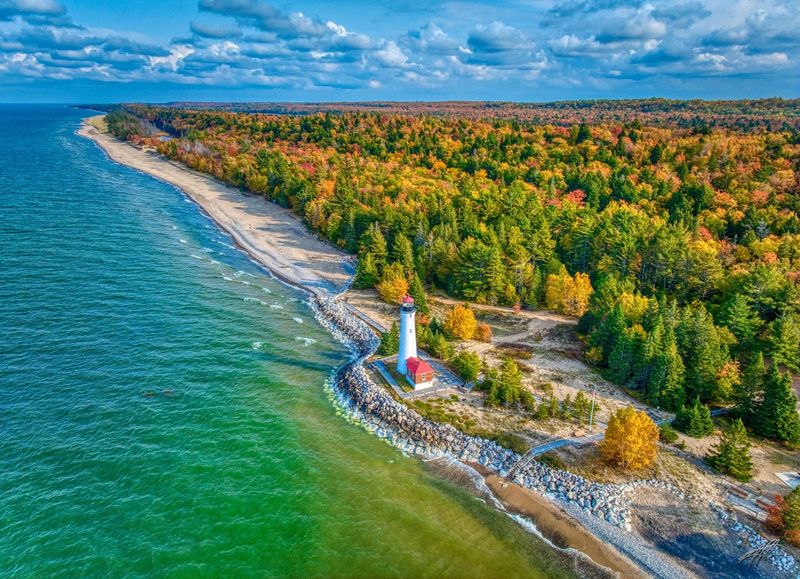
Getting to Crisp Point Lighthouse requires roughly 20 miles of unpaved road, a willingness to lose all phone signal, and the patience to drive slowly enough that your vehicle survives the gravel.
What waits at the end of that journey is a restored 1904 lighthouse standing completely alone on the Lake Superior shoreline, with nothing around it but water, sky, and endless forest behind you.
The lighthouse is maintained by a volunteer nonprofit organization that has worked for decades to prevent it from collapsing into the lake. Their efforts are visible in the careful restoration work that makes the structure genuinely beautiful up close.
Camping is available nearby, and staying overnight means experiencing a level of darkness and quiet that most people never encounter in modern life. The stars visible from this stretch of shoreline are, without exaggeration, extraordinary.
9. The Paulding Light
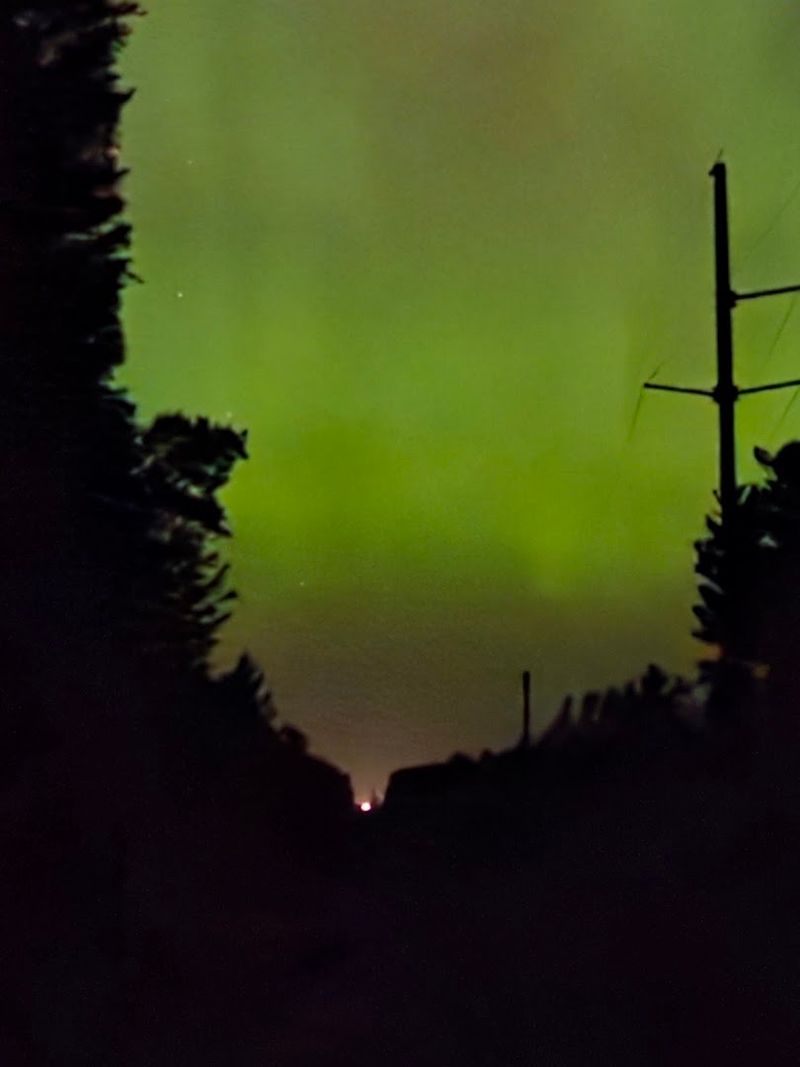
Every region has its unexplained mystery, and Michigan’s Upper Peninsula delivers one of the more entertaining versions in the form of the Paulding Light.
For decades, visitors have driven to a dead-end road between Watersmeet and Paulding after dark to watch a light appear, hover, change color, and move in ways that resist simple explanation. Scientists from Michigan Tech investigated the phenomenon in 2010 and concluded it was caused by car headlights refracting along a distant highway, but that explanation has done almost nothing to slow the crowds who come looking for something stranger.
The experience is genuinely odd regardless of what you believe caused it. Standing in a dark forest watching an unexplained light do its thing is unsettling in a way that’s hard to shake afterward.
It remains one of the most famous roadside mysteries in the entire Great Lakes region.
10. Copper Harbor
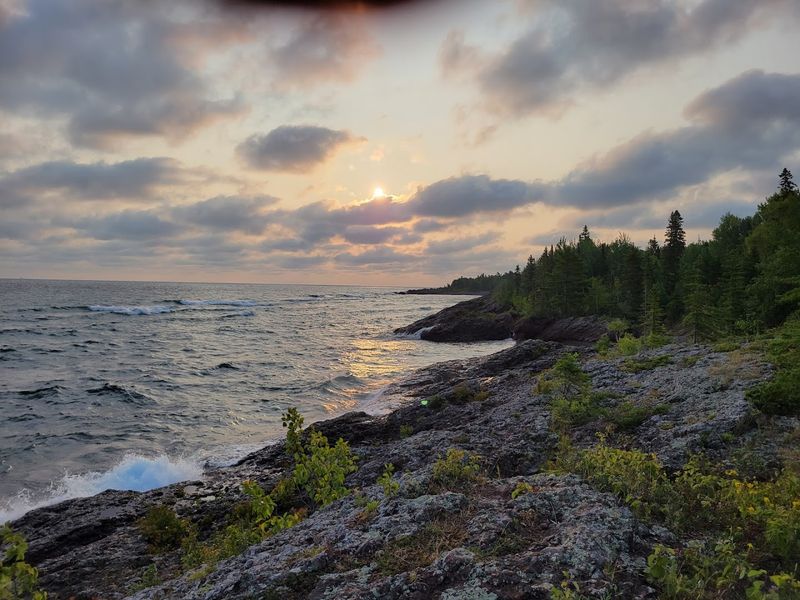
Copper Harbor sits at the absolute northern tip of the Keweenaw Peninsula, which means reaching it requires full commitment to the drive, and that commitment filters out everyone who isn’t serious about being there.
The town itself is small enough that a slow walk covers every street in under 20 minutes, but the surrounding landscape more than compensates for the compact size. Mountain biking trails here have earned a serious national reputation, drawing riders from across the country who want technical single-track through old-growth forest.
Fort Wilkins State Park preserves a mid-1800s military outpost just outside town, giving history enthusiasts a genuinely well-preserved destination. The harbor views from the breakwater on a clear afternoon are the kind that make people reconsider their life choices about where they live.
Copper Harbor has a quiet confidence that comes from knowing exactly what it is.
11. Miners Castle at Sunrise
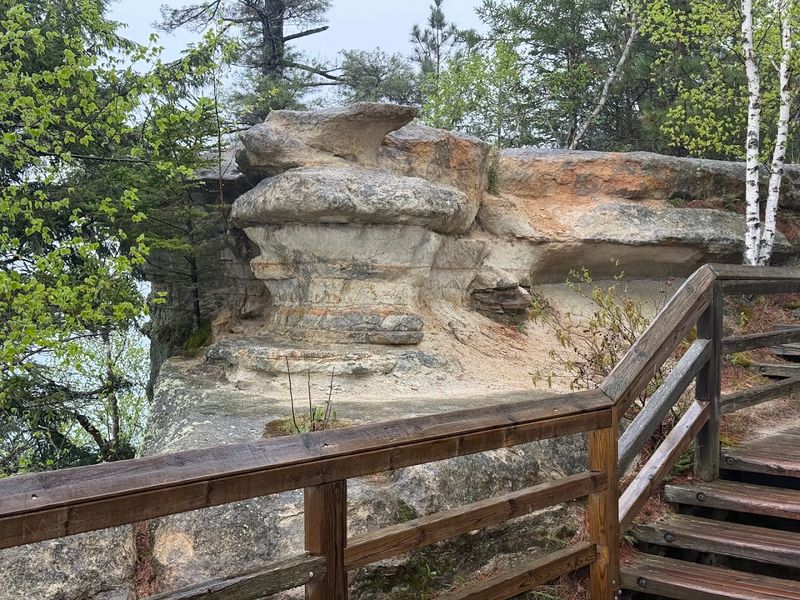
Pictured Rocks National Lakeshore draws enormous crowds during summer, but almost none of those visitors are standing at Miners Castle when the sun comes up.
The famous sandstone formation rises 50 feet above Lake Superior, and at sunrise the colors that play across both the rock and the water shift rapidly through shades of pink, orange, and gold before settling into the bright daylight palette most visitors see. Arriving before 6 a.m. in peak season means having the entire overlook to yourself.
The Miners Castle area also connects to Miners Beach, a stretch of sand that offers a completely different perspective on the cliffs from water level. Kayakers who launch early often report seeing the formation in morning light from the lake, which is an even more dramatic view.
Timing a visit around sunrise here is one of the simplest upgrades anyone can make to a Pictured Rocks trip.
12. The Jampot
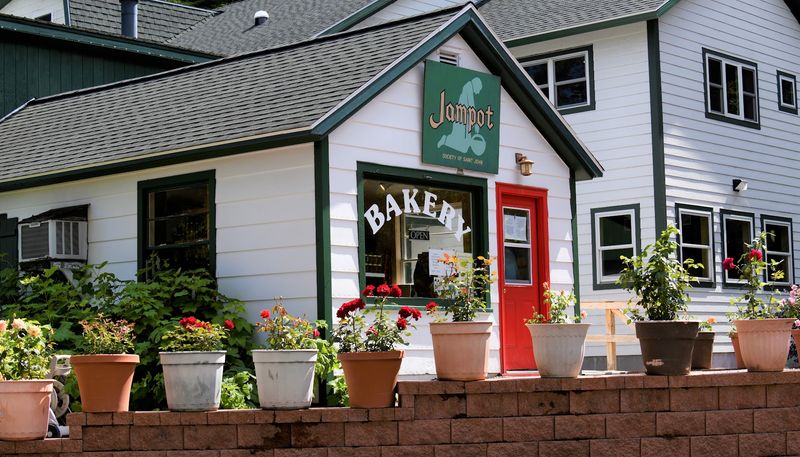
A monastery bakery run by monks on a remote stretch of highway sounds like the setup for a joke, but the Society of Saint John’s Jampot near Eagle Harbor is completely serious and completely worth the detour.
The monks produce thimbleberry jam, fruitcakes, and seasonal baked goods in small batches, and the operation runs on an honest first-come, first-served basis. Arriving late in the day often means the shelves are bare, which is a lesson most visitors only need to learn once.
Thimbleberries grow wild across the Upper Peninsula and have a short harvest window, making the jam genuinely rare outside the region. The Jampot is one of the only places where you can reliably find it in any quantity.
Jacob’s Falls sits just steps from the bakery, which gives the stop a bonus waterfall that most people didn’t even plan for.
13. Tahquamenon Falls in Winter
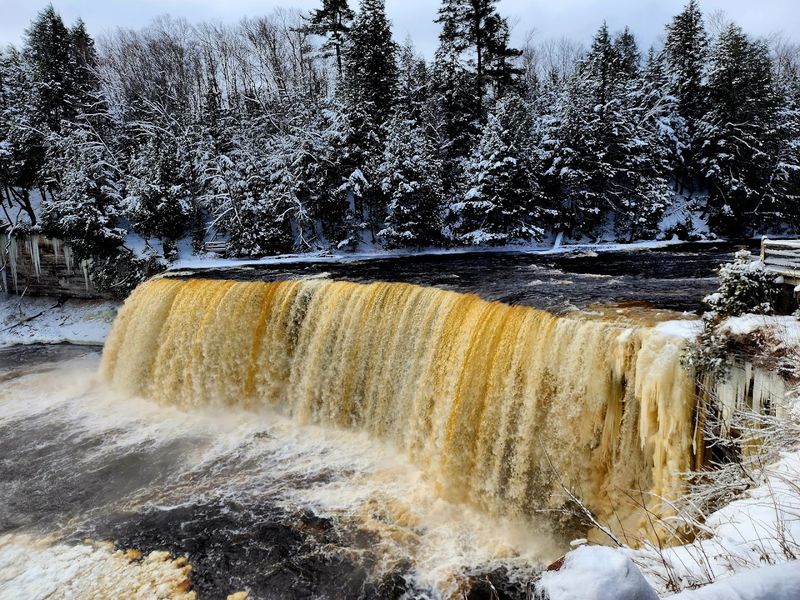
Summer visitors to Tahquamenon Falls see an impressive waterfall. Winter visitors see something closer to a spectacle that most people don’t even know exists.
The upper falls, one of the largest waterfalls east of the Mississippi River, pushes too much water to freeze completely even in the coldest months. What happens instead is a dramatic contrast: amber-tinted water, colored by tannins from decaying vegetation upstream, crashes through formations of ice that build up along the edges and surrounding rock faces.
Snow-covered forest lines both sides of the river for the entire trail system, which stays open year-round and can be explored by snowshoe during winter. Visitor numbers drop dramatically after October, which means the experience becomes far more personal than the crowded summer version.
The amber water against white snow and grey ice is one of those color combinations that photographs almost always fail to capture accurately.
14. Mount Arvon
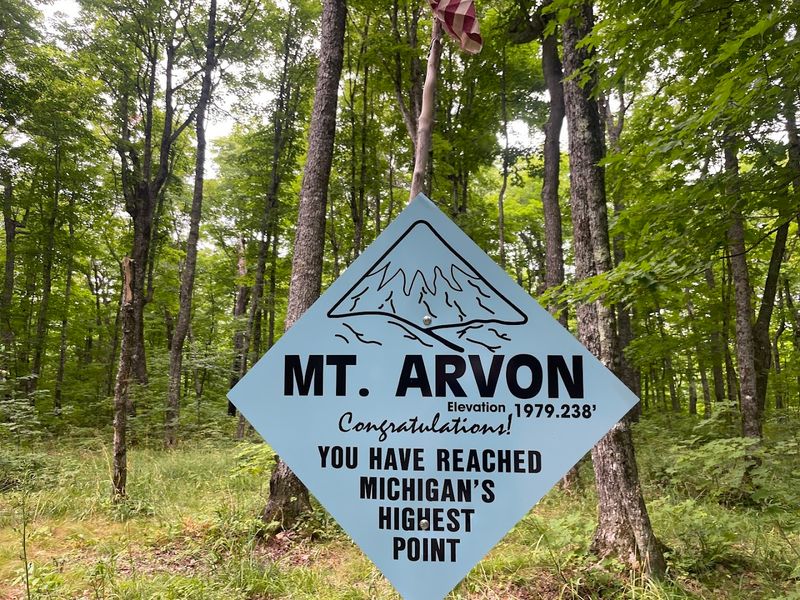
Michigan’s highest point doesn’t announce itself with dramatic cliffs or sweeping alpine meadows. Mount Arvon rises to 1,979 feet above sea level in the Huron Mountains, and reaching the summit involves navigating a series of forest roads that grow progressively narrower and less confident as you approach.
The summit itself is forested, so the view is modest rather than panoramic, but that’s almost beside the point. The satisfaction of standing at the highest spot in Michigan, with no other person in sight and no cell service for miles, carries its own quiet reward.
A small wooden sign marks the peak, and visitors often leave notes or small mementos in a weatherproof box nearby. The surrounding Huron Mountains are privately owned and largely off-limits, making the public access road to Arvon a genuinely rare opportunity in this part of the U.P.
15. Silver Mountain
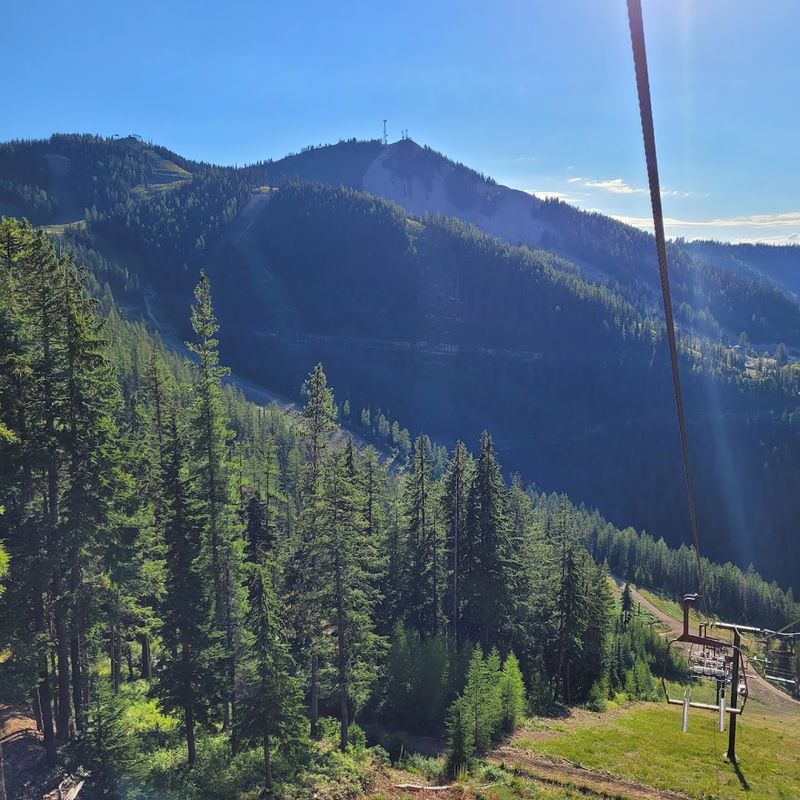
Barely anyone outside the immediate area around L’Anse seems to know that Silver Mountain exists, which is genuinely baffling once you see what it offers from the top.
The overlook sits above a landscape that stretches seemingly without limit in every direction, with Keweenaw Bay and the distant hills of the Keweenaw Peninsula visible on clear days. During fall color season, the hillsides below turn into a patchwork of orange, yellow, and red that makes the drive up feel almost unfairly rewarding.
The road to the top is unpaved and requires careful driving, particularly after rain. A small parking area sits near the summit, and a short walk reaches the main viewpoint.
Unlike many overlooks that require serious hiking, Silver Mountain delivers its payoff quickly, making it accessible for a wide range of visitors. The lack of crowds here remains one of the U.P.’s most pleasant ongoing surprises.
16. Brockway Mountain Drive
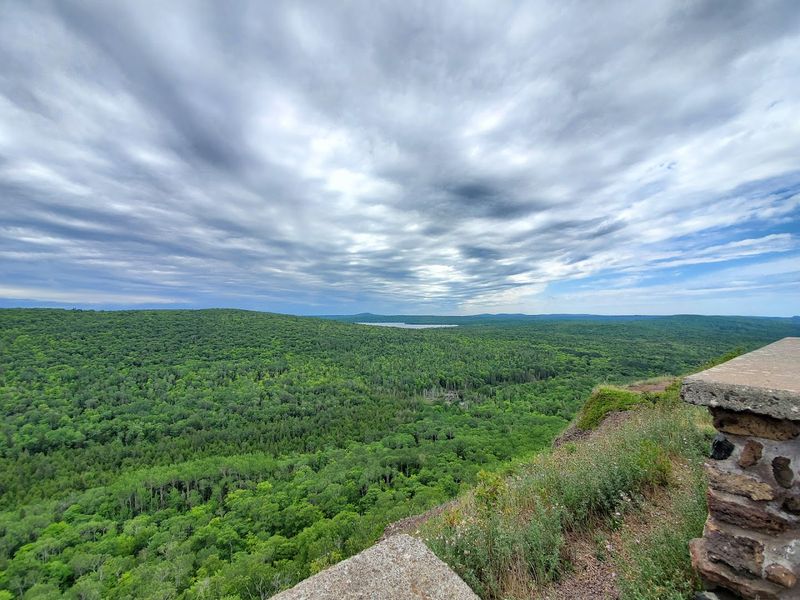
The first time I drove Brockway Mountain Drive, I pulled over three separate times because the views kept getting better in ways I wasn’t prepared for.
The road climbs to 735 feet above Lake Superior along the spine of the Keweenaw Peninsula, offering unobstructed views across the lake and down into the forests below. On clear days, the Canadian shoreline is visible in the distance, which still surprises people who forget how large Lake Superior actually is.
The drive is especially popular during hawk migration season in September and October, when thousands of raptors ride the thermals above the ridge. A small shelter near the summit gives visitors a place to watch without fully braving the wind.
After three full years of living in the Upper Peninsula, this road never lost its ability to produce a genuine moment of pause. Some places simply don’t wear out.
Share this story