There is a small town in northwest Illinois where the streets look like they belong in a period film, the buildings have barely changed in 150 years, and the whole place smells faintly of old brick and fresh pie. Every block tells a story, and not the kind you have to squint to find.
I first heard about this town from a friend who said, “You will think someone built a museum and forgot to rope it off.” She was not wrong. From a Civil War general’s home to ancient earthen mounds on the edge of town, this place packs more history into a few square miles than most cities manage across an entire county.
Keep reading, because this one is worth every word.
Where It All Begins: The Heart of Galena
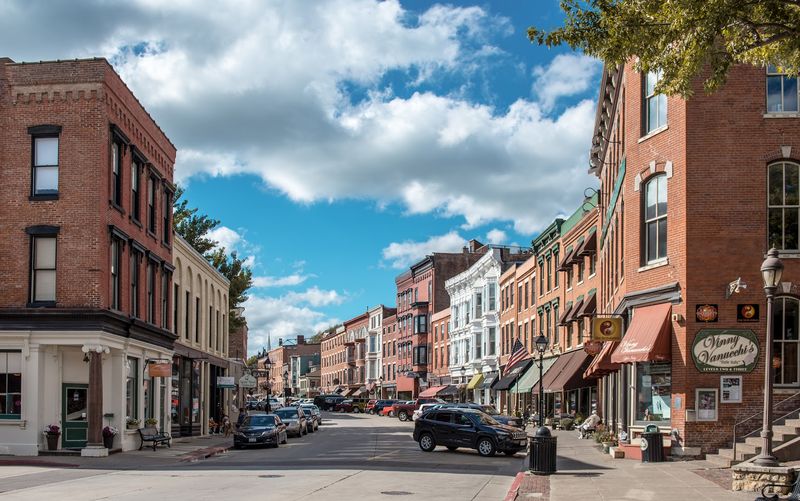
Galena, Illinois, sits in the far northwest corner of the state at Illinois 61036, tucked into the rolling hills of Jo Daviess County near the Mississippi River. The town is not easy to stumble upon by accident, and that is part of its charm.
You have to want to be here, and once you arrive, you will be glad you made the effort.
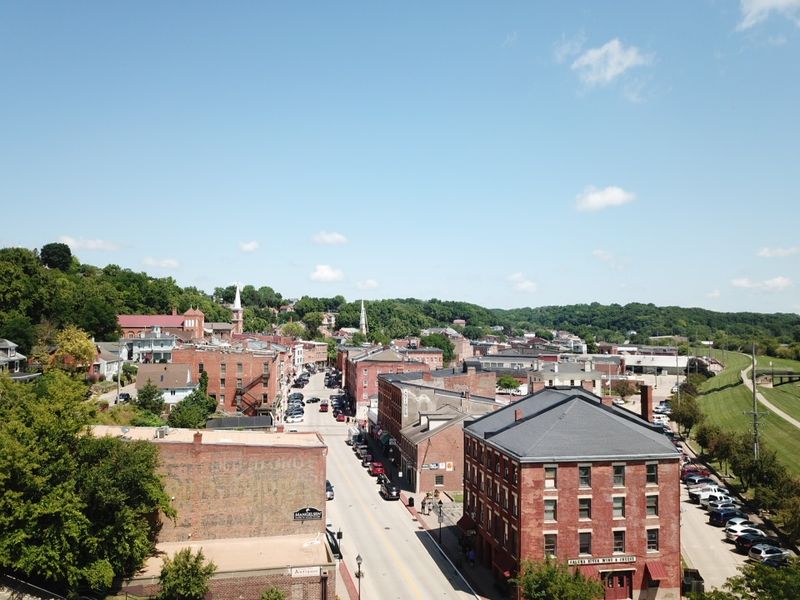
Main Street is the beating heart of the town, lined with well-preserved 19th-century storefronts that house boutiques, bakeries, and galleries. The brick sidewalks are uneven in the best possible way, worn smooth by generations of foot traffic.
What makes Galena genuinely special is how little it has changed. Unlike many historic towns that have traded authenticity for tourist convenience, Galena has kept its bones intact.
The scale of the buildings, the width of the streets, and the rhythm of the town still match what they looked like in the 1800s. It is a rare thing, and locals know it.
The Dowling House and the Oldest Stone in Town
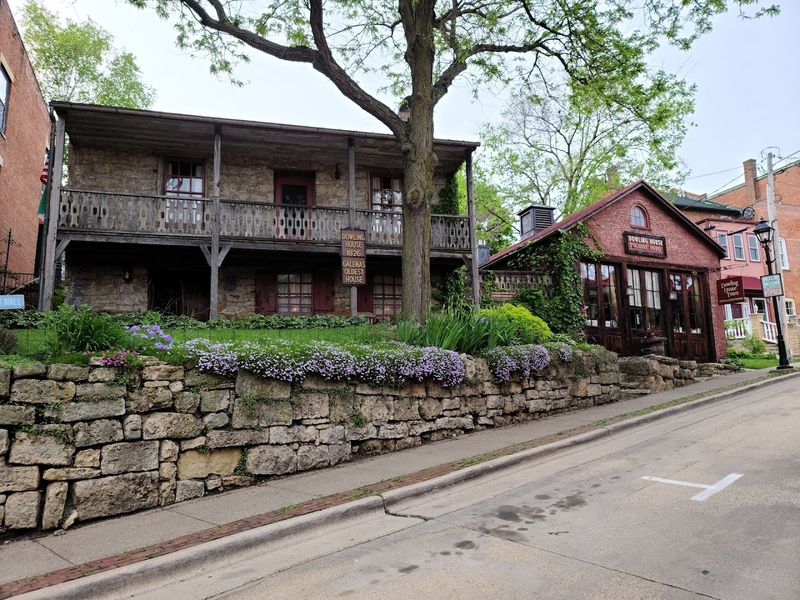
Built in 1826, the Dowling House holds the title of Galena’s oldest standing structure, and it earns that title with every rough-cut limestone wall. The building is compact and sturdy, the kind of construction that was built to last through hard winters and harder times.
John Dowling was a lead miner and trader who put down roots here when Galena was just beginning to boom. The house he built reflects that early frontier practicality: small windows, thick walls, and a layout designed for function over style.
Visiting it feels less like a museum tour and more like walking into someone’s actual past.
The interior has been restored to reflect the 1820s period, with period-appropriate furniture and tools that give a real sense of daily life on the early frontier. There are no velvet ropes keeping you at a distance.
The house sits near the base of Bench Street, a short walk from the busier parts of town, and it rewards anyone curious enough to seek it out. History this tangible does not come around often.
The Ulysses S. Grant Home: A General’s Gift
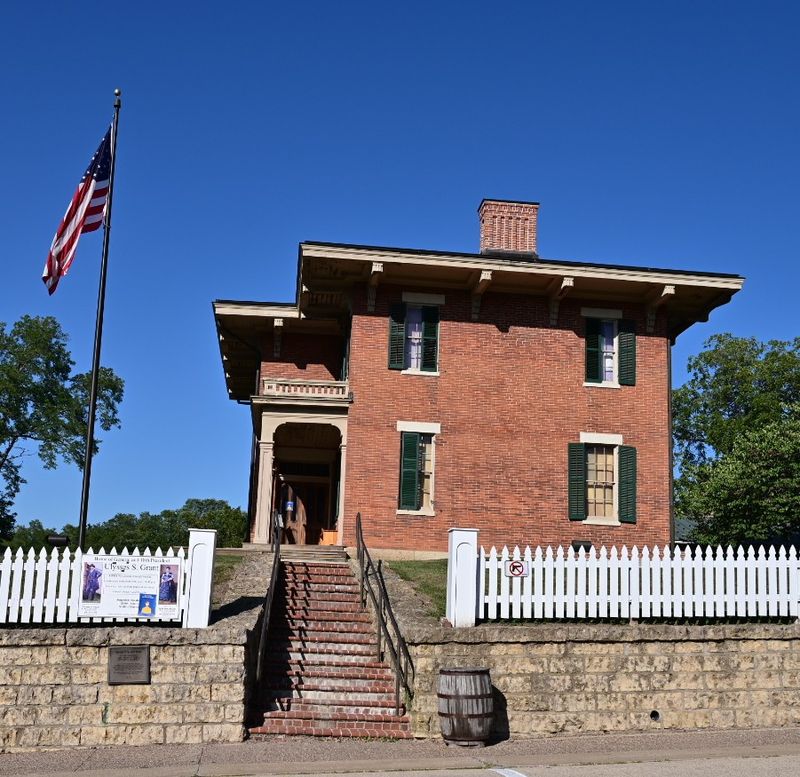
Few towns can claim they gave a future U.S. president his house as a gift, but Galena is not most towns. After the Civil War ended, grateful local citizens presented Ulysses S.
Grant with a handsome Italianate-style home perched on a hill above town. Grant accepted, and the house became one of the most visited sites in all of Illinois.
The home at 500 Bouthillier Street is preserved exactly as it appeared when Grant and his family lived there. The furnishings are original, the wallpaper is period-correct, and the staff clearly love what they do.
Standing in the parlor where Grant once sat, you get a quiet but powerful sense of the man behind the uniform.
The house is managed by the Illinois Historic Preservation Agency and is open to the public for tours. The hilltop setting gives a sweeping view of the town below, which makes the short climb up the steps completely worth it.
Grant may have gone on to lead a nation, but this modest home in a small Illinois town is where he returned to simply be himself. That says quite a lot.
Horseshoe Mound and the View That Spans Three States
On a clear day, Horseshoe Mound delivers one of the most unexpected views in the Midwest. From the top of this natural rise on the outskirts of Galena, you can see into Wisconsin, Iowa, and Illinois all at once, which is the kind of geographic flex that most overlooks cannot pull off.
The mound rises about 400 feet above the surrounding landscape and offers a 360-degree panorama of the rolling Driftless Area terrain. This is a region that glaciers missed entirely, which is why the landscape looks so dramatically different from the flat plains most people associate with Illinois.
The hills here have real elevation, real character, and real drama.
The hike to the top is manageable for most fitness levels and takes about 20 to 30 minutes. Bring water, wear sturdy shoes, and go on a weekday if you want the summit mostly to yourself.
Sunrise and late afternoon light are both excellent for photography. The view rewards patience, and on the right day, you will stand up there and feel like the whole Midwest has been laid out just for you.
Ancient Earthworks at Casper Bluff
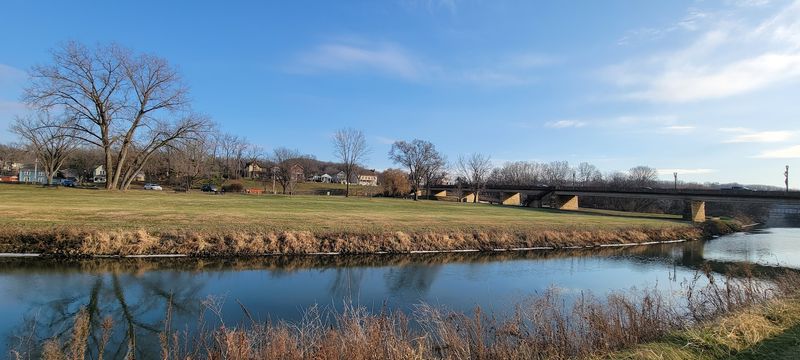
Long before Galena became a mining boomtown, people were already building on this land. At Casper Bluff Land and Water Reserve, just outside of town, a series of ancient earthen mounds sit quietly on a limestone bluff overlooking the Apple River valley.
These structures are believed to be ceremonial sites created by Native American cultures over a thousand years ago.
The mounds at Casper Bluff are effigy mounds, shaped like animals or geometric forms when viewed from above. They are subtle from ground level, which makes them even more impressive once you understand what you are looking at.
A short trail leads along the bluff and past the mounds, with interpretive signs that explain their significance without overwhelming the experience.
The reserve is managed by the Jo Daviess Conservation Foundation and is free to visit. The trail is not heavily trafficked, so you often have the bluff to yourself, which adds to the sense of quiet reverence the site deserves.
Few places in Illinois carry this kind of layered history, where the ancient and the 19th century exist just a few miles apart. Casper Bluff earns its own afternoon.
The Architecture That Makes Galena Look Like a Film Set
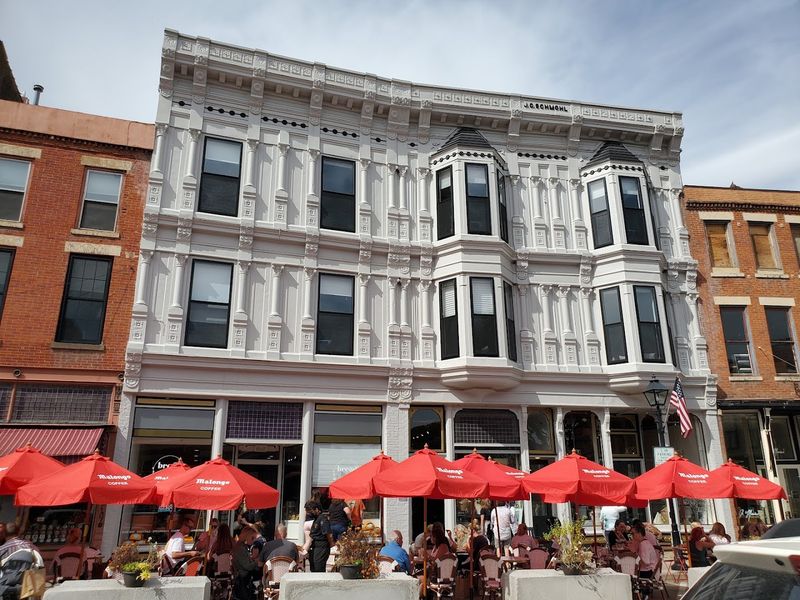
Galena has over 85 percent of its buildings listed on the National Register of Historic Places, a statistic that sounds dry until you actually walk the streets and realize what it means in practice. Every block is a catalog of 19th-century architectural styles: Italianate, Greek Revival, Federal, and Queen Anne all show up within a few minutes of each other.
The reason so much survived is partly economic. After the Civil War, Galena’s lead mining industry declined sharply, and the town lost the momentum that would have driven new construction.
While other Midwestern cities tore down their old buildings to put up modern ones, Galena simply could not afford to. That misfortune turned into preservation by default, and today the town benefits enormously from it.
The DeSoto House Hotel, which opened in 1855, is the oldest operating hotel in Illinois and has hosted Abraham Lincoln and Mark Twain. The Galena and Chicago Union Railroad Depot, now a visitors center, is another standout.
Every building has a story attached to it, and the town makes those stories accessible without being preachy about it. Good architecture aged well here.
The Lead Mining Legacy That Built the Town
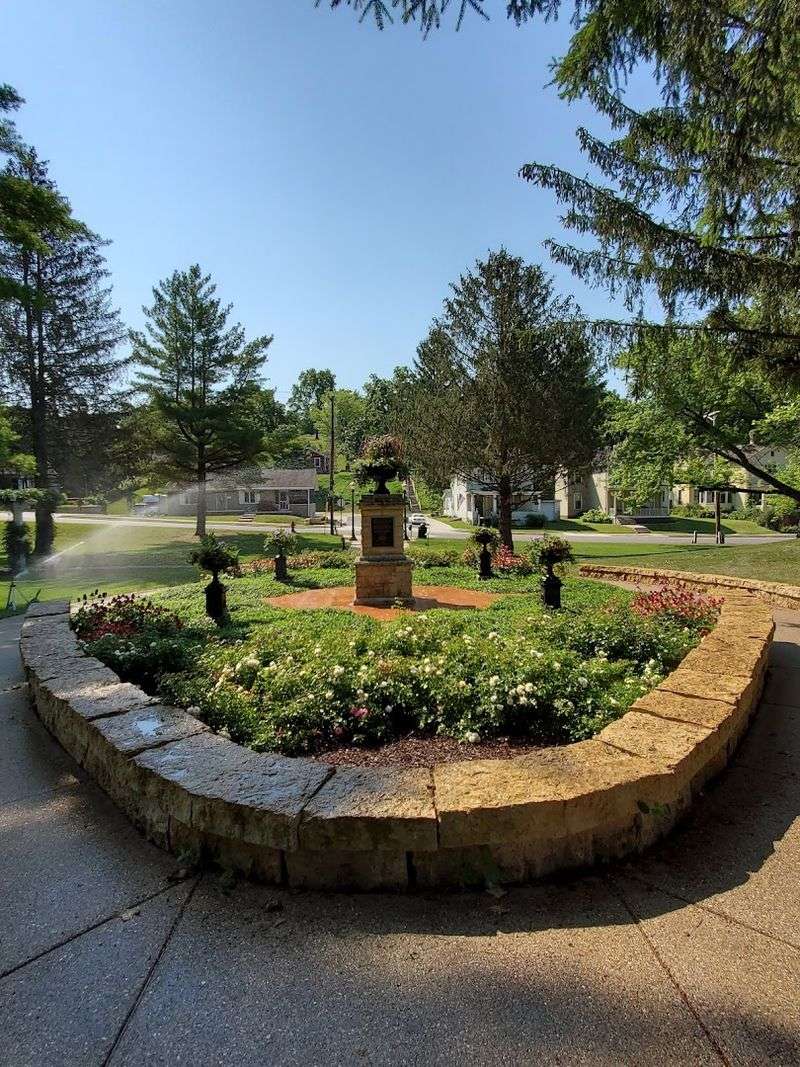
Before the Civil War, before the tourists, and before the boutique shops, Galena was a boomtown built entirely on lead. The region around Galena held some of the richest lead deposits in North America, and by the 1840s, the town was producing more than 80 percent of the nation’s lead supply.
At its peak, Galena was larger and more prosperous than Chicago.
That fact tends to stop people mid-sentence. Chicago was once the smaller city.
Galena had the money, the population, and the infrastructure. The Galena History Museum on Bench Street does an excellent job of telling this story without making it feel like a textbook.
The exhibits cover the mining process, the social structure of the boom years, and the gradual decline that followed when the ore ran out and the railroads bypassed the town.
The museum also covers Galena’s remarkable collection of Civil War generals. Nine Union generals came from this single small town, which is an extraordinary concentration of military leadership from one community.
The lead mining wealth funded education and opportunity, and the town produced leaders as reliably as it once produced ore. That legacy still shapes how Galena sees itself.
Strolling Bench Street and the Neighborhood Hills
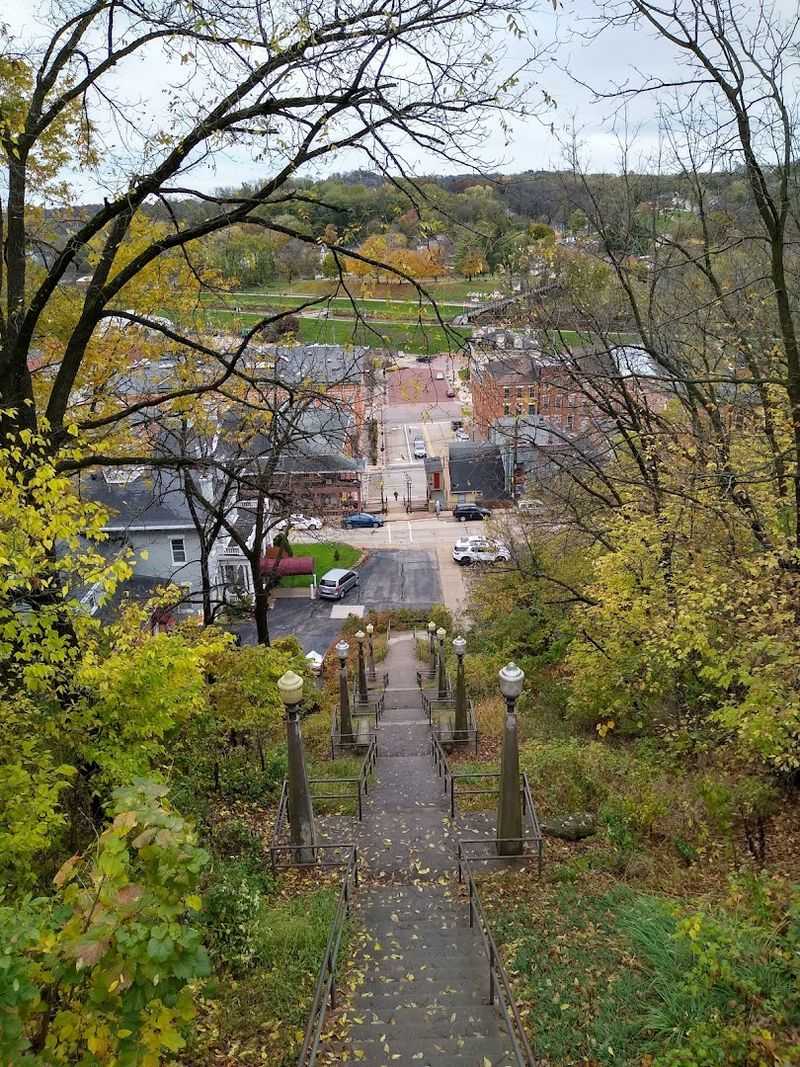
Galena is not a flat town. The streets climb and dip in ways that keep your legs honest, and the residential neighborhoods stacked up on the surrounding hills are some of the most photogenic blocks in the state.
Bench Street, which runs parallel to Main Street at a higher elevation, offers a quieter and often overlooked perspective on the town.
From Bench Street, you look down at the rooftops of the commercial district and out toward the river valley beyond. The homes up here are a mix of modest worker cottages and more elaborate merchant houses, all packed close together on narrow lots.
Walking these blocks feels genuinely unhurried, which is a rare sensation in a town that also draws a steady stream of visitors.
The hillside staircases connecting the different street levels are worth seeking out. Some are original stone steps, worn and mossy, that have connected neighbors for nearly two centuries.
The whole neighborhood grid has an organic quality that you do not get from planned developments. Galena grew the way towns used to grow, following the land rather than overriding it, and the result is a place that feels earned rather than designed.
The Galena River Trail and Outdoor Life
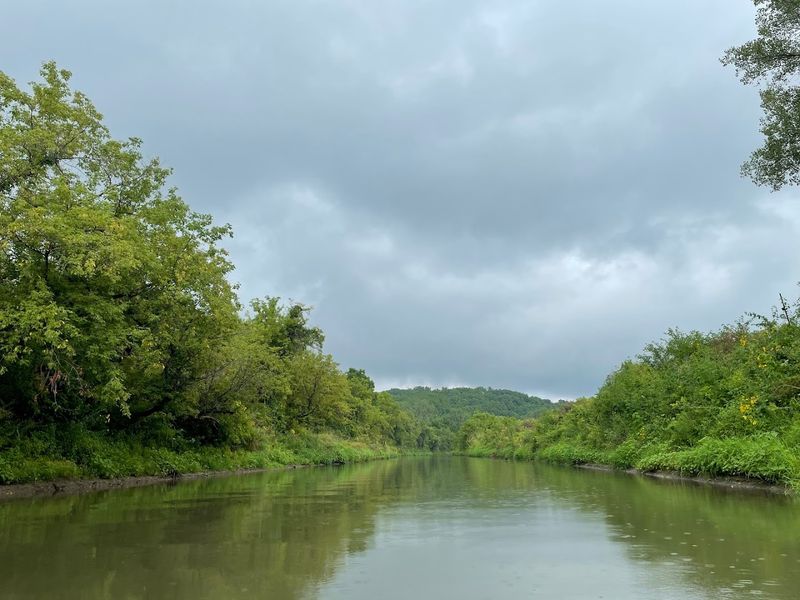
Not everything in Galena asks you to look at old buildings. The Galena River Trail runs about 6 miles along the Galena River and offers a completely different kind of experience than the historic downtown.
The trail is paved, flat, and accessible, making it a good option for families, cyclists, and anyone who wants to stretch their legs without climbing hills.
The trail passes through a mix of open meadows and wooded sections, with the river visible for much of the route. Bird watching is excellent here, particularly in spring and fall migration seasons.
Great blue herons are a common sight, and the quieter stretches of the trail feel genuinely removed from the bustle of Main Street, even though the two are only minutes apart.
The surrounding Jo Daviess County also offers opportunities for horseback riding, kayaking on the Galena River, and mountain biking on more rugged terrain. Apple River Canyon State Park is about 20 miles east and makes for a solid half-day side trip.
Galena works well as a base for exploring the wider Driftless Area, a landscape that rewards anyone willing to slow down and pay attention to it.
Shopping and Local Crafts on Main Street
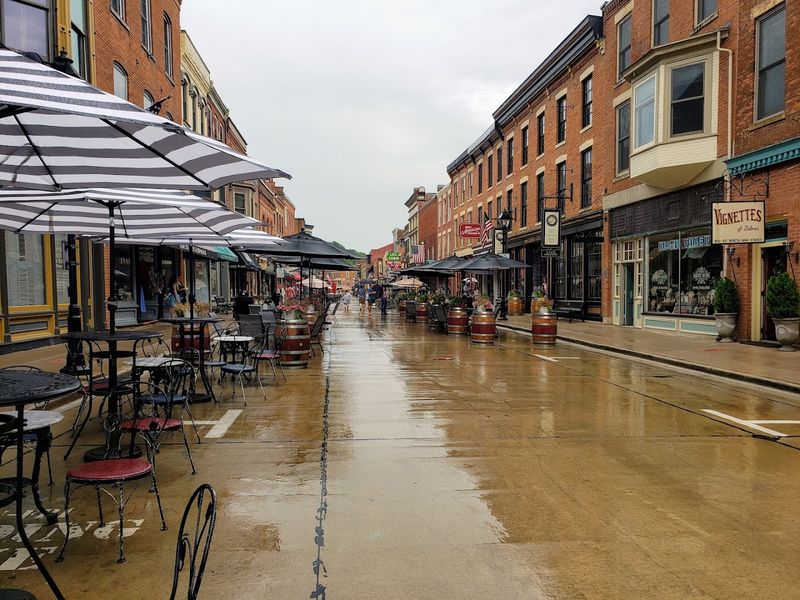
Main Street in Galena is the kind of shopping street that actually makes you want to browse. The stores are independently owned, the merchandise skews toward handmade and locally sourced, and the overall experience is the opposite of a generic outlet mall.
You will find pottery, jewelry, antiques, gourmet food products, and artwork made by regional artists.
The antique shops deserve special mention. Galena has a long tradition of antique dealing, and the quality of the inventory tends to be higher than average because the town has been drawing serious collectors for decades.
You are not sifting through boxes of broken ceramics. The good stuff is displayed properly and priced by people who know what they have.
Several shops specialize in items connected to Galena’s history, including Civil War memorabilia, Grant-related collectibles, and reproductions of period maps and photographs. The food shops carry local jams, mustards, and specialty items that travel well as gifts.
The best strategy is to walk the full length of Main Street in both directions before buying anything, because the last shop you pass might be the one that has exactly what you were looking for.
Where to Eat and What to Expect
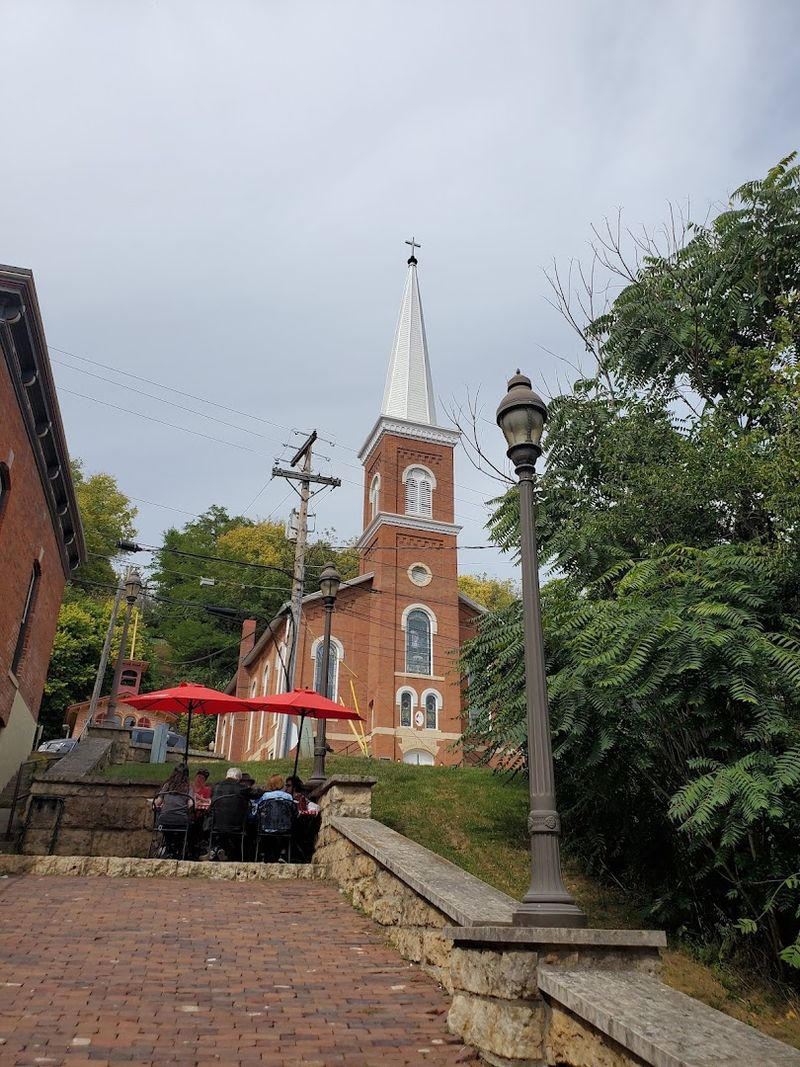
Galena’s dining scene is small but genuinely satisfying. The town has a handful of restaurants that take their food seriously without turning the experience into something stiff or precious.
The kitchens here lean toward hearty Midwestern cooking with seasonal touches, which makes sense given the agricultural landscape surrounding the town.
Fried chicken, house-made soups, and fresh-baked breads show up on menus across town, and the portions tend to be generous. Several spots source produce and proteins from local farms, which you can taste in the freshness of the ingredients.
The coffee shops and bakeries are worth visiting early in the morning before the weekend crowds pick up.
The DeSoto House Hotel has a dining room that captures the historic atmosphere of the building without feeling like a costume drama. Eating there while looking out at the street below is one of those small pleasures that makes a trip feel complete.
Reservations are recommended on weekends, especially in fall when the foliage draws visitors from across the region. Plan ahead, arrive hungry, and do not skip dessert.
The local bakers clearly take pride in their work, and it shows on the plate.
Best Time to Visit and Practical Tips
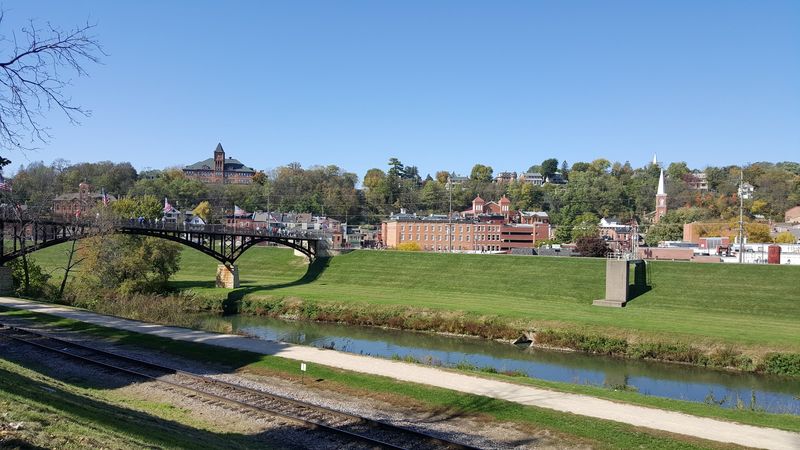
Fall is the most popular season in Galena, and the foliage in the Driftless Area delivers the kind of color that makes the drive in feel like its own attraction. October weekends fill up fast, so booking accommodations several weeks in advance is strongly advised.
Spring and early summer are quieter and equally beautiful, with wildflowers along the river trail and comfortable temperatures for walking.
Winter has its own appeal. The town decorates thoughtfully for the holidays, and the smaller crowds mean you can actually have a conversation with shop owners and locals without competing for their attention.
Some restaurants and shops reduce their hours in January and February, so checking ahead saves frustration.
Parking is available in several lots near Main Street, and the town is compact enough that a car is unnecessary once you arrive. Comfortable walking shoes matter more than anything else you pack, given the hilly terrain and uneven brick sidewalks.
The official city website at cityofgalena.org maintains a current events calendar and a list of operating hours for major sites. A weekend is enough to cover the highlights, but Galena is the kind of place that keeps revealing new details the longer you stay.
Share this story