 Unearth The Voyage
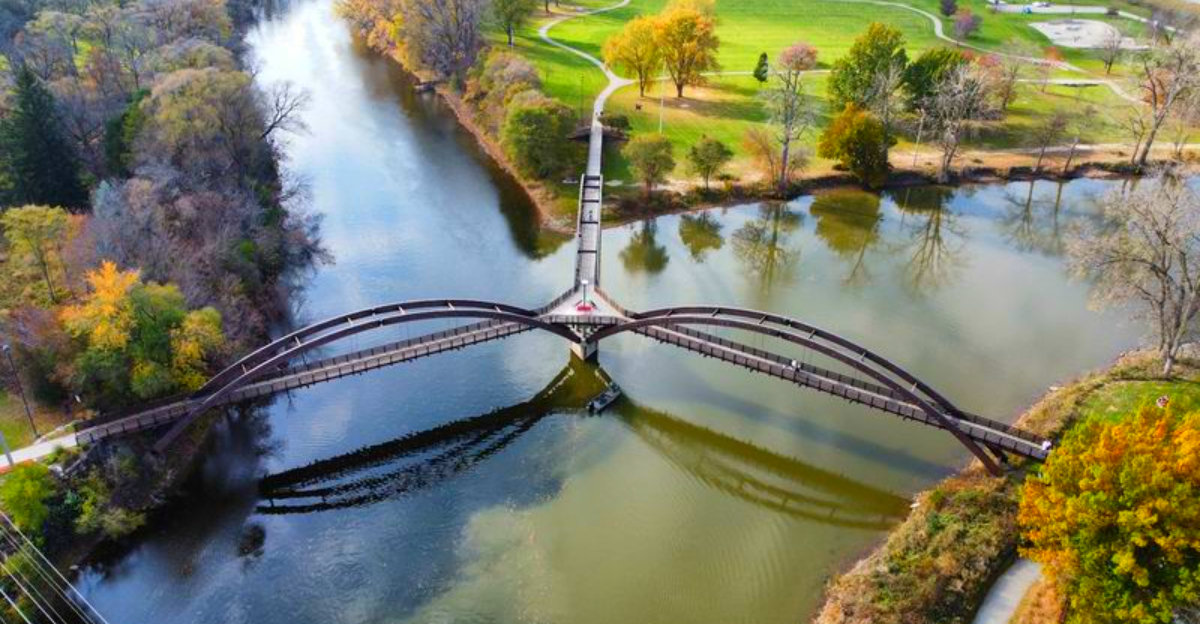
Some landmarks make you stop for a photo, but this one made me stop, wander, look around, and then circle back for another photo because one angle was simply not enough. Right in the heart of Midland, a wooden bridge with three arms stretches over the meeting point of two rivers and somehow feels both playful and beautifully precise.
It is the kind of place that works for a quick stroll, a long walk, a bike ride, or a pause on a bench when you want scenery without any fuss. Keep reading, because this is not just a bridge story – it is a riverside experience with smart design, local character, and plenty of reasons to linger.
Where the visit begins
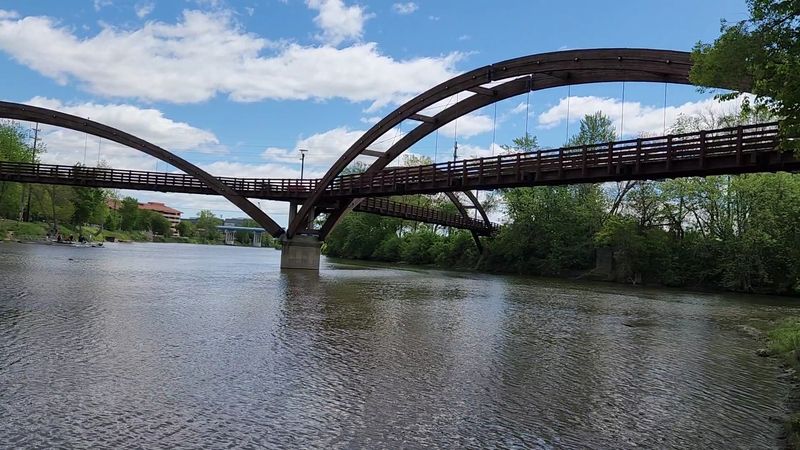
A few steps into downtown Midland, I reached The Tridge at 101 Ashman St, Midland, MI 48640, in the United States, and the setting immediately explained why cameras love this place. The bridge rises from the meeting point of the Tittabawassee and Chippewa Rivers, with three wooden arms branching toward parkland and the downtown riverfront.
That first view feels orderly and surprising at the same time. Instead of treating the rivers like scenery off to the side, the design places you directly above the action, so every direction gives you water, trees, sky, and a new path to follow.
I liked that the visit did not require a long plan or a special schedule. You can park nearby, walk out in minutes, and feel like you have landed somewhere distinctive without leaving the city behind.
For a place so easy to reach, it delivers a remarkably strong sense of arrival. My advice is simple: start here, pause in the middle, and let the rivers introduce the rest of your day.
A design you do not forget
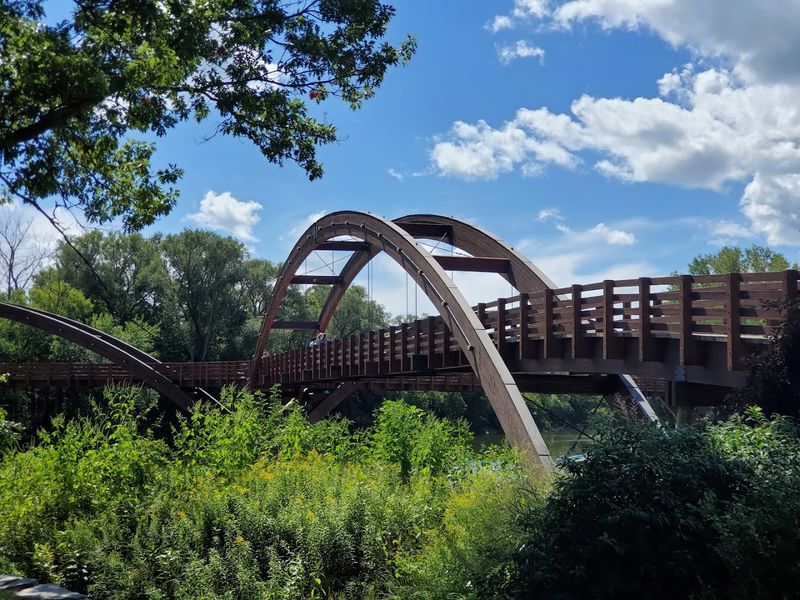
Plenty of bridges help people cross water, but very few make you grin before you even step onto the deck. The Tridge stands out because its three-legged layout is genuinely unusual, with a central support column and three long spokes that create a shape you remember almost immediately.
I found myself staring at the angles longer than expected. Each arm stretches about 180 feet and the walkway stays a comfortable width, so the structure feels practical as well as photogenic, which is a rare combination in the world of attention-seeking landmarks.
Wood gives it warmth that steel often cannot match. Even with its tidy engineering and deliberate symmetry, the bridge never feels cold, and that balance between clever design and approachable atmosphere is a big part of its charm.
This is the sort of place that rewards both casual walkers and architecture fans. By the time I crossed from one arm to another, I understood why people treat it like a local icon instead of just a shortcut over water.
The view from the center
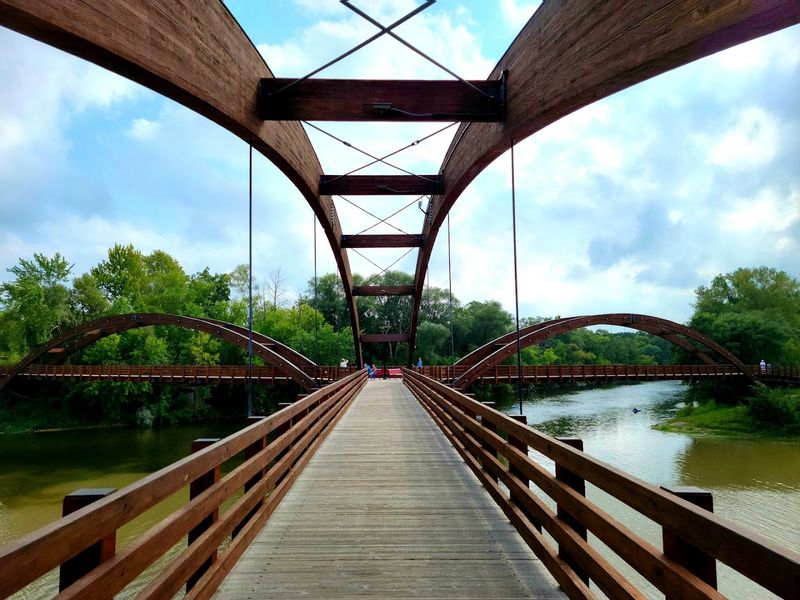
The magic really kicks in at the middle, where the three sections meet and the rivers spread out beneath you. From that central point, I could look in several directions and get a slightly different mood each time, from open water and tree-lined banks to the neat edges of downtown nearby.
Benches at the center make a big difference. Instead of hurrying across, I could actually sit, watch the current, and notice small details like shifting light on the water and the way people naturally slowed down once they reached the hub.
It is a peaceful perch, but not a sleepy one. Runners passed through, families stopped for pictures, cyclists rolled by, and the whole scene felt active without tipping into chaos, which can be hard to pull off in a popular public spot.
I appreciated how the bridge turns a simple pause into part of the experience. When a landmark gives you a reason to stay put for a while, it has done more than look good in photos.
Why photographers keep coming back
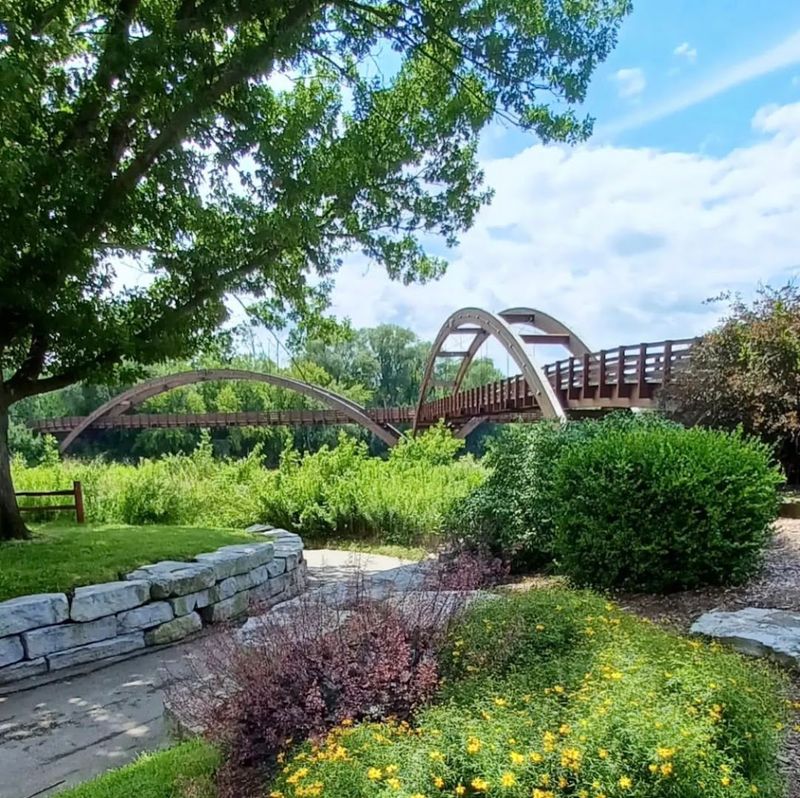
Some places seem to know exactly how to behave in front of a camera, and this is one of them. The Tridge offers strong lines, warm wood tones, open sky, and moving water, so even a casual phone shot can come out looking polished without much effort.
I quickly saw why it is one of Michigan’s most photographed landmarks. From the riverbanks, you get the full three-pronged shape; from the deck, you can frame the water and trees; and around twilight, the light softens everything in a way that makes even ordinary moments look carefully staged.
It also helps that people use the bridge as a backdrop for milestone photos. I noticed how naturally it fits portraits, family pictures, and seasonal snapshots because the structure is distinctive but never overwhelms the people standing on it.
Photogenic places can sometimes feel all surface and no substance, yet this one has both. My camera had a great day here, but the better surprise was that the bridge itself kept me interested long after I put the phone away.
A gateway to movement
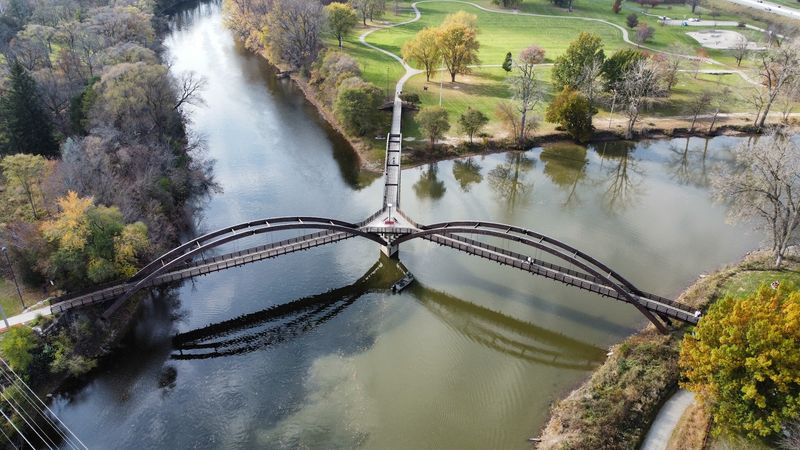
A bridge like this would already be memorable as a landmark, but it earns extra points for being genuinely useful. The Tridge serves as the starting point for the Pere Marquette Rail-Trail, a long paved route that invites walkers, joggers, cyclists, and skaters to keep the outing going well beyond the bridge itself.
I liked that sense of momentum. One minute I was admiring the river confluence, and the next I could imagine turning the visit into a longer ride or a low-key fitness break without any awkward transition or complicated planning.
The surface and layout make that easy. Bicycles, skateboards, and in-line skates are allowed, so the bridge functions as a small transportation hub disguised as a scenic stop, which is a pretty clever trick for a wooden footbridge.
Even if you are not chasing steps or miles, the active energy adds life to the place. It feels connected to the rhythm of Midland, and that practical side gives the landmark more staying power than a pretty view alone ever could.
Three directions, three moods
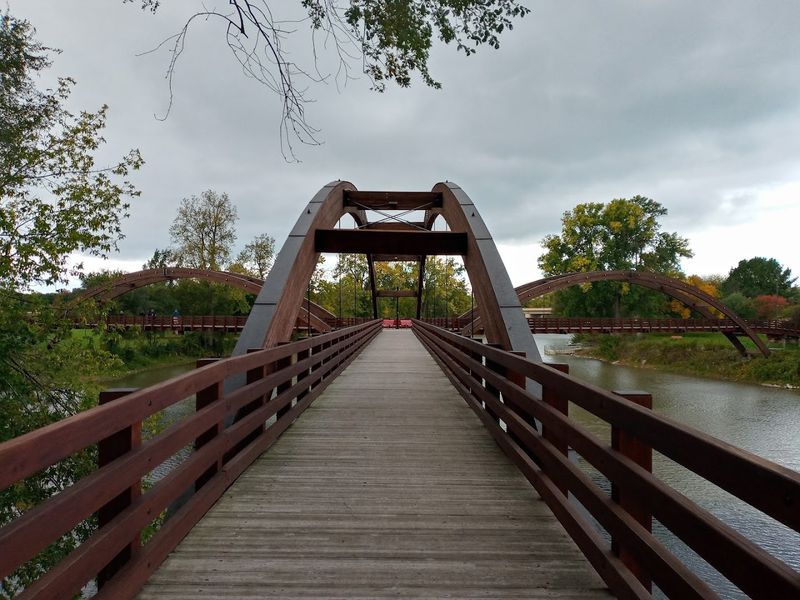
One of the smartest things about The Tridge is that each arm feels like an invitation with its own personality. From the middle, you can head toward Chippewassee Park, drift toward St. Charles Park, or angle back toward the downtown riverfront, and each route changes the mood of the visit.
I enjoyed how that setup kept the experience from feeling one-note. A lot of famous structures are basically there to be looked at, but this one nudges you to explore, because choosing a direction becomes part of the fun instead of an afterthought.
The surrounding green space helps the bridge breathe. There are open lawns, pathways, river edges, and recreation areas nearby, so the landmark feels woven into everyday outdoor life rather than separated from it behind a rope and a sign.
That flexibility is a big reason it appeals to so many kinds of visitors. You can treat it as a scenic pause, a starting point, or a connector between activities, and somehow all three options feel exactly right by the time you head home.
Best times to show up
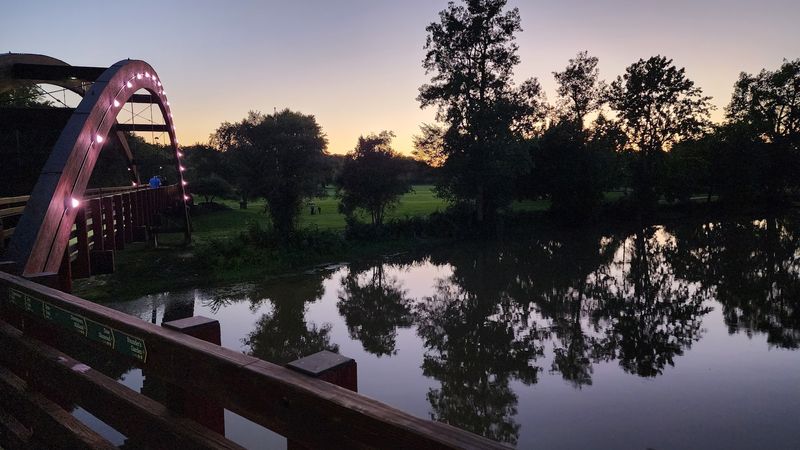
Timing changes the personality of The Tridge more than you might expect. I found it appealing in daylight, when the wooden structure and surrounding parks look crisp and inviting, but the bridge becomes especially memorable near twilight when the sky softens and the water starts catching more color.
Special lighting adds another layer. The bridge has color-changing LED lights for select occasions, and while you should not count on a full light show every time, that feature gives the landmark an extra sense of occasion when Midland decides to dress it up.
Summer evenings can also bring concerts and a little more community buzz, which suits the setting well. On the other hand, a quieter morning works beautifully if you want space for photos, a calm walk, or a bench break with fewer people passing through your frame.
I would not call there a bad time to visit, just different versions of a good one. Pick your mood first, then let the bridge handle the scenery like a seasoned professional.
Easy access, easy pace
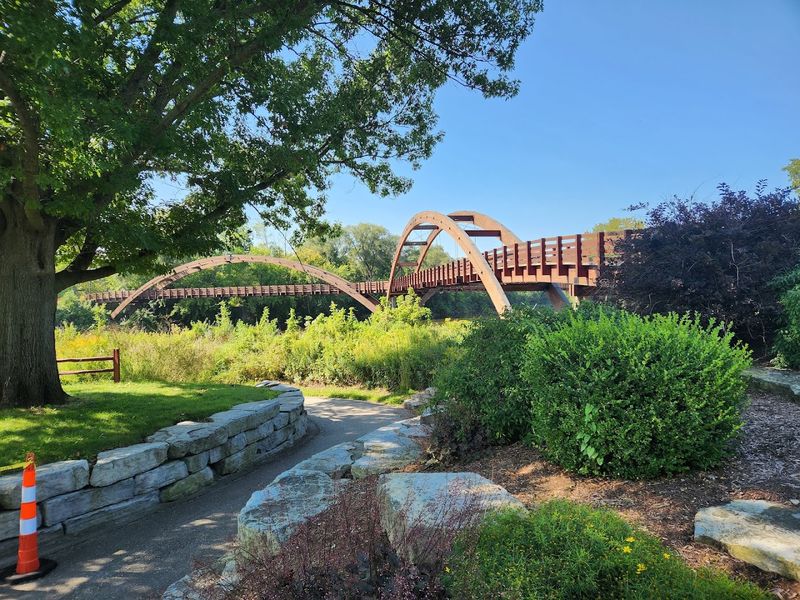
One reason I would recommend The Tridge so quickly is that it asks very little from visitors while giving plenty back. Access is straightforward, nearby parking makes arrival simple, and the walk onto the bridge feels manageable for a broad range of ages and energy levels.
That ease matters more than people admit. Not every scenic stop needs to be a strenuous outing, and this place proves you can get rewarding views, fresh air, and a real sense of place without turning the day into a logistical puzzle or an endurance contest in casual shoes.
The path feels welcoming, and the bridge itself is built for actual use, not just admiration. I saw people moving at every pace, from brisk walkers to leisurely strollers, and nobody looked like they were wrestling with the space or wondering where they were supposed to go next.
For travelers, that kind of simplicity is gold. The Tridge makes it easy to drop in for twenty minutes or stay much longer, and I have a soft spot for places that do not make relaxation feel like hard work.
Small details that stick
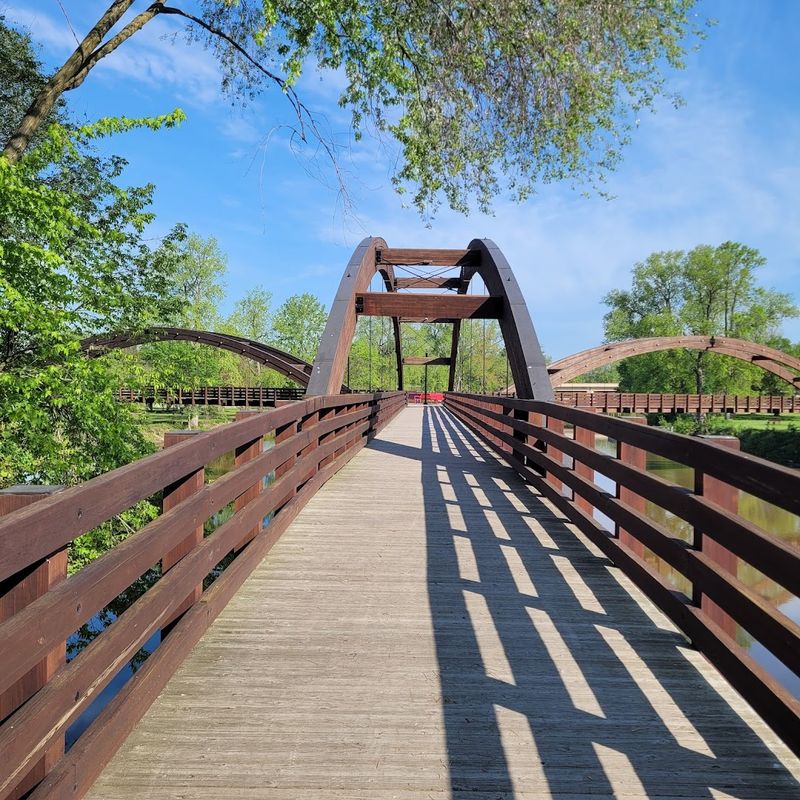
Not every memorable part of The Tridge comes from its headline feature. I kept noticing little details that rounded out the experience, like the way the railing frames the water, the benches inviting people to stay longer, and the landscaping nearby adding color without stealing attention from the rivers.
The water itself also holds your attention. Because the bridge sits over a confluence, the currents and surface patterns shift constantly, so even standing still feels visually busy in the best possible way, with ripples, reflections, and changing light doing quiet work below.
I also liked how the surrounding park areas soften the structure. The bridge is distinctive, yes, but it never feels isolated from nature, and that relationship between built design and open green space makes the whole setting feel balanced rather than showy.
Those smaller touches are why the place lingers in memory after the obvious wow factor fades. The Tridge has enough character to catch your eye first, then enough texture to keep your attention once curiosity has done its job.
Why it works in every season
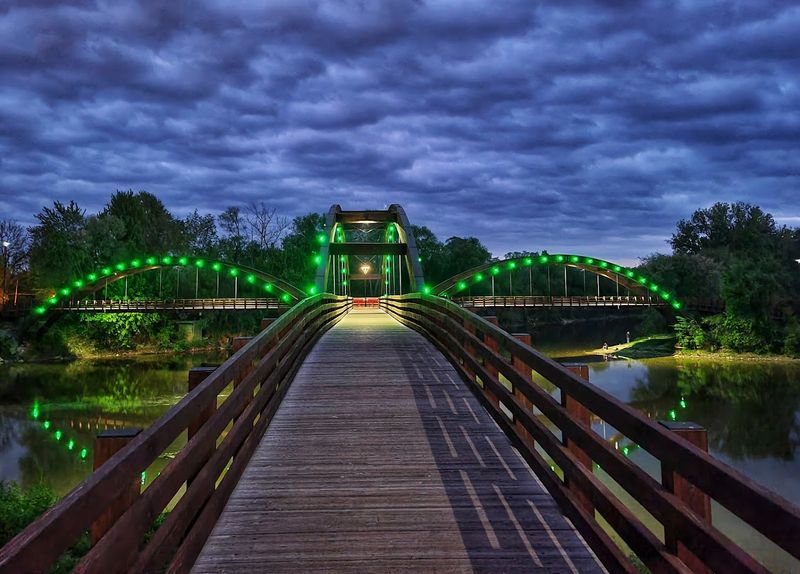
Some destinations shine only under perfect weather, but The Tridge has a wider range than that. Summer brings green riverbanks, active trails, and longer evenings, while colder months strip the scene down to clean lines, open views, and a quieter atmosphere that makes the structure stand out even more.
I can see why people return in different seasons instead of treating it as a one-time stop. The basic experience stays strong because the design is the attraction, yet the surrounding trees, sky, and water keep changing the mood enough to make repeat visits feel fresh rather than repetitive.
That seasonal flexibility gives the place staying power. A bright afternoon, a crisp morning, or a peaceful winter visit all reveal something slightly different, and the bridge handles each version of the landscape with the calm confidence of a landmark that knows its angles.
For me, that was one of the best surprises. The Tridge is not a one-season wonder, and any place that can charm under shifting skies deserves a little extra respect and probably another walk before long.
The reason it stays with you
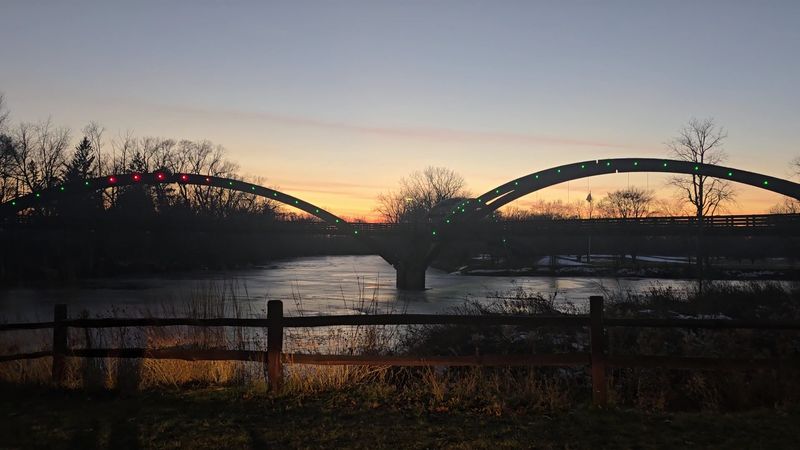
By the time I left, I understood why The Tridge holds such a firm place in Midland’s identity. It is visually unusual, easy to enjoy, tied closely to the rivers and parks around it, and useful enough that people do more than simply admire it for a minute before moving on.
That combination is rare. Plenty of places are scenic, and plenty are practical, but this bridge lands right in the sweet spot where design, recreation, and atmosphere all support each other without any one element trying too hard to dominate the experience.
I came for a landmark and ended up appreciating a whole riverside crossroads that felt relaxed, local, and thoughtfully built. The photos were great, the walk was better, and the sense of being in a place that genuinely belongs to its city was best of all.
If Midland had to make one introduction on behalf of its riverfront, this would be a smart choice. The Tridge does what the best landmarks do: it gives you a clear picture of a place, then makes you glad you stayed longer.



