The ocean covers more than 70 percent of our planet, yet most of it remains largely unexplored. Beneath the surface, an astonishing world of creatures goes about daily life in ways that are hard to believe until you witness them firsthand. Some of these animals are enormous, some are microscopic, and a few look like they were designed by someone with a very wild imagination. Divers spend years chasing bucket-list encounters with specific species, planning trips to remote reefs, cold-water kelp forests, and open ocean feeding grounds just for one magical moment.
The 13 creatures listed here represent the ultimate wish list for anyone who straps on a tank and descends below the waves. Each one offers something genuinely unique, whether that is record-breaking size, jaw-dropping camouflage, or behavior that no nature documentary can fully capture. Read on to find out which ocean animals make divers travel halfway around the world for a single sighting.
1. Whale Shark
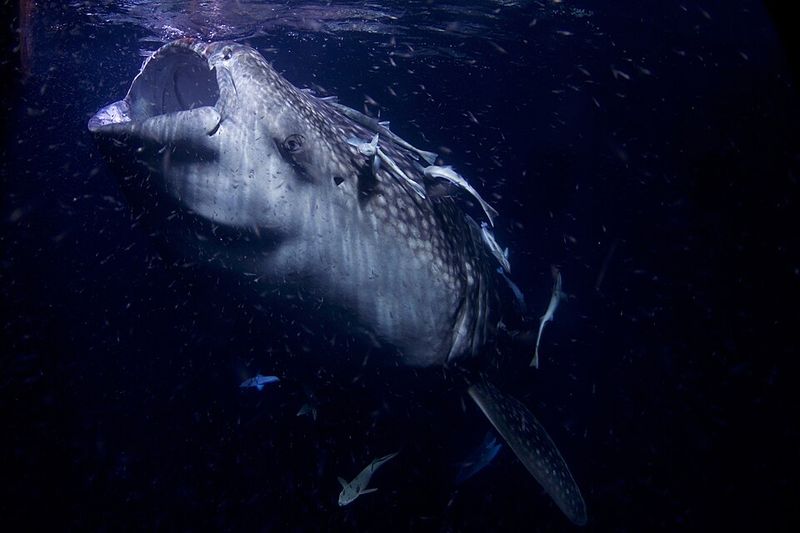
Picture the largest fish on Earth cruising past you at a leisurely pace while you try to remember how to breathe through your regulator. Whale sharks can grow beyond 40 feet long and weigh as much as 20 tons, yet they feed almost entirely on plankton and tiny fish, making them one of the ocean’s most peaceful giants.
Their skin is patterned with unique white spots, almost like a fingerprint, and researchers actually use these patterns to identify individual animals. Divers travel to Ningaloo Reef in Australia, Isla Mujeres in Mexico, and Oslob in the Philippines specifically for the chance to swim alongside them.
Unfortunately, the species is classified as Endangered, with populations dropping more than 50 percent over the last 75 years due to fishing pressure and boat strikes. Every responsible encounter is a reminder of how important ocean conservation truly is.
2. Leafy Seadragon
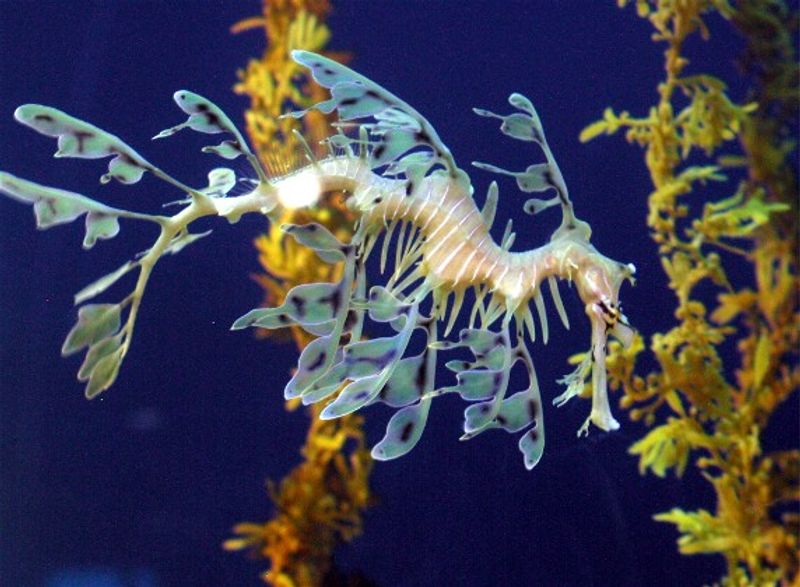
Exclusive to the southern coastline of Australia, the leafy seadragon is essentially nature’s most elaborate disguise project. Its body is covered in long, ribbon-like appendages that look exactly like drifting pieces of seaweed, making it nearly impossible to spot unless you know precisely what to look for.
Divers at sites near Adelaide, the Yorke Peninsula, and the waters around Kangaroo Island consider a confirmed sighting a major achievement. Patience is essential, because even experienced guides sometimes spend ten or fifteen minutes scanning kelp beds before finding one.
Despite its dramatic appearance, the leafy seadragon is a relatively fragile animal. It has no teeth and feeds by sucking up tiny crustaceans through its long snout. Underwater photographers rank it among the most photogenic subjects in the ocean, and it is easy to understand why once you see one drifting like a living piece of art through the kelp.
3. Manta Ray
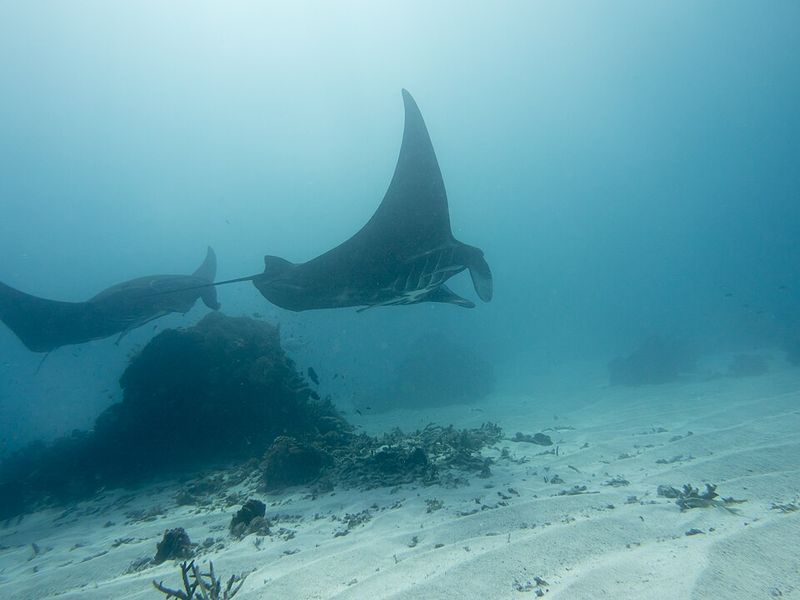
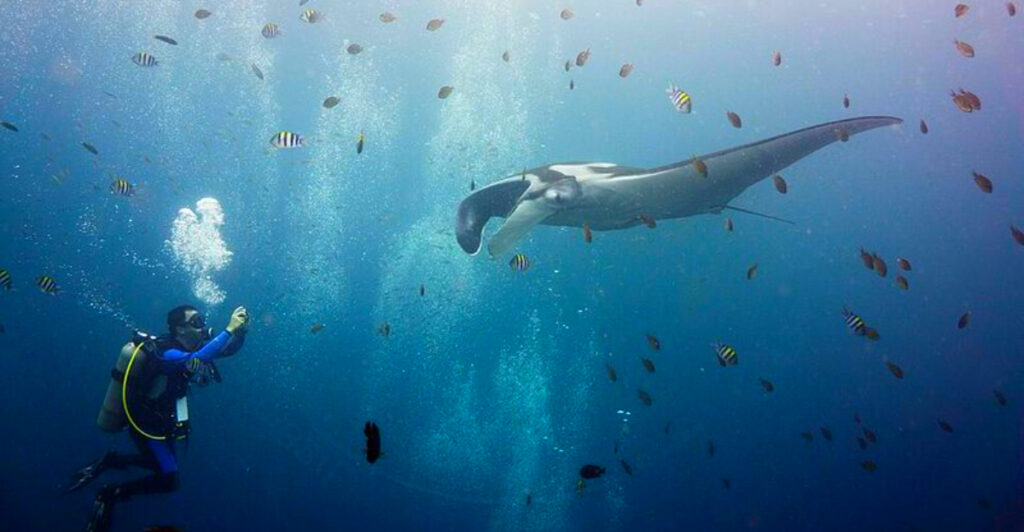
Few underwater moments compare to watching a giant manta ray bank and turn overhead, its enormous wings moving in slow, deliberate arcs through open water. These animals can have wingspans exceeding 20 feet, and the largest oceanic species can reach nearly 29 feet from tip to tip.
Manta rays hold the record for the largest brain-to-body ratio of any fish, which may explain why they often appear genuinely curious about divers rather than indifferent to them. They visit cleaning stations regularly, hovering in place while small fish remove parasites from their skin, giving divers extended, close-up views.
Top destinations include the Maldives, Hawaii, and various sites throughout Indonesia, where seasonal aggregations bring multiple animals together. One important note: touching a manta ray removes its protective mucus layer, so admiring from a short distance is always the right call.
4. Giant Pacific Octopus
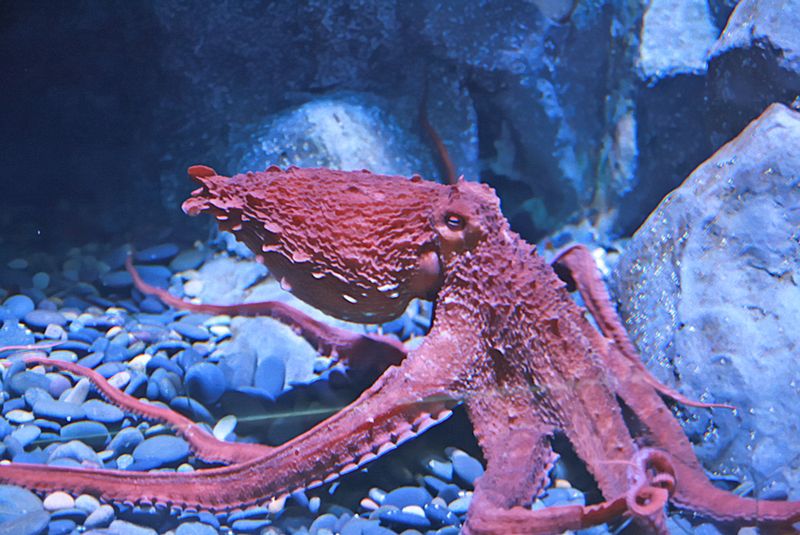
Cold water and high intelligence make an interesting combination, and the Giant Pacific Octopus delivers both in abundance. This remarkable cephalopod can weigh more than 100 pounds and has a documented ability to solve puzzles, open jars, and recognize individual human faces, which makes every encounter feel less like observing wildlife and more like meeting someone.
British Columbia, Washington State, and Alaska are prime locations for finding these animals tucked into rocky dens along the seafloor. Divers often spot them by noticing a pile of empty crab and clam shells outside a crevice, which is essentially the octopus equivalent of leaving dishes outside the door.
Their ability to change color and skin texture within a fraction of a second remains genuinely astonishing no matter how many times you witness it. The Giant Pacific Octopus is proof that some of the ocean’s most extraordinary animals live in its coldest corners.
5. Dugong
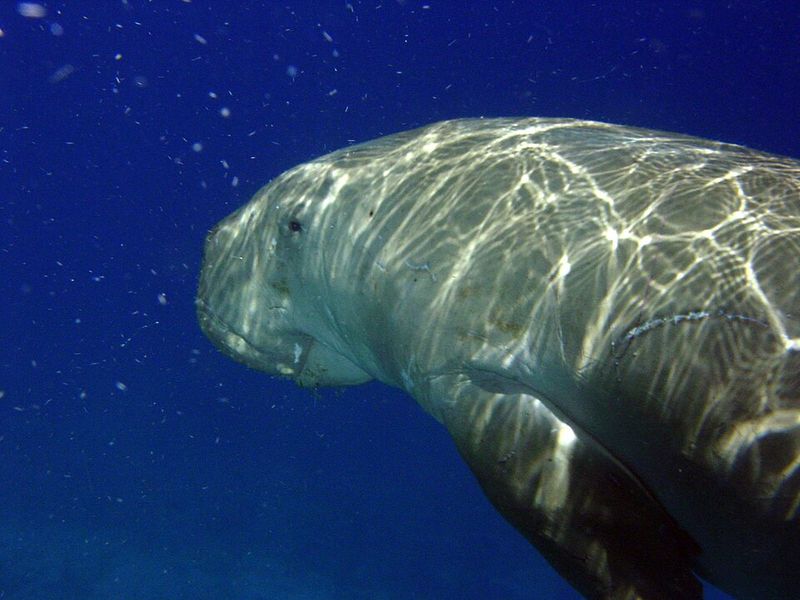
Rotund, slow-moving, and completely unbothered by the concept of hurry, the dugong is the kind of ocean animal that makes you want to slow your own pace down and just watch. Often called the sea cow, it spends most of its life grazing on underwater seagrass meadows, sometimes consuming up to 88 pounds of seagrass in a single day.
Healthy populations remain in parts of northern Australia, the Red Sea, and coastal Southeast Asia, though habitat loss and boat strikes have made the species increasingly vulnerable. Divers who spot one typically describe the encounter as unexpectedly moving, because there is something disarming about an animal that simply does not care that you are there.
Unlike dolphins or manta rays, dugongs rarely perform for an audience. They graze, surface briefly to breathe, and return to the bottom without drama. That quiet, unhurried routine is precisely what makes a dugong sighting feel so genuinely special.
6. Weedy Seadragon
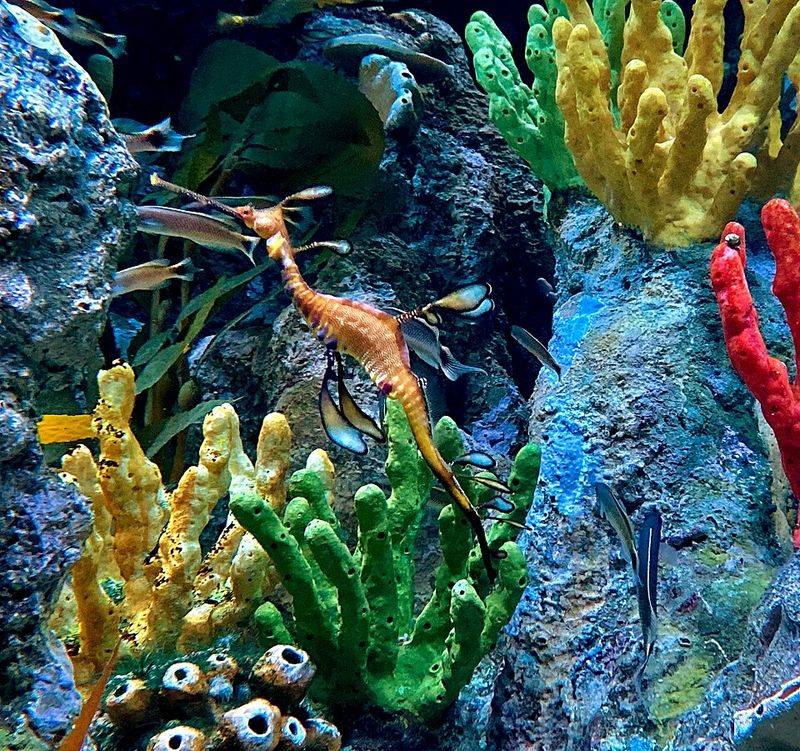
The weedy seadragon may share a family tree with its leafy cousin, but it has developed its own distinct personality in the waters off southern Australia. Slightly sleeker and decorated with vivid orange and purple markings along its body, it drifts through kelp forests with an air of complete composure, as if fully aware of how good it looks.
Unlike the leafy seadragon, the weedy version is a little easier to spot once you train your eye, though it still requires careful searching along rocky reefs and seagrass beds. Melbourne’s Port Phillip Bay and the waters near Tasmania are reliable spots for encounters.
Male weedy seadragons carry the eggs on a specialized patch under their tails, making them one of the rare cases in the animal kingdom where the males handle most of the parenting. Underwater photographers consistently rank it among the most rewarding subjects the Australian coast has to offer.
7. Oceanic Manta Ray
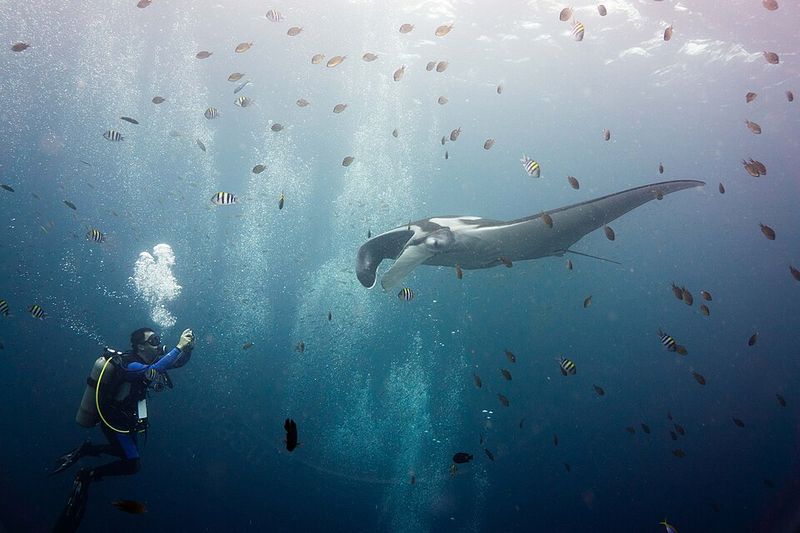
The oceanic manta ray is the larger, more adventurous sibling of the reef manta, spending most of its life in open water far from coastlines. Its wingspan can reach close to 29 feet, and encountering one in the blue expanse of open ocean, with nothing but water in every direction, is a genuinely humbling experience.
These animals are not found at typical reef dive sites. Seeing one usually requires a dedicated offshore trip to areas where they feed in plankton-rich currents or visit remote cleaning stations. The Azores, certain sites in Ecuador near the Galapagos, and deep-water locations in Indonesia are among the best bets.
Oceanic mantas are listed as Endangered on the IUCN Red List, primarily due to targeted fishing for their gill plates. Their sheer scale and fluid movement through open water make them one of the most sought-after sightings in all of recreational and technical diving.
8. Nautilus
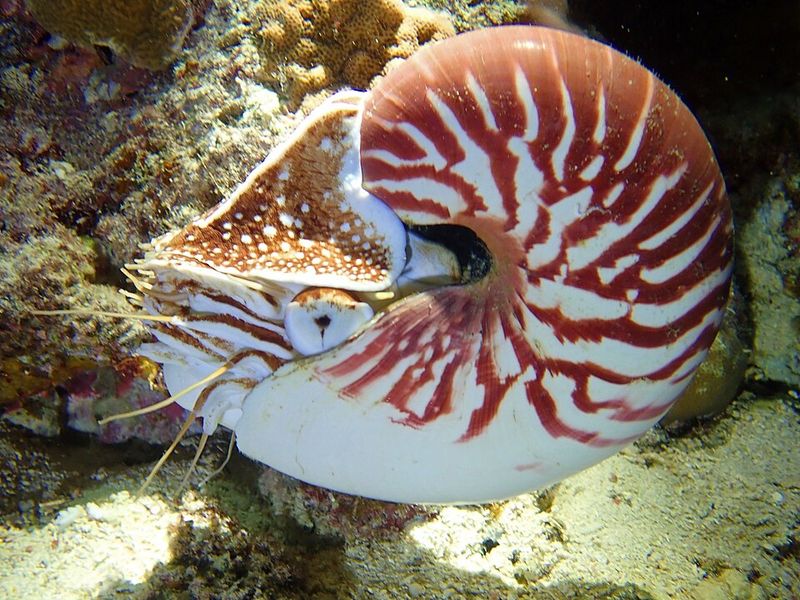
The nautilus has been patrolling the ocean depths for roughly 500 million years, which means it was already ancient before dinosaurs existed. Scientists often call it a living fossil, and looking at one, it is not hard to see why. Its beautifully coiled shell and trailing tentacles look like something drawn from a natural history illustration rather than a living creature.
Nautiluses typically inhabit deep reef slopes in the Indo-Pacific, often at depths beyond the range of recreational scuba diving. Specialized expeditions using baited traps or deeper technical dives occasionally bring lucky divers face to face with one, usually after dark when nautiluses rise from their daytime depths.
Its shell is divided into sealed chambers that it uses for buoyancy control, a design so effective that engineers have studied it for inspiration. For divers who do get a sighting, the nautilus represents one of the ocean’s most direct connections to deep prehistoric time.
9. Giant Cuttlefish
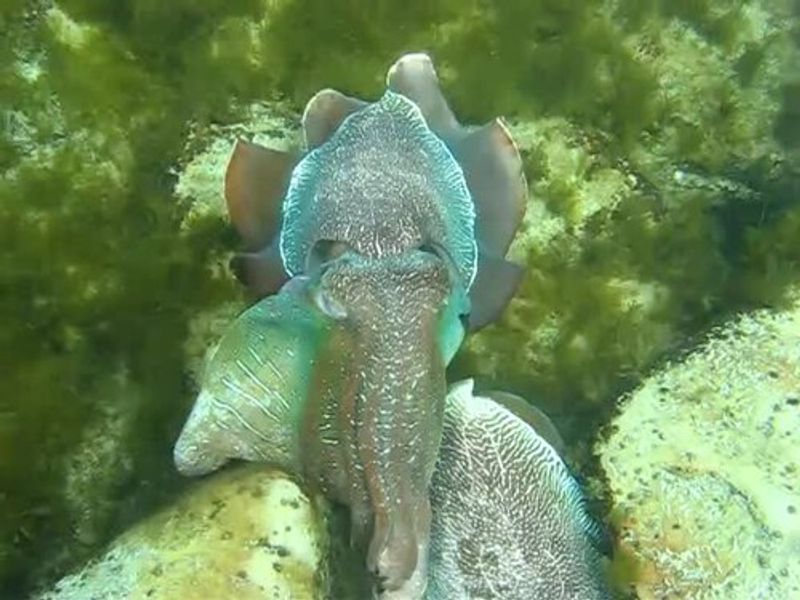
Every year, thousands of giant cuttlefish gather in South Australia’s Spencer Gulf to breed, creating one of the most extraordinary marine spectacles on the planet. Males dramatically outnumber females during the aggregation, which means competition is fierce and the color displays these animals produce are nothing short of extraordinary.
Giant cuttlefish communicate through rapid, rippling waves of color and pattern across their skin, shifting between camouflage and bold displays in a fraction of a second. Smaller males sometimes mimic female coloring to sneak past dominant rivals, which is arguably one of the ocean’s most clever behavioral tricks.
The dive site near Whyalla in South Australia is the primary location for this annual event, typically running from May through August. Divers who time their visit correctly find themselves surrounded by dozens of animals at once, each one performing a different visual routine. It is the kind of spectacle that makes people immediately start planning a return trip.
10. Goblin Shark
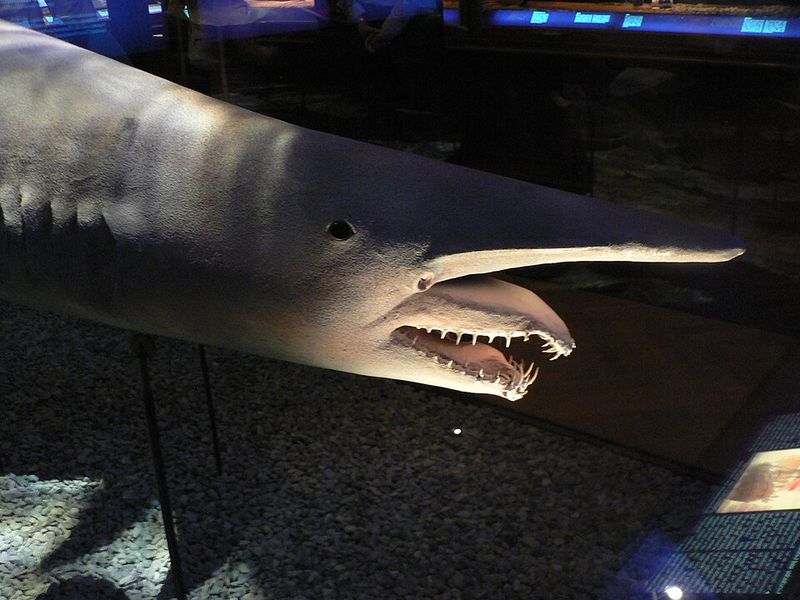
Rarely seen, poorly understood, and genuinely strange-looking, the goblin shark holds a special place in the imagination of every diver who has ever flipped through a deep-sea field guide. Its flattened, elongated snout extends well beyond its eyes, and its jaws can shoot forward rapidly to snatch prey, a feeding mechanism unlike almost anything else in the shark world.
Most recorded goblin shark sightings have come from deep-sea fishing bycatch or submersible footage rather than conventional diving encounters. The species lives at depths typically exceeding 900 feet, putting it firmly out of reach for recreational divers and even most technical divers.
Its pale, pinkish coloring comes from blood vessels visible through translucent skin, which adds to its otherworldly appearance. For divers, spotting a goblin shark remains the ultimate deep-sea fantasy, the kind of encounter so rare that even professional marine biologists have never seen one in the wild. That exclusivity is part of the appeal.
11. Blue-Ringed Octopus
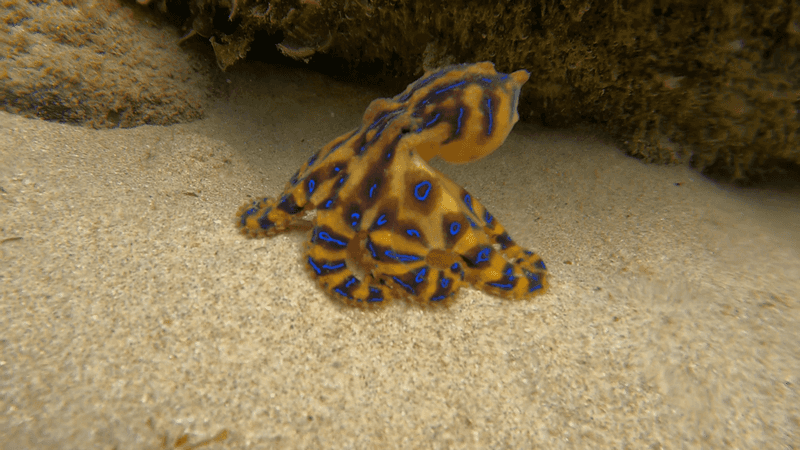
Small enough to fit in a coffee cup but carrying venom powerful enough to be genuinely dangerous, the blue-ringed octopus is one of the ocean’s most visually striking paradoxes. Under normal conditions it appears brownish and easy to overlook, but when it feels threatened, brilliant iridescent blue rings flash across its entire body as a warning signal.
Found across the Indo-Pacific from Australia to Japan, this tiny cephalopod is a favorite subject for macro photographers who appreciate the challenge of finding something so small and so well camouflaged on sandy or rubble seafloors. Dive guides in places like Lembeh Strait in Indonesia and Anilao in the Philippines are experts at spotting them.
Divers observe blue-ringed octopuses strictly from a distance, and for good reason. Its venom contains tetrodotoxin, the same compound found in pufferfish, and there is no known antidote. Respecting this tiny animal from a safe distance is both the smart and responsible approach.
12. Japanese Spider Crab
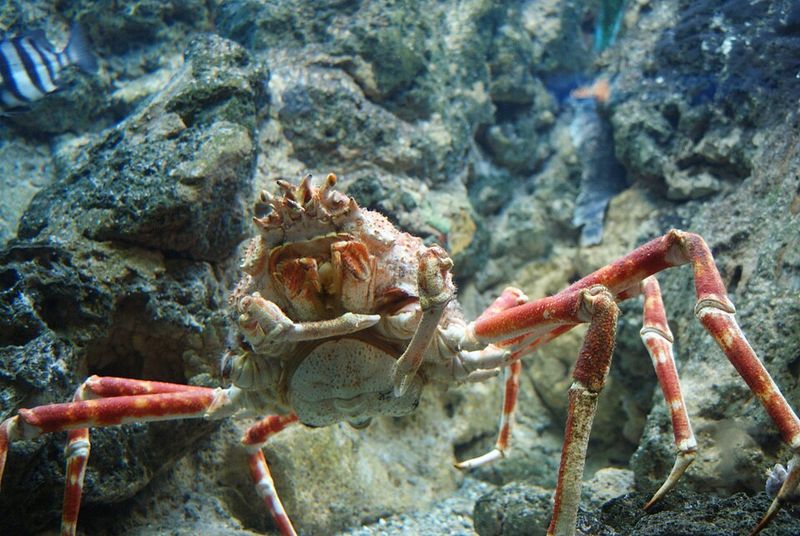
Measuring up to 12 feet from claw tip to claw tip, the Japanese spider crab holds the record as the largest arthropod on Earth, a title that is hard to fully appreciate until you are looking at one in person. Its body is relatively small compared to those extraordinary legs, giving it an appearance that seems almost structurally improbable.
These crustaceans live primarily in the deep waters off the Pacific coast of Japan, usually at depths between 160 and 2,000 feet. Divers occasionally encounter them at shallower depths during spring, when the crabs migrate to breed in warmer, less-deep water near Suruga Bay.
Despite their intimidating dimensions, Japanese spider crabs are not aggressive. They are slow-moving scavengers that feed on plant matter and animal remains along the seafloor. Their prehistoric appearance, combined with their sheer scale, makes them one of the most memorable sightings available to divers willing to explore Japanese coastal waters.
13. Flamboyant Cuttlefish
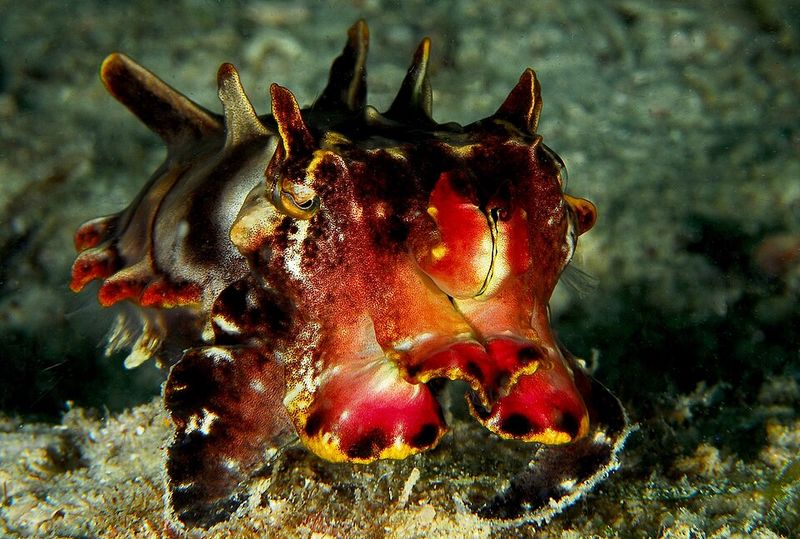
No bigger than an adult’s palm, the flamboyant cuttlefish operates on the principle that the best defense is looking absolutely unforgettable. Found in the shallow tropical waters of Indonesia, Malaysia, and parts of the Philippines, it cycles through waves of purple, yellow, white, and red across its skin in patterns that shift continuously as it moves.
Unlike most cuttlefish that prefer to swim when moving between locations, the flamboyant version frequently walks across the seafloor using its lower arms and fin edges, giving it a quirky, deliberate gait that sets it apart from every other cephalopod. Macro photographers consider it one of the ocean’s most rewarding subjects precisely because of this slow, watchable behavior.
It is also the only cuttlefish species confirmed to be venomous, which explains why it advertises itself so boldly rather than hiding. Divers at sites like Lembeh Strait and Ambon consistently rank a flamboyant cuttlefish sighting among the highlights of any trip to the Coral Triangle.
Share this story