 Unearth The Voyage
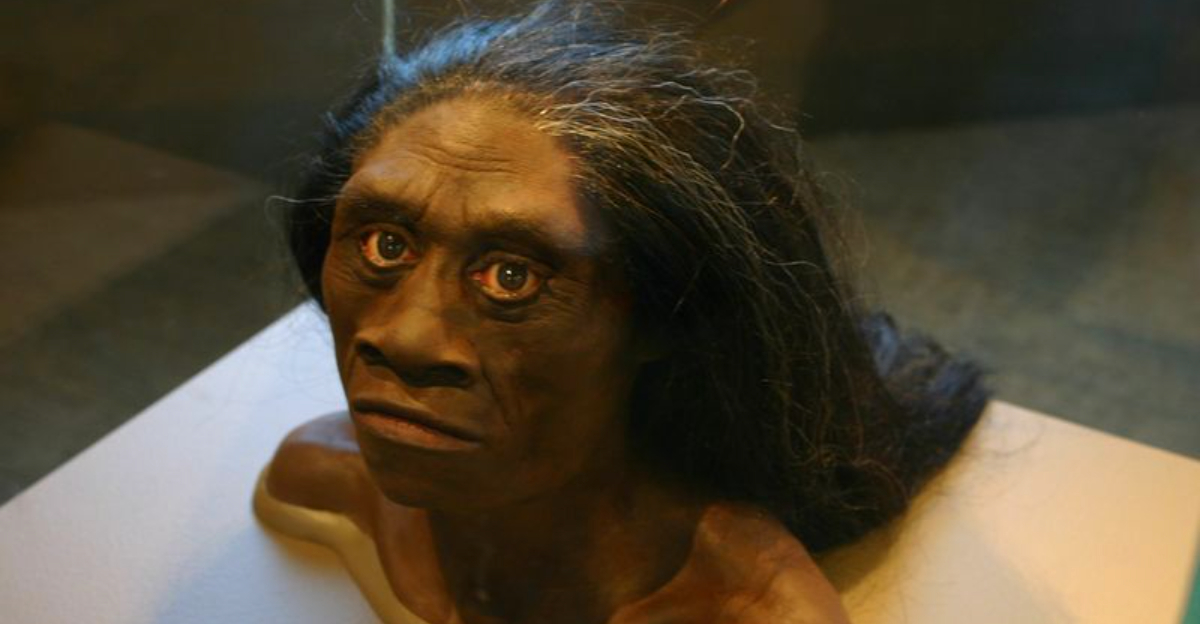
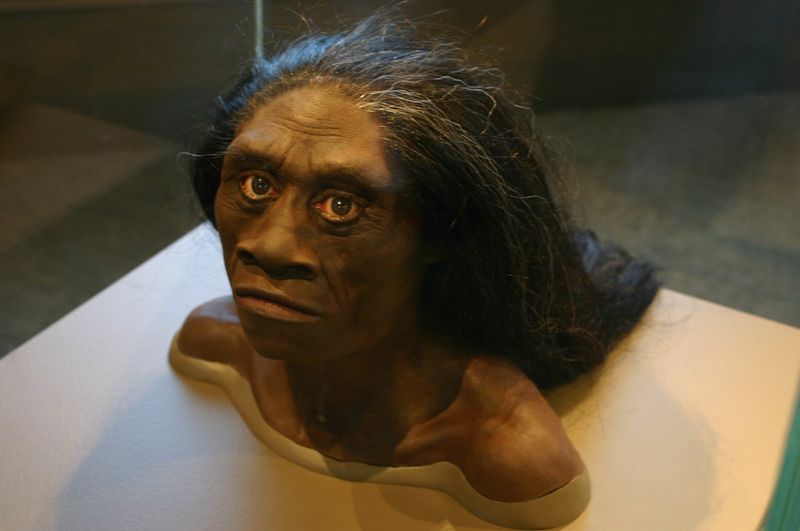
Back in 2003, scientists made an astonishing discovery in a cave on a remote Indonesian island: tiny human skeletons that looked like something straight out of fantasy fiction. These ancient relatives, officially named Homo floresiensis but affectionately called “Hobbits,” stood just over three feet tall and lived tens of thousands of years ago. The big question that still fascinates researchers and adventurers alike is whether any of these miniature humans could possibly still exist in hidden pockets of the world today.
Scientists worldwide agree that this wasn’t just folklore or misidentified bones. When researchers unearthed skeletal remains in Liang Bua cave on Flores Island back in 2003, they knew immediately this was something extraordinary. The global scientific community carefully examined every detail and confirmed it as a legitimate, distinct species of human.
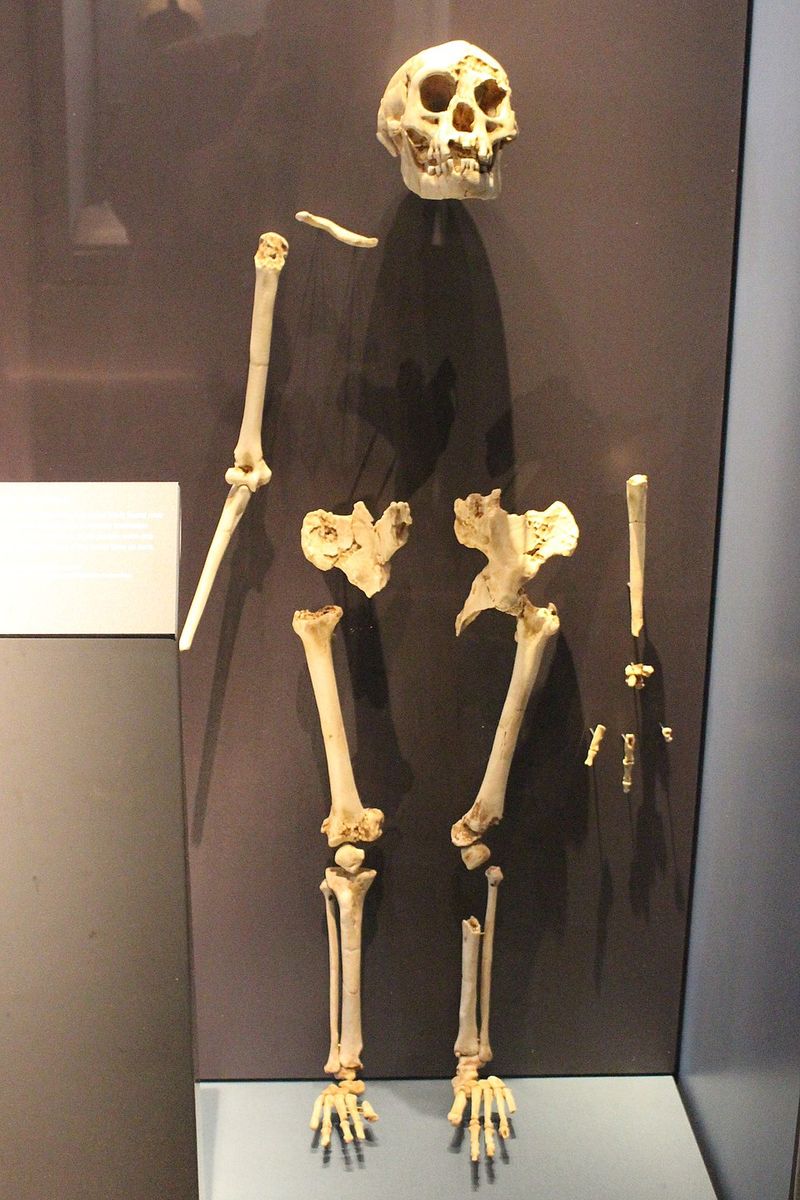
What makes this discovery so remarkable is how recently we learned about an entirely different branch of the human family tree. Before 2003, nobody imagined such small-bodied humans had walked the Earth. Now textbooks and museums everywhere include Homo floresiensis as one of our fascinating ancient cousins, proving that human evolution was far more diverse and complex than anyone previously thought.
Imagine meeting an adult human who barely reaches your waist. That’s exactly how tall Homo floresiensis individuals were, standing at roughly 3.3 feet or just one meter from head to toe. Their tiny stature immediately reminded scientists of the fictional Hobbits from popular fantasy stories, which is how they earned their famous nickname.
This wasn’t just one unusually short individual either. Multiple skeletons showed the same petite proportions, confirming this was their normal adult height. Compared to modern humans who average between 5 and 6 feet tall, these ancient relatives were truly miniature people.
Their small size raises fascinating questions about how they survived, hunted, and built tools despite their physical limitations in a world filled with larger predators and challenges.
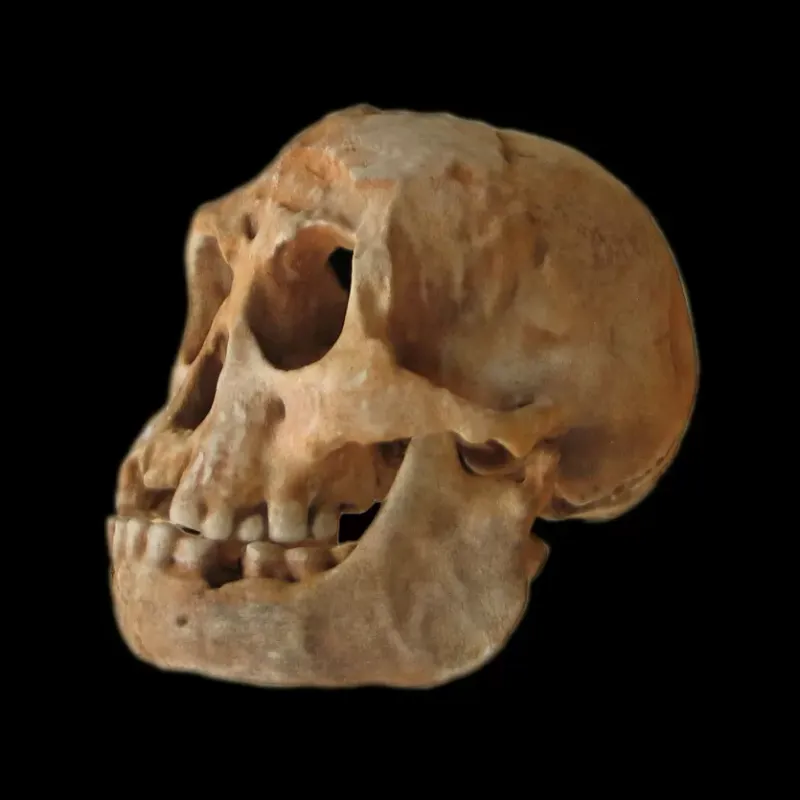
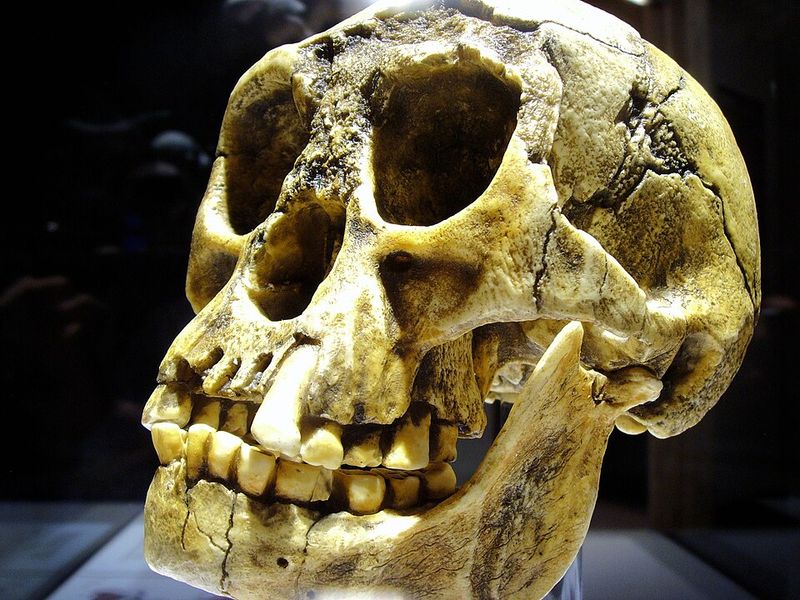
Brain size has always been considered important when studying human intelligence and capability. Homo floresiensis had skulls that housed brains measuring only about 380 cubic centimeters in volume. To put that in perspective, that’s closer to a chimpanzee’s brain than a modern human’s, which averages around 1,300 cubic centimeters.
Yet here’s where things get really interesting and challenge our assumptions. Despite having such tiny brains, these little humans created sophisticated stone tools and successfully hunted large animals. This proves that brain size alone doesn’t tell the whole story about intelligence or survival skills.

Their small cranial capacity continues to puzzle scientists who study the relationship between brain development and complex behaviors in human evolution.
Every single confirmed fossil of Homo floresiensis comes from one specific location: Flores Island in Indonesia. This remote tropical island became their isolated home for tens of thousands of years. The primary discovery site, Liang Bua cave, is a massive limestone cavern where layers of sediment preserved their bones remarkably well.
Flores sits in Southeast Asia, part of the Indonesian archipelago between Asia and Australia. The island’s isolation played a crucial role in how these humans evolved their unique characteristics. Being cut off from mainland populations meant they developed differently over countless generations.
Researchers have searched other nearby islands hoping to find more fossils, but so far, Flores remains the only place where we’ve found evidence of these remarkable little people.
Scattered around the skeletal remains, archaeologists discovered something that changed everything: carefully crafted stone tools. These weren’t just random rocks either. The tools showed deliberate shaping and sophisticated manufacturing techniques that required planning, skill, and intelligence.
Finding these implements alongside such small-brained humans shocked the scientific world. It challenged the long-held belief that you needed a large brain to create complex tools and technology. Homo floresiensis proved that determination and adaptation matter just as much as raw brain power.
The toolmaking ability suggests they could plan hunts, process food, and solve practical problems effectively. This discovery reminds us that intelligence comes in many forms and that our ancient relatives were far more capable than their physical size might suggest to us today.
Life on Flores Island meant dealing with some unusual neighbors, including Stegodon, a species of dwarf elephant. Evidence found in the cave shows that Homo floresiensis actively hunted these miniature pachyderms for food. The bones of butchered Stegodon appeared in the same archaeological layers as the human remains and stone tools.
Picture this: tiny humans taking down elephants, even if those elephants were smaller than their mainland cousins. It required teamwork, strategy, and courage. The successful hunting of such large prey demonstrates impressive cooperation and planning abilities.
This predator-prey relationship shows how island ecosystems create unique situations where both hunters and hunted evolve together. The dwarf elephants and tiny humans shared their isolated world for thousands of years in a fascinating ecological dance.
Among all the fossils discovered, one skeleton stands out as the star of the show. Scientists call her LB1, short for Liang Bua 1, because she was the first major find from that cave. This adult female skeleton, unearthed in 2003, remains the most complete and well-preserved specimen we have.
LB1 has taught us almost everything we know about Homo floresiensis anatomy. Her bones revealed the species’ height, brain size, limb proportions, and unique features. Without this remarkably intact skeleton, scientists would have struggled to understand just how different these humans were.
She’s become something of a celebrity in paleontology circles, traveling to research facilities worldwide and appearing in countless scientific papers and documentaries about human evolution and our diverse family tree.
Modern dating technology has pinpointed when these little humans walked the Earth. The youngest bones found belong to individuals who died somewhere between 50,000 and 60,000 years ago. That might sound incredibly ancient, but in evolutionary terms, it’s actually quite recent.
Think about it: while Homo floresiensis was still living on Flores, modern humans were spreading across the globe, creating art, and developing complex cultures. These two human species existed at the same time on the same planet. Earlier estimates suggested they might have survived until just 12,000 years ago, but improved dating methods revised that timeline.
Knowing they lived so recently makes people wonder about possible encounters with our ancestors and fuels speculation about whether tiny populations might have somehow survived even longer in unexplored regions.
Around the same time Homo floresiensis disappears from the fossil record, something significant happened: Homo sapiens arrived in the region. Archaeological evidence shows modern humans reached Southeast Asia and began island-hopping through Indonesia roughly 50,000 to 60,000 years ago.
This timing is probably not a coincidence. The two species may have briefly shared the landscape, though we have no direct evidence of interaction. Did they meet? Did they compete for resources? Did modern humans contribute to their extinction? These questions remain unanswered mysteries.
What we do know is that after modern humans appeared in the area, Homo floresiensis vanished. Whether through competition, disease, interbreeding, or simple bad luck, the arrival of our species seems connected to their disappearance from history.
How did humans become so small? The leading scientific explanation involves a fascinating evolutionary process called island dwarfism. When large animals get trapped on islands with limited resources, natural selection favors smaller body sizes over many generations. Smaller individuals need less food and can survive better in restricted environments.
Most researchers believe Homo floresiensis descended from larger ancestors, probably Homo erectus, who somehow reached Flores hundreds of thousands of years ago. Over countless generations of isolation, they gradually shrank. This same process affected other Flores animals, including the dwarf elephants they hunted.
Island dwarfism is well-documented in many species worldwide, from elephants to hippos to deer. Homo floresiensis represents a remarkable example of how powerful evolutionary forces can dramatically reshape even human bodies.
One of the strangest features of Homo floresiensis was their disproportionately large feet. Relative to their tiny bodies, their feet were enormous, almost comically oversized. This unusual proportion affected how they walked and maintained balance while moving through their island environment.
Scientists studying their foot bones noticed the length and unusual structure immediately. These weren’t just scaled-down versions of modern human feet. They had distinct characteristics that suggest a different walking style, possibly more flat-footed and less efficient than our stride.

The big feet might have provided stability on uneven cave floors and jungle terrain. While they might have looked awkward, these oversized feet served important practical purposes for survival. Every odd feature of their anatomy tells part of the story of how they adapted to island life.
When scientists examined the wrist bones of Homo floresiensis, they found something unexpected. The bone structure resembled early hominins and ancient human ancestors rather than modern Homo sapiens. This primitive wrist anatomy became crucial evidence in a major scientific debate.
Some skeptics initially suggested these weren’t a separate species at all but rather modern humans suffering from genetic diseases that cause dwarfism and developmental problems. However, the primitive wrist bones settled that argument. No disease could make a modern human develop ancient-style wrist structures.
These anatomical details confirmed that Homo floresiensis truly was a distinct species with a deep evolutionary history separate from our own. Their wrists connected them to much older branches of the human family tree, proving their legitimacy beyond doubt.
Body proportions tell stories about how creatures move and live. Homo floresiensis had limb ratios that looked more like much older human ancestors such as Australopithecus than modern people. Their arms were relatively long compared to their short legs, creating an unusual silhouette.
Modern humans have long legs and shorter arms, which helps us walk and run efficiently over long distances. The reversed proportions in Homo floresiensis suggest they moved differently, perhaps spending more time climbing or moving through dense forest environments. Their body plan was adapted for their specific island lifestyle.
These proportions add another piece to the puzzle of their evolutionary history. They retained ancient characteristics that most other human species had already lost, making them a unique mosaic of old and new features combined in one small package.
One of the biggest frustrations for scientists is the complete absence of genetic material from Homo floresiensis fossils. Modern technology can extract and sequence ancient DNA from many extinct species, revealing evolutionary relationships and even specific genetic traits. Unfortunately, tropical climates destroy DNA rapidly.
The hot, humid conditions on Flores Island create perfect conditions for decomposition but terrible conditions for DNA preservation. Genetic material breaks down quickly in such environments, leaving nothing for scientists to analyze. All the fossils are essentially blank pages when it comes to genetic information.
Without DNA, researchers must rely entirely on physical bones and archaeological evidence to understand these humans. While frustrating, this limitation hasn’t stopped scientists from learning remarkable details about their lives, abilities, and place in human evolution through careful study.
Despite romantic speculation and occasional unverified reports, science provides a clear answer: Homo floresiensis no longer exists. Researchers have found no modern fossils, no DNA traces, no footprints, no tools, and no physical evidence whatsoever of surviving populations anywhere in the world.
The scientific consensus is unanimous and definitive. These remarkable little humans died out at least 50,000 years ago, leaving only their bones and tools behind as silent testimony to their existence. Extensive searches of Flores and surrounding islands have turned up nothing to suggest otherwise.
While local legends sometimes mention small forest people, no credible evidence supports the idea that isolated groups survived into modern times. The real-life Hobbits are gone, existing now only in the fossil record and our imagination, reminding us how diverse and wonderful human evolution truly was.



