There is a building in Cleveland where the smell of machine oil hangs in the air and massive steam locomotives sit quietly, waiting to breathe again. It is not a museum in the traditional sense.
No velvet ropes keep you at a distance, and no recorded audio guides walk you through glass cases. This is a living, working place where history is actively being rescued, bolt by bolt, and the story of American railroading is told by the people who refuse to let it disappear.
The 1907 B&O Roundhouse: A Structure That Refused to Fall
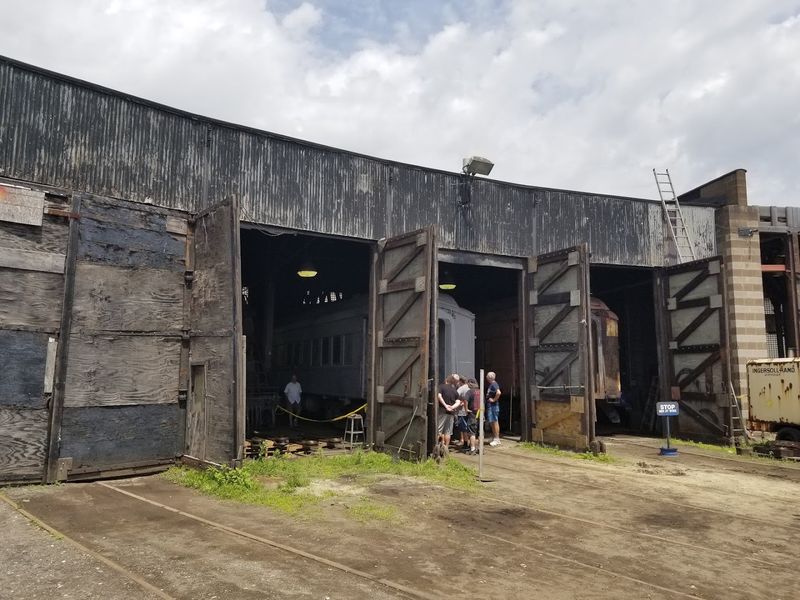
Most buildings from 1907 have long since been torn down or converted into condos. This one became something rarer: a sanctuary for steam.
The B&O Roundhouse in Cleveland is one of the few surviving structures of its kind in the entire United States, and standing inside it for the first time is a genuinely jaw-dropping moment.
The circular design was built specifically to allow locomotives to be rotated on a central turntable and rolled into individual service bays. That engineering logic is still visible in every curve of the brick walls and every beam overhead.
The sheer scale of the space makes you realize just how enormous steam locomotives actually are.
What makes this building special is that it never became a relic. It kept working, and today it houses an active restoration operation that brings the entire structure back to life every single day volunteers show up.
Midwest Railway Preservation Society: The Organization Behind the Mission
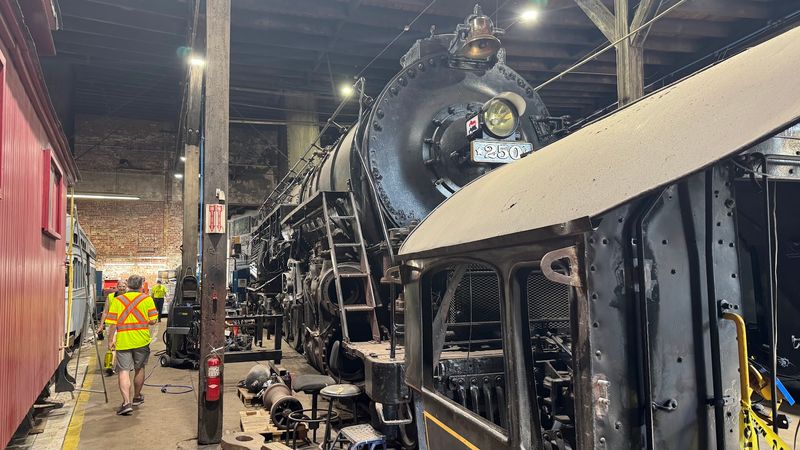
The Midwest Railway Preservation Society Inc., located at 2800 W 3rd St, Cleveland, OH 44113, is the nonprofit organization responsible for saving and operating this extraordinary site. Founded by railroad enthusiasts who believed that steam-era history deserved more than a footnote, the society has grown into one of the most respected railway preservation groups in the Midwest.
The organization runs almost entirely on volunteer power and community donations. That grassroots spirit shows in everything from the hand-painted signs to the deeply personal tours led by people who clearly love every rivet of every locomotive on the property.
Their website at midwestrailway.org offers information about upcoming tours and events. What the website cannot fully convey is the atmosphere you feel when you actually walk through those massive roundhouse doors and realize that something genuinely important is happening here, right now, in real time.
Steam Locomotives Being Restored: Giants Waking Up Slowly
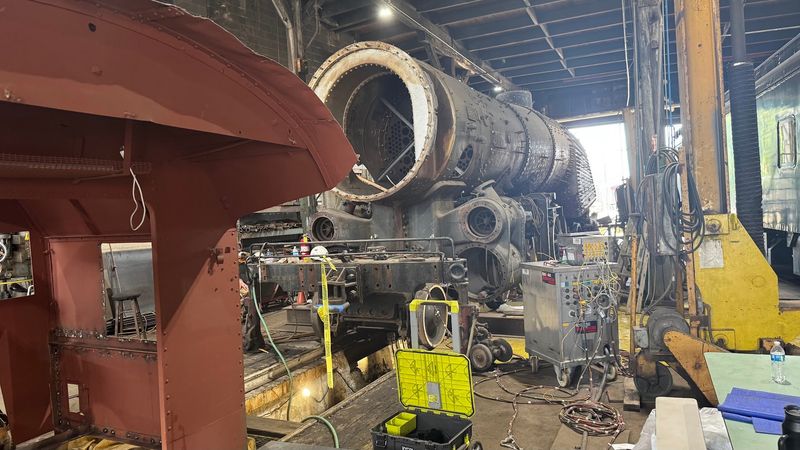
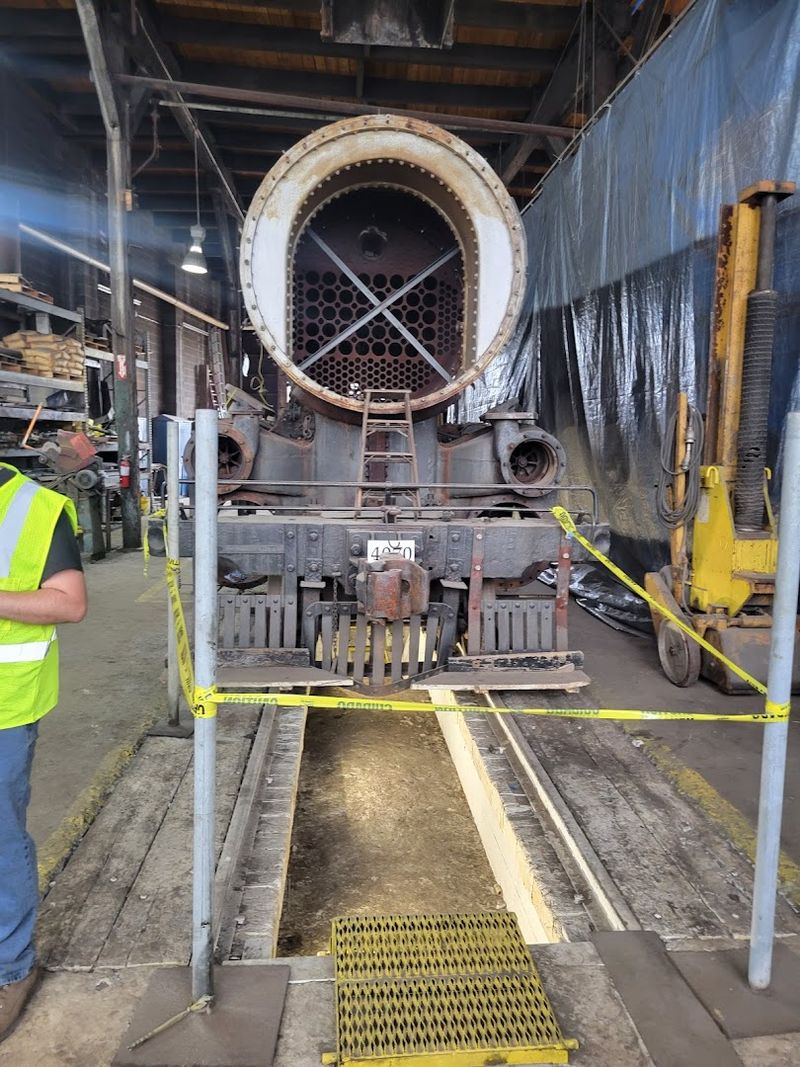
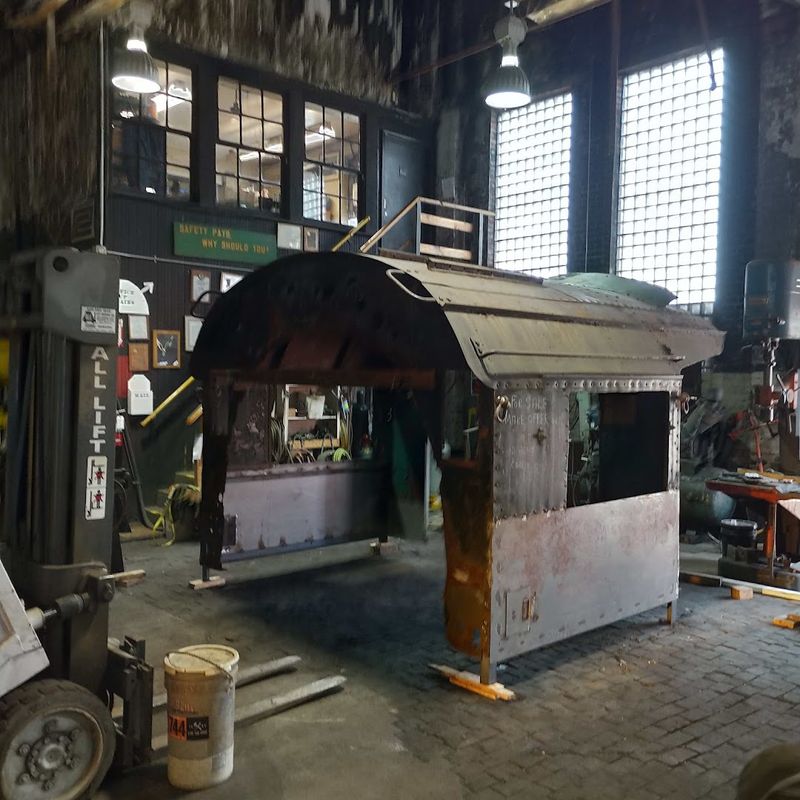
Two massive steam locomotives are currently undergoing full restoration inside the roundhouse, and getting close to them is a genuinely humbling experience. These engines are enormous in a way that photographs simply cannot communicate.
Their boilers alone dwarf most modern vehicles, and the complexity of their mechanical systems is staggering.
Volunteers with deep technical knowledge walk visitors through exactly what the restoration process involves, from boiler inspections to the painstaking work of refurbishing individual components that have not moved in decades. The level of detail in the explanations is outstanding, and questions are not just welcomed but actively encouraged.
Watching someone explain the inner workings of a steam locomotive with obvious passion and expertise is one of those experiences that reminds you how much knowledge lives outside of textbooks. These volunteers are not just preserving machines.
They are preserving a craft that very few people in the world still understand.
The Rail Car America: A Piece of Presidential Campaign History
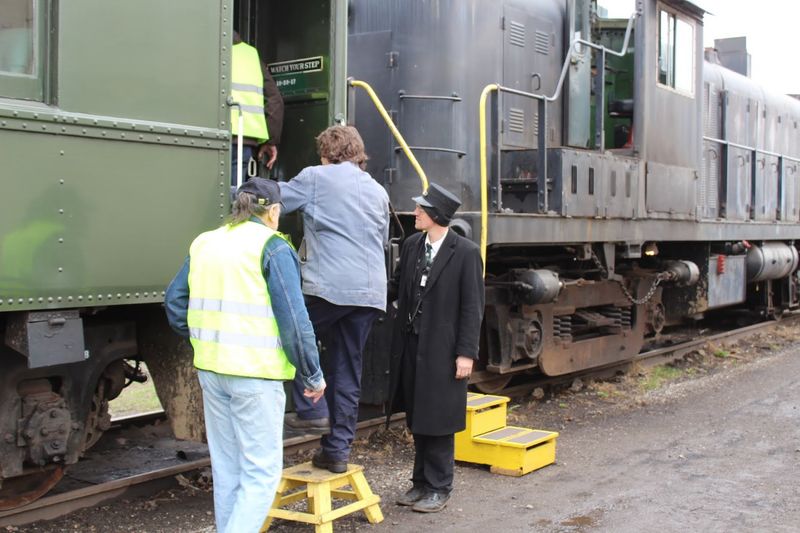
Among the many remarkable pieces of equipment at the roundhouse, the rail car known as America carries a particularly fascinating story. This is the car that John Kennedy used during his first presidential campaign, rolling through American towns at a time when whistle-stop politics still shaped elections.
Volunteers at the society completed a full refurbishment of America, bringing its systems up to current Amtrak standards, including the ability to operate at speeds exceeding 100 miles per hour. That combination of historic significance and modern functionality is exactly the kind of work the society specializes in.
Seeing a car with that kind of history sitting inside a Cleveland roundhouse, fully restored and road-ready, puts the entire preservation mission into sharp perspective. This is not just about nostalgia.
It is about keeping historically significant objects functional and connected to the living world rather than sealed away in storage.
The Tour Experience: More Workshop Than Museum
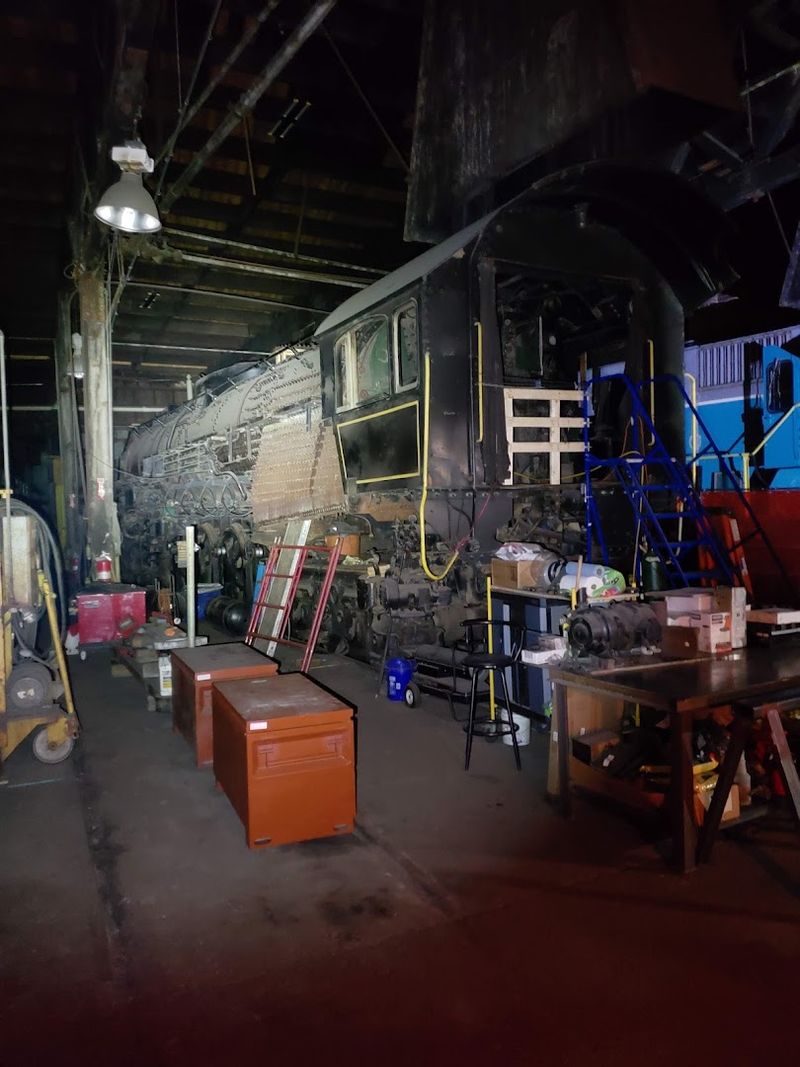
A visit to the Midwest Railway Preservation Society is not like walking through a conventional museum. There are no polished display cases or ambient soundtracks playing in the background.
The tour takes you directly into the working restoration facility, where the smell of grease and metal is part of the experience.
Guides lead groups through the active shop areas, pointing out locomotives in various stages of restoration and explaining the technical challenges involved in each project. The depth of knowledge on display during these tours is genuinely impressive, and the guides have a knack for making complex mechanical information accessible and interesting even for people who have never thought much about trains.
Some visitors arrive expecting a ride-focused attraction and leave surprised by how much they learned instead. The tour is best appreciated by anyone curious about how things work and how history gets saved one careful repair at a time.
The Volunteer Community: Passion That Keeps the Engines Running
Every organization has a heartbeat, and at the Midwest Railway Preservation Society, that heartbeat is entirely volunteer-powered. The people who show up week after week to sand, weld, inspect, and reassemble these locomotives do so because they genuinely love what they are preserving.
That love is impossible to miss during a tour.
Volunteers range from retired engineers with lifelong railroad careers to enthusiastic newcomers who simply wanted to get their hands on something real. What unites them is an almost contagious enthusiasm for the history and mechanics of steam-era railroading.
Ask any of them a question and you will likely get a thorough, anecdote-filled answer that goes well beyond what you expected.
The society openly welcomes people interested in volunteering, and the community that has formed around the roundhouse is one of the more quietly remarkable things about the entire operation. Good work tends to attract good people.
The Architecture Up Close: Engineering Logic You Can See
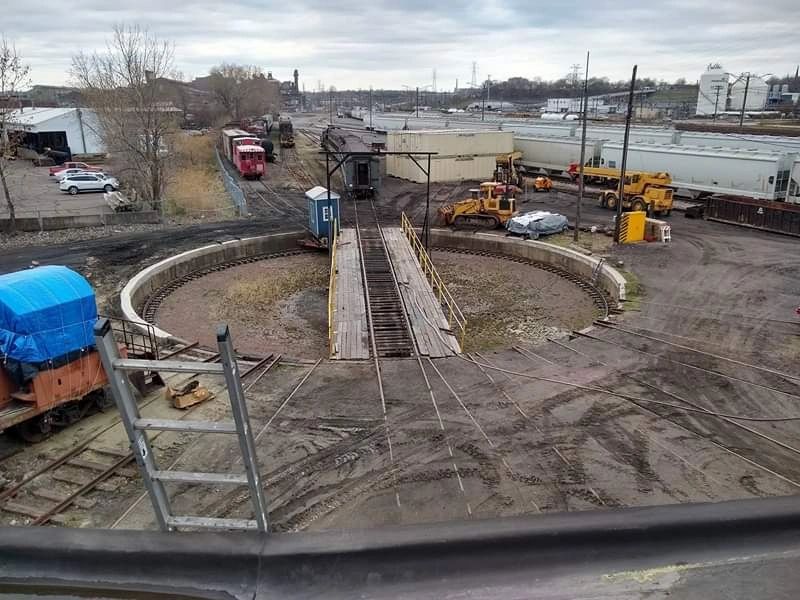
The roundhouse design was a brilliant piece of 19th and early 20th century industrial engineering, and the Cleveland B&O example shows exactly why. The circular layout allows multiple locomotives to be serviced simultaneously while sharing access to a central turntable.
Every bay is positioned to maximize workflow efficiency in a way that still makes practical sense today.
The brick walls have the kind of weathered character that only comes from more than a century of real use. Overhead, the original structural framework remains largely intact, giving the interior a cathedral-like quality that contrasts beautifully with the heavy machinery below.
Natural light filters through windows that have witnessed generations of railroad workers.
Preservation of the building itself is an ongoing project alongside the locomotive restoration work. Keeping a structure this old functional and structurally sound requires consistent attention, and the society treats the roundhouse as a historic artifact in its own right, not just a convenient workshop.
EMD E Units and Passenger Cars: The Outdoor Collection
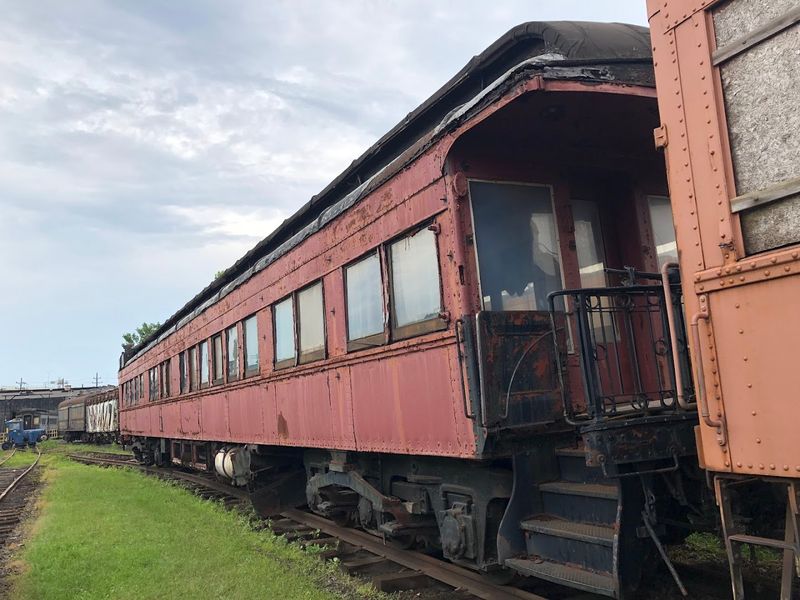
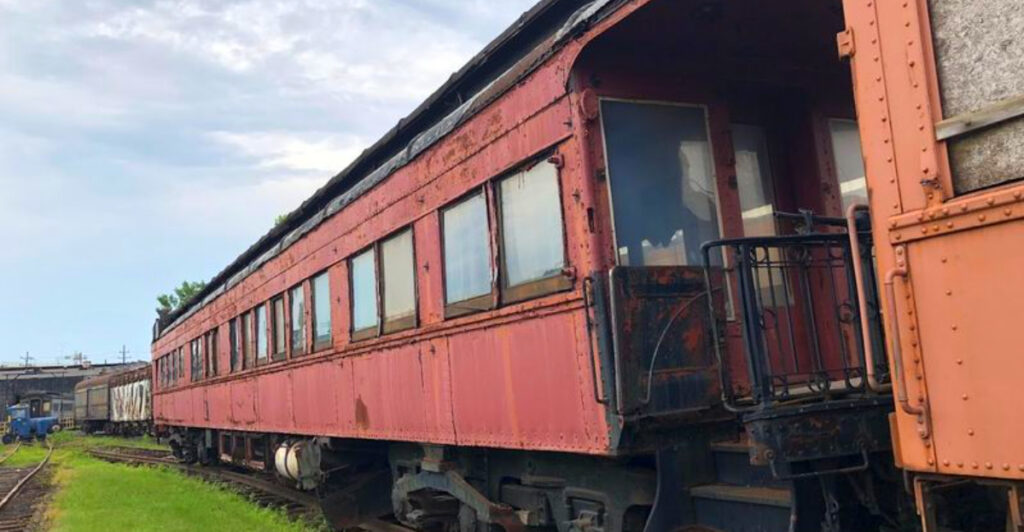
Before you even reach the main entrance, the property announces itself with a lineup of vintage EMD E unit locomotives and passenger cars positioned along the south end of the grounds. Approaching from the nearby interstate, these machines are visible from the road and give first-time visitors an immediate sense of the scale of what the society has collected.
The EMD E units represent a pivotal era in American railroad history, when diesel power began replacing steam in the mid-20th century. Having both steam and diesel-era equipment on the same property gives the collection a broader historical scope than many visitors initially expect.
The outdoor equipment is weathered and raw in a way that indoor museum pieces rarely are. There is something honest about seeing these machines in the open air, aging on their own terms rather than being artificially preserved behind glass.
It adds a layer of authenticity that serious railfans tend to appreciate deeply.
Special Events and Seasonal Visits: When the Roundhouse Comes Alive
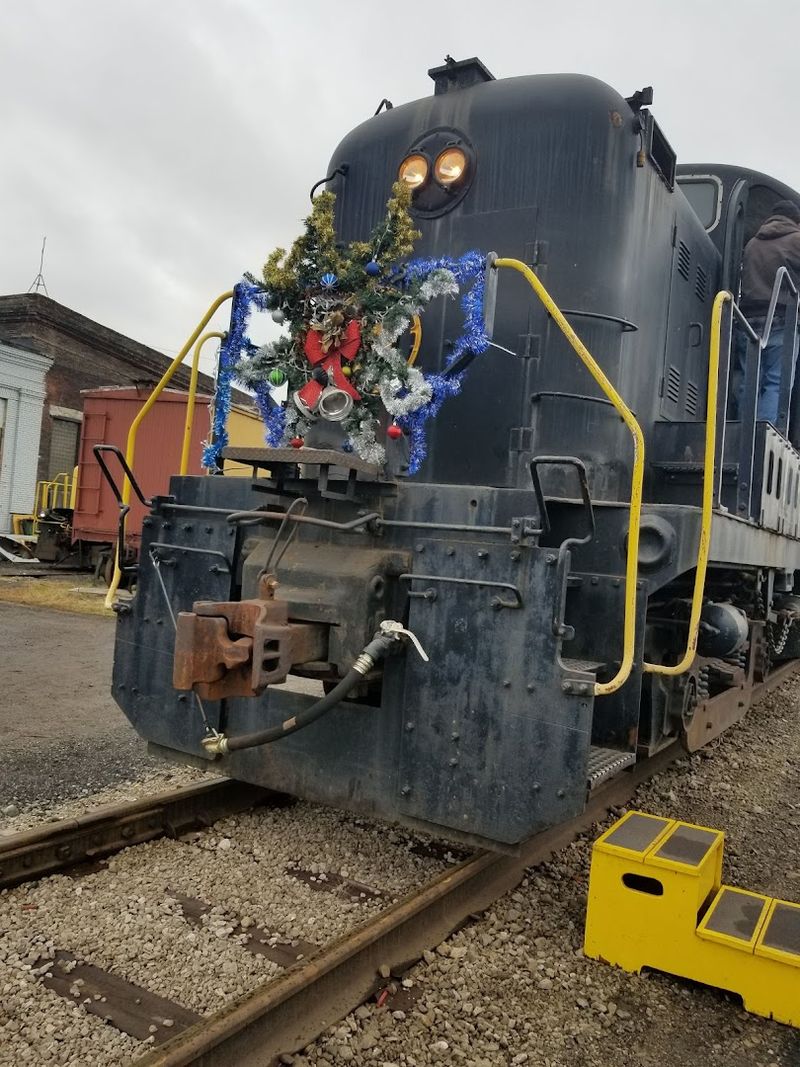
The society hosts special events throughout the year that draw visitors who might not otherwise seek out a railroad preservation facility. Past events have included holiday-themed visits and seasonal gatherings that bring families to the roundhouse in a more festive context than a standard tour provides.
These events tend to showcase different aspects of the property, giving repeat visitors a reason to come back and experience the roundhouse from a new angle. The combination of living history and seasonal programming makes the site more accessible to people who might find a purely technical tour intimidating.
Checking the society’s schedule before planning a visit is always a good idea, since event days offer a noticeably different energy than regular tour days. The roundhouse has a way of transforming depending on who is filling it, and a crowd of families on a special event day creates a warmth that is genuinely hard to replicate anywhere else in Cleveland.
Planning Your Visit: What to Know Before You Go
A few practical things are worth knowing before heading to the roundhouse. Tours are the primary way to experience the facility, and checking availability in advance through the society’s website is strongly recommended.
The property is not a walk-in attraction in the way that a traditional museum might be, so a little planning goes a long way.
Wear comfortable shoes with closed toes. The tour covers active workshop areas where the ground surfaces vary from paved paths to gravel and dirt, and the environment is industrial rather than polished.
Comfortable clothes that you do not mind getting a little dusty are a sensible choice as well.
The society operates on donations and community support, so coming prepared to contribute is both appreciated and genuinely meaningful. Every dollar that comes through the door goes directly toward keeping these locomotives and this irreplaceable building alive for future generations of visitors and rail enthusiasts.
Why Cleveland’s Railroad Heritage Deserves More Attention
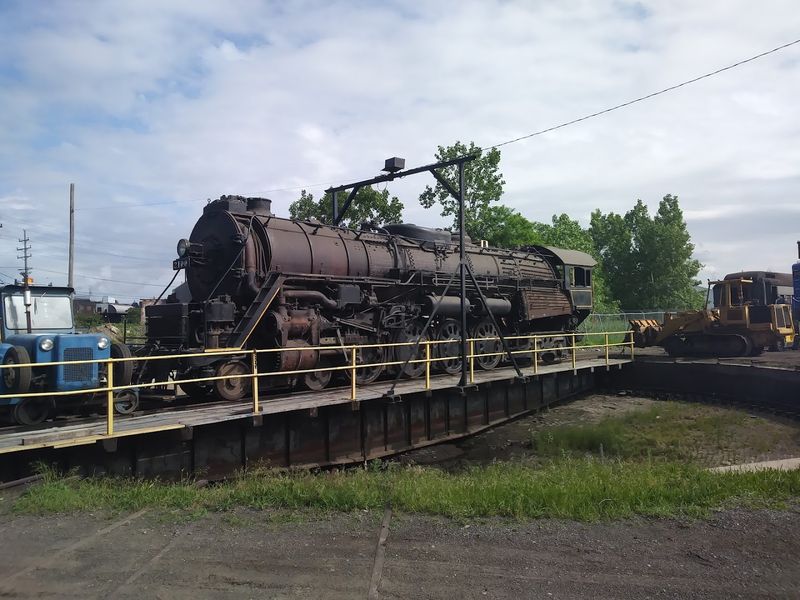
Cleveland’s industrial history is inseparable from its railroad history. The city grew into a major American manufacturing and shipping hub in large part because of its rail connections, and the B&O Roundhouse is one of the few remaining physical reminders of that era still standing within city limits.
Most cities that had roundhouses this old have lost them entirely. The fact that Cleveland still has one, and that a dedicated group of people has committed to keeping it operational and open to the public, is genuinely remarkable.
It deserves far more attention than it currently receives from the broader travel community.
Rail enthusiasts already know about this place, but it should be on the radar of anyone who cares about American industrial history, urban preservation, or the kind of hands-on storytelling that no digital exhibit can replicate. The roundhouse is real, it is working, and it is absolutely worth your time.
Share this story