Some islands are far more than remote patches of land. They are places where extraordinary events unfolded, from famous mutinies and lost colonies to secret military projects and remarkable natural phenomena.
Their histories are filled with twists that often seem stranger than fiction.
Scattered across the globe, these islands have served as prisons, refuges, testing grounds, and homes to unique communities and wildlife. Each has a story shaped by unusual circumstances, unexpected discoveries, or unforgettable characters.
These 15 islands prove that some of the most fascinating chapters in history happened far from the mainland.
1. Pitcairn Island, Pitcairn Islands
Back in 1790, a group of mutineers from the HMS Bounty made one of history’s boldest gambles: they sailed to one of the most remote islands on Earth and hoped nobody would find them. Fletcher Christian led the group, which included both British sailors and Tahitian companions, to Pitcairn Island, a tiny volcanic outcrop so isolated it had been incorrectly charted on naval maps.
They burned the Bounty in the bay to destroy any evidence of their presence. The colony they established was chaotic, conflict-filled, and at times violent, yet somehow it survived.
Today, Pitcairn has fewer than 50 permanent residents, many of them direct descendants of those original mutineers.
The island remains one of the least visited places on Earth, reachable only by cargo ship every few months. Its community still carries surnames like Christian and Young, living proof that one famous act of rebellion left a permanent mark on the Pacific.
2. Easter Island, Rapa Nui, Chile
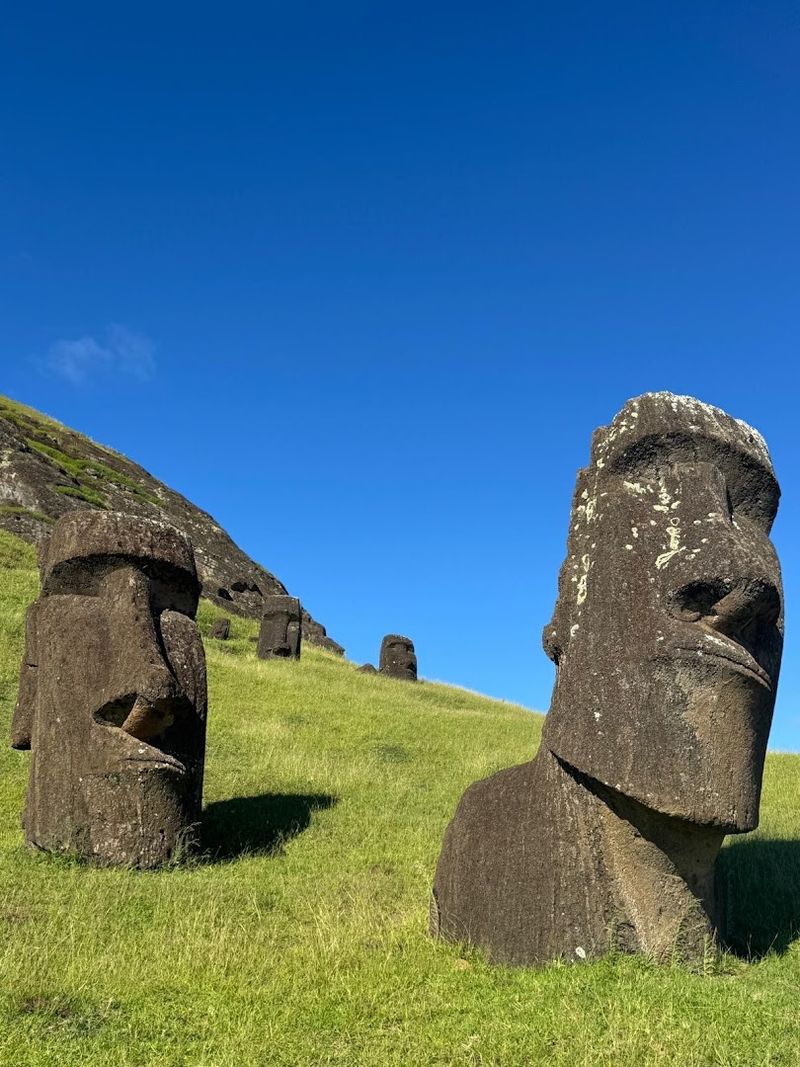
Nearly 1,000 massive stone heads stare across a windswept island in the middle of the Pacific, and nobody alive today fully understands how they got there. The moai of Easter Island, carved by the Rapa Nui people between the 13th and 16th centuries, weigh up to 80 tons each and were somehow transported miles from the quarry where they were made.
Researchers have spent decades debating the techniques used, with theories ranging from wooden sledges to a rocking, walking method that moves the statues upright. What makes Easter Island even more remarkable is the collapse of its civilization, which many scholars link to deforestation, resource depletion, and population pressure.
The island, formally a Chilean territory, sits roughly 2,300 miles from the nearest populated landmass. About 1,000 moai were created in total, and many still lie unfinished in the quarry, frozen mid-production as if the whole project stopped overnight.
3. Alcatraz Island, San Francisco, California, USA
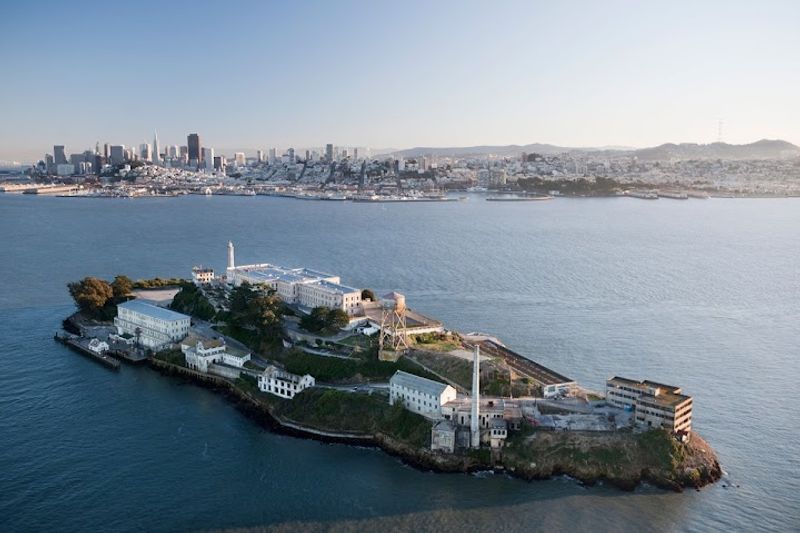
Al Capone doing laundry, Machine Gun Kelly staring at the San Francisco skyline from behind bars, and a group of Native American activists raising a flag over the prison yard. Alcatraz has hosted all of these moments, making it one of America’s most layered and surprising landmarks.
The island’s federal prison era ran from 1934 to 1963, but its history stretches back further. It was a military fort before the Civil War, then a military prison, and then the site of the first lighthouse on the West Coast.
After the prison closed, a group of Native American activists occupied the island from 1969 to 1971, demanding that the government honor old treaties.
That occupation helped spark a national movement for Indigenous rights and changed how many Americans thought about federal land policy.
4. Hashima Island, Nagasaki, Japan
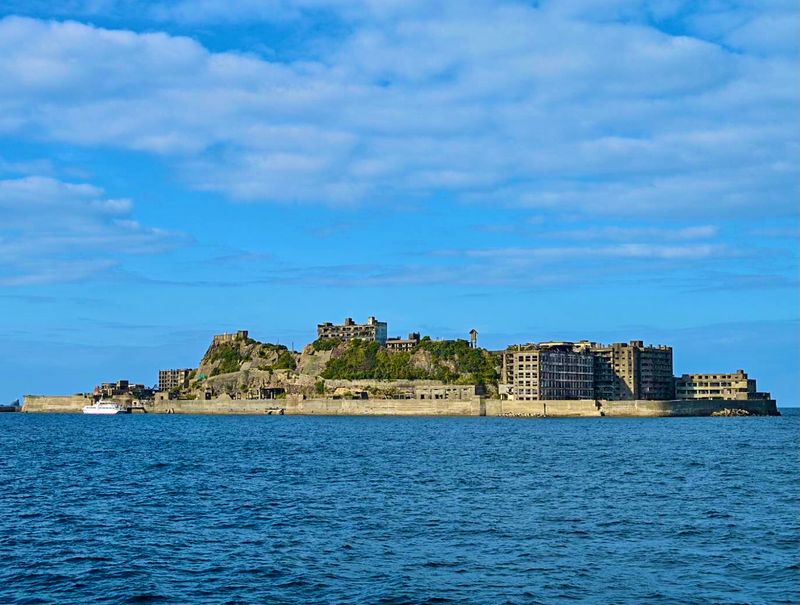
At its peak in 1959, Hashima Island crammed 5,259 people into a space barely the size of a few city blocks, making it one of the most densely populated places ever recorded on Earth. The island ran entirely on coal, and the mining company that operated it built towering concrete apartment blocks, schools, and shops to keep workers from ever needing to leave.
Coal was discovered there in 1810, and for over a century the island hummed with industrial activity. During World War II, Korean and Chinese laborers were forced to work in the mines under brutal conditions.
When coal demand collapsed in 1974, the company gave workers just a few weeks to pack up and leave.
Everything else stayed. Furniture, clothes, and personal items were left behind, and the concrete city slowly crumbled into ruin.
Hashima reopened to limited tourism in 2009 and became a UNESCO World Heritage Site in 2015, though its wartime labor history remains a point of serious international dispute.
5. Poveglia Island, Venice, Italy
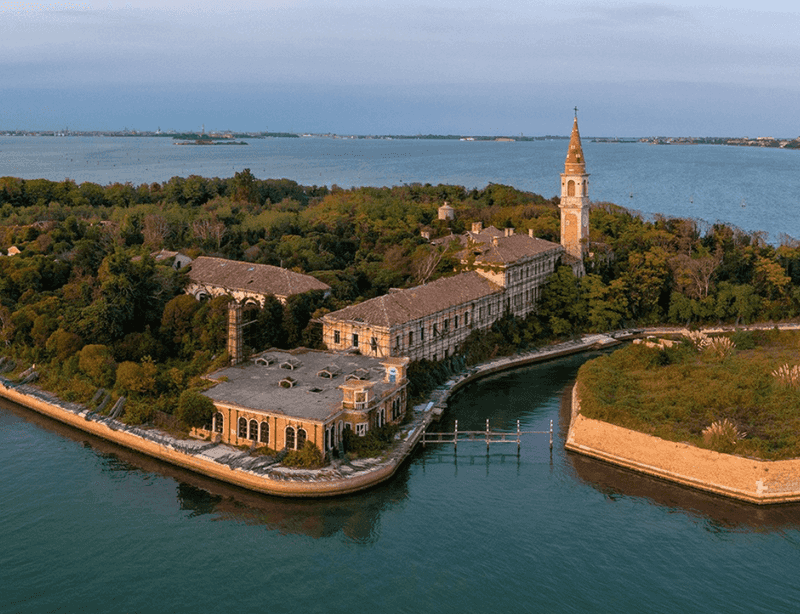
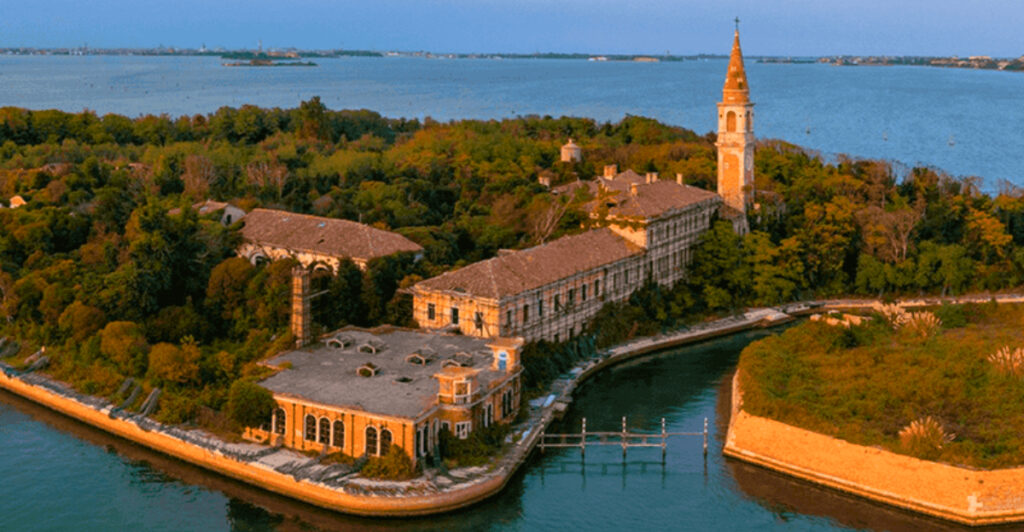
Roughly 160,000 people are estimated to have passed through Poveglia Island during its centuries as a quarantine station, and according to some researchers, around half the island’s soil is composed of human ash and bone. That is not a horror movie premise.
That is the documented history of a small island in the Venetian Lagoon.
First recorded in 421 AD, Poveglia was used to isolate plague victims as early as 1776. Ships arriving in Venice were required to stop there first, and anyone showing signs of illness was removed and kept on the island.
In 1922, the buildings were converted into a psychiatric facility, which operated until 1968.
Since then, the island has been closed to the public, accessible only with special government permission.
6. Spinalonga, Crete, Greece
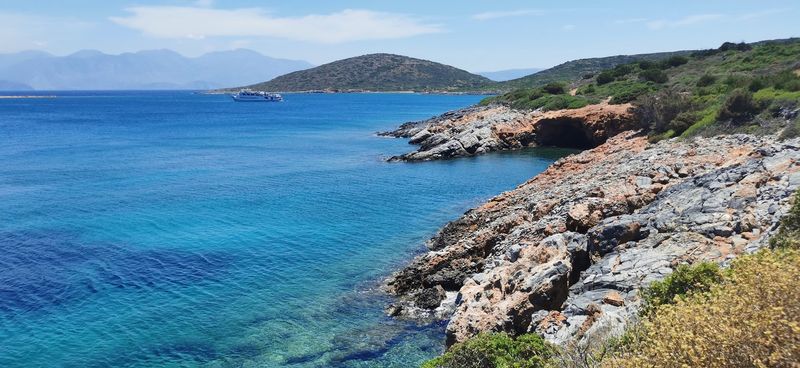
For most of its history, Spinalonga was a military prize. The Venetians built its impressive fortifications in 1579, and the island remained one of their last strongholds in Crete long after Ottoman forces had taken the rest of the island, finally falling in 1715.
Then, in 1903, it became something else entirely: one of Europe’s last active leper colonies.
People diagnosed with leprosy were transported to Spinalonga and expected to remain there indefinitely. What developed, though, was not just isolation but a genuine community.
Residents organized shops, a church, a school, and eventually a theater within the island’s old stone walls.
The colony closed in 1957 when effective treatment for leprosy became available. Unlike many historical sites, Spinalonga’s buildings are well preserved, giving visitors a clear picture of what daily life looked like for the people who lived there.
Victoria Hislop’s 2005 novel “The Island” brought the colony’s story to a global audience.
7. Okunoshima, Hiroshima Prefecture, Japan
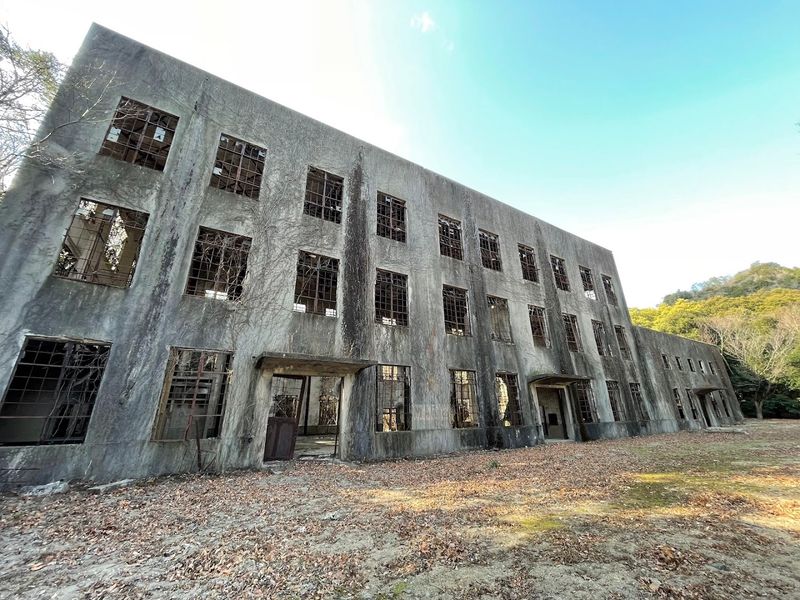
Hundreds of fluffy rabbits now rule an island that was once scrubbed from official Japanese maps to protect a classified military secret. Okunoshima, located in the Seto Inland Sea, was home to a chemical weapons production facility from 1929 to 1945 that manufactured over 6,000 tons of poisonous gas used in warfare.
Workers at the facility, many of whom were never told exactly what they were producing, suffered serious long-term health consequences. The island was so sensitive that it was removed from maps entirely during the war years.
After Japan’s defeat, the weapons stockpiles were destroyed and the island was decommissioned.
Today, the rabbits that now populate the island are believed to be descendants of animals brought by schoolchildren in the 1970s, though some accounts link them to wartime testing.
8. Bikini Atoll, Marshall Islands
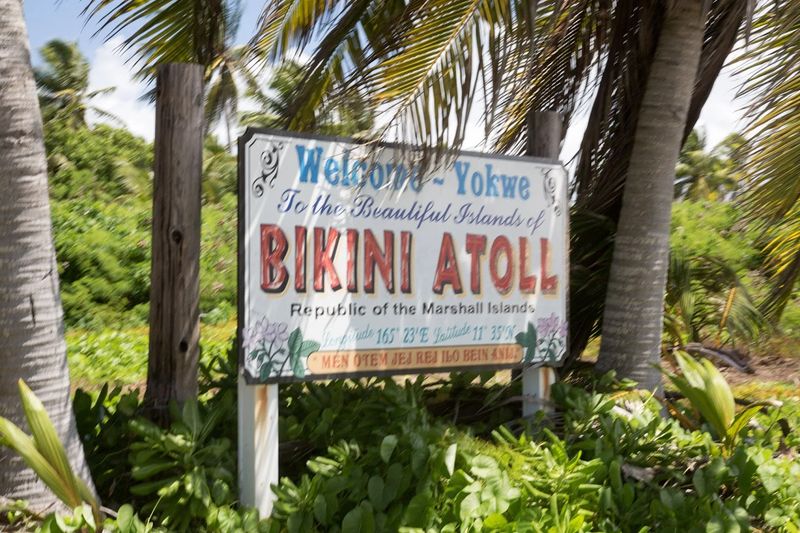
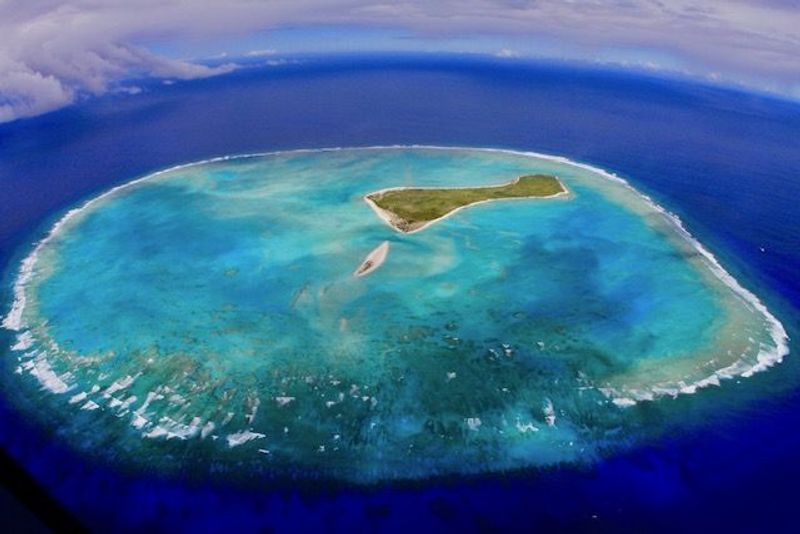
The word Bikini entered global fashion vocabulary in 1946, named after this remote Pacific atoll just days after the world watched a nuclear bomb test there. The swimsuit’s French designer thought the design would cause an explosion of controversy, so he named it after the place that had just caused a literal one.
Between 1946 and 1958, the United States conducted 23 nuclear weapons tests at Bikini Atoll, including the first-ever test of a hydrogen bomb in 1952. The atoll’s original residents were relocated before testing began, promised they could return.
Most never did, and their descendants remain displaced to this day.
The lagoon floor holds the wrecks of warships deliberately sunk during the tests, and Bikini Atoll was declared a UNESCO World Heritage Site in 2010. Radiation levels on parts of the atoll remain elevated, and the site stands as a sobering marker of what the atomic age actually looked like from ground level.
9. North Sentinel Island, Andaman Islands, India
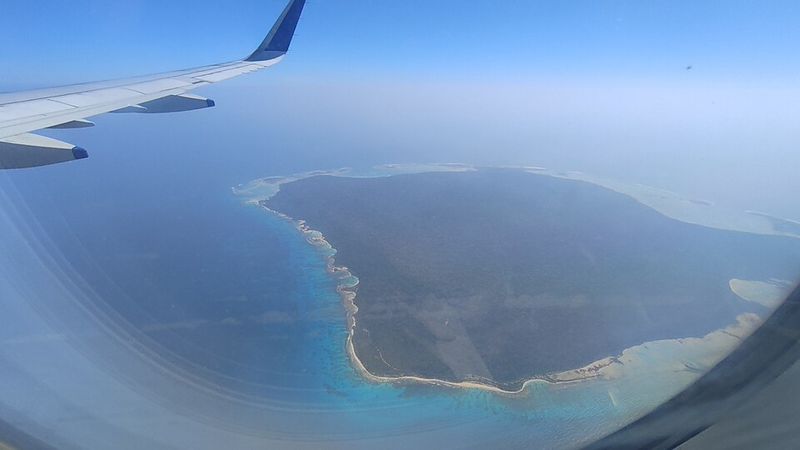
Indian law makes it illegal to approach within five nautical miles of North Sentinel Island, and there are very good reasons for that rule. The Sentinelese people who live there have actively resisted every attempt at outside contact for as long as records exist, and their response to approaching boats or aircraft is consistent: they shoot arrows and throw spears.
The island sits in the Bay of Bengal, and its inhabitants are believed to have lived there for up to 60,000 years, maintaining a lifestyle that predates recorded history. The Indian government officially protects their right to remain uncontacted, recognizing that exposure to outside diseases could devastate a population with no immunity to common illnesses.
10. Ilha da Queimada Grande, São Paulo, Brazil
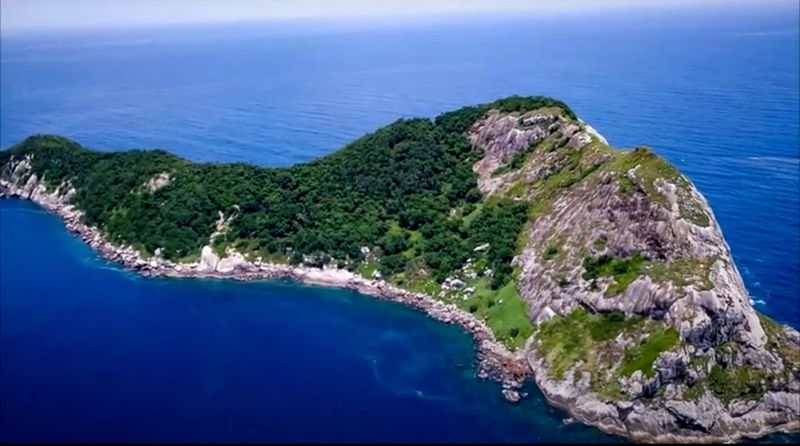
Scientists estimate that between one and five golden lancehead vipers live on every square meter of this island, which works out to somewhere between 2,000 and 4,000 of the world’s most venomous snakes packed into roughly 43 hectares of land. The Brazilian government has banned civilian access entirely, and even researchers need special permits to visit.
The golden lancehead is a species found nowhere else on Earth. It evolved in isolation after rising sea levels separated the island from the mainland roughly 11,000 years ago.
Cut off from ground-based prey, the snakes adapted to hunt migratory birds, developing venom potent enough to immobilize fast-moving targets almost instantly.
11. Gruinard Island, Scotland
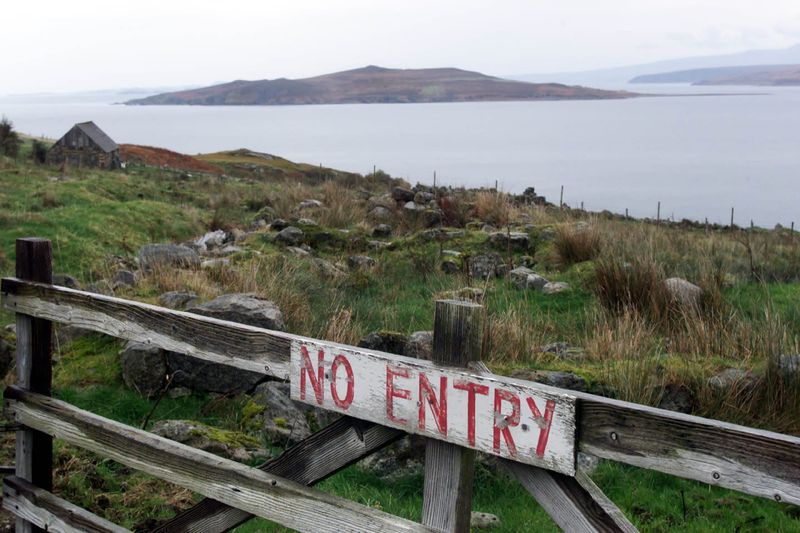
For 48 years, a small Scottish island sat behind a quarantine notice warning that landing on it was prohibited by government order. Gruinard Island, located off the northwest coast of Scotland, was used by British military scientists in 1942 to test anthrax bombs on a flock of sheep.
The results confirmed that anthrax was devastatingly effective as a weapon.
They also confirmed that anthrax spores are extraordinarily difficult to remove from soil. The island remained contaminated and off-limits to the public from 1942 until 1990, when a major decontamination operation using formaldehyde solution finally rendered it safe.
The government officially returned the island to its original owners for the symbolic sum of 500 pounds.
12. Clipperton Island, Pacific Ocean, France
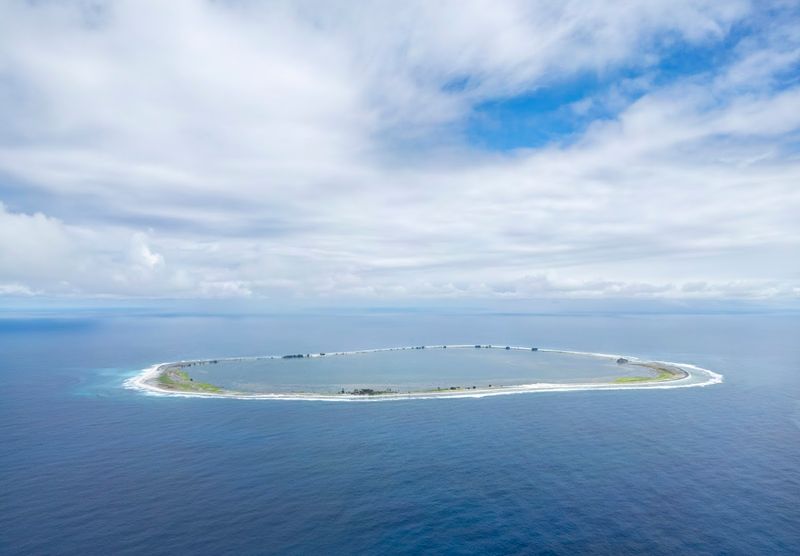
Clipperton Island is technically French territory, named after an English pirate, located in the Pacific, and the site of one of the most harrowing survival episodes of the 20th century. A small Mexican colony was established there in 1906 to mine guano and assert territorial claims.
Within a few years, supply ships stopped arriving due to the chaos of the Mexican Revolution.
The colonists, including women and children, were left completely cut off. Food ran out, disease spread, and the population collapsed over the following years.
By 1917, only one man remained alive on the island, a lighthouse keeper named Victoriano Alvarez who had declared himself king and ruled the surviving women through fear and force.
A passing American gunboat rescued the survivors in 1917. The island has been uninhabited ever since, administered by France as an overseas territory.
13. Spike Island, County Cork, Ireland
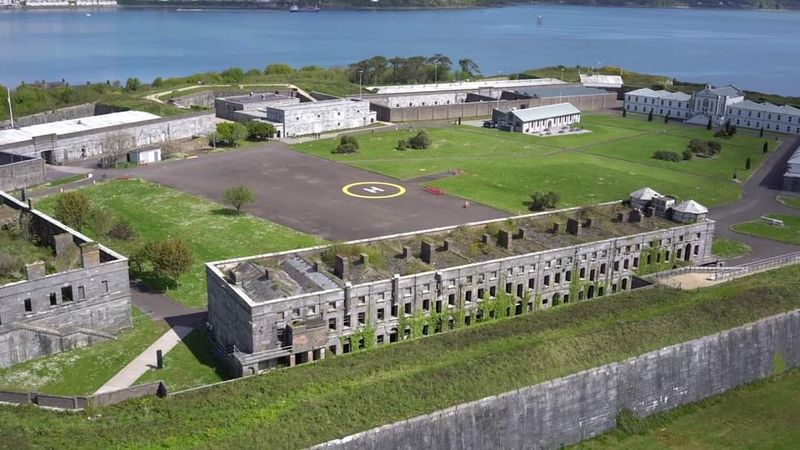
Cork Harbour holds an island that has been, at various points in its documented history, a monastery, a military garrison, a storage depot, a prison, a naval base, and a tourist attraction. Spike Island has been continuously occupied for over 1,300 years, which makes it one of the most historically layered small islands in all of Europe.
Its most dramatic chapter came during the 19th century, when it became a holding facility for prisoners awaiting transportation to Australian penal colonies. At its peak in 1848, during the aftermath of the Great Famine, more than 2,300 prisoners were crammed onto the island.
The conditions were grim, overcrowded, and poorly documented.
The Irish government eventually transferred the island to Cork County Council in 2010, and it reopened as a heritage site.
14. Tristan da Cunha, British Overseas Territory
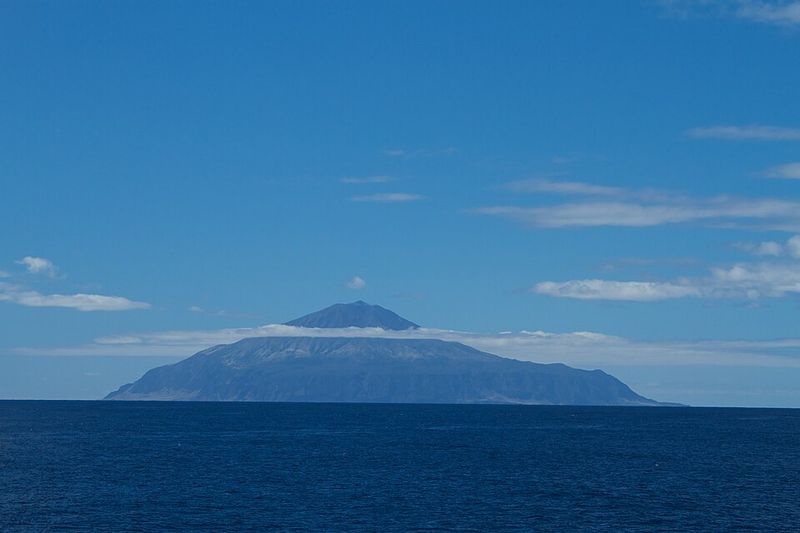
The nearest landmass to Tristan da Cunha is Saint Helena, which is itself famously remote, and it sits 1,500 miles away. The nearest continent is roughly 1,700 miles distant.
This South Atlantic island holds the title of the most remote permanently inhabited place on Earth, a fact that shapes every aspect of life there.
The island’s entire population of around 250 people shares just eight family surnames, reflecting the small number of original settlers who arrived in the early 19th century. A volcanic eruption in 1961 forced the entire population to evacuate to Britain, but the vast majority chose to return when it was declared safe in 1963.
Tristan has no airport. The only way to reach it is by boat, a journey that takes roughly six days from South Africa and is only possible when sea conditions allow.
15. Norfolk Island, Norfolk Island
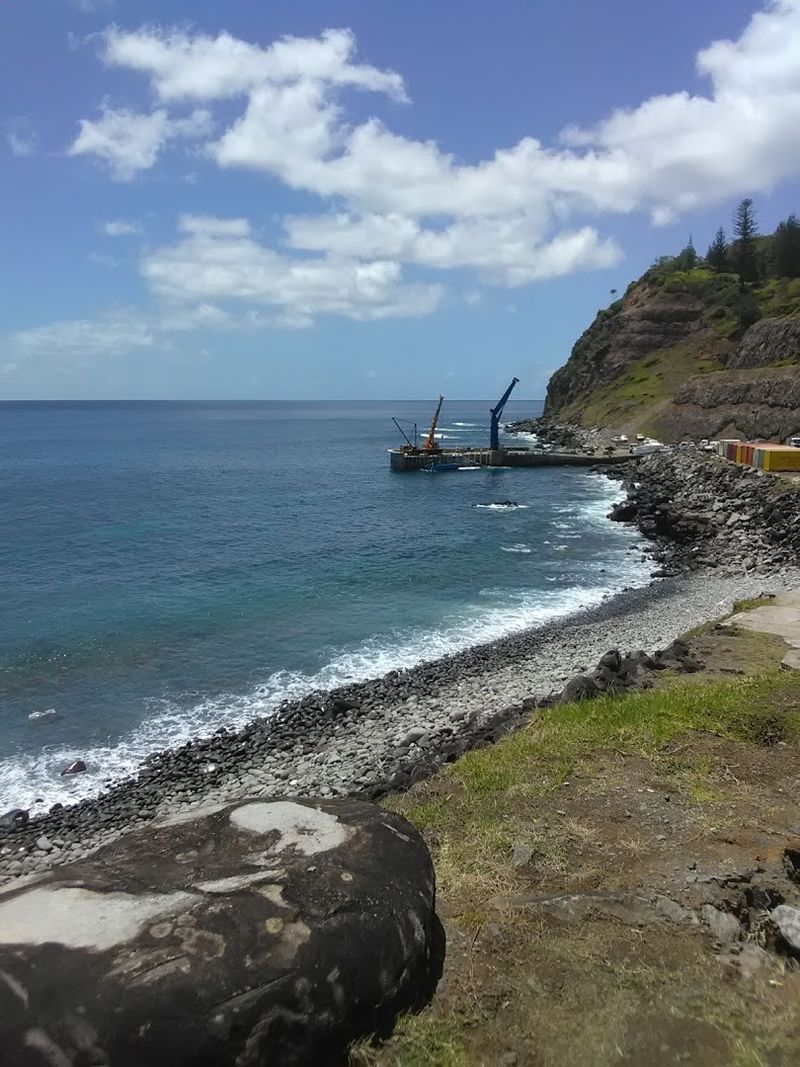
Norfolk Island’s history reads like a relay race between some of the British Empire’s most dramatic chapters. It began as a brutal convict settlement in 1788, gained a reputation as one of the harshest penal colonies in the Pacific, was then abandoned, and later repopulated in 1856 with the descendants of the HMS Bounty mutineers who had outgrown Pitcairn Island.
Those families, carrying surnames like Christian, Quintal, and McCoy, brought their unique Pitkern-Norf’k language with them, a creole blend of 18th-century English and Tahitian that is still spoken on the island today. The connection to the Bounty mutiny gives Norfolk a direct human link to one of maritime history’s most famous events.
Share this story