 Unearth The Voyage
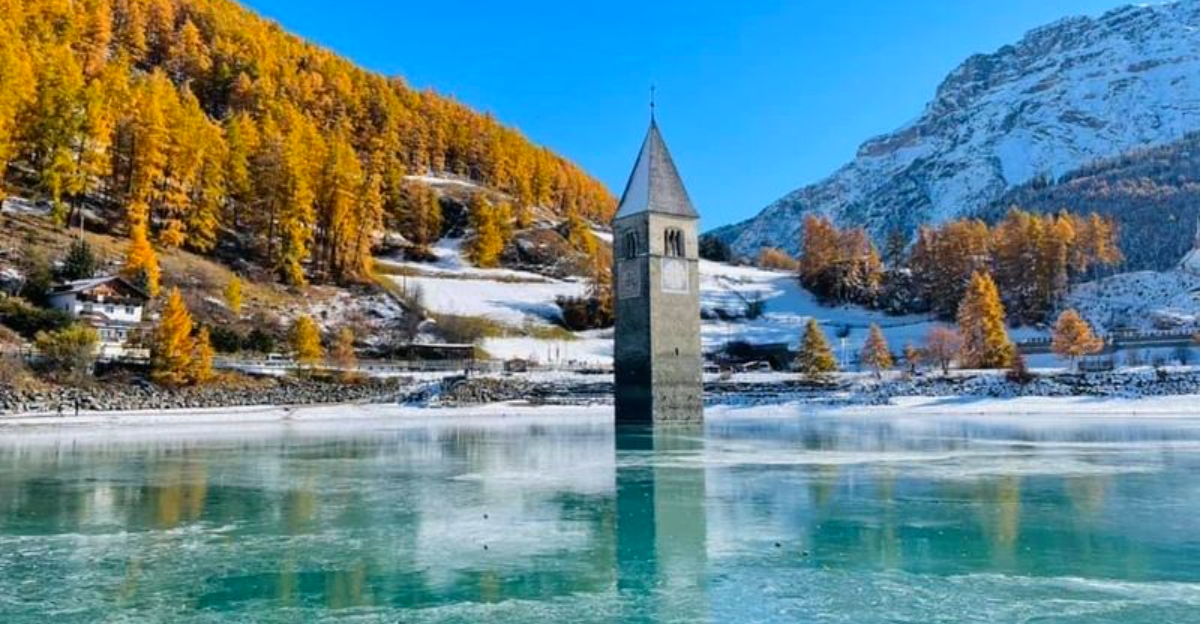
Lake Resia sits in northern Italy’s Alto Adige region, best known for a 14th-century bell tower rising straight out of the water. The tower is the last visible remnant of the village of Curon, which was flooded in 1950 to create a reservoir.
While the image is striking on its own, the surrounding area offers far more than a single photo stop. Scenic Alpine routes, historic towns, quiet valleys, and cross-border roads turn this location into a destination that feels much larger than its size.
1. Start with the Icon: The Bell Tower of Curon (Graun)
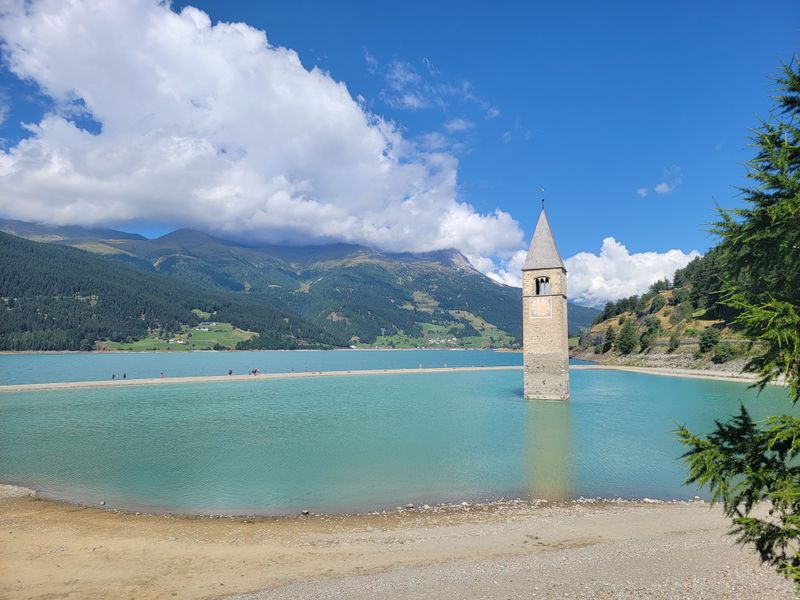
You can’t visit Lake Resia without standing in front of the bell tower. It’s the reason most people come here in the first place.
What makes it special is the backstory: this tower once belonged to the village church of St. Catherine, and when the valley was flooded in 1950 to create a hydroelectric reservoir, everything else disappeared beneath the water. Early morning is the best time to visit if you want that mirror-like reflection and a quieter experience.
The light is soft, the water is still, and you’ll have space to take photos without a crowd blocking your view. Late afternoon works too, especially if you prefer moodier tones and golden hour drama.
In winter, the lake freezes over and people actually walk out to the tower across the ice. It’s surreal and beautiful, but also a little eerie when you think about what’s underneath.
During warmer months, you can walk the shoreline promenade and get different angles of the tower from various points around the lake. The tower itself is simple—just stone and a peaked roof—but its isolation makes it unforgettable.
It’s become a symbol of loss, resilience, and the strange beauty that sometimes comes from both.
2. Walk the Lake Promenade (The Classic 15 km Loop)
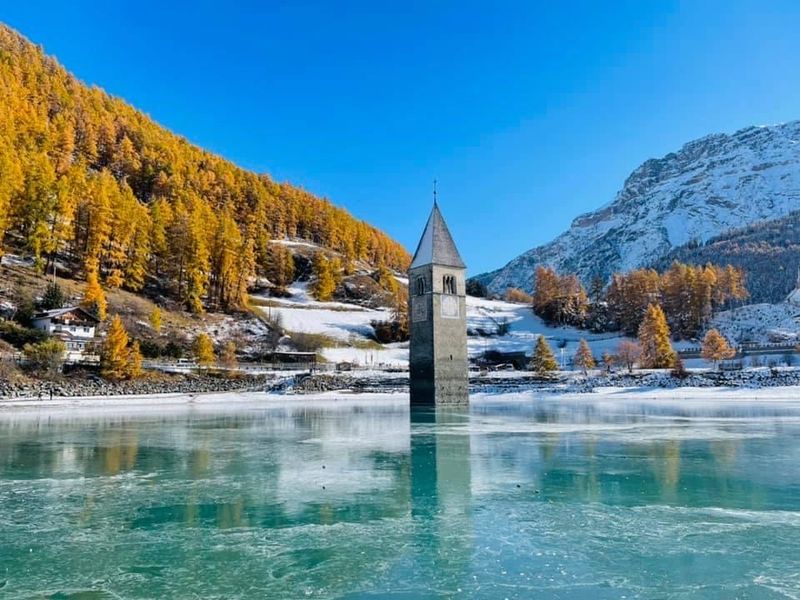
If you want to experience Lake Resia beyond the postcard shot, walk the full loop. It’s about 15 kilometers around the entire lake, mostly flat, and incredibly easy to follow.
You don’t need hiking boots or a map—just start walking and let the path guide you. The loop gives you constantly shifting views of the water, the mountains, and the bell tower from every possible angle.
Some stretches feel open and windswept, while others tuck into quieter sections where the landscape feels more intimate. It’s the kind of walk that works for all paces—whether you’re strolling slowly or power-walking through.
Because the terrain is so flat and well-maintained, it’s also popular with families, older visitors, and anyone who wants a long walk without the strain of elevation gain. You can stop whenever you want, sit by the water, or just take in the view without feeling rushed.
The entire loop takes around three to four hours at a relaxed pace, but you can easily do just half if you’re short on time. Either way, it’s one of those rare walks that feels satisfying the whole way through—no boring stretches, no regrets.
3. Cycle the Resia Loop (Same Views, More Distance Covered)
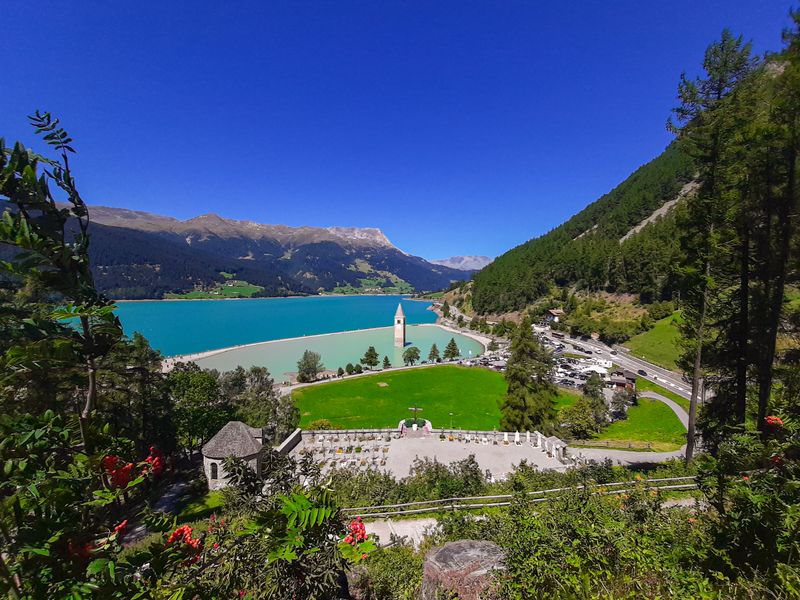
Prefer wheels over walking? The same 15-kilometer loop works beautifully by bike.
It’s flat, paved, and designed with cyclists in mind, so you’ll see plenty of people cruising the circuit on everything from road bikes to e-bikes. Cycling lets you cover the distance faster, which means you can loop the lake and still have time to explore nearby villages or grab lunch somewhere with a view.
The path is wide enough that walkers and cyclists share it comfortably, and there are spots where you can pull off to rest or take photos. E-bikes are especially popular here, and for good reason.
Even though the loop is flat, the altitude (over 1,500 meters) can make pedaling feel harder than expected. An e-bike takes the edge off and lets you focus on the scenery instead of your breathing.
You’ll pass through small lakeside areas, cross over bridges, and get those same stunning mountain-and-water views that make the walk so memorable. The difference is you’ll finish in about an hour instead of three, which opens up your day for other adventures in the valley.
4. Add the Second Lake: Haidersee (Lago di San Valentino alla Muta)
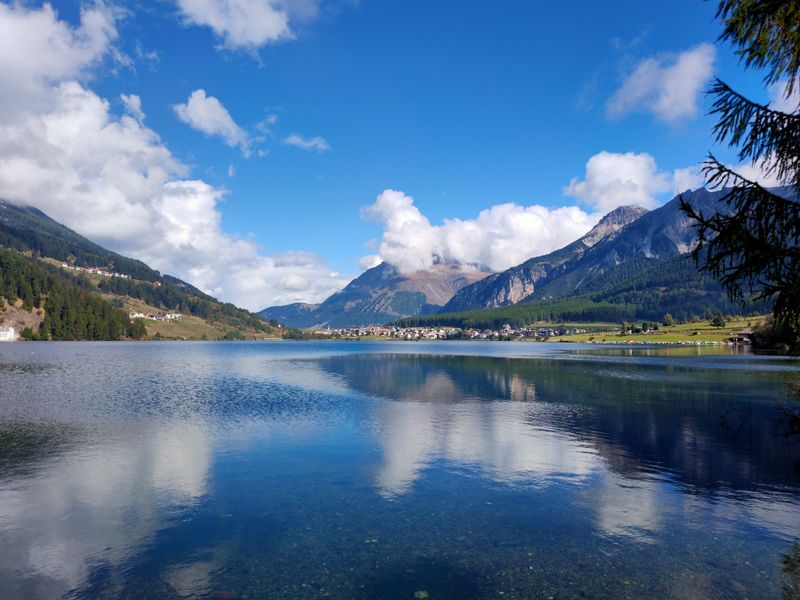
Just a short distance from Lake Resia, Haidersee offers a quieter, more intimate experience. It’s smaller, less famous, and feels like the kind of place locals go when they want to avoid the tourist buzz.
The shoreline path is gentle and scenic, with views that feel softer and more tucked-in than Resia’s wide-open drama. Haidersee is especially beautiful when the water is still and the mountains reflect cleanly on the surface.
It’s a great spot for a slower-paced walk or a picnic by the water. The vibe here is calm and unhurried, which makes it a nice contrast if you’ve just come from the busier scenes around the bell tower.
Because it’s less visited, you’ll often have stretches of the path to yourself. That makes it ideal for people who want nature without the crowds, or for anyone traveling with kids who need space to roam without feeling watched.
The lake is also part of the same reservoir system as Resia, so it shares that same high-altitude Alpine setting. But it feels like a different world—less iconic, maybe, but more peaceful.
If you have time, it’s worth adding to your itinerary as a softer, quieter complement to the main event.
5. Follow the Via Claudia Augusta (Yes, This Area Is a Cycling Classic)
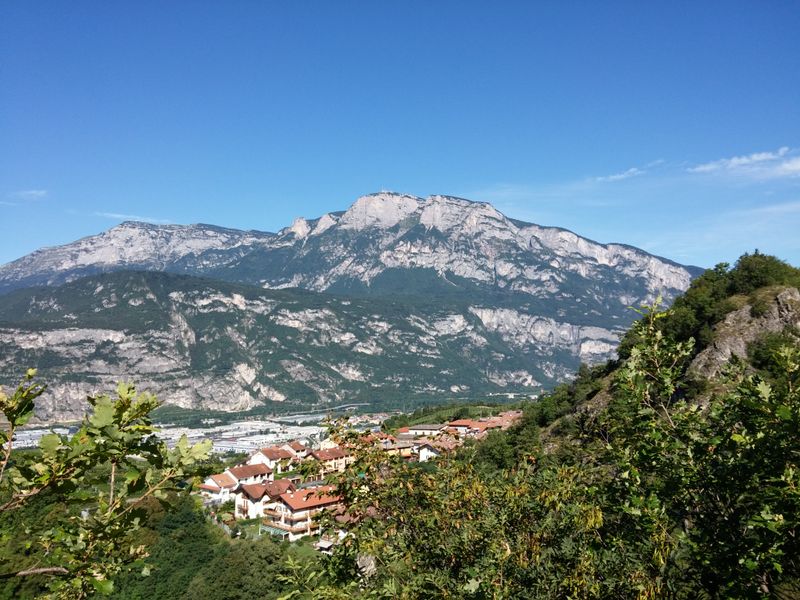
Lake Resia sits right along the Via Claudia Augusta, one of Europe’s most famous long-distance cycling routes. The path follows an ancient Roman road that once connected the Po River valley with the Danube, and today it’s a beloved trail for cyclists who want history, scenery, and a well-marked route all in one.
The section through the Vinschgau (Val Venosta) valley is especially popular. It’s mostly flat, passes through charming villages, and offers views of orchards, monasteries, and mountain ridges.
You don’t have to ride the entire route to enjoy it—just picking up a section near Resia gives you a taste of what makes this corridor so special. Along the way, you’ll see signs marking the route’s Roman origins, and you’ll pass through towns that feel like they’ve been part of this landscape forever.
It’s the kind of ride that mixes culture, nature, and a little bit of time travel. If you’re not into multi-day cycling trips, no problem.
You can rent a bike locally and ride just a portion of the route, stopping wherever something catches your eye. The beauty of the Via Claudia Augusta is that it’s flexible—serious cyclists love it, but casual riders enjoy it just as much.
6. Visit Glorenza (Glurns): A Tiny Walled Medieval Town
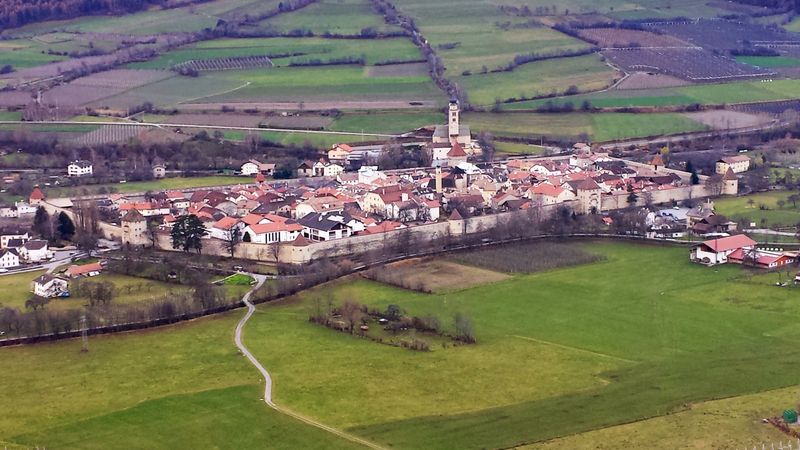
Glorenza is one of those places that makes you stop and wonder how it still exists. It’s a tiny medieval town completely surrounded by intact walls, with narrow streets, archways, and buildings that look like they haven’t changed in centuries.
The whole place is walkable in under an hour, but it’s charming enough that you’ll want to linger. The town walls are remarkably well-preserved, and you can walk along sections of them for views over the rooftops and surrounding valley.
Inside, the streets are quiet and lined with colorful buildings, small shops, and cafes where locals still outnumber tourists. Glorenza is small, but it doesn’t feel sleepy.
There’s a sense of pride here—people take care of the town, and it shows. You’ll see flowers in window boxes, clean cobblestones, and signs explaining the town’s history in multiple languages.
It’s also a great spot for a lunch break if you’re cycling or driving through the valley. The town has a few good restaurants, and eating inside those old walls adds a layer of atmosphere you won’t get at a roadside stop.
Glorenza isn’t a full-day destination, but it’s absolutely worth a half-day detour if you’re in the area.
7. Stop in Mals (Malles): Towers, Views, and a Real-Lived-In Feel
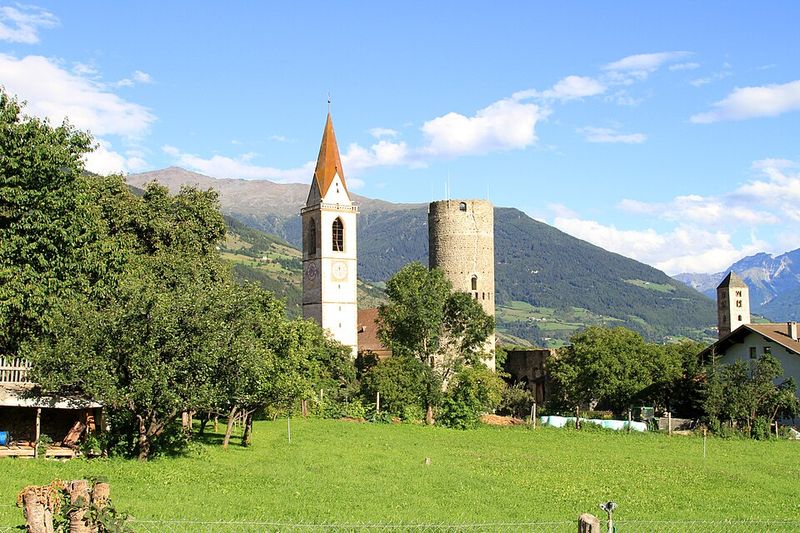
Mals is bigger than Glorenza but still small enough to feel authentic. It’s a working town, not a tourist showcase, and that gives it a different kind of appeal.
You’ll see locals running errands, kids on bikes, and shops that serve the community first and visitors second. The town is known for its towers—medieval structures that still stand tall and give Mals a distinctive skyline.
You can’t miss them as you approach, and they’re a reminder that this area has been strategically important for centuries. Mals sits in the Upper Vinschgau valley, which has long been a corridor between cultures and countries.
Because it’s a real hub for the surrounding area, Mals has better infrastructure than some of the smaller villages. You’ll find grocery stores, bakeries, restaurants, and even a few hotels if you’re looking for a base that’s less touristy than the lakeside options.
Mals is also a popular stop along the Via Claudia Augusta, so cyclists pass through regularly. That means the town is used to visitors, but it doesn’t cater to them the way resort towns do.
It’s a good balance—welcoming without being overly polished.
8. Marienberg Abbey (Abbazia di Monte Maria): A High, Peaceful Detour
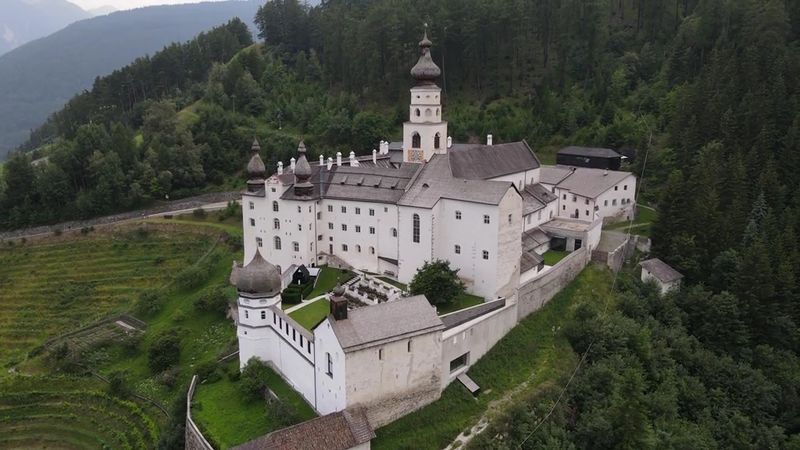
Marienberg Abbey sits high above the village of Burgeis, and it’s known as Europe’s highest Benedictine monastery. The location alone is impressive—perched on a hillside with sweeping views of the valley below and mountains all around.
Getting there requires a short drive or a steep walk, but the setting makes it worth the effort. The abbey has been home to a community of monks for centuries, and that sense of continuity is palpable.
The buildings are simple but beautiful, and the atmosphere is calm in a way that feels genuinely removed from the world below. Visitors are welcome, and there’s a small museum inside that covers the abbey’s history and the life of the monastic community.
One of the highlights is the Romanesque crypt, which dates back to the 12th century and contains some remarkably well-preserved frescoes. The artwork is vivid and detailed, and seeing it in such an intimate, quiet space feels like a privilege.
Marienberg isn’t a place to rush through. It’s best experienced slowly, with time to walk the grounds, sit in the chapel, and take in the views.
If you’re looking for a peaceful detour that offers both history and altitude, this is it.
9. Langtaufers Valley: The Escape the Crowds Nature Option
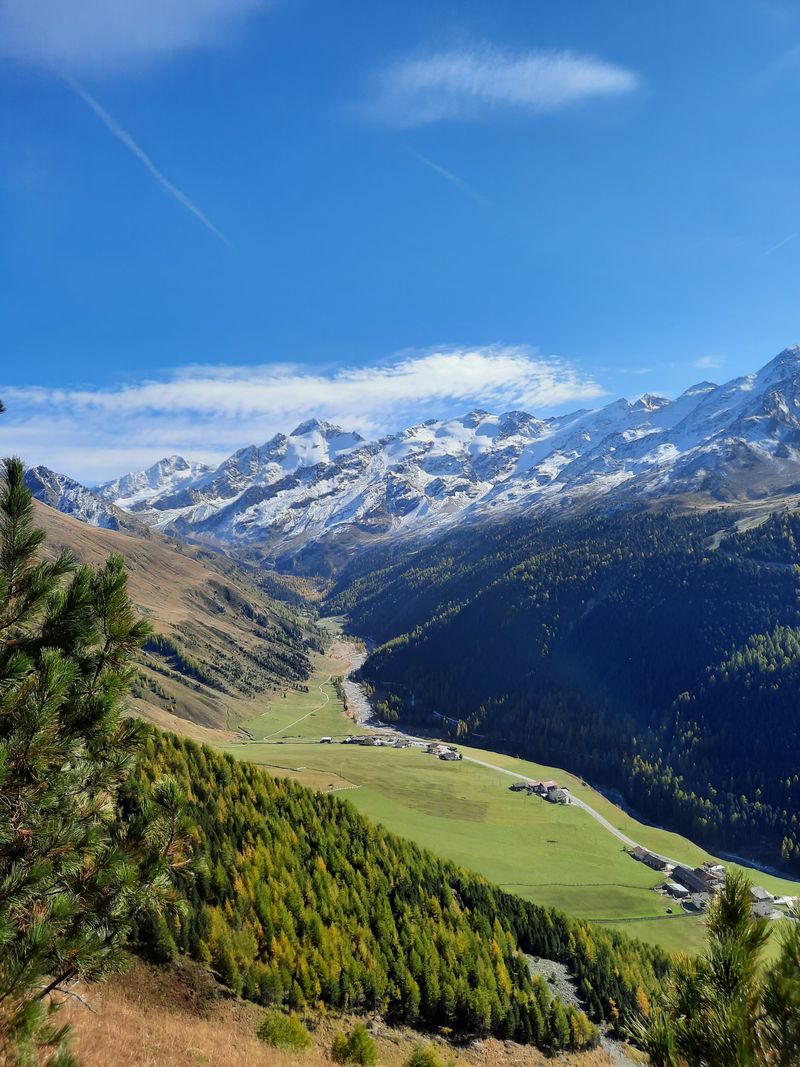
If you want raw Alpine scenery without the polished feel of a tourist destination, head into Langtaufers. This valley stretches into the mountains beyond Mals, and it’s known for wide-open views, quiet trails, and a sense of remoteness that’s hard to find near the more popular spots.
Langtaufers is a favorite among hikers who want something more rugged than the flat lake promenade. The trails here range from easy valley walks to more challenging mountain routes, and all of them offer big, dramatic views.
You’ll see fewer people, more wildlife, and landscapes that feel genuinely wild. The valley is also home to a few small villages and mountain huts, so you can stop for a meal or a drink along the way.
These places are simple and welcoming, and they serve the kind of hearty mountain food that tastes even better after a long walk. Because Langtaufers is less developed, it’s ideal for people who want to escape the crowds and spend time in nature on their own terms.
It’s not about ticking off a famous landmark—it’s about being in a place that still feels untouched and unscripted.
10. Watles Ski & Adventure Mountain (Winter Slopes, Summer Views)
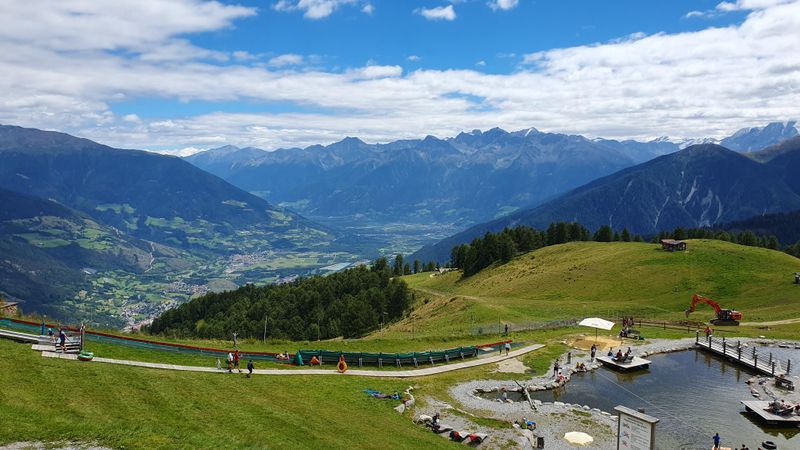
Watles is a solid choice if you’re traveling with a group that wants different things. In winter, it’s a family-friendly ski area with gentle slopes and reliable snow.
Outside of ski season, it’s still worth visiting for the views and the chance to get up into the mountains without a long hike. The cable car takes you up to the higher elevations, where you can walk, explore, or just enjoy the fresh air and panoramic views.
It’s a great option for families with young kids, older travelers, or anyone who wants mountain time without the physical strain of a steep climb. Watles doesn’t have the big-name reputation of some nearby resorts, and that’s part of its appeal.
It’s quieter, less crowded, and more relaxed. You won’t find massive ski runs or luxury lodges, but you will find a friendly atmosphere and a genuine mountain experience.
In summer, the area offers hiking trails, picnic spots, and plenty of space to roam. It’s also a good option if the weather turns and you want something to do that doesn’t involve being outside all day.
The cable car ride alone is worth it for the views.
11. Do a Three-Country Feeling Day (Italy–Austria–Switzerland Region)
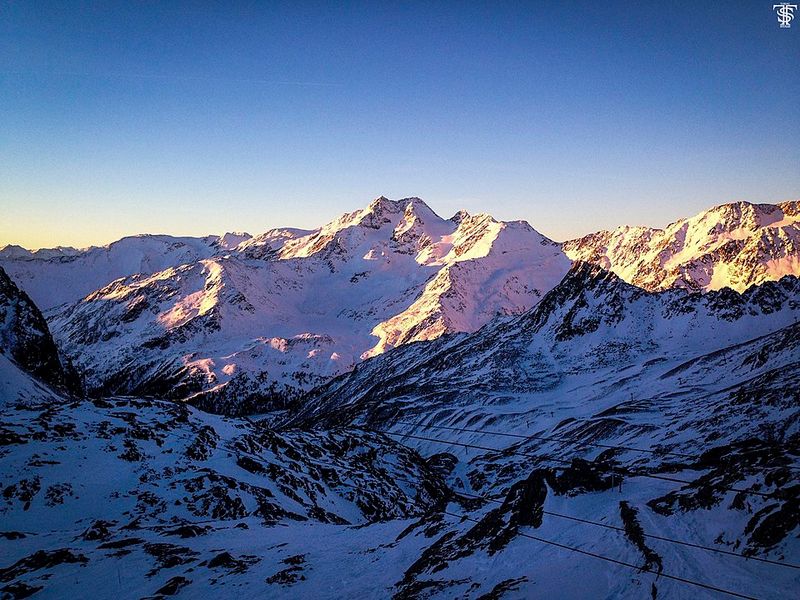
One of the coolest things about Lake Resia is its location. You’re sitting in a corner of the Alps where Italy, Austria, and Switzerland come together, and that geography creates a unique cultural mix.
Even without chasing a literal tripoint, you can build a day that feels international – different languages, different food, same dramatic mountains. The borders here are soft and easy to cross, which makes it simple to hop between countries for different experiences.
You might start the day at the bell tower in Italy, drive into Austria for lunch, and end up in Switzerland by evening. Each place has its own vibe, and the contrasts make the day more interesting.
This area has been a crossroads for centuries, and you can still feel that layered history in the towns and landscapes. Signs switch languages, menus change, and architectural styles shift depending on which side of the border you’re on.
It’s a subtle but fascinating way to experience Europe’s cultural diversity in a single day. You don’t need a complicated plan, just pick a few towns or viewpoints in different countries and let the road take you there.
The joy is in the movement and the sense of being somewhere that doesn’t belong to just one place.
12. Cross Into Austria for Nauders (Especially if You’re Here in Winter)
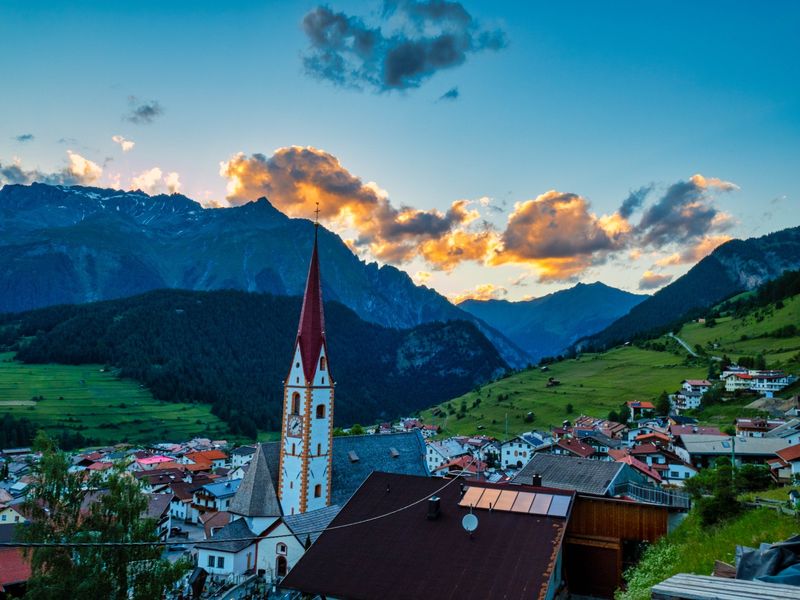
Just over the Reschen Pass, Nauders sits on the Austrian side and offers a classic Tyrolean mountain resort experience. It’s especially popular in winter, when the ski area draws visitors from across the region.
But even outside ski season, Nauders is worth a visit for its mountain scenery and easygoing Alpine atmosphere. The town has a well-developed infrastructure, with hotels, restaurants, and shops that cater to both winter sports enthusiasts and summer hikers.
It’s bigger and more resort-oriented than some of the quieter Italian villages around Lake Resia, which makes it a good option if you want more amenities and a livelier vibe. Nauders also has a cable car that takes you up to higher elevations for views and hiking trails.
In winter, it’s all about skiing and snowboarding, but in summer the mountain becomes a playground for hikers and mountain bikers. The trails are well-marked, and the scenery is the kind of big, open Alpine beauty that makes you want to stay outside all day.
Crossing into Nauders is easy and adds an international dimension to your Lake Resia trip. It’s close enough to visit on a whim, but different enough to feel like a real change of scene.
13. Make It Epic: Stelvio Pass as a Big Day Trip
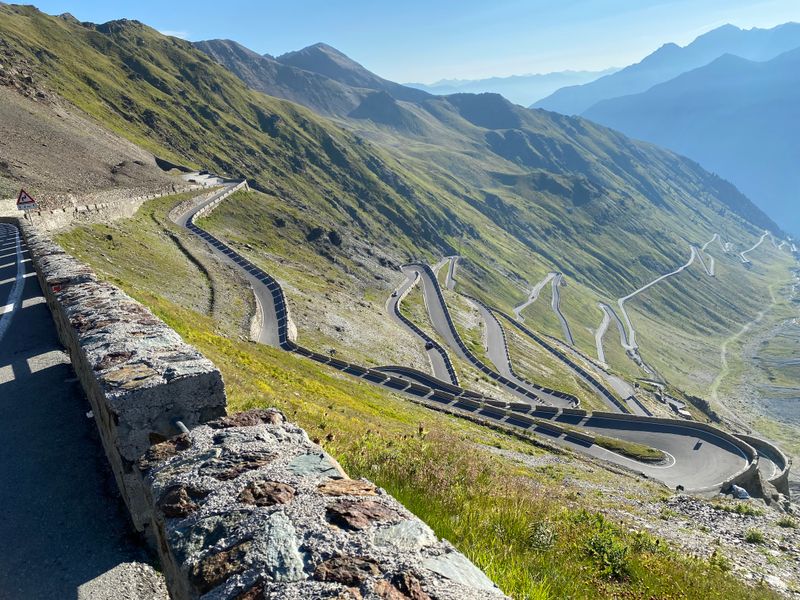
If you have a car and a sense of adventure, consider adding Stelvio Pass to your itinerary. It’s one of Italy’s most famous mountain roads, known for its dramatic switchbacks, high elevation, and the kind of views that make you pull over every few minutes.
It’s not right next to Lake Resia, but it’s close enough to work as a purposeful day trip. The pass reaches over 2,700 meters and is a bucket-list destination for drivers, motorcyclists, and cyclists who want to test themselves on one of Europe’s most iconic roads.
The switchbacks are steep and numerous, 48 hairpin turns on the Prato side alone, and the engineering is as impressive as the scenery. Stelvio Pass is usually open from late spring through early fall, depending on snow conditions.
In summer, it’s a busy route, so expect company. But the experience of driving or riding up through those curves, with the mountains rising all around you, is unforgettable.
Even if you’re not a car enthusiast, the pass offers incredible views and a sense of accomplishment that comes with reaching such a high point. There are a few spots to stop for food or photos, and the summit has a small visitor area where you can take it all in before heading back down.



