 Unearth The Voyage
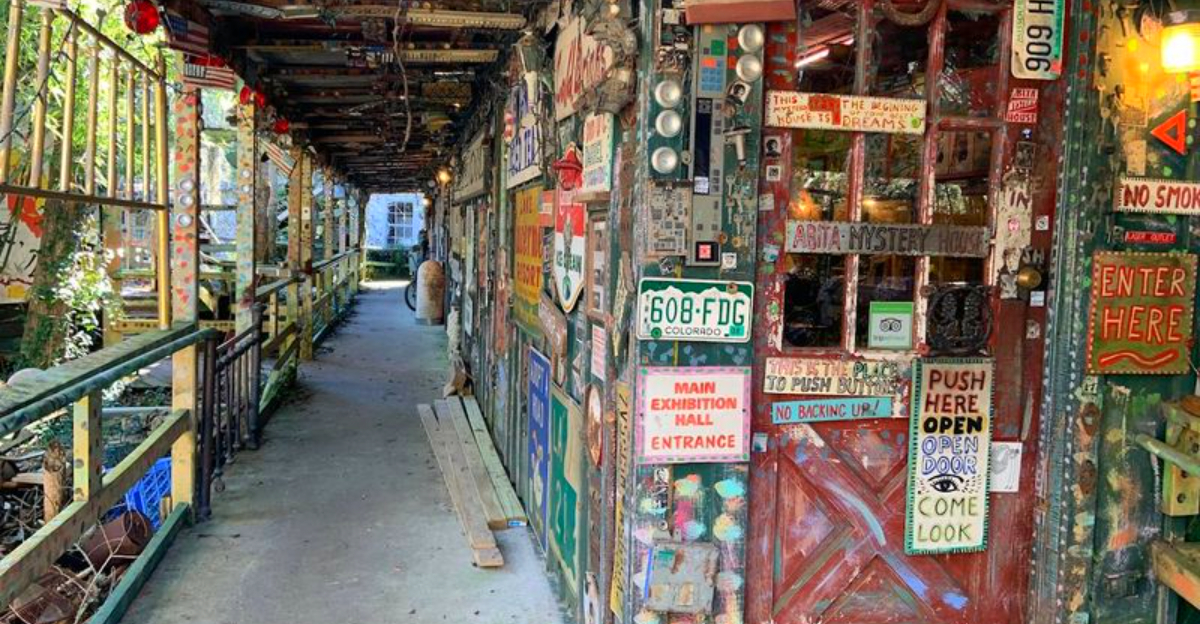
There is a small town in Louisiana where a roadside museum quietly defies every expectation you have ever had about what art can be. Every wall, shelf, and corner is packed with hand-built contraptions, folk art dioramas, vintage oddities, and found objects that somehow tell a story together.
The owner hands you quarters at the door so you can bring certain displays to life, and that detail alone sets the tone for everything that follows. This is not a polished gallery with velvet ropes and hushed voices.
It is something far more personal, far more Louisiana, and far more worth your time.
The Address, Location, and First Impressions
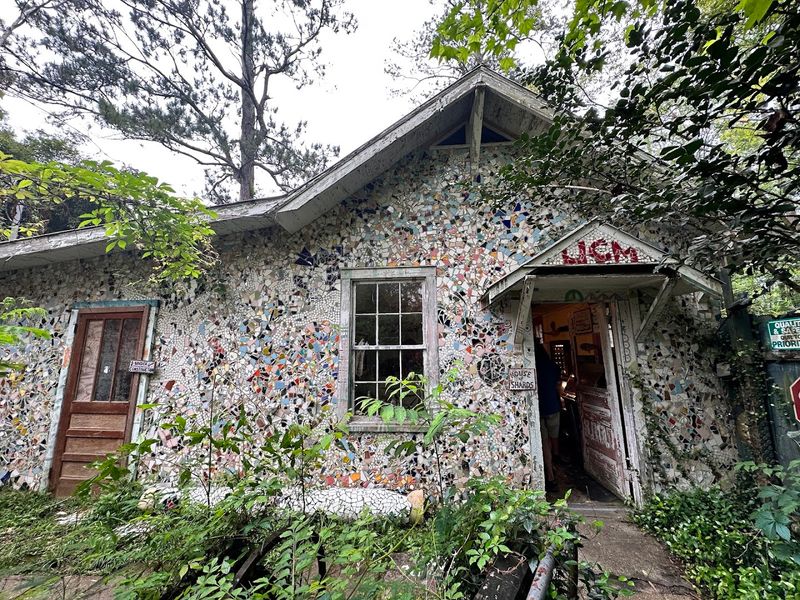
The address is 22275 LA-36, Abita Springs, LA 70420, and the drive there already starts to feel like you are heading somewhere off the usual map. Abita Springs sits on the north shore of Lake Pontchartrain, about 45 minutes from New Orleans, and the town itself has a quiet, unhurried personality that suits this museum perfectly.
The building does not announce itself with neon lights or a grand parking lot. What you notice first are the sculptures and objects arranged outside, weathered by the Louisiana humidity but placed with obvious care.
There is a lived-in quality to the exterior that tells you this place has been accumulating character for decades.
The UCM Museum, which stands for UnCommon Museum, has been drawing curious travelers and locals alike since the 1990s. It holds a 4.6-star rating from over 800 reviews, which is remarkable for a venue that cheerfully describes itself as a collection of junk arranged with pride and creativity.
First-timers often stand outside for a moment, unsure what they are about to walk into, and that uncertainty is exactly the right feeling to arrive with.
The Story Behind the Museum
John Preble, the owner and creator of the Abita Mystery House, started this project as a personal hobby that simply never stopped growing. What began as a love of collecting unusual objects eventually became one of the most talked-about roadside attractions in the entire southeastern United States.
Preble has a reputation for being genuinely warm and conversational with visitors. He knows the history of nearly every piece in the museum and shares that knowledge freely, turning a self-guided tour into something closer to a personal conversation about creativity and Louisiana culture.
The museum has been compared, by Preble himself, to the House on the Rock in Wisconsin, though he frames it with characteristic humility as the “poor man’s” version. That self-awareness is part of what makes the place so endearing.
Unlike destinations that take themselves too seriously, this one leans into its own strangeness with full confidence. The result is a space that feels genuinely one of a kind, built not for profit but for the preservation of something wonderfully hard to define.
Visitors from road trips across states as far away as Oklahoma have listed it among their top ten coolest stops ever.
The Interactive Exhibits and Quarter-Operated Displays
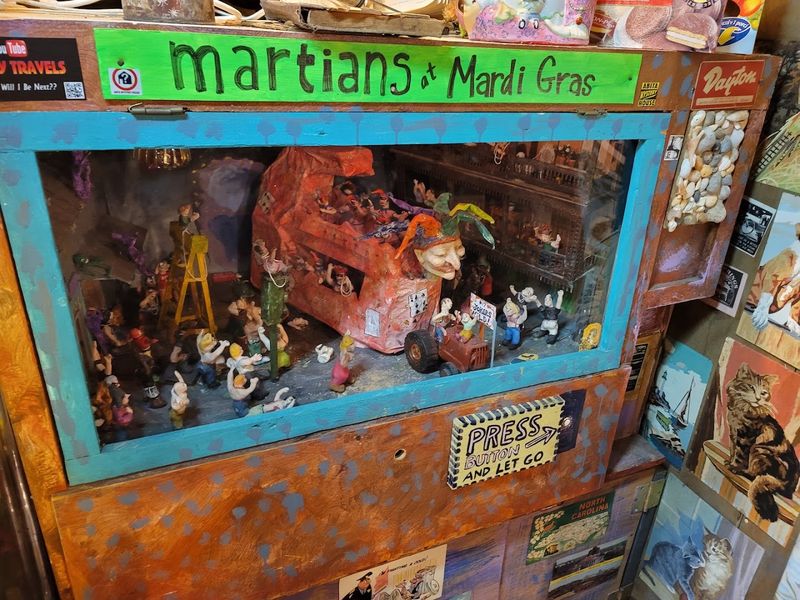
One of the most genuinely fun details about visiting the Abita Mystery House is that the staff hands you quarters at the front before you begin your tour. Those quarters are not for a vending machine.
They are for the interactive displays scattered throughout the museum that require a coin to spring to life.
Some of these coin-operated pieces are hand-engineered by Preble himself, built to move, make sounds, or trigger a small mechanical performance. The craftsmanship behind them is surprisingly sophisticated for something assembled from found materials, and the effect is more entertaining than most fully funded museum installations I have encountered.
Pressing buttons and inserting quarters turns the visit into something participatory rather than passive. You are not just looking at things behind glass.
You are activating them, watching gears turn and figures move, and occasionally laughing out loud at the result. Road-trippers from Oklahoma and beyond have noted spending a solid hour just working through the interactive section alone.
The displays that are not currently functioning still hold visual interest, so even a non-working button does not feel like a wasted stop along the tour route.
The Folk Art Dioramas and Hand-Crafted Scenes
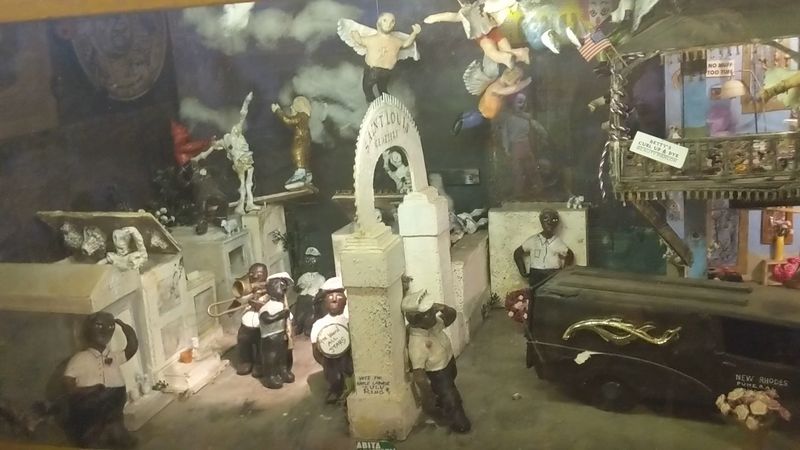
Some of the most visually arresting pieces in the Abita Mystery House are the hand-crafted dioramas tucked into corners and along walls throughout the space. These are small constructed worlds, built from found objects, recycled materials, and a lot of imagination, each one telling its own odd little story.
The detail work in these scenes is the kind that rewards slow looking. A quick glance gives you the general idea, but a closer inspection reveals layers of humor, commentary, and craftsmanship that are easy to miss if you rush.
The advice from people who have visited multiple times is consistent: slow down and really take in the intricacies.
Louisiana folk art has a long and celebrated tradition, and these dioramas fit naturally into that lineage. They carry the same spirit as outsider art movements found across the South, where creativity operates outside formal training and thrives on personal vision.
The Abita Mystery House honors that tradition not by putting it in a frame and labeling it, but by letting it pile up, overflow, and fill every available surface with unfiltered expression. Each scene feels like a small window into a very specific and very committed imagination.
The Retro Americana and Vintage Collectibles
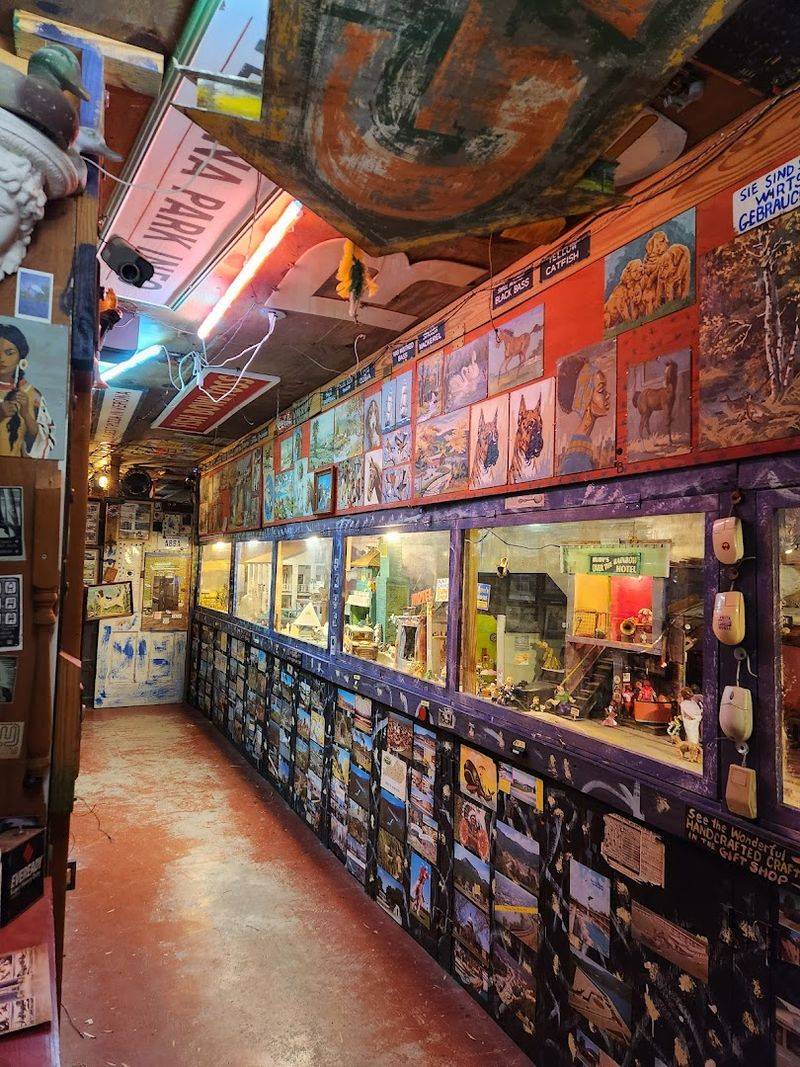
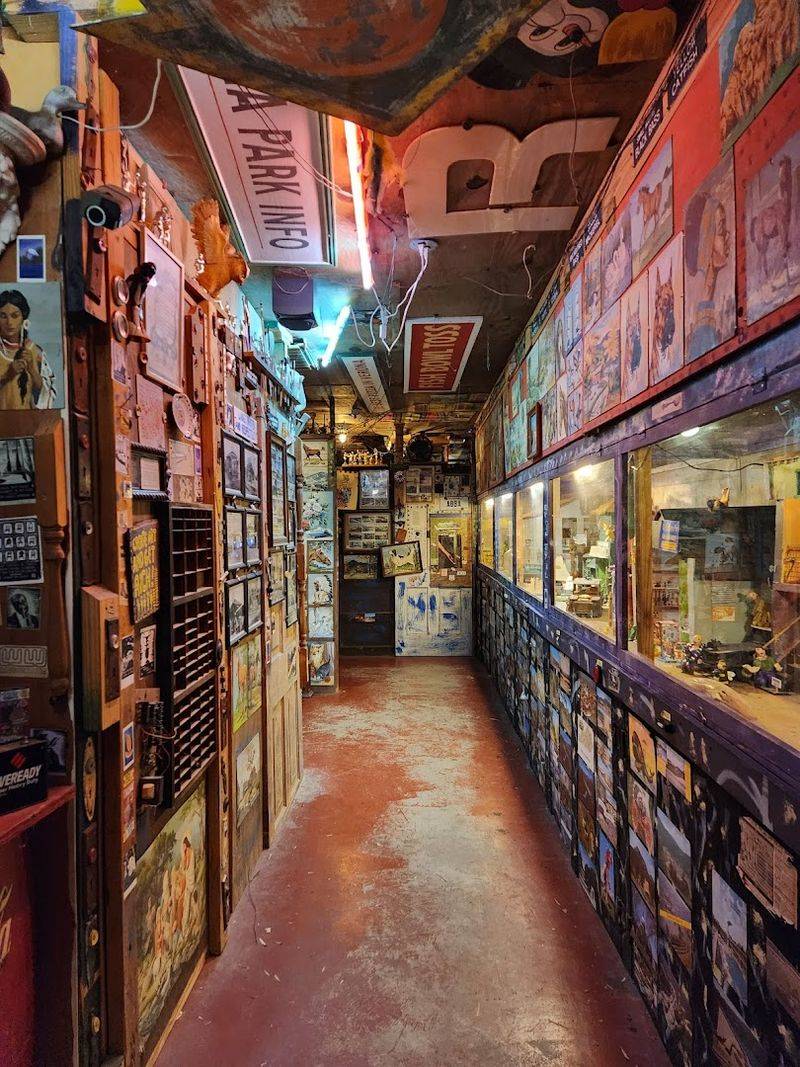
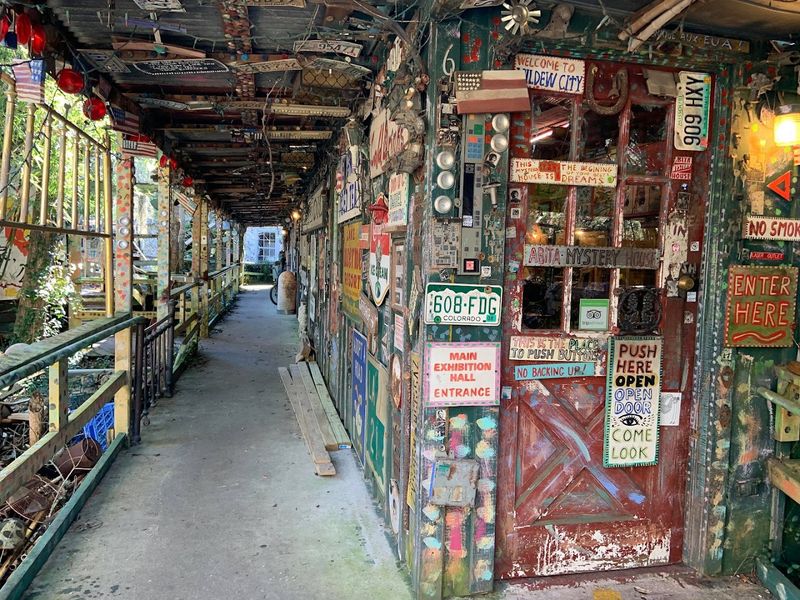
Beyond the interactive pieces and dioramas, the Abita Mystery House holds a staggering volume of vintage Americana that triggers a specific kind of nostalgic recognition in almost every visitor. Old tin signs, retro toys, antique tools, faded advertisements, and objects from mid-century American daily life cover every available surface.
The density of the collection is part of the experience. There is not a single inch of this place that is not covered with some sort of item, and that is not an exaggeration.
The cumulative effect is somewhere between a well-curated flea market and a time capsule that someone forgot to seal.
What separates this from a standard antique shop is the intentionality of the arrangement. These objects are not just stored here.
They are displayed with a clear sense of humor and a deliberate eye for grouping things that create unexpected conversations between unrelated items. A ceramic figurine sits next to a rusted gear next to a vintage cereal box, and somehow the combination makes perfect sense in context.
Visitors from Oklahoma to the Florida coast have left genuinely moved by the nostalgic weight of the collection and the care behind its presentation.
The Outdoor Exhibits and Sculptural Yard
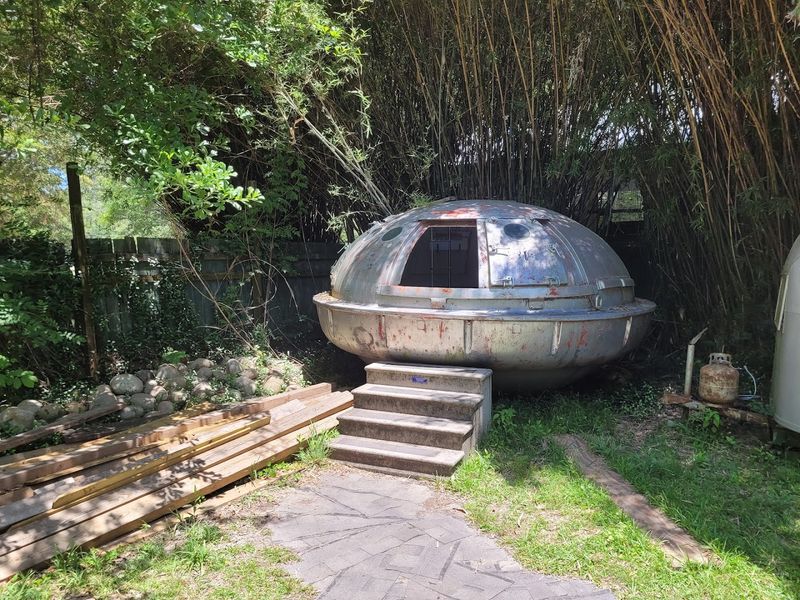
The Abita Mystery House does not contain its personality strictly indoors. The outdoor area surrounding the building carries the same creative energy as the interior, with sculptural pieces, large-scale constructions, and found-object installations arranged across the yard in a way that feels both chaotic and deliberate.
The outdoor exhibits have a rougher, more weathered quality than the indoor pieces, which suits them. Louisiana humidity and heat leave their mark on everything eventually, and the patina on the outdoor sculptures adds to their character rather than diminishing it.
These are objects that have been outside and have earned their texture.
The yard is also where you are most likely to encounter Nila, the resident cat who has become something of an unofficial mascot for the museum. Nila is famously friendly, known for climbing onto visitors’ shoulders and accompanying people on their self-guided tours with an easy confidence that suggests she considers the whole property her personal territory.
She is a small but genuinely memorable part of the visit, and more than a few reviews have singled her out as a highlight. The outdoor space also gives the museum a sense of scale that the interior alone cannot fully convey.
Nila the Museum Cat and the Welcoming Atmosphere
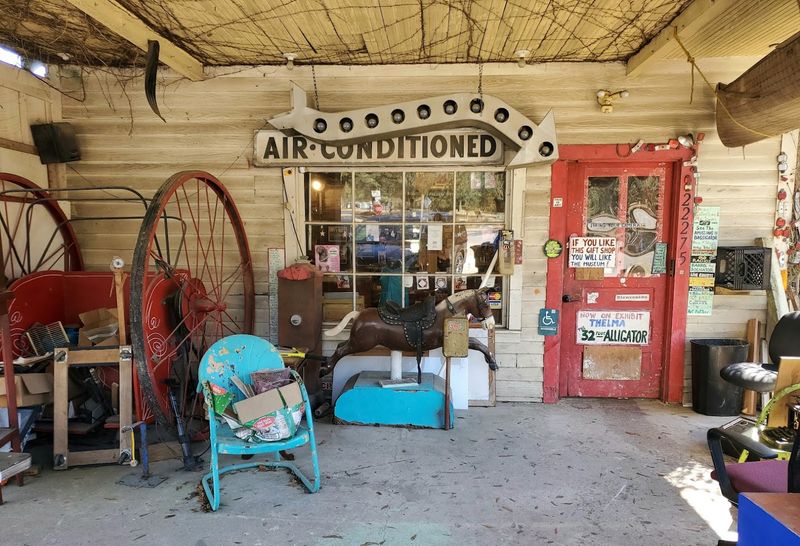
Not every museum has a cat on the payroll, but Nila earns her place at the Abita Mystery House with consistent dedication. She roams the outdoor areas with the calm authority of someone who has been here longer than most visitors and intends to stay longer still.
Nila has a habit of jumping onto shoulders, which sounds surprising until it happens to you and feels completely natural. Multiple visitors have noted carrying her through the entire outdoor portion of their tour without her showing any interest in leaving.
She is the kind of animal presence that makes a place feel lived-in and genuinely welcoming rather than just commercially curated.
The broader atmosphere of the museum carries this same warmth. The staff reflects the personality of the owner, who sets a tone of openness and genuine enthusiasm for sharing the space.
Service dogs have been welcomed without issue, and the museum has proven more accessible than many visitors expected, with most of the space navigable even for those using manual wheelchairs. That combination of physical accessibility and social warmth is not something every attraction manages to get right, and the Abita Mystery House handles it without making a production of it.
The place simply feels good to be in.
The Admission Price and Practical Visiting Tips
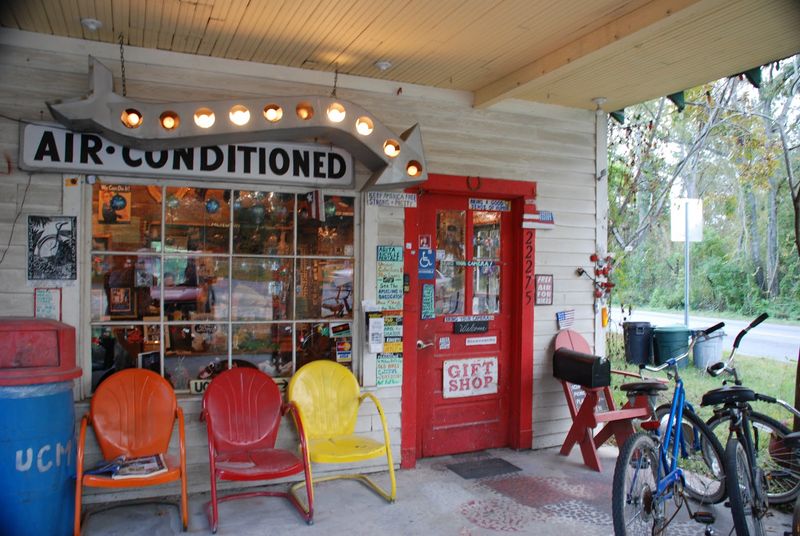
The admission at the Abita Mystery House is five dollars, collected as you leave rather than as you enter, which is a detail the owner delivers with a straight face and a note that you pay to escape. It is a small joke that sets the right tone for what you are about to experience inside.
First-time visitors have occasionally gotten in for free, and the museum sometimes hands out quarters at the entrance for the coin-operated displays, so the overall cost of the visit tends to stay very reasonable. For five dollars, the value is genuinely hard to argue with, especially compared to larger attractions that charge ten times as much for a fraction of the personality.
The museum is open seven days a week from 10 AM to 5 PM, which makes scheduling straightforward. The phone number is 985-892-2624, and the website at ucmmuseum.com has additional information for planning your visit.
Budget at least an hour, though many people find themselves staying longer once they start pressing buttons and opening drawers. Road-trippers who stop here on the way to or from New Orleans consistently report it as one of the better spontaneous detours they have made, regardless of whether they traveled from Oklahoma, Texas, or just across the lake.
The Gift Shop and Souvenirs
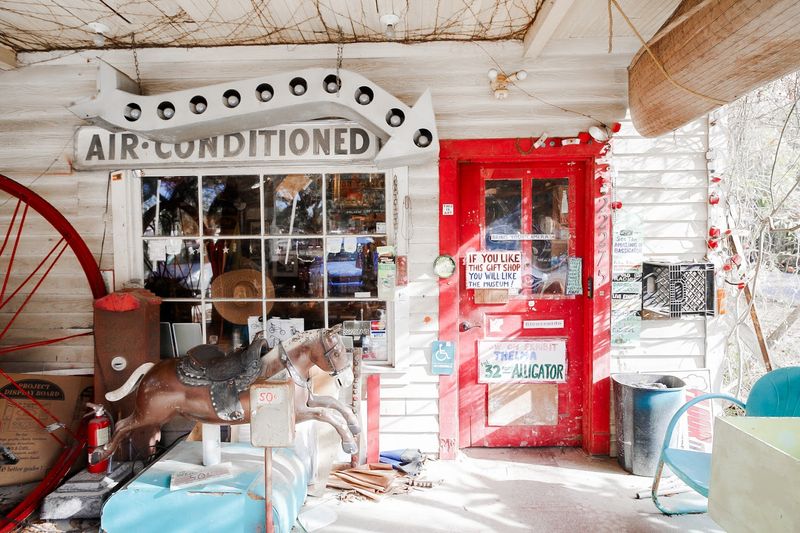
The gift shop at the Abita Mystery House sits near the entrance and manages to capture the spirit of the museum in a compact retail space. The items for sale are not generic tourist merchandise.
They reflect the same eclectic personality as the exhibits themselves, with postcards, handmade pieces, and objects that feel specific to this place rather than produced in bulk for any roadside stop.
Pricing in the shop is fair and deliberately so. The museum is not trying to maximize revenue from visitors.
It is trying to preserve a culture and share it, and the gift shop operates with that same philosophy. Most visitors end up spending more in the shop than they paid for admission, and they do so happily.
Postcards are a particular draw for those who collect them, and the selection here is genuinely good. There are also items that make strong gifts for people who appreciate the unusual, which covers a wider audience than you might expect.
The gift shop functions as a final chapter to the visit, a chance to take a small piece of the museum’s personality home with you. After an hour of wandering through decades of accumulated strangeness, leaving with something tangible feels like the natural conclusion.
Why This Museum Belongs on Your Louisiana Road Trip
Road trips through Louisiana tend to follow predictable routes, anchored by New Orleans and the plantation homes along the river. The Abita Mystery House sits just north of that circuit, close enough to be a genuine day trip from the city but far enough to feel like a real departure from the tourist trail.
The museum has earned its reputation among road-trip communities across the country, drawing visitors from Oklahoma, the Midwest, and the East Coast who specifically route their journeys through Abita Springs to see it. That kind of word-of-mouth loyalty is not manufactured.
It comes from a place that delivers something genuinely different every single time.
What the Abita Mystery House offers is not easy to categorize, and that is precisely its value. It is folk art, Americana, interactive installation, personal history, and Louisiana personality all compressed into one building and its surrounding yard.
The experience of being inside it, surrounded by decades of collected strangeness brought to life by quarters and buttons and the enthusiasm of its creator, is the kind of thing that stays with you long after the drive home. Some places are worth a detour.
This one is worth planning your whole route around.



