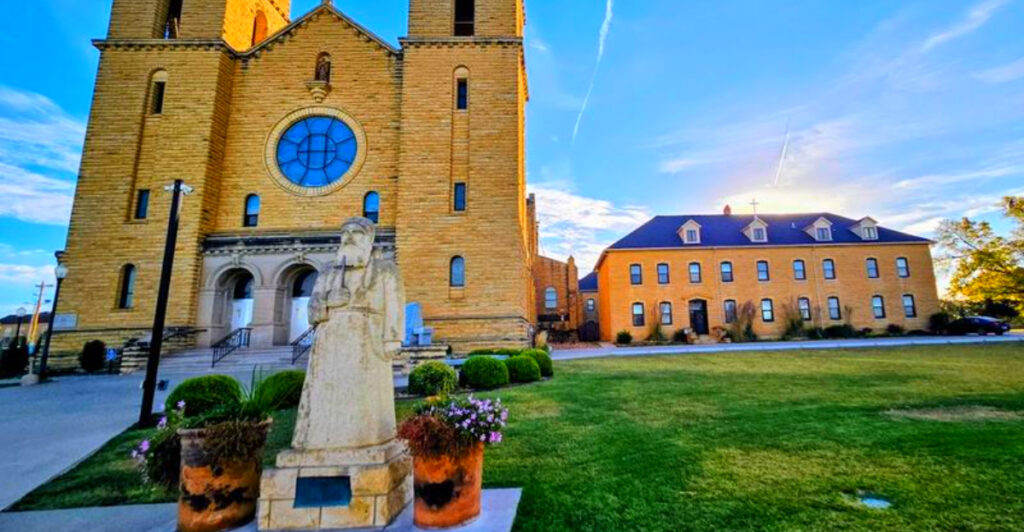
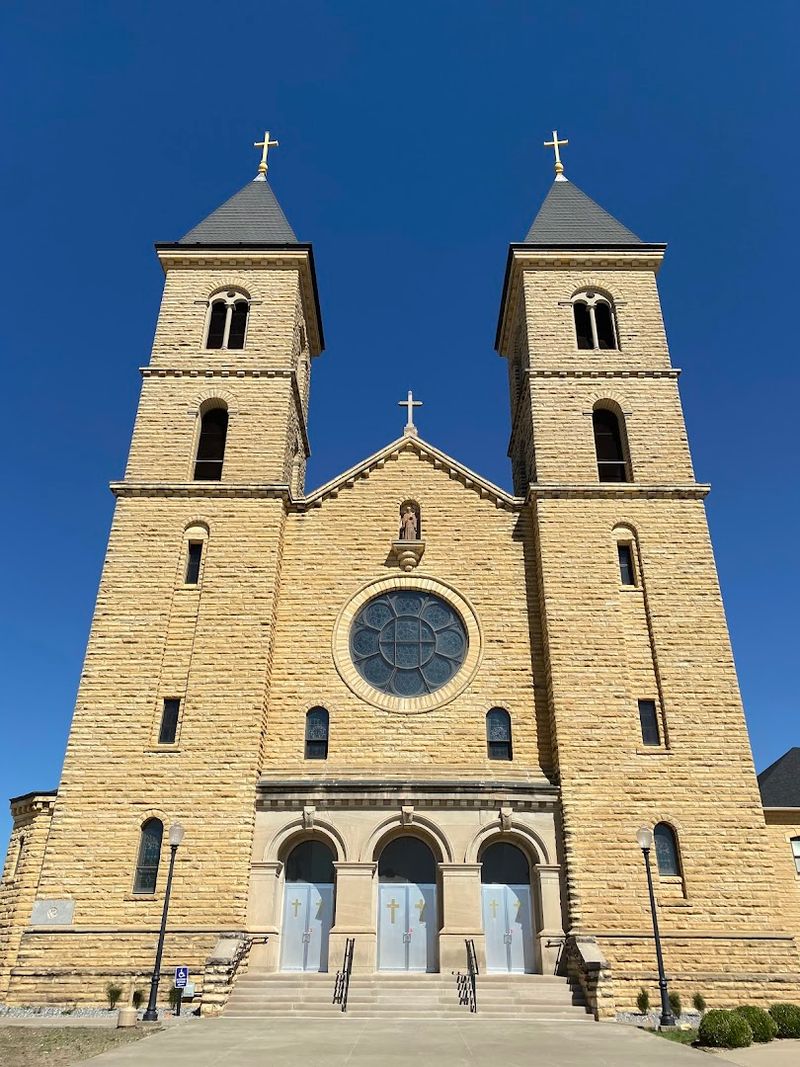
The “Cathedral of the Plains” rises unexpectedly from the Kansas prairie, with twin towers so tall they can be seen for miles along Interstate 70. Built by Volga German immigrants in the early 1900s, the massive limestone church looks far more like a European cathedral than something standing in the middle of rural Kansas.
What makes the basilica remarkable is not just its size, but the effort behind it. Local families hauled limestone across the plains by wagon and spent years building the church by hand, creating a landmark that still dominates the tiny town of Victoria more than a century later.
Inside, stained-glass windows, imported artwork, and detailed woodwork reveal a level of craftsmanship most travelers never expect to find in western Kansas.
Since earning the nickname “Cathedral of the Plains” in 1912 and being elevated to a minor basilica by Pope Francis in 2014, the church has become one of the state’s most surprising historic sites. For many visitors, the biggest surprise is how quickly a roadside stop turns into a deep dive into Kansas history, immigration, and faith.
A Small Town Address That Holds a Grand Secret
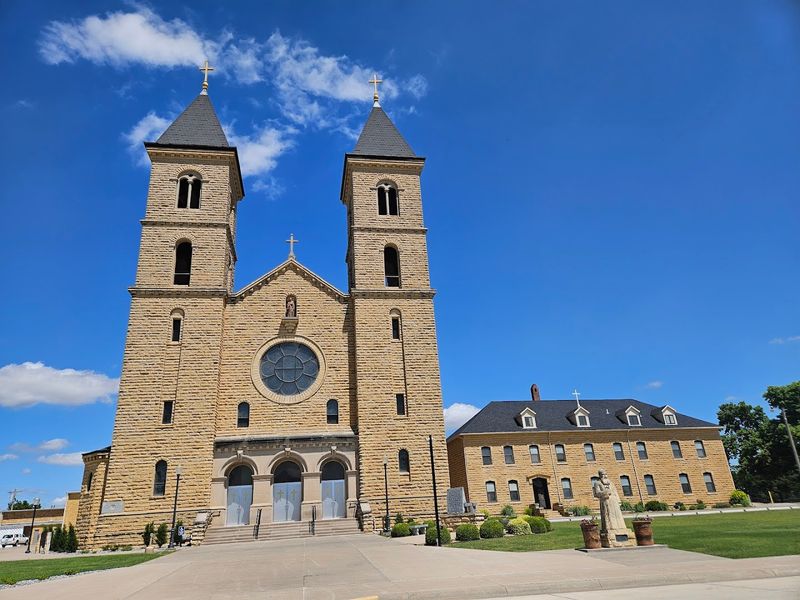
Most people blow past Victoria, Kansas without a second thought, but the address 900 Cathedral Ave, Victoria, KS 67671 is worth every mile of detour. The town itself is tiny, with a population that hovers around 1,200, which makes the sheer scale of what stands here all the more jaw-dropping.
St. Fidelis Basilica occupies a commanding spot just off Interstate 70 in Ellis County, in the heart of western Kansas. The church is open daily from 6 AM to 8 PM, and reaching it from the highway takes only a few minutes.
You can also call ahead at 785-735-2777 or check the parish website at stfidelischurch.com for service times and visitor information.
The contrast between the modest surrounding town and this towering limestone structure is something you feel immediately. Victoria was settled by Volga German immigrants in the 1870s, and their faith shaped everything that followed, including this extraordinary building that now draws over 16,000 visitors every single year.
How a Presidential Candidate Gave This Church Its Famous Nickname
In 1912, a man named William Jennings Bryan visited a construction site in rural Kansas and said something that stuck forever. Bryan, a three-time Democratic presidential candidate and one of the most famous orators in American history, took one look at the nearly finished church and called it the “Cathedral of the Plains.”
That nickname has never left. It captures something real about the building’s relationship to its surroundings.
On the open Kansas prairie, where the horizon stretches in every direction and the sky feels enormous, this structure asserts itself with a confidence that feels almost defiant.
Bryan’s visit came just a year after the church’s dedication in 1911, when it was already recognized as the largest church in Kansas and widely considered the largest church west of the Mississippi River. A single offhand remark from a famous visitor turned into the defining identity of a community landmark, and over a century later, the name still fits perfectly.
The Volga Germans Who Built a Cathedral With Wagon Loads of Stone
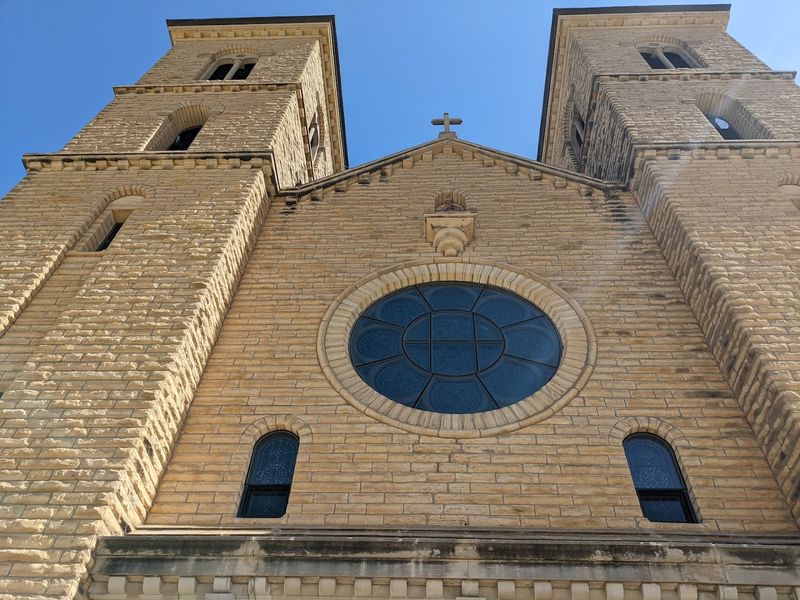
The construction story behind this basilica is one of the most remarkable community efforts in American architectural history. Volga German immigrants, who had originally come from Russia to settle the Kansas plains in the 1870s, broke ground on the current church in 1908 and completed it in just three years.
Every parish member aged 12 or older was required to contribute $45 annually toward construction costs. Beyond the financial commitment, each family also had to haul six wagon loads of Fencepost limestone and four loads of sand from local sources.
That was not a suggestion; it was a communal obligation taken seriously by nearly every household.
The limestone came from a quarry located about seven miles south of Victoria, and much of it was cut by hand. Considering the limited tools and technology available in rural Kansas at the time, the speed and scale of construction feel almost impossible.
The pride those families poured into every stone is something you can still sense when you stand inside the finished building today.
The Architecture That Makes Your Jaw Drop From the Parking Lot
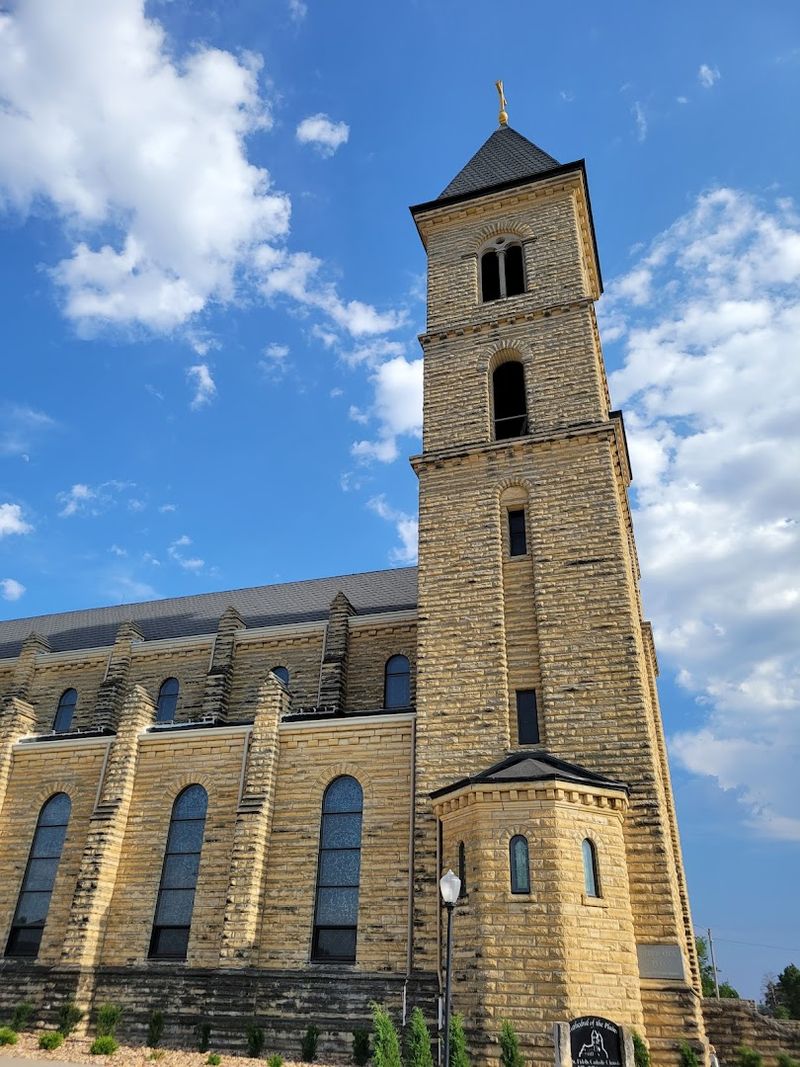
Architect John T. Comes designed the building in a Romanesque style, and later modifications were handled by Joseph Marshall.
The result is a structure that feels rooted in European church-building tradition while being made almost entirely from materials pulled out of the Kansas earth.
The primary construction material is native Fencepost limestone quarried seven miles south of Victoria. The interior, however, tells a more cosmopolitan story.
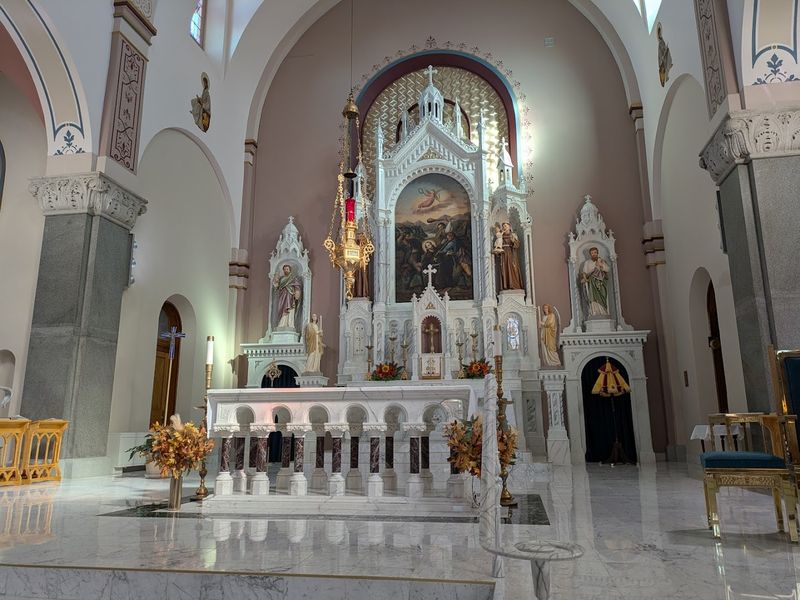
Indiana Limestone, Vermont Marble, and granite pillars from Vermont were all incorporated into the design, giving the space a richness that surprises first-time visitors.
The numbers alone are impressive: 220 feet long, 110 feet wide at the transepts, and 75 feet tall at the nave. The twin towers climb to 141 feet, and they are clearly visible from Interstate 70 several miles away.
What really gets you, though, is standing at the base of those towers and tipping your head back to look straight up at stone that was quarried, hauled, and set by hand more than a century ago.
What Pope Francis Did in 2014 That Changed Everything
For most of its history, St. Fidelis was widely called a cathedral, but technically that title belongs only to a church that serves as the seat of a bishop. The building in Victoria was never that, despite its scale and grandeur.
Then came February 21, 2014.
On that date, Pope Francis officially elevated St. Fidelis to the status of a minor basilica, a designation granted by the Vatican to churches of particular historical, architectural, or spiritual significance. The elevation made St. Fidelis the first minor basilica in the state of Kansas and the 78th in the entire United States.
A minor basilica is not just an honorary title. It comes with specific liturgical privileges and a formal recognition of the church’s importance within the Catholic world.
For the small community of Victoria, it was a moment of enormous pride, confirming what residents had always believed: that their ancestors built something worthy of the world’s attention. The basilica designation added a new chapter to a story already more than a century in the making.
48 Stained-Glass Windows That Turn Sunlight Into Something Sacred
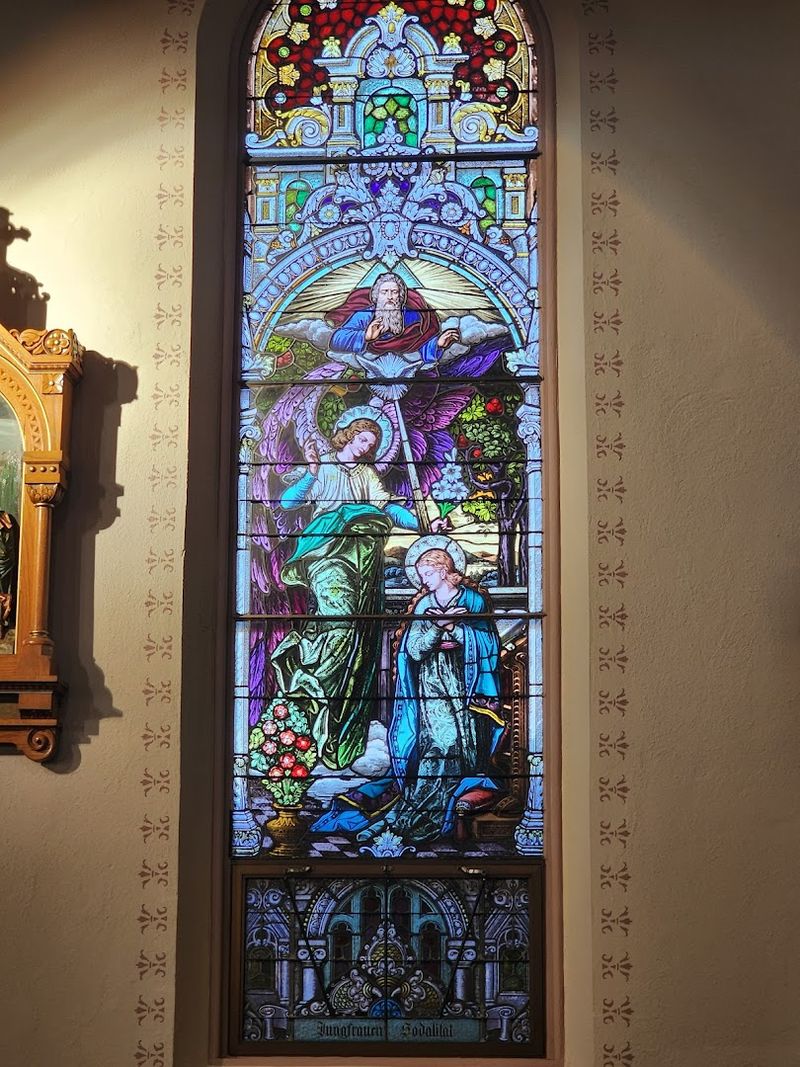
The 48 stained-glass windows inside St. Fidelis are among the most celebrated features of the entire building. Installed in 1916, they were crafted in Munich by the Munich Studio of Chicago, a firm known for producing ecclesiastical art of the highest quality for American churches during that era.
Each window depicts scenes from scripture and the lives of the saints, and together they form a visual narrative that covers the walls of the nave, transepts, and sanctuary. On a bright afternoon, the light that pours through them fills the interior with color in a way that feels genuinely theatrical.
The windows are not just beautiful decoration. They function as a teaching tool, presenting complex religious stories in a format that was historically accessible to worshippers who could not read.
Many visitors spend a long time simply moving from window to window, trying to identify the figures and scenes depicted. The artistry is precise enough that the faces of individual figures carry distinct expressions, giving each panel a sense of life that photographs rarely capture fully.
Austrian Stations of the Cross and Relics That Traveled Across the World
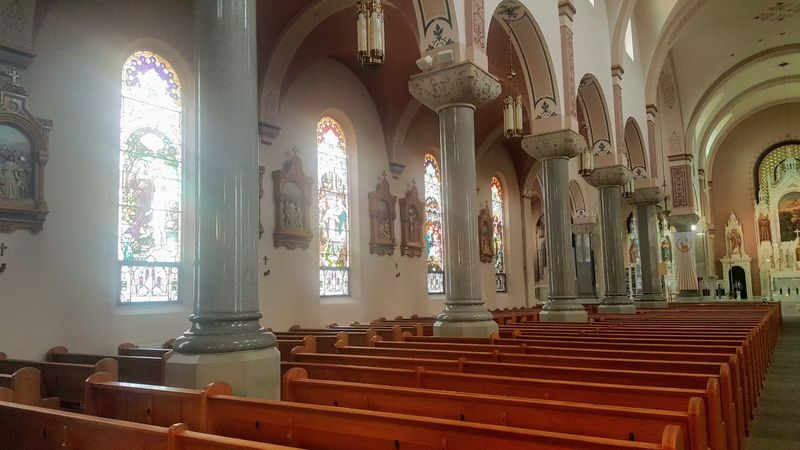
The stained-glass windows are not the only imported artwork inside the basilica. The Stations of the Cross, which line the walls of the nave and guide worshippers through the events of the Passion narrative, were imported from Austria.
Their craftsmanship reflects the same European tradition that shaped the rest of the building’s interior design.
The main altar reportedly contains relics of both St. Francis of Assisi and St. Fidelis of Sigmaringen, the patron saint of the church. The presence of these relics adds a layer of historical and spiritual depth that goes well beyond what most visitors expect to find in a small Kansas town.
More recently, a relic of St. Padre Pio has also been added to the basilica’s collection, drawing additional pilgrims and devotional visitors. The combination of Austrian artwork, Bavarian stained glass, Vermont marble, and Kansas limestone gives the interior a genuinely international character, reflecting the global reach of the Catholic Church while remaining rooted in the specific story of a Volga German immigrant community on the American prairie.
One of the 8 Wonders of Kansas and a Place on the National Register
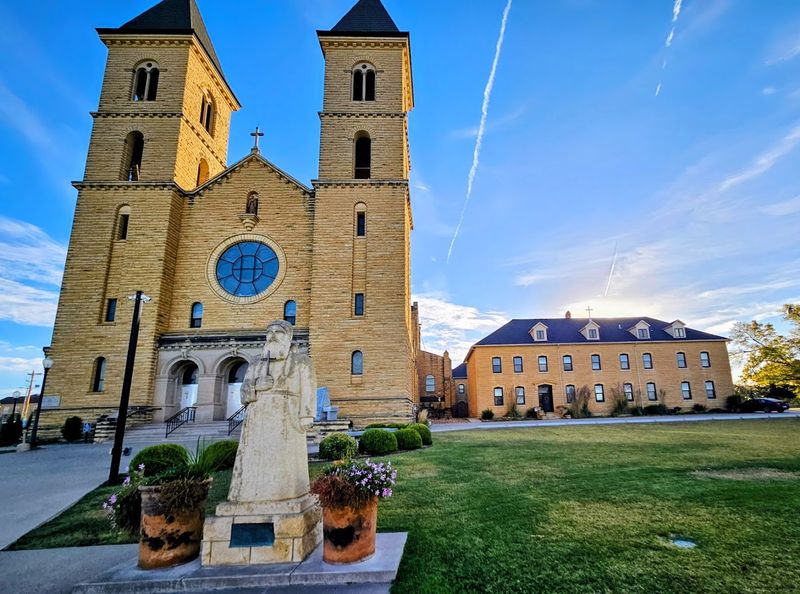
Recognition has come steadily to this building over the decades. St. Fidelis Basilica was added to the National Register of Historic Places in 1971, cementing its status as a structure worth preserving for future generations.
That designation was not just symbolic; it also made the building eligible for certain preservation funding and protections.
Then, in 2008, the basilica was named one of the “8 Wonders of Kansas” by the Kansas Sampler Foundation, a recognition voted on by the public and focused on places that best represent the character and heritage of the state. The other wonders on that list include natural formations and cultural landmarks spread across Kansas, which gives a sense of how seriously this recognition is taken.
Being on both lists is unusual for a single building, especially one that is still an active place of worship. The basilica is not a museum or a preserved ruin.
Masses are celebrated regularly, weddings take place here, and the building continues to serve the same community whose ancestors built it, which makes every accolade feel earned rather than ceremonial.
The Self-Guided Tour That Lets You Explore at Your Own Pace
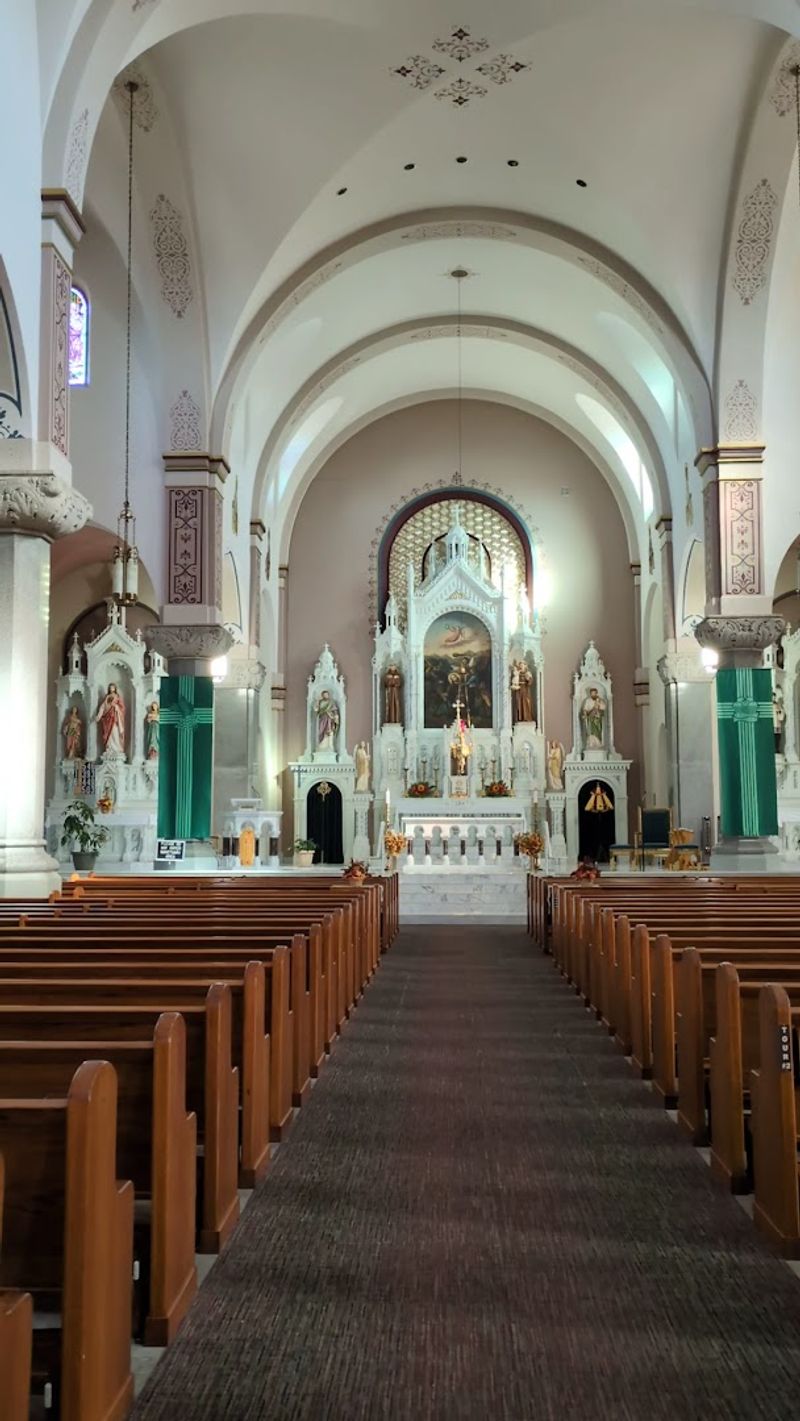
There is no ticket booth at St. Fidelis, and no one rushes you along. The basilica is open to self-guided visitors every day from 6 AM to 8 PM, and the experience is deliberately unhurried.
Just inside the main doors, printed information panels introduce the history of the building and its community, giving you a framework before you head deeper inside.
Audio tour stations are positioned around the basilica, allowing visitors to listen to detailed explanations of specific architectural features, artwork, and historical moments at their own pace. These audio stops are genuinely informative and add context that you would otherwise miss without a guide.
Across the street from the basilica, a small two-story visitor center and museum offers additional history about the Volga German settlers who built the church. Staff there are knowledgeable and happy to answer questions.
The gift shop has limited hours, so checking ahead is a good idea if picking up a souvenir or religious item is on your list. The whole visit, done properly, takes about an hour to ninety minutes.
The Atmosphere Inside That Visitors Keep Trying to Describe
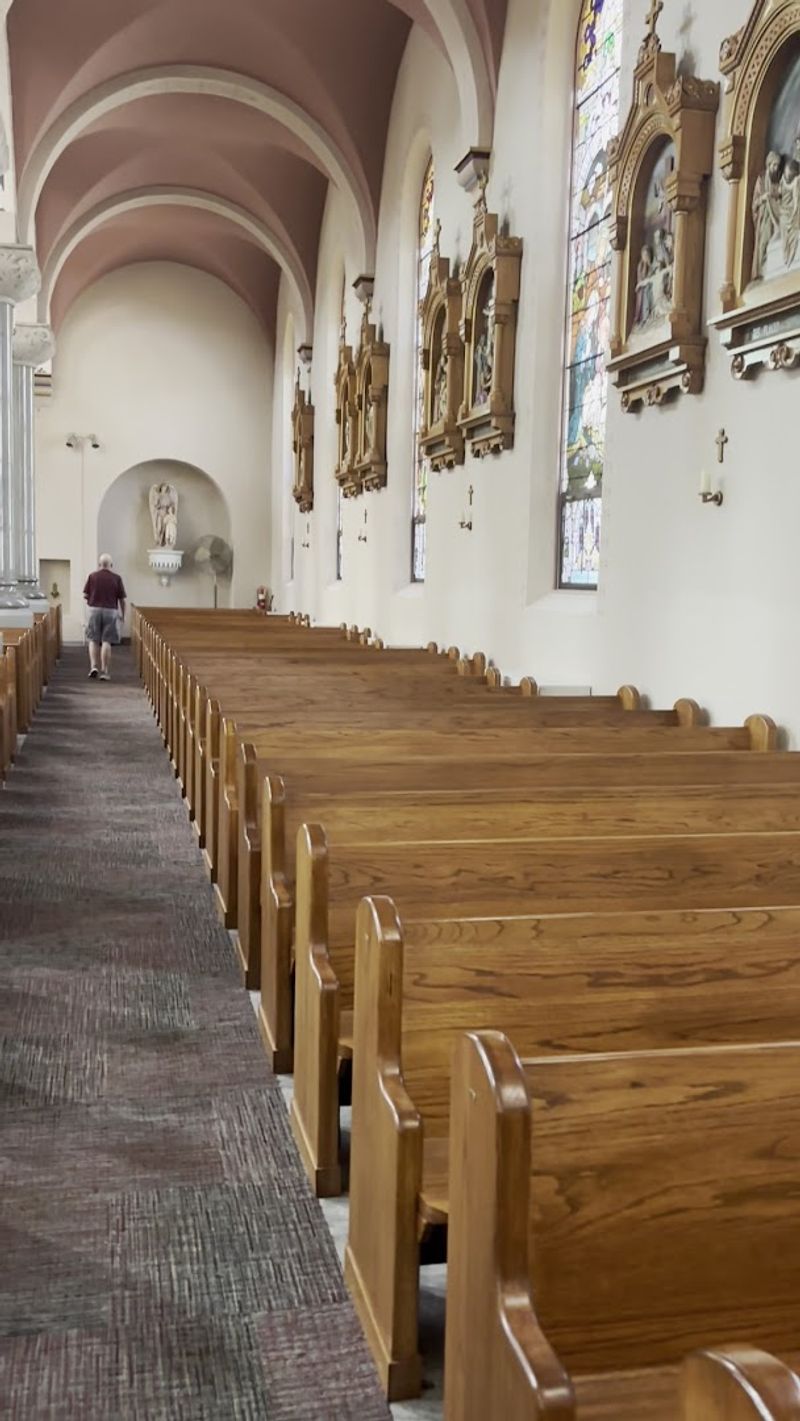
Every visitor seems to reach for the same word when they step inside: peaceful. The stone walls absorb sound in a way that creates a natural hush, and the scale of the nave produces a kind of vertical stillness that is hard to find anywhere else.
The ceiling climbs 75 feet overhead, and the space between the columns feels genuinely open.
On a weekday afternoon, the basilica is often nearly empty. A few people might be seated quietly in the pews, and the only sounds are the faint echoes of footsteps on stone floors.
The colored light from the Munich windows shifts slowly as the sun moves, and different parts of the interior catch the glow at different times of day.
There is something about the combination of scale, silence, and craftsmanship that produces a feeling visitors consistently describe as moving, regardless of their personal beliefs. The building was designed to inspire awe, and more than a century after it was completed, it still does exactly that, without needing any help from lighting effects or sound systems.
Why the Drive Off I-70 Is Absolutely Worth the Few Extra Minutes
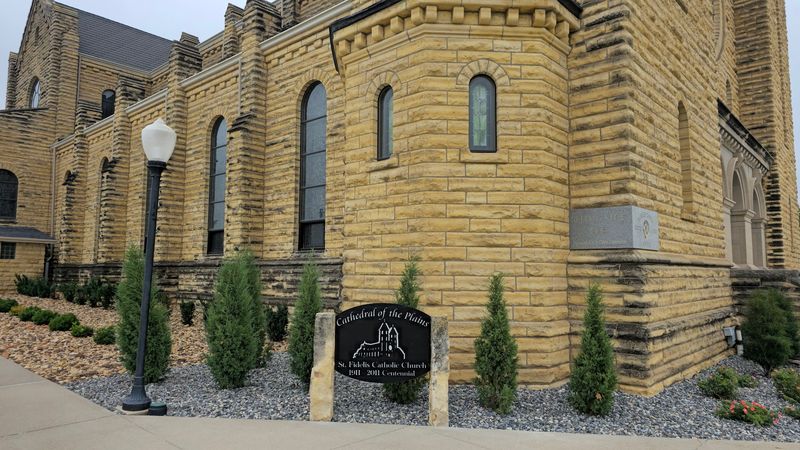
The basilica sits less than a mile from Interstate 70, which means the detour from the highway is almost no detour at all. The twin towers are visible from the interstate long before you reach the Victoria exit, and once you see them, the pull to stop is hard to resist.
Western Kansas highway driving can feel relentless, with long flat stretches that blur together after a while. The basilica breaks that monotony with something completely unexpected: a massive Romanesque stone church rising from the prairie with the confidence of a European landmark.
The stop resets your sense of where you are and reminds you that the plains have stories most travelers miss entirely.
The parking area is easy to navigate, and the walk to the entrance is short. Whether you have twenty minutes or two hours, the visit scales to fit your schedule.
First-timers usually end up staying longer than planned, and people who have passed through before almost always make it a regular stop whenever they find themselves on this stretch of I-70.
A Living Church With Over a Century of Community at Its Heart
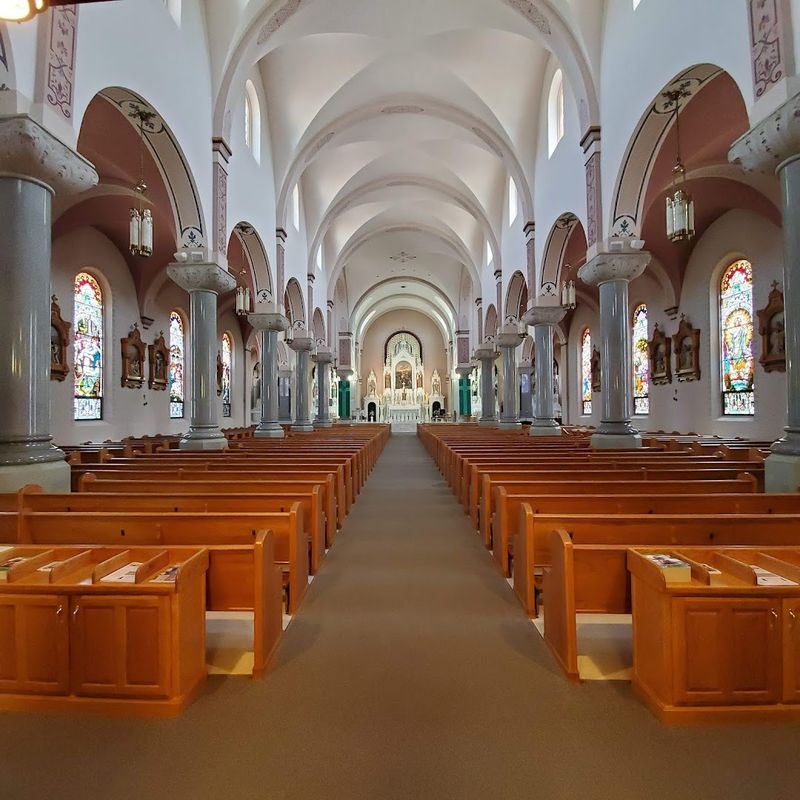
Some historic buildings feel frozen in time, preserved behind velvet ropes and kept at a careful distance from everyday life. St. Fidelis is the opposite.
It is an active parish church that has served the same community since 1911, and that continuity is part of what makes a visit here feel different from touring a monument.
Weddings are celebrated here regularly, drawing guests from across the region who want the experience of exchanging vows inside one of the most architecturally significant churches in the country. Daily and Sunday Masses keep the liturgical calendar moving, and the parish community that gathers here is the direct descendant of the Volga German settlers who built the building with their own hands and their own resources.
That living quality is what separates St. Fidelis from a museum. The building was not saved by a preservation society; it was maintained by a congregation that never stopped using it.
Over 16,000 visitors arrive each year to witness what a determined immigrant community built on the Kansas prairie, and the church meets every one of them with its doors open wide.
Share this story