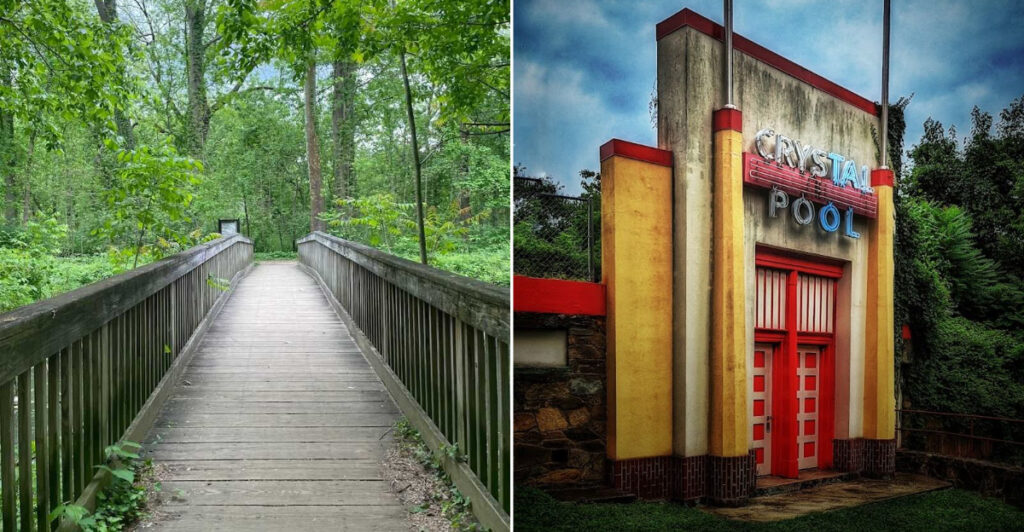
There is a place just outside Washington, D.C., where history, art, and a surprisingly resilient carousel have managed to outlast everything that tried to erase them. What started as an ambitious 1891 educational retreat eventually became one of the region’s most beloved amusement parks, then sat quietly abandoned for years before finding a second life as a thriving arts destination.
This park in Maryland has worn more hats than most places twice its size. From Chautauqua lectures to swing dancing nights in an Art Deco ballroom, this park has refused to stay forgotten.
The story of how it got here involves civil rights history, federal intervention, and a community that simply would not let go. Keep reading to find out what makes this unusual corner of Maryland so worth your attention.
The Streetcar Connection That Built an Amusement Park
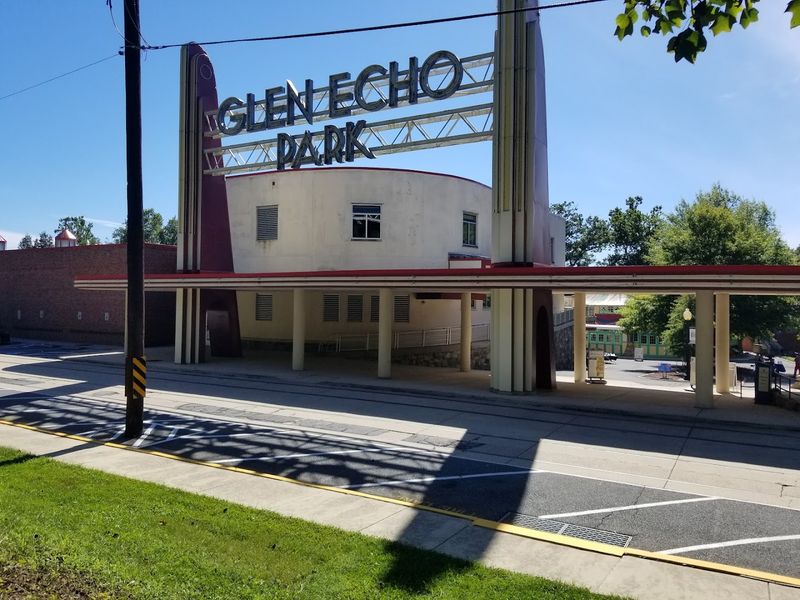
Streetcar companies across the United States in the late 1800s had a clever business problem to solve. Ridership dropped on weekends because most passengers used trolleys to commute to work.
The solution became known as the “trolley park” strategy. Companies would build leisure destinations at the end of their lines to give families a reason to ride on Saturdays and Sundays.
Glen Echo Park became one of those destinations in 1899, operated by the Washington Railway and Electric Company.
The park grew steadily over the following decades, adding rides, a swimming pool, a roller coaster, and eventually the grand Spanish Ballroom. At its height, Glen Echo drew enormous crowds from the D.C. area who arrived specifically by trolley.
The park became deeply woven into the social fabric of the region, which made what happened next, during the civil rights era, all the more significant and complicated.
A Civil Rights Flashpoint Hidden in the Park’s Past
By the time the 1960s arrived, Glen Echo Amusement Park had a troubling policy in place. Like many public and private spaces in the mid-Atlantic region, the park operated under racial segregation, barring Black visitors from entering.
In June 1960, a group of young activists, many of them students from nearby universities and members of the Congress of Racial Equality, organized sit-in demonstrations at the park’s entrance. The protests drew national attention and put significant pressure on the park’s management and on the broader community.
After sustained demonstrations and public pressure, Glen Echo desegregated in 1961, becoming one of the earlier amusement parks in the region to do so. The park later began screening a documentary about this history called “Ain’t No Back to the Merry-Go-Round,” ensuring that this chapter is not quietly forgotten.
That commitment to acknowledging the past is part of what gives the park its layered character today.
How the Amusement Park Finally Closed and What Came Next
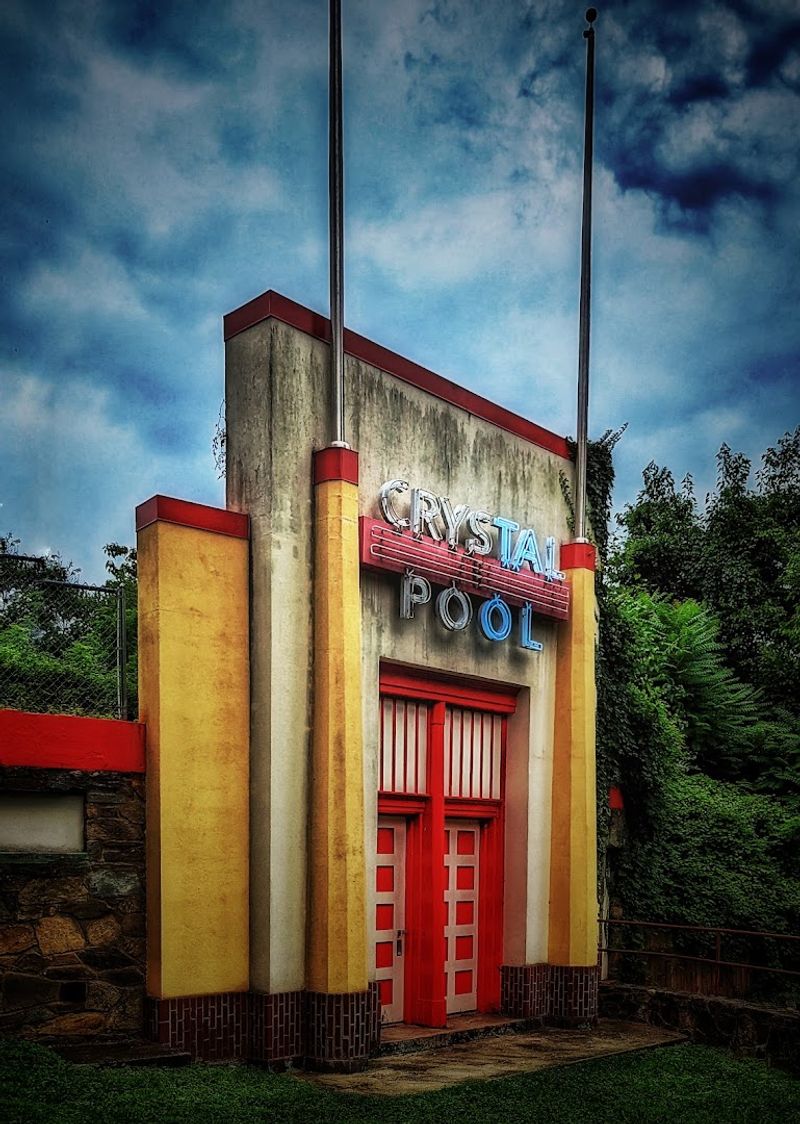
Even after desegregation, Glen Echo Amusement Park faced mounting challenges. Attendance declined through the late 1960s as suburban growth changed how families spent their leisure time and as competition from newer entertainment options increased.
The park closed permanently in 1968. For a brief period, the grounds sat largely unused, and the structures that had once hosted thousands of visitors began to show the effects of neglect.
The colorful amusement park that had defined summer weekends for generations of D.C.-area residents was suddenly quiet.
Then the National Park Service stepped in. The federal government acquired the property in 1971, and the NPS began working to preserve the historic structures rather than demolish them.
That decision changed everything. Rather than becoming a forgotten lot or a generic recreational space, Glen Echo got a genuine second chance.
The partnership between federal stewardship and community arts organizations that followed would eventually make the park something far more interesting than it had ever been before.
The National Park Service Era and the Arts Rebirth
Under National Park Service management, Glen Echo Park took on an entirely new identity. The NPS partnered with local arts organizations to bring programming back to the historic structures, and that collaboration became the foundation of what the park is today.
Artists moved into studios within the original amusement park buildings. Pottery wheels replaced carnival games.
Glass-blowing studios occupied spaces that once housed ride operators. Photography darkrooms, painting classes, and theatrical productions found homes in structures that had been built for entirely different purposes decades earlier.
The Partnership for Public Lands, later reorganized as the Partnership for Arts and Culture, took on management responsibilities and helped coordinate the wide range of programming that now defines the park. Today, the park operates as a visual and performing arts center while retaining its status as a unit of the National Park system.
That unusual combination of federal preservation and grassroots arts energy gives Glen Echo a character that very few public spaces in the country can match.
The Carousel That Has Outlasted Everything
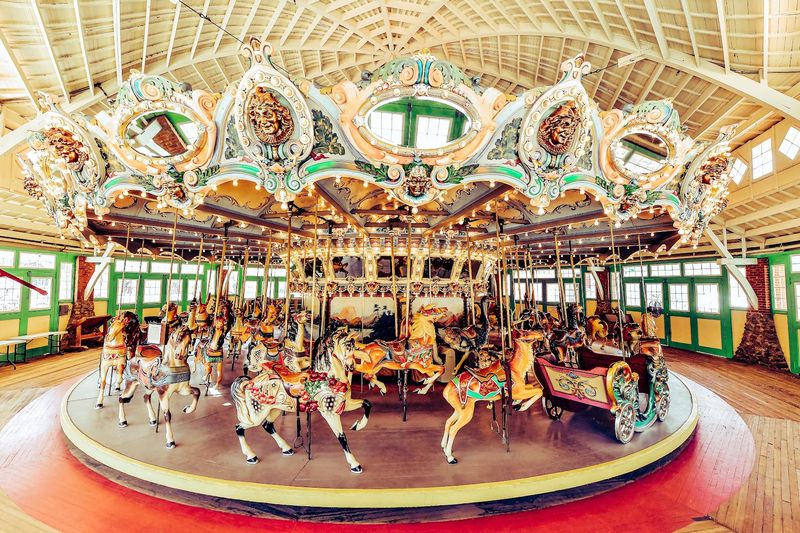
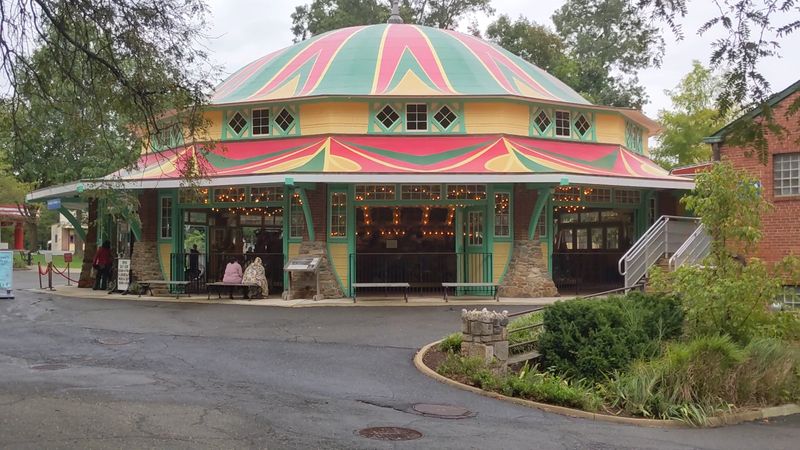
Of all the rides and attractions that once filled Glen Echo Amusement Park, one has survived in working condition and become the park’s most recognizable symbol. The Dentzel carousel, built in 1921, still operates today and is listed on the National Register of Historic Places.
The carousel features hand-carved wooden animals, including horses, rabbits, deer, and other figures, all crafted with the kind of detail that mass production simply cannot replicate. The mechanism that powers it and the original band organ that accompanies the ride have both been carefully maintained and restored over the years.
Riding it is available to the public on weekends during the operating season, and the experience draws people of all ages. Weddings held at the park frequently incorporate the carousel into their events, with guests riding during cocktail hours.
For a structure that was built over a century ago and survived the park’s closure and years of uncertainty, the Dentzel carousel is a remarkable piece of living history.
The Spanish Ballroom and Its Dancing Legacy
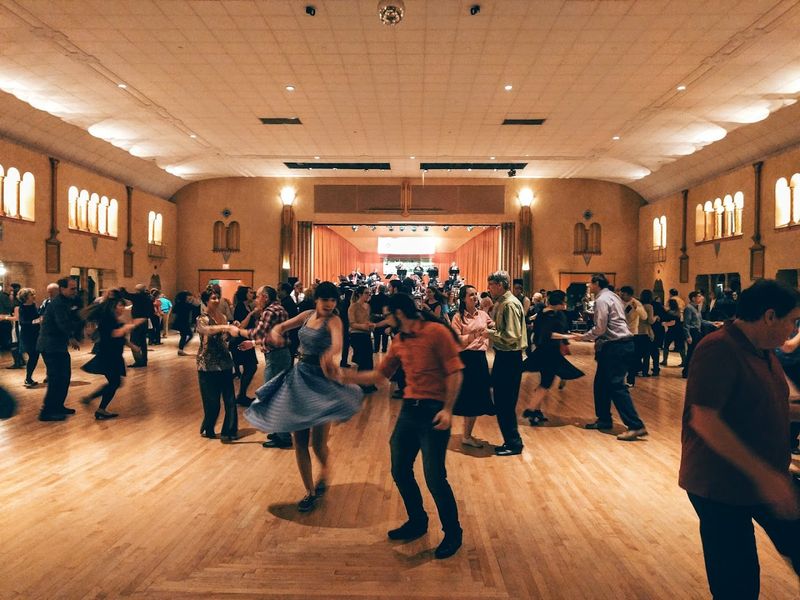
Built in 1933, the Spanish Ballroom at Glen Echo Park is one of the most striking examples of Art Deco architecture in the entire Washington, D.C., area. The building features a sprung hardwood floor, ornate interior detailing, and neon lighting that gives the space a warm, retro character.
During the amusement park era, the ballroom hosted big band performances and drew enormous crowds. After the park’s revival, the ballroom was restored and returned to active use as a dance venue.
Today it hosts more than 300 dance events per year, covering styles that include swing, salsa, bachata, country line dancing, and ballroom.
Live bands perform regularly, and the events are open to dancers of all skill levels, from complete beginners to seasoned performers. The monthly Latin dance nights in particular have built a loyal following in the regional dance community.
The ballroom also serves as a wedding and event venue, and its combination of historic architecture and active programming makes it genuinely one of a kind.
Art Studios and Creative Workshops Throughout the Grounds
One of the most distinctive aspects of Glen Echo Park today is the network of working artist studios spread across the historic grounds. These are not display spaces where finished work sits behind glass.
They are active production environments where artists work, teach, and sell.
The Yellow Barn, the Bumper Car Pavilion, and several other original amusement park structures now house studios dedicated to pottery, glass blowing, photography, painting, printmaking, and more. Many of the resident artists offer classes and workshops to the public, ranging from single-session introductions to multi-week courses.
Children’s programs are a significant part of the schedule, with summer camps and weekend workshops designed specifically for younger participants. The variety of disciplines represented under one roof means that a single visit can expose a person to creative practices they might never have encountered otherwise.
The studios are generally open during park hours, and browsing through them without enrolling in a class is perfectly welcome.
Theater at the Park and Its Children’s Productions
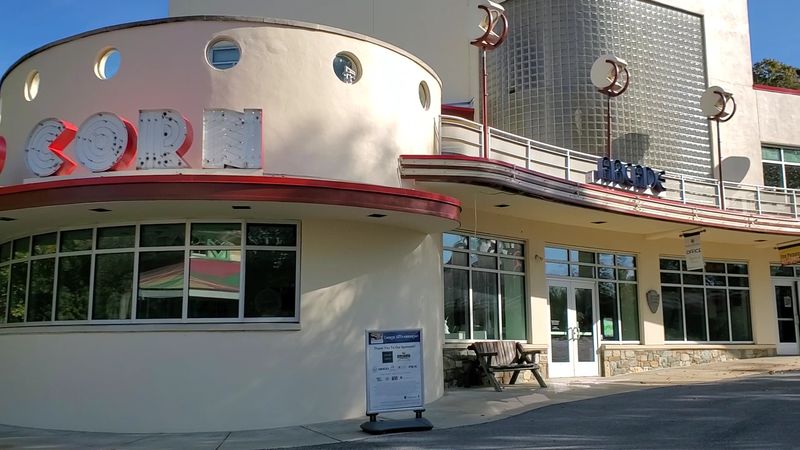
Glen Echo Park has been home to Adventure Theatre MTC, a professional theater company focused on productions for young audiences, for several decades. The company performs in a dedicated theater space within the park and has built a strong reputation for high-quality productions that engage children and families.
The theater’s programming typically includes original works and adaptations of well-known stories, all performed by professional actors and supported by full production design. The intimate scale of the venue means that even young children can follow the action closely without feeling overwhelmed by a large auditorium.
In addition to performances, Adventure Theatre MTC offers acting classes and theater education programs for children and teens. The presence of a professional theater company within a public park is relatively uncommon, and it adds a layer of cultural programming that strengthens Glen Echo’s identity as a genuine arts destination rather than simply a historic site.
Checking the schedule in advance is recommended, as productions sell out regularly during popular runs.
The C&O Canal, Nature Trails, and the Outdoor Setting
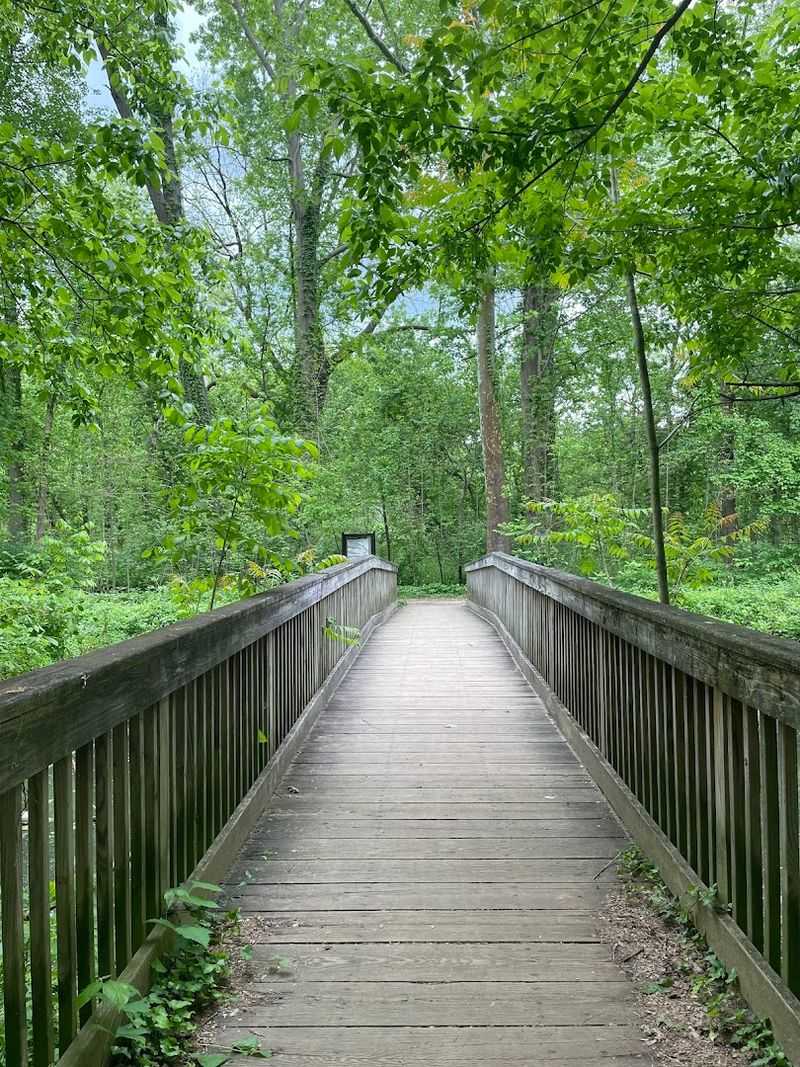
The park’s natural setting is easy to overlook when the historic buildings and active programming draw so much attention, but the surrounding landscape is genuinely worth exploring. Glen Echo Park sits adjacent to the Chesapeake and Ohio Canal National Historical Park, and the two properties share a connection that adds outdoor depth to any visit.
Paved pathways wind through wooded areas between the park’s buildings and play areas, making it straightforward to move between the carousel, the studios, the ballroom, and the outdoor spaces without losing your bearings. The tree canopy over much of the property provides shade and a quieter counterpoint to the activity inside the studios and performance spaces.
The C&O Canal towpath, accessible nearby, offers miles of flat walking and cycling along the historic waterway. Visitors who arrive with extra time can extend their outing significantly by combining the park with a walk along the canal.
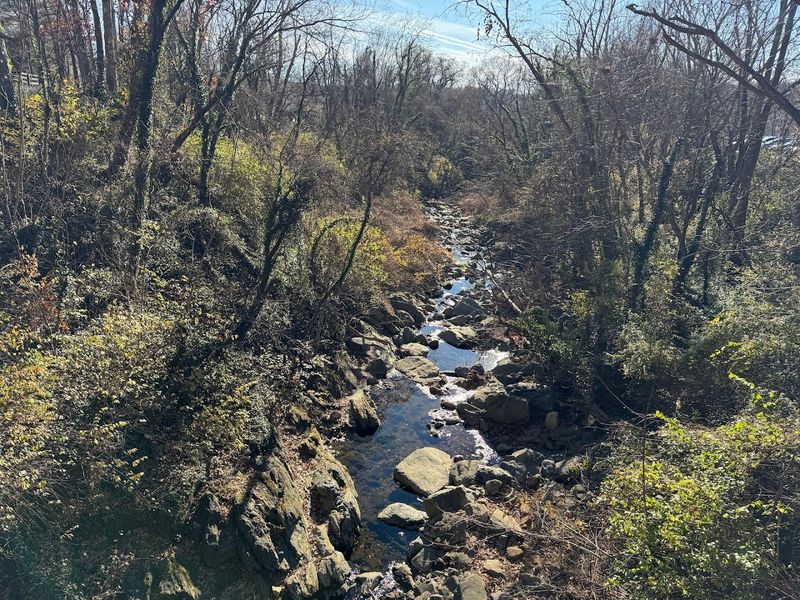
Parking is available across a small stream, with a pedestrian path connecting the lot to the main grounds.
Free Concerts and Community Events Year-Round
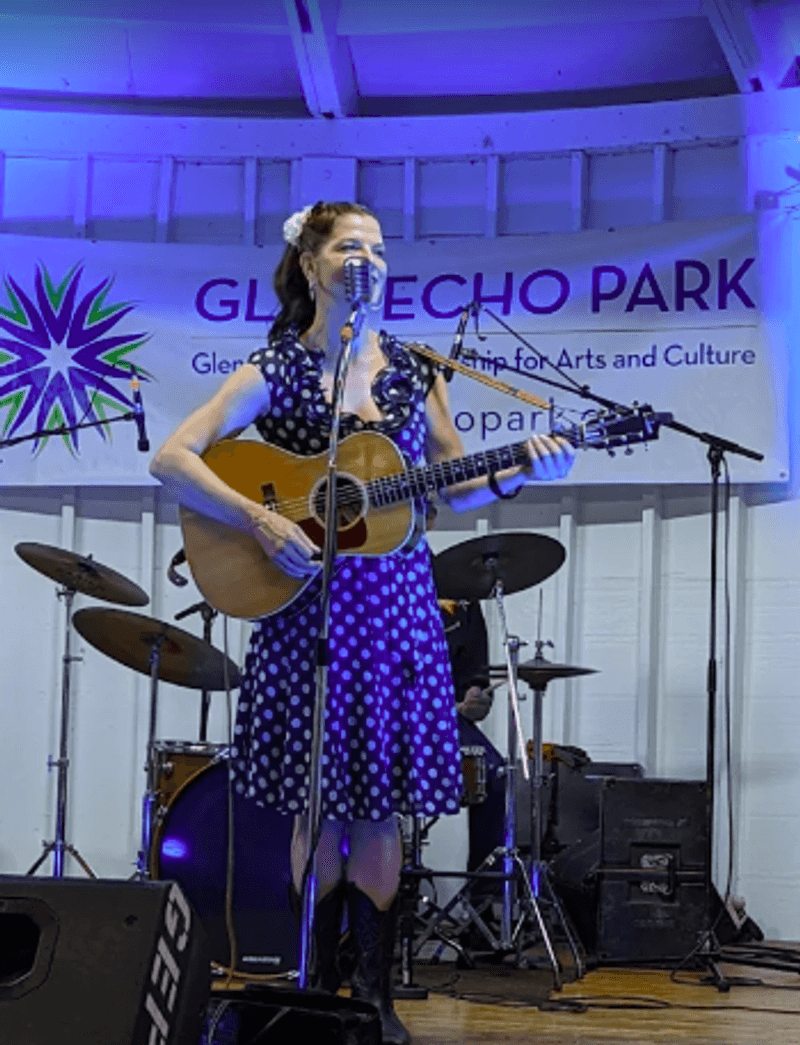
Glen Echo Park runs an active events calendar throughout the year, and a notable portion of that programming is free to the public. The summer concert series has become a fixture for D.C.-area residents looking for accessible outdoor entertainment without the hassle of large festival crowds.
Concerts take place in the outdoor spaces on the park grounds, with audiences gathering on the grass or at picnic tables. The musical styles covered across the series tend to be broad, reflecting the eclectic character of the park itself.
Film screenings, art exhibitions, and seasonal events round out the calendar during the cooler months.
The park’s event schedule is published on its website at glenechopark.org, and checking ahead of a visit is strongly recommended because programming changes frequently. Some events do require tickets or registration, particularly the dance nights in the Spanish Ballroom and theater performances, but the free offerings alone make Glen Echo worth a spontaneous weekend trip from anywhere in the D.C. metro area.
Why Glen Echo Remains Worth the Trip Today
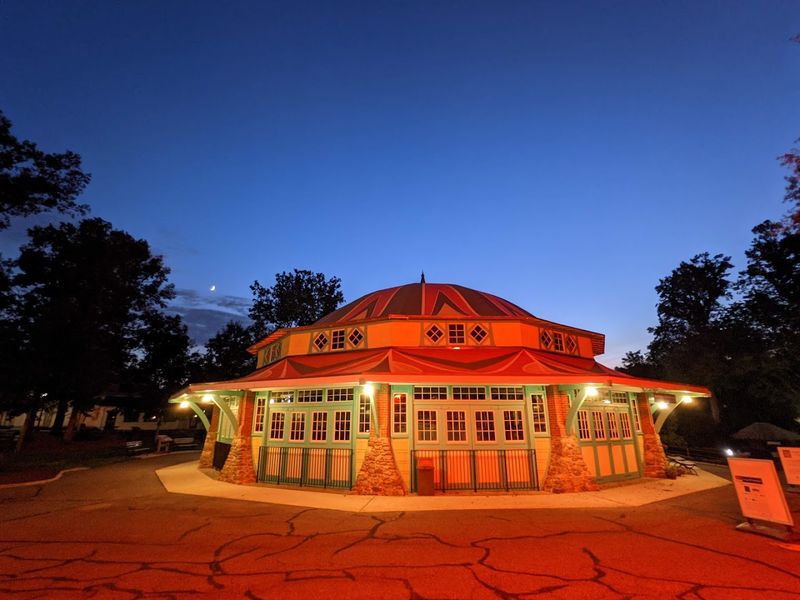
More than 130 years after the Baltzley brothers first broke ground here with educational ambitions, Glen Echo Park continues to evolve without abandoning what makes it genuinely unusual. The combination of federal historic preservation, active arts programming, community dance culture, and a working 1921 carousel is not something that can be replicated or manufactured from scratch.
The park draws families with young children, serious dancers, working artists, history enthusiasts, and wedding parties, often all on the same weekend. That range of audiences coexisting around a shared historic space is part of what keeps the energy here from ever feeling stale or predictable.
Admission to the park grounds is free, though individual events, carousel rides, and classes carry their own fees. The park is open year-round, though seasonal programming affects what is available on any given visit.
For anyone within reasonable distance of the D.C. area, Glen Echo Park is the kind of place that rewards repeat visits far more than a single afternoon can fully capture.
Where It All Began: Address, Location, and Origins
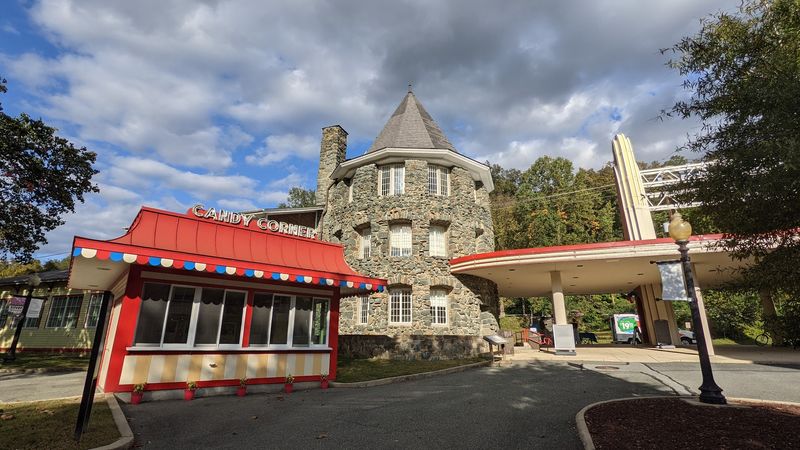
Glen Echo Park sits at 7300 MacArthur Blvd, Glen Echo, MD 20812, just a short drive from the heart of Washington, D.C., tucked along the banks of the C&O Canal in Montgomery County, Maryland.
The park’s story begins in 1891, when brothers Edwin and Edward Baltzley purchased land here with the specific goal of establishing a Chautauqua assembly. The Chautauqua movement was a nationwide effort to bring adult education, lectures, and cultural programming to communities outside of major cities.
The Baltzley brothers built a stone tower and several structures to support that mission. However, the Chautauqua experiment lasted only two seasons before financial difficulties ended it.
Rather than letting the land sit idle, the brothers pivoted and leased the property to a streetcar company, which transformed the grounds into an amusement park to drive ridership on their trolley line.
Share this story