Tucked along the Patuxent River in Anne Arundel County, Maryland, there is a place where the land meets the water in a way that stops you in your tracks. It protects one of the largest remaining freshwater tidal wetlands on the entire East Coast, a fact that makes it quietly remarkable in a region where development has swallowed so much natural habitat.
Herons glide over open marsh, beavers build their lodges in the shallows, and trails wind through towering beech and tulip poplar forests that feel untouched by time. Whether you are a seasoned naturalist or simply someone who wants a genuine outdoor escape close to the DC metro area, this sanctuary in southern Maryland delivers something that is genuinely hard to find these days.
Keep reading to find out what makes this place worth every mile of the drive.
The Scale Of The Wetlands Is Hard To Overstate
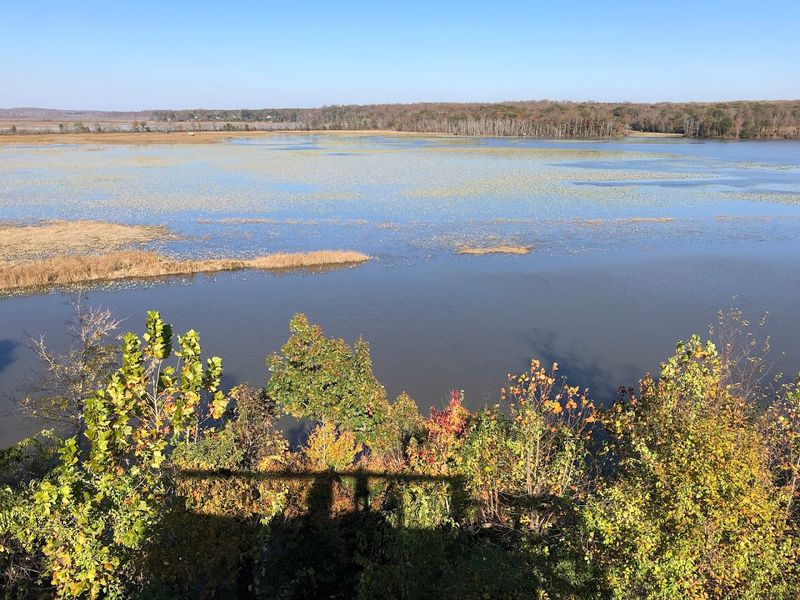
Freshwater tidal wetlands are rarer than most people realize. Unlike saltwater marshes, they occur where tidal rivers push and pull freshwater rather than ocean water, creating a dynamic ecosystem that very few places along the Atlantic coast still have intact.
Jug Bay protects a significant stretch of this rare habitat along the Patuxent River, which has been recognized as one of the healthiest tidal rivers in the Chesapeake Bay region.
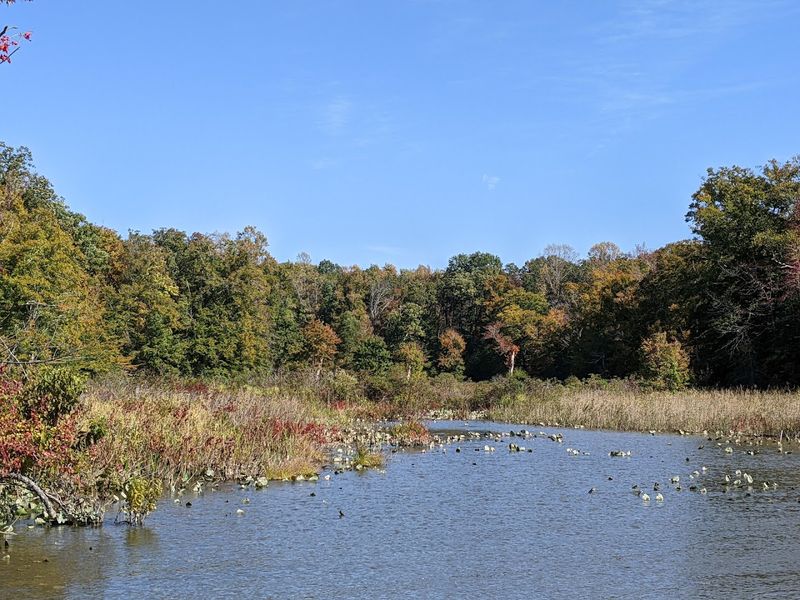
The open marsh areas visible from the trails and boardwalks stretch far into the distance, covered in wild rice, arrow arum, and pickerelweed that shift with the seasons.
During late summer, the wild rice stands can grow tall enough to create a wall of green along the water’s edge, attracting migrating birds in numbers that surprise first-time visitors. The sheer scale of what has been preserved here puts the conservation effort into sharp perspective for anyone who takes the time to look out over the water.
A Trail Network Built For Every Kind Of Explorer
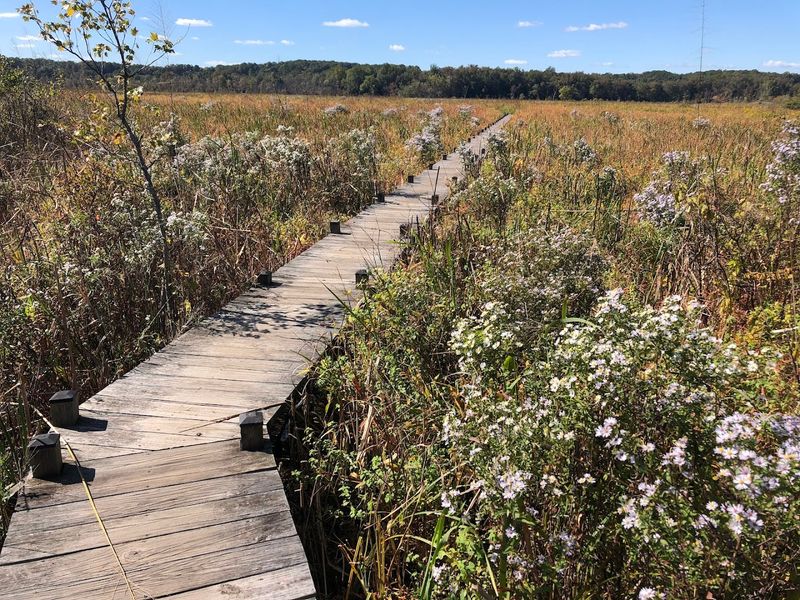
The trail system at Jug Bay covers a range of distances and difficulty levels, making it genuinely useful for solo hikers, families with young children, and older adults who want a manageable outdoor outing.
The Railroad Trail follows the route of a former rail line and runs along the river with open marsh views and two boardwalk spurs that branch off into the wetlands. The Beech Trail takes hikers through some of the most impressive mature forest in the region, where massive beech trees and towering oaks create a canopy that feels ancient.
Trail markers guide the way, though some sections can be harder to follow in spots where the path narrows near the marsh edge. Hiking boots are a practical choice, especially after rain, when the ground near the wetland areas can get soft.
Multiple trailheads with their own parking areas give visitors the flexibility to plan shorter or longer outings depending on how much time they have available.
The Boardwalks Take You Right Into The Swamp
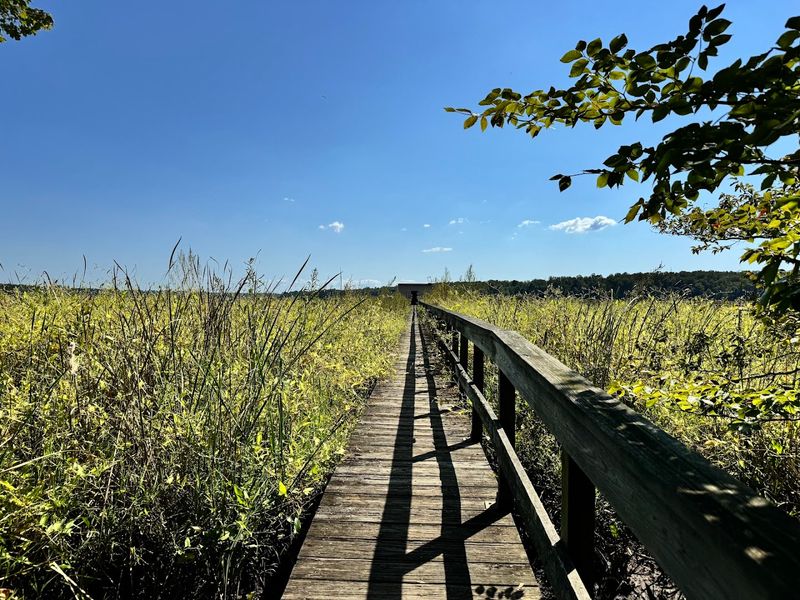
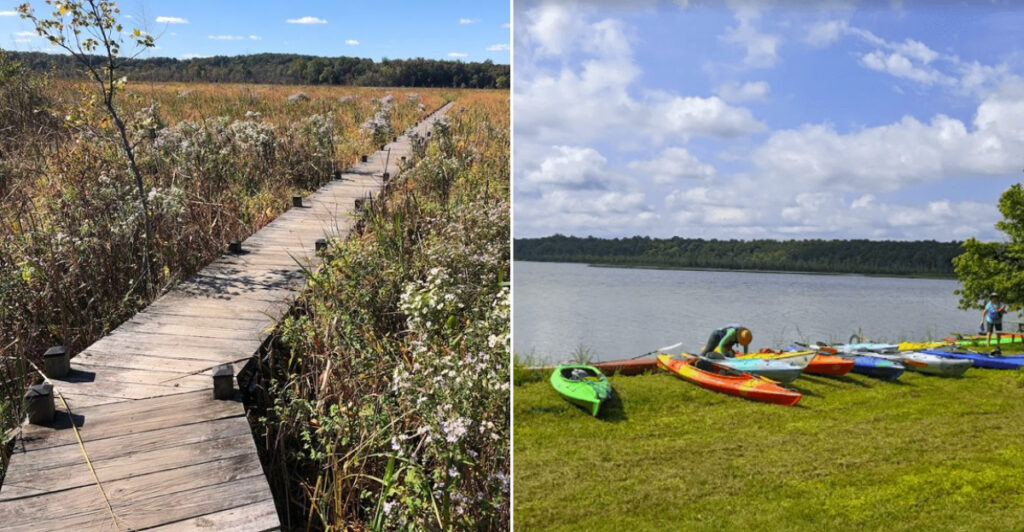
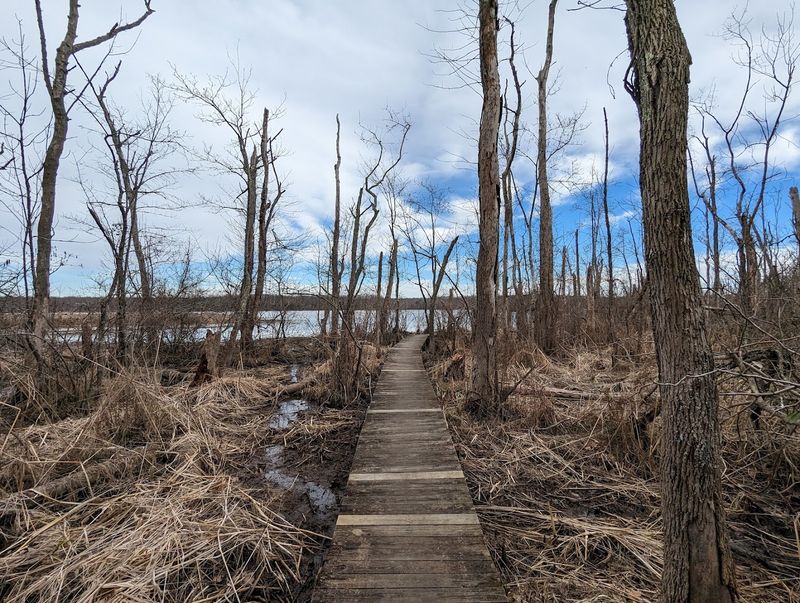
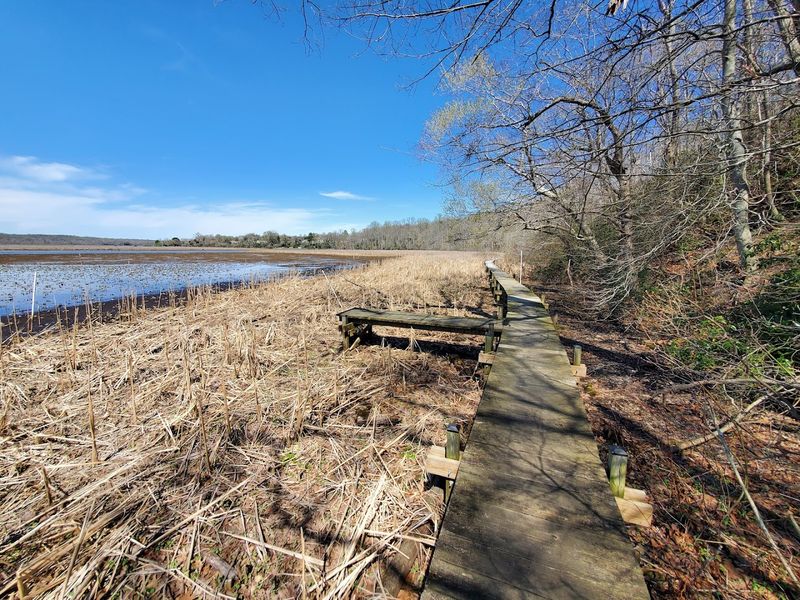
A handful of raised boardwalks are among the most memorable features of the sanctuary, and they do something that a regular trail simply cannot: they put you directly over the water.
The Chris Swarth Boardwalk extends several hundred feet into the swamp, giving visitors a close-up perspective on the wetland ecosystem that would otherwise require a canoe. From that vantage point, the complexity of the habitat becomes clear.
Lily pads float on the surface, small frogs hop between vegetation, and the occasional great blue heron stands motionless in the shallows below.
Additional boardwalk sections along the Railroad Trail offer benches where people can sit and watch the marsh for extended periods, which turns out to be a more rewarding activity than it might sound on paper.
The boardwalks are well-constructed and maintained, though it is worth checking the sanctuary website before visiting, as some sections have been temporarily closed for repairs at various points throughout the year.
Wildlife That Shows Up Without An Invitation
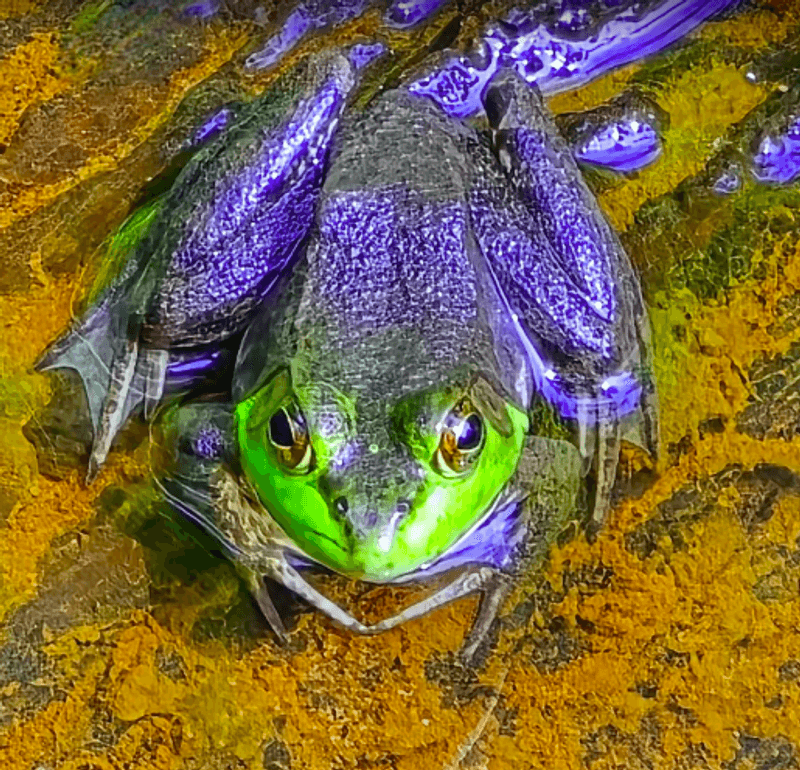
The wildlife at Jug Bay does not need a schedule. Beavers, muskrats, foxes, deer, turtles, frogs, salamanders, and an impressive variety of bird species have all been spotted along the trails and waterways throughout the year.
Waterfowl are particularly reliable during cooler months, while warbler migrations bring dedicated birders out in spring. The marsh edges attract great blue herons regularly, and osprey are common overhead during warmer months when fish are active near the surface.
Less expected finds include blue-tailed salamanders tucked under logs, garden snakes crossing the path, and dragonflies hovering in large numbers over the open water areas during summer. Otter prints have been spotted in the marsh mud, though the animals themselves are elusive.
The diversity of wildlife here reflects the health of the ecosystem. A place that supports this many species across this many habitat types is doing something right, and Jug Bay has been doing it for decades.
The Visitor Center Holds More Than You Expect
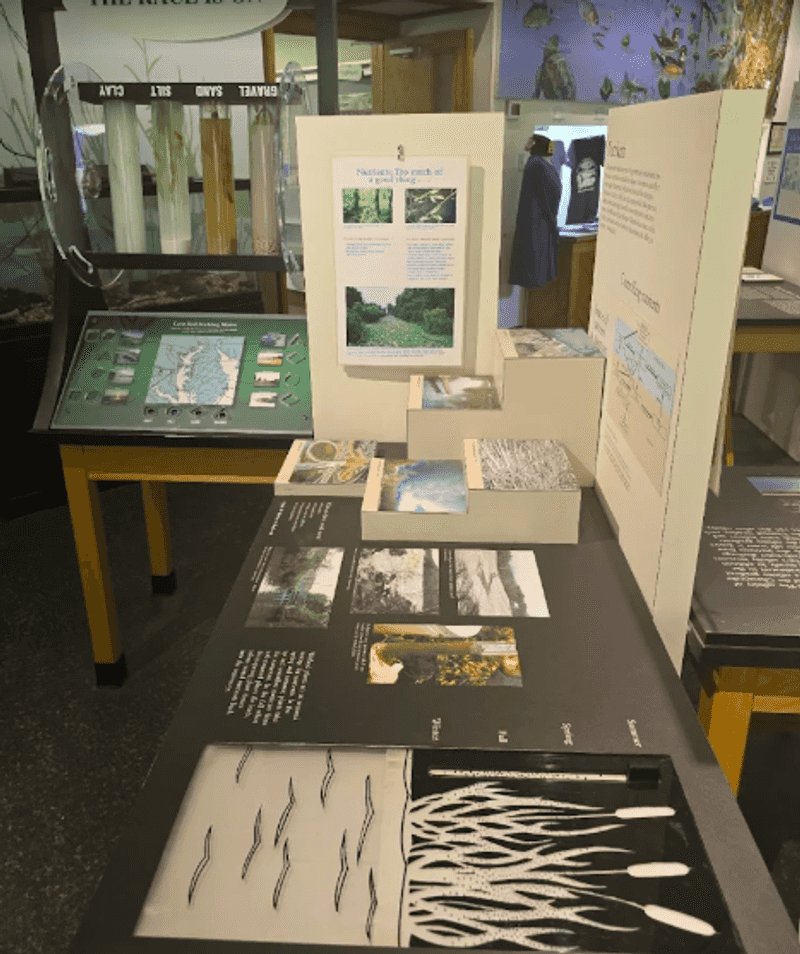
The nature center at Jug Bay is modest in size but packed with useful and interesting content. Exhibits cover the ecology of the Patuxent River watershed, the role of tidal wetlands in the broader Chesapeake Bay system, and the specific wildlife species that call the sanctuary home.
Staff and volunteers inside are consistently knowledgeable and happy to answer questions, point visitors toward the best trail options for the day, or explain what might be active in the marsh based on the season and recent conditions.
A small gift shop offers nature-themed items, field guides, and other materials that support the sanctuary’s mission. The center also serves as the starting point for many of the organized programs the sanctuary runs throughout the year.
For first-time visitors, spending a few minutes in the visitor center before heading out on the trails is a practical way to orient yourself and get more out of the experience. The context it provides makes the landscape outside feel more layered and alive.
Volunteering Here Is A Real Commitment To Conservation
The volunteer program at Jug Bay is woven into everything the sanctuary does. Without its dedicated volunteer base, many of the programs, guided walks, and trail maintenance efforts simply would not happen at the scale they currently do.
Volunteers lead public hikes, assist with educational programs, help manage invasive plant species, and support the visitor center operations throughout the open season. The investment of time these individuals make is visible in the quality of the experience the sanctuary provides.
For anyone interested in getting involved, the sanctuary actively recruits new volunteers and offers training to help people contribute meaningfully regardless of their prior experience with conservation work.
The relationship between the paid staff and the volunteer community feels collaborative rather than transactional, which gives the whole operation a warmth that is easy to pick up on during a visit. It is the kind of place where people return not just because the trails are good, but because the community around it keeps pulling them back.
Visiting Through The Seasons Reveals A Different Place Each Time
One of the more compelling reasons to visit Jug Bay more than once is that the sanctuary changes dramatically across the four seasons, and each version of it offers something distinct.
Spring brings migrating songbirds, emerging marsh vegetation, and the first signs of activity from turtles and amphibians that have been dormant through the cold months. Summer fills the marsh with wild rice, dragonflies, and the kind of lush green growth that makes the wetland feel at its most alive.
Fall shifts the palette entirely, with the surrounding forest turning gold and orange while waterfowl begin moving through on their southward migration. Winter strips the canopy back and removes the insects entirely, which some visitors find to be a genuine advantage for spotting wildlife against the bare branches and open sky.
The sanctuary is open Wednesday through Sunday from 9 AM to 5 PM, so planning around those hours is essential. Each season rewards patience in its own way.
Entry Fees And Membership Options Worth Knowing
Getting into Jug Bay is straightforward and reasonably priced. The standard entry fee is six dollars per car, which covers the entire group traveling together rather than charging per person.
That structure makes it particularly good value for families.
For those who plan to visit more than once or twice a year, a family annual membership is available for thirty-five dollars, which quickly pays for itself after a couple of trips. The membership also supports the sanctuary’s ongoing conservation and education work directly.
Parking is available at multiple trailheads across the property, and the lots are generally adequate for the number of visitors the sanctuary receives. Leashed dogs are welcome at the sanctuary, which makes it a practical outing for pet owners who want to include their animals in a longer outdoor excursion.
The combination of affordable entry, multiple access points, and a well-developed trail system makes Jug Bay one of the better-value nature destinations in the broader DC and Annapolis metro region.
Kayaking And Fishing Add Another Layer To The Experience
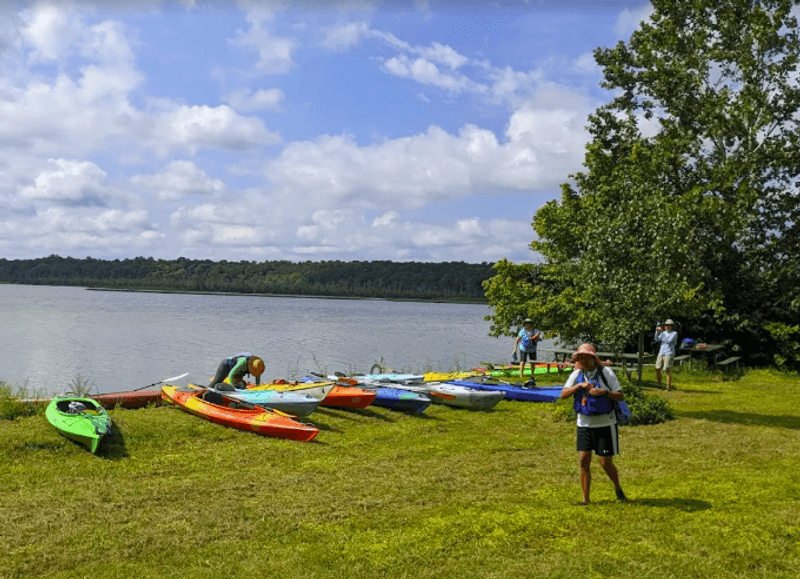
The Patuxent River that borders the sanctuary is not just a backdrop. It is an active part of the experience for visitors who want to get out on the water rather than observe it from the bank.
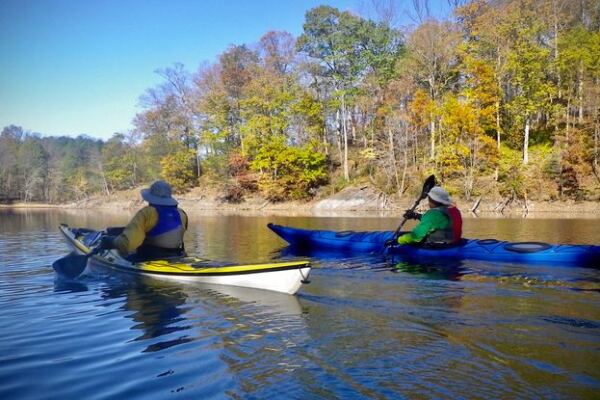
Kayaking and canoeing on the river give a completely different perspective on the wetland habitat, allowing paddlers to move through areas of the marsh that are inaccessible from land. The water-level view of the wild rice stands and the reed beds is something the trails simply cannot replicate.
Fishing is also popular along the Patuxent, particularly for anglers targeting the invasive northern snakehead, which has established itself in the river system and can be caught throughout the warmer months. High tide conditions tend to produce the best results along the marsh edges.
The combination of land-based and water-based activities gives Jug Bay a range that keeps it interesting for repeat visitors who want to approach the sanctuary from a new angle each time they return.
Why This Place Deserves More Attention Than It Gets
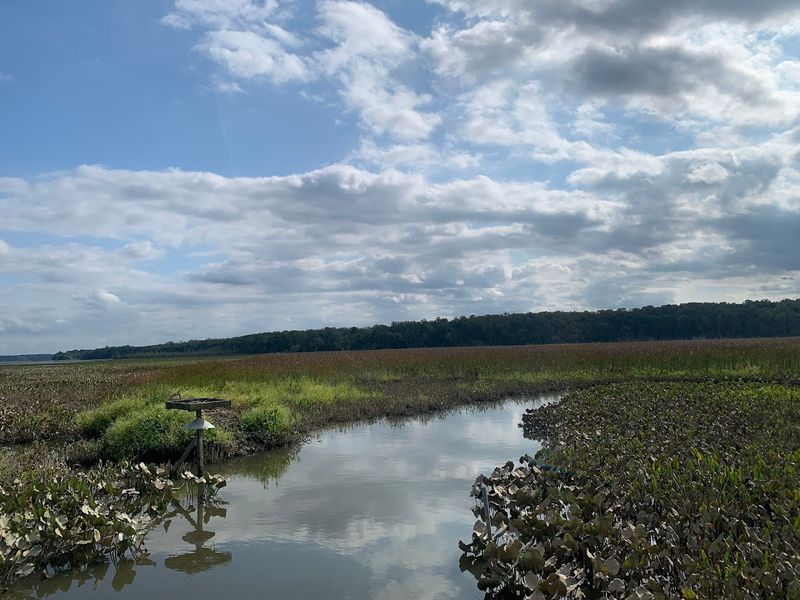
Jug Bay Wetlands Sanctuary sits in a category of place that tends to get overlooked in favor of larger or more heavily marketed parks, and that relative quiet is actually part of what makes it worth visiting.
The trails do not get crowded. The wildlife has not been pushed to the edges by constant foot traffic.
The marsh still functions the way it is supposed to, filtering water, sheltering wildlife, and cycling nutrients through the Chesapeake Bay watershed in a way that benefits the entire region.
The sanctuary operates with a clear sense of purpose that shows up in how the trails are maintained, how the programs are run, and how the staff and volunteers engage with people who walk through the door.
For a region as densely populated as the DC metro corridor, having a place like this within 45 minutes of the city is something worth protecting and supporting. Getting out there and paying the six-dollar entry fee is one of the simplest ways to do exactly that.
Where This Sanctuary Sits And Why It Matters
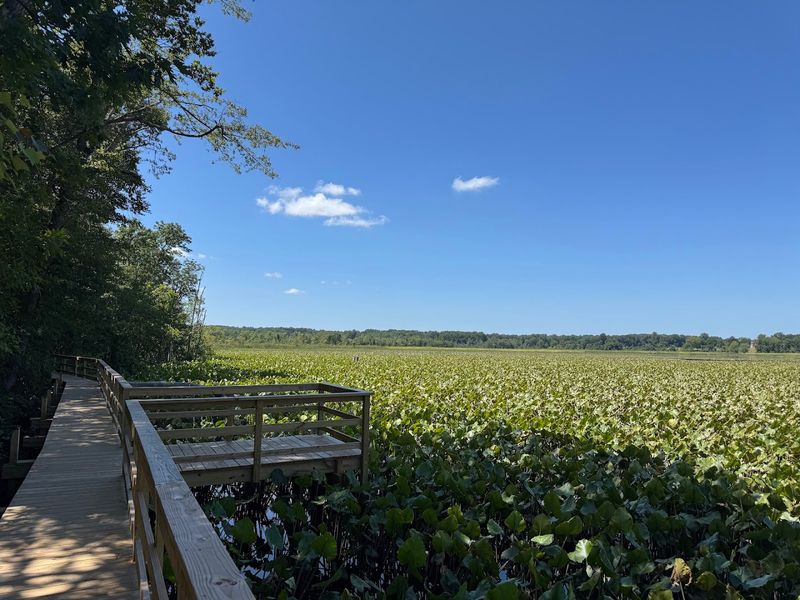
Jug Bay Wetlands Sanctuary is located at 1361 Wrighton Rd, Lothian, MD 20711, nestled in Anne Arundel County along the western shore of the Patuxent River.
The sanctuary sits within the Chesapeake Bay watershed and protects more than 1,500 acres of land, including some of the most ecologically significant freshwater tidal wetland habitat remaining on the East Coast.
That designation is not just a title. The wetlands here act as a natural filter, cleaning water before it flows into the Chesapeake Bay, supporting fish nurseries, and providing critical habitat for migratory birds and resident wildlife year-round.
About 45 minutes from Washington, DC, and close to Annapolis, the sanctuary manages to feel genuinely remote despite being surprisingly accessible. It is managed by Anne Arundel County and supported by a dedicated volunteer community that helps keep the trails, programs, and visitor center running smoothly each season.
Share this story