Tucked into the hills of North Adams in western Massachusetts, there is a state park that most people drive past without a second thought. That turns out to be a big mistake.
The park holds the only naturally formed white marble arch in North America, sitting alongside the only white marble dam on the continent, both carved and shaped over millions of years. The geology alone would be worth the trip, but the abandoned marble quarry, the quiet trails, and the surprisingly rich history make this place feel like a whole afternoon well spent.
Best of all, the park is free to enter for Massachusetts residents, making it one of the most underrated stops along the entire Mohawk Trail. There is more going on here than the roadside sign lets on, and the full story is worth reading before you plan your visit.
The One Geological Feature That Stops Everyone Cold
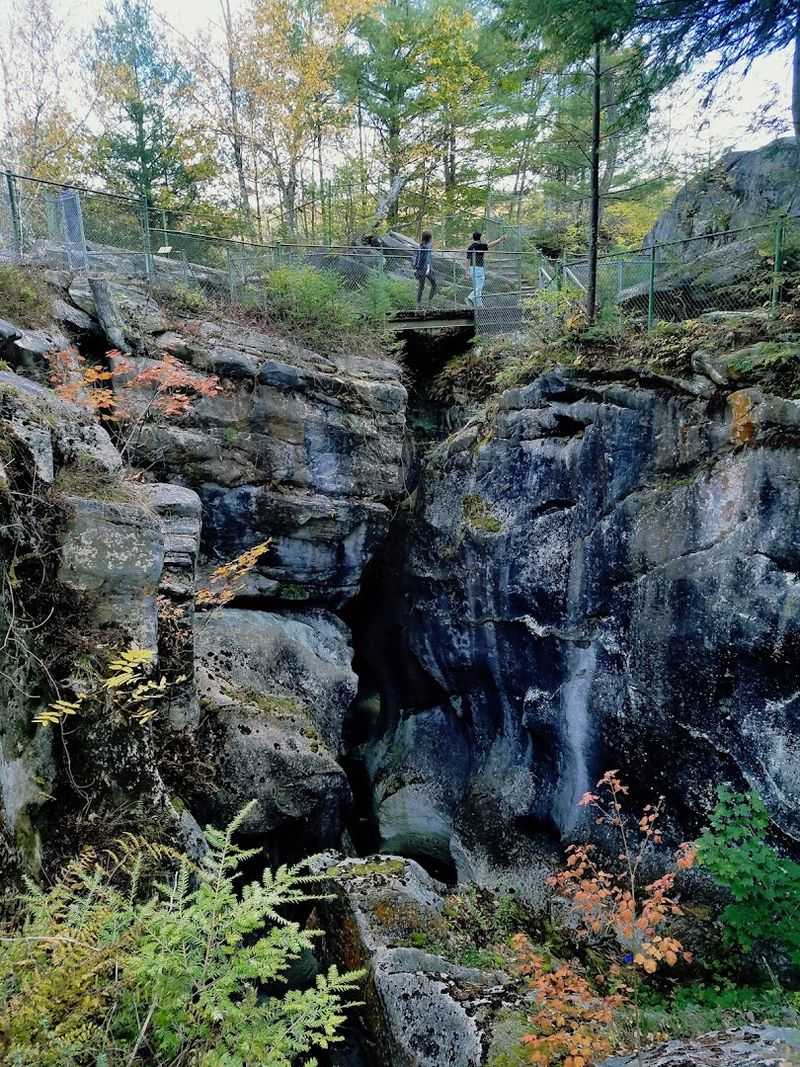
The star of the park is the natural white marble arch, widely recognized as the only one of its kind in North America. It spans a narrow gorge carved by Hudson Brook, and the arch itself formed over roughly 13,000 years of water erosion working through 550-million-year-old marble bedrock.
The arch is not enormous by dramatic landscape standards, but its rarity and geological significance make it genuinely remarkable. The white marble glows in natural light in a way that feels almost out of place in a New England forest setting.
Access to walk directly beneath the arch has been limited in recent years due to ongoing safety and structural work, with fencing and viewing platforms controlling where guests can go. Even from the designated viewing areas, the arch is clearly visible and easy to photograph.
Few geological features in the entire northeastern United States carry this level of scientific uniqueness packed into such a compact, walkable space.
A Dam Unlike Any Other in North America
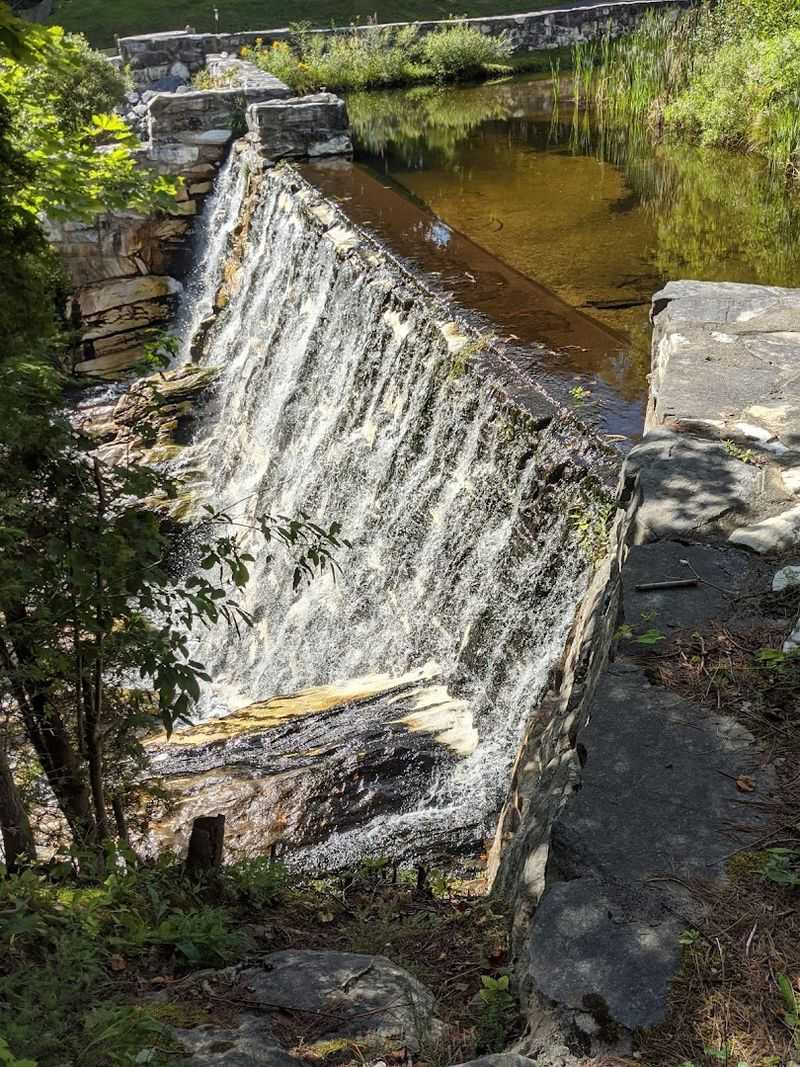
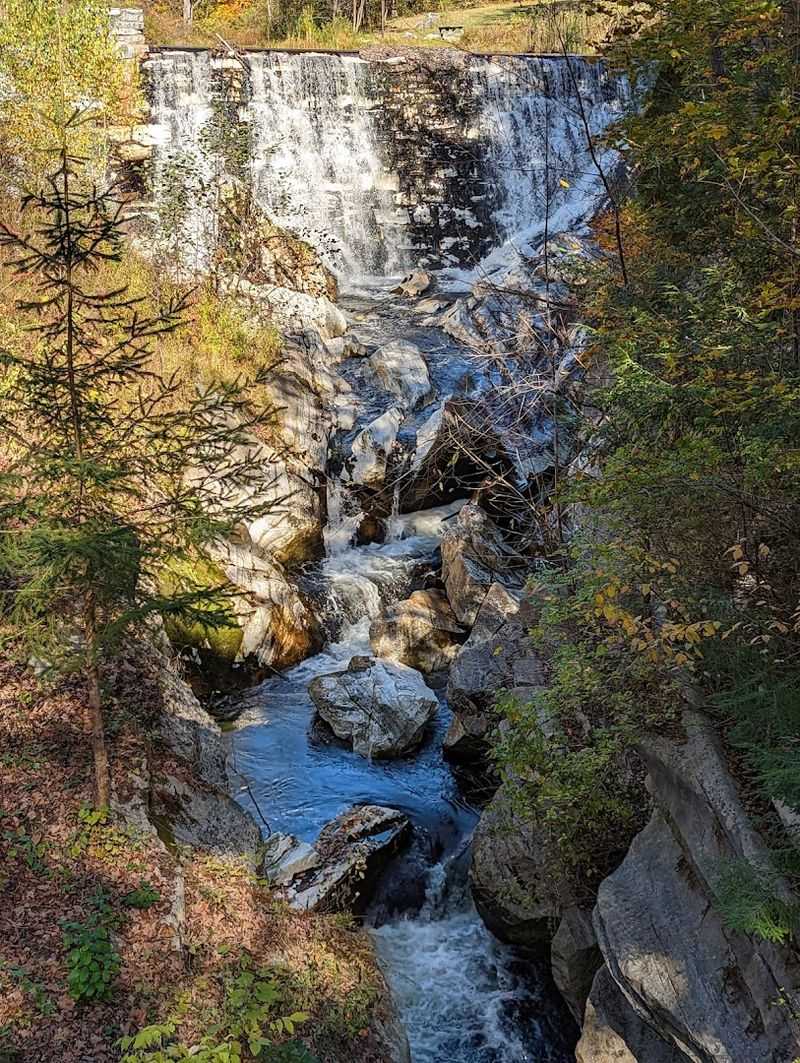
Right alongside the natural arch sits another record-holder that most people do not know exists: the only white marble dam in North America. Built during the active quarrying era, the dam was constructed entirely from the same brilliant white marble that makes up the surrounding landscape.
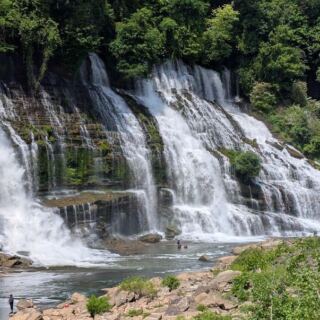
The dam holds back a small pond at the upper section of the park, and the water that spills over it creates a visual that is genuinely hard to replicate anywhere else on the continent. The contrast between the moving water and the pale, almost luminous marble surface is striking in any season.
During the height of the quarrying operation, the dam served a practical industrial function, helping manage water flow through the worksite. Today it stands as both a historical artifact and an active geological feature.
It is one of those details that makes the park feel layered, where every corner holds something that exists nowhere else, and that kind of place is worth protecting.
The Abandoned Marble Quarry That Time Left Behind
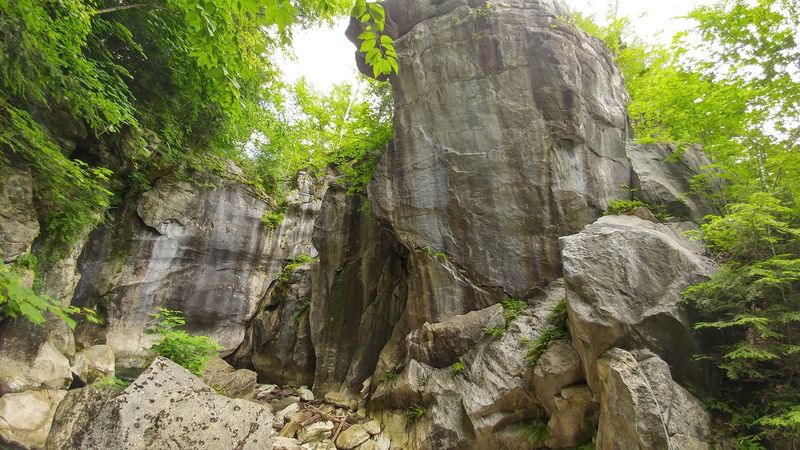
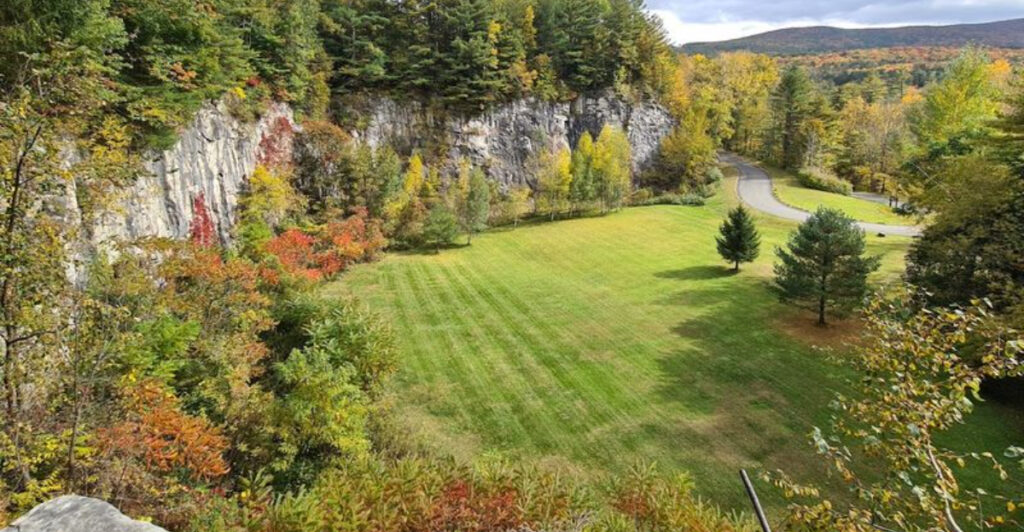
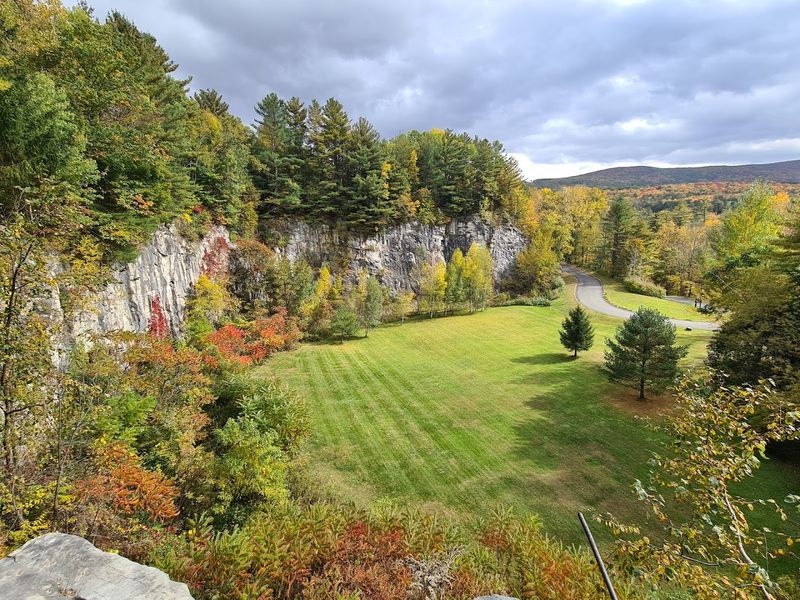
The marble quarry at the heart of the park operated for well over a century, and the walls it left behind are genuinely dramatic. Sheer cliff-like faces of white marble rise on multiple sides, creating a kind of open-air geology exhibit that no museum could replicate at this scale.
Marble quarrying in this part of Massachusetts was a major industry during the 1800s and into the early 1900s. The Berkshires held some of the most commercially valuable marble deposits in New England, and the North Adams operation was among the most active in the region.
Walking through the old quarry floor gives a clear sense of the industrial scale involved. The cuts in the rock are precise and deliberate, standing in sharp contrast to the smooth curves shaped by centuries of water erosion nearby.
A detailed diorama inside the visitor center shows what the quarry looked like during its peak operation around the 1940s, which helps put the silent stone walls into a much richer historical context.
Hudson Brook and the Water That Shaped Everything
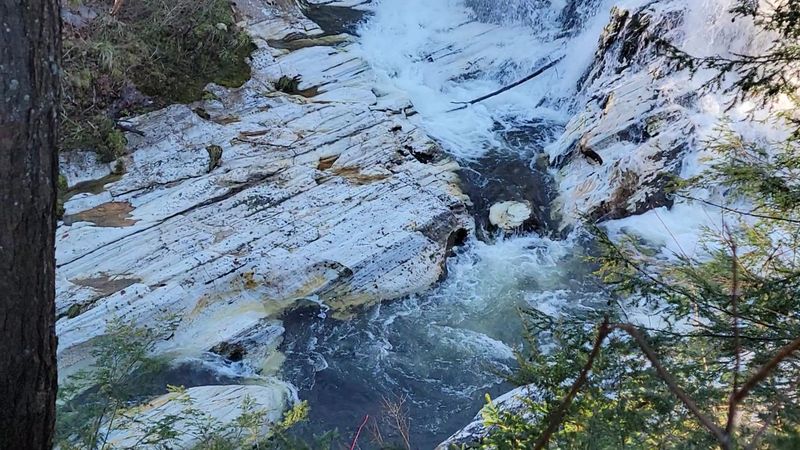
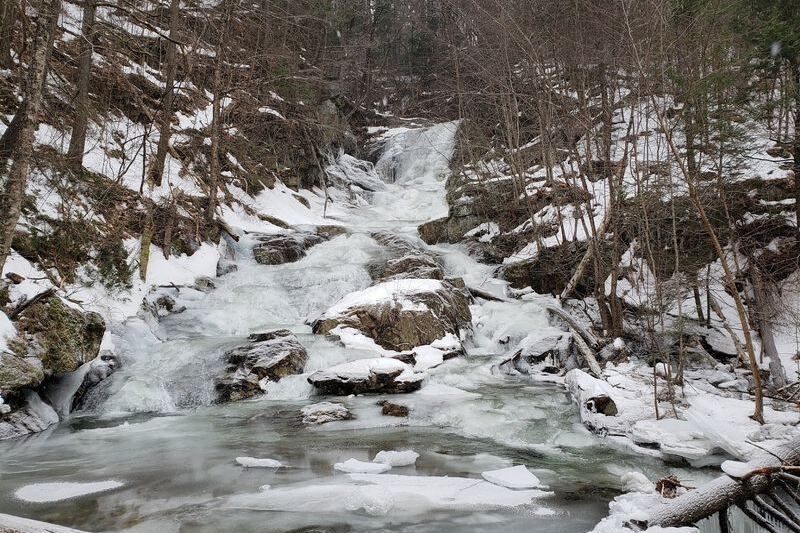
Hudson Brook is the quiet but powerful force behind everything remarkable at this park. Over thousands of years, the brook carved its way through the marble bedrock, creating the gorge, shaping the natural arch, and sculpting the cave-like passages that visitors can observe along the trail.
The brook runs through sections where the water moves between boulders, through narrow channels, and beneath overhanging marble walls. At certain points, the brook and a nearby river meet at the base of the park, and that confluence is one of the spots that the interpretive signs highlight as particularly worth stopping to observe.
Water-carved landscapes tend to develop over timescales that are hard to hold in mind, and this one is no different. The fact that the same brook responsible for creating a geological landmark is still flowing through the park today adds a living quality to the whole experience.
The geology here is not frozen in the past; it is still technically in progress.
What the Visitor Center Actually Offers
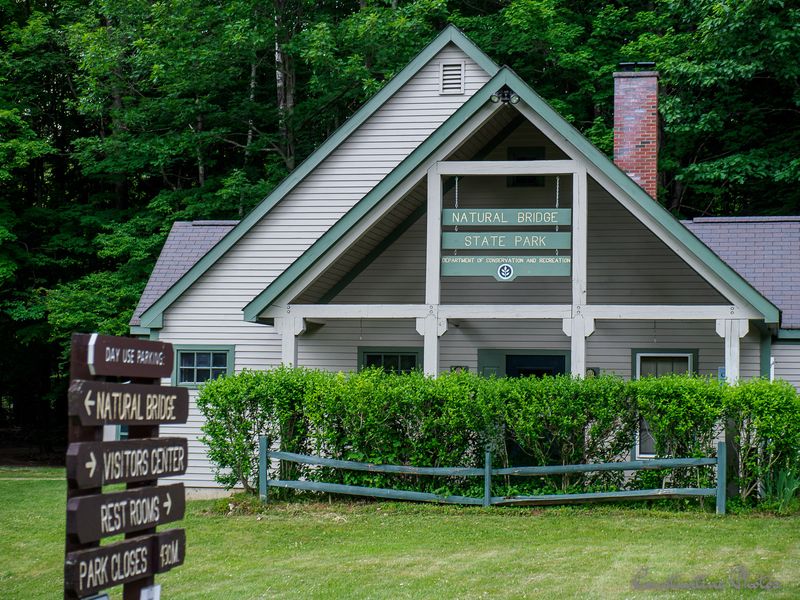
The visitor center at Natural Bridge State Park is compact but genuinely useful. Inside, guests will find clean restrooms, printed information about the park’s geology and history, and one feature that stands out above the rest: a detailed diorama depicting the marble quarry as it appeared during active operation in the 1940s.
The diorama gives real context to the stone walls and equipment remnants visible throughout the park. Seeing the scale of the operation laid out in miniature makes the quarry feel much more understandable than reading text alone ever could.
Staff availability can vary depending on the day and season, so it is worth arriving with some background knowledge rather than relying entirely on on-site guidance. The visitor center also serves as the main trailhead area, with picnic tables set up nearby for anyone planning to turn the visit into a longer outdoor break.
For a free park, the level of interpretive infrastructure here is notably thoughtful and well-organized.
Hiking Trails Worth Lacing Up For
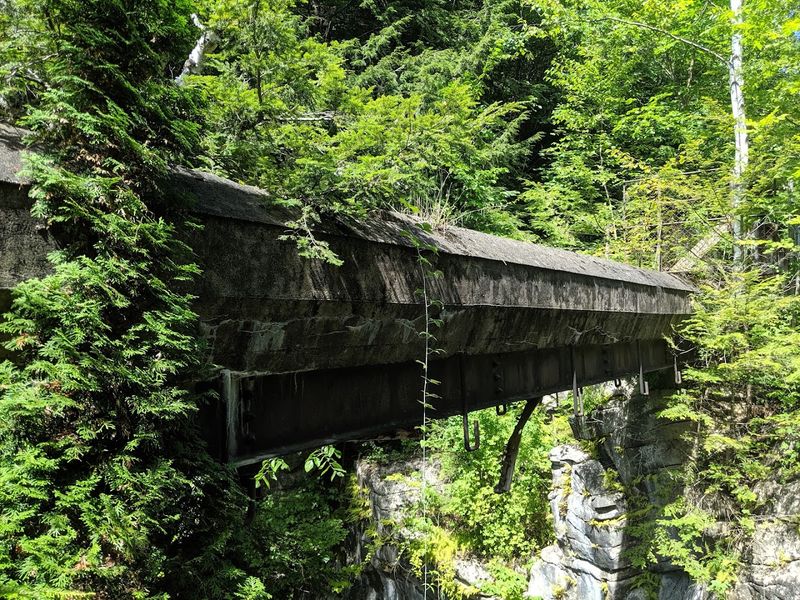
Beyond the main geological attractions, Natural Bridge State Park offers a nature trail that runs a little over a mile in one direction through the surrounding woods. The trail is well-marked and passes through a mix of forested terrain and areas where the underlying marble geology becomes visible through the tree cover.
The trail network also connects to views of the distant mountains, which add a broader landscape perspective to what is otherwise a geology-focused visit. For families with younger children or anyone not looking for a strenuous outing, the main loop around the quarry and dam area is manageable and takes roughly 30 to 45 minutes at a relaxed pace.
There are stairs and ramps throughout the accessible sections near the visitor center, but the terrain is not entirely flat, so footwear with decent grip is a practical choice. The park is not designed for long-distance hiking, but the combination of short trails and dramatic scenery makes the overall experience feel much larger than the park’s modest size suggests.
The Noisy Cave and the Gorge Below
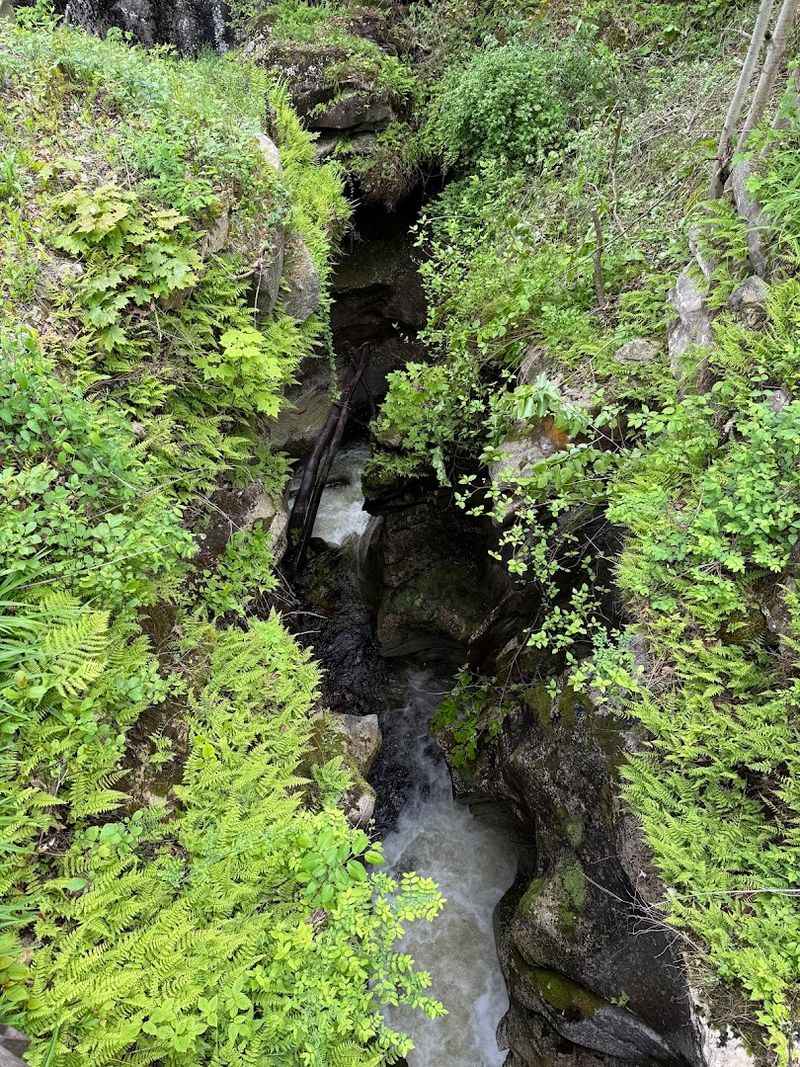
One of the more unusual features tucked into the park is a section known informally as the Noisy Cave, a cave-like passage carved into the marble where sound behaves in unexpected ways due to the acoustics of the enclosed rock space. It sits along the lower portion of the trail network and tends to be one of the spots that catches first-time visitors off guard.
The gorge itself, which the cave is part of, drops below the main viewing areas and gives a ground-level perspective on just how deeply the brook has cut into the bedrock over millennia. The walls of the gorge rise sharply on both sides, and the marble takes on different tones depending on the angle of available light.
Spending time in this lower section of the park adds a different dimension to the visit that the upper quarry area alone does not provide. The two sections together give a much more complete picture of how water, time, and geology combined to create this particular landscape in the Berkshires.
The Sculpture Garden That Surprises First-Timers
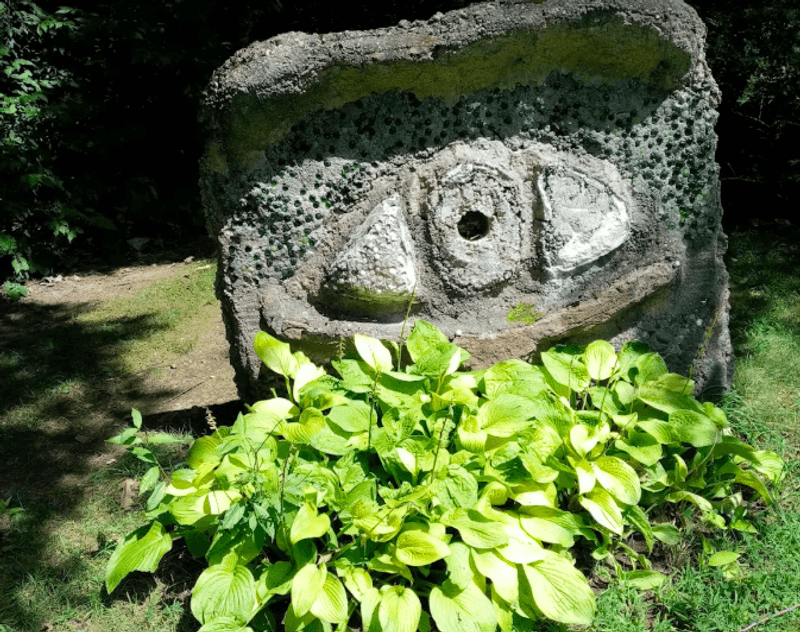
Not every state park comes with its own outdoor art installation, but Natural Bridge State Park is not every state park. Tucked into one section of the grounds is a small sculpture garden featuring works created by high school students, most of them dating back to the early 2000s.
The sculptures are made from a range of materials and sit along a pathway that visitors pass through as part of the general park circuit. The collection is modest in scale but adds an unexpected creative layer to a park already rich in geological and historical character.
The combination of natural marble formations, industrial quarry history, and student artwork gives the park a surprisingly varied personality for such a small site. It is the kind of detail that does not appear in most travel summaries but tends to stick with people long after the visit.
Art and geology sharing the same outdoor space is not a combination that comes along very often, and this park pulls it off without either element feeling out of place.
The Best Time of Year to Make the Trip
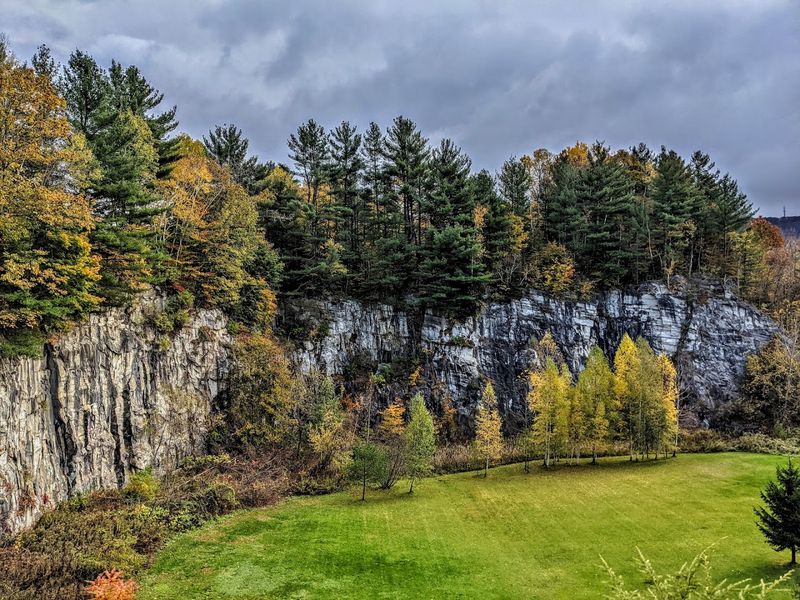
Natural Bridge State Park holds appeal across multiple seasons, but autumn tends to bring out the most striking contrast between the white marble surfaces and the surrounding landscape. The Berkshires are known for their fall color, and the combination of orange and red foliage against pale quarry walls creates a visual that is hard to replicate at any other time of year.
Spring and early summer bring higher water flow through the gorge and along Hudson Brook, which makes the water features more active and the overall landscape more dynamic. Visiting during the shoulder seasons, either late spring or early fall, also means smaller crowds and a more relaxed pace on the trails.
The park operates daily from 9 AM to 4:30 PM year-round, with last entry at 4:00 PM. Arriving closer to opening time on weekdays tends to give the most uncrowded experience.
Parking is available on-site, and the access road, while narrow, is manageable for standard passenger vehicles with careful driving.
Pairing the Park With the Broader North Adams Experience
North Adams is a small city that punches well above its weight in terms of cultural offerings, and Natural Bridge State Park fits naturally into a broader day trip built around everything the area has going for it. The Massachusetts Museum of Contemporary Art, known widely as MASS MoCA, sits just a short drive away and is one of the largest contemporary art museums in the entire country.
The Mohawk Trail itself, which runs through North Adams, is one of the most scenic drives in New England and connects several other historical and natural sites within easy reach. Building a full day around the park, the trail, and a stop in downtown North Adams gives the visit a satisfying range of experiences that covers both the natural and the cultural.
The park also has picnic tables on-site, which makes it a practical midday stop between other destinations. Bringing a packed lunch and spending a relaxed hour at the quarry before continuing along the Mohawk Trail is a well-tested approach that consistently delivers a rewarding day out in the Berkshires.
Where Exactly is This Hidden Park
Natural Bridge State Park sits at McAuley Rd, North Adams, MA 01247, right along the famous Mohawk Trail in the Berkshires region of western Massachusetts. The park is managed by the Massachusetts Department of Conservation and Recreation and is open daily from 9 AM to 4:30 PM, with last entries accepted at 4:00 PM sharp.
North Adams itself is a small city packed with cultural history, and the park fits right into that character. The drive up to the parking area follows a narrow, single-lane road with marble rock walls rising on one side, which sets the tone immediately for what lies ahead.
The park is free for Massachusetts residents, though out-of-state vehicles may be charged a parking fee. The compact size of the park makes it a realistic stop even on a busy travel day, since most people can explore the main features in under two hours.
Share this story