 Unearth The Voyage
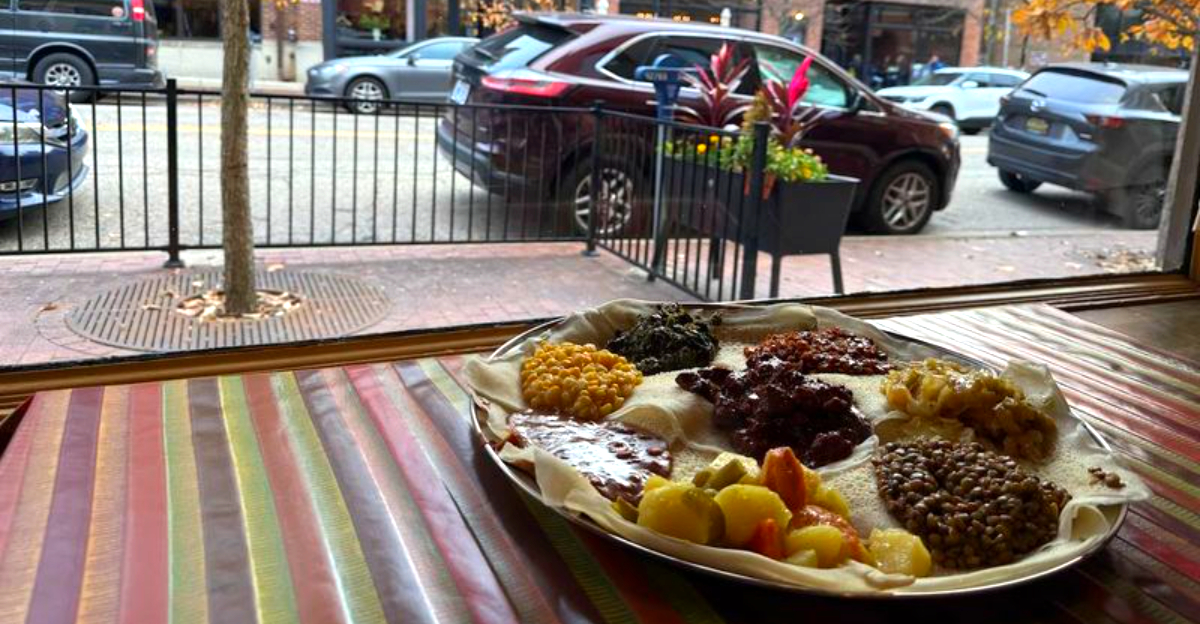
There is a restaurant in downtown Ann Arbor where you eat with your hands, share a single enormous platter with everyone at your table, and leave feeling like you just attended a really good dinner party. The bread is spongy and tangy, the stews are layered with bold spices, and the whole experience feels nothing like a typical night out.
Blue Nile has been quietly converting first-timers into regulars since 1989. After one visit, it becomes very clear why people keep coming back year after year, sometimes even driving 45 minutes just to grab a seat at one of its tables.
A Downtown Address With Decades of History Behind It
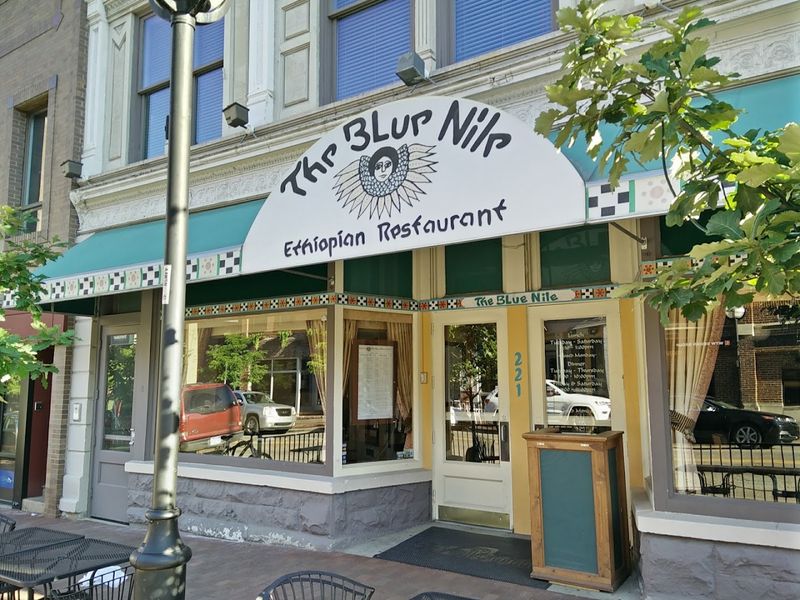
Some restaurants open and close before the decade is out, but Blue Nile Ethiopian Restaurant has been feeding Ann Arbor since 1989, which means it has outlasted trends, recessions, and probably several neighboring businesses.
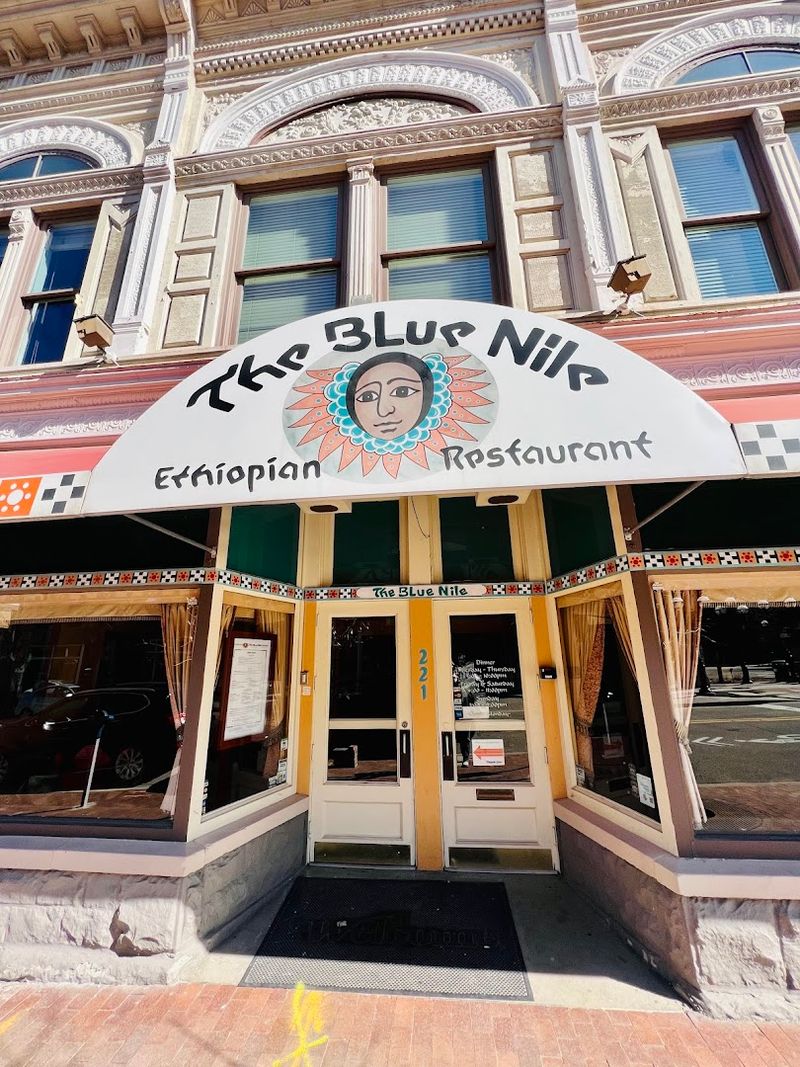
You will find it at 221 E Washington St, Ann Arbor, MI 48104, right in the heart of downtown. The location is walkable from the University of Michigan campus, which partly explains the loyal and diverse crowd that fills the tables on any given evening.
Owners Habte and Alma built something that the city clearly did not want to lose. Over 35 years, the restaurant has earned more than 1,000 reviews on Google, maintaining a 4.3-star rating that reflects genuine, repeat satisfaction rather than novelty hype.
The building itself fits right into the texture of downtown Ann Arbor, understated from the outside but immediately warm and colorful the moment you cross the threshold. Few restaurants anywhere can claim this kind of staying power, and fewer still deserve it as much as this one does.
The Atmosphere Inside the Dining Room
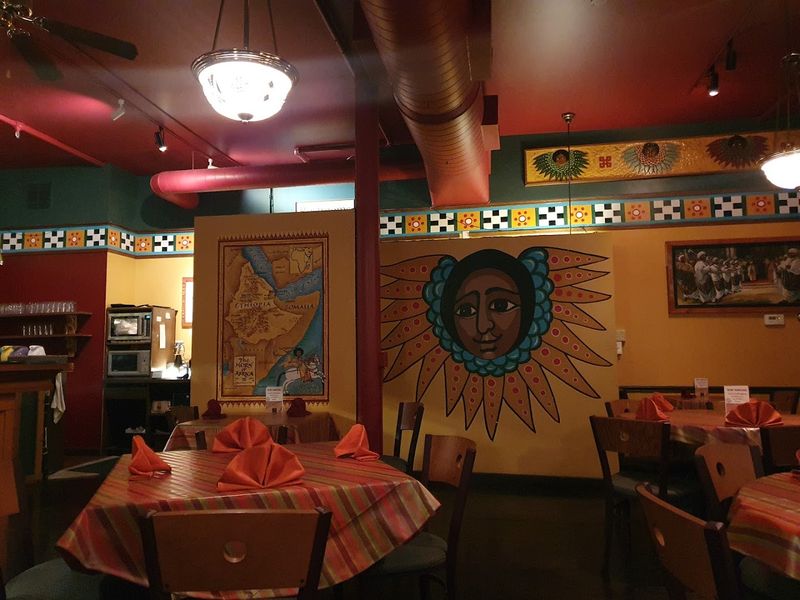
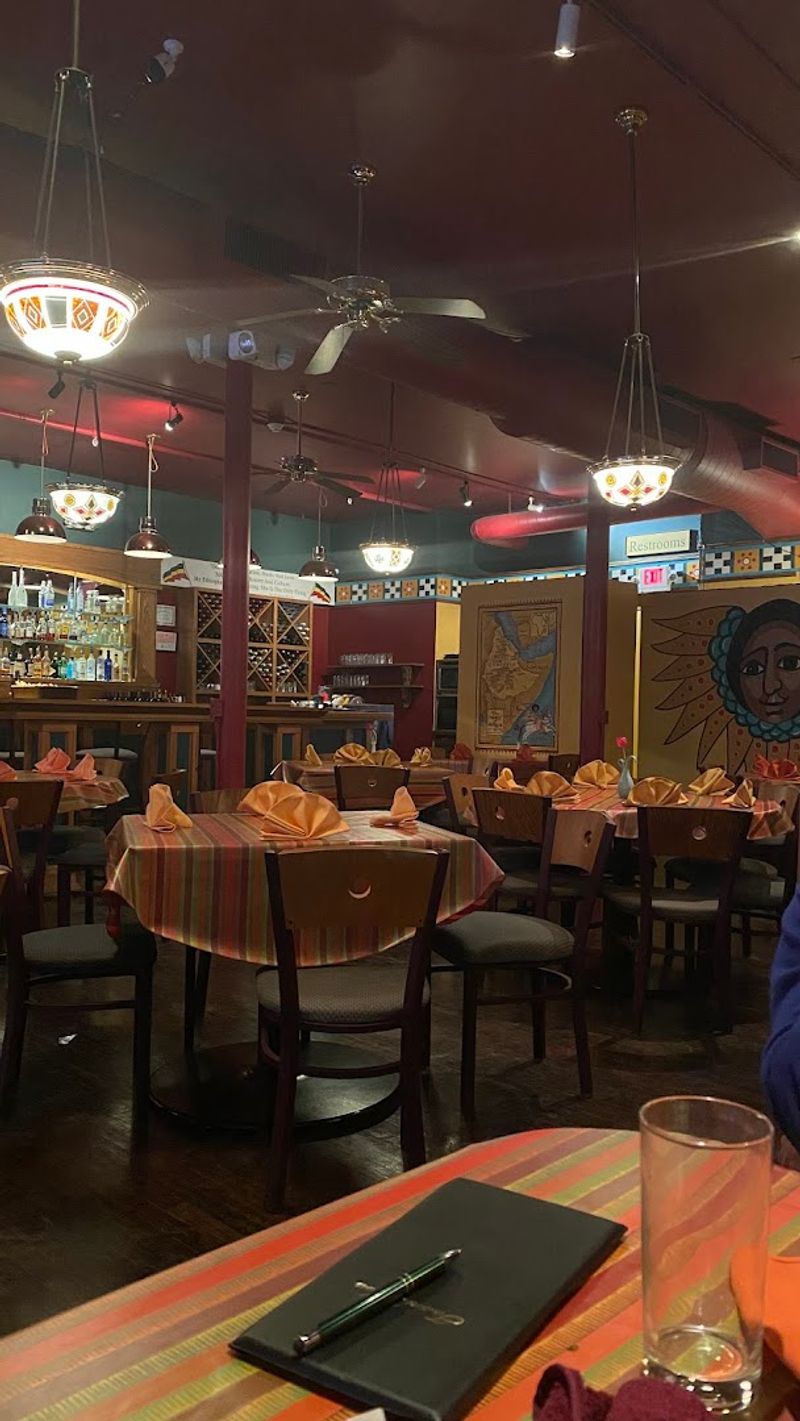
The dining room at Blue Nile does not try to be subtle. Colorful textiles, traditional decor, and warm lighting give the space a character that feels genuinely transported rather than themed for effect.
The lighting is slightly dim, which works perfectly whether you are on a date, catching up with old friends, or simply trying to have a conversation without the buzzing distraction of a loud, bright restaurant. The atmosphere is calm and quiet in a way that actually encourages people to talk to each other.
Tables are arranged so that groups can gather comfortably around a shared platter, which reinforces the communal spirit that Ethiopian dining is built around. The decor transports you in a way that feels respectful and authentic rather than decorative.
One detail that surprises first-timers is how unhurried the whole environment feels. Nobody rushes you, nobody hovers, and the pace of the meal naturally slows down in the best possible way, turning dinner into something closer to an event than a quick stop for food.
What Injera Actually Is and Why It Changes Everything
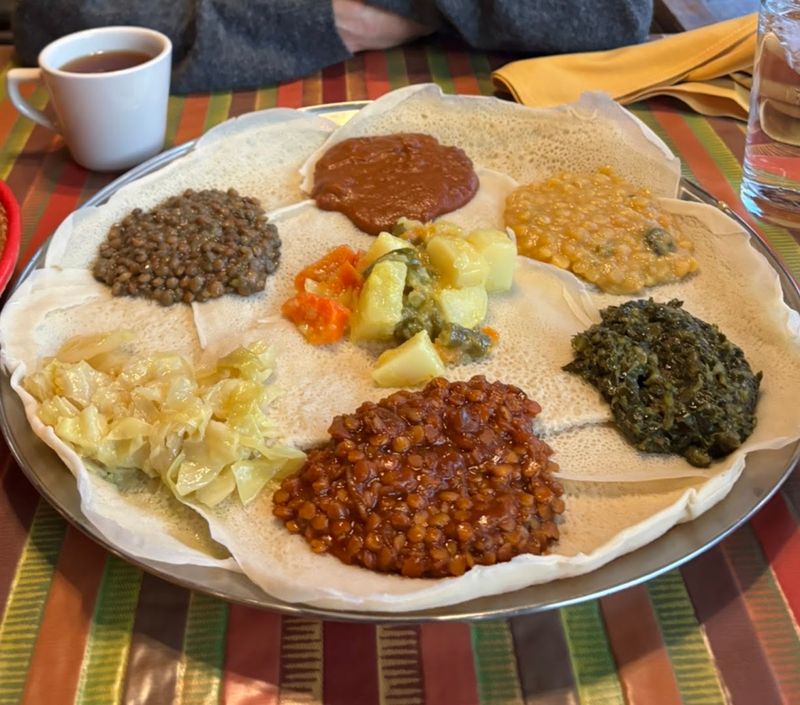
If you have never eaten Ethiopian food before, injera is the first thing you need to understand, because it is simultaneously the plate, the utensil, and a significant part of the meal itself.
Injera is a spongy, slightly tangy flatbread made from teff flour, a grain native to Ethiopia. At Blue Nile, it lines the base of every large shared platter, soaking up the juices from each stew and dish placed on top of it.
You tear off pieces with your right hand and use them to scoop up whatever you want to eat.
The texture is soft and porous, almost like a very thin sourdough pancake, and the mild sourness of the bread balances the bold spices of the dishes perfectly. Servers keep bringing fresh injera throughout the meal, so you never run short.
Blue Nile also offers a gluten-free version made entirely from teff flour for an additional fee, which is a thoughtful option that many Ethiopian restaurants do not bother to provide. Once you eat this way, using a fork starts to feel oddly limiting.
The Vegetarian Feast That Steals the Show
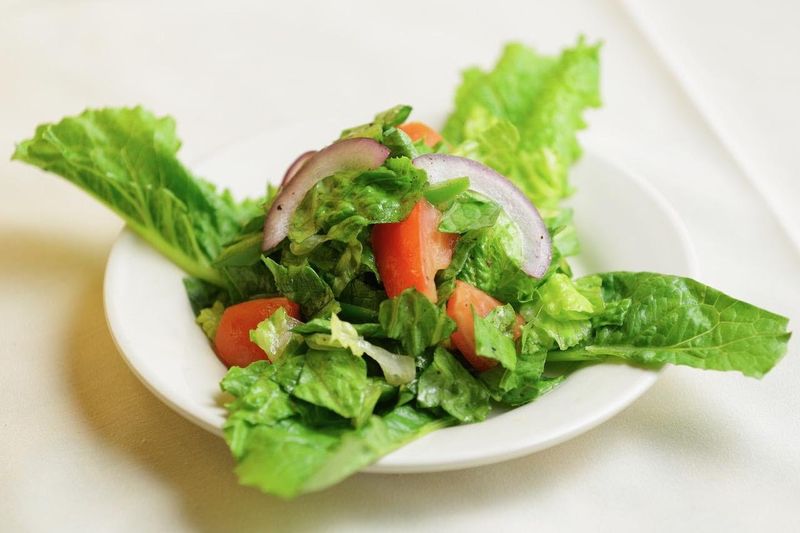
The all-you-can-eat Vegetarian Feast is the dish that most regulars point to as the main reason they keep coming back, and after tasting it, the loyalty makes complete sense.
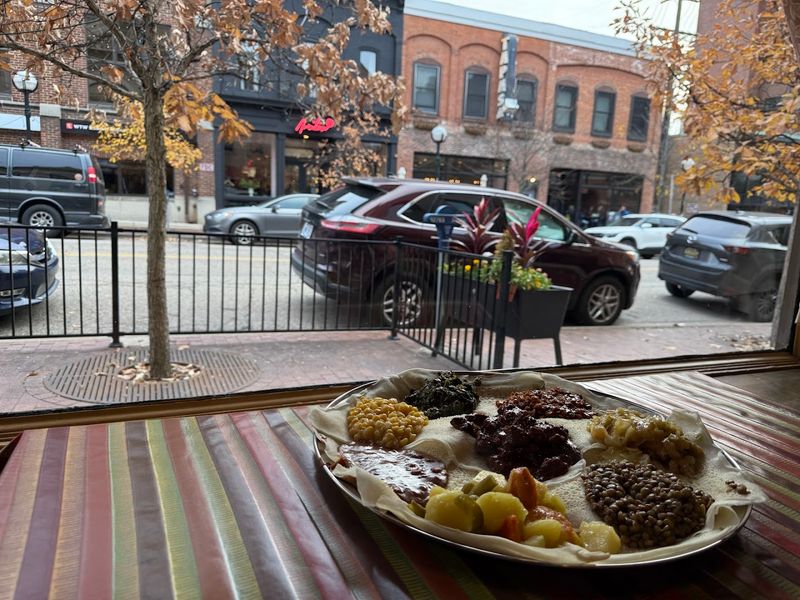
The platter arrives loaded with spicy lentils, stewed dried peas, braised cabbage, collard greens, and vegetables mixed with potatoes, all arranged in colorful mounds on top of a layer of fresh injera. Each component has its own distinct flavor profile, so the platter never feels repetitive even as you work your way around it.
The flavors are rich and layered without being overwhelming, and the spice level is present but not punishing. Everything feels filling and satisfying without leaving you with that heavy, sluggish feeling that some large meals produce.
Because the feast is all-you-can-eat, servers regularly check in to see which dishes you want more of, and the injera keeps coming as long as you want it. For plant-based diners especially, this platter represents one of the most generous and genuinely flavorful options available within a very wide radius of Ann Arbor.
Adding Meat to the Mix
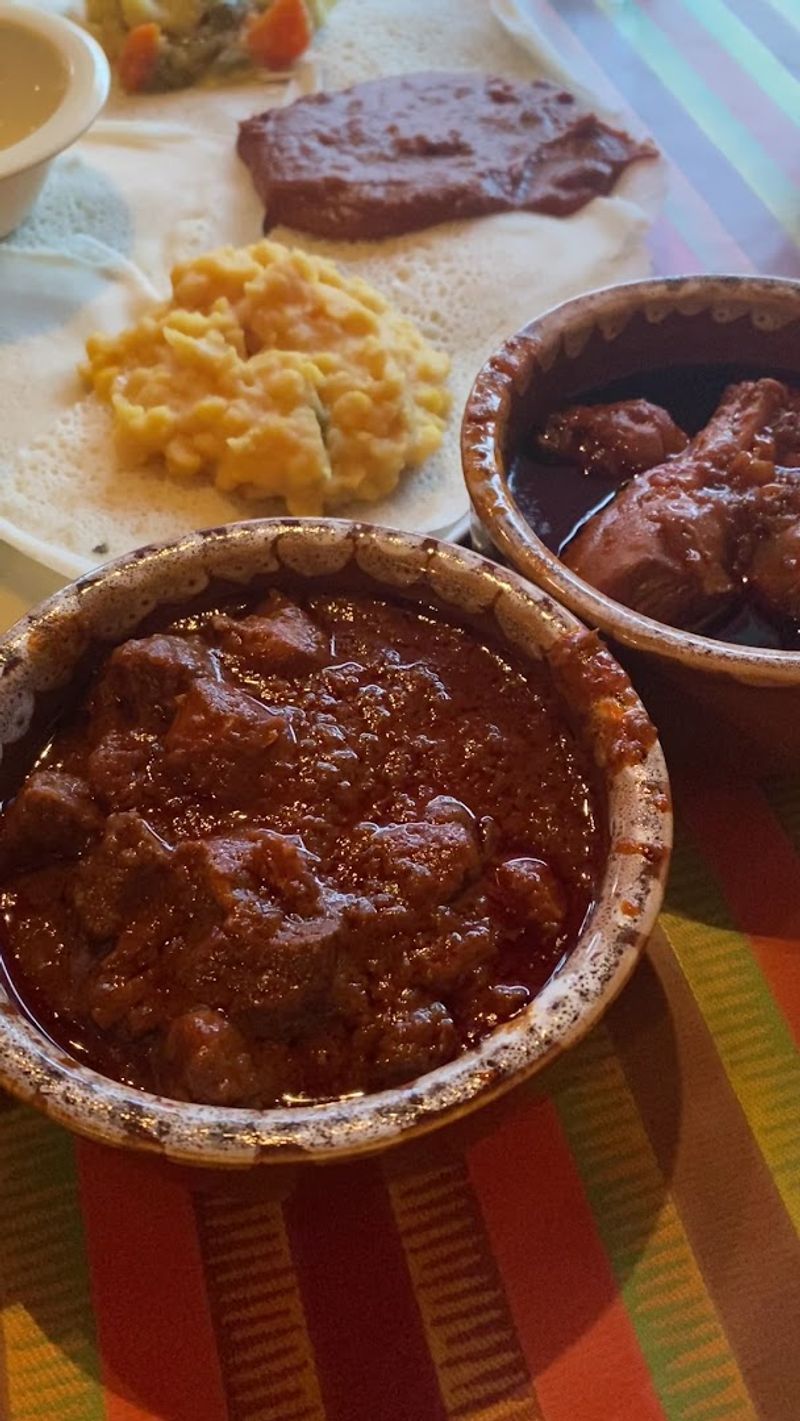
For diners who want to add protein to the vegetarian spread, Blue Nile offers meat options that turn the already generous platter into something even more substantial.
The Ethiopian Feast builds on the vegetarian base by adding a trio of chicken and beef dishes. The chicken doro wat is the standout, arriving with tender meat that practically falls off the bone, coated in a deeply spiced sauce that has clearly been cooked low and slow for a long time.
The stewed beef is similarly impressive, slow-cooked until the texture becomes almost silky, with seasoning that is bold but never one-dimensional. Zil zil wat, a dish of spiced beef strips, is a particular favorite among regulars who have been visiting for years and know exactly what to order.
The meat portions are smaller than the vegetarian spread, which reflects their role as a complement rather than the centerpiece. That balance actually works in the restaurant’s favor, because you end up tasting everything rather than filling up on one thing and missing the rest of the spread entirely.
The Ritual of the Hot Towel and Eating With Your Hands
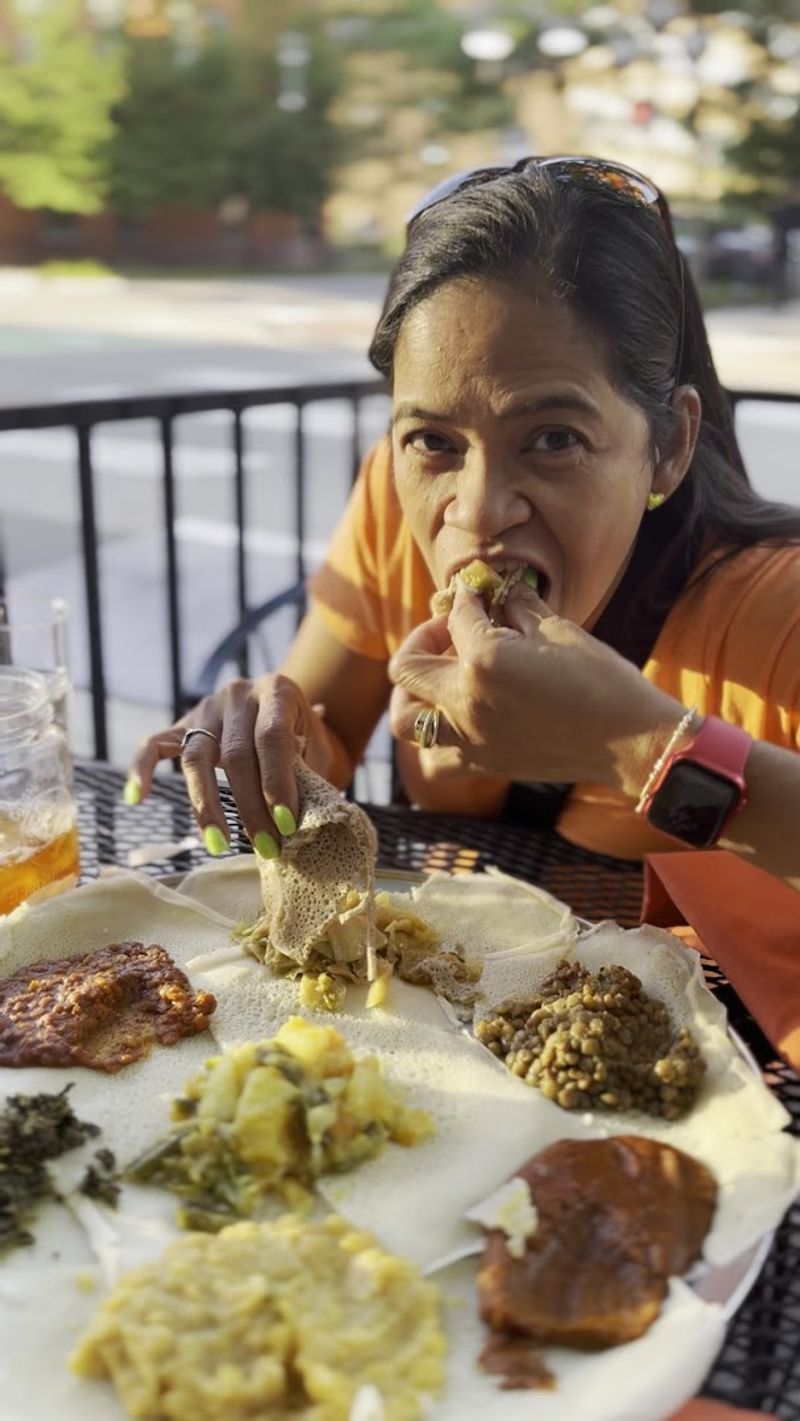
Before the food even arrives at Blue Nile, something small happens that immediately signals this meal will be different from most: a server brings each guest a steamy hot towel to cleanse their hands.
It is a simple gesture, but it sets the tone for everything that follows. The meal is meant to be eaten with your hands, and the hot towel is both a practical preparation and a quiet introduction to the communal, tactile nature of Ethiopian dining culture.
Once the platters arrive, the fork-free approach stops feeling unusual and starts feeling completely natural. Tearing injera and scooping up lentils with your fingers slows the pace of eating in a way that actually makes the food taste better, or at least makes you pay more attention to it.
Servers also bring warm towels after the meal, bookending the experience with the same thoughtful hospitality. One guest who brought a friend for his birthday actually confiscated the fork to make sure the full experience was honored, and apparently the friend had no complaints once the food arrived.
Standout Desserts Worth Saving Room For
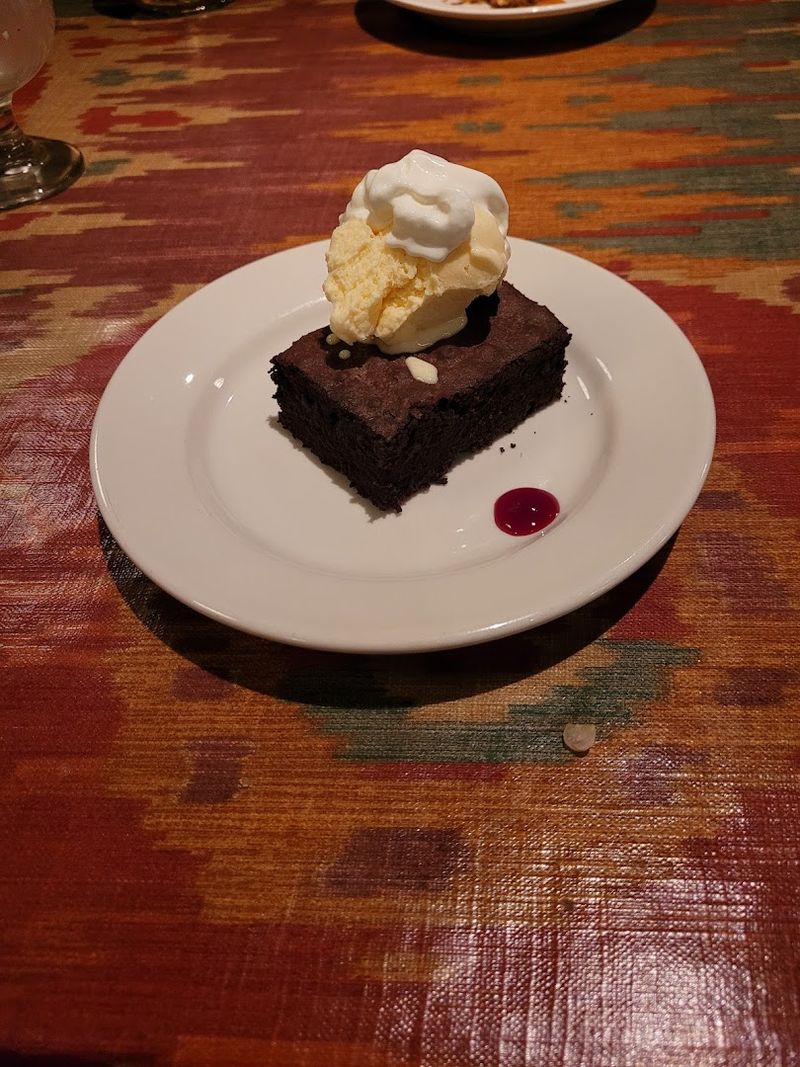
Ethiopian cuisine is not typically associated with elaborate desserts, but Blue Nile has developed a small selection of sweets that have quietly become highlights of the meal in their own right.
The almond cake has developed something of a cult following among regulars. It is the kind of dessert that people describe ordering even when they are already completely full, and the restaurant’s own response to reviews suggests they know exactly how beloved it has become.
Lemon sorbet offers a refreshing, clean finish that works especially well after a meal heavy with warm spices and rich stews. The contrast between the cool, bright sorbet and the deep, earthy flavors of the main dishes is genuinely satisfying.
The chocolate mousse has also drawn enthusiastic praise from diners who did not expect to find it on the menu. For anyone who tends to skip dessert at restaurants, Blue Nile is the kind of place that will change that habit, at least for one evening, and probably for every visit that follows after the first.
The Spiced Ethiopian Tea You Will Want to Take Home
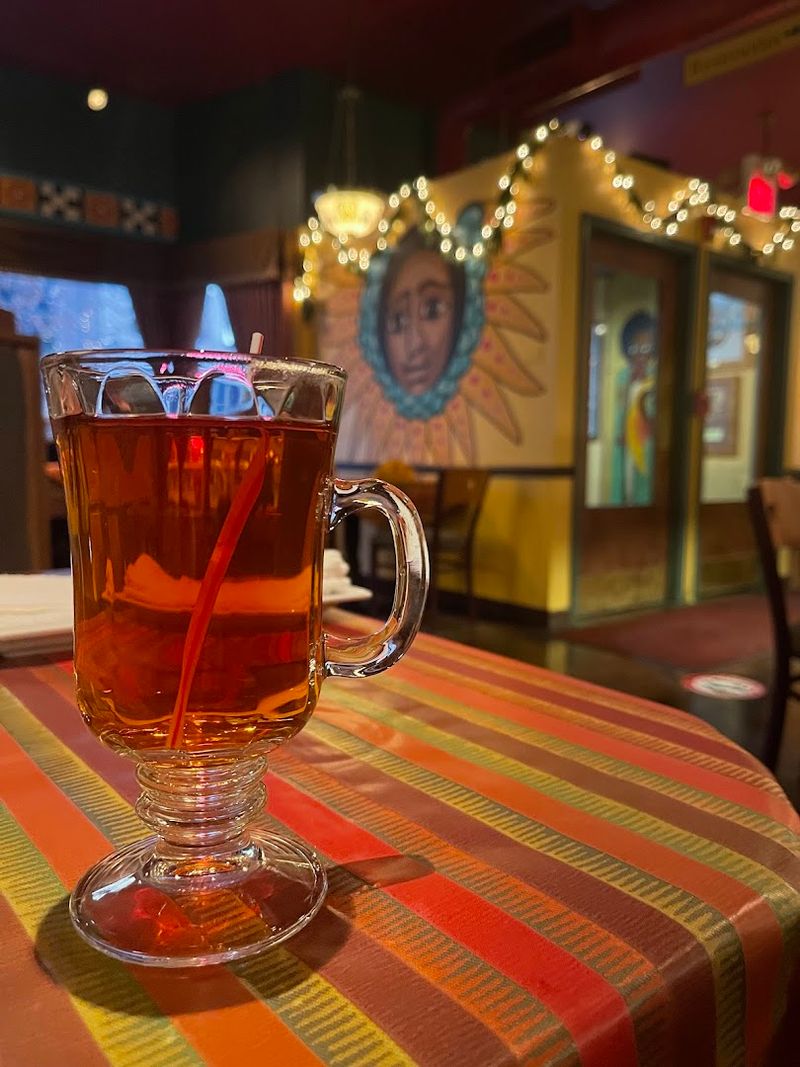
The spiced Ethiopian tea at Blue Nile has developed its own fan base entirely separate from the food, which is saying something given how strong the food is on its own merits.
The tea is naturally sweet and warmly spiced, arriving in small cups that feel almost ceremonial. It is the kind of drink that makes you slow down and actually sit with the end of your meal rather than rushing toward the check.
Several regulars have mentioned ordering it every single visit without fail, and the restaurant sells the loose tea in bulk so guests can take it home and recreate the experience in their own kitchens. That detail alone tells you something about how memorable the tea is.
Ethiopian tea culture is deeply tied to hospitality and conversation, and the way it is served at Blue Nile reflects that tradition accurately. Whether you order it at the start of the meal, at the end, or both, it adds a layer to the dining experience that most restaurants in Ann Arbor simply cannot replicate.
It is genuinely worth ordering every time.
How the Service Works and What to Expect
The service model at Blue Nile is collaborative rather than assigned, meaning multiple staff members may handle different parts of your meal. One person brings water, another takes your order, another delivers the food, and so on throughout the evening.
For some diners, this feels seamlessly coordinated and reflects a team-oriented hospitality approach that mirrors the communal spirit of the food itself. For others who prefer knowing exactly who their server is, it can feel slightly unfamiliar at first.
What consistently comes through in the experience is genuine attentiveness. Servers check in regularly to see which dishes need refilling, the injera keeps coming without you having to ask repeatedly, and the overall pace of the meal is managed with care.
Some staff members wear traditional Ethiopian clothing, which adds an authentic cultural dimension to the experience that goes beyond mere decoration. The restaurant’s team has been praised for warmth and knowledge, particularly when helping first-time guests navigate the menu.
Going in with an open mind about the service style makes the whole experience considerably more enjoyable from start to finish.
Practical Details: Hours, Pricing, and Reservations
Blue Nile operates on an afternoon and evening schedule, which means it is strictly a lunch-free zone for most of the week. Current hours run Tuesday through Thursday from 5 to 9:30 PM, Friday from 3 to 10 PM, Saturday from 4 to 10 PM, and Sunday from 3 to 9 PM.
Monday is a rest day for the whole operation.
The restaurant falls into the mid-range pricing category, with the Vegetarian Feast priced at around $22 per person. Adding meat dishes increases the total, and the gluten-free teff injera comes with a small additional charge per refill.
For two people with tea and a dessert, expect to spend somewhere in the $80 to $100 range before tip.
On the reservation front, it is worth calling ahead, particularly for special occasions or larger groups. The phone number is +1 734-998-4746, and the website at bluenileannarbor.com has additional information.
The restaurant does not take walk-ins on particularly busy nights, so planning ahead is genuinely the smarter approach, especially around holidays when demand spikes considerably higher than usual.
The Kind of Place That Turns First-Timers Into Regulars
There is a particular category of restaurant that people describe not just as a place they like but as a place that belongs to them, and Blue Nile has clearly earned that status for a significant portion of Ann Arbor’s population.
One family has been celebrating birthdays there for 40 consecutive years. Former Michigan residents who have since moved away make a point of stopping in whenever they return to town.
First-timers regularly describe leaving with plans to come back, sometimes within the same week.
The communal dining format plays a real role in this loyalty. Sharing a platter with people you care about, eating with your hands, passing injera back and forth, all of it creates a kind of shared experience that a plate of pasta simply cannot replicate.
The meal becomes a memory rather than just a transaction.
Blue Nile is also the only all-you-can-eat Ethiopian restaurant in the region, a distinction that its most devoted regulars mention with something close to civic pride. After one visit, it becomes very easy to understand exactly why they feel that way about a restaurant that has clearly earned every year of its 35-year run.



