 Unearth The Voyage
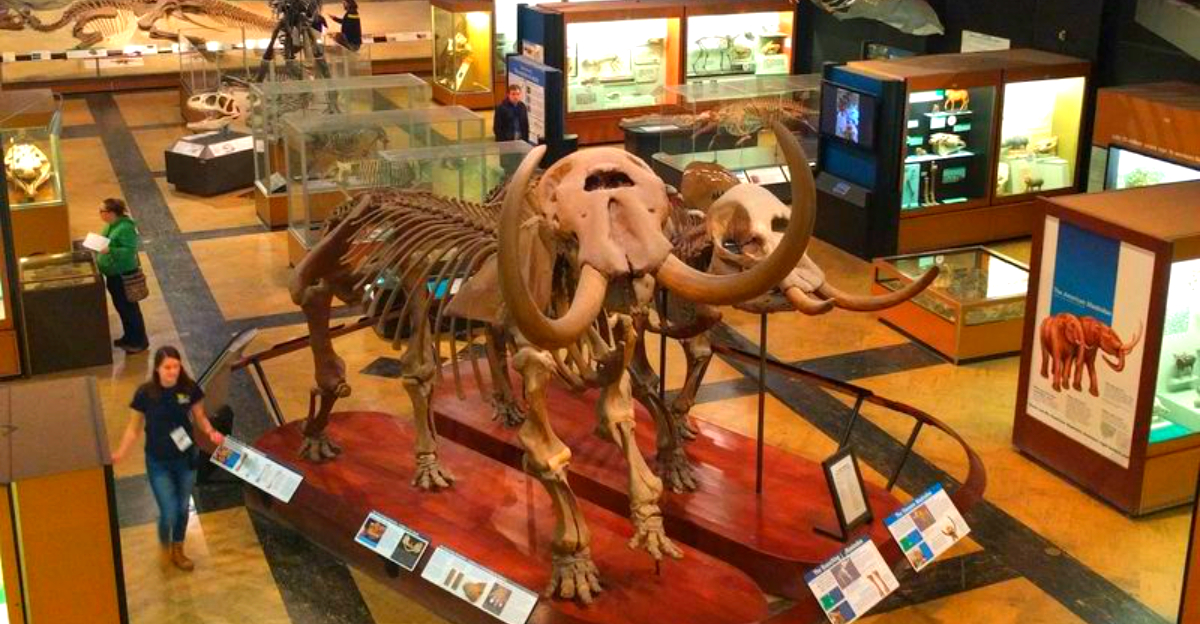
Imagine standing face-to-face with a nearly 20-foot-tall dinosaur skeleton, completely free of charge, in the middle of a working university campus. That is exactly the kind of surprise waiting for you at a natural history museum tucked inside Ann Arbor, Michigan, that most people outside the city have never even heard of.
I stumbled across this place on a slow Tuesday afternoon, expecting a modest collection of dusty bones and faded labels, and walked out two hours later genuinely amazed. From a towering Allosaurus to glittering mineral displays, a working science lab you can actually peek into, and a planetarium showing cosmic films overhead, this spot packs a serious punch without costing you a single dollar at the door.
Whether you are a curious adult, a parent hunting for a rainy-day adventure, or a self-proclaimed dinosaur enthusiast, keep reading because what is inside this building will genuinely surprise you.
Finding the Museum: Address, Campus Location, and What to Expect at Arrival

The University of Michigan Museum of Natural History sits inside the Biological Sciences Building at 1105 N University Ave, Ann Arbor, MI 48109, right in the heart of the U of M campus. Getting there is straightforward, but finding the actual entrance can feel like a small puzzle the first time around.
The building blends into the academic surroundings, so keep your eyes open for the museum signage near the main doors. Nearby parking is available at the Forest Avenue Parking Structure, where rates run about $1.50 per hour, which is reasonable for a university neighborhood.
Once you are inside, a welcome desk greets you immediately, and the staff there are genuinely friendly and helpful. The museum is open Tuesday through Sunday from 10 a.m. to 4 p.m. and is closed on Mondays.
Admission is free, though donation boxes are placed thoughtfully around the space, and even a few dollars goes a long way toward supporting the research happening right inside the building.
The Star of the Show: The Towering Allosaurus Skeleton in the Hall of Evolution
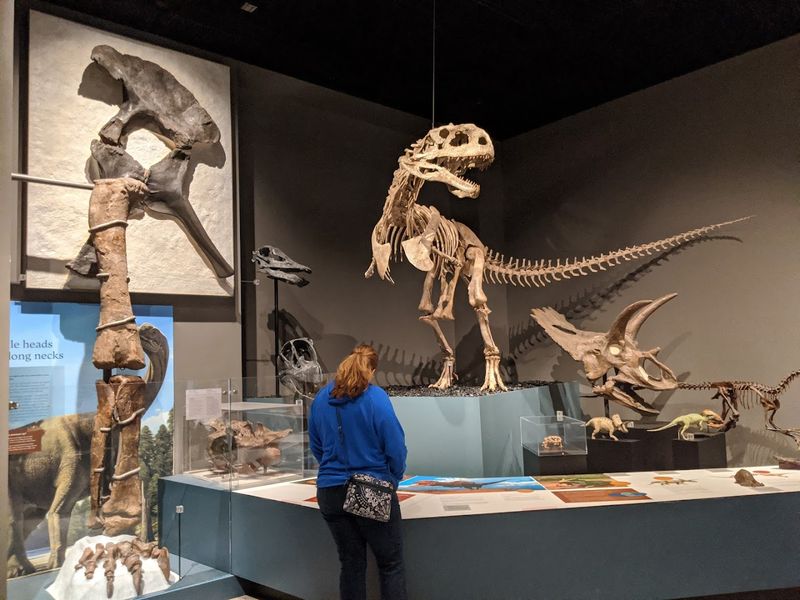
Nothing quite prepares you for the moment you round the corner and come face-to-face with a nearly 20-foot-tall Allosaurus skeleton rising toward the ceiling. The sheer scale of it stops you mid-step, and for a moment, the rest of the room disappears.
The complete Allosaurus is the centerpiece of the Hall of Evolution, and it is surrounded by skeletal remains from 13 other dinosaur species, creating a display that feels both educational and genuinely dramatic. The arrangement gives each fossil room to breathe, so you are never crowded or overwhelmed.
What makes this exhibit stand out is the quality of the presentation. Labels are clear, concise, and written in language that both kids and adults can follow without feeling talked down to.
I found myself reading every single placard, which is not something I usually do. The Majungasaurus display nearby is also remarkably well-preserved and worth a long look before you move on to the next section of the museum.
Touch-Friendly Exhibits That Actually Encourage Hands-On Exploration
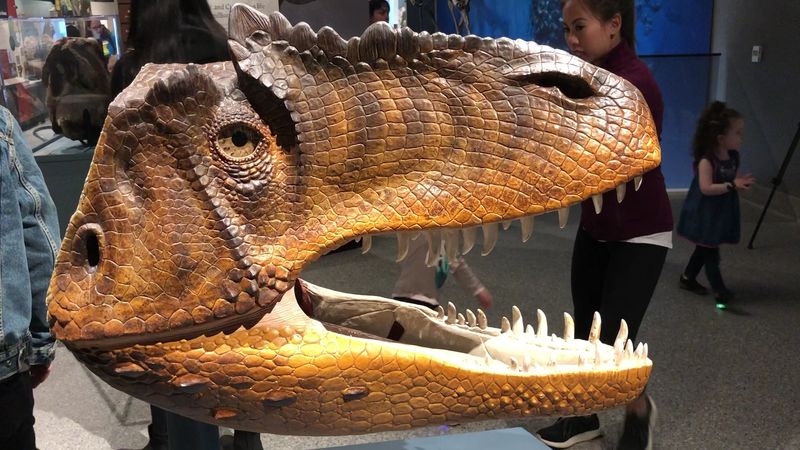
Most museums post “do not touch” signs every few feet, which makes the University of Michigan Museum of Natural History feel refreshingly different. Here, touching is not just allowed in certain spots, it is actively encouraged, and the interactive displays are genuinely well-designed.
Petrified wood sits out in the open, inviting you to feel the grain of a tree that solidified millions of years ago. A dinosaur skull replica is positioned low enough that you can put your head right up to the open jaw, which gives you a surprisingly vivid sense of just how large these creatures really were.
There is also a fingerprint lab where visitors can analyze their own prints using real scientific tools, and a giant cell model that lets you walk inside a recreated cellular structure. Kids go absolutely wild in these sections, but honestly, adults do too.
The hands-on approach turns passive looking into active learning, and that shift makes the whole experience far more memorable than a traditional exhibit layout ever could.
Gems, Crystals, and Minerals That Will Leave You Speechless
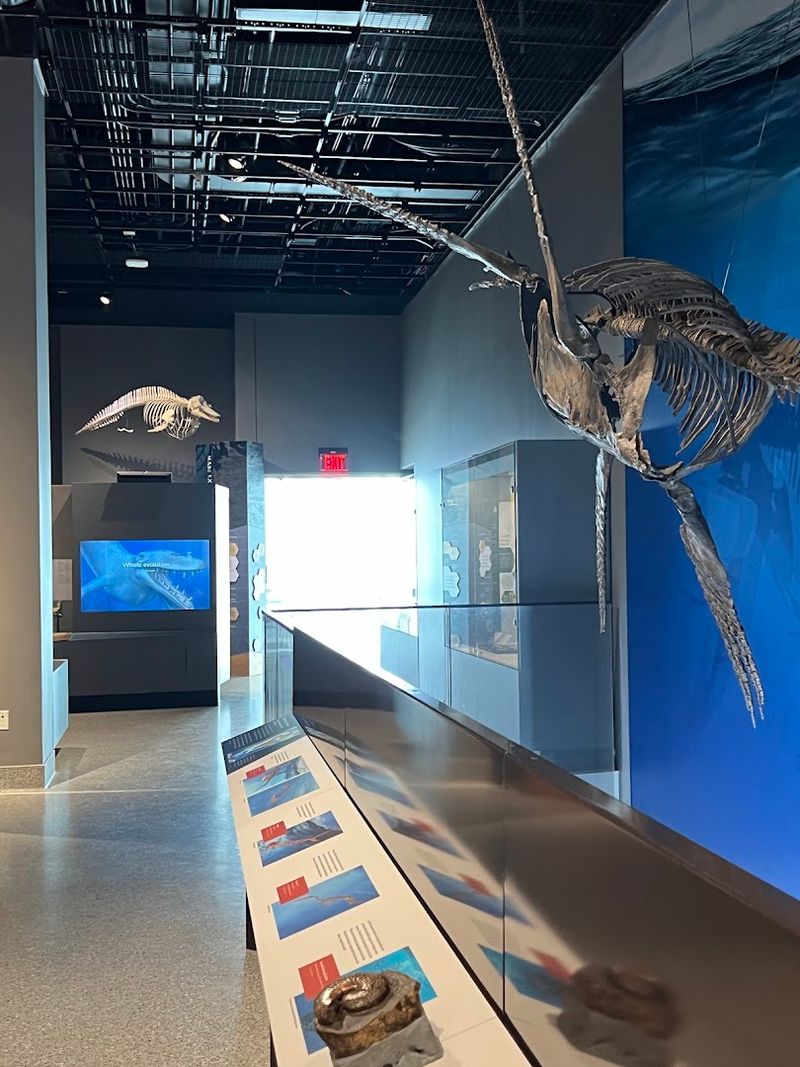
Buried a little deeper inside the museum is a mineral and gem collection that quietly steals the show for many visitors. The display cases are packed with specimens in colors and formations that seem almost too vivid to be real.
Some of the minerals on display are varieties that even seasoned rock enthusiasts might not recognize, which makes browsing the collection feel like a genuine discovery rather than a review of familiar facts. Every label includes the mineral name, origin, and a short explanation of how it formed, keeping the educational thread intact without making the display feel like a textbook.
The crystals in particular draw long looks from visitors of all ages. Huge geodes, translucent formations, and deep-colored stones fill the cases from top to bottom.
I spent more time in this section than I expected to, circling back twice just to look at specimens I had passed too quickly the first time. If geology was never your subject in school, this collection might just change your mind about that.
Watching Real Scientists Work Through the Lab Windows
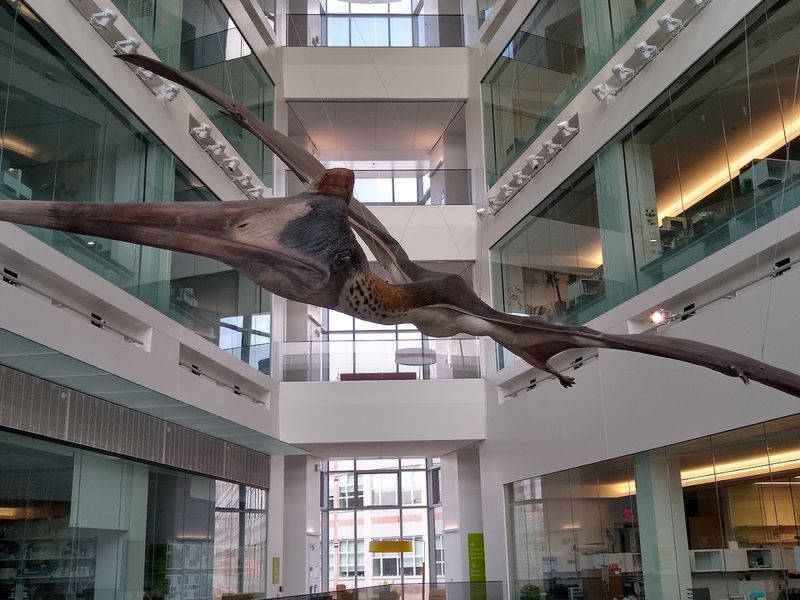
One of the most unexpectedly fascinating features of this museum is the opportunity to watch actual scientists at work through large windows that look directly into functioning research labs. When a light above the window is on, it signals that the researcher inside is available to chat, and that detail alone elevates the whole experience.
During my visit, a researcher was carefully working with specimens at a lab bench, and a small group of visitors had gathered to watch and ask questions. The scientist was patient, enthusiastic, and clearly happy to explain what they were doing in plain language.
This feature connects the museum to its university roots in a way that feels authentic rather than staged. You are not looking at a recreation of science; you are watching real research happen in real time.
It is a reminder that the museum is not just a place to look at old bones but an active institution where new discoveries are still being made. That context adds a layer of meaning to everything else you see on the floor.
The Exploring Michigan Exhibit and What It Reveals About the Great Lakes State
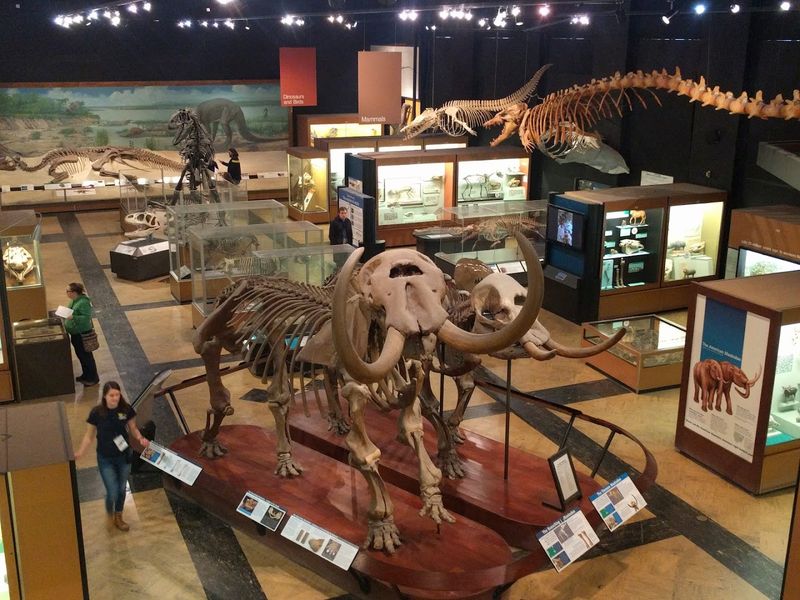
Michigan has a surprisingly rich natural history, and the Exploring Michigan exhibit does a thorough job of laying it all out in one well-organized space. From glacial geology to regional wildlife, the exhibit covers the state’s natural story with both depth and clarity.
One highlight is the mammoth fossil discovered in Chelsea, Michigan, in 2015, which is displayed with detailed context about how and where it was found. Seeing a fossil from your own state, or a state you are visiting, gives the exhibit a personal quality that broader global collections sometimes lack.
The DNA and genetics section within this exhibit also covers how scientists study changes in plants and animals over time, presented in a way that feels current and relevant rather than purely historical. Interactive panels let you explore specific topics at your own pace.
I walked in expecting a quick pass-through and ended up reading nearly everything on display. For anyone curious about what lies beneath Michigan’s surface, this exhibit is well worth a slow, careful look.
The Planetarium and Dome Theater: A Cosmic Add-On Worth Knowing About
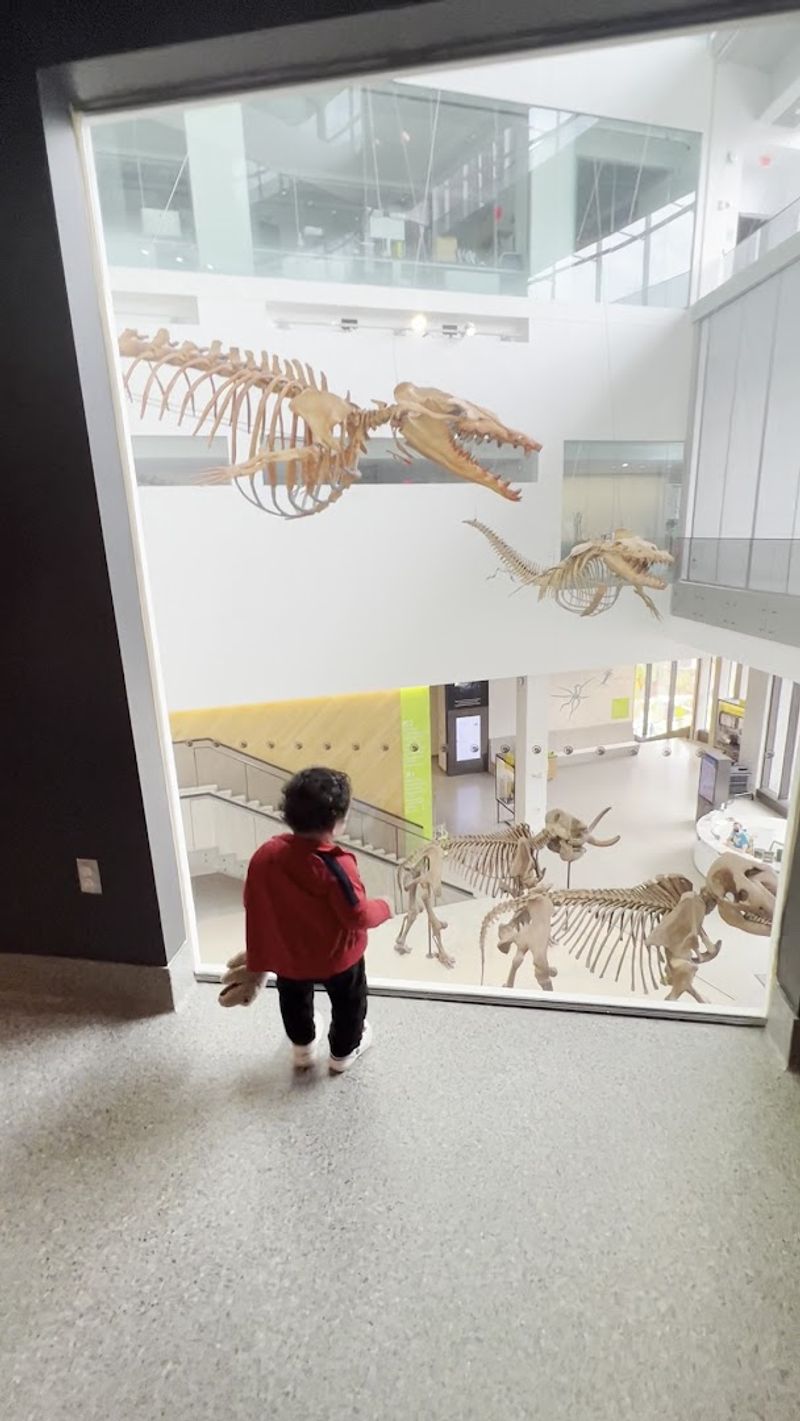
Beyond the main museum floor, the University of Michigan Museum of Natural History also houses a Planetarium and Dome Theater, which offers a separate ticketed experience on top of the free general admission. Showtimes vary, so checking the museum’s website before your visit is a smart move.
The planetarium adds a genuinely different dimension to the visit, taking the prehistoric and geological themes of the main floor and extending them outward into space. The dome format creates an immersive viewing environment that feels quite different from a standard screen presentation.
A practical tip worth mentioning: confirm which show is scheduled before purchasing your ticket, since the film selection rotates and the titles vary in subject matter. Some visitors have arrived expecting a specific program and found a different one running, which can be a mild disappointment after a long drive.
That said, the dome itself is a fun and atmospheric space, and the experience is worth adding to your visit if the timing works out and the show lines up with your interests.
Free Admission and What That Actually Means for Your Visit
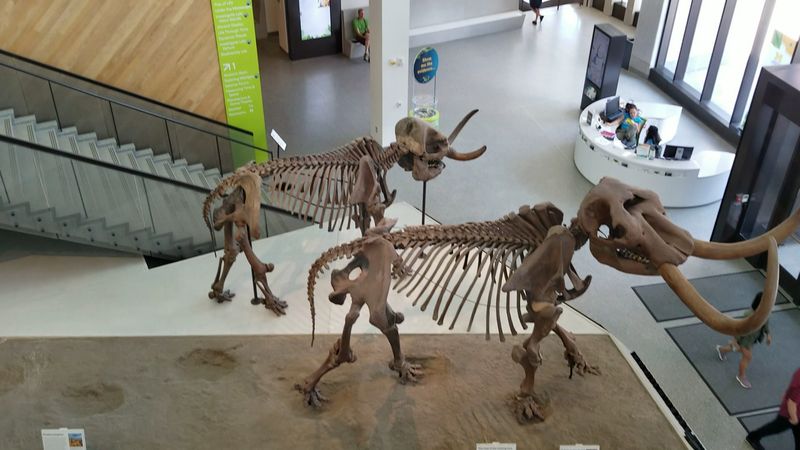
Free admission at a museum of this caliber is genuinely rare, and it changes the entire dynamic of the visit in ways that are easy to overlook at first. When there is no ticket price weighing on your afternoon, you move differently through the space.
You linger longer, circle back, and explore corners you might have skipped if you were watching the clock against a paid entry.
Donations are warmly encouraged, and small boxes are placed throughout the museum. Contributing a few dollars feels natural rather than pressured, especially after you have spent an hour or two realizing just how much thought and research has gone into every exhibit.
The free model also makes the museum accessible to families, students, and anyone passing through Ann Arbor on a budget. Parents with toddlers, college students with a free afternoon, and road-trippers making an unplanned stop all fit comfortably into this space.
The lack of a financial barrier is not just a perk; it is a genuine reflection of the museum’s commitment to public education and community access.
Accessibility, Hours, and Smart Tips for Planning Your Visit

The museum takes accessibility seriously, with ramps, elevators, and accessible restrooms available throughout the building. Wheelchairs are available to borrow on a first-come, first-served basis at the welcome desk, which is a thoughtful detail that makes the space genuinely welcoming for visitors with mobility needs.
The museum is open Tuesday through Sunday, 10 a.m. to 4 p.m., and is closed on Mondays. A visit typically takes between one and two hours, depending on how thoroughly you explore each section.
Arriving closer to opening time gives you more space to move around, especially on weekends when families tend to fill the interactive areas.
Parking can be a bit confusing on a busy campus, but the Forest Avenue Parking Structure is the most reliable option nearby. Once you have parked, look for museum signage to guide you through the building’s maze of corridors to the main entrance.
For questions before your visit, the museum can be reached at 734-764-0478 or by email at [email protected].
Why This Museum Belongs on Your Ann Arbor Itinerary
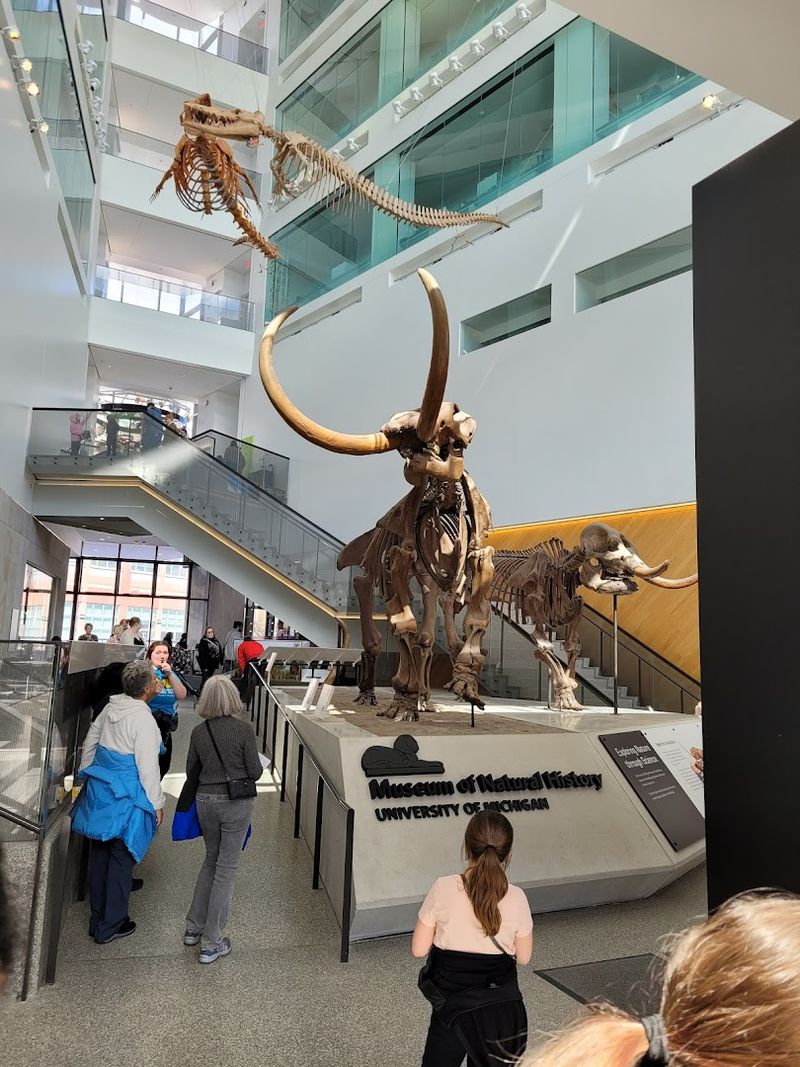
Ann Arbor has plenty of things competing for your attention, from the university’s architecture to the lively restaurant scene along State Street. But the Museum of Natural History earns a spot on any itinerary because it offers something that most paid attractions simply cannot match: genuine substance at zero cost.
The combination of towering dinosaur fossils, glittering minerals, hands-on labs, live science demonstrations, and a working planetarium creates a layered experience that holds up for kids, adults, and everyone in between. The museum’s 4.7-star rating across thousands of reviews is not an accident; it reflects a consistent quality of curation and a staff that clearly cares about the visitor experience.
My honest take after spending an afternoon here is that this place deserves far more attention than it typically gets outside of Michigan. It is compact enough to cover in a single visit without feeling rushed, deep enough to reward curiosity at every turn, and free enough to make the decision to stop in an absolute no-brainer.
Go, and bring someone who thinks they are not a museum person.



