 Unearth The Voyage
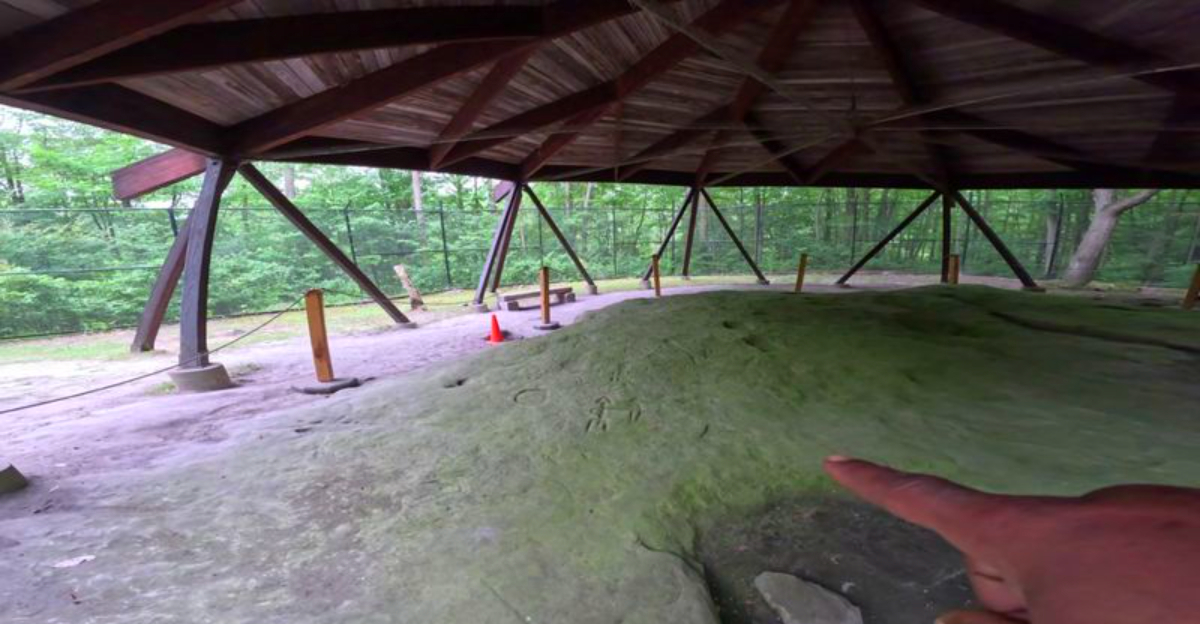
You could walk right over them and never realize what you are standing on. In Michigan’s Thumb region, there is a quiet, wooded site where ancient carvings etched into sandstone have survived for nearly a thousand years.
At first glance, it looks like an ordinary stretch of rock, but the moment you notice the markings, everything changes. Look closer, and you will see symbols left behind by Ojibwa and other Anishinabek peoples, offering a glimpse into a time when this land was used for hunting, gathering, and spiritual practices.
The carvings are not random. They tell stories, mark beliefs, and reflect a deep connection to the natural world that still feels powerful today.
It is the largest known collection of Native American petroglyphs in Michigan, yet it remains surprisingly under the radar, tucked inside a peaceful park along a winding river that many travelers pass without a second thought. And once you understand what you are looking at, the experience shifts from a simple walk in the woods to something far more meaningful.
Here is what those carvings represent, how they were discovered, and what you should know before planning your visit.
The Location and Address of the Park
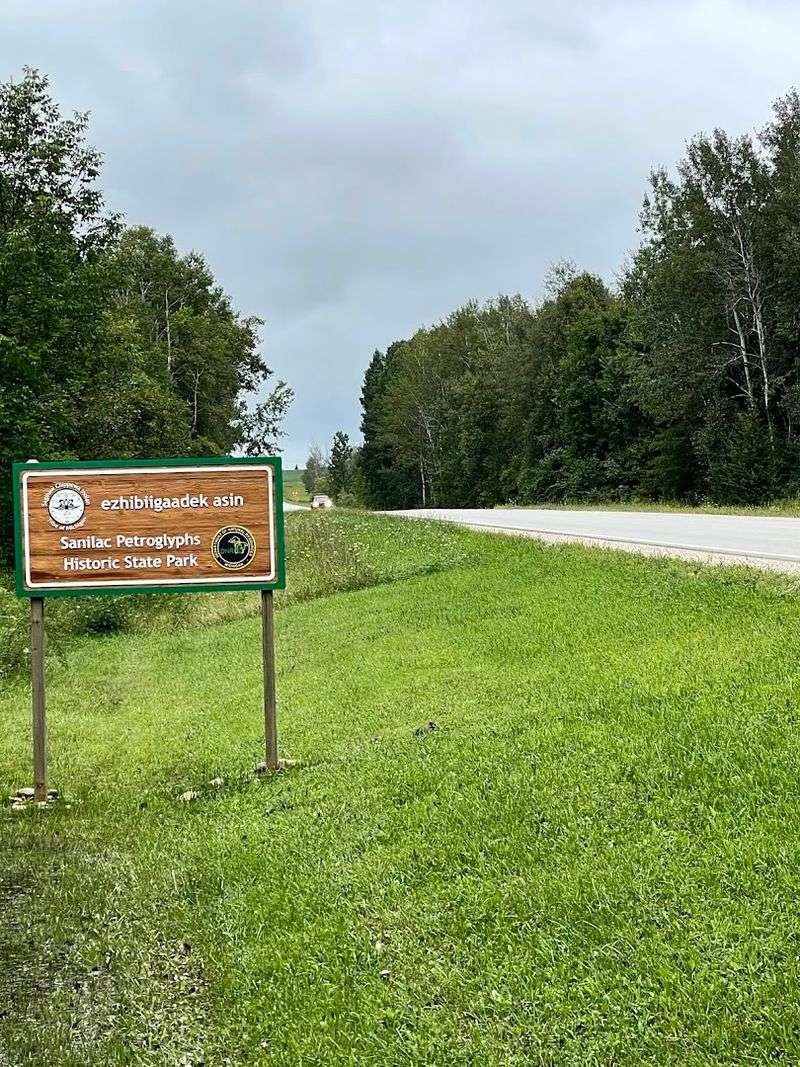
A modest gravel parking lot and a simple sign on Germania Road mark the entrance to one of Michigan’s most remarkable historic sites. Sanilac Petroglyphs Historic State Park sits at 8251 Germania Rd, Cass City, MI 48726, tucked into the forested landscape of Michigan’s Thumb region.
The park is co-managed by the Michigan Department of Natural Resources and the Saginaw Chippewa Nation, a partnership that reflects the deep cultural importance of the site to indigenous communities. Most visitors pass through Cass City without knowing this treasure exists just a short drive away.
The area is peaceful and rural, surrounded by farmland and second-growth forest that gives the whole experience a sense of quiet discovery. You can reach the park by phone at +1 989-856-4411 or find more details at the official Michigan History Center website.
Plan your arrival during open hours to make the most of your time here.
How the Petroglyphs Were Discovered
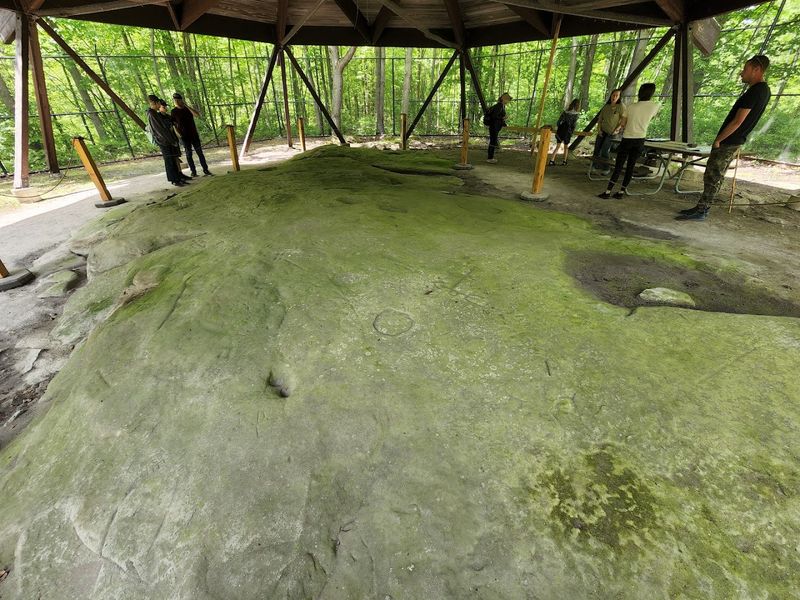
Before 1881, these carvings had been hidden for centuries beneath a thick canopy of forest, completely unknown to settlers in the region. Then a massive wildfire tore through the area, burning away the vegetation and exposing a flat sandstone outcrop covered in mysterious symbols.
Local residents who came across the exposed rock were stunned by what they found. The images carved into the surface were clearly deliberate and detailed, depicting figures, animals, and abstract shapes that had survived undisturbed for hundreds of years beneath the forest floor.
The discovery sparked immediate curiosity among historians and archaeologists, and the site quickly gained recognition as something genuinely rare. It is a reminder that history has a way of revealing itself when least expected, sometimes through destruction and sometimes through sheer luck.
The fire that seemed like a catastrophe ended up being the reason this irreplaceable piece of indigenous heritage was found at all.
Who Created the Carvings and When
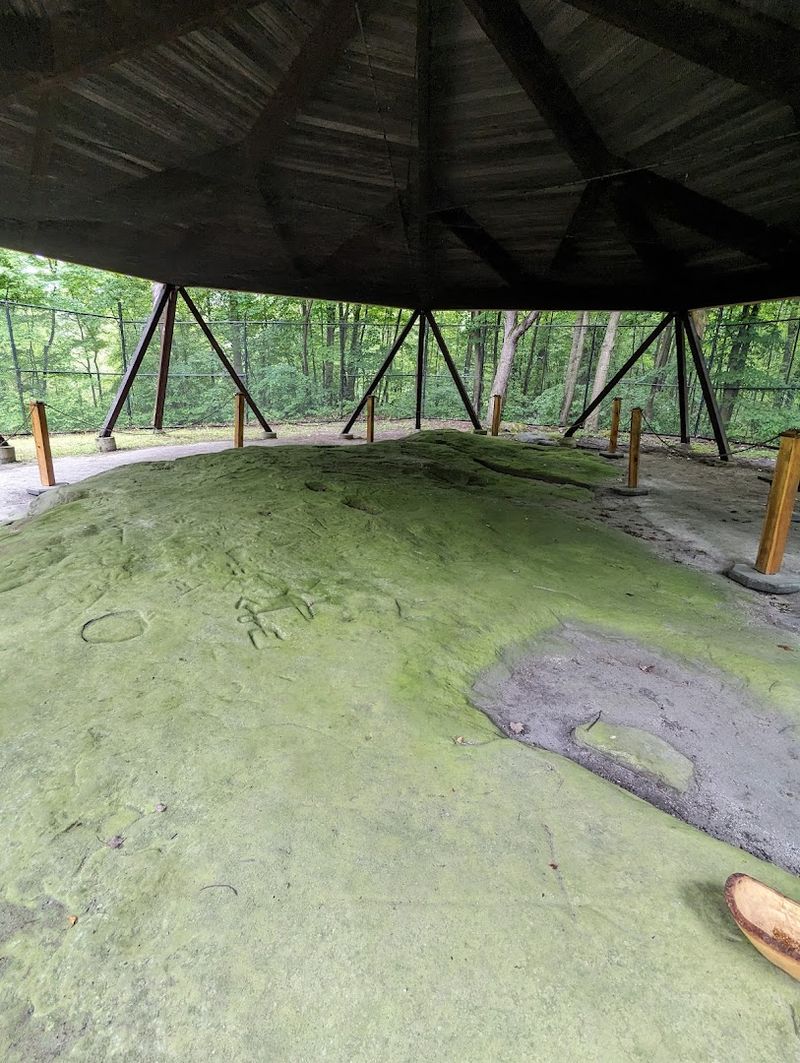
Researchers estimate the petroglyphs were created somewhere between 300 and 1,400 years ago, which puts their origins anywhere from the early medieval period to more recent pre-European contact times. That is a wide range, and it reflects just how difficult it is to date rock carvings with precision.
The carvings are most often attributed to the Hopewell culture or the Chippewa, also known as the Ojibwa, who have long inhabited the Great Lakes region. The Saginaw Chippewa Nation considers this site deeply sacred and plays an active role in its preservation and interpretation today.
The people who made these carvings used stone tools to chip and scrape designs into the relatively soft sandstone surface, a painstaking process that required both skill and intention. Each symbol carries meaning rooted in spiritual belief, daily life, and the natural world.
Knowing that real human hands shaped these images centuries ago makes standing beside them feel genuinely humbling.
What the Symbols Actually Depict
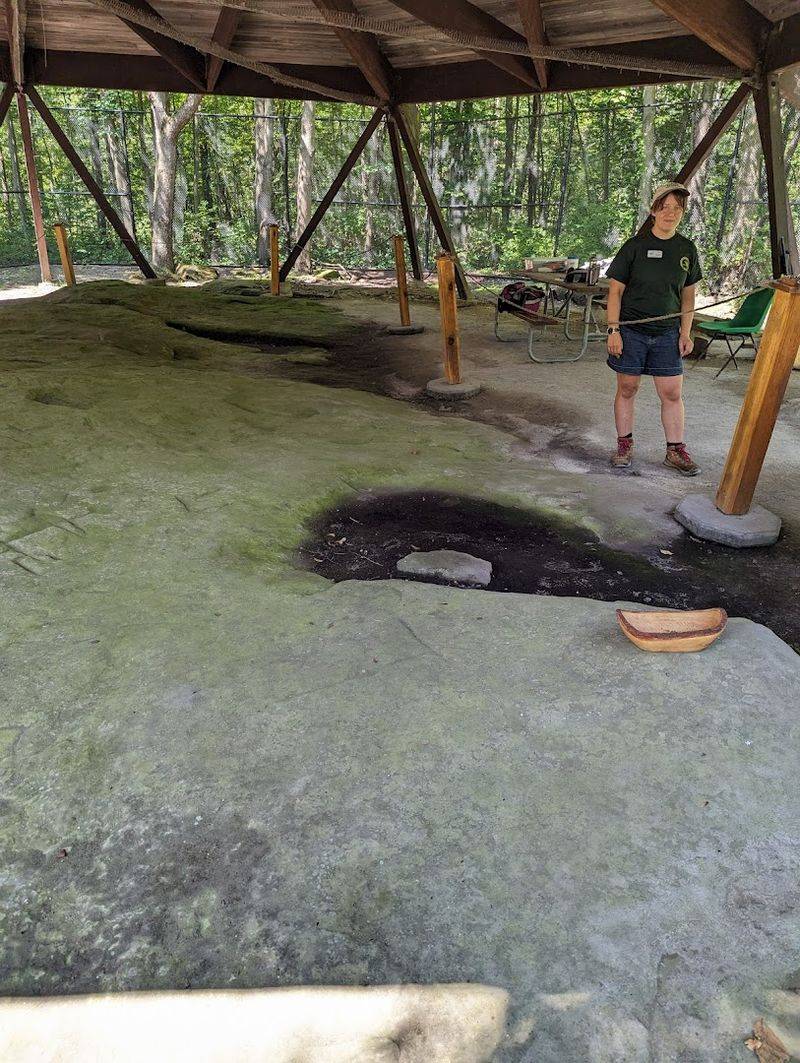
The carvings at this site are not random scratches. They include recognizable images of animals such as deer and birds, human figures in various poses, and abstract designs that likely held spiritual or ceremonial significance to the people who created them.
One of the most discussed images shows what appears to be a large bird with outstretched wings, believed by some researchers to represent the Thunderbird, a powerful spirit figure in Anishinabek tradition. Other carvings seem to document hunting scenes or celestial observations, though interpreting their exact meaning is a careful and ongoing conversation between archaeologists and tribal knowledge keepers.
The park guides are knowledgeable and enthusiastic, and they do an excellent job of walking visitors through what each image might represent without oversimplifying or making claims that go beyond the evidence. Listening to their explanations adds real depth to what you see.
The carvings stop being just shapes and start feeling like a genuine form of communication across time.
The Protective Enclosure and Viewing Experience
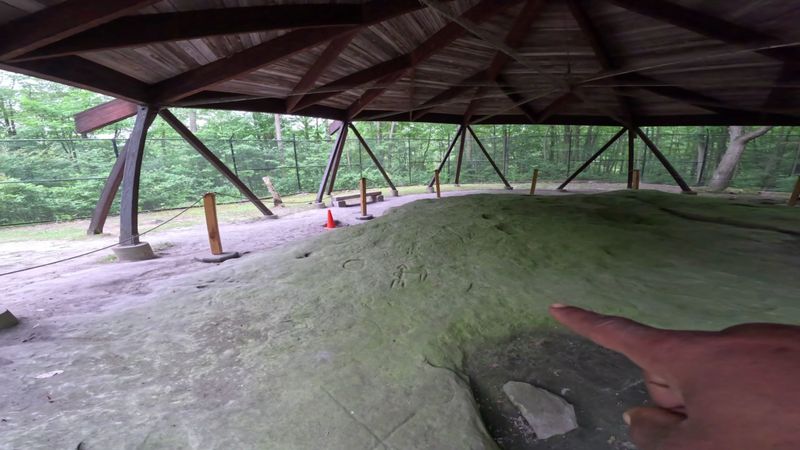
The petroglyphs are protected by a roofed enclosure that shields them from rain, snow, and direct sunlight, all of which can accelerate the natural weathering of sandstone. A low fence surrounds the carvings to prevent accidental contact, but the site is designed so visitors can view the images from all sides.
Park guides are stationed near the enclosure during open hours and provide free interpretive tours that bring the carvings to life with context and stories. The experience is surprisingly intimate for a historic site, with no crowds jostling for position or loud audio guides drowning out the natural sounds of the surrounding forest.
The petroglyphs are open to the public Wednesday through Sunday, from 10 a.m. to 5 p.m., between Memorial Day and Labor Day. Outside those hours, the enclosure is closed and covered for protection.
Timing your visit within that window ensures you get the full experience, including access to the knowledgeable staff who make the whole visit click.
The One-Mile Interpretive Hiking Trail
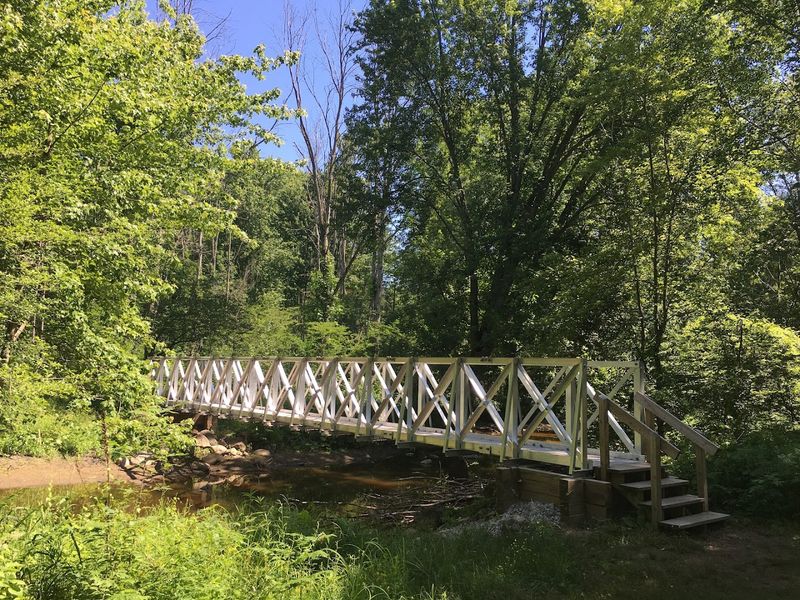
Beyond the petroglyphs themselves, the park offers a one-mile self-guided interpretive trail that loops through the surrounding woodland and crosses a branch of the Little Cass River via small wooden bridges. The trail is dotted with informational markers that provide context about the natural environment and its relationship to indigenous life in the region.
The path winds through a canopy of mature trees, and the forest floor is lush with ferns and wildflowers depending on the season. Tree roots and rocks cross the trail in places, so sturdy footwear is a smart choice, especially after rain when the ground can get slippery near the river crossings.
The whole loop takes about an hour at a relaxed pace, making it a satisfying addition to the petroglyph visit rather than a separate excursion. Wildlife is active along the trail, and deer sightings are common enough that bringing a camera or binoculars is well worth the effort.
The river itself is close enough to touch in spots, which adds a lovely sensory dimension to the walk.
The Cultural Significance to the Saginaw Chippewa Nation
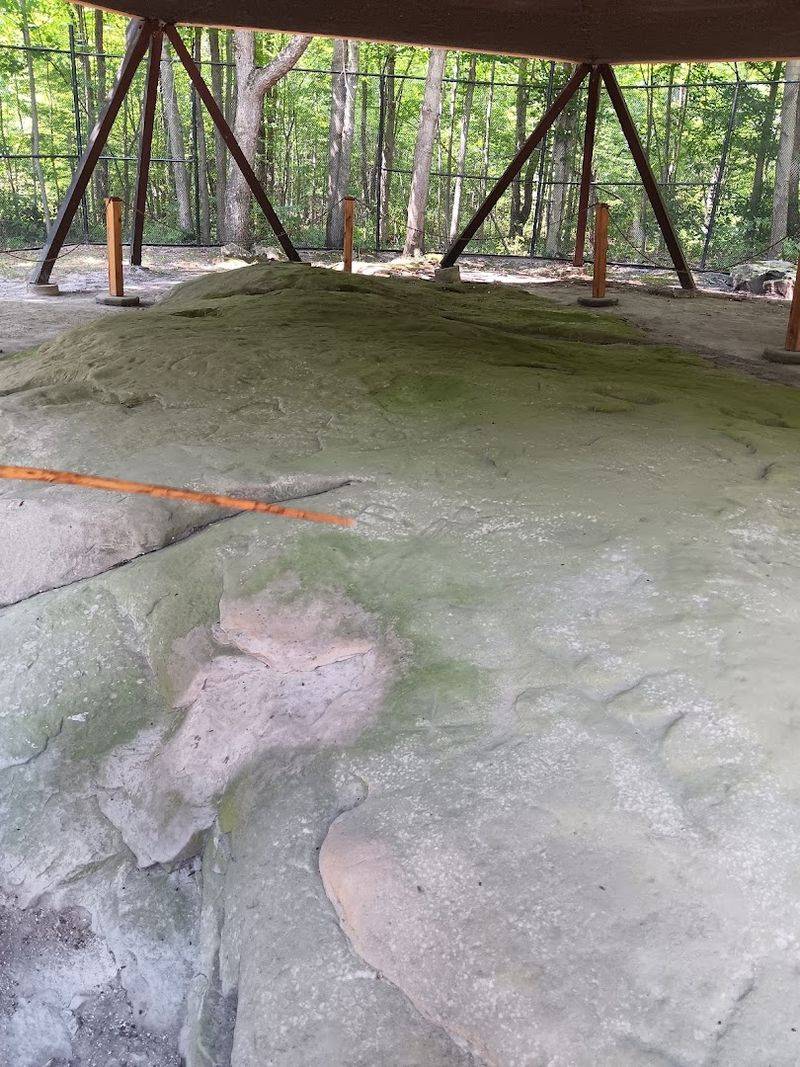
For the Saginaw Chippewa Nation, this is not simply an outdoor museum or a tourist attraction. The petroglyphs are a sacred site, a place where ancestors communicated their beliefs, experiences, and spiritual connections through images carved into the earth itself.
Tribal members still visit the site to leave offerings and observe traditions connected to the land and the carvings. The ongoing relationship between the Saginaw Chippewa Nation and this site is a living example of how indigenous heritage can be honored rather than just preserved behind glass.
The co-management arrangement with the Michigan Department of Natural Resources ensures that tribal perspectives shape how the site is interpreted and protected. Visitors who approach the petroglyphs with that understanding tend to come away with a much richer experience than those who treat it as just another roadside stop.
Respecting the site means recognizing that for some people, this is not history at all but a deeply personal and ongoing connection to place.
The 2017 Vandalism Incident and Preservation Efforts
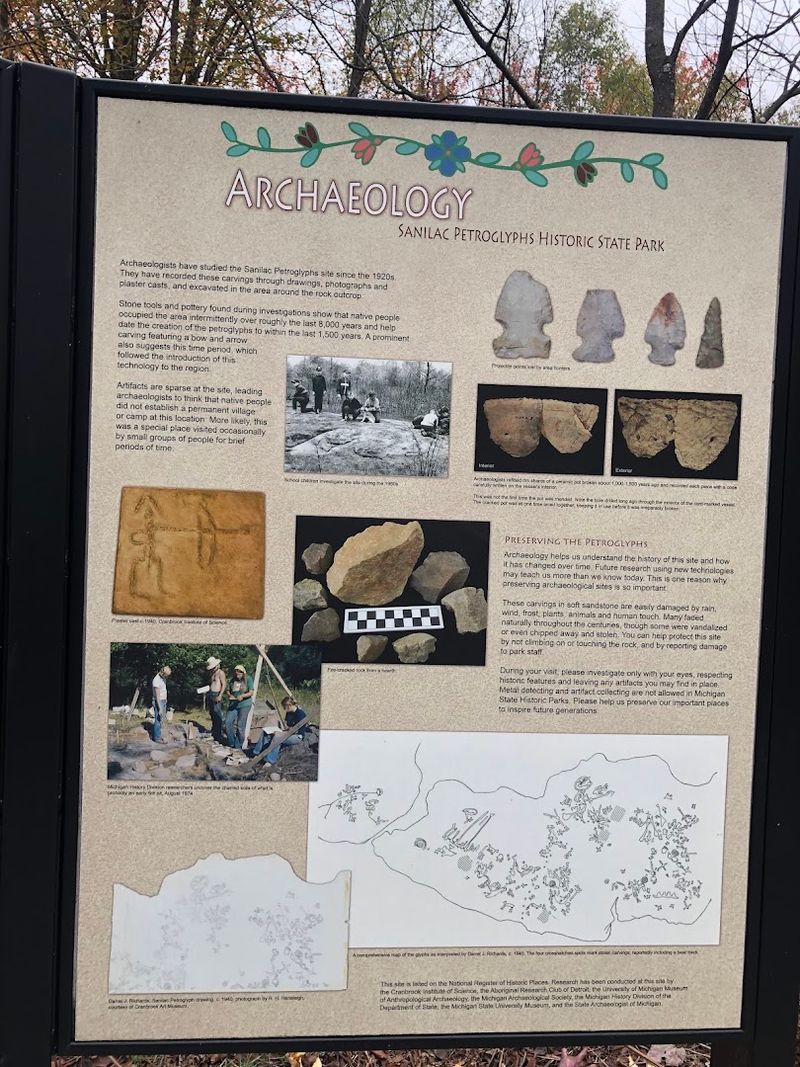
In 2017, the site suffered a deeply troubling act of vandalism when someone carved new images into the ancient sandstone, permanently altering a surface that had survived centuries of natural weathering. The incident drew national attention and sparked renewed conversations about how to better protect irreplaceable cultural sites.
The Michigan Department of Natural Resources and the Saginaw Chippewa Nation responded by reinforcing protective measures around the petroglyphs and increasing awareness about the site’s significance. The enclosure and fencing that visitors see today reflect years of effort to balance public access with genuine preservation.
Conservationists continue to monitor the condition of the carvings, which are subject to natural erosion as well as human impact. Some researchers have noted that the images may become harder to read over the coming decades as the sandstone continues to weather.
That fact alone makes visiting sooner rather than later a genuinely worthwhile consideration, because what is visible today may not always be this clear.
Practical Visitor Tips and Amenities
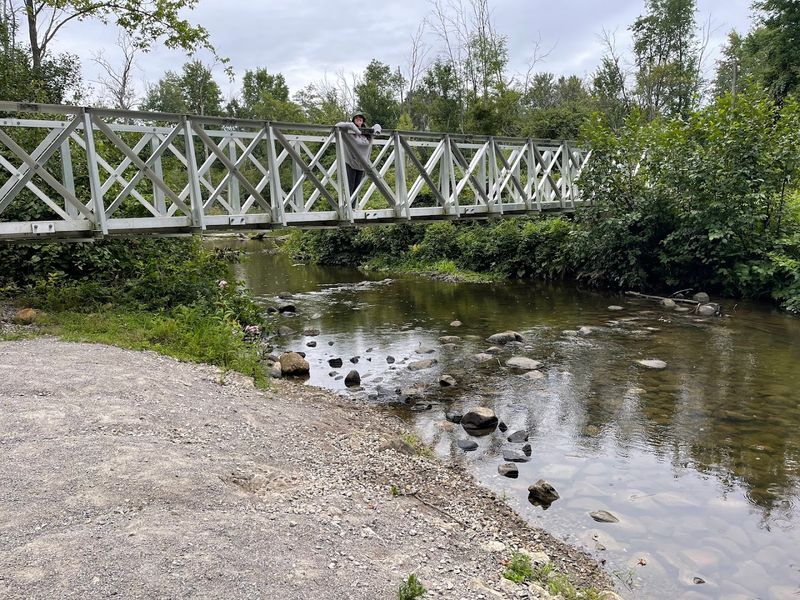
The park is free to enter, which makes it one of the most accessible historic sites in Michigan for families and budget-conscious travelers. Parking is available in a small gravel lot near the entrance, and the facilities include vault toilets and several picnic tables scattered through the wooded area near the trailhead.
There are no playgrounds or concession stands, so pack your own snacks and water before arriving. Bug spray is a genuinely useful item to bring along, especially in early summer when mosquitoes and other insects are active near the river portions of the trail.
The petroglyph enclosure is wheelchair accessible via the short quarter-mile path leading from the parking area, though the full one-mile hiking loop has uneven terrain that may be challenging for some visitors. Arriving early on a weekend gives you the best chance of catching a guided tour without waiting.
The staff are friendly, unhurried, and clearly passionate about sharing the history of this remarkable place with everyone who shows up.
Why This Site Belongs on Every Michigan Bucket List
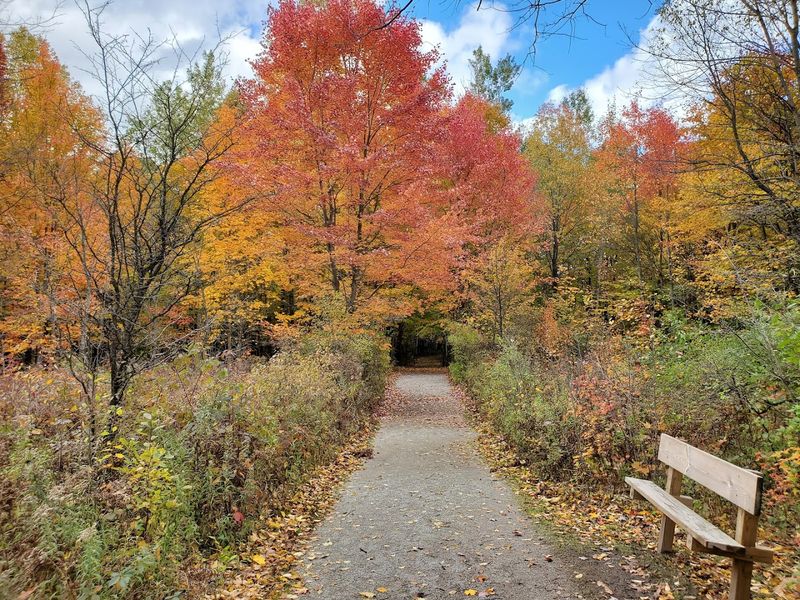
Michigan has no shortage of natural beauty, but very few places in the state offer the combination of outdoor recreation and genuine historical depth that this park delivers in a single visit. The petroglyphs connect visitors to a chapter of human history that predates European contact by centuries, and that context transforms a simple hike into something much more meaningful.
The site holds a 4.5-star rating from hundreds of visitors, and the consistent theme across reviews is that people leave feeling like they discovered something most of the world does not know about. That sense of quiet discovery is rare and worth seeking out.
Whether you are a history enthusiast, a nature lover, or simply someone looking for a road trip detour that delivers more than expected, this park checks every box without requiring a full day or a big budget. Few places in Michigan can honestly claim to offer a thousand years of human story within a single mile of walking trail, but this one absolutely can.



