 Unearth The Voyage

Turn off Range Line Road and the pace changes almost immediately. The St. Joseph River runs alongside the property, and the Welcome Center marks the starting point for exploring the grounds.
Within minutes, it becomes clear that this is a place designed for gradual discovery. Paths curve through gardens and wooded areas, encouraging you to take your time rather than rush from one spot to the next.
If you appreciate destinations that unfold step by step, Fernwood offers a calm, thoughtful experience that lingers long after your visit.
Trailhead Whispers: First Steps Into the Canopy
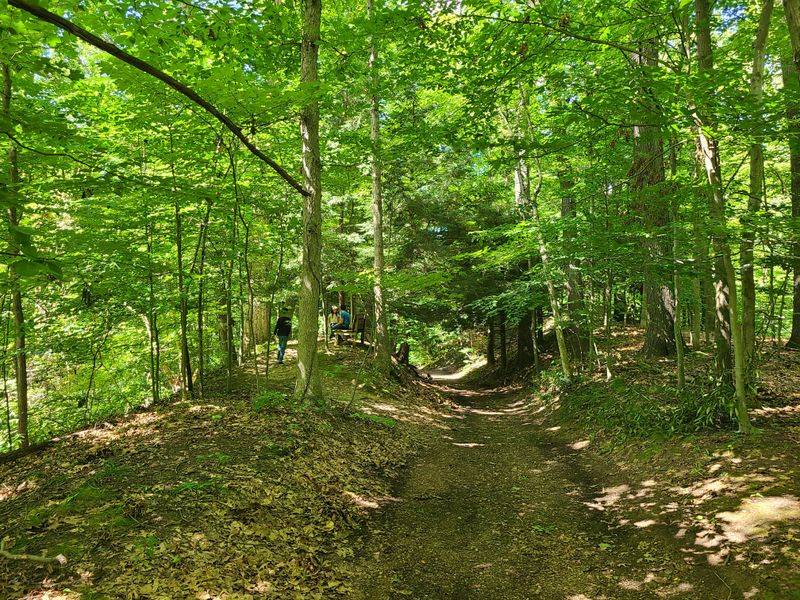
The trail begins as a hush. Gravel gives way to leaf duff, and each step sounds different beneath the oaks and sugar maples.
A red squirrel clacks from a branch, unbothered by your arrival, like locals who have long stopped announcing the good coffee shop.
A wooden post marked River Trail points left, but the breeze pulls right. You catch a fern brushing your calf, cool and damp as a rinsed spoon.
Somewhere downslope, the St. Joseph River slides along the bluff, not loud, just present, a bassline under birdsong and the soft s of wind.
Fernwood teaches by pacing. The first hundred yards are a calibration, a chance to let your shoulders drop and eyes widen.
You begin noticing the way sunlight braids through beech leaves, the scuff of last year’s oak caps, the metallic ping of a distant wind chime near the Visitor Center.
At a bend, you pass a low bench cut from a single plank. It holds the day’s chill the way a stone holds memory.
Sit for a beat, and you will hear the tiny applause of poplar leaves, like the garden acknowledging that yes, you made it, and now the real walk can start.
Sculpture Among Green: Quiet Conversations in Steel and Stone
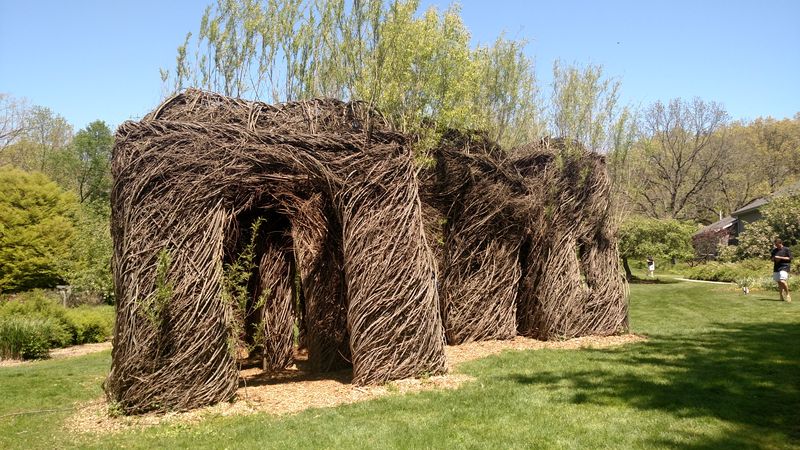
Fernwood tucks art where the plants can finish the sentence. A weathered steel arc leans into prairie switchgrass, and the negative space becomes wind.
On a limestone plinth, a polished form cupps sky, making a passing cloud look like part of the piece.
The plaques keep things factual, but you do not need much guidance. Stand at an angle, and the sculpture clips the horizon like a doorstop holding the day open.
Step left, and a pin oak inserts a shadow line that was never in the artist’s sketch, yet belongs here completely.
What surprises is how soft the materials feel when surrounded by chlorophyll. Steel reads warm when it mirrors late light.
Granite looks almost edible where moss has sugar-coated the edges. You realize the garden has edited each piece with lichen, rain, and patience.
A couple passes with the slow cadence of people who are not trying to finish anything. One mentions a campus museum in South Bend.
You want to disagree kindly because this setting is the point. Art here is not a destination.
It is a conversation partner you keep meeting by accident, saying oh, there you are, and meaning it each time.
The Railway Garden: Miniature Miles With Full-Size Heart
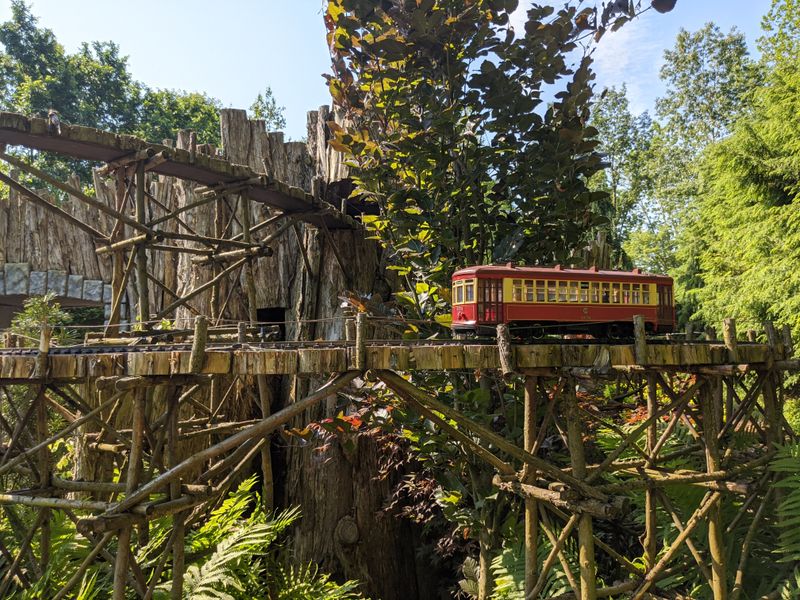
You hear it before you see it, a bright clatter like pocket change in a tumbler. Then a G-scale diesel noses across a cedar trestle, hauling cars lettered for long stories and short trips.
Kids grip the fence rail, knuckles pale, eyes tracking the arc like gulls watching a wake.
The Railway Garden is not cute so much as meticulous. Tiny brick depots wear the right soot.
A station clock shows a believable late, and a thumbprint of water beneath a bridge flashes sky. Dwarf conifers frame the scene, scaled perfectly, making the trains feel consequential.
On weekends, a volunteer in a faded cap tweaks switches with a practiced wrist. He tells you the curves need daily brushing because pine needles are giants at this scale.
You start noticing how hosta leaves become shade sails, how gravel becomes boulders, how the world recalibrates by ratio.
There is a moment when the engine hums into a tunnel and the sound drops, then blooms again on exit. That tiny absence is the hook.
It turns watching into waiting, and waiting into wanting one more loop. Step back and you will find parents timing departures with phones, not for content, but to catch the smile that arrives exactly two seconds after the train does.
River Overlook: Where The St. Joseph Knows Your Name
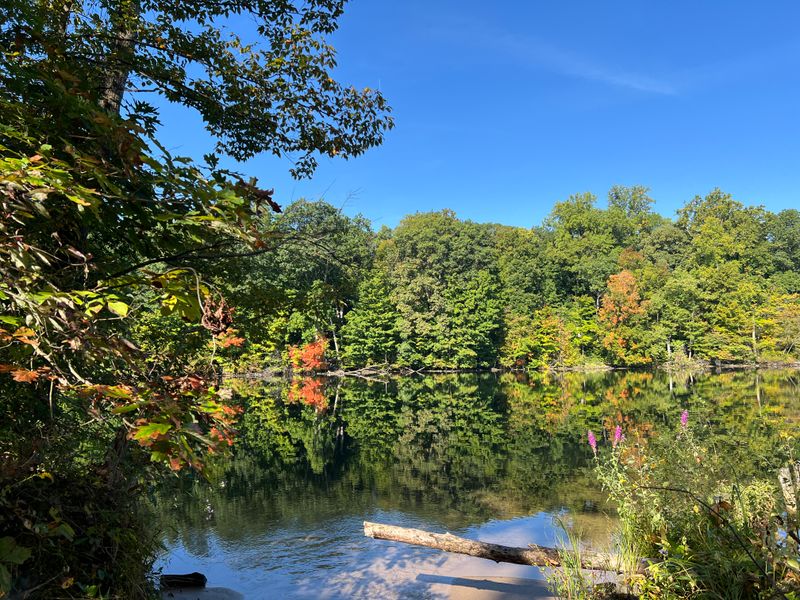
The overlook is a rectangle of pause cantilevered above the St. Joseph. Boards flex a whisper underfoot, and the railing smells like sun-warmed cedar.
Down below, the river does its practiced shoulder roll around a snag, quiet muscle, no drama.
You lean in and pick out layers. Midges tumble in a silver cloud, then unzip.
A kingfisher strafes upstream, teal and urgent, skimming a seam where fast water knots with slow. Across the way, the far bank lifts into a stacked palette of cottonwood, elm, and whatever the wind planted last spring.
This is where time gets elastic. Ten minutes feel like one good breath.
The view does not change much, but your attention does. Tiny ellipses form in the current and vanish, making you think about everything that seems fixed until it slides slightly and is not.
A laminated sign mentions the river’s role in regional trade a century back, barges and log drives, the human impulse to ask water to carry load and story. You tuck that away and return to what is here: the click of a grasshopper vaulting from the railing, the way your hands remember the grain of the wood, the quiet promise to return when snow prints the surface into a page you can read.
Four-Season Conservatory: Heat, Humidity, and A Sudden Green Rush
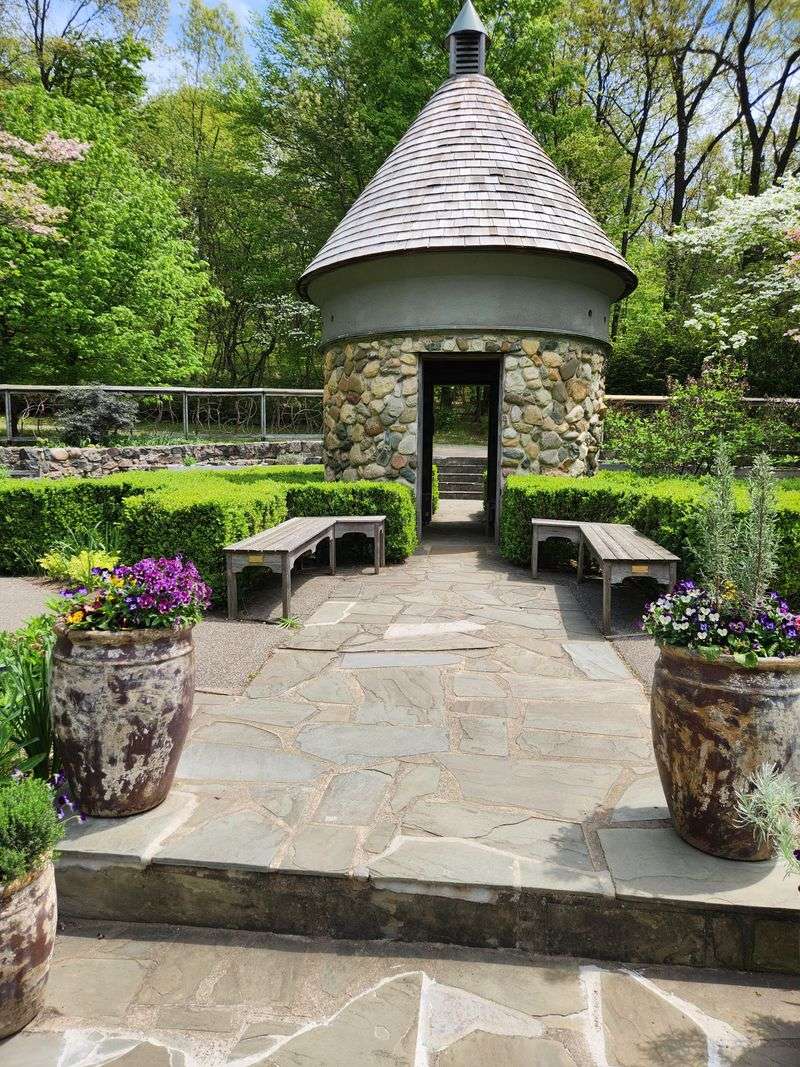
Open the conservatory door in January and your glasses fog like a magic trick. Air sits heavy with loam and citrus, the smell of life compressed.
Philodendron leaves shine like lacquered shields, and orchids hover in sherbet colors, indifferent to Midwest weather outside.
Mist threads from a hidden nozzle, catching light in a way that makes each droplet look staged. You trail a fingertip along a rubber tree leaf and feel the waxy resilience.
Somewhere a frog speaks once and then retires, satisfied. The paths are narrow, making eye contact easy, nods exchanged between strangers who have found the same greenhouse moment.
Look up and you will see cables like taut vines holding sky panes. Condensation races in vertical streams, clearing small windows that re-fog in seconds.
It becomes a rhythm that slows you, a metronome for breathing. The metal benches warm to body temperature, and sitting turns into lingering without anyone needing to explain.
Winter carries more visitors here, according to staff who watch the door counts jump when the lake-effect chill lands. You understand immediately.
This room is a portal and a practical kindness, a way to borrow a different climate for ten minutes. Step back outside, and the cold slaps bright but less rude, like a friend who knows just when to stop the joke.
Prairie Restoration: Where Wind Writes In Tallgrass
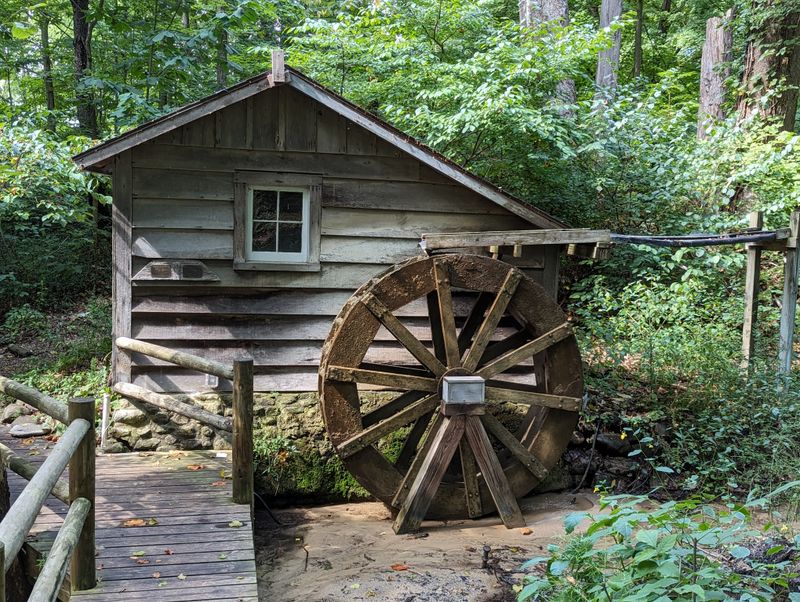
The prairie breathes in paragraphs. Big bluestem triforks like a peace sign held high, and Indian grass leans with the kind of posture that makes wind visible.
Goldfinches tilt from cone to cone, yellow punctuation against purple coneflower heads.
Follow the mowed ribbon and your calves will collect seeds like confetti. The air smells faintly of warm hay and something peppery when the bergamot is on.
A monarch hangs from a milkweed leaf like a folded ticket, paid and waiting for departure. You pause to hear the dry rattle of seed pods, a sound that reads as calendar.
Interpretive panels do the helpful work: prescribed burns, root depths measured in feet, the immigrant histories of plants that hitchhiked on wagon wheels. Numbers make it real without crowding the senses.
You hold an image of roots as deep as a story whispered three generations down.
Later, when you pass a lawn on the drive home, it feels suddenly two-dimensional. The prairie has stretched your eye to notice layers you missed at shorter lengths.
In September light, every grass blade signs its name with a shadow. You leave with a burr or two on your socks, a small tax happily paid to the nation of tallgrass.
Quiet Rooms of Shade: Fern Dell and The Cooling Hour
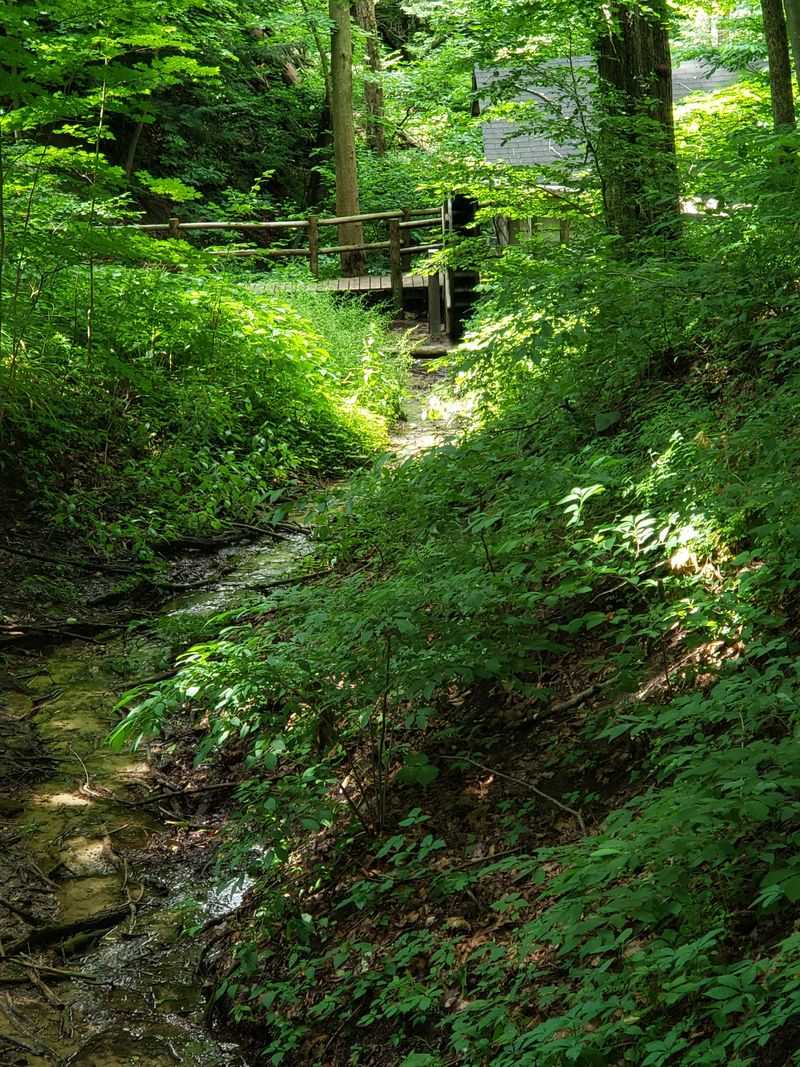
The temperature drops five degrees when the path slips into the fern dell. Water threads through stones, not a creek so much as a thought spoken softly.
Sword ferns splay like open hands, and the air tastes mineral, clean as a rinsed glass.
A footbridge arcs a polite curve, just enough for a single step’s worth of drama. Your shoes scrape damp wood and leave dark prints that fade as fast as a sigh.
Overhead, hemlock tips trail like tassels, and a wren performs a solo made of commas.
You do not talk here, not because silence is required, but because your voice would sound expensive. The garden does the speaking with textures: ribbed fronds, the velvet of moss, the ribcage clack of beech nuts underfoot.
Even the sunlight arrives in lace, patterned by leaves into moving doilies.
There is a bench you could miss if you hurry. Sit, and you will notice steam rising from your shoulders if the day was hot.
This is recovery, a human cooldown built from chlorophyll and patience. When you stand again, the path out feels brighter, as if the eyes learned a new shutter speed.
Wada Pavilion and Japanese Garden: Edges, Reflections, Restraint
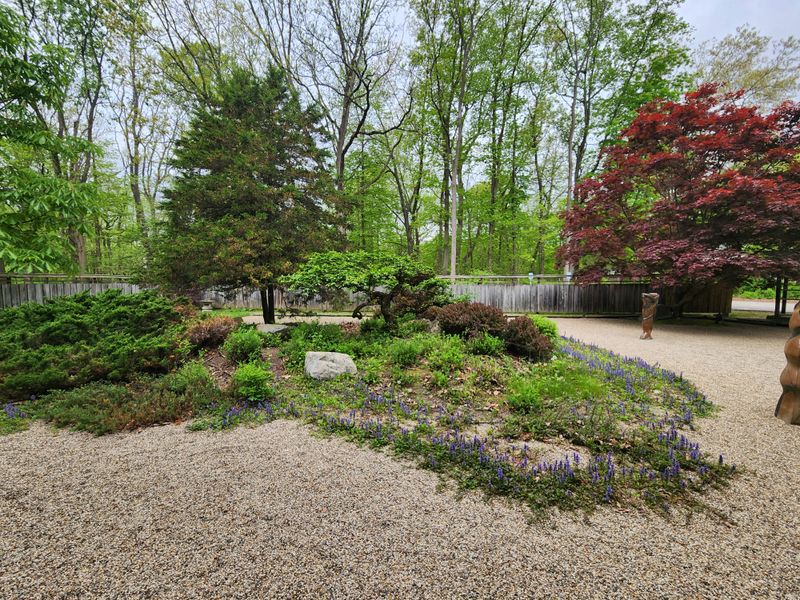
The Wada Pavilion sits low and certain beside a narrow pond. Gravel has been raked into tides that will hold their shape until the next breeze edits them.
A stone lantern keeps its small watch while a maple rehearses autumn at the edges, red sparking through green.
You watch your own reflection bend across the pond’s surface and remember how water makes better mirrors than glass. Koi drift like careful punctuation, commas and em dashes turned into muscle.
The pavilion’s wood smells faintly of rain even when it is dry, a stored weather.
Here, the garden lowers its voice and your attention obediently leans in. You learn to count silence between frog clicks.
You notice how a single well-placed rock can hold the weight of a view. Minimal does not mean less.
It means the right amount, revealed.
A volunteer once said this corner is where impatient people finally find their brakes. You believe it after three minutes of nothing you can post and everything you can feel.
When the wind lifts, maple leaves skate across the water, and the pattern is so briefly perfect you almost clap, then do not, because restraint is the point.
Practical Magic: Hours, Paths, and Small Moves That Change Everything
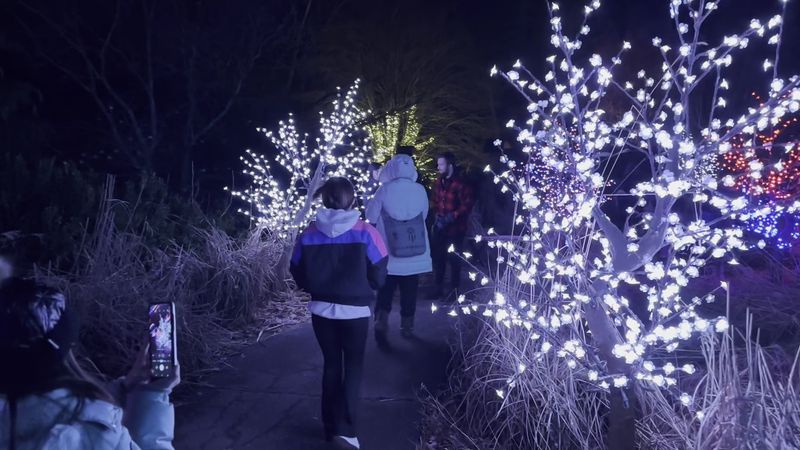
Start early if you can. Doors open at 11 AM most days here, with Monday closed, and an hour can turn crowded when the Railway Garden draws families.
Parking is simple, but the best first move is to pocket a map and choose one loop rather than try to swipe the whole place in a pass.
Shoes matter more than outfits. Paths mix gravel, mulch, and a few wood steps near the river bluff.
In wet weather, the fern dell politely steals traction, so keep your stride honest. If you have small kids, reverse the order: trains first, snack second, shade third.
That sequence buys you longer calm.
Memberships pay back fast if you live within an hour. Check the events calendar for workshops and plant sales that sell out because locals know value.
Review counts keep climbing for a reason, and staff say weekends in peak leaf can feel brisk. Bring water and a pocket notebook.
You will want to write down plant names you swear you will remember and will not.
Last tip: pause on any bench that faces nothing obvious. Fernwood hides some of its best angles in the in-betweens.
Sit for two minutes and let movement come to you. That small move changes everything.



