 Unearth The Voyage
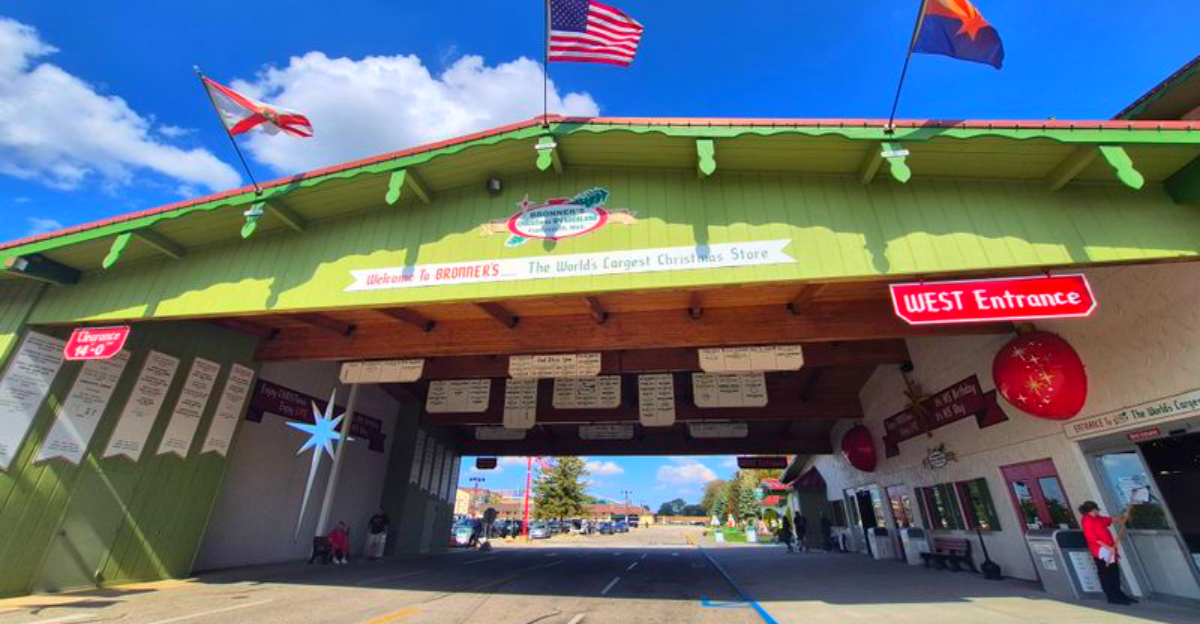
You do not need a calendar reminder to know it is always the holiday season at this massive Christmas destination in Frankenmuth. Spread across 27 acres, the property operates year-round and draws visitors from across Michigan and beyond.
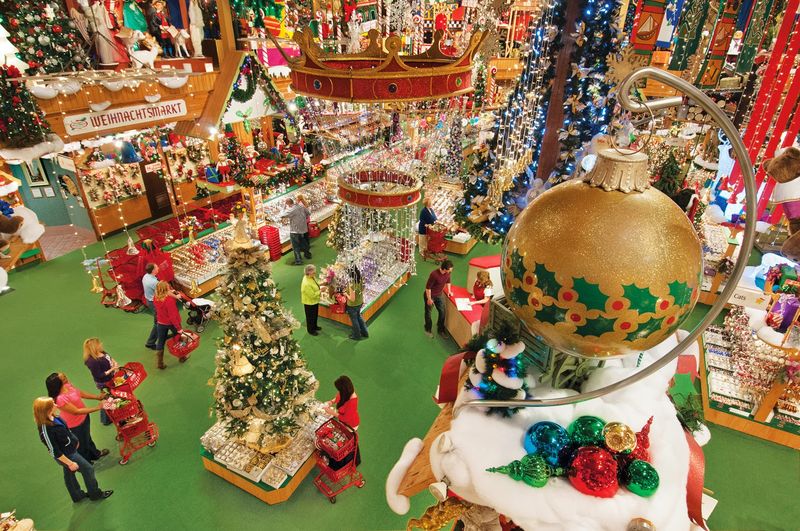
Inside, the scale is what stands out first. Long aisles, organized themes, and thousands of ornaments make it feel more like a holiday warehouse than a seasonal pop-up shop.
But what makes the experience memorable is not just the size. It is the thoughtful details, the personalized ornaments, and the traditions families build by returning year after year.
If you are planning a visit, it helps to know where to look and what makes this place more than just a stop for decorations.
Arriving On Christmas Lane
You turn onto Christmas Lane and the name stops feeling cute and starts feeling literal. The road is rimmed with low, glowing arches, and the building ahead looks like a cheerful fortress trimmed in red and white.
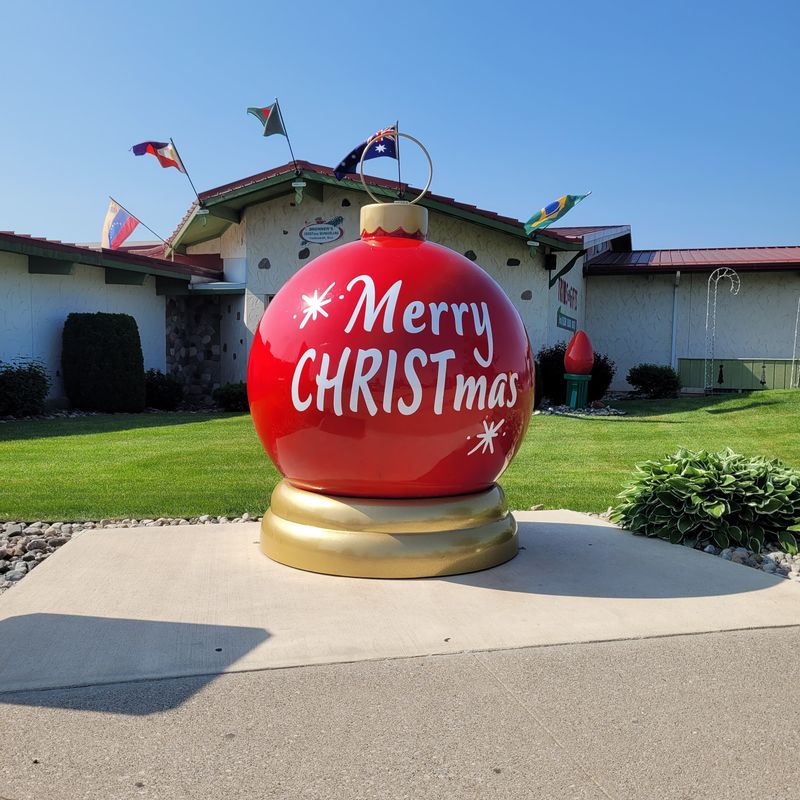
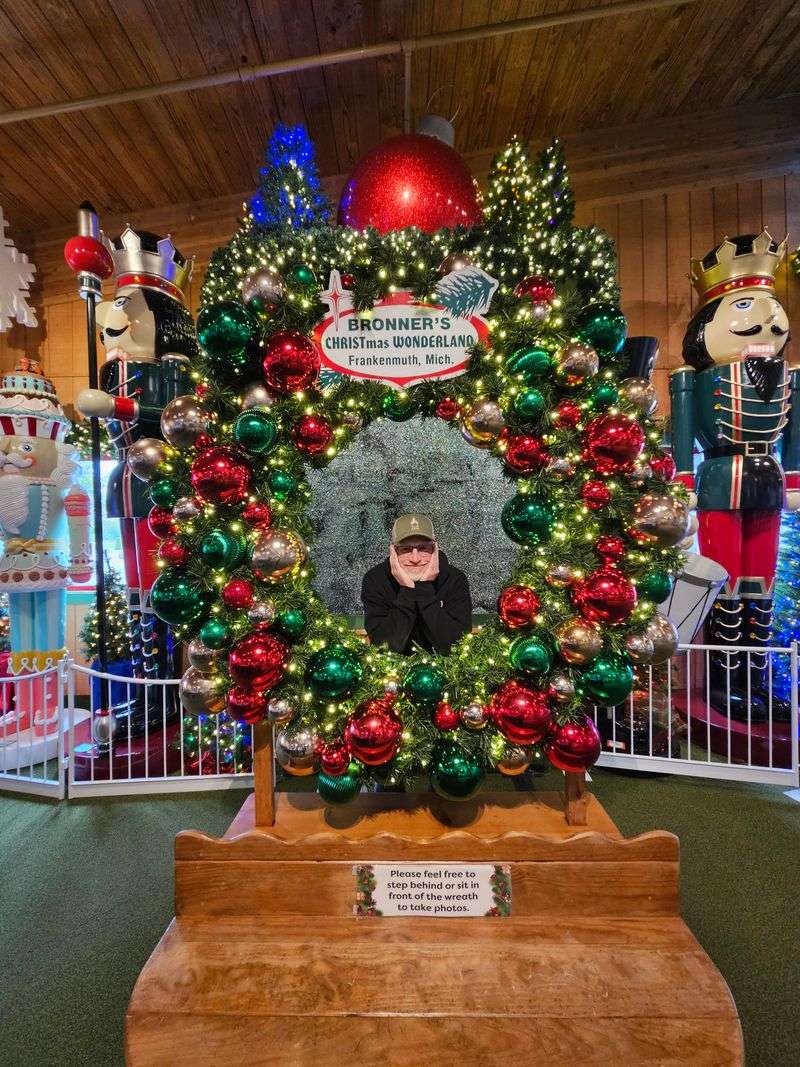
Park near the giant ornaments in the lot and listen: distant sleigh bells from a looping track, the thrum of conversation, a kid gasping at a twelve-foot nutcracker.
Inside the vestibule, warm air folds around you, carrying cinnamon sugar and that clean scent of new packaging. A paper map waits by the door and you should take it, even if maps feel fussy, because this place sprawls like a small airport.
Overhead, a model train clicks along a suspended rail, rounding a bend above the checkouts, metal wheels whispering.
A greeter mentions hours, 361 days open, and points you toward trees, villages, personalization. You notice shoppers cradling boxes like bread loaves, edges taped, handwriting neat.
The lighting is bright but not harsh, the kind that makes glitter look wet. First instinct is to sprint ahead.
Better to breathe, choose a direction, and let the store unfold like a long song.
Ornament Aisles That Feel Endless
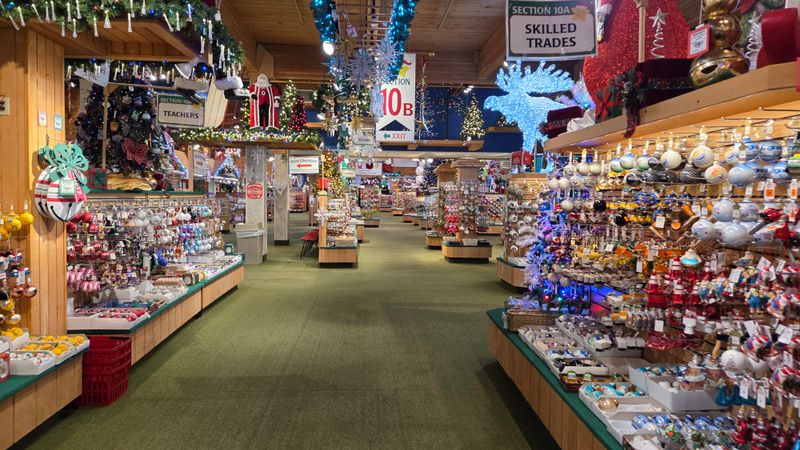
The ornament aisles run so long your footsteps set a rhythm. Themes shift every few yards: travel, pets, professions, a shelf of tiny violins with strings so fine you instinctively hush your voice.
Glass catches light and throws back hundreds of small suns, each tag crisp with a SKU and a price that nudges your inner budget manager.
Reach for a baseball ornament and feel the paint ridges under your thumb. Next to it, a scuba diver with a glossy mask stares back, flippers suspended mid-kick.
A couple debates firefighter helmet versus paramedic badge, quietly, like the ornament might overhear and take offense.
Here is the secret: move slowly and look at the backs. Bronner’s tucks surprises there, tiny inscriptions and color variants that the front-facing hooks hide.
Staff glide in with restock carts, bubble wrap whispering as they hang more. When you decide, a red-shirted employee slips your pick into a white box, tissue paper crinkling like frost.
The box has room for a future story.
Personalization While You Wait
You queue at the personalization counter and the air changes, fainter on the cinnamon, sharper with acrylic. Names are everywhere, drying on racks, ink shining before it settles.
The artists work with a calm tempo, wrists steady, paint pens ticking softly against ceramic and glass.
Someone ahead asks for a long hyphenated last name, and the letterer tests spacing on a scrap tag, measuring with their eye. You slide your ornament forward, say the year, maybe add a small heart.
They repeat it back without fuss, then start, first stroke smooth, no hesitation.
While the paint cures, you linger and read the in-house notes about preferred fonts and cure times. An employee reminds you not to stack boxes while enamel sets.
There is a low satisfaction when your name appears, exact and centered, transformed from purchase to keepsake. You leave with your small white carton, pen scent fading, knowing future Decembers will remember this counter by touch alone.
Village Displays And Quiet Worlds
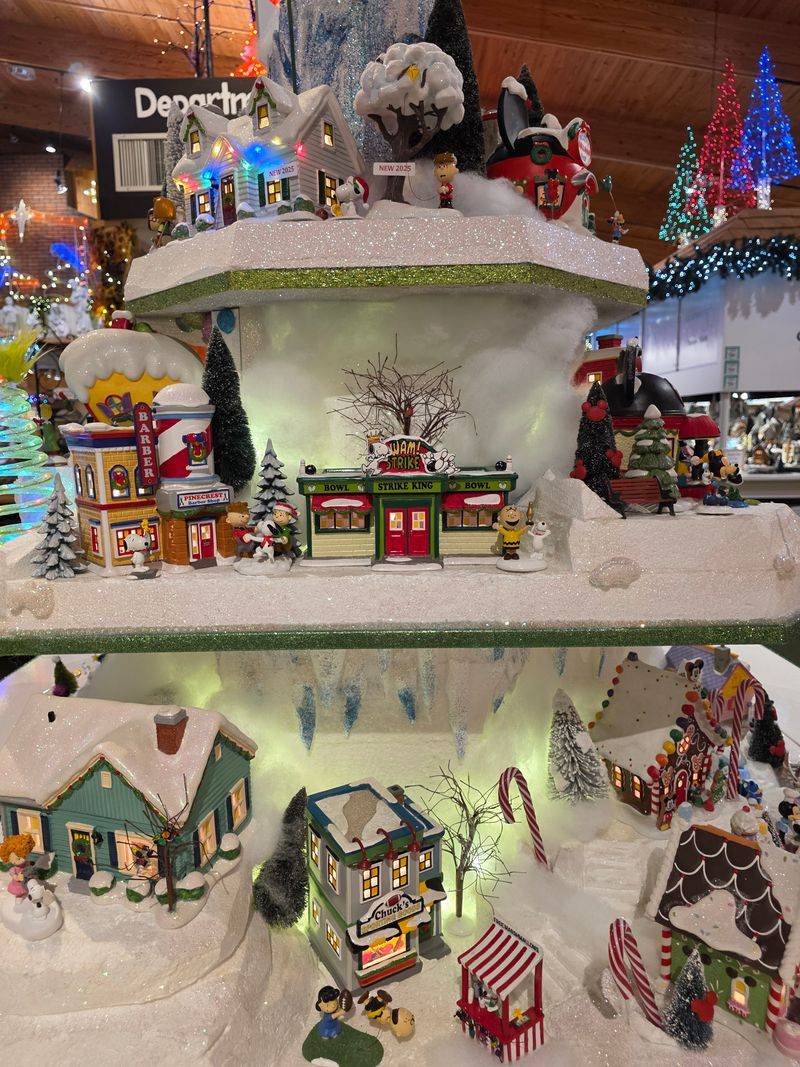
The village section hums at a different voltage. Lights dim a notch and the snow scenes glow with that bluish evening you only get after 4 pm in December.
A skater circles a resin pond in tiny imperfect loops, mechanism clicking like a pocket watch.
You lean closer and find the bakery window flown open, flour dust frozen mid-air, loaves scored in perfect diagonals. A child points at a Ferris wheel the size of a salad plate, mouth open, the wheel sighing as it turns.
Department 56 placards are tucked like museum labels beneath the streets.
If you never built a village, this is where the idea starts to itch. Staff will walk you through power cords, splitter trees, and how to hide wiring under blanket snow.
You feel clever leaving with felt, two lampposts, and a diner with chrome trim. Back home, you will set it up on a bookshelf and the room will feel newly possible.
Trees, Lights, And The Science Of Glow
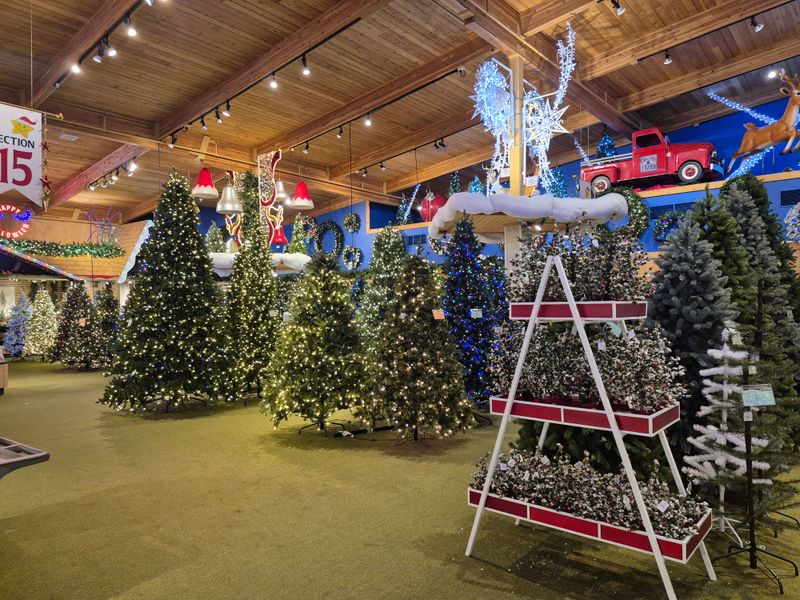
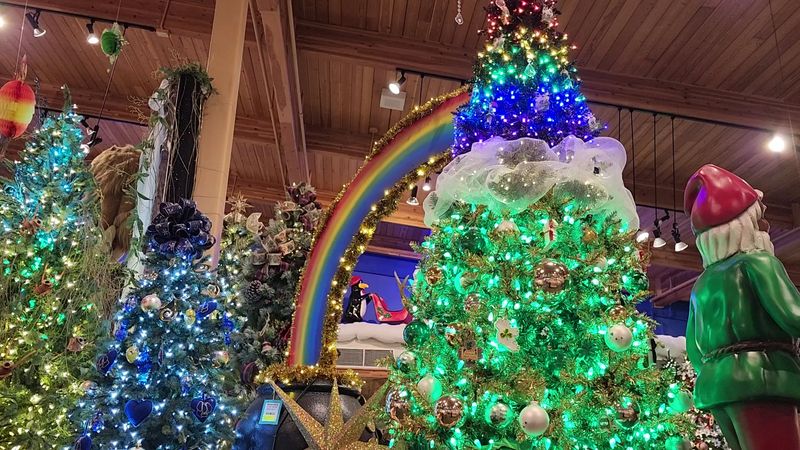
The tree forest is where you stop guessing and start testing. Needle types scratch lightly against your sleeve, PE next to PVC, a chart explaining why one looks more woodsy under warm LEDs.
Staff demonstrate a dimmer and the room breathes with the light, soft to bright in a second.
You hold two strands of lights side by side, one warm, one cool. The difference is suddenly not theoretical but personal, like choosing a bulb temperature for your kitchen.
A rep toggles a remote and a tree shimmers in a slow twinkle instead of a harsh flash, and your shoulders drop.
Statistics surface here in helpful doses: energy savings on LEDs compared to incandescent, lifespan measured in seasons, not hours. There is a board that shows failure points on plugs and why strain relief matters.
You leave with a coil of extension cord that feels oddly satisfying in the hand, plus a timer that will earn your future self sleep.
History In The Aisles
Between aisles you find a modest exhibit and stop because retail rarely pauses for memory. Here are photos of Wally Bronner, smiling in black-and-white, a timeline that walks from basement beginnings to 27 acres.
The panels are concise, respectful, and you catch your reflection in the glass beside a Christmas Lane groundbreaking photo. Old advertisements show hand-painted lettering and early delivery vans, reminders that this empire of tinsel once fit inside a single car trunk.
It adds weight to the sparkle. A staffer mentions the store is open 361 days, and points to a note about why the Silent Night Memorial Chapel stands on-site.
There are framed letters from visitors who made pilgrimages here decades apart, describing first ornaments bought as newlyweds. In a space designed for consumption, this corner invites you to stand still and look backward, which is its own kind of generosity.
You step away seeing the building differently. The aisles become chapters, the displays arguments for joy as a practical practice.
History here is not a plaque to nod at, but the reason a stranger will wrap your fragile purchase like it is evidence from a better future.
Stockings, Garlands, And The Texture Of Tradition
Turn a corner and the palette shifts from sparkle to softness. Stockings hang in long, color-coordinated waves: velvet reds, cable-knit creams, deep forest greens with cuffs thick enough to fold over your wrist.
You reach out without thinking. The textures are the point.
Some are embroidered in looping gold thread, others trimmed in faux fur that feels surprisingly plush. A grandmother tests the weight of one as if measuring how much it might hold on Christmas morning.
Garlands drape from overhead racks like evergreen waterfalls. Pine needles brush your sleeve.
Berry clusters peek out in glossy red punctuation marks.
There are mantels staged along the aisle, complete with faux fireplaces flickering in tidy repetition. You can stand there and rehearse your own living room, mentally swapping your photo frames for nutcrackers.
Wreaths vary from restrained to exuberant. One leans Nordic minimal.
Another bursts with ribbon spirals that look mid-dance.
This section slows people down. It is less about collecting and more about imagining.
You picture a staircase banister. A doorway.
The back of a dining chair. And suddenly you are not just shopping for December.
You are staging a feeling.
International Christmas: One Holiday, Many Accents
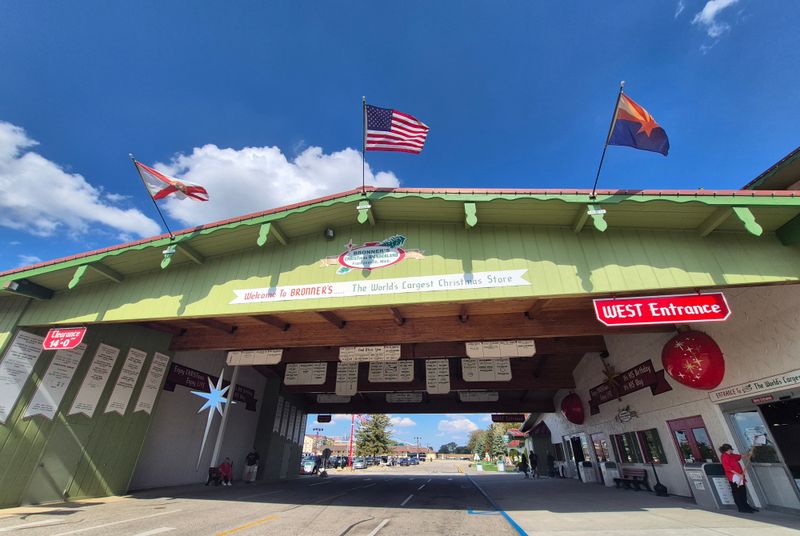
Flags mark small clusters of ornaments and decor inspired by traditions around the world. German pyramids spin gently under candlelight.
Polish glass glints in jewel tones. Scandinavian straw stars hang airy and precise.
Each section feels like a passport stamp. Placards explain customs without lecturing.
You learn how pickle ornaments became playful hide-and-seek traditions. You see delicate Ukrainian designs with intricate painted patterns that look almost mathematical.
A shopper murmurs, “My grandmother had one like this,” holding up a hand-blown sphere thin as an eggshell.
The global aisle hums differently. Less spectacle, more reverence.
It reminds you that while Bronner’s is massive, the traditions it holds are intimate. Specific.
Carried across oceans and decades in suitcases and memory. You leave this stretch seeing your own tree as part of a much longer conversation.
The Checkout Ballet
Eventually, every cart points toward the registers.
Lines look long but move with surprising grace. Boxes slide down counters, tissue folded with a practiced twist.
Tape seals edges in crisp strokes.
There is choreography here. A cashier asks if anything inside is personalized and adjusts the packing accordingly.
Fragile items are double-wrapped without you requesting it.
Behind you, someone laughs about buying “just one ornament” and somehow leaving with twelve. Ahead, a child guards a snow globe like treasure.
The overhead train circles once more, wheels ticking softly above the hum of scanners.
When your turn comes, the total feels secondary to the ritual. Items are tucked into sturdy bags, handles looped carefully so weight distributes evenly.
You step aside to reorganize, hands brushing cardboard corners and soft tissue.
And for a moment, under fluorescent light and model train tracks, it feels less like a transaction and more like preparation.
Preparation for December. For memory.
For a future version of yourself opening that same white box years from now and remembering exactly where you stood.
After Dark: Christmas Lane And The Chapel
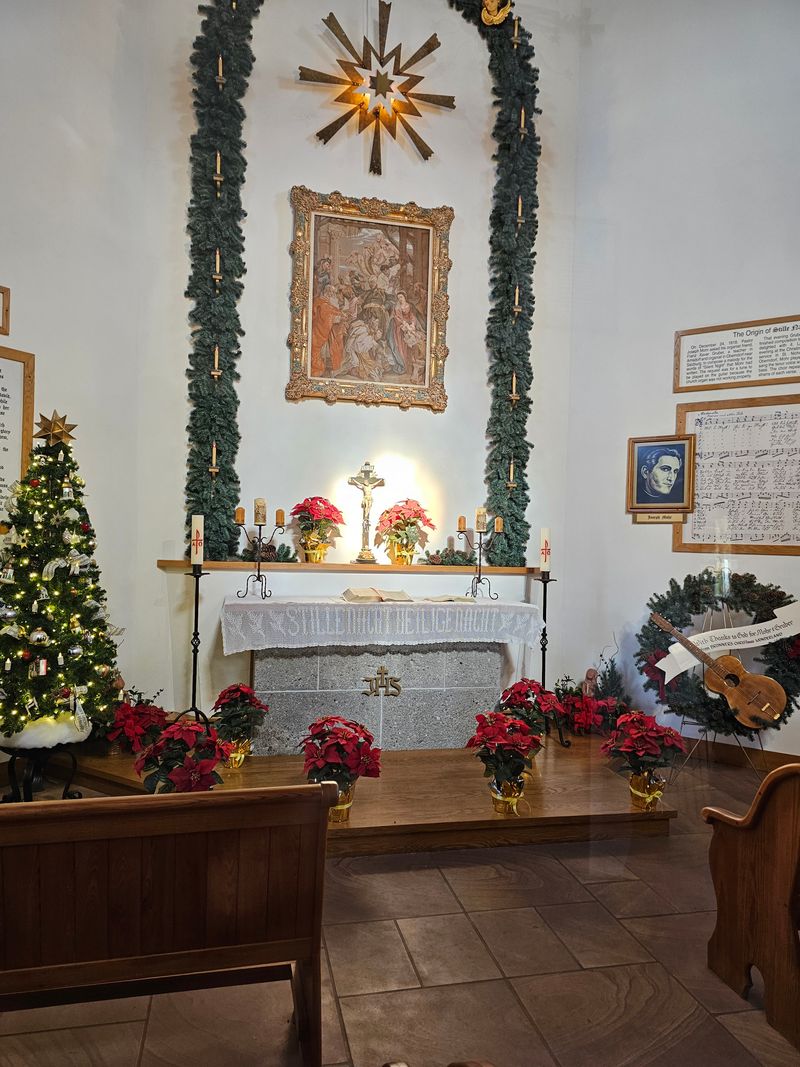
Return outside after dusk and the campus edits itself into a nighttime sentence. Over 100,000 lights outline eaves and trees, color bands shifting without frenzy.
The Silent Night Memorial Chapel glows like a page turned in low light, small, spare, and oddly persuasive.
Stand a moment. You will hear tires shushing on M-83 and the soft slide of boots on salted pavement.
People speak quietly near the chapel, a toned-down reverence that has nothing to do with shopping bags. Inside, the hymn’s story is told in simple panels and the room answers with its own hush.
When you walk back to the car, the parking lot ornaments reflect like planets in a shallow pond. You think about how a store can be open nearly all year and still keep surprise alive.
That is the trick here: the spectacle is loud, but the part you remember is gentle.



