 Unearth The Voyage
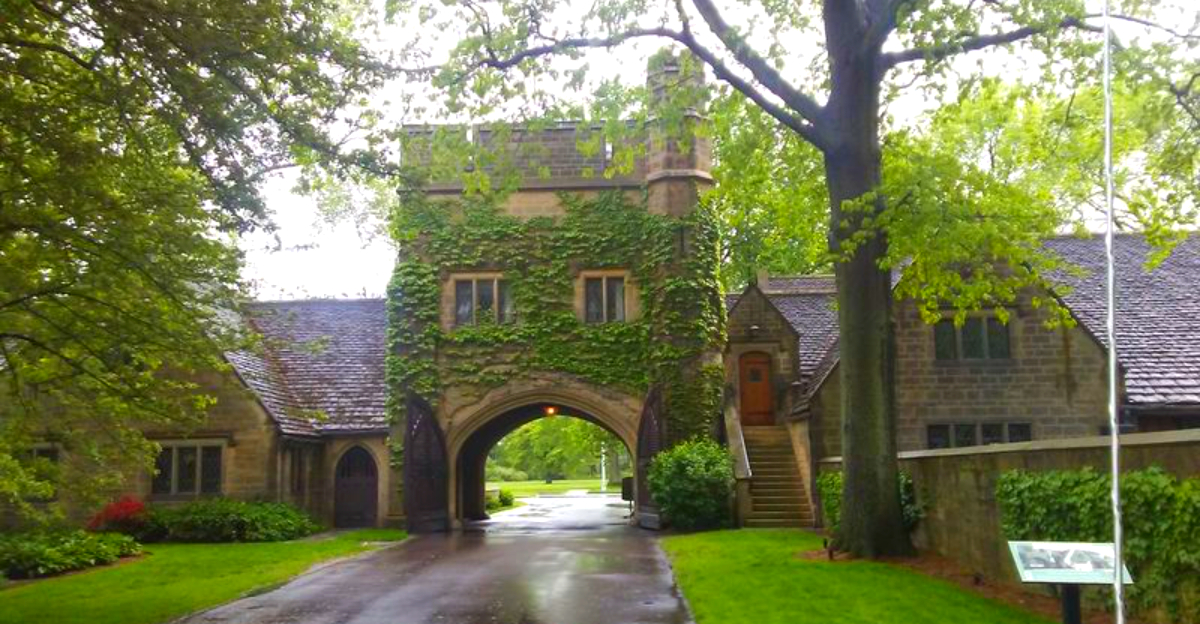
Along the shores of Lake St. Clair, there’s a Michigan estate where it feels like time stopped around 1930. Rising above manicured lawns in Cotswold-style grandeur, the former home of Edsel and Eleanor Ford looks as if it were lifted straight from the English countryside.
Now open to the public, the nearly 90-acre property offers far more than beautiful views – it’s a living chapter of American history. From a garage filled with rare automobiles to a storybook playhouse built for a child, every corner reveals a new surprise.
Quiet on the outside, this lakeside landmark is anything but ordinary.
Where It All Begins: Address and Location
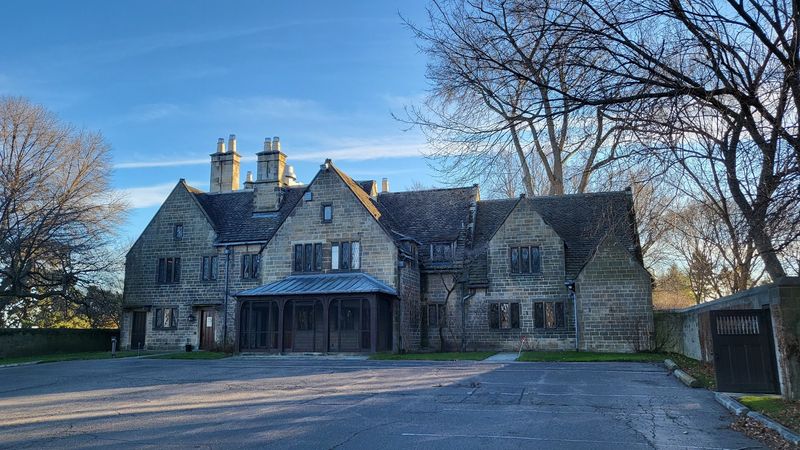
The estate sits at 1100 Lake Shore Road in Grosse Pointe Shores, Michigan 48236, right along the western edge of Lake St. Clair. That address might not mean much until you actually arrive and realize you are standing at the edge of one of the most carefully preserved private estates ever opened to the public in the United States.
Grosse Pointe Shores is a quiet, upscale community just northeast of Detroit, and the Ford House fits right into its refined lakeside character. The grounds stretch across nearly 90 acres, with the main residence, a garage, a powerhouse, a pool house, and other historic structures all connected by well-marked pathways.
A visitor center greets you near the entrance, and from there you can walk or take a shuttle to the main house. The whole property faces Lake St. Clair, giving it a natural backdrop that makes the estate feel even more like a world of its own.
The Man Behind the Mansion: Edsel Ford’s Story
Most people know Henry Ford, but Edsel Ford is the quieter chapter in that famous family story. Born in 1893, Edsel became president of Ford Motor Company at just 25 years old, and he brought a different kind of energy to the brand, one focused on design, elegance, and artistic vision rather than pure mechanical output.
He commissioned this estate in the late 1920s, working closely with renowned architect Albert Kahn and landscape designer Jens Jensen to create a home that reflected his personal taste. While Henry Ford favored simplicity, Edsel leaned toward beauty and sophistication, and this property is the clearest proof of that difference.
Edsel passed away in 1943 at just 49 years old, before he could see many of his ambitions fully realized at Ford Motor Company. His wife Eleanor later donated the estate so the public could appreciate what they had built together, a decision that preserved one of Michigan’s most remarkable historic properties.
A Home Built for Beauty: The Architecture
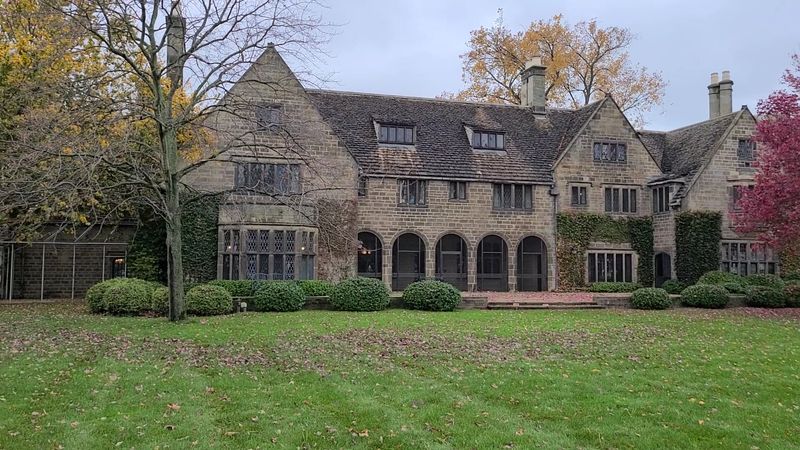
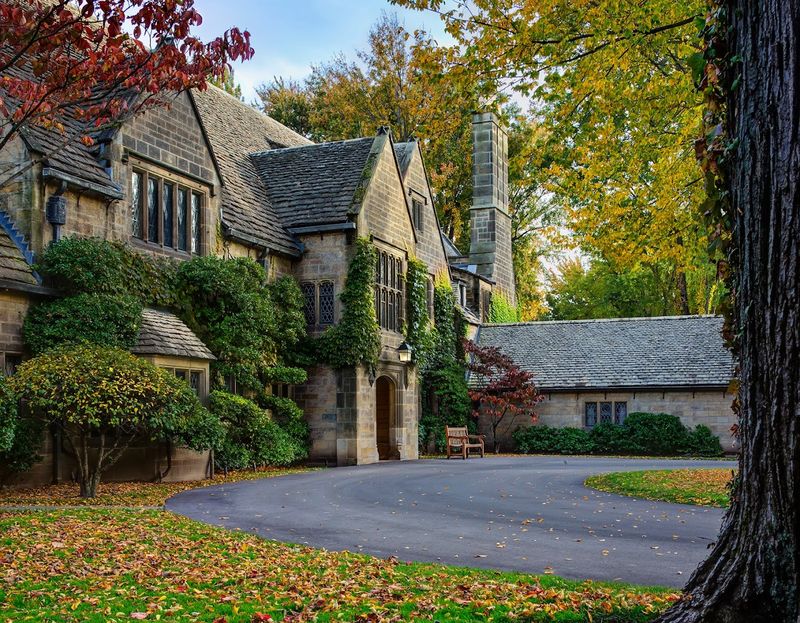
Albert Kahn designed the main residence in the Cotswold cottage style, which is a surprising choice for a Michigan lakefront estate but somehow makes perfect sense once you see it. The stone walls, steep slate roofs, and irregular rooflines give the house a handcrafted, almost storybook quality that sets it apart from the grand formal mansions you might expect from a family of this wealth.
The house contains 60 rooms and covers roughly 18,000 square feet. Each room was designed with a specific purpose and a distinct decorative style, drawing from English, French, and American influences depending on the function of the space.
What makes the architecture especially interesting is how it manages to feel both monumental and intimate at the same time. The exterior does not shout for attention the way some great estates do.
Instead, it draws you in slowly, and the more you look, the more details you notice, from the hand-laid stonework to the carefully proportioned windows that frame the lake beyond.
Inside the Main Residence: Rooms Worth Remembering
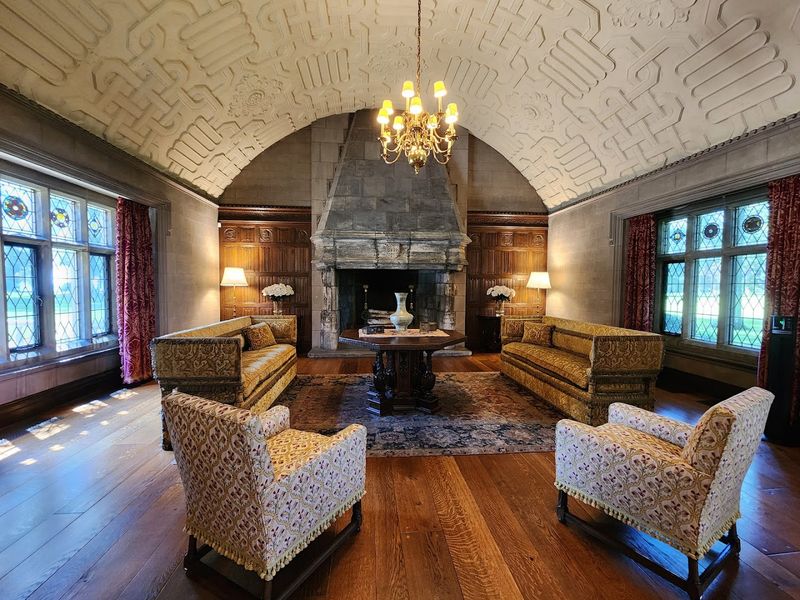
The interior of the main house is the kind of place where you find yourself slowing down in every doorway because there is always something new to take in. Each room has its own personality, from the wood-paneled library stocked with books the family actually read to the formal dining room with its long table set as if guests are expected any moment.
The docents stationed throughout the house are genuinely one of the highlights of any visit. They are knowledgeable, enthusiastic, and full of small details that make the history feel personal rather than textbook-dry.
Ask them about the hidden features built into the house and you will not be disappointed.
Eleanor Ford’s influence is visible in the careful curation of art and furnishings, many of which were collected during the family’s travels in Europe. The house never feels like a museum in the cold, hands-off sense.
It feels lived in, which is exactly the impression the restoration team has worked hard to maintain over the decades.
The Garage and Car Collection: A Motorhead’s Dream

If the main house is a portrait of elegant living, the garage is a love letter to the automobile. Edsel Ford had a deeply personal relationship with car design, and his private collection reflects that passion in the most direct way possible.
The vehicles on display include rare and beautifully preserved cars from the 1930s and 1940s, many of which Edsel had a direct hand in shaping through his influence on Ford’s design department. These are not just old cars behind ropes.
They are rolling sculptures, each one a piece of automotive history with a specific story attached.
The garage building itself is worth admiring as a structure, built with the same craftsmanship and attention to detail as the main house. Car enthusiasts often say this is their favorite part of the entire estate, and even visitors who have never thought twice about automobiles tend to linger here longer than they expected.
The collection has a way of making you appreciate the artistry behind industrial design.
The Grounds and Landscape: Jens Jensen’s Masterpiece
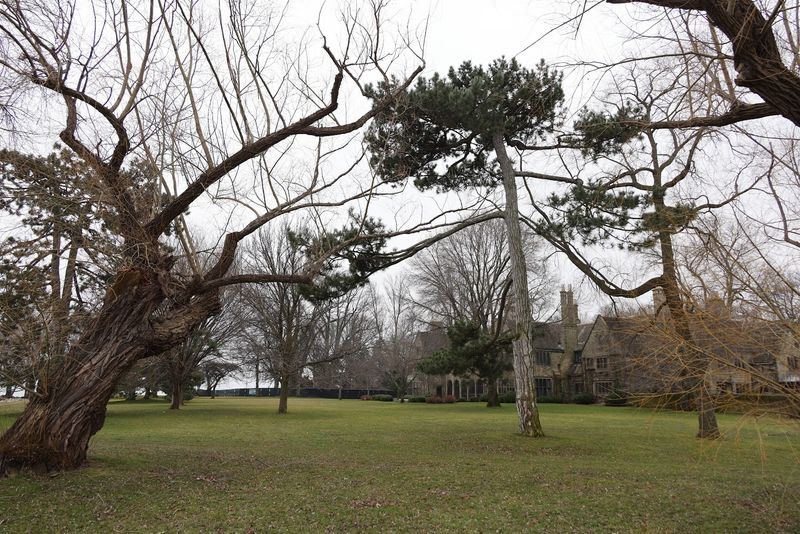
Jens Jensen was one of the most celebrated landscape architects of the early 20th century, and his work on the Ford House grounds is considered among his finest achievements. He believed in using native plants and natural forms to create landscapes that felt like extensions of the regional environment rather than imported European formality.
The result is a property that shifts in character as you move through it. Near the house, the grounds are more structured and manicured.
As you move toward the shoreline, the plantings become wilder and more naturalistic, with sweeping views of Lake St. Clair opening up through the trees.
Walking the grounds on a clear day is one of those simple pleasures that requires no historical knowledge to appreciate. The willow trees along the water’s edge move gently in the lake breeze, and the overall sense of space and calm is remarkable given how close the estate sits to metropolitan Detroit.
Jensen designed a place that breathes, and nearly a century later, it still does.
The Playhouse: Small Scale, Big Craftsmanship
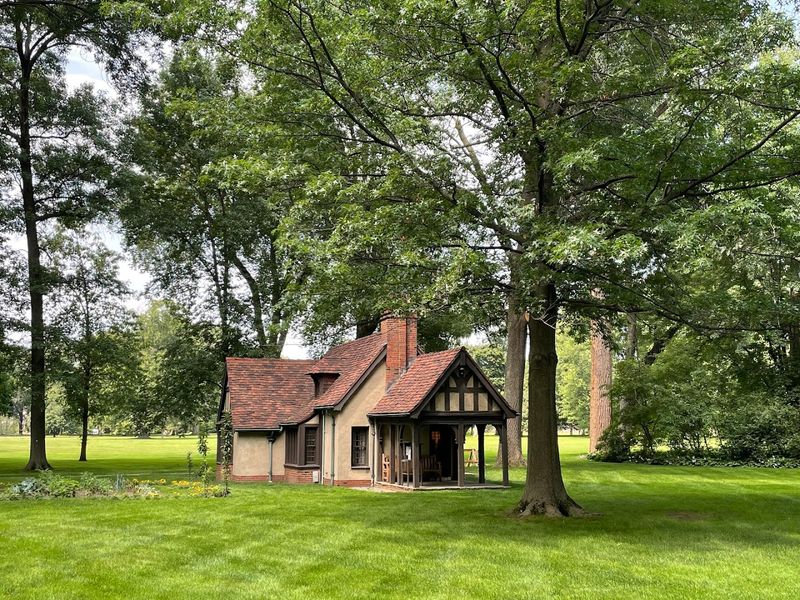
One of the most talked-about features of the Ford House estate is the playhouse built for the Ford children, and it earns every bit of that attention. This is not a painted wooden box with a plastic slide attached.
It is a fully realized miniature home, built with the same quality materials and craftsmanship as the main residence.
Every detail inside was scaled down for children but executed with adult-level precision. The light switches are child height.
The furniture is proportioned for small bodies. The rooms are distinct and functional in their miniature way.
The effect is somewhere between charming and genuinely astonishing when you consider the level of care that went into something built purely for play.
Visitors with children tend to gravitate here naturally, but adults often find it just as captivating. There is something about the sheer commitment to detail at such a small scale that stops people in their tracks and prompts the same thought again and again: what must it have been like to grow up here?
The Powerhouse and Pool House: Behind the Scenes
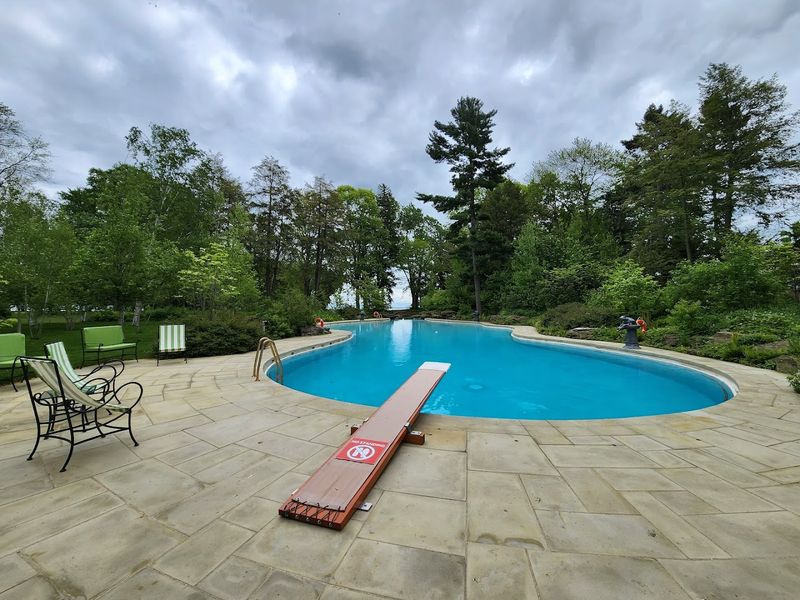
Most historic estate tours focus on the glamorous spaces and skip the working infrastructure, but the Ford House does things differently. The powerhouse and pool house are both open to explore, and they offer a fascinating look at how a property of this scale actually functioned day to day in the 1930s.
The powerhouse contains the mechanical systems that kept the estate running, and seeing the original equipment preserved in place gives you a real sense of the engineering ambition behind the property. The Ford family wanted the estate to be largely self-sufficient, and the powerhouse was central to making that possible.
The pool house is more decorative in character, designed with the same architectural care as the main residence. The indoor pool area has a Mediterranean warmth to it that contrasts interestingly with the English cottage exterior of the main house.
Tours like the special nooks and crannies experience take visitors into areas not typically seen, including the basement shooting range Edsel had built for his own recreational use.
The Continental Restaurant: Lunch With a Lake View
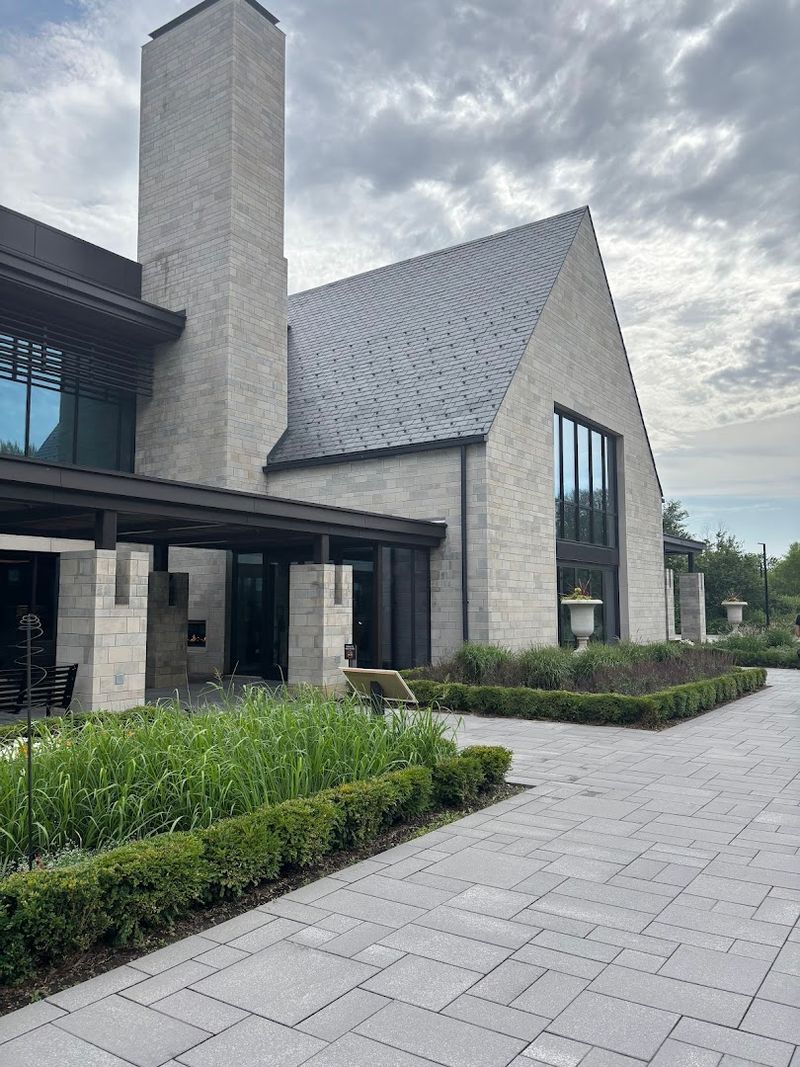
The on-site restaurant, called The Continental, is located in the visitor center and has developed a strong reputation that goes well beyond the standard museum cafe experience. The food is genuinely good, the service is attentive, and the setting near the water makes a simple lunch feel like a small occasion.
The menu leans toward elevated comfort food with seasonal touches. The mushroom bisque has become something of a signature dish, consistently drawing praise from visitors who were not even sure they liked mushrooms before trying it.
The chicken salad croissants are another crowd favorite, light and satisfying without being fussy.
The restaurant also functions as a private event venue, with the St. Clair Room available for gatherings of around 30 people. The room overlooks the water and has a quiet, classy atmosphere that makes it well suited for special occasions.
Whether you stop in for a quick lunch between tours or linger over a longer meal, The Continental adds a genuinely enjoyable dimension to the visit.
Events, Tours, and the Best Times to Visit
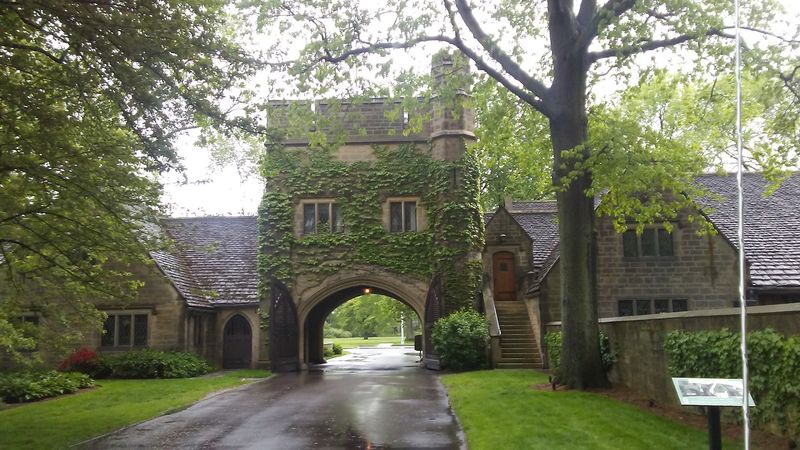
The Ford House runs a full calendar of events throughout the year, and choosing the right one can completely shape the kind of experience you have. The standard guided tours of the main residence are available Tuesday through Sunday, with the house open from 9 AM on weekdays and 10 AM on Fridays, Saturdays, and Thursdays, closing at 8 PM on those later evenings.
The holiday season brings out something special in the estate. The Home for the Holidays program fills the mansion with period-appropriate decorations and creates an atmosphere that feels genuinely magical rather than commercially festive.
Visitors who come in winter often say the decorations make the house feel more alive than at any other time of year.
Spring and summer visits offer a different reward, with the grounds at their most lush and the lake views at their clearest. The self-guided grounds tour is especially rewarding in warm weather, and arriving early on a weekday is the easiest way to enjoy the property without large crowds.
Membership options are available and offer excellent value for repeat visitors.



