 Unearth The Voyage
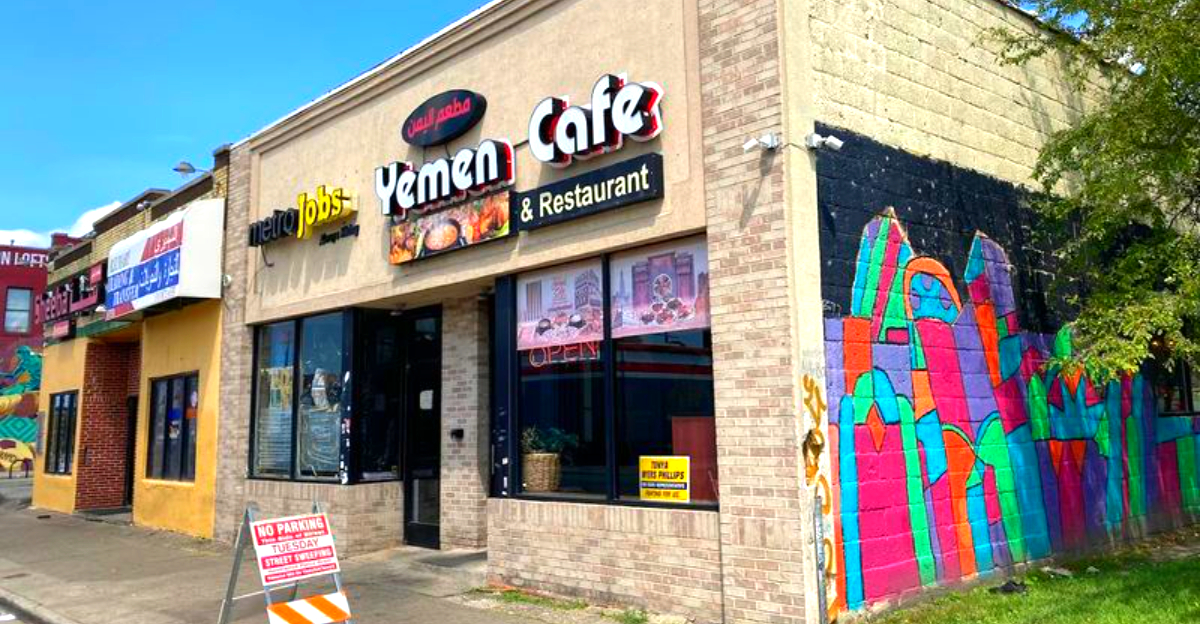
There is a city in Michigan so small you can walk from one end to the other in about twenty minutes, yet somehow it packs more countries onto a single block than most people visit in a lifetime. I am talking about a place where the smell of Bengali curry drifts past a Yemeni bakery, and a Polish pierogi shop sits just a few doors down from a Bangladeshi sweets counter.
It is the kind of place that makes you stop mid-bite and think, “Wait, where am I right now?” I have eaten my way through a lot of American cities, but nothing quite prepared me for the sheer, glorious chaos of this two-square-mile enclave tucked inside Wayne County, Michigan. By the time you finish reading this article, you will understand exactly why food lovers, travel writers, and curious road-trippers keep showing up here with empty stomachs and wide eyes.
Keep reading, because the story of this tiny city is genuinely one of the most surprising in the entire Midwest.
Welcome to Hamtramck: Address, Location, and Why It Exists
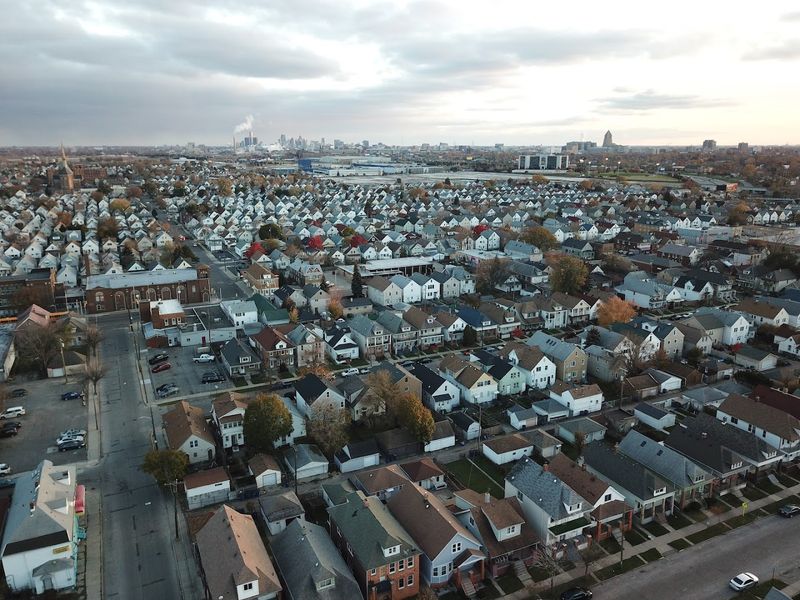
Hamtramck sits at 3401 Evaline Street, Hamtramck, Michigan 48212, right in the heart of Wayne County, completely surrounded by the city of Detroit on most sides.
It is technically its own independent city, not a neighborhood, which means it has its own mayor, its own city council, and its own zip code, all packed into just 2.1 square miles.
That geographic quirk is part of what makes it so fascinating. Most people driving through Detroit do not even realize they have crossed a city boundary until they spot a different street sign style or a flag they do not recognize flying above a storefront.
Hamtramck is located roughly five miles north of downtown Detroit, making it incredibly easy to reach from the highway. The city grew rapidly in the early 20th century as an industrial hub, largely because of the Dodge Brothers automobile plant that drew thousands of workers from Poland and Ukraine.
Today, that same magnetic pull for new arrivals continues, only now the newcomers come from Bangladesh, Yemen, Bosnia, and beyond. The city’s compact size is not a limitation; it is the whole point, because everything here is close enough to experience in a single afternoon.
The Polish Roots That Built the City
Long before Hamtramck became a global food destination, it was one of the most concentrated Polish communities in the entire United States.
The Dodge Brothers plant opened in 1910, and within a decade, thousands of Polish immigrants had flooded into the area, building churches, bakeries, and social clubs that gave the city its earliest identity.
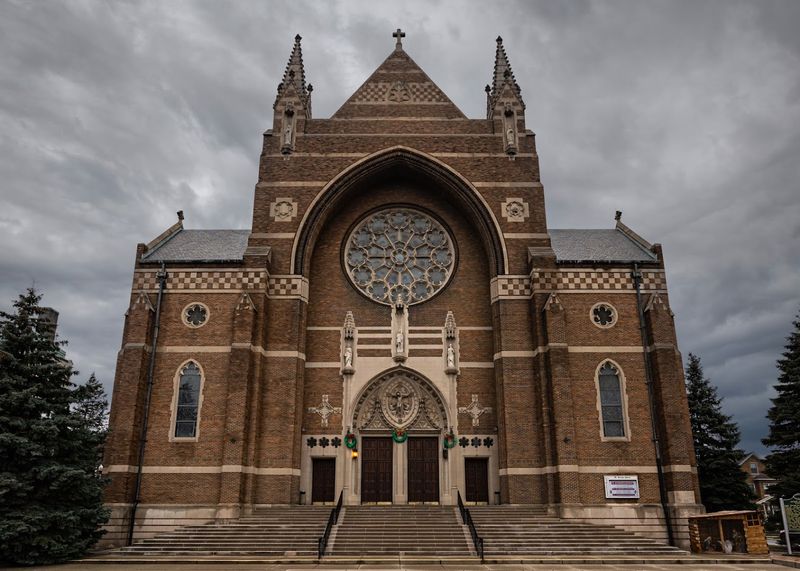
At its peak, Hamtramck’s Polish population numbered in the tens of thousands, and the cultural fingerprints from that era are still visible today. St. Florian Catholic Church, built in 1908, still stands as a reminder of that founding community, with its towering brick facade anchoring the neighborhood’s architectural character.
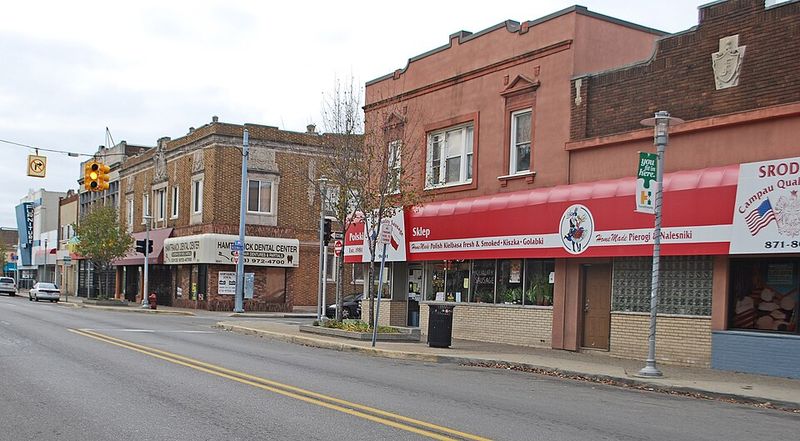
Polish delis and pierogi shops have not disappeared entirely, either. A handful of old-school establishments still serve handmade dumplings and kielbasa to loyal regulars who have been coming for decades.
What is remarkable is not that the Polish community eventually gave way to newer arrivals, but that the city absorbed wave after wave of immigrants without losing its sense of place. The Polish chapter gave Hamtramck its bones, its tight-knit block culture, its pride in hard work, and that foundation made everything that followed possible.
How Hamtramck Became a Global Village
The transformation from Polish enclave to international city did not happen overnight, and it was not the result of any grand plan.
Starting in the 1970s and accelerating through the 1980s and 1990s, Hamtramck began attracting immigrants from Bangladesh, Yemen, Bosnia, and Albania, largely because housing was affordable and the existing immigrant infrastructure made newcomers feel less out of place.
Each new community brought its own food traditions, its own places of worship, and its own small businesses. Halal butchers replaced some of the old Polish delis.
Bangladeshi sweets shops opened next to Ukrainian social clubs. Mosques were built within blocks of Catholic churches.
By the early 2000s, Hamtramck had become the first city in the United States with a Muslim-majority city council, a milestone that attracted national media attention and underscored just how dramatically the city’s demographics had shifted.
None of this happened without some friction, but what stands out when you walk the streets today is how genuinely layered the culture feels. It is not a theme park version of diversity; it is the real thing, built block by block over decades by people who came here looking for a better life and ended up creating something extraordinary.
The Bangladeshi Food Scene That Will Rearrange Your Priorities
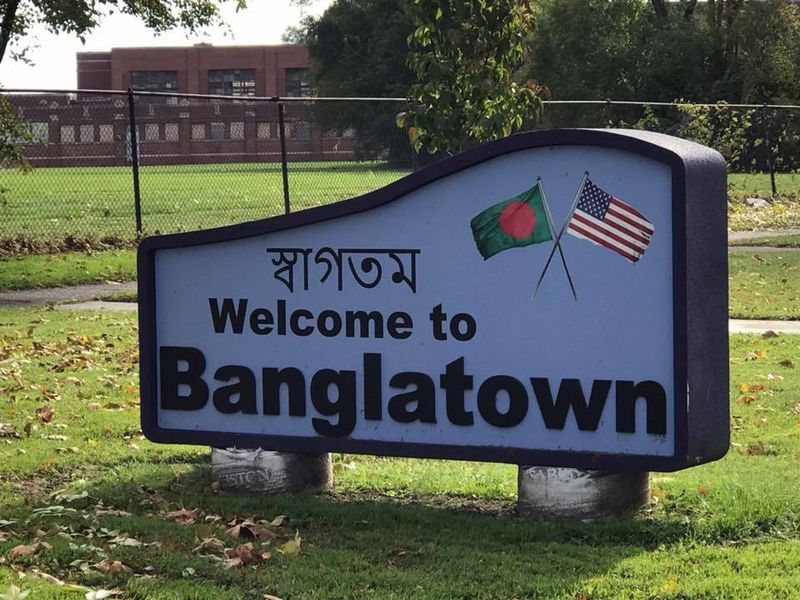
The Bangladeshi restaurants on Joseph Campau Avenue are the kind of places that ruin you for lesser curry in the best possible way.
Hamtramck has one of the largest Bangladeshi communities outside of New York City, and the food reflects that depth. These are not watered-down versions of South Asian cooking designed for cautious palates; the spice levels are honest, the portions are generous, and the rice comes in mounds that make you question your ambitions.
Dishes like hilsa fish curry, mustard-spiced prawn, and slow-cooked beef rezala show up on menus that mix Bengali and English in equal measure. The restaurants tend to be simple in their decor, with plastic chairs and fluorescent lighting, but nobody comes here for the ambiance.
They come because the food is the real deal, made by cooks who grew up eating this way and are not interested in compromising the flavor profile for anyone.
A full meal at one of these spots will cost you less than fifteen dollars in most cases, which makes the whole experience feel almost criminally affordable. If you have never tried Bangladeshi food before, Hamtramck is genuinely one of the best places in the country to start that education.
Yemeni Bakeries and the Art of the Slow Morning
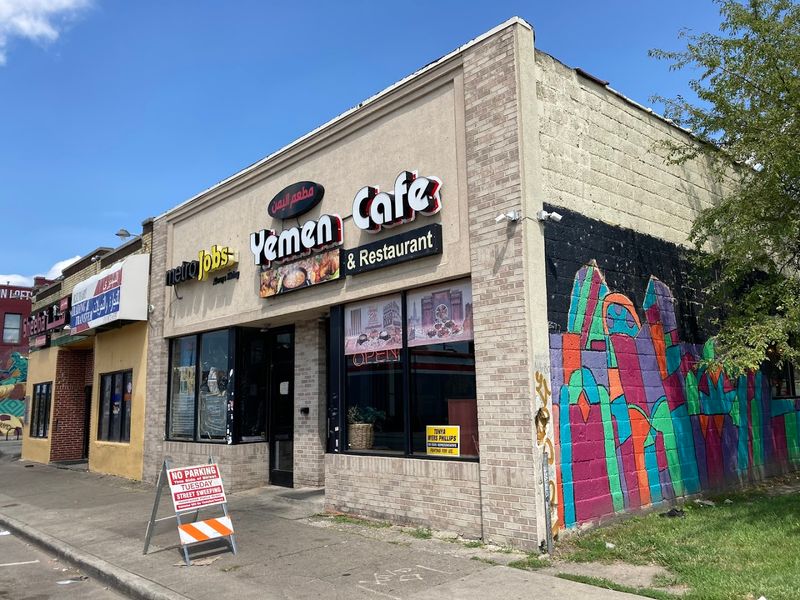
There is something almost meditative about a Yemeni bakery in the early morning, when the bread is still warm and the honey comes in a jar so thick you have to coax it onto the plate.
Hamtramck has a well-established Yemeni community, and the bakeries and cafes they have built reflect a food culture that prizes slow, deliberate eating over convenience. Lahoh, a spongy sourdough flatbread, is a staple that shows up at breakfast tables across Yemen, and in Hamtramck, you can find it fresh-made within walking distance of the city center.
Yemeni honey, often sold alongside the baked goods, carries a reputation for quality that goes back centuries in the Arab world. Sidr honey in particular commands serious attention from food lovers who know what they are looking for.
The cafes attached to some of these bakeries serve strong, cardamom-spiced tea that pairs with the bread in a way that makes you want to cancel the rest of your day’s plans.
The pace inside these spots is unhurried and warm, and the regulars tend to linger. Sitting down for breakfast here feels less like a quick meal and more like a genuine cultural exchange, one bite and one cup at a time.
Joseph Campau Avenue: The Main Street That Tells the Whole Story
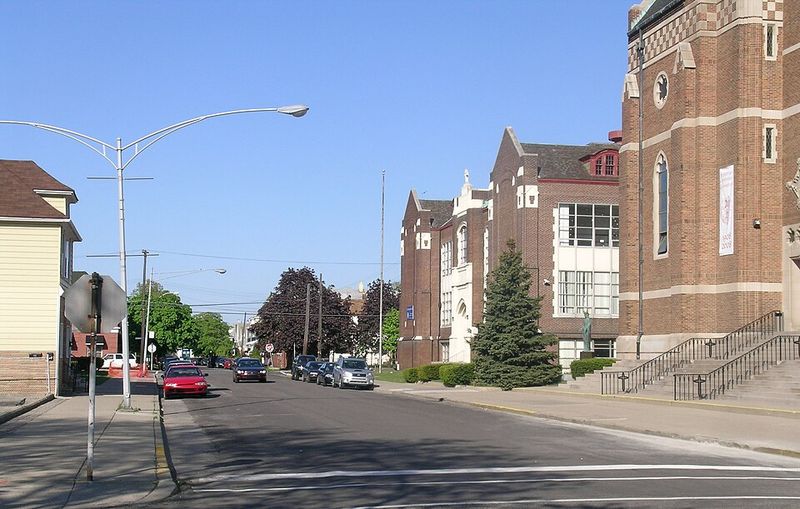
Joseph Campau Avenue is the spine of Hamtramck, and walking its length is the fastest way to understand what this city actually is.
On a single stretch of this road, you can pass a Polish deli, a Bangladeshi sweets shop, a Yemeni restaurant, a Bosnian cafe, and a halal grocery store without crossing more than three intersections. The signage shifts languages mid-block, and the smells change every few steps in a way that feels almost cinematic.
The street has been the commercial heart of Hamtramck since the early 20th century, when Polish merchants first set up shop along its length. Today, it functions as a living timeline of every community that has called this city home.
Murals appear on several buildings, celebrating the city’s immigrant history with bold colors and faces that represent dozens of nationalities. Some of the artwork is formal and commissioned; some looks like it went up overnight.
Either way, the effect is a street that feels alive and opinionated, the kind of place that has something to say and is not particularly interested in being quiet about it. A slow walk down Joseph Campau with no particular destination in mind is honestly one of the better ways to spend a Saturday afternoon in Michigan.
Bosnian and Albanian Flavors You Did Not Know You Were Missing
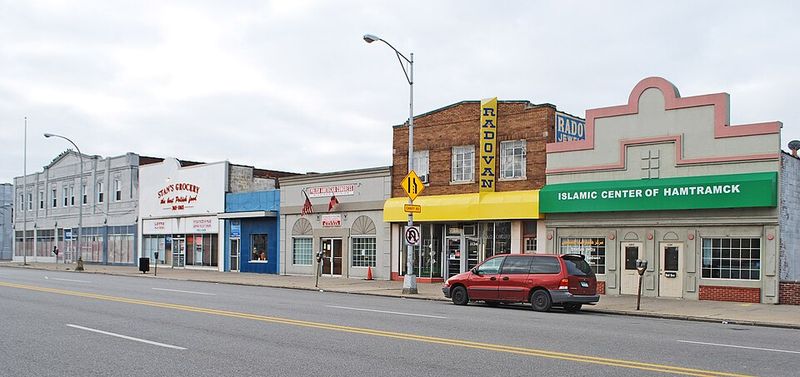
Hamtramck’s Bosnian and Albanian communities arrived in significant numbers during and after the conflicts in the former Yugoslavia during the 1990s, and the food they brought with them deserves far more national attention than it gets.
Cevapi, small grilled sausages made from a blend of beef and lamb, served with flatbread and a smoky roasted pepper spread called ajvar, is the kind of dish that converts skeptics on the first bite. The Bosnian spots in Hamtramck tend to serve it exactly the way it is made in Sarajevo, without shortcuts.
Burek, a flaky phyllo pastry filled with meat or cheese, is another staple that shows up in the Bosnian bakeries here. It is hearty and satisfying in a way that makes you understand immediately why it became a working-class staple across the Balkans.
Albanian cooking shares some of these influences but brings its own distinct character, with dishes like tavë kosi, a baked lamb and yogurt casserole, appearing on menus for those willing to explore beyond the familiar.
The communities that built these restaurants brought their recipes with them as carefully as they packed anything else, and eating here feels like a direct connection to a culinary tradition that survived extraordinary circumstances.
The Hamtramck Festival Scene and What It Reveals About the City
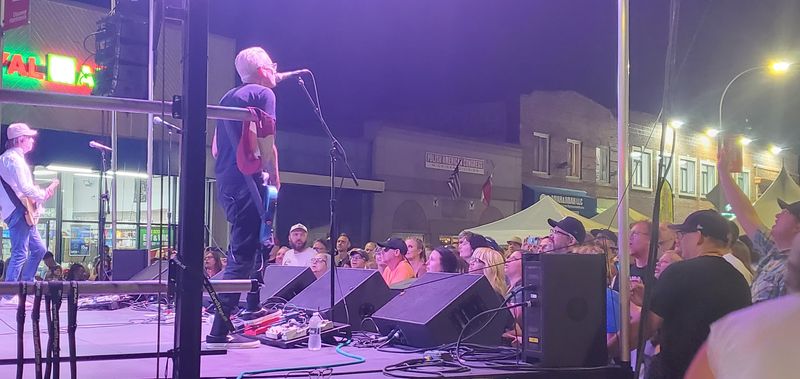
Few cities of Hamtramck’s size throw as many festivals as this one does, and the lineup reads like a map of the world condensed into a two-square-mile calendar.
The Hamtramck Labor Day Festival has been a fixture for decades, drawing crowds from across Metro Detroit for live music, food vendors, and carnival rides that take over the city’s main streets. The festival originated in the city’s working-class Polish roots but has evolved to reflect the full range of communities that now call Hamtramck home.
The Bangladeshi community hosts cultural events that feature traditional music, dance, and food that are open to everyone. Yemeni and Arab community celebrations bring their own distinct energy to the city’s public spaces throughout the year.
What strikes me most about the festival culture here is that it is not performative. These events are not designed for outsiders looking for an exotic experience; they are genuine community celebrations that happen to be welcoming to visitors.
The city also hosts an annual arts festival, Hamtramck Blowout, which has been running for decades and showcases local bands across multiple venues simultaneously. It is chaotic, loud, and completely earnest, and it captures something true about a city that has always made space for everyone willing to show up.
Practical Tips for Visiting Hamtramck on a Food Tour
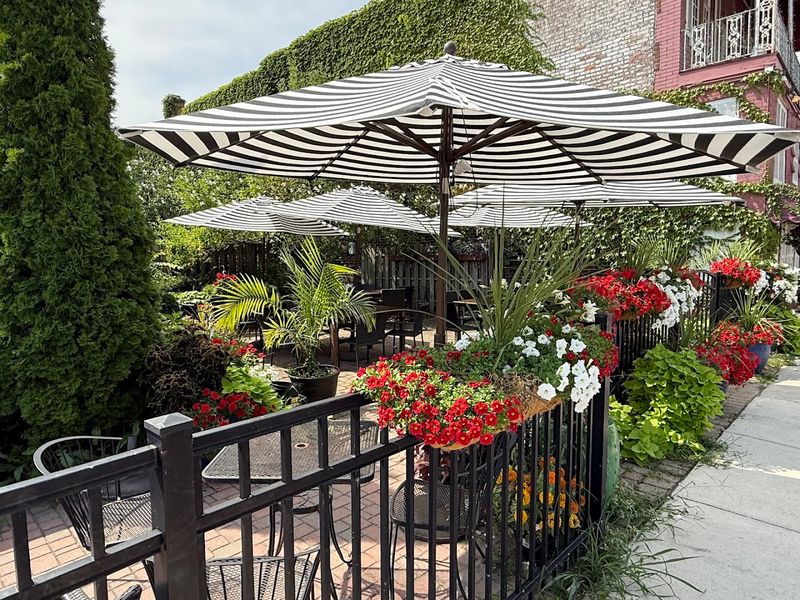
Getting the most out of a visit to Hamtramck requires almost no planning, which is part of its charm, but a few practical notes will help you eat better and waste less time.
The city is best explored on foot, since most of the restaurants and shops are clustered along Joseph Campau Avenue and Conant Street, both of which are walkable in under twenty minutes end to end. Parking is generally easy to find on side streets, and the city is accessible from Interstate 75 and Interstate 94 without much trouble.
Arrive hungry and bring cash, because many of the smaller restaurants and bakeries are cash-only operations. ATMs are available nearby, but having cash in hand saves the awkward conversation at the register.
Lunch is often the best meal of the day at most of these spots, since the kitchens are fully stocked and the crowds have not yet peaked. Weekends bring more foot traffic and a livelier street atmosphere, but weekday visits are quieter and give you more time to linger.
Do not make the mistake of eating at just one place. The whole point of Hamtramck is the accumulation of small tastes across multiple cuisines, so order light at each stop and keep moving.
Three or four restaurants in a single afternoon is entirely achievable, and your stomach will thank you for the variety.



