 Unearth The Voyage
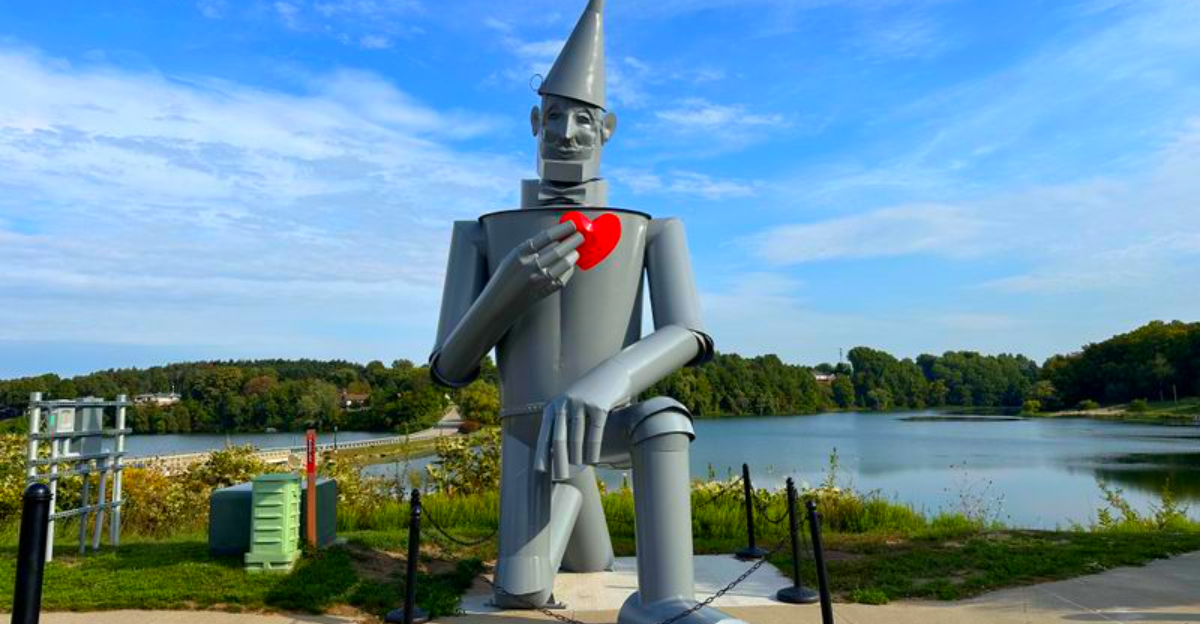
Turn the corner onto E Main Street and you’ll spot him right away – a 24-foot metal Tin Man rising above Hart Commons. He holds a bright red heart, a simple but striking tribute that draws attention in this small lakeside town.
Locals pass by on their way to nearby shops and trails, rarely missing a glance at the steel giant. So how did this towering figure become one of Hart’s most talked-about landmarks?
Let’s take a closer look.
First Glimpse: A Heart Held High
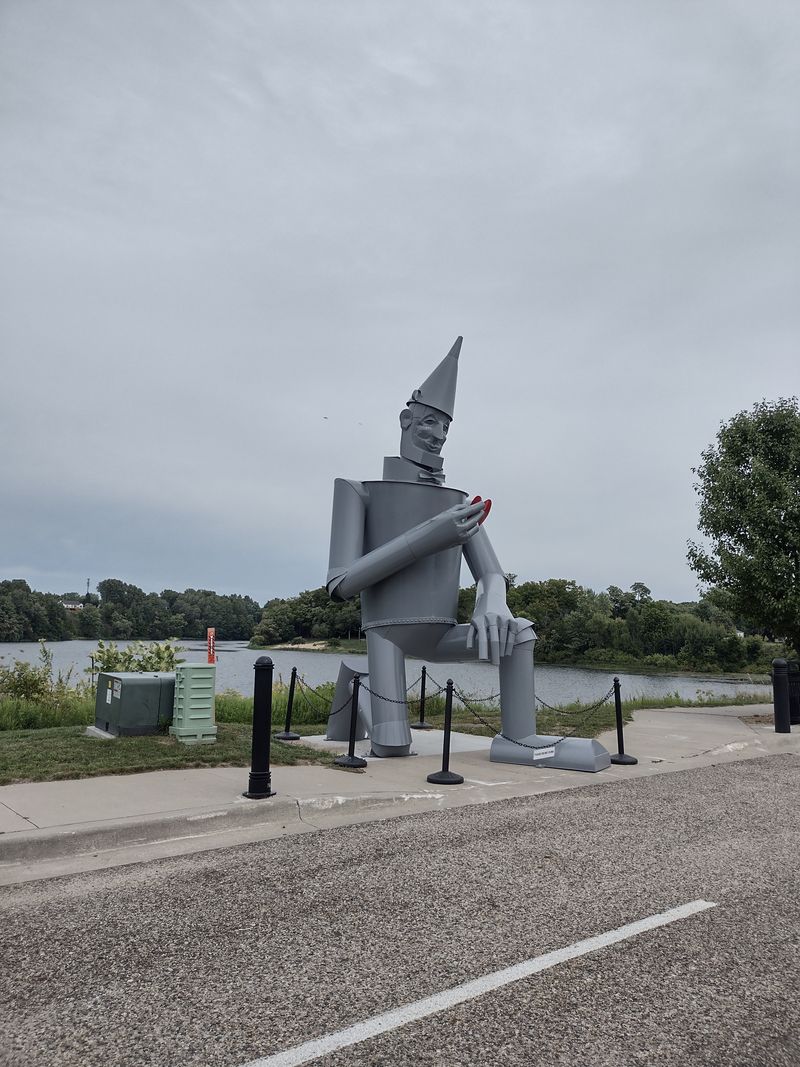
Walk up from 206 E Main Street and the Tin Man rises fast, brighter than the lake light. His arm angles up, not stiff, but sure, lifting that red heart as if passing it to you.
People stop mid-sentence, phones lift, and the hollow ring of boots on the concrete carries under the pavilion roof.
Lean close and you see bolt heads like freckles, weld seams mapping the torso’s planes. The metal throws back sky in patches, dulls where fingertips brush, flares where the sun skates.
A child taps his shin, listening for a story inside the drum of it.
There is a plaque that says Bill Secunda, 2023, unveiled during the National Asparagus Festival’s 50th year. That date clicks into place with the freshness of the welds, the town’s voice in steel.
You feel the pride before you read it.
Behind him, Hart Lake shifts from glass to corduroy when the wind changes. Geese mutter.
A picnic bench creaks as someone leans forward for the group shot.
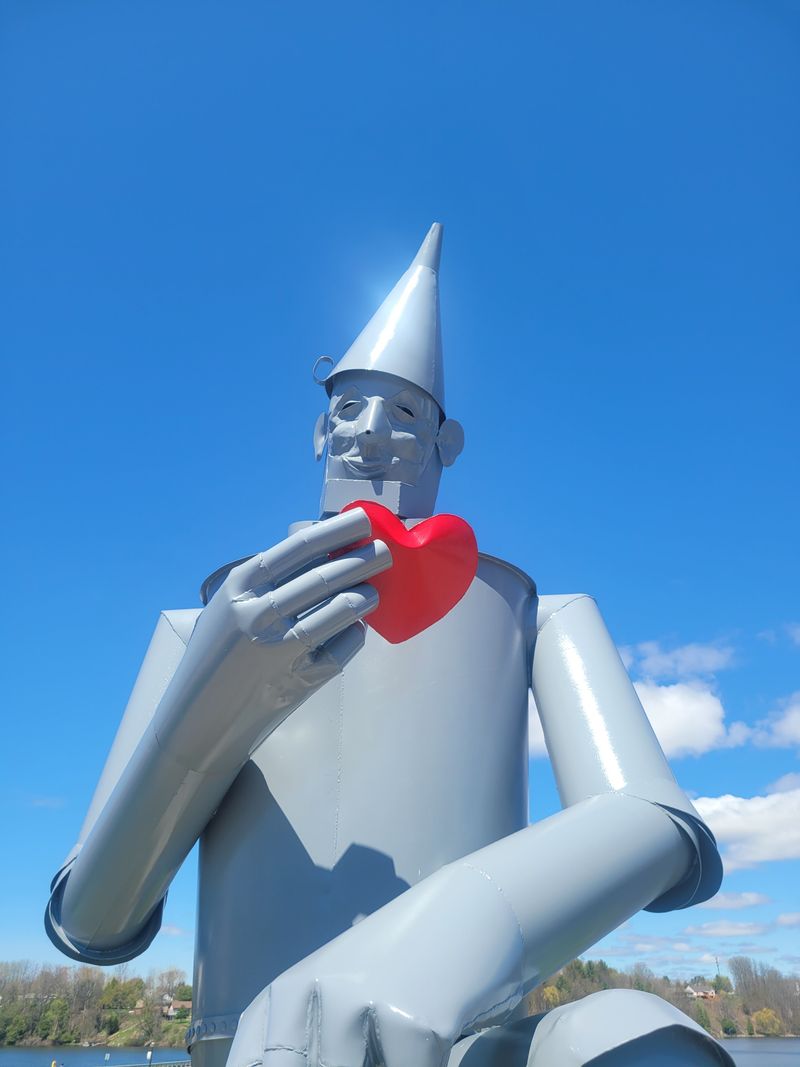
The heart is glossy, scandal-red, catching every eye on E Main. It reads as invitation more than trophy.
You move in for your photo and look smaller, but somehow bigger, inside its shine.
Why Here, Why Now
Stand by the plaque and time compresses. June 2023, the 50th National Asparagus Festival, the town’s signature celebration, becomes a line you can touch.
The artist’s name, Bill Secunda, is clear, like a signature on a big idea.
Hart grows crops and grit, and the Tin Man’s body sounds like both. Tap the calf and hear farm sheds, grinder sparks, a shop radio climbing over the whirr.
The red heart says cooperation, but your eye feels backbone in the ankles.
A local tells me reviews hit 4.9 stars on Google, which sounds like vanity until you watch faces tilt. People don’t just pose.
They settle into the space, self-consciousness sliding off.
Secunda’s pose is forward-leaning, toes set as if mid-step. It changes the plaza’s energy.
Vendors talk faster, kids pace circles, cyclists sprawl in easy diagonals along railings.
The story from Oz trails in, but the lake edits it. Heart lost, heart found.
Here, the ending holds still enough for a picture, yet open enough to pull you back tomorrow.
Steel Anatomy: Up Close
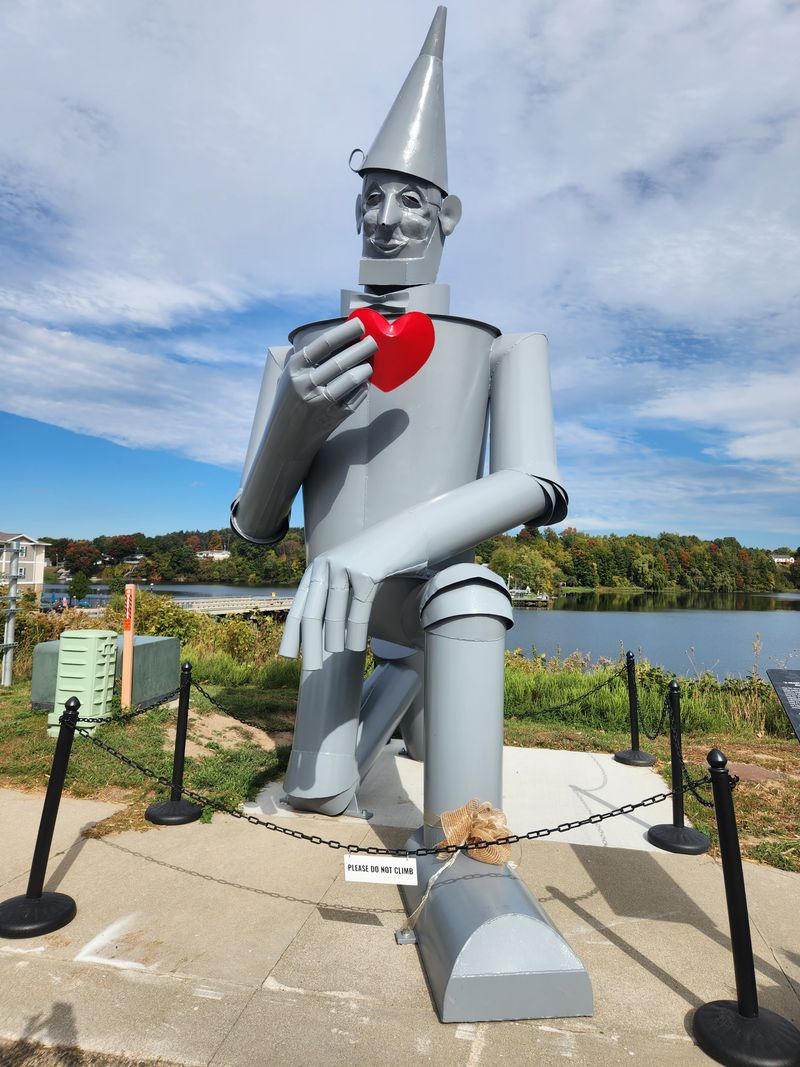
Forget the postcard view. Get close enough to smell the lake and the faint hint of oil that clings to new steel.
The Tin Man’s skin is not smooth. It’s a quilt of plates, hammered, torqued, and trimmed to fit a body that never had nerves.
Rivets blink like bright fish eyes, each a decision. Welds walk in clean beads, some ground flush, others proud enough to cast little shadows.
Sunlight catches the high spots and leaves the valleys soft.
Look at the wrist joint. There’s a clever hinge that reads as tendon, catching the red heart in a grip that looks gentle.
You trust it anyway.
Knees flare into domes, heavy enough to carry a town’s attention. The feet are anchors, planted to take Michigan wind and river cold.
Shoes shaped from sheet metal curl like a blacksmith’s flourish.
Under the arm, darker bands show where rain writes the same story each storm. Birds test the crown and think better of it.
You run a fingertip along a seam and feel heat, not temperature, but the heat of effort that welded a community to a story.
The Moment You Frame Your Shot
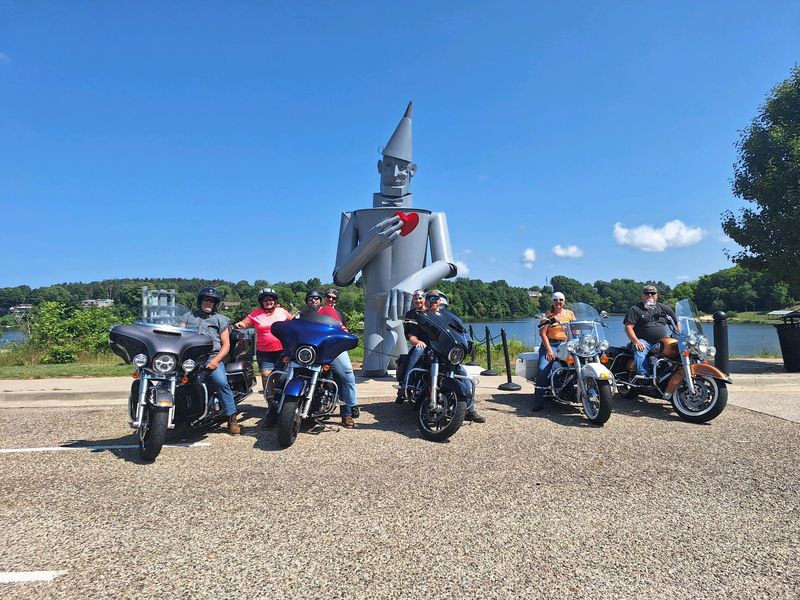
You learn quickly there is no bad angle, only different moods. From the lakeside railing, the red heart floats against water.
From Main Street, the Tin Man seems to step into traffic, pausing just for your shutter.
Parents kneel, count to three, then lose count when a gull heckles overhead. Teenagers try low angles, sneakers in foreground, robot giant above.
A cyclist clicks his helmet to the bars and offers to trade photos without small talk.
The plaza floor throws back clean light, so faces glow even on cloudy days. That helps when you roll up late.
The statue’s galvanized skin acts like a reflector, softening eyes, catching laughter.
If you care about timing, early morning gives you metal like pewter. Noon gives you polish and drumming footsteps.
Sunset gives you burnished shoulders and a red heart that looks back at you.
Later, you see your photo again and hear the square’s sounds. Scoops clack in the ice cream station.
A door closer sighs at Heggs Furniture. You remember the breeze nudging your collar and the way the heart made your chest feel less heavy.
Conversations On The Commons
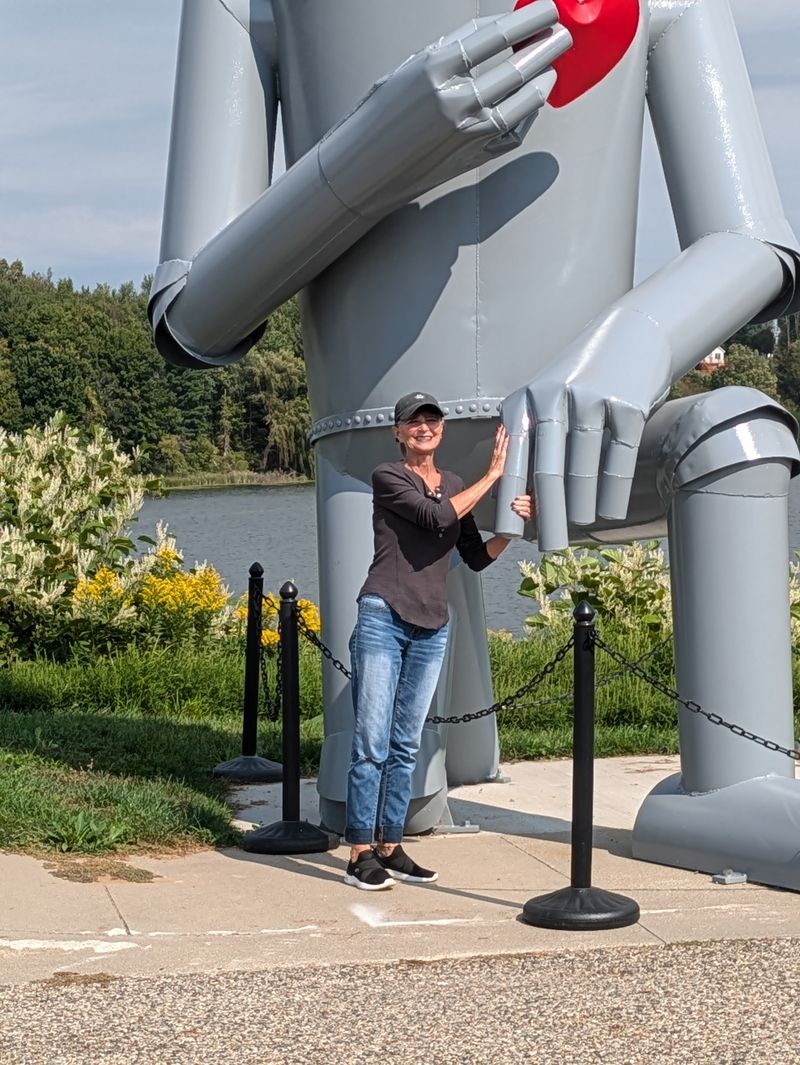
Hart Commons works like a porch. People perch, share a bench edge, talk across the plaza as if the lake were their yard.
The Tin Man listens without moving, an eavesdropper with perfect posture.
I hear a grandmother decode the Oz story for a kid who only knows the movie’s colors. A man in a neon work shirt says he helped pour concrete on a cold morning, then shrugs like it is no big deal.
A vendor checks a chalet lock and tells me Saturdays hum.
There is ice cream near the chalets, and you can hear happiness as a rhythm: scrape, tap, thump. The cones lean dangerously until a quick lick fixes everything.
Across E Main, a coffee door chimes and releases a warm toast smell.
Between words, the water does its part. A small chop taps the rocks.
Ducks negotiate.
When the sun edges behind storefront roofs, the plaza cools fast. Someone drapes a hoodie over a chair back.
You stay a minute longer, because staying feels like the point.
Trail To Tin: Two Wheels, One Destination
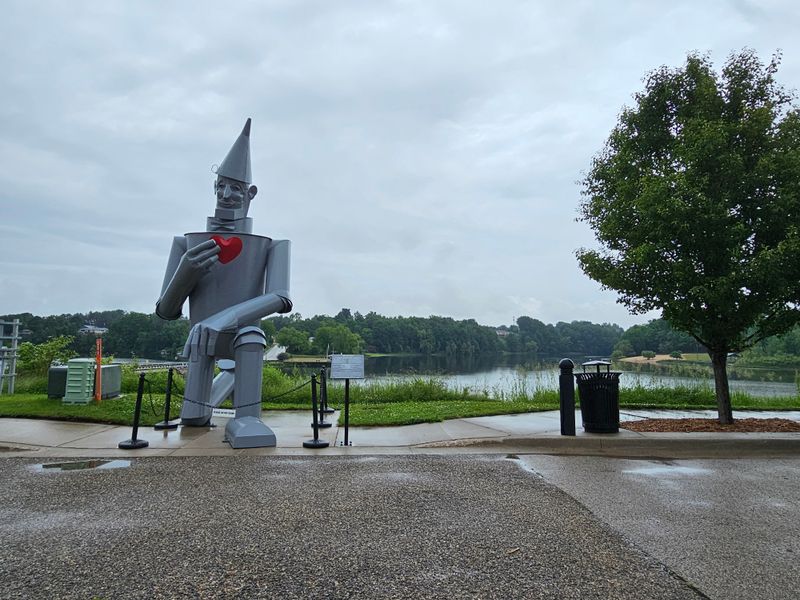
The Hart-Montague Trail runs like a quiet promise through fruit country, and more than a few riders end at the Tin Man. You hear freewheels buzz as they roll in, shoes click to pavement, water bottles tilt.
The plaza is a soft landing after miles of corn whisper and orchard sweetness.
A rider tells me he came up from Whitehall, curious and grinning. He ranks this stop above a rest area because it feels like arriving, not pausing.
The lake offers breeze to cool damp jerseys while photos do the work of proof.
Bikes lean on railings in a neat diagonal. Helmets hang like silver bells.
Nobody hurries because the statue is open 24 hours, and the light keeps changing.
There are restrooms nearby you are grateful for. There is ice cream you absolutely earn.
Someone checks tire pressure with the thumb test and nods.
If the wind picks up, steel hums faintly, or maybe that is the bridge guardrail. Either way, it tunes the moment.
You mount up again, legs loose, and push off, the Tin Man’s heart at your back like a tailwind.
Oz, Rewired For A Lake Town
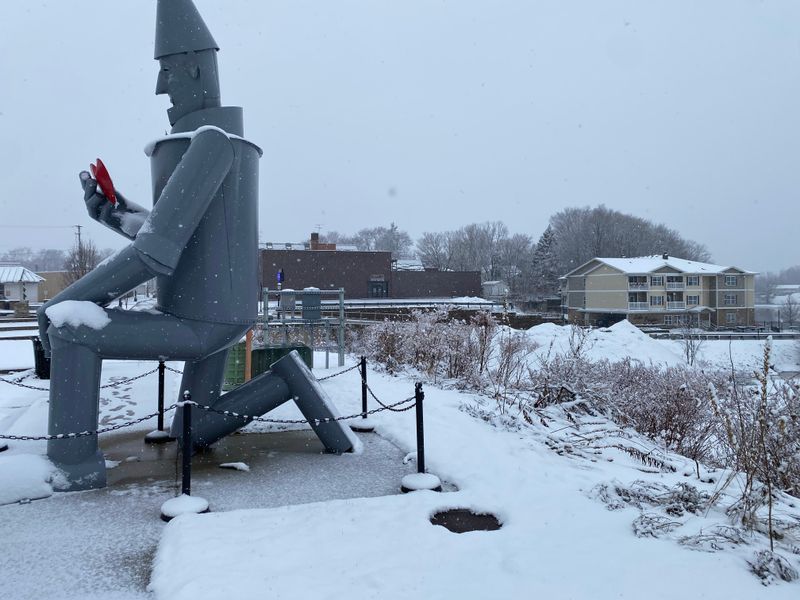
Most folks arrive with the movie in mind, but the story bends here. The Tin Man is not pleading for a heart.
He is presenting one, like a neighbor sharing tools over a fence.
Oz was a fable about labor, love, and the machinery of both. Hart reads it through orchards, packing sheds, and an industrial spine that still shows.
The statue makes the allegory breathable, with boots planted and sleeves rolled.
The plaque’s lines on cooperation feel less like spin when you watch strangers trade photos and tips on where to grab dinner. Love is operational here.
It runs on handshakes and schedules.
Some nights the lake throws up a silver path and the heart blooms like a buoy. The Tin Man stares down Main as if guarding third shift.
You feel protected in a way fantasy rarely provides.
Back in your car, the metaphor follows. You think about what work takes and what it gives back.
Then you realize the open spot in your day got filled by a red shape balanced in a steel hand.
Food, Sweets, And The Pause That Sticks
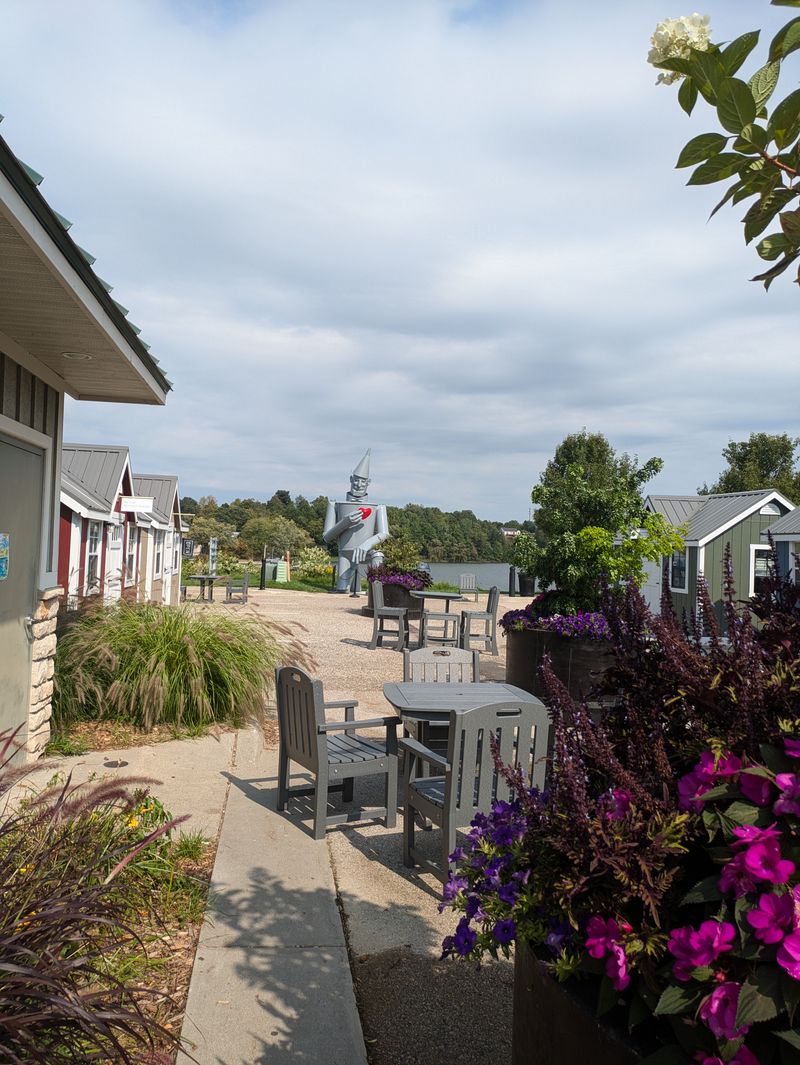
You plan to snap one picture and slip out, but the plaza edits that plan. A kid walks by with a scoop so big it lists like a sail.
Laughter carries, and the red heart appears in every reflection, even the napkin dispenser.
Someone points you toward La Fiesta on the block and a bakery with still-warm trays, proofed right. The smell of cinnamon and butter leaks into the square, then resets your appetite.
Suddenly ten more minutes sounds responsible.
At a table by the rail, two friends compare pastry flakes on their sleeves and discuss lake levels. Down the walk, a couple splits tacos and trade sips of horchata, always passing the cup with a small bow.
Food trucks slide in some weekends and make the air busy. Griddles hiss, lids clack, a bell rings when an order lands.
The Tin Man does not move, but the plaza’s pulse jumps.
You leave with sugar on your tongue and a sticky spot of memory. It is small-town simple only if you miss the choreography.
Here, calories are just a timeline for conversation.
Stats In The Story, Not The Slogan
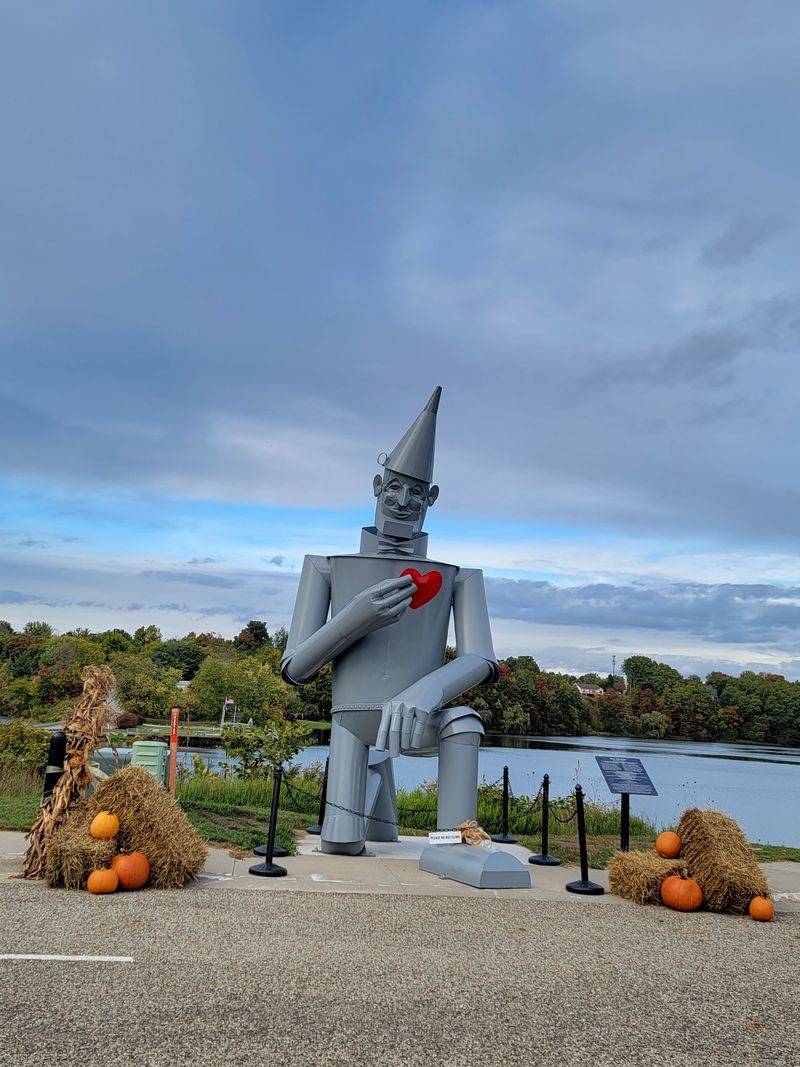
It helps to keep numbers honest. The Tin Man stands 24 feet, which explains why your neck tips and your voice softens when you get close.
The attraction holds a 4.9-star average across dozens of reviews, and you can feel that consensus in the easy pace of people who linger.
Hours are listed as open 24, which is not marketing bravado. You can come at dawn when gulls own the rail.
You can come late when neon softens shop windows and the lake turns slate.
One more figure matters: fifty years of the National Asparagus Festival when this piece arrived. That anniversary gives the red heart more weight than paint.
It is community data welded into public art.
Statistics do not make smiles, but they brace the story. You log them without losing the scent of waffle cones and wet leaves.
They let a quick stop feel credible, not accidental.
In the end, the math tucks behind the metal. You are left with a feeling that outlasts the digits.
The photo proves you were here. The numbers prove why it felt inevitable.
Leaving With The Heart In Mind
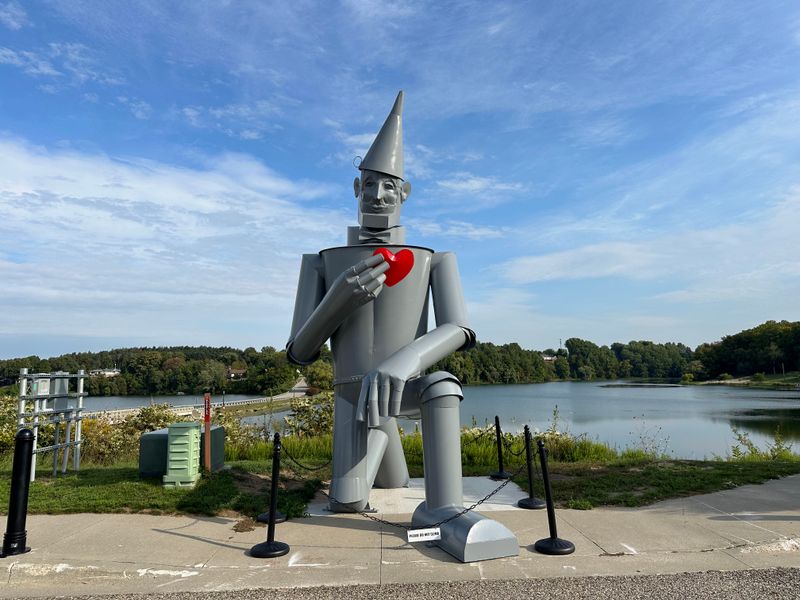
Twilight makes the plaza honest. The lake loses its glare and starts telling the truth in ripples.
The Tin Man holds the heart steady, a red punctuation mark at the end of your day.
Cars slide along Main with that end-of-shift patience, and a coffee shop door thunks closed. Someone tucks a to-go bag into a bicycle basket, kicks once, and vanishes down E Main’s gentle slope.
The chalets click as locks find home.
You take one last look and hear small sounds: flag clips ticking a pole, a zipper bite, the watery smack of a duck landing. Steel carries dusk like a low note.
The Oz story offered a certificate, a declaration that feeling was earned. Hart offers practice.
Show up, share the plaza, hold the heart in view.
Driving out, you keep expecting the statue to move. It does not need to.
The movement is in you, a quiet shift that outlasts the taillights.



